Archive for the ‘9th century’ Category
8月 13, 2024
HILDESHEIM
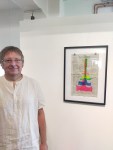
please click on this link to hear and see me read a poem at the opening of SOUL MATTER, an exhibition of Arnd Christian Müller’s works from many years
https://photos.app.goo.gl/pHDh7WXRUQJLwN1f9
Thanks to Arnd and to the Blume family!
ST. MICHAELIS
in hildesheim
in st. michaelis
in der schönen großen
tausendjährigen kirche
mit byzantinischen bildern
hoch oben durch
die romanische kathedrale
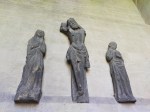
mit dem christus ganz vorn
der schwebt selbst als kreuz
aus metall wie holz
sieht aus wie sehr alt
wie im feuer verbrannt
daneben war ein gästebuch
jetzt steht in letzter zeit
stand im gästebuch böses
gegen muslime
deshalb legen sies
vorläufig schweren herzens nicht aus
das hat mich beeindruckt
ebenso wie
die vereinigung mit
der katholischen krypta
ungefähr zur selben zeit
wie der christus dort vorn
nach tausend jahren
wieder ein hohes würdiges haus
der garten herum
ist auch sehr schön
es gibt sogar toiletten
eine sandkiste hinten
ein großer grüner
friedlicher hügel
MW August 2024
HILDESHEIMER DOM
insgesamt mit dem innenhof
mit den großen toren
mit dem dommuseum
mit dem platz rundherum
mit den alten resten
ein sehr schöner ort
ein ort des friedens
nach der furchtbaren zerstörung
in der krypta
steht am eingang
zum grab der bischöfe
der letzte bischof
der dort drinnen liegt
der vorher jahrzehntelang
bischof war
gegen den gibt es
sehr viele vorwürfe
wegen missbrauchs
deshalb bleibt
der eingang zum grab
der bischöfe zu
MW August 2024
HILDESHEIM
tief in der nacht
ganz in der früh
wenn alles schläft
fast alles schläft
dann ist es schön
auch untertags
ist es ein ort
der schönheit hat
aus alter zeit
der vieles kennt
schönheit empfängt
und sie bewahrt
MW 2024.8.12
标签:art, history, memory, poetry
发表在 11th century, 1940s, 1950s, 1960s, 1970s, 1980s, 1990s, 2000s, 2010s, 2020s, 2022, 2023, 2024, 20th century, 21st century, 9th century, Antique times, August 2024, Middle Ages, poetry | Leave a Comment »
11月 14, 2023
陈兴
现代诗八首
Chen Xing
SCHLAFNYMPHE
Herbstnacht am Teich,
Seerose fehlt.
Ist wohl verschlafen
versunken.
Hab sie nicht rausgefischt,
um nachzusehen.
Übersetzt von MW im November 2023
睡莲
秋夜经过小池
这次没有遇到睡莲
应该是睡过头的时候
沉了下去
我没有从池底捞起来
看看睡得如何

MOND
Unterm Baum
sind lauter Zimtblüten.
Aber der Mond
ist noch auf dem Baum.
Übersetzt von MW im November 2023
月光
树下
落满了桂花
但月光
还在树上
HERBSTMORGEN
Ein Gedicht
gibt
ein anderes.
Feuerwerk
reagiert auf Kontakt.
Übersetzt von MW im November 2023
秋晓
一首诗
衍生了
下一首诗
正如鞭炮的引信
一旦点燃
HERBSTWIND
Herbstwind,
feg dein Laub
selber zusammen!
Übersetzt von MW im November 2023
秋风
秋风呵
自己吹落的树叶
你自己打扫
MOND
Der Mond ist auch
ein Transvestit
und zieht in der Nacht
ein Glitzerhemd an.
Übersetzt von MW im November 2023
明月
明月亦好
变装
夜着一件
发光的衣服
KATZE STRECKT SICH
Die Katze hört sicher,
wenn sie sich streckt,
wie die Knochen knacken.
Übersetzt von MW im November 2023
伸懒腰的猫
猫一定听到了
它伸懒腰时
骨头发出的声音

MOND
Der Mond macht nicht das Meer,
doch er bewegt es,
Ebbe und Flut.
Übersetzt von MW im November 2023
月亮
月亮不制造海
但制造潮汐
搬运海
GROSSER KANAL
Vom Großen Kanal her
knackt dauernd
das Eis.
Übersetzt von MW im November 2023
大运河
大运河面
不停传来
冰裂声
Chen Xing
陈兴诗词
标签:animals, autumn, blossoms, body, bones, canal, cat, Chen Xing, classical poetry, drowning, 陈兴, fall, flood, flowers, gender, Grand Canal, Haiku, ice, leaves, light, lotus, modern times, moon, move, movement, myth, names, night, osmanthus, people, performance, plant, poetry, pond, pool, sea, sleep, sound, sounds, tide, tradition, translation, tree, trees, water, wind
发表在 11th century, 13th century, 14th century, 15th century, 16th century, 17th century, 18th century, 1980s, 1990s, 19th century, 2000s, 2010s, 2020s, 2021, 2022, 2023, 20th century, 21st century, 6th century, 7th century, 8th century, 9th century, Antique times, Middle Ages, November 2023, October 2023, poetry, Prehistoric times, Tang Dynasty, Translations | Leave a Comment »
6月 18, 2023

Photos by Hong Junzhi
WHERE
Where am I going
what have I been doing
I have been writing
some in Chinese
some in German
I was in China
in Austria
in borderlands
into art
poetry
countryside
Traveling
with friends
dedicated
artists
people who deal with
garbage food administration
concepts spirit
Trade many trades skills
languages
What am I
have I been
sinking or swimming
guess both
It’s been fun
much fun
Thank you
hope you are well
MW June 2023

DOING LAUNDRY
Doing laundry in Brno
was interesting
Finding
the laundromat place
using machines
local people money time
waiting Janacek opera
South Moravian square
parks trying to get tickets
maybe just strolling spending
maybe two hours
very well spent
MW June 2023

DIX MINUTES AVANT QUATRE
dix minutes avant quatre
les oiseaux commencent
je vais vers le W.C.
et retour à mon lit
les oiseaux sont les poetes
ils appellons plus tôt plus souvent
que n’importe qui
dans le monde entier
MW juin 2023

Sculpture and photo by Tristan Tréhin
UM ZEHN VOR VIER
um zehn vor vier
fangen die vögel an
ich geh aufs klo
und wieder ins bett
vögel sind dichter
viel viel dichter
als irgendwer
auf der erde
MW Juni 2023
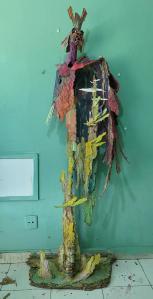
Sculpture and photo by Tristan Tréhin
再次去肖普朗犹太庙
匈牙利肖普朗镇
有中世纪犹太庙
十几年前去过,
写了诗
肖普朗犹太人
现在也许没有
二战都被纳粹杀了
中世纪犹太庙
一九五十年代发现
维修后当博物馆
感觉到气氛
沉下的过去
像古老教堂
没有人做礼拜
但气氛镇静
适合静坐
可以写诗
2023.6.16

捷克布尔诺城堡
我们在监狱上面喝啤酒
我看过很多地方的监狱
你说
都差不多
参观感觉也许是差不多
参观都可以
随便出去
喝世界上最好的啤酒
2023.6.10

“viecha U slediaka”
在布拉迪斯拉发
餐厅的名字
电车一号线
快到市中心
今天中午吃了
他们当天的菜
每天两个选择
六块五欧元
当地菜单
服务员会英语
好吃
好啤酒
三个人
大约二十块
墙上都是
八九年报纸
斯洛伐克语
十二月初
真理报
2023.6.12

捷克布尔诺大教堂
这里是圣地
在教堂
在塔上
在光明
在城市
以上
我们是火燎
每一个人
每个星星
每个动物
小小的火燎
十二年前
我们来这里
普通旅客
在暮光里
还没到暮光
最后的阳光
我们是圣徒
这座城
从维也纳不远
历史
一样悠久
一样残忍
今天我们
看到阳光
完全够了
2023.6.9
兹诺伊莫
捷克小城
都值得去
都感觉到
欧洲历史
兹诺伊莫
靠近奥地利
从维也纳
坐小火车
历史悠久
历史残忍
旅游胜地
做葡萄酒
做啤酒
都非常好
当地人
非常好客
森林好
国家保护区
一直觉得
边境地区
世界各地
边境地区
最有意思
最值得去
2023.6.8
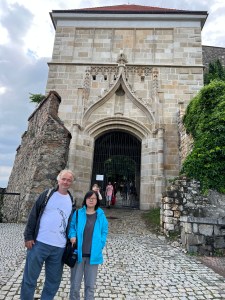
下雨
昨天又下雨
到今天上午
现在也感觉到一点
只要够大
下雨让人看不见
让世界
停下
疫情时候
也停下
人造的
人为的
他们说
为人
而停下
下雨
来就来
没有人
能让它停
下雨
不听使唤
不听劝告
不听劝阻
虽然有过
人造下雨
需要黑云
需要水
下雨说
不听你的
谁都不听
2023.6
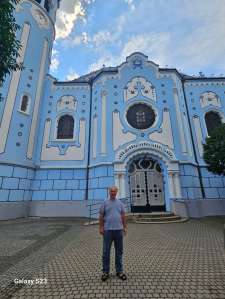
下雨
刚写了一首德语诗
听下雨写
德语说话
跟下雨
两个词
声音差不多
只有一个字母
不同
下雨了
有人说话太多
有人不能说话
有人不许说话
雨终于来了
田野呼吸
道路呼吸
屋顶呼吸
小阳台呼吸
大地呼吸
虫子呼吸
等等等等
月亮听到
仿佛也呼吸
2023.6

国际跨界诗人沙龙——维马丁 Martin Winter (奥地利)诗歌展
ZNOJMO
Böhmische
Dörfer und Städte
sind alle gut
um Geschichte zu spüren.
Znaim ist
gleich bei Österreich
zu erreichen per Bahn hoffentlich
Lange Geschichte
grausame Geschichten
Herrliche Gegend
sehr guter Wein
sehr gutes Bier
In Znaim gebraut
in Znaim gekeltert
in der Umgebung
Wälder Hügel
ein Nationalpark
Grenzland ist
überall
ganz besonders
Wir haben uns
sehr wohl gefühlt
MW 2023-06-08

这一辑“天生好诗人”的主角是奥地利诗人维马丁和中国诗人孟秋
BRÜNN, PETROV
Hier ist ein heiliger Ort.
In der Kirche,
auf dem Turm
und im Licht
über der Stadt.
Wir sind Funken,
jeder Mensch
jeder Stern
jedes Tier
ist ein kleiner Funken.
Vor zwölf Jahren
waren wir hier
im Abendlicht
am großen Tor.
Wir waren Touristen,
aber im Licht
waren wir Pilger.
Diese Stadt
ist nicht weit von Wien.
Die Geschichte
auf Deutsch und auf Tschechisch
und in vielen Sprachen,
die ist genauso alt
genauso grausam
genauso schön
ungefähr.
Hier im Licht
sind wir da
das ist
genug.
MW 2023-06-09

FESTUNG SPIELBERG
Wir trinken Bier über dem Kerker.
Du hast viele Gefängnisse gesehen,
sagst du,
da sei nicht viel Unterschied.
Wahrscheinlich hast du recht,
wenn du besichtigst,
kannst du jederzeit raus
und kriegst das beste Bier auf der Welt.
2023-06-10
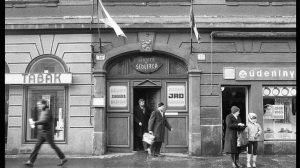
VIECHA U SLEDIAKA
Ein Restaurant, eine Bar
in Bratislava
an der Straßenbahn 1
knapp vorm Zentrum.
Heute mittag gab es
das tägliche Menü,
zwei Möglichkeiten
je 6 Euro fünfzig.
Örtliche Küche,
die Kellnerin spricht Englisch.
Gutes Essen,
gutes Bier,
drei Leute
ungefähr 20 Euro.
An den Wänden
Zeitungsseiten
auf Slowakisch,
Anfang Dezember 1989.
Die Tschechoslowakische Prawda.
MW 12. Juni 2023

WIEDER IN DER SYNAGOGE IN SOPRON
In der kleinen Stadt Sopron in Ungarn
gibt es eine Synagoge aus dem Mittelalter.
Vor ein Dutzend Jahren war ich da,
hab ein Gedicht auf Englisch geschrieben,
über Europa in Trümmern.
Gibt es hier noch Juden?
Haben die Nazis alle ermordet?
Die mittelalterliche Synagoge
wurde 1954 entdeckt, dann
renoviert als Museum.
Ich spür eine Stille,
versunkene Zeit,
wie in einer Kirche.
Niemand kommt zum Gebet,
nur die Stille lädt ein,
zum Sitzen,
zum Schreiben.
MW Juni 2023
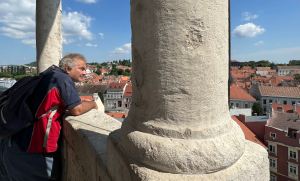
标签:Anna Park, BRATISLAVA, Brno, czech republic, 维马丁, Europe, food, history, Hong Junzhi, hungary, Korean, languages, laundry, Martin Winter, memory, people, poetry, sleep, slovakia, Sopron, time, toilet, translation, travel, Western Hungary, wine, world, writing, znojmo, 洪君植
发表在 11th century, 13th century, 14th century, 15th century, 16th century, 17th century, 18th century, 1900s, 1910s, 1920s, 1930s, 1940s, 1950s, 1960s, 1970s, 1980s, 1989, 1990s, 19th century, 2000s, 2010s, 2020s, 2023, 20th century, 21st century, 5th century, 6th century, 7th century, 8th century, 9th century, Antique times, June, June 2023, Middle Ages, poetry, Roman times, Translations | Leave a Comment »
11月 29, 2022

Xuanyuan Shike
CONTEMPORARY POEM
What ancient poets didn’t encounter,
we have encountered it.
What modern poets didn’t encounter,
we have encountered it.
What modernist poets didn’t encounter,
we have encountered it.
What poets of the future will never encounter,
we have encountered it.
What
have we encountered ?
2022-11-23
Translated by MW in November 2022
Xuanyuan Shike
AKTUELLES GEDICHT
Alten Dichtern ist es nicht begegnet,
aber uns ist es begegnet.
Neueren Dichtern ist es nicht begegnet,
aber uns ist es begegnet.
Modernen Dichtern ist es nicht begegnet,
aber uns ist es begegnet.
Dichtern der Zukunft wird es nicht begegnen,
aber uns ist es begegnet.
Was
ist uns begegnet?
2022-11-23
Übersetzt von MW im November 2022
当代诗一首
轩辕轼轲
古代诗人没遇到的
都让我们遇到了
近代诗人没遇到的
都让我们遇到了
现代诗人没遇到的
都让我们遇到了
未来诗人没遇到的
都让我们遇到了
我们遇到了
啥
2022-11-23

标签:encounter, 轩辕轼轲, future, life, lockdown, memory, past, people, phenomena, poetry, poets, politcs, society, thing, things, time, virus, Wang Youwei, Xidu Heshang, Xuanyuan Shike
发表在 11th century, 13th century, 14th century, 15th century, 16th century, 17th century, 18th century, 1900s, 1910s, 1920s, 1930s, 1940s, 1950s, 1960s, 1970s, 1980s, 1990s, 2000s, 2010s, 2020s, 2021, 2022, 2081, 20th century, 21st century, 22nd century, 5th century, 6th century, 7th century, 8th century, 9th century, Antique times, Middle Ages, November 2022, poetry, Prehistoric times, Qin Dynasty, Qing Dynasty, Song Dynasty, Stone Age, Tang Dynasty, Translations, Warring States, 朱剑 | Leave a Comment »
12月 8, 2021
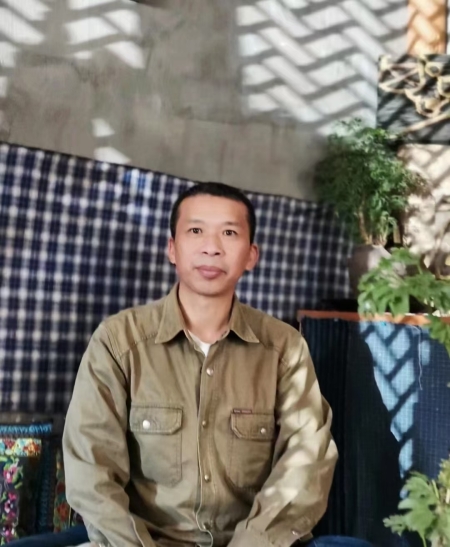
Zhang Xiaoyun
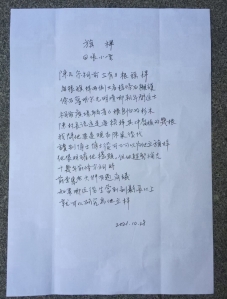
FAHNENSTANGE
Vor dem Familientempel der Chen stehen 8 Fahnenstangen.
Jede Fahnenstange wird an beiden Seiten von Steinen gehalten.
Auf den Steinen stehen die Absolventen der Palastprüfungen von der Song- bis zur Qing-Dynastie.
Auf dem Platz davor liegen 6 abgezogene Föhrenstämme.
Bürgermeister Chen sagt, manche Stangen müssen ersetzt werden.
Ich frage, was ist, wenn jetzt jemand aus der Familie
seinen Doktor macht und so weiter, kriegt er vielleicht eine Stange?
Der Bürgermeister schüttelt den Kopf.
Aber er fügt gleich hinzu, bei der letzten Renovierung vor über zehn Jahren
haben die Ältesten sich besprochen,
falls ein Nachfahre
etwas Höheres wird als Vize-Kreisvorstand,
dann kann man schon darüber beraten.
2021-10-28
Übersetzt von MW im Dezember 2021
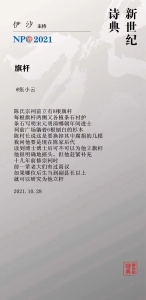
 伊沙推荐:这个地方,在福建漳州,我也到访过,不曾写成诗,关键在于:当时无从了解当代情况,所以无缘古今嫁接擦出火花,也就无诗而归。时隔多年,读小云兄诗,受教了!
高歌:那些断裂的,未延续下来的,是太厚古拘泥,还是不同时代的价值观对接不上呢?不过,做官在此间倒是亘古不变地被尊重被推崇……
况禹点评《新诗典》张小云《旗杆》:张小云的诗里有一路,属于“有滋有味的当代风俗画”,之前已经领略过他笔下的北京现代市井,这一首又把我们带到了福建漳州。至于博士博士后没有过去的进士在老人处获凭高(这一点我很赞同),副县长以上却又评官威胜出(其实也不算太错,因为古代相当多县令都是进士出身,当代的副县长好赖也算个县丞罢),这都不过是顺笔一带的,也正因不刻意,反倒显出了机锋。
黎雪梅读《新世纪诗典》之张小云《旗杆》:“学而优则仕”的观念对国人有着非常广泛而深远的影响,历来是中国知识分子毕生的追求的目标,因为只要达到了这个目标,活着的时候不仅可以光宗耀祖,受人尊敬与崇拜,死了之后还可以在祠堂立牌位,受后人供奉祭祀。这一点至今并没有发生根本的变化,如诗中所写“如果哪位后生当到副县长以上/就可以研究为他立杆”,这仍然是对权力尊崇与膜拜,哪怕是读到博士与博士后也不能网开一面。一根旗杆横贯古今,细致入微地景观描摹,让我们能感受到陈氏宗祠悠久的历史与文化,在其中还有荣耀、有传统,还有根深蒂固的家族观念及国人的心理意识,教科书级别地呈现,令人思接千载,不胜感慨唏嘘。
晏非跟读《新世纪诗典》| 2021.12.8诗人张小云《旗杆》
立旗杆表彰优秀之士,本无可厚非,奈何历朝历代说到底就是官本位,当了官才算优秀人才,当了大官才是栋梁之材,才能光宗耀祖,其他的技能都只是等而下之,或者奇技淫巧。我们在那些枯黄的地方志书中,能够连篇累牍地看到这种糟朽的记载。这种现状到了近代以降,在华夏大地是否有了实质性改观,本诗可作一个样本考察,读到博士博士后的明确不能立旗杆旌表,而“如果哪位后生当到副县长以上/就可以研究为他立杆”,官本主义的现实仍未真正破局,未来的路还会很艰辛。需要指出的是,以前的进士好歹都可称学富多车,学而优则仕能够理解,而今官场所见所闻,可称得上怪现状,既看不到进之学识,亦看不到士之风采。
马金山|读张小云的诗《旗杆》的十一条:
1、很多时候,把事物写清楚,就是诗;
2、写作的目的首先是表达情感,表现事物,然后让已经死的东西,再重新的活过来,并且充满活力;
3、张小云,1965年生于厦门,走过第三代诗歌年代,倡行过荒诞与类型实验写作。著有诗集《我去过冬天》、《够不着》、《现代汉语读本》、《北京类型》、《买菜哪MyChina》、《一路畅通》等。2019年1月获亚洲诗人奖,2020年6月获李白诗歌奖特别奖;
4、至今为止,也见过居士两面,一次是2017年冒着台风参加的惠州诗会上,另一次是今年六月份的绵阳诗会上,其在沉静中,依然给人以朴实而温暖的感觉,这就是诗人无形的通感;
5、张小云的诗,荒诞之中,充盈着禅性的意蕴,含厚中显现出独特的精神内涵,既有口语化的质感,还有现代化的生活记录,却总有一种陌生化的力量深藏其中,让人回味悠长;
6、诗以镜头式的布局,一步步引向深入,透过现象,书写独具特色的传统文化,并在此基础上,将古今的门第观念,予以融汇贯通,细致入微,而又深刻透彻;
7、诗中不紧不慢的陈述,具体到一个明确的区域,位置,以及宗祠上面,从而形成了鲜明的时代背景和历史纵深,并由旗杆融为一体,不仅是精神的,更是信仰的;
8、不在于文化程度的高低,而在于官位的大小,这是从古至今一直以来,人的价值观现实一面的真实写照,还是根深蒂固的思想体系;
9、诗的标题《旗杆》,在本诗中带有信仰的东西,而且让人深刻地感受到宗教事务的高级文化,并自带典型的意识与力量,又颇有代表性;
10、本诗给予诗人的启示:“诗的呈现,是一切事物的力量”;
11、信仰之诗、观念之诗、文明之诗。
标签:examination, exams, family, flags, generations, history, memory, names, people, stele, stone, temple, tradition, Zhang Xiaoyun, 张小云, 張小云, 新世纪詩典
发表在 11th century, 13th century, 14th century, 15th century, 16th century, 17th century, 1960s, 1965, 1970s, 1980s, 1990s, 19th century, 2000s, 2010s, 2020, 2021, 20th century, 21st century, 9th century, Antique times, December 2021, Middle Ages, NPC, October 2021, poetry, Qing Dynasty, Song Dynasty, Translations, 新世纪诗典 | Leave a Comment »
1月 6, 2020

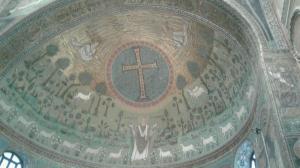
RAVENNA
All sorts of bands
and flowers and strands
and lines and motifs
lie intertwined
beneath the old church
of Santa Eufemia.
Take a close look,
they are dancing,
the lines and so on.
A big Roman house
with courtyards and tiles
all over the floors.
A dance of the seasons.
They say Summer is missing,
or maybe it’s Spring,
holding Winter’s hand,
like Autumn does
on the other side.
Winter is wrapped in blue,
around the head too.
Crooked lines come out
above the head.
Is it a fool?
They say it’s grass,
maybe reeds.
And there is a shepherd,
the second big mosaic,
also with a pan-flute.
Two storeys above
is the old city.
This city below was the western capital
of the Byzantine empire
among other things.
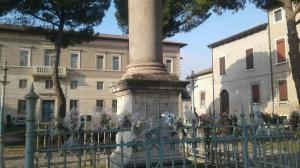
Then there is Dante,
buried in a mound
overgrown with green leaves
all-year round
in 1944 and 1945,
German hell-hounds were loose.
Maybe one year
his bones were in there,
the shape of the mound
reminded me of an old poetess
in China in Xi’an, formerly Chang’an,
the old capital.
Cai Wenji was her name.
Her mound is much bigger,
and very well kept,
much in contrast to all the graves
of famous male poets.
She was politically very important.
Back in Ravenna
in winter
wrapped against the cold
we move on
to our next monument.
MW December 30, 2019

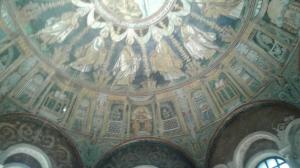
NEON
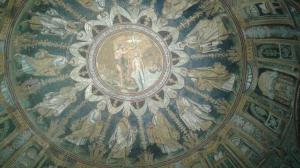
Neon reigned in 452.
No, this was the year
they built the mosaics
the wonderful dome
under bishop Neon.
It’s the Orthodox baptistery.
Much more elaborate
than the Arian one
across the old city.
Each apostle is named.
Most have a beard.
Simon looks like a woman.
The Arian dome
has only one throne
and here there are four,
they are all empty too
but there are also four books
in between, the four gospels.
Blessed are those whose iniquities
and sins are remitted,
says one inscription.
MW December 30, 2019
IVORY THRONE
The ivory throne
was for Bishop Maximian,
550 or something.
Joseph and his brothers.
Jesus feeds 5000 people.
The annunciation,
the water test
for Mary’s virginity.
What was that exactly?
Carved panels in different sizes
all around the back and on the sides.
Blank parts in between,
maybe panels are missing.
Ebony covered with ivory.
Somewhere in the museum
with Saint Andrew’s chapel,
wonderful mosaics.
Then in the afternoon
Saint Apollinaire in Classe.
Classe was the harbour
of the Roman fleet
and the main port
until the ninth century.
The church is huge,
and there were more,
there is a museum
in the sugar factory,
closed in 1982.
The sea isn’t far.
MW December 30, 2019
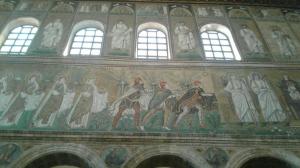
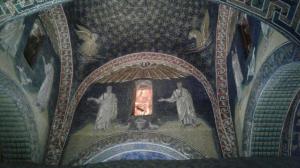
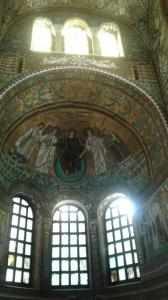
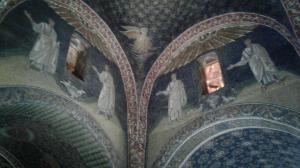
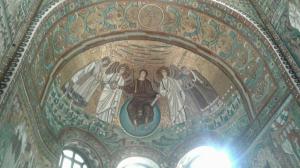
SAN VITALE IN RAVENNA
You know right away
you are in a place of worship.
In this way it’s like the Alhambra.
At least I hope the Alhambra retains it,
haven’t been there for 38 years.
A sense of awe
and exultation,
no matter how many people,
how many tourists.
Very big, very grand, spacious.
Filigree columns, needlework stone.
Very very high, many arches.
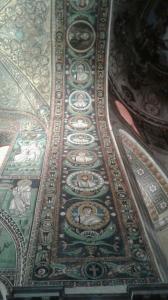
Mosaics.
Some of the best ones
in this splendid city.
A sacred place.
Stay.
The whole city is sacred.
Drink,
try to retain
some of this beauty.
MW December 31st, 2019







标签:antiquity, beauty, bible, books, ceiling, china, churches, colors, culture, East Roman Empire, Europe, floor, food, history, life, memory, mosaics, people, poetry, poets, Ravenna, religion, Stones, streets, tradition, travel, walls
发表在 2000s, 2010s, 2019, 2020, 21st century, 5th century, 6th century, 7th century, 8th century, 9th century, Antique times, Byzantinian times, December 2019, Han dynasty, January 2020, Middle Ages, poetry, Roman times, Tang Dynasty, Uncategorized | Leave a Comment »



 中国大好き
中国大好き 