Posts Tagged ‘pot’

BUY A KNIFE – 尚仲敏 Shang Zhongmin

12月 5, 2024


Shang Zhongmin
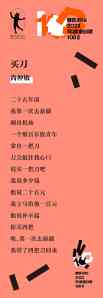
BUY A KNIFE

Twenty-five years ago
I first went to Xinjiang.
Just out of the airport
a young Uighur guy came to me.
He took out a knife,
the tip was right against my chest.
Buy a knife, he said.
How much?
Twenty-five Yuan.
I gave him a hundred.
He had no change.
Buy four knives, he said.
And so from my first trip to Xinjiang
I brought back four knives.

Translated by MW in December 2024

磨铁诗歌奖·2023年度最佳诗歌100首|尚仲敏《买刀》入选理由:一首幽默的诗光有好笑的内容还不够,还得加入恰当的语言和诗人的个性,要不然很容易写成一个段子。尚仲敏很擅长写具有高级幽默感的诗,他的生活为他提供了源源不断的素材,他的个性、他写诗的语言和口气,让他的诗有着独一份的鲜活。《买刀》这首诗,讲的本来是一个有点沉重的故事,但是尚仲敏松弛的叙述,和他最后两行充满个性的点睛之笔,让这个故事充满了黑色幽默,强大的诗性一挥而就。(磨铁读诗会 / 方妙红)

Sang Gege
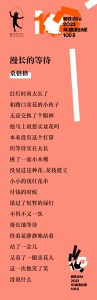
LONG WAIT

The red light was going on too long
and the young guy selling flowers
randomly exchanged a glance with me
and said right away, please buy a pot!
I had no such plan before
but the wait was too long
so I picked out a small kind of hibiscus.
Never saw that kind, stem standing up,
small light red blossoms attached together.
When I paid, I missed
the short green light.
So there was another
long wait.
Standing still there with my flower
after a while
I saw the guy again
but he just smiled,
didn’t say anything.

Translated by MW in December 2024

磨铁诗歌奖·2023年度最佳诗歌100首|桑格格《漫长的等待》入选理由:我曾经有过几乎一模一样的经历,只不过桑格格是在等红灯,我是在等网约车开来,等待时,眼神正好碰到旁边卖花人,他喊我看看他的花,看了,也就买了,我买的是一盆蝴蝶兰。但我没有意识到这个过程是一首诗,没有意识到其中的偶然与美好足以令敏感的心为之跳动。有什么样的内心,就能写什么样的诗,所以桑格格把这样的日常场景写得如此优美动人。(磨铁读诗会/沈浩波)

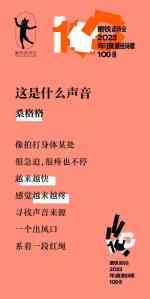
磨铁诗歌奖·2023年度最佳诗歌100首|桑格格《这是什么声音》入选理由:这是一首在诗歌意识上很新的诗。前四行写活了一种声音的同时,又写实了一种痛感。但这首诗的重点既不在声音上,也不在痛感上。最后两行,诗人把落点放在“一个出风口/系着一段红绳”,太意外了,又那么妙!桑格格发现诗歌的能力令人羡慕,她眼光敏锐,诗心聪慧,总能在最轻微之处,察觉到一种看似散漫实则凝固着的诗性。(磨铁读诗会/里所)

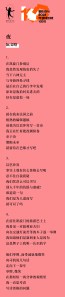
磨铁诗歌奖·2023年度最佳诗歌100首|阮文略《夜》入选理由:这是一首大作,但携带着诗人最个体最细腻的感情;这是一首长诗,但每一节都言之凿凿,一层层铺开,演化出诗人内心复杂的图景;这首诗语言舒缓真挚,但不无铿锵、顿挫之感,每一个字都暗合诗人的心跳。在2023年度最佳诗歌100首(实为122首)里,这是唯一一首令我在阅读过程中哽咽流泪的诗,也是一首让整个编辑部印象至深的诗,因其承载和记录着一种弥漫在每个人周围的时代痛感。香港诗人阮文略身上有一种可贵的知识分子诗人的传统,他是那种“守夜人”式的诗人,必须以诗为人类的处境作一份见证,并且对他来说,这不是立场的问题,不是选A或者选B的问题。他胸中的沉郁之气浓得化不开,因此只能写这样的诗,直指现实残酷幽暗处。(磨铁读诗会/里所)

Xiron Poetry Club


WHAT – 我 – SAY – 说

11月 2, 2024

Photo by Zhan Mingzhao

WHAT

Martin Winter

This text begins with a poem in Chinese. It is not very long, you can continue reading below.

我到底是什么人
怎么样的人
锅到底是什么人
怎么样的人
蜗牛到底
是什么人
怎么样的人
蝴蝶到底
是什么人
怎么样的人
蚂蚁到底
是什么人
怎么样的人
躺着到底
是什么人
怎么样的人
站着到底
是什么人
怎么样的人
爬着到底
是什么人
怎么样的人
我能不能
休息再说
明天再说
下周再说
等等再说
就稍微
等等

2024.6.22

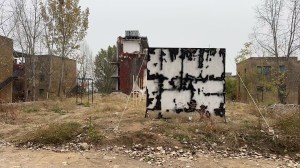
I wrote a poem titled What in June 2024, when they had almost finished demolishing Shangyuan Art Museum in a village near Huairou outside of Beijing. I was there as a resident artist. Poetry is important at this place. Some of the founders of Shangyuan Art Museum were poets, including Cheng Xiaobei, the most prominent representative of the museum in China. I was invited for my poetry, this and last year. Mostly for poetry in Chinese. The poem What is 我 in Chinese. 我 doesn’t mean ‘what’, but the two words sound somewhat similar. The Chinese poem came first.

The poem is rather repetitive. Wo daodi shi shenme ren, zenmeyang the ren? This is the first two lines in the official Romanization for Mandarin Chinese. Romanization means using an equivalent to the characters in Latin letters, more or less. Letters of European languages with diacritical lines for the tones. There are four tones in Mandarin Chinese, plus the absence of a tone in some syllables. I am not using the diacritical marks here for now. ‘Wo’ in this poem is in the third tone. It is a little drawn out, so ‘wo’ sounds rather like ‘woah’. ‘Woah’, what is this?

Guo daodi shi shenme rén, zenmeyang de rén? I started to write ‘the’ in front of ‘rén’ just now. Rén means human or person. The tone in rén goes up, a bit like a question. Zenmeyang means ‘how is it’, it can be a greeting. The ‘z’ is not a voiced ‘s’, it’s rather like saying ‘tsih tsih’ when you imitate a bird or a cricket, a chirping sound. Tsen meh yang, three syllables. How, in what way, how is it, what kind of? The ‘of’ in ‘what kind of’ is ‘de’ in Chinese. Written d-e, but it sounds very similar to ‘the’, like in What the flower are you talking about?

Guo and ‘wo’ are both one-character words. Each character is one syllable in Chinese. Guo is pot. A pot for cooking, or a pan. A wok. Guo daodi shi shenme ren? Shenme is ‘what’. Daodi is something like ‘actually’, literally ‘at the bottom’ or ‘in the end’. Shi is pronounced without a vowel, or rather like ‘ugh’ after a ‘shsh’. Shi means ‘to be’, ‘is’. Pot actually is what person? What kind of person?
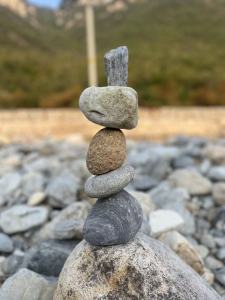
WHAT

What person
what kind of person
what kind of person
am I in the end

What person
what kind of person
what kind of person
is pot in the end

What person
what kind of person
what kind of person
is snail in the end

What person
what kind of person
what kind of person
is moth in the end

What person
what kind of person
what kind of person
is ant in the end

What person
what kind of person
what kind of person
lies down in the end

What person
what kind of person
what kind of person
stands up in the end

What person
what kind of person
what kind of person
crawls in the end

Can I please
take a rest first

Can I please
wait until tomorrow

Can I please
wait till next week

Can I please
just wait a little

Please can I
wait

MW June 23rd, 2024

There is a lot of repetition. Maybe that’s the main drawback. I just haven’t figured out how to make something with less repetition and the same effect otherwise.

What is this about? Why is this person asking these questions? Why the request for being allowed to wait in the end? What does it have to do with the demolition of the museum?

I am glad there is no obvious direct connection. No, there is no specific hidden explanation either, none that I am aware of. I wrote many poems at the time, one per day on average. They are all rather different. More realist, less strange. More directly connected to my reality. But I think there is a strong connection.
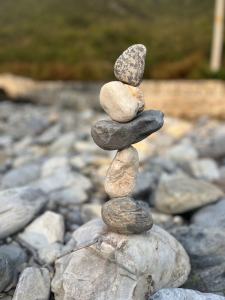
WOAH?

Das chinesische Gedicht war zuerst da.
维马丁 ist mein chinesischer Name. Weh Mahding, so klingt es ungefähr. Martin Winter auf Deutsch oder Englisch.

Alles andere geht so:

Wo 我

Wo daodi shi shenme ren
zenmeyang de ren
Guo 锅 daodi shi shenme ren
zenmeyang de ren
Woniu daodi
shi shenme ren
zenmeyang de ren
….

Auf Chinesisch ist jedes Zeichen eine Silbe. Zwischen den Wörtern in einem Satz gibt es Abstände, auf Deutsch oder auf Englisch etc., aber nicht auf Chinesisch, außer hier oben in der Umschrift. 我 wo bedeutet ‘ich’. 我到底是什么人, das ist die erste Zeile auf Chinesisch. 锅到底是什么人, das ist die dritte Zeile. Statt 我 ‘wo’ steht am Anfang 锅 ‘guo’.

Wo, oder eher ‘Woah’ von der Aussprache her, klingt ähnlich wie “guo”, oder auch “wok”, in der kantonesischen Aussprache. Ein Topf oder eine große hohle ostasiatische Pfanne. So ist das Gedicht entstanden, aus diesem Klang.

Woah, was ist das für ein Mensch,
was für eine Art?
Wok, was ist das für ein Mensch,
was für eine Art?

Woniu 蜗牛, oder ungefähr ‘Woahniuu’, ist eine Schnecke.

Woaniuu, was ist das für ein Mensch,
welche Art von Mensch?

Schnecke, was bist du für ein Mensch,
welche Art bist du?

Und so weiter!

Dann kommt auf Englisch “moth”, da ist auch dieses “o” oder “oah”. Nein, noch kein “sch” dazu… 🙂

Auf Chinesisch hab ich an diesem Punkt umgeschaltet. Hudie 蝴蝶, ungefähr ‘huuhdi-eh’, sind Schmetterlinge. Nichts mit ‘oah’, aber eben kleine Tiere wie Schnecken.

Chinesisch war zuerst da, Englisch auch schon am selben Tag.

Motte, was ist das für ein Mann,
welche Art von Mann?

Dann kommt die Ameise. Mayi 蚂蚁, ungefähr ‘maah-iih’.

Ameisen, was sind das für Menschen,
auf welche Art?

Nach der Ameise kommt schon ‘liegen’, oder im Liegen: Tangzhe 躺着, ungefähr tahng-dschöah.

Liegen, was sind das für Menschen, auf welche Art?

Nach liegen kommt stehen.

Stehen, das sind welche Menschen, auf welche Art?

Nach stehen kommt kriechen.

Kriechen, was sind das für Menschen, was für eine Art?

Kann ich mich bitte zuerst ausruhen?

Kann ich es bitte morgen sagen?

Oder nächste Woche?

Kann ich bitte ein bisschen warten,
ein bisschen
warten?
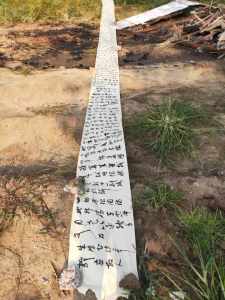
ICH

Was bin ich für ein Mensch,
welche Art von Mensch?
Was ist der Topf für ein Mensch,
welche Art von Mensch?
Was ist die Schnecke für ein Mensch,
welche Art von Mensch?
Was ist der Schmetterling für ein Mensch,
welche Art von Mensch?
Was ist die Ameise für ein Mensch,
welche Art von Mensch?
Im Liegen, was bin ich für ein Mensch,
welche Art von Mensch?
Im Stehen, was bin ich für ein Mensch,
welche Art von Mensch?
Im Kriechen, was bin ich für ein Mensch,
welche Art von Mensch?
Kann ich mich bitte zuerst ausruhen?
Kann ich es bitte morgen sagen?
Oder nächste Woche?
Kann ich ein bisschen warten,
bitte ein bisschen
warten?

MW 2024-6-22
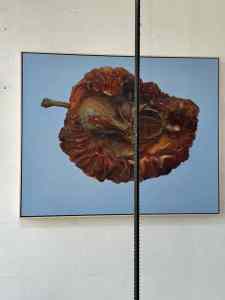
Painting by Wang Xiaoyan

我觉得什么
都不想说
锅觉得什么
都不想说
蜗牛它什么
都不想说
蝴蝶也肯定
都不想说
蚂蚁她觉得
都不想说
躺着还觉得
都不想说
站着我觉得
都不想说
爬着也觉得
都不想说
蚂蚁它能
休息再说嘛
明天再说
下周再说
等等再说嘛
就稍微
等等

2024.10
SAY

I think I don’t
want to say anything.
The pot doesn’t want
to say anything.
A snail doesn’t want
to say anything.
A moth doesn’t want
to say anything.
The ants, they don’t want
to say anything.
Lying down I don’t
want to say anything.
Standing up I do not
want to say anything.
Crawling I don’t
want to say anything.
Maybe the ant
could take a break?
Wait until tomorrow?
Wait until next week?
Maybe just wait?

MW October 2024
DIE VÖGEL AM MORGEN – 沈浩波 Shen Haobo

9月 1, 2022

Shen Haobo
DIE VÖGEL AM MORGEN

In Kanton, Besuch bei einem Handelskonzern.
Das Gespräch kommt auf gutes Essen,
da reden Kantonesen am besten.
Der Vorstand sagt,
bevor das Fleisch vom Schwein in den Topf kommt,
darf es erstens kein Licht sehen,
zweitens darf kein Wasser dazu,
nur dann wird es köstlich.
Ich lass den Mund offen stehen.
Der Generaldirektor sagt,
kein Wasser aufs Fleisch bedeutet,
die Innereien werden nicht gewaschen,
sie kommen direkt mit dem Blut in den Topf,
so schmeckt es am besten.
“Und was ist das, Fleisch darf kein Licht sehen?”
Der Vorstand sagt, das Schwein wird in der Nacht geschlachtet.
Der Generaldirektor ergänzt: in der Nacht geschlachtet, und gleich in den Topf.
Wenns gar ist, dann hört man die Vögel am Morgen.

2022-06-30
Übersetzt von MW im August 2022

新世纪诗典作品联展#沈浩波#(36.0)


《新诗典》小档案:沈浩波,1976年出生于江苏泰兴,1999年毕业于北京师范大学中文系。现居北京。

1998年发表《谁在拿90年代开涮》一文,这篇文章后来成为引发1999年中国先锋诗界“民间立场”和“知识分子写作”大论争(盘峰论争)的导火索。并成为该诗歌论争中“民间立场”一方的中坚人物之一。

2000年7月和一些朋友一同发起创办《下半身》同人诗刊,并写作《下半身写作及反对上半身》。掀起了对中国诗歌影响深远的“下半身诗歌运动”。

出版有诗集中文诗集《心藏大恶》、《蝴蝶》、《文楼村记事》、《命令我沉默》、《向命要诗》、《花莲之夜》等,西班牙语诗集《下半身》,韩语诗集《理想国》。

曾获得2000年《作家》杂志诗歌奖;2008年御鼎诗歌奖;2010年《人民文学》诗歌奖;2011年中国首届桂冠诗集奖;2012年首届“新世纪诗典”金诗奖等;2012年第三届长安诗歌节. 现代诗成就大奖;第十一届华语文学传媒大奖.年度诗人奖。2013年《十月》诗歌奖。2016年度王维诗歌奖等。第八届李白诗歌奖成就奖。

2016年12月3日,在微信朋友圈发表《关于各种诗歌奖》一文,宣布从此不再接受任何国内诗歌奖项。

2015年创办“磨铁读诗会”,致力于传播、推广、出版中国当代先锋诗歌和世界范围内的优秀诗歌。

诗歌被翻译成英语、西班牙语、德语、俄语、丹麦语、韩语、荷兰语、波斯语、阿拉伯语、印地语等在海外发表约100多首。


JIAOZI KOCHEN: 一丁 Yi Ding

8月 17, 2021

Yi Ding
JIAOZI KOCHEN

Die Zeit vergeht jetzt wirklich schneller,
ich hab in der Küche Jiaozi gekocht,
sie waren
gleich fertig.
Ich war klein, meine Mama hat Jiaozi gekocht,
ich bin ein paar Mal zum Topf gerannt,
jedes Mal hat Mama gesagt,
noch nicht fertig, ein bisschen warten.

2021-06-26 in Beijing
Übersetzt von MW im August 2021 in Wien

Yi Ding, Künstlername von Ding Jianbao, 1971 in einem Dorf im Wanda-Gebirge in der Provinz Heilongjiang. Die Familie kommt ursprünglich aus Shandong. Wohnt in Beijing. Hat viel nachgedacht, viel gesucht, viel gelesen. Glaubt immer noch, NPC repräsentiert chinesische Poesie am besten. Auch wenn er es 77 Mal versucht und nicht hinein kommt.

《新诗典》小档案:一丁, 本名丁建宝,1971年出生于黑龙江省完达山脉一山村,籍贯山东,现居北京。
我一直在思考, 我要走的诗歌道路。 不停地摸索,阅读不同风格的作品, 还是认为《新诗典》代表华语诗歌的正源。
即便是发诗77遍没有入选, 也不会对新诗典失去信心。

伊沙:不论是主观感觉,还是客观事实,不论惟心,还是惟物,这都是诗意的,是事实的诗意。多关心点诗意,少关心点意义,关心诗意,就是对人生品质的最大讲究。
韩敬源:浪漫主义诗歌很难有后现代口语诗中这种瞬间出来的神感觉,灵光闪闪。一快一慢的时间感之下是事实的诗意,形成的反差装满了延绵不绝的光影交错的深情。

况禹点评《新诗典》一丁《煮饺子》:似曾相识的瞬间,似曾相识的记忆,谁都有,关键是——如果你是个创作者,你要把它们写出来。

高歌:没错,就是这种感觉……

马金山|读一丁的诗《煮饺子》的十一条:
1、诗,不仅是一种表现方式,还是一种呈现的形式;
2、写诗,写现代诗,首先要有从内到外的感受力,其次是意味的深刻,内涵与思想的高度集中和呈现;
3、一丁, 本名丁建宝,1971年出生于黑龙江省完达山脉一山村,籍贯山东。现居北京;
4、本诗写出的不只是一个人的生活与经历,更是一代人的记忆和心声,还是一个个人最直观的感受和体验,而且诗里行间的两个细节,也十分的到位;
5、如果将诗分为三个层面的话,似乎读评起来更加的好玩,如诗一开头,即直接描述了个体的感觉,也是一种总结性的句子;
6、紧接着,是诗人就近煮饺子所感悟到的状态与事实,因为饺子一会儿功夫,就煮好了,它不仅是时间上的,还是内心深处的抒发;
7、在这个饱满、形象的重现之下,竖立起一种直观的生活境况,语言紧密结合,逻辑清晰而透彻,诗意之间的断层,干净利落;
8、诗中所言,所述的各个层次,均颇具生活的色彩与温度,还具有非常现实的感觉,三种感受都可触可感;
9、最后一层,瞬间回到自己的童年,即回到了那个充满悸动与物质匮乏的年代,并且落实到妈妈煮饺子的过程,回到了妈妈的味道身上,温暖而温馨;
10、本诗给予诗人的启示:“把话说清楚,把事记清楚,是最简单但是最重要的事情”;
11、记录之诗,感觉之诗,生活之诗。


DISTANCE: 一兵 Yi Bing

5月 18, 2020

Yi Bing
DISTANCE

That night father
grabbed for the night pot under the bed,
fell down head first,
never got up again.

My brother and I slept next to him
less than half a metre away on makeshift beds,
snored through till morning.

5/1/20
Translated by MW, May 2020

Zhang Yibing, pen name Yi Bing, born in the 1970s, comes from Xiangyuan in Shanxi. Has published poetry in many journals and through various online portals. 《新诗典》小档案:姓名:张一兵,笔名:一兵。山西襄垣人。70后,诗歌作品散见于《中国口语诗年鉴》(2019年卷)、《山东诗歌》、《佛城诗歌》、《角落》等报刊杂志。近年来开始口语诗写作。有部分诗被《中国诗人微刊》、《大河诗刊》、《诗快报》 等网络平台选用。


CORONA – 君儿

3月 12, 2020

Jun Er
CORONA

The virus sifts country by country.
Tests public trust & civilization,
tests civil spirit & responsibility,
tests dictatorship & democracy,
tests freedom and love.
This poison poised for destruction
should also belong to life.

March 10, 2020
Translated by MW, March 2020


Jun Er
CORONA

Das Virus siebt Land für Land,
prüft öffentliches Vertrauen, den Grad an Zivilisation,
das allgemeine Niveau, den Sinn für Verantwortung.
Es prüft Diktatur und Demokratie,
prüft Freiheit und Liebe.
Dieses Gift wird ausgelöscht werden
und sollte auch zum Leben gehören.

10. März 2020
Übersetzt von MW im März 2020


《冠状》

君儿

病毒一国一国地过筛子
检验公信力和文明程度
检验公民素质和责任心
检验专制与民主
检验自由与爱
这个注定将被消灭的毒
应该也属于生物

2020.3.10


Jun Er
TRIEB IN DER SCHACHTEL

Hab eine Schachtel Mandarinen bestellt
und einen Trieb bekommen.
Was soll ich tun?
Hab einen leeren Topf aufgetrieben,
den Trieb eingepflanzt,
Erde dazugetan und gegossen,
hab ein paar Muscheln und Steine hineingedrückt.
Keine Ahnung, ob er so leben kann,
muss mich auf seine Kraft verlassen.
Ob das ein Baum wird mit süßen Früchten,
daran trau ich mich noch nicht zu denken.

10. März 2020
Übersetzt von MW im März 2020


《打开丰巢收到树苗》
君儿

网上买一箱橘子
结果收到一棵橘树苗
这让我如何是好
我腾了一个闲置花盆
把它栽进去
填上土 浇足水
压了几块海螺和石头
完全不懂它的习性
能不能活下来
全靠它原始生命力
至于结不结沙糖橘
我连想也不敢想


KOCHEN – 陈可馨

2月 27, 2020

Chen Kexin
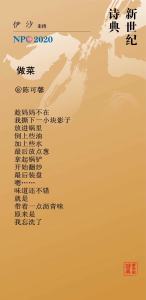
KOCHEN

Wenn Mama nicht da ist
reiß ich ein kleines Stück Schatten ab,
gebs in die Pfanne.
Ein bisschen Öl drauf
dann ein bisschen Wasser,
als letztes Schnittlauch,
dann mit dem Kochlöffel
drehen und wenden,
am Schluss auf den Teller.
Mhm…
Schmeckt nicht schlecht!
Nur halt
ein bisschen nach Asphalt,
hab vergessen
ihn vorher zu waschen.

Übersetzt von MW im Februar 2020


KOCHFRAU – 宋雨

1月 21, 2018

Song Yu
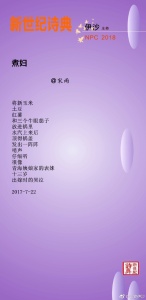
KOCHFRAU

Frischen Mais,
Kartoffeln,
Süßkartoffeln
und drei Rindsaugen-Melanzani
geb ich in einen Topf.
Dampf steigt auf, dann
kommt der Deckel drauf.
Ein Pfeifen,
ein paar mal.
Wenn ich genau zuhör,
ist es wie
bei der Großtante in Qinghai die Kusine,
13 Jahre alt,
bei der Hochzeit geweint hat.

22. Juli 2017

EGGSHELL RICE POTS – 摆丢

9月 21, 2015

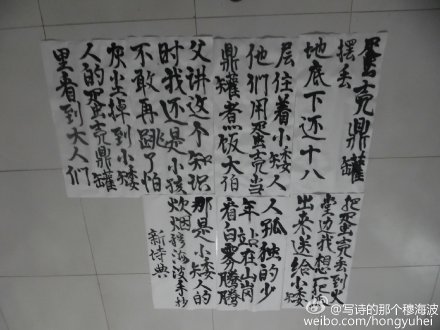
Bai Diu Handschrift Yi Sha pin Bai Diu Bai Diu eggshell pots

Bai Diu
EGGSHELLS FOR POTS AND PANS

there are 18 floors under the earth
full of dwarfs who use eggshells
for pots and pans to cook food
when my uncle told me this “knowledge”
I was a kid. Didn’t dare to jump anymore
otherwise dust would get into their pots
when I saw grown-ups throw eggshells to the fire
I wanted to grab back a handful
and give them to the little people

lonely young person stands on a mountain
looks at rising white mist
must be the dwarfs’ kitchen smoke

Tr. MW, Sept. 2015

Bai Diu etc