Posts Tagged ‘universe’
12月 18, 2024
Zhang Wenkang
STRICK
Viele Menschen mögen Pferde,
ich auch.
Viele Menschen mögen Bäume,
ich auch.
Viele Menschen möchten ein Pferd
sanft und still an einem Baum.
Ich nicht.
Übersetzt von MW im Dezember 2024
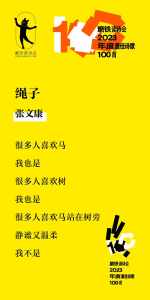
磨铁诗歌奖·2023年度最佳诗歌100首|张文康《绳子》入选理由:张文康是哲学专业的,思辨能力很强,对诗的掌控力也很强。这首诗的结构非常巧妙,慢慢将读者带入诗人的思维之中,最后的“我不是”,是思维的断裂处,也是诗性的爆破处。题目是《绳子》,绳子作为一个隐藏的意象,把这首诗的诗性固定住了,绳子的另一端,被诗人紧紧握在手里。(磨铁读诗会 / 方妙红)
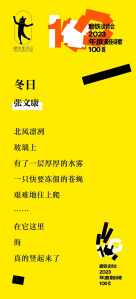
磨铁诗歌奖·2023年度最佳诗歌100首|张文康《冬日》入选理由:最后三行真漂亮,而且是突然出现如此漂亮的三行,令人先是猝不及防,继而击节叹赏。极其精彩的比喻,令整首诗骤然陡峭峻拔。这种突然感太重要了,如果只是精彩的比喻,而不够突然的话,就没有这么好的艺术效果了。年轻诗人张文康的意象能力令人印象深刻。这是一首可以让人想起瑞典诗人特朗斯特罗姆的诗。(磨铁读诗会/沈浩波)
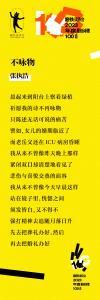
磨铁诗歌奖·2023年度最佳诗歌100首|张执浩《不咏物》入选理由:一首以“不咏物”为题的带有古意、饱含真情的诗。当悲伤和喜悦都达到了顶点,文字传达的情感就全是自然流露,也无需托物言志了。诗人的语言张弛有度,节奏跟着语言一张一缩,仿佛能听到诗人紧张的心跳声。“先去把葬礼办好,然后 / 再去把婚礼办好”,最后两行掷地有声,诗人用最平实的语言托起了全诗的情感重量。(磨铁读诗会 / 方妙红)
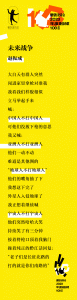
磨铁诗歌奖·2023年度最佳诗歌100首|赵振成《未来战争》入选理由:个体到底属于哪个群体,赵振成并没有给出答案,却用这首诗唤起了我们的思考。身份政治的斗争在人类社会中从未平息,本诗步步推进,从国籍、大洲到星球,最后却因为所属街道的不同照样打了起来。飞扬、谐趣的想象中却又包含深思的隐喻,一首好诗同时也是一则寓言。(磨铁读诗会/胡啸岩)
Xiron Poetry Club
标签:allegiance, animals, country, 磨铁读诗会, death, earth, 赵振成, funeral, group, horse, horses, life, marriage, philosophy, quality, society, street, tree, trees, universe, war, Zhang Wenkang, Zhang Zhihao, Zhao Zhencheng, 张执浩, 张文康
发表在 1960s, 1970s, 1980s, 1990s, 2000s, 2010s, 2020s, 20th century, 21st century, December 2024, Middle Ages, poetry, Translations, 沈浩波 | Leave a Comment »
10月 22, 2024
Xiao Xiao
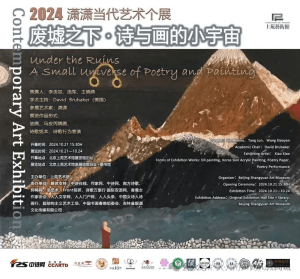
废墟之上
一一献给2024留守上苑的艺术家们
潇潇
这里,废墟之上
曾是艺术的展览馆
每年,它的墙上都挂满
来自诗人艺术家
灵魂的海阔天空
一一诗与画的小宇宙
六月,在突突突的震耳轰鸣中
被吞没,坍毁
它成为七月的
废墟难以置信,杂草、焰火
与有毒的曼陀罗
在废墟上疯长,开花
犹如呼吸尘土飞扬
后留守的我们此刻,
十月二十一日下午三点半
站在上苑艺术馆的遗址上
致敬!诗与艺术
还有一个名字叫不死
2024年10月
注:2024年留守上苑艺术馆的艺术家:李念奴、詹明昭、石详宇、刘冰凌、韦安、汤军、潇潇、姚丽双、罗应龙、段维国、布木布泰、禾子、赵家漩、李海英、朱鹏飞、孙榕宁、王晓燕、张宗希、芳华、何戚明、道日娜、涂海燕、孟志、行云、维马丁(奥地利)Goran Stakic(塞尔维亚) 、David Brubaker(美国)。
潇潇诗与画作品系列:
潇潇《哀歌》2020年12月布面油画60cmX90cm德语、英语译者: 维马丁 Martin Winter
Xiao Xiao
AUF DEN RUINEN
– für die verbliebenen Künstlerinnen und Künstler von 2024 im Shangyuan Art Museum
Hier auf den Ruinen
war eine grosse Ausstellungshalle.
Jedes Jahr hing drinnen ein Universum
aus Bildern, Skulpturen, Gedichten,
aus den Seelen der Menschen.
Unter ohrenbetäubendem Donner im Juni
wurde die Kunst verschluckt und zerstört.
Seit Juli wuchert auf den Ruinen
Tollkraut, giftige Blüten
und in der Nacht Lagerfeuer.
Wir sind im fliegenden Staub geblieben
und stehen hier am 21. Oktober um 3:30 Uhr
auf den Ruinen des Shangyuan Art Museums
und salutieren! Kunst und Poesie,
sie werden so leicht noch nicht sterben.
Oktober 2024
Übersetzt von Martin Winter im Oktober 2024
Die verbliebenen Künstlerinnen und Künstler von 2024:
Li Liannu, Zhan Mingzhao, Shi Xiangyu, Liu Bingling, Wei An, Tang Jun, Xiao Xiao, Yao Lihua, Luo Yinglong, Duan Weiguo, Bumubutai, Hezi, Zhao Jiaxuan, Li Haiying, Zhu Pengfei, Sun Rongning, Wang Xiaoyan, Zhang Zongxi, Fang Hua, He Qiming, Dorina, Tu Haiyan, Meng Zhi, Xing Yun, Martin Winter, Goran Stakic, David Brubaker
Xiao Xiao
ON THE RUINS
– for the remaining artists at Shangyuan Art Museum in 2024
Here, on the ruins,
there used to be an exhibition hall.
Every year, the walls inside
were crammed with pictures, sculptures, poetry
from the souls of people,
a small universe.
Come June, this tall building
was swallowed and chewed
in an earsplitting racket
and by July these ruins
were growing with jimsonweed,
poisonous flowers, and fires at night.
We who remain have been breathing dust,
and now we stand here,
on October 21 at 3:30 pm,
on the remains of Shangyuan Art Museum
to salute you! Poetry and art,
here is a name that refuses to die.
Translated by Martin Winter in October 2024
The remaining artists at Shangyuan Art Museum in 2024 are:
Li Liannu, Zhan Mingzhao, Shi Xiangyu, Liu Bingling, Wei An, Tang Jun, Xiao Xiao, Yao Lihua, Luo Yinglong, Duan Weiguo, Bumubutai, Hezi, Zhao Jiaxuan, Li Haiying, Zhu Pengfei, Sun Rongning, Wang Xiaoyan, Zhang Zongxi, Fang Hua, He Qiming, Dorina, Tu Haiyan, Meng Zhi, Xing Yun, Martin Winter, Goran Stakic, David Brubaker
标签:art, artist, artists, building, community, 维马丁, death, demolishing, demolition, dust, exhibition, exhibitions, expression, life, Martin Winter, museum, painting, performance, performing, plants, poet, poetry, ruins, sculptures, Shangyuan Art Museum, universe, violence, work, Xiao Xiao, 潇潇
发表在 Uncategorized | Leave a Comment »
6月 27, 2024

IN THE MUSEUM THAT IS
BEING DEMOLISHED
Here and Vienna,
two different planets.
Here and Beijing,
two different planets.
Here and the mountains
or even the neighbors,
two different planets.
Although to the neighbors
there are some relations
closer than being
in the same solar system.
MW June 2024
这里跟维也纳
是两个星球
跟北京市
两个星球
跟这里山上
甚至跟邻居
都两个星球
虽然邻居
都有很多
比同一个太阳系
更密切的
联系
2024.6.26
MOON
This is Monday.
Last night the moon
was full and had sleep.
Although after dark
they went on demolishing.
Walking to Pingyifen
at nine o’clock
we still got noodles.
Walked back, went to sleep.
At three thirty or so
dawn was beginning.
One hour later
I crawled out of bed.
Took a shower at five
and there was water!
Around six
they went on digging.
Walked down to the basement,
there was no power.
Walked to the library
with the water heater
with ground coffee
and the French press.
The library has Wifi.
I was beginning
to get back my spirits.
Then we went out
to have a picnic
under some trees.
At around eleven
you could feel the heat.
There were some clouds,
just like a Sunday.
MW June 24, 2024
月
是星期一
昨晚月满
难得安静
天黑以后
他们还拆
去平义分
九点多了
还能吃面
走回去睡
三点半醒
天慢慢亮
到四点半
可以起床
五点洗澡
还好有水
六点左右
又继续挖
去地下室
地下停电
去图书馆
带热水壶
带咖啡粉
带过滤器
可以上网
慢慢开始
恢复精神
跟朋友去
树下野餐
到十一点
有一点热
偶尔有云
像星期天
2024.6.24
标签:art, demolishing, demolition, moon, museum, neighbors, people, planets, Shangyuan Art Museum, sun, time, universe
发表在 1950s, 1960s, 1970s, 1980s, 1990s, 2000s, 2003, 2007, 2010s, 2020s, 2023, 2024, 20th century, 21st century, Antique times, April 2023, April 2024, August 2023, First Emperor, May, May 2023, May 2024, Middle Ages, October 2023, poetry, song & dance dynasty, Translations | Leave a Comment »
8月 7, 2022

Lu Fuxiang
GEBROCHENE ZEILEN
Ich hab immer gesucht
zwischen den Zeilen,
wo etwas bricht.
Was sich da verbirgt
in einem Gedicht,
was sich da verwandelt,
ist das ein Schmerz
von splitternden Knochen?
Die rasende wirbelnde Kraft eines Wasserfalls.
Die Spuren der Sterne, wie sie sich drehen.
Die Evolution, die Geschichte der Menschen, der Dinge.
Oder nur ein Krachen, das ich aufschreib,
solang ich noch kann.
Übersetzt von MW im August 2022

Lu Fuxiang
BROKEN LINES
I have been exploring
breaking points
in a poem,
what is hiding
between phrases.
How a sentence changes tone,
are there any bones
cracking with pain?
The force of rushing waterfalls,
how the universe moves and the stars in their tracks.
People evolving and other things.
Or just a crisp sound I write down
before my last breath.
Translated by Shi Jian and Martin Winter
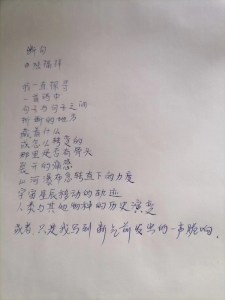
《新诗典》小档案:陆福祥,1985年8月14日生于广西南宁,壮族,《新世纪诗典》诗人。
伊沙:我有一个看法:能够在诗写中发现诗的人,都是在诗中用心很深的人,这是一个专业程度的表征。本诗告诉你,陆福祥正是这样的人,作为一名后起的85后,他是实力诗人。
况禹点评《新诗典》陆福祥《断句》:“小”处入手,深挖、大开,于具体中见宏大,且富有形式感。是一首彰显作者内力的佳作。
标签:body, bones, break, breaks, evolution, 陆福祥, history, lines, Lu Fuxiang, memory, NPC, pain, path, people, phrase, sentence, sentences, stars, universe, verse, water, waterfall, 新世纪詩典
发表在 1980s, 1985, 1990s, 2000s, 2010s, 2020s, 2022, 20th century, 21st century, August 2022, Middle Ages, NPC, poetry, Translations, 新世纪诗典 | Leave a Comment »
8月 29, 2021
Yan Li
ECHO
Kleine Wege im Wald sind kompliziert.
Alle gehören zu ihrem Teil im All.
Ich glaub, was ich gesagt und getan hab,
bringt sicher viele Arten von Echo.
Darunter sind auf jeden Fall
Parolen, Gebete und Heulen,
aufsteigend und niederfallend.
Apropos Echo,
jedesmal, wenn die Menschen metaphysisch
Vorfrühling als Idee ans Jahr übergeben,
kommt hehres Rezitieren von Versen zurück.
Es ist nur,
der physische Stein, den sie vor unserer Zeitrechnung
in die Tiefe geworfen haben,
ist 2021 noch ohne Echo.
2021-03-21, Internationaler Tag der Poesie
Übersetzt von Martin Winter am 29. August 2021

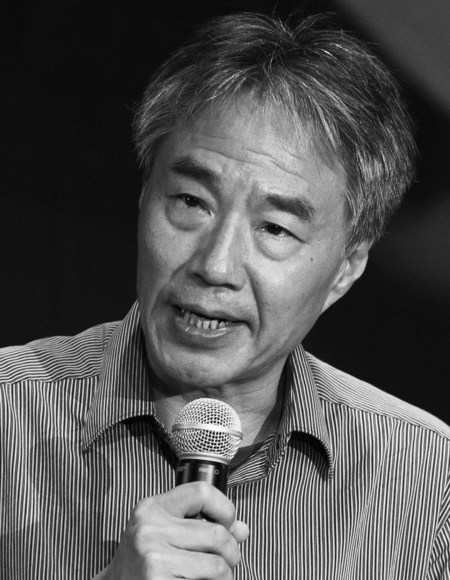
新世紀詩典作品聯展:嚴力(26)

伊沙推荐:为什么诗人作为文学家的那一面是需要反复强调的?而作为思想家的这一面则强调得少?因为后者大诗人才需要。尤其是当"事实的诗意"确立之后,当代诗人们的综合思辩力集体下降了,严力又一次凸显出来,形象的思辨本来就是他的强项,本诗在思考疫年之中诗歌存在的意义,在8月下半月推荐诗中当居亚军。
况禹点评《新诗典》严力《回声》:思辨型作品通常分为两种:一种是装在语言的套子里,看着挺深奥,实则空话一堆;一种是用明白话思考、辨析道理。严力的作品属于后一种。他的诗还有一个特色——能把抽象的词语、术语当作形象来写。这在当代汉语诗里,也属于别无分号。
黎雪梅读《新世纪诗典》之严力《回声》:关于形而上和形而下的关系,汉唐以来的哲学家们展开了长期的争论,王弼派玄学家和宋明时期的理学家都认为形而上的东西先于并决定形而下的东西。而在文学界却很少有这样关于二者的思辨,本诗从诗人的个人经验出发,进行了纵深的思考,这也必将引发更多人的关注和反响。无数的事实证明,形而下的东西随着的时间流逝迟早会灰飞烟灭,哪怕就是坚如磐石也会化为沙砾。而形而上的东西作为人类的意识对物质的反映,如同大山里喊了几嗓子总是会不断有回声传来。诗人以形而上的诗歌产生的回声,与形而下的坚硬石子“公元前扔进深度洞的/2021年依然没有回声”进行对比,印证了只有诗歌才有回声,这“回声”便是诗歌存在的意义与价值,它不会被时间冲淡,只会代代相传历久弥坚,而创造这一奇迹的就是诗人及他们的创作。

Calligraphy by Huang Kaibing
简评严力《回声》|雪也
第一节诗人设置的环境是林中的小径,“我”的言行举止,传来回声,这回声包括“口号”“祈祷”和“嚎叫声”。第二节,由个体的“我”上升到人类。人类把初春递给岁月,会传回“诗歌朗诵”,这是形而上的。公元前某日某人扔的石子,直到2021年依然没有回声。这是形而下的。“形而上者谓之道,形而下者谓之器”,所以第二节诗人又运用了对比的手法。整体来看,作为画家的诗人,又带来很鲜活的画面感。在2021年国际诗歌日,诗人来写“回声”,注定隐藏了诗人的喜好、思考和一定的张力。
黄开兵:写字,难在克服惯性书写。写诗应该更是!天天训练,目的在于写得更好,但形成惯性,又容易写得油滑。主持人所说:思辩,乃行家言语!

Calligraphy by Huang Kaibing
马金山|读严力的诗《回声》的十一条:
1、诗歌照见到了另一个自己,另一个自己又是无数个人;
2、世间最美好的事情,莫过于拥有诗歌与善良的心灵,还有真正的三两个知己;
3、严力,诗人、艺术家,1954年生于北京。1985年留学美国并于1987年在纽约创立“一行”诗刊,任主编(2000年停刊),2020年6月复刊为一年两期的上、下半年刊。2018年出任纽约“法拉盛诗歌节”主任委员,同年出任纽约“海外华文作家笔会”会长;
4、严力,是一位老诗人,是足见格局和才华的大诗人,而且通过各方面的关注,其还是一位值得珍视与尊重的人,更是一位颇具实力与素养的艺术家;
5、严力的诗,是时代的声线,是生命的强劲之力,是思想的重要表现,还是深刻而饱含情感纯度的存在,淳厚且足见功力;
6、诗中语言通感十足,浑厚有力,所包含的内容和精神状态全部集中其中,是行为本身,还是内外相间的弦外之音;
7、诗里行间,此起彼伏的声响激荡着的除了思维的碰撞与交融,丰富而多彩的人生经历,既是时代的强劲之音,还是世间的本真之情;
8、从形而上,到形而下,皆构成了由时间到空间,再从现实到精神层面的延伸,传递出浓烈的思辩力和智慧性;
9、无论是从思想的纵深推进,还是诗艺的横向延展,都透着浓浓的内心感受,是意识的觉悟,还是人性的坦露;
10、本诗给予诗人的启示:“诗的丰富性,在于形象与本真”;
11、智慧之诗,时代之诗,思辩之诗。

Calligraphy by Huang Kaibing
标签:behavior, complicated, deeds, echo, history, howl, idea, ideas, memory, paths, poetry, prayer, rock, slogans, sound, sounds, spring, stone, thinking, time, universe, woods, words, Yan Li, 新世纪詩典, 严力
发表在 Uncategorized | Leave a Comment »
8月 11, 2021
Li Xiaoxi
SCHÄDLINGE
Das Universum ist ein Riese
Die Erde ist sein Mund
Die Häuser sind seine Zähne
Wir sind die kleinen Schädlinge
Übersetzt von MW im August 2020
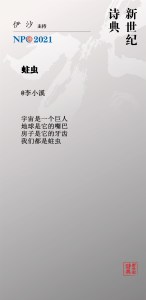

伊沙推荐:李小溪,久违了。00后+10后诗人,读书、成长更重要,只要这二者做得好,就是好的,写作来日方长。本诗写得好,比大多数成年诗人,深刻得多,本质得多,又很形象。
况禹点评《新诗典》李小溪《蛀虫》:想象独到。估计不少人会欣赏第四行的“蛀虫”,但我更欣赏第二行(如果不写“嘴巴”而写“嘴”可能会更好),这种想象跳出了大人(或大人教给孩子们)的逻辑。
黎雪梅点评《新世纪诗典》之李小溪《蛀虫》:哈哈,读完仍不住笑了。我们都是蛀虫,多么新奇的想象,才会有如此新鲜的比喻,纯真的童心水晶般透明,诗句却不乏逻辑富有条理,个性化的语言彰显的是自由的思想和不羁的灵魂。

Calligraphy by Huang Kaibing
马金山|读李小溪的诗《蛀虫》的十一条:
1、在诗里行间,写出内心世界里想象中的真实,是一件既惊喜又震撼人心的事情;
2、归根结底,诗就是一个人内心世界里的真实写照,更是情景与情感的碰撞和交融;
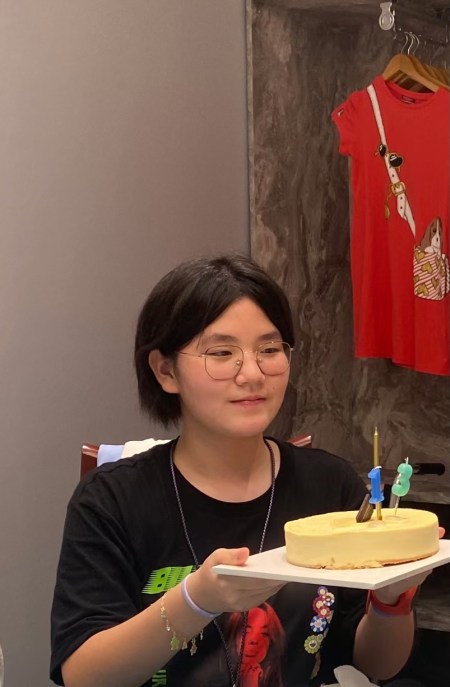
3、李小溪,本名李雨萱,2008年7月28日出生,4岁写出人生第一首诗《雪花》,曾被选为“中国诗歌春晚福娃”。诗歌多次入选《新世纪诗典》等; 2016-2017荣获第二届、第三届“当代小诗人奖”;
4、李小溪的诗,给人一种深刻的感受,那是一种事物之中暗含某种充满活力的气息,且饱含想象空间的大胆与真实,并给人带来巨大的思想波动力;
5、本诗短短四行,三种事物从形状到不同的层次,都形象而且物体清晰,这些排比与现实之间的比喻,质地细腻而富有创意,而结尾又回到了人的身上,可谓深彻而又丰富;
6、从结构来看,诗以总分总的形式呈现,即一开头就将宇宙作为一种人的感觉存在,直观而大胆;
7、诗中由空间到人,再由人到具体的部位,在几种不同的角度下,构筑成一个完整的世界,对应的事物不同,其中所迸发出来的效果完全不同;
8、而最后把人变回想象中的一种状态,不仅独特,而且在某种程度上,还有一种特殊的意味感;
9、标题以自嘲的形象作为一个具体的事物,且以此作为最本真的样子,塑造感极具色彩;
10、本诗给予诗人的启示:“想象力,永远是诗歌至关重要的元素之一”;
11、想象之诗,空间之诗,本真之诗。
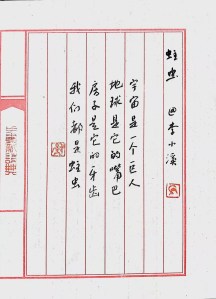
Calligraphy by Huang Kaibing

Calligraphy by Huang Kaibing
标签:animals, child, children, earth, giant, houses, Li Xiaoxi, mouth, NPC, pest, teeth, universe, 新世纪詩典, 李小溪
发表在 2000s, 2008, 2010s, 2020, 2021, 20th century, 21st century, August 2021, Middle Ages, NPC, poetry, Translations, Uncategorized, 新世纪诗典 | Leave a Comment »
7月 19, 2021

Wu Yulun 吴雨伦《家门口的陨石店》
METEORITENLADEN IM HAUS
Unten im Haus von meiner neuen Wohnung
gibt es ein Meteoritenmuseum
wo sie Steine versteigern.
Ein Meteorit, braun, groß wie ein Kühlschrank,
hat tausende Lichtjahre hinter sich,
ein toter Brocken
verstreuter Sternenstaub,
angeschrieben für
1, 8 Millionen Yuan.
Sein Bruder,
ein abgetrennter
Sternensplitter,
verarbeitet in ein Jadearmband:
Rufpreis zweitausend.
Übersetzt von MW im Juli 2021
 伊沙推荐:我与作者同时到过本诗现场,他有诗,我无诗,这说明写得再多的人也有无感的时刻,写得再少的人有感之时也是无可替代。作者仍处于学龄,并准备以影视为职业,在诗上走量少而质优的道路,我一直是支持的。
况禹点评《新诗典》吴雨伦《家门口的陨石店》:天体残留物与人间商业对撞,迸发出怪异的感觉。但这不是想出来的,依然属于生活的诗意。本诗的与众不同来自于诗意发掘的角度。作者有一阶段对科幻情有独衷,相信这也是本诗把陨石店写得这么带感的原因之一。
黄开兵:即使是来自同一个地方,甚至同胞兄弟,有的飞黄腾达,有的失意潦倒。“大人物”之大,“小人物”之小,亦如这天外来客乎?
读吴雨伦的诗《家门口的陨石店》有感 | 亚黎
来自外太空的陨石
就在家门口
这本身就有一种神奇感
相信宇宙里还有
别的智慧生命
只是与我们隔的光年太过遥远
互相看不见
或人家比我们高级很多
路过
而不加理会我们
作者诗中的陨石被以兄弟相称
这种生命的赋予仿佛一下子
拉近了地球人与外太空的距离
无独有偶
我昨晚梦见自己带着一只
通人性的猴子
在一个蓝色星球的雨林里赶路
头顶是一片奇形怪状的星际
伸手触摸不到
目测距离又不是很远
2021.7.18
标签:auction, death, dust, home, life, meteors, museum, NPC, objects, people, poetry, price, rocks, shop, stars, Stones, things, trade, universe, Wu Yulun, 吴雨伦, 新世纪詩典
发表在 1990s, 2000s, 2010s, 2020, 2021, 20th century, 21st century, July 2021, Middle Ages, NPC, poetry, Translations, 新世纪诗典 | Leave a Comment »
12月 25, 2019

STAR WARS
(Star Wars 9 & Toy Story 4)
The heartbreaking thing
about Star Wars
is when the rebels
have won
and survived
or at least most of them
or some of them
or at least some that you like
and you’re all happy
and you go home
and it really was a good ending
and you go to bed
and the next day
there is your life.
Has the universe changed
since the 1970s of our era?
Or since Jesus Christ
turned bread into fish?
Come on, give the Baby a break,
it is Christmas.
There will be life
and there will be movies.
There’ll be things to fight for,
and evil overlords.
And something beyond.
And some new toy
maybe made out of trash
will ask a companion
how am I alive –
and will hear –
I don’t know.
MW December 2019

标签:bread, Christmas, fish, food, heart, history, Jesus, life, memory, movies, peace, people, poetry, rebels, religion, revolution, stars, time, toys, universe, war
发表在 1970s, 1980s, 1989, 1990s, 2000s, 2010s, 2019, 2020, 20th century, 21st century, December 2019, Middle Ages, poetry, Uncategorized, Warring States | Leave a Comment »
7月 28, 2018
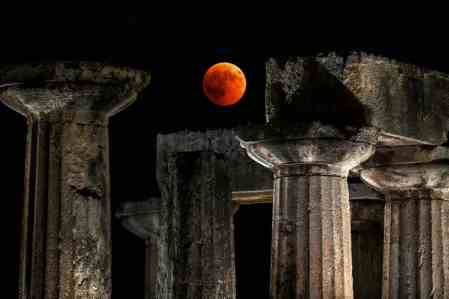
The full moon sits over the temple of Apollo in Corinth, Greece. Photograph: Valerie Gache/AFP/Getty Images
国际月亮满和不满
昨天是月食。
听说整个歐洲都看得见,
除非有云。
我们楼一些邻居一块上屋顶看看,
還带各种望远镜,
包括能站的, 很大的。
火星相当大ͺ 红。
月亮用望远镜看得見细节,
像看到地图。
还看到ISS国际太空站。
主要是邻居一块出来看月亮,
很多人外面也出来看。
而前天晚上还是普通的满月。
中国奥地利都一样圆,
每个小地方,
除非看不见。
每次看还是感觉难得。
而且不满其实一样,
每一个人看都不同。
晚上的星星,
白天的云彩
有机会看
同样难得。
2018/7
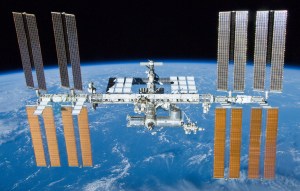
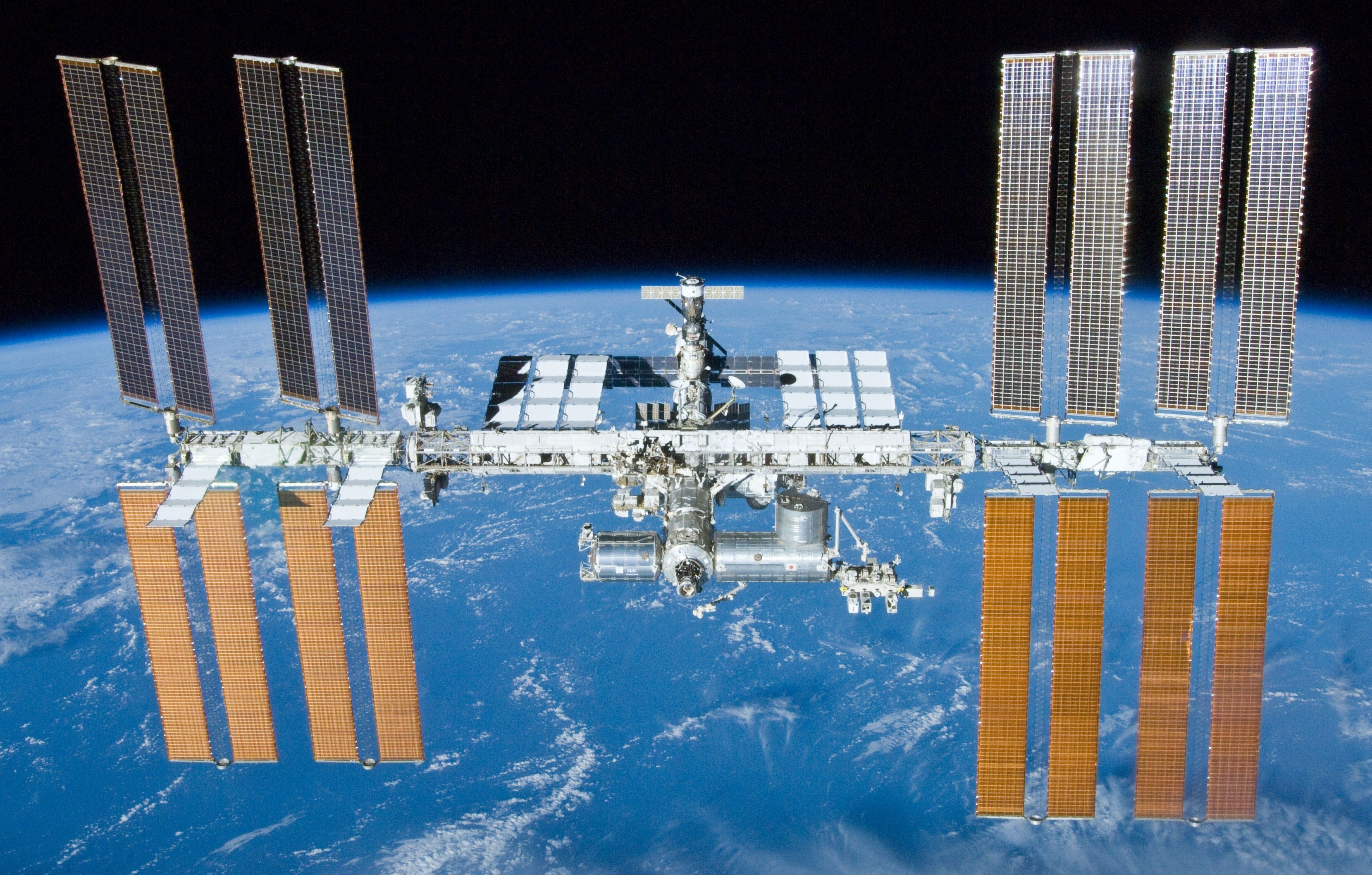
International_Space_Station_after_undocking_of_STS-132
标签:austria, building, china, earth, Europe, home, international news, international relations, life, light, Mars, moon, neighbors, poetry, sky, stars, universe, Vienna
发表在 2018, 20th century, 21st century, July 2018, poetry, Uncategorized | Leave a Comment »
3月 29, 2017

MOSTLY HARNESS
i mostly harness
the universe
and also the other way
a win-win situation
MW March 29th, 2017
标签:language, life, literature, poetry, situation, universe, weather
发表在 2017, March 2017, poetry, Uncategorized | Leave a Comment »
7月 18, 2015
Yi Sha
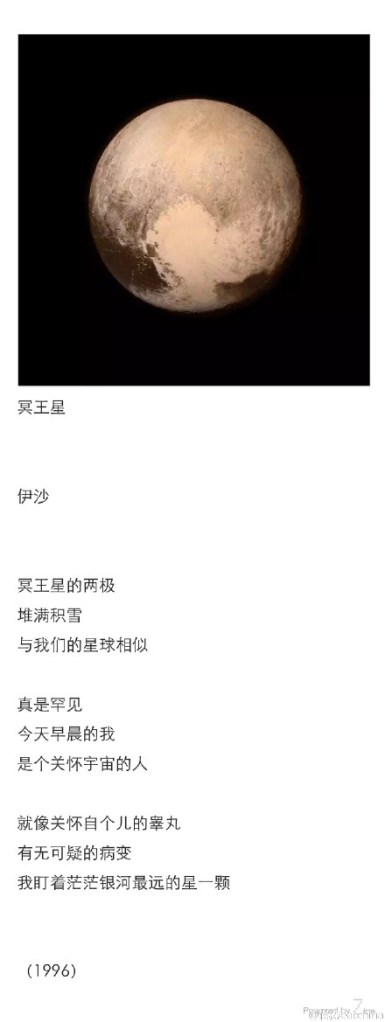
PLUTO
vast stores of snow
on pluto’s poles
just like on our earthball
a rare occurrence
this morning
I care for the universe
just like a man cares for his balls
looks if there’s any cause for alarm
I am gazing far into the milky way
1996
Tr. MW, 2015
Yi Sha
PLUTO
die pole des pluto
voll schnee und eis
fast wie bei unserem eierplaneten
ein seltenes gefühl
heute morgen
denke ich an unser universum
so wie jemand an seine eier denkt
ob es gefährliche anzeichen gibt
so starr ich ganz weit weg in die milchstraße
1996
Übers. v. MW, 2015
标签:amass, ball, balls, earth, Pluto, pole, snow, star, stargazing, universe, yi sha, 伊沙
发表在 1996, July 2015, poetry, Translations, Uncategorized, Yi Sha, 伊沙 | Leave a Comment »
6月 28, 2013

Frankfurter Allgemeine Zeitung 2013-06-27 page 25
Yi Sha
THANK YOU, FATHER
under mao zedong
we had starry nights
we had vast starry skies
people lifting their heads
one summer night
it was father and i
father told me
about the universe
about a cosmonaut
yuri gagarin
flying in space
my mouth stood open
like a barn door
thank you, father
my heavenly father
in a dark corner
of north korea
measuring 9,600,000
square kilometers
among hundreds of millions
malnourished blockheads
i was the smartest
did not see the future
but i saw space
2003
Tr. MW, 2013
Shenzhou 10 news videos (BBC)

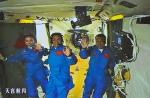
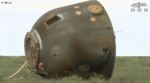
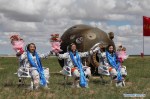
《感謝父親》
伊沙
毛澤東的時代
也有浩瀚的星空
也有星空下
翹首仰望的人民
那個夏夜
是父親和我
他告訴我
太空的存在
和一個叫做
加加林的
天外飛人
叫我嘴巴
張得老大
感謝父親
你就是我的上帝
讓我在九百六十萬
平方公里的北朝鮮
黑暗王國的一角
成為數億
營養不良的傻兒中
最聰明的一個
看不見未來
但看見了太空
2003
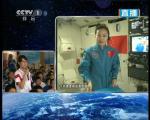
Wang Yaping 王亞平 teaching from space
Concentrating on private impressions and conversations in published poems is self-evident for many, maybe for most people who read, write, translate, edit such stuff. But China, and also Taiwan to a certain extent, have put into question art, books, beauty, skills, traditions, language- anything had to serve the Party, and what the Party couldn’t use could not exist. Capitalism does it too, everything that doesn’t pay, that we can’t finance, cannot remain. They get along splendidly, finance and centralized state, Mao and the Mammon. That’s how the modern world was developed.
腳下是隱形的塵土和古蟒的灰燼。/父親拿著鐵棒,問我:“你怕不怕?”/哦,我抬起頭來,獵戶星座在中天閃耀,/空中傳來千秋的微響——/那無聲垂落的,是流星,還是一道道藍色的鞭影?
“Beneath our feet, we couldn’t see through dust and ash, rank growth of old. Father holding his iron staff, asking me: ‘Are you afraid?’ Oh, I raised my head, Orion sparkling right in the middle, space reverberations sounding from eons– falling silently, are those meteors, one blue whiplash after the other?” 流星記事, Meteor Account, or Meteor Accounts, by Zhu Fengming 祝凤鸣 (Oct. 1996). Nick Kaldis just showed me his translation of Meteor Account, from a dozen Chinese poems in the magazine Dirty Goat (#24 February 2011).The quote above is in my own translation, I couldn’t resist. Rank growth of old – 古蟒 or 古莽? Nick Kaldis thinks there might be a misprint. (“古蟒 would refer to a snake known from fossil remains, the Paleopython, while 古莽 refers to rank grass.”). 祝凤鸣,男,1964年生于安徽宿松县… Zhu Fengming (born 1964) is a geologist from Anhui.
《流星記事》
祝鳳鳴
有一次,丘崗夜色正濃,二月還未清醒,
我踏著回家的羊腸小徑,在山坡
白花花的梨樹下,碰見鄰村
淒涼的赤腳醫生,面孔平和。
“剛從李灣回來,那個孩子怕是不行了。”
他說,藥箱在右肩閃著棗紅的微光。
路邊的灌叢越來越黑,細沙嗖嗖——
我們站在風中,談起宅基,柳樹,輪轉的風水。
陰陽和天體在交割,無盡的秘密,使人聲變冷,
“……生死由命。”這時,藍光一閃
話語聲中,一群流星靜靜地布滿天空﹔
還有一次,我和父親走在冬月下
曠野的一切彷彿在錫箔中顫抖。
腳下是隱形的塵土和古蟒的灰燼。
父親拿著鐵棒,問我:“你怕不怕?”
哦,我抬起頭來,獵戶星座在中天閃耀,
空中傳來千秋的微響——
那無聲垂落的,是流星,還是一道道藍色的鞭影?
The existence of space. Of God(s). Yin-yang, fengshui. Existence of wonder. Or the other way, wonder of existence. Outside the Party. Very much among the common people on the other hand, in the countryside, barefoot doctors, and so on, in the rest of Zhu Fengming’s poem.
Yes, 蟒 (mang3) may be a misprint for the homophonous character 莽 (mang3). 古莽之國, the ancient uncultured state. The Book of Liezi.
古莽之國,出《列子周穆王第三》,屬迺古三國。三國者何也?古莽之國、中央之國、阜落之國也。蓋處天地之外、神話之中,事未可徵,史未可考。古莽之地,陰陽不交,寒暑不辨;民不衣不食而多眠,五旬一覺,而以夢為真,真為妄也。
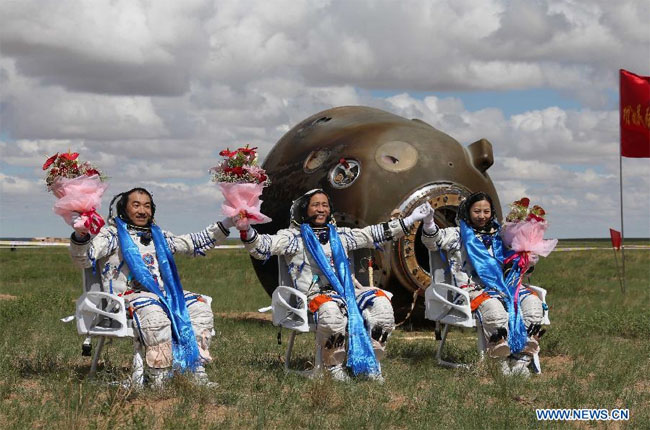
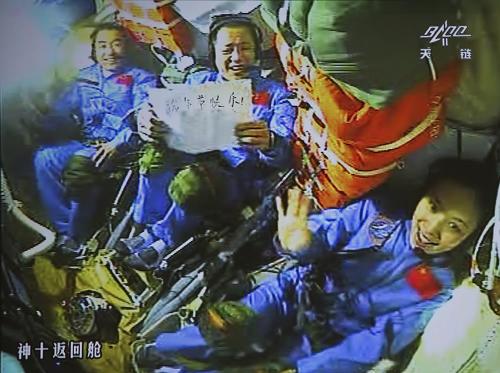
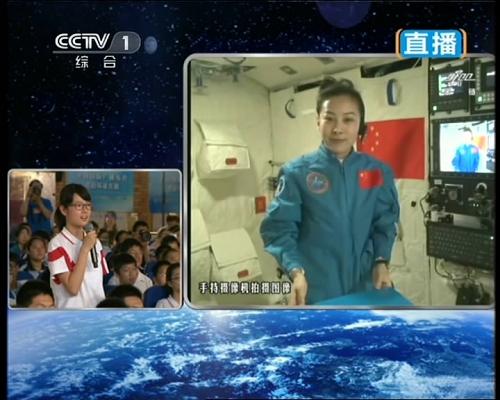
(Wikipedia)Space, spaceflight. A great achievement. “Sister killed her baby ’cause she couldn’t afford to feed it we are sending people to the moon.” Prince, Sign o’ the Times. Really, I think they should have written more about this in the international papers. Yes, it worked, no-one died, Wang Yaping 王亞平 teaching from space, tens of millions watching and listening to her. A great leap, a giant leap, really. Responsibility, great responsibility. How many things could go wrong, in space, for the nation. Planning everything, the very opposite of wu wei. That’s how the famine came. No space for real wondering. Everything organized, all propaganda, all of the nation. They are planning, they have begun to move hundreds of millions more to the cities. Destroying small farms, villages, settlements, temples. Like they destroyed the ancient cities.
They should write about spaceflight, every time. I have to get back to my daughter. Show her the videos from Shenzhou 10.
标签:1960s, china, education, heaven, heavenly father, literature, north korea, nutrition, poetry, shenzhou 10, sky, space, spaceflight, stargazing, stars, taikonauts, universe
发表在 June 2013, Translations, Uncategorized, Welcome! | 1 Comment »
5月 31, 2012

Hsia Yü
Mit einem Korb Obst
An diesem Tag ging ich an einen Ort und jemand sagte mir, ich solle nicht mehr kommen. Ich sagte ihm, das wolle ich auch nicht. Jemand wird gehen, das ist etwas Anderes. Zurück in meiner Mietwohnung kochte ich einen Fisch. Ein Freund kam zum Essen. Nach dem Fisch gestand er, es gehe ihm schlecht. Er verlor seinen Job und verpasste einen Zug in den Süden auf der Suche nach Arbeit. Diese Jobs verbrauchen Kraft, Geist und Licht, verbrauchen alles, was da ist, sagte er. „Dann zahlst du in Raten, kaufst ein Haus, einen Wagen, findest eine Frau. Ihr kriegt einige Kinder, geraten sie zu sehr nach dir, ist es peinlich, geraten sie gar nicht nach dir ist es ebenso peinlich.” Wir besprachen den Unterschied zwischen Vermieter und Mieter. Dann taten wir es. Er fragte wieviele Liebhaber ich habe und was bei ihm anders sei. Ich sagte „Quatsch, natürlich bist du anders.” Er bestand darauf und fragte inwiefern. Ich sagte: “Du bist einfach anders. Aber wenn du unbedingt wissen willst was bei dir anders ist, dann muss ich dir sagen, du bist gar nicht anders.” „Ich hab’s ja gewusst”, sagte er. „Du erwartest einfach das Schlimmste”, sagte ich. „Genau, dann habe ich Ruhe”. Wir sahen zusammen ein Video, die kleine Meerjungfrau. Als Arielle ihre Stimme verlor, weinte er. Wir spulten den Film immer wieder zurück und sahen unsere Lieblingsabschnitte. Außerdem kochten wir noch einen Fisch und aßen ihn auf. Ich legte Tarockkarten, um zu sehen, ob er eine Arbeit finden und was aus uns werden würde. „Du findest keine Arbeit”, sagte ich. „Aha, keine Arbeit?” „Genau, du brauchst es gar nicht versuchen.” „Na was mache ich dann?” „Du machst gar nichts, dann hast du mehr Ruhe”, sagte ich. „Werden wir heiraten?”, fragte er. „Nein”, sagte ich. „Die Karten stimmen nicht. Wie soll ich wissen, ob sie recht haben?” „Du weißt es nicht, ich kann es dir auch nicht sagen.” „Warum glaubst du dann daran?” „Genau in der Sekunde, in der ich die Karten lege, sind alle karmischen Beziehungen seit Anbeginn von Himmel und Erde von selbst auf einmal ausgerechnet.” „Hör auf mit deinem Universum”, sagte er. Wäre das Universum nicht so beschaffen, sagte ich, säßen wir nicht hier und spielten Karten. Außerdem habe ich es ein bisschen satt, ich wolle umziehen. „Dann frag die Karten, ob du eine Wohnung findest.” Ich legte die Karten. Die Karten sagten, ich werde eine Wohnung finden. „Dann frag noch, ob ich mit dir zusammen einziehen kann.” „Die Karten sagen, das geht nicht.” Wir taten es noch einmal. Wir wussten sowieso nicht, was wir tun sollten. Dann ging er. Seither habe ich ihn nicht mehr gesehen. Vielleicht ergibt sich noch etwas Anderes, ich weiß es nicht. Eine Freundin ruft an. „Ai, ich weiß wirklich nicht, ob er mich liebt.”„Er liebt dich”, sage ich. „Wieso weißt du das?”„Weil er mich nicht liebt.” Da legt sie auf. Ich lege noch einmal die Karten. Ich weiß, sie wird gleich wieder anrufen und fragen, ob ich ihn liebe. Sie ruft an. Ich sage „Ja”, um sie zu ärgern. Ich weiß, sie wird sofort ihn anrufen und ihn fragen, warum er mich nicht liebt, wo ich ihn doch liebe. Sie erwartet, dass er sagt, er liebe mich. Sie erwartet auch das Schlimmste. Dann hat sie Ruhe. Denn sie liebt sowieso keiner. Sie ist ganz erschöpft. Wir sind es auch. Dann bin ich umgezogen. Ich habe sie nicht mit einem Korb Obst besucht.
Aus „Salsa”, Taipei 1999/2000
Übersetzung Martin Winter Mai/Juni 2012

夏宇
帶一籃水果去看她
今天我去一個地方有人告訴我下次不要再來了/我告訴他反
正我也不想去了/有人會去但那是另一回事/我回到租來的
公寓蒸一條魚/一個朋友來和我一起吃魚/吃完魚他說他最
近不好/丟了工作/又錯過一班火車南下找工作/那些工作
都花力氣花精神花光所有的存在他說/如何你就分期付款買
房子和買車子然後找到一個女人/你們生一些小孩小孩長得
太像你不好意思不像你也不好意思/我們講了一下當房東和
房客的差別/然後我們就做了/他問你有几個愛人我有什麼
不一樣/我說廢話你當然不一樣/他堅持問那里不一樣/我
說你就是不一樣如果你一定要知道那里不一樣我只好說好吧
你沒什麼不一樣/你看我就知道他說/你反正等最壞的我說
/對這樣我就安靜了他說/我們一起看錄影帶人魚公主/人
魚公主失去聲音的時候他哭了/我們不斷倒帶看我們喜歡的
段落/又蒸一條魚吃/我把塔羅牌翻開看他會不會找到工作
及看看我們會怎麼樣/你找不到工作的我說/啊找不到嗎他
說/對試也不用試/那我怎么辦/沒怎么辦你會比較安靜我
說/那我們會結婚嗎他問/也不會我說/牌不准他說我怎么
知道它說的是真的/你是不知道我說我也無法讓你知道/那
你為什么相信它/就在我把牌翻開的那一秒鐘我說開天辟地
以來所有的因果關系都暗中自行推算加減了一翻/少來宇宙
那一套他說/如果宇宙不是這樣一套我們就不會坐在這里玩
牌我說/我有點膩了我又說我想搬家了/那你翻一張看看你
找不找得到房子他說/牌翻開/牌說我找得到房子/那你再
問它我可不可以跟你一起住他說/牌說不可以/我們又做了
一次/反正不知道做什麼好/然後他走了/我再也沒有看見
過他從此以後/可能還有別的結論但是我還不知道/另一個
朋友打電話來說唉我真的不知道他愛不愛我/他愛的我說/
你怎麼知道她說/因為他不愛我我說/她掛了電話/我又把
牌翻開/我知道等一下她還會打電話問那你愛不愛他/果然
她打來了/我說愛因為想讓她生氣/我知道她會馬上打電話
問他她愛你為什麼你不愛她/她等著他說我愛她/她也在等
最壞的/然後她就安靜了/因為反正大家都不愛她/她疲倦
極了/我們也是/後來我就搬家了/沒有帶一籃水果去看她
标签:cards, cooking, fish, housing, life, love, poetry, telephone, universe, work
发表在 May 2012, Uncategorized | Leave a Comment »




 中国大好き
中国大好き 