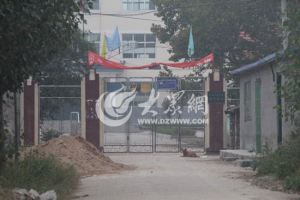
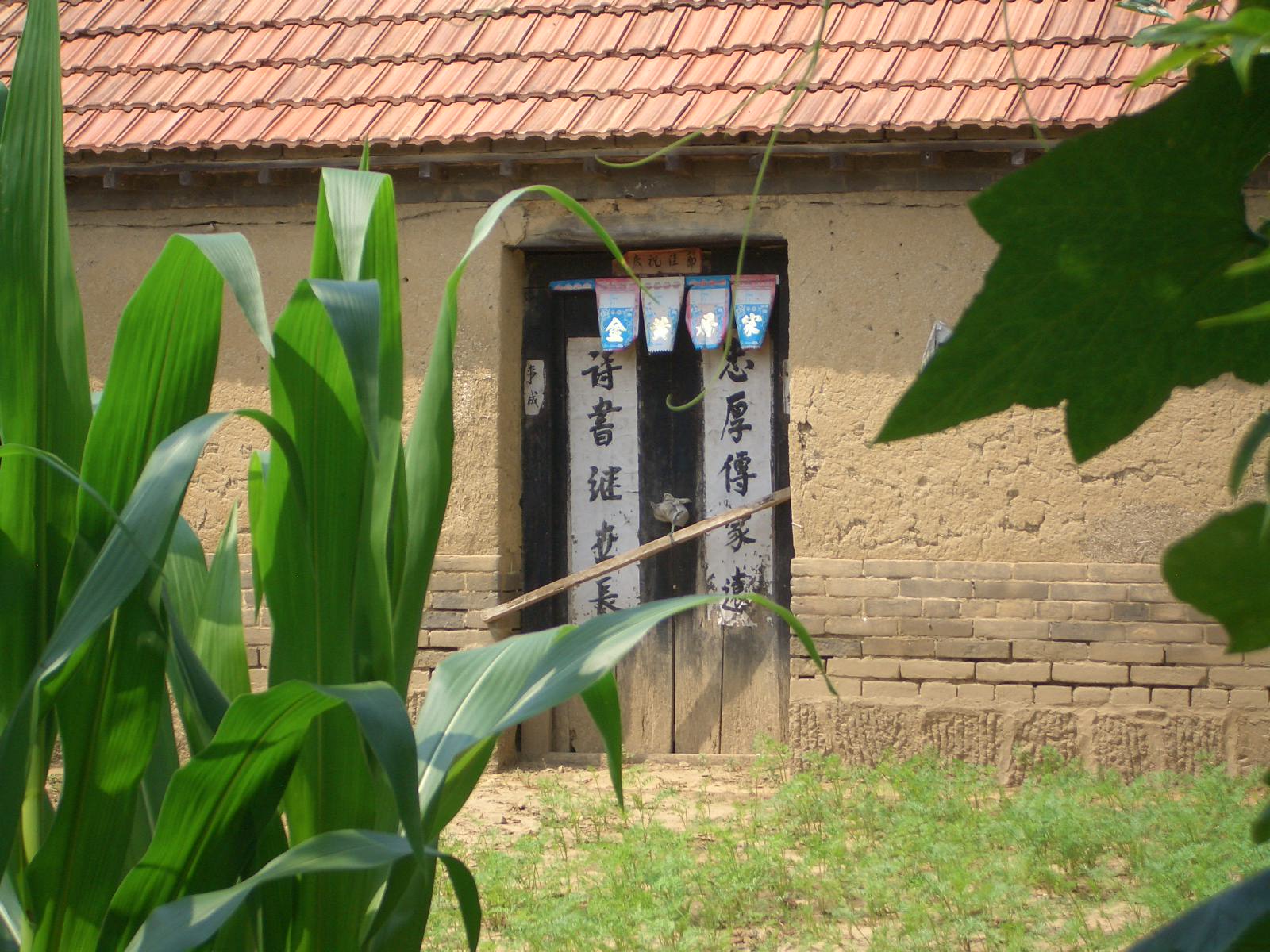
the former camp of the production brigade
has become our ancestral hall
we say the Zhao family temple
when I was small
every time I passed this place
I felt its mystery
people’s commune and county leaders would often gather
alcohol fumes drift through the air
none of us dared to steal a look at those dignified faces
at the spotted western wall
five classic characters written in lime:
LONG LIVE CHAIR-MAN MAO
solemn and serious
I thought there must be many officials in the whole country called Chairman Mao
and wondered if there was one in our production brigade
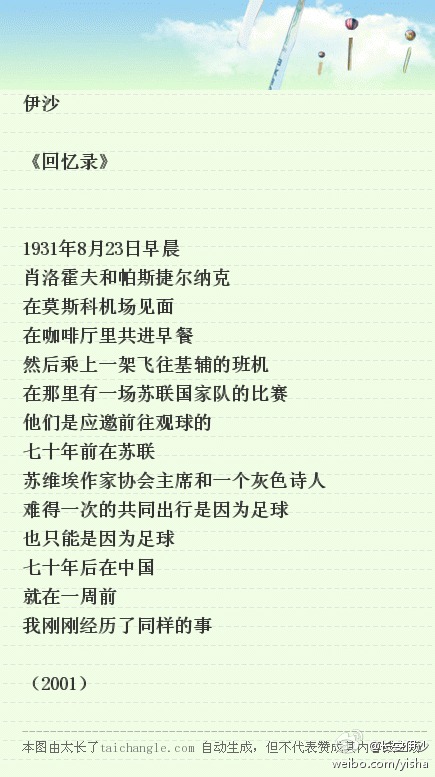
on august 23rd 1931
sholohov and pasternak
sat down together for breakfast
at moscow airport
before bording a plane bound for kiev
to watch the soviet soccer team
they were invited
70 years ago in the soviet union
the official writer’s association chairman
and a dubious poet
the only time they went out together
it was all in the name of soccer
70 years later in china
one week ago
I had the same experience
2001
Tr. MW, June 2014
Yi Sha
MEMOIREN
am 23. august 1931
saßen scholochow und pasternak
am moskauer flughafen
im kaffeehaus zusammen beim frühstück
dann stiegen sie in ein flugzeug nach kiew
dort spielte das sowjetische team
sie waren beide eingeladen
vor 70 jahren in der sowjetunion
der präsident des autorenverbandes und ein dichter der grauzone
auf dieser einen gemeinsamen reise
und nur für den fußball
siebzig jahre später in china
vor einer woche
hatte ich die gleiche erfahrung
caught by a whiff of salty fish
I know I have entered the square
the biggest fish market in town
is on the south side
so the square has been reeking
all through the years
at the east is the science museum
never been in there
don’t know what they have
young pioneers palace is on the west side
I sneaked in alone
when I was 14
to see the human body display
I stood in front of a model
of female sexual organs forever
without understanding
now I’ve come to the north of the square
they call it the front side
from a double decker window
I can see everything
the province government building
looks quite imposing
up there my wife whiled her hours away
for shabby pay
the square – concrete slabs and some grass
they are lowering the flag
it’s at the middle now
looks like half-mast
22 years ago in september
we were standing here mourning
the former leader who had just died
red kerchiefs and our young faces
drenched in icy autumn rain
our white-haired principal
standing there howling through wind and rain
“What will happen to China?”*
I can see the whole scene
now I see the spectators gleaming
in the sunset
a heap of tangerines
I see two people
have left the ranks
they are two grown-up men
holding hands
running towards the east of the square
and my bus keeps going west
so I can’t make out
where they might be going
1998
Tr. MW, June 2014
*“What will happen to China?”, literally “Whither China?”, “Where is China going?”, in Chinese Zhongguo Xiang He Chu Qu 中国向何处去 was the title of a political essay published in Big Character Posters in 1968, written by the 19-year-old Yang Xiaokai 杨小凯 who was sentenced to 10 years in prison for his text. In the end he became an economist and taught at universities in China, USA and Australia (online sources).
ein gestank nach salzigem fisch
sagt mir ich bin auf den platz vorgedrungen
der größte fischmarkt der stadt
ist im süden des platzes
deshalb ist er durch die jahre
von diesem geruch durchweht
im osten steht das technische museum
ich bin nie hineingegangen
weiß nicht was es drinnen gibt
im westen steht der jugendpalast
einmal schlich ich mich hinein
als 14jähriger schüler
es ging um das geheimnis des körpers
ich stand sehr lange vor einem modell
weiblicher fortpflanzungsorgane
ich blickte auch am ende nicht durch
jetzt bin ich schon am nordrand des platzes
man sagt hier die vorderseite
aus einem doppeldeckerfenster
kann ich alles überblicken
das provinzregierungsgebäude
erhebt sich doch recht stattlich
meine frau war dort oben beschäftigt
für kümmerlichen lohn
über den platz – gras und betonziegel
man lässt gerade die fahne hinunter
sie ist bei der hälfte
sieht aus wie auf halbmast
im september vor 22 jahren
standen wir in trauer hier
der frühere staatsführer war grad gestorben
junge gesichter mit roten halstüchern
im eisigen herbstregen
der schuldirektor mit weißen haaren
stand heulend und jammernd im wind und im regen
“was wird aus china?”
ich hab es noch genau vor augen
jetzt seh ich die zuseher
in der sinkenden sonne
sehen sie aus wie ein haufen orangen
ich sehe auch zwei menschen
sie haben sich schon aus der menge gelöst
es sind zwei erwachsene männer
hand in hand
laufen sie zum osten des platzes
mein bus entfernt sich nach westen
ich kann nicht erkennen
wohin sie am ende gehen
Hung Hung
MARTIAL LAW ERA – AFTER HEARING THAT SUN YAT-SEN’S STATUE AT THNG TEK-CHIONG PARK IN TAINAN HAD BEEN TORN DOWN
all those bronze statues
are busy at night
patrolling the streets
lest people get drunk and say the wrong thing or kiss in the alleys
or play mahjong at home
statues will check at the newspaper press
is there a piece on the chief like last year?
is there a space for respect at the top?
has someone scribbled in the blank spot?
bronze statues are busy
they are scared of too many things
scared stamps could bear other portraits
scared streets and squares, schools, libraries
would all change their names
no more school kids saluting
no more chatting with sparrows
scared that one day
there’d be a rope
to pull them down
“mama, why is the statue green in the face?”
“no finger-pointing, your fingers fall off!”
“mama, the statue hides for a smoke at the fire brigade!”
“he just takes a break, he got burned in the sun every day.”
those statues have long forgotten the killings
of another generation
forgotten how they are still being used
they only remember the heat of the forge
it was hard to bear
and once you cool down, then come the years
standing empty and cold
Written on the eve of Febr. 28th, 2014,
67 years after the Febr. 28th, 1947 massacre.
Tr. MW, May 2014
I was very astonished when I first saw the picture. It does look like violence, the statue is smeared red. The poem is a revelation. Why would people have something against Sun Yat-sen? Nice guy, compared to what came later. Late retribution, for the killing of Thng Tek-Chiong, governor of Tainan in 1947, one of the first dead in the February 28 massacre? Sun Yat-sen is rather far from home in Tainan, far from his home base. I remember that small park near the train station in Taipei, where Sun Yat-sen lived when he visited Taiwan, it was a Japanese hotel back then. Small garden, very peaceful. A little forlorn and frail among the hustle and bustle around Taipei train station. Why would anyone be angry at a statue of Sun Yat-sen? In 2011 and early 2012, there were many conferences around the world in memory of the 1911 辛亥革命. People talked about many interesting things, but something like this? Without this poem, I would never have thought people would think that way about these statues. Not that much. So many killings back then, so much White Terror in decades, and no retribution. And the KMT still in power. There is repressed violence in people’s hearts, and everybody can count there lucky stars if they take it out only on statues.
Taiwan is a very peaceful and safe place, all in all. One-party dictatorship does create a sense of security for some, at least in retrospect. The world gets more complicated in those new-fangled pluralist societies. So there are people who blame the subway knife attack of a deranged student on May 21 on the student-led protests in March and early April this year. In Austria, the shameless tabloid that is much bigger than Murdoch and Berlusconi in their countries, still says things like all demonstrations and protest are leftist, and cost a lot of public money. When there are anti-foreigner rightists marching in Vienna, and the police need to protect them, it is not their fault, right? And if they want to have a ball in the emperor’s palace and parade on the square where Hitler proclaimed the Anschluss in 1938, it is their right and they should be protected, and if the whole city center is full of police barricades, it is the fault of those leftists.
It’s the other way around! In a more open society, there is much less repressed violence. Look at the recent bloody clashes and attacks in many cities in China. That won’t get less, probably. Taiwan people should be very proud of that big, peaceful demonstration on March 30. Their country has become a much better place through the changes of the last 25 years. The KMT could and should be proud of that, too. But they are the 中國國民黨, so they have to think about stability in a much bigger way, don’t they?
We teach our kids to believe in justice.
You torture righteous children to death
and exonerate murderers.
We teach our kids to believe in peace.
You betray the people’s trust for your profits.
We teach our children honesty.
You swindle voters, they pay the bills.
We teach our kids democracy.
You auction off our rights on the side.
We teach our children respect.
You trample poor people under your feet
and then give out alms.
We teach our children to live in justice.
You wheel and deal and sell off their homes,
let them drink pesticides crawling and crying.
You call our children a violent mob.
Their clothes may be dirty, at heart they are pure.
Your clothes are perfect, calmly you put on your elegant ties
and wrap the filth in your hands.
You say you’re calling on education
but you let police clobber our children
and have them arrested as criminals.
What we taught our children went against facts.
They had to memorize and recite
and write it one hundred times if they failed.
Now they won’t believe what we tell them.
We put down our textbooks
to practice democracy,
exercising a spirit you never knew.
Protect our children!
Don’t let your cold-blooded thinking sentence them to death.
We are fighting to testify for all those pure and gentle hearts.
in meiner anthologie des neuen jahrhunderts
erhebt ein rechtsabweichler
seinen kahlen sträflingsschädel
seine gedichte
versteh ich überhaupt nicht
jedesmal bleib ich stecken beim lesen
wie ist er hineingekommen?
weil er rechtsabweichler war
hab ich ihn etwa nur deshalb genommen?
cannot abandon this country, five thousand years of meager creeks and cold peaks
five thousand years having a band of whores erecting gateways for memory
its people industrious, intelligent, brave
and used by these whores, pressed to their last drop of blood
cannot abandon this country, connected from birth inseparably
my tears becoming one of its rivers, drinking its juices
slurping its blood, look at these whores telling lies as their trade
poets are used to the emperor’s new clothes, no-one plays a small child
I cannot abandon this country, nor am I having these whores banish me
getting angry is fruitless, I’d rather become another Sisyphus
and even for dying, it is on its earth where I am going to sleep
The Globe and Mail article quoted by Paul Manfredi is well informed and sympathetic. But it doesn’t spell out any concrete reasons for Ai Weiwei’s singular status. Ai Weiwei’s status, even after his imprisonment, is that of a “princeling”. It seems to be easier to get rid of Bo Xilai. Bo’s father was one of the “eight immortals” of the Communist Party. Ai Weiwei’s father Ai Qing was a persecuted Communist writer, persecuted under Communist rule since the 1940s. Persecuted before, that’s where he got his name. Most of his colleagues denounced each other. Among famous writers, few seem to have been as obstinate as Ai Qing. He was banished to an army town in Xinjiang, a huge city today. There he cleaned toilets, together with little Weiwei. But after Deng Xiaoping came to power in 1978, Ai Qing became an icon. Unlike Bo Xilai and his henchmen, Ai Weiwei did not build labor camps and organ-harvested Falungong-followers. Before he was arrested, Global Times had published many sympathetic articles about his civil rights activism. And even after his abduction and imprisonment at an unknown location, Ai Weiwei gets to keep his comparatively huge house and grounds and most of his fortune. If he was persecuted too much, the main reason for Ai Weiwei’s status would come out too clearly: It would be awkward to discuss his father’s fate in detail. Cultural policy since the 1940s is no secret to anybody in and around the arts in China. But still. Maybe it would come out too clearly how control over art and literature and everything connected to culture was deemed even more important than in other Socialist countries. How idealism had been betrayed again and again, most effectively with broad domestic and international participation in economic growth after 1989. Ai Weiwei is very different from his father Ai Qing in many aspects, as well from his older brother Ai Xuan, who is also a well-known artist in China. But like his father, Ai Weiwei remains an icon of idealism. It would be awkward and politically dangerous to challenge such icons too much and thus revive ideals in a big way.
The Globe and Mail article quoted by Paul Manfredi gives convincing evidence of Ai Weiwei’s civil disobedience and civil rights engagement. Another good recent piece on Ai Weiwei, his imprisonment in 2011 and comparable phenomena elsewhere around the world is a TED-talk by An Xiao Mina.
Lovely town. Sleepy. Great central square. Or main street. Everybody out there on Friday night, who is not in the other beer gardens. Or begging. First rain-free night in ages, maybe. Rivers all full. Still chilly, just a little. Blankets on the seats outside. Great cathedral, we haven’t been inside yet. They had a great mass, with TV. People standing on the steps outside, and kneeling. Wonder how it was under Socialism. Much sleepier? Sleep of reason breeds … how does that go? What reason? Goya. Modernism, Kosice Modernism. An exhibition advertised around town, or a book, or an event. In Slovak, so I’m not sure. 。。。(click for more)
What is Chinese literature about? Exile, inner exile. Inside China, banished. Happened to many poets through the ages, including the most famous. Or voluntary exile, to be somewhere else, not among the people. 别有天地非人間。Teaching Latin in a high school in Vienna, a friend of our uses Du Fu 杜甫. Du Fu, Brecht, Theodor Kramer, Guido Zernatto. She teaches Latin, so exile comes from Ovid. Epistulaes ex ponto. From Casablanca. No, it’s that port city on the Black Sea, in Romania. Constantza. Like Tristan Tzara. Z or S? Whatever. Du Fu. They use an old edition from the 1930s. Brought into verse by H. Not just translated, not directly. That’s how they used to do it. Gustav Mahler’s 馬勒 Song of the Earth 大地之歌 came from Li Bai 李白 (Li Tai-po), Wang Wei 王維 and Meng Haoran 孟浩然, through many versions in different languages in between. Mahler wrote the final versions to fit his music. Two poems by different poets merged into one, at the end. No, that Du Fu edition is very accurate, from the feel of it. Two great volumes, large and thick. Not rhymed. But rather formal. Not luosuo 羅嗦. No superfluos words. Hardly. Again, from the feel of it, I haven’t checked, just listened and read. Listened, our friends read well. Very down-to-earth, daily details. Ants, chicken. Fencing in chicken, thinking about it. A reference to the times, the circumstances. Suddenly becoming political, as our friend says. Towards the end. A moral at the end, maybe more in this German version than in Chinese. Circumstances, Du Fu’s circumstances. He always complains, says our friend. Very down-to-earth, very daily life. Strife, poverty, famine. Starving on the streets. We have a master’s thesis on Tang Poetry social critique in Vienna, from 1990. Anna Maria Eigner. Bai Juyi 白居易, many different poets. Li Shangyin 李商隐 wrote a lot about poverty in the countryside. Not in is most famous poems, unfortunately.
Daddy, who is this?
He is called Li Bifeng. I just translated a poem by him. He is in prison. They are all in prison. This one is a writer, too.
Why is he in prison?
He took part in protests, demonstrations. Demonstration, you remember what that is? Yes, we were in one together this year.
Where is this?
This is in China.
What else did he do?
He organized strikes. Do you know what strikes are?
No.
Strikes are when workers in a factory say they won’t work, all of them. To get better pay. To get insurance, you know what that is? When you are sick, to get money from insurance so you can get a doctor, go to hospital.
Daddy, are there any places with no government?
Good question. There are some places where women are in charge. They own the land, they run things. Used to. Sometimes still do. Places in China.
Well, they should. Women are important. Women bear children.
I don’t know if there are any places with no government. There are some places with not many people at all. Deserts, mountains.
he jumped from the top of the building
peng!
he was dead
it wasn’t like he had seen it
on tv
on tv
the contractor who owed migrant workers
when he heard someone would jump
right away he came out with his pay
but this time
no-one held him back
that’s how he died
peng!
ostermontag ist schön.
man kann die autos zählen
man geht nach emmaus
klingt gar nicht hebräisch.
die meisten sind weg.
ich mein’ nicht die hebräer.
es gibt wirklich nicht viele.
da gibt es den schönberg.
das zentrum dort oben.
ostermontag ist schön.
am schwarzenbergplatz
den stalin umrunden
per roller, zu fuß.
der brunnen geht wieder.
und jemand spielt auf.
das kino spielt das paradies.
das kino kommt weg.
wir geh’n eh viel zu selten.
paradies hat drei teile.
sie heißen glaube, liebe, hoffnung.
ostermontag ist schön.
Liao Yiwu reading his poem “The Massacre”, Meng Huang 孟煌 reading his “Letter to Liu Xiaobo in Prison” and Maria Rosén singing the Swedish folksong “Ballad from Roknäs”, 19th March 2013, 9 pm, Sergels Torg, Stockholm, Sweden
Click here for texts and lyrics in Chinese, and to access the FREE LI BIFENG 釋放李必丰 page:
I want to thank Charles Laughlin for his recent posts on the MCLC list and on Facebook. His conclusion included these words: “Mo Yan’s critics are expecting the same of him that Mao Zedong would have: the political subservience of writers and their responsibility to serve as the political conscience of the nation”. Now I have written another blog post about this. 罗老师多谢!
Mo Yan’s 莫言 situation is ironic, as Charles Laughlin says. But serving “as the political conscience of the nation” is not the same as “political subservience”. It is rather the opposite. As we know, Murakami Haruki 村上春树 and his colleagues can be “the political conscience” of Japan, making “politically progressive gestures”, but Chinese writers in China, because of “political subservience” cannot be “the political conscience of the nation”, except obliquely in their fiction, poetry etc. Or in the first few days after they win a Nobel.
Along with Charles and many other people I am very glad that after Mo Yan was announced as a Nobel winner, he finally felt up to, or forced to open his mouth as a public intellectual, in contrast to the meaning of his pen name. Now he can be a public figure, like Murakami in Japan, not just an ambivalent functionary and a reclusive writer. Or can he? Is he going to say anything more on China-Japan relations or political prisoners? Is he going to mention Liu Xiaobo 刘晓波 in Stockholm? He will certainly be asked about other Chinese Nobel winners. That’s the nature of this particular prize, whether you like it or not.
Murakami and his colleagues can “serve” as public intellectuals, when their conscience tells them to do something additional to their writing. The irony is that under CCP 中国共产党 rule, there are no public intellectuals in China. There are occasional trouble-makers and commentators, like Ai Weiwei 艾未未 and Murong Xuecun 慕容雪村, Yu Hua 余华 and Wang Shuo 王朔. But can any of them speak their mind in public at length about Sino-Japanese relations or other sensitive topics? Apart from these writers and artists, there are professors like Cui Weiping 崔卫平, who issued the call to turn back to reason in Sino-Japanese relations, which got censored on Sina Weibo 新浪微波. She has often been prevented from traveling abroad. And there are some civil rights lawyers, who sometimes disappear.
Murakami and his colleagues can “serve as the political conscience” of Japanese society in and out of their books. Mo Yan has to be very circumspect with his topics. The Garlic Ballads was censored and supressed for a while. Mao’s “Talks” 讲话 at the “Yan’an Forum” 延安文艺座谈会 helped to make sure writers and artists could not speak their conscience. Vague documents like this have played an important role as instruments of obedience inforcement in one-party societies, as Anne Sytske Keijser and Maghiel van Crevel have shown in a recent article in “De Groene Amsterdammer” (10/17/2012). Mo Yan knows about this dilemma. His comments after he won the Nobel, and even some comments before, suggest he cannot find hand-copying and displaying Chairman quotes quite as harmless as Charles. That would be the difference between working with political realities in China and teaching about them in the US. The conditions of these political realities are still determined by largely the same factors as decades ago. As Keijser and Van Crevel put it, Mao’s “Talks” and other directives are up on the shelf, routinely mentioned in speeches by present leaders, and ready to be enforced again as needed. Yes, Mo Yan and his colleagues fought successfully for enough freedom to write great literature. Isn’t that enough? Not outside the realm of fiction, unfortunately. The cultural achievements of the 1980s couldn’t prevent the 1989 crackdown and everything that stays vague and threatening in theory and practice today.
Mo Yan writes “stupendous” novels, as Charles Laughlin says. Yes, he does. His development as a writer was influenced by the threat of starvation, the brutality in the name of revolution, and by the ideology. Yes, including the Yan’an “Talks”, as Charles shows. Now, Charles says, “China’s writers are receiving much-deserved international recognition simply because they are devoting their souls wholly to literary art.” Yes, they do. Liao Yiwu’s 廖亦武 speech in Frankfurt was in Sichuan dialect 四川方言. The text is available on the Internet. Try to find a video not dubbed into German. The German translation was fine, it just wasn’t dialect or even colloquial German. And it didn’t sound half as humble as Liao himself did. Politics made him into the writer, musician, poet and activist he is now. And his temper, his foolhardiness, as he readily admits. Not a hero, as Jonathan Stalling suggested. The German Book Trade’s Peace Prize has often been awarded to writers such as Orhan Pamuk.
The irony is that in theory, as taught by Charles, “Mao Zedong would have” reminded writers of their “responsibility to serve as the political conscience of the nation.” In practice, he silenced them. Virtually all, in time. So there would be no political conscience. That’s what Orwell’s Nineteen-Eighty-Four is about. Words like “Ministry of Truth” 真理部 are very well-known in China. 1984 is a vision of the closed world of a one-party state. Some moments of life in other societies can feel just as eerie, like a progressive college professor who turns into a cult leader, as in Murakami’s 1Q84, or, even more so, the perfectly cultured killer with secret roots in Korea. But on the whole, Japan in the 1980’s, evocatively and masterfully portrayed, is not ironic enough for connecting to Orwell’s 1984. I guess Taiwan under martial law 台灣戒嚴, in 1984, could have just made it.
Hu Ping 胡平, elected as independent candidate in Beijing’s Haidian district towards the end of the brief Beijing Spring over 30 years ago, recently circulated an excerpt from Mo’s “Life and Death Are Wearing me Out” (Shengsi pilao 生死疲勞). The novel was already well-known before the Nobel. A land owner who had his head blown off in the land reform in 1950 is born again as a farm animal several times, most famously as a donkey. In this excerpt, the donkey/landlord laments his unreasonable and unnecessarily bloody execution, until the guy who shot him tells him he acted with expressive backing from local and provincial authorities, to make sure the revolution was irreversible. So was it “a matter of historical necessity”? I don’t know what Hu Ping meant by circulating the email that somehow ended up forwarded in my inbox, because I don’t follow Chinese exile communications very closely. To me, the excerpt sounds just as absurd, evocative, tragic and yes, “stupendous”, as Mo Yan’s novels usually do. And thus rather close to Orwell’s 1984, or Wang Xiaobo’s 王小波 2015, in a way. I don’t think most readers would think that the author wants to commend, recommend or even excuse such acts of brutality.
There is another irony. Gao Xingjian 高行健 was awarded the Nobel prize for literature in 2000 even though, or maybe because, he did not and does not make himself available for political comments. Gao emigrated to France in the late 1980s and rescinded his Party membership in 1989, and it doesn’t seem he wants to come to terms with the powers that be in China in his lifetime. But on the whole, Gao has made about as many explicit political comments in the last 20 years as Yang Mu 楊木.
Chinese writing in 2012 is very complex. At least there is “much-deserved international recognition”, finally. Yu Hua’s essays “China In 10 Words” 《十個詞彙里的中國》 were serialized in the New York Times 紐約時報, among other international papers. And now Yang Mu, Mo Yan and Liao Yiwu appear together in headlines, also in the New York Times. What more could we wish for?
300 Modern Chinese Poems (Chinese-English) 汉英对照版《中国新诗300首》
Zhao Siyun 赵思运, who was introduced on the MCLC list by Michael Day a while ago with a poem called June 5th 六月五日, has a list of authors and poems on his Blog, for a Chinese-English anthology of over 300 modern Chinese poems 中国新诗300首. Compiled by an institution called International Poetry Translation and Research Centre, IPTRC. Very welcoming, diverse and expansive. Including writers from Taiwan, and many young voices. Liao Yiwu 廖亦武 is included, though not with his most representative work, probably. Lü Yuan 绿原 is there, he did a Chinese-German anthology, introducing Yu Jian 于坚 in 1990, rather early. Bei Dao 北岛 was included in there, but with a comparatively insignificant poem. He is better represented in this new effort, although I miss the mosquito. It’s very hard to include one or two significant poems from an author who is obviously politically significant.
Interesting to compare this with other anthologies, in Chinese and other languages. Zhongguo Xin Shi 中国新诗 (Fudan UP 2000), ed. Zhang Xinying 张新颖, has two poems by Zhou Zuoren 周作人, one against unnecessary water dams and a drinking song, both very impressive. Zhou Zuoren has not made it onto the IPTRC list. Of course it’s rather easy to come up with some of your favorites who are not represented, compared to shifting through many thousand poems and coming up with such a list. Huang Xiang 黄翔 is included, despite his dissident status, but he is already in Zhongguo Xin Shi 中国新诗. As usual, I am looking at newer people first, although I only recognize two from those born in 1970 or later. Zhou Yunpeng 周云蓬 is there, the blind folk singer. But not Cui Jian 崔健. Woeser 唯色 is there, which is great! But in general there are hardly any poets from minority nations in China.
Ha Jin 哈金 is missing, but he writes in English. Gao Xingjian 高行健 does not appear, but is mostly known for fiction and drama. So who else hasn’t made it? Yang Ze 楊澤、Hsiang Yang 向陽、Hung Hung 鴻鴻、Mai Mang 麦芒 (Huang Yibing 黄亦兵), who sometimes writes in English and teaches at Connecticut (there is another Mai Mang 麦芒 in China, known for one-liners).
On with the non-list: Sun Wenbo 孙文波、Li Nan 李南、Yang Jian 杨键、Zhu Wen 朱文、Yin Lichuan 尹丽川、Zheng Xiaoqiong 郑小琼、Ma Lan 马兰、Hong Ying 虹影、Pang Pei 庞培、Che Qianzi 车前子、Yan Jun 顏峻. I would have included Yan Jun’s 反对 Against All Organized Deception (translated by Maghiel van Crevel) and Ma Lan’s 事故和理由 The accident and the reason, maybe even combined with 仿佛 As If. And How We Kill a Glove 我们如何杀一只手套, if it wouldn’t be too long. Hong Ying’s 饥饿 Hunger, also written abroad. And one of Zheng Xiaoqiong’s 郑小琼 new female migrant worker’s portraits.
I have been reading a great anthology of Lithuanian poetry in the last few days. And there are beautiful anthologies of recent Chinese poetry in English, like the online treasure in the Spring/Summer 2006 issue of thedrunkenboat.com, edited by Inara Cedrins, or the Atlanta Review China issue. Without any Chinese characters, unfortunately. But these are important collections, with some great translations. The Drunken Boat collection is very diverse, including minority people in China, extra sections on Hong Kong, Macau and Singapore, as well as very much else from abroad. Even half of the non-minority nation poets in China who are in The Drunken Boat are not in the IPTRC 300. The Antlanta Review China collection, edited by George O’Connell, contains some of the best Chinese poetry I’ve read in translation anywhere in any language. And there is a good volume in English of Che Qianzi’s 车前子 poems and some of his friends, with a note in the back that the Chinese text can be found in some university library. Oh well. Many contemporary poets from China, including some world-famous ones, are not easily found in China. This has been going on for decades. Anyway, there is not enough modernity, not enough experiment in Chinese literature in general, especially in China. So it would be great to include some people like Che Qianzi 车前子 in any anthology. There is also not enough performance, that’s where Yan Jun 颜峻 and other sound and music stuff would come in.
The Lithuanian anthology mentioned above is from Poetry Salzburg Press. I love the long hallucinating love poem Bird in Freedom by Vytautas Bložė, written while imprisoned and “treated” in a Soviet psychiatric hospital. And the song-like evocations of Vilnius’ old city and the empty Jewish ghetto by Judita Vaičiūnaitė. The translations of these poems and many others by Laima Sruoginis are hauntingly beautiful. Much of the identity of the Baltic countries is built on songs, a great foundation for poetry.
Gute Nacht, Mond
Die Straße geht den Berg hinauf.
Dort steht ein Baum.
Vom Baum aus ist der Platz nicht weit.
Man überquert den Platz und kommt
Zum Karlsplatz. Die Kirche und der Teich davor,
Die Spielplätze sind auch nicht schlecht.
Gute Nacht, Mond. Der Wind ist kalt.
Heut geh ich nicht den Berg hinauf.
Du gehst ins Bett. Ich sing ein Lied.
Ich sag schlaf gut. Ich leg mich hin.
Der Kleine schläft. Die Frau ist müd.
Gute Nacht, Mond.
MW Ende Mai 2012
Holunderblüten
Wären gut in der Pfanne
So viele, vom Zug
MW Juni 2012
Ein Mädchen erzählt in einer neuen Wohnung. Der Mond ist fast voll.
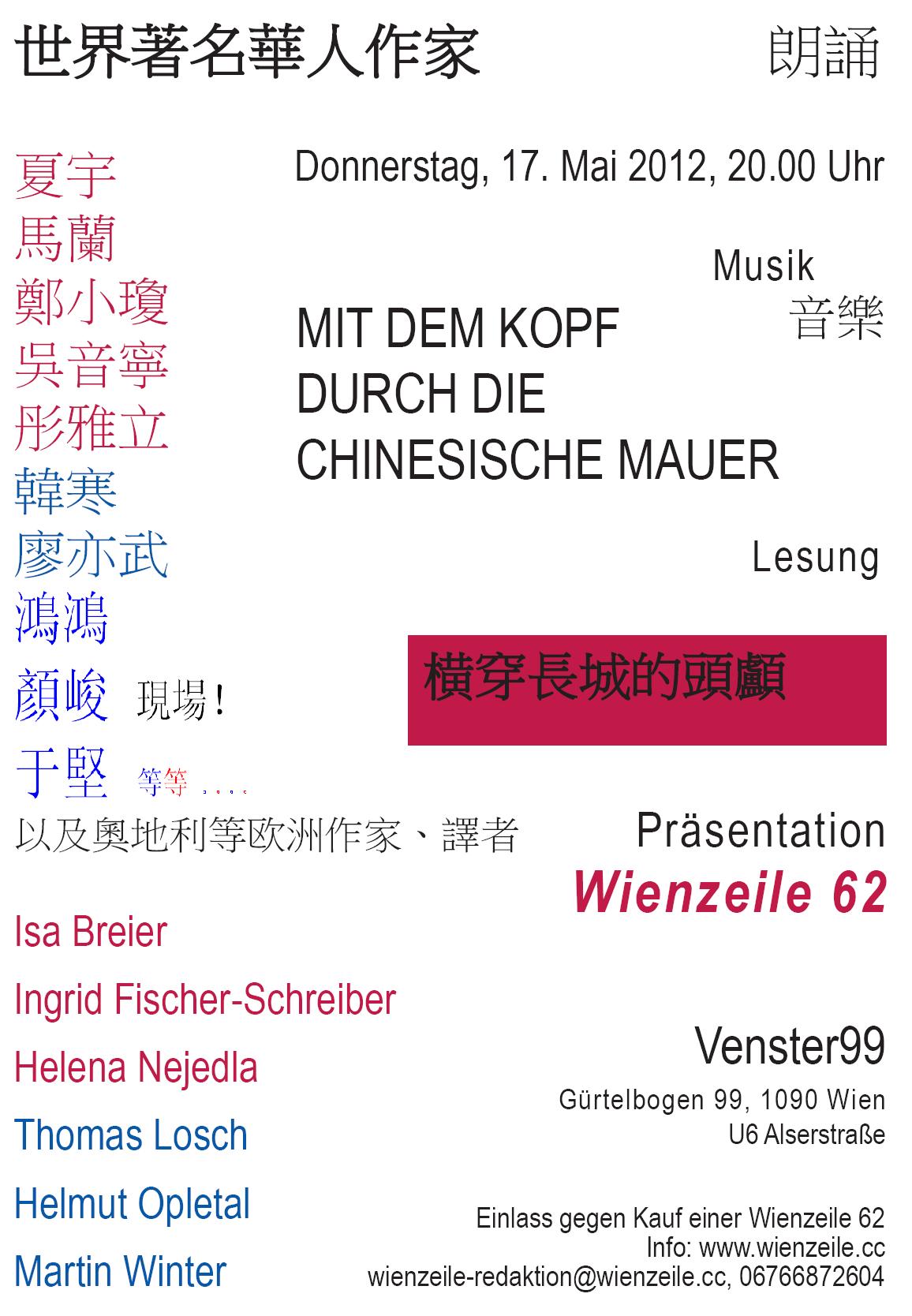
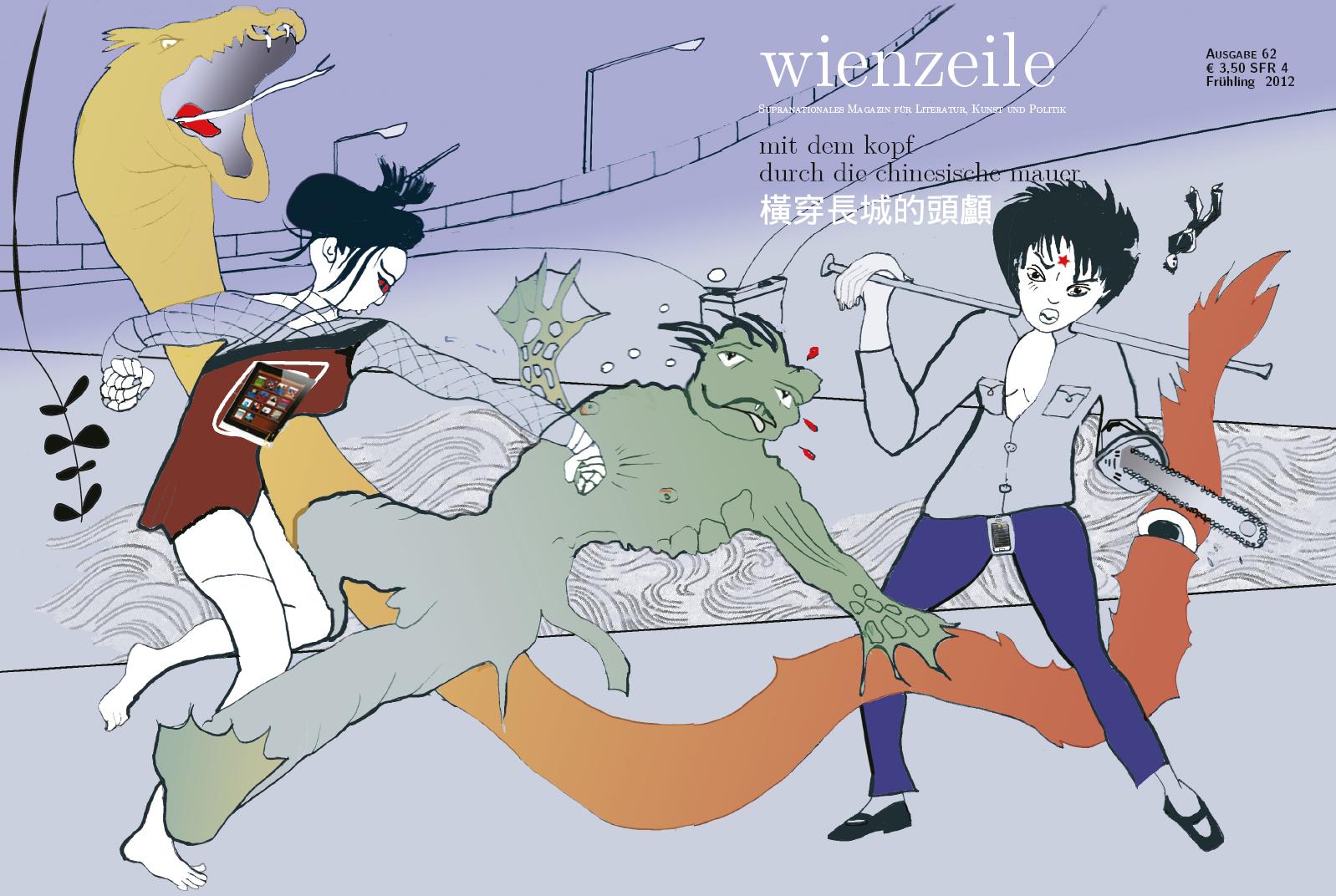
Wienzeile, a literature magazine coming out in Vienna, Austria, with entries in Chinese, English and German. Lots of new literature by Hsia Yü 夏宇、Yan Jun 顏峻、Hung Hung 鴻鴻、Zheng Xiaoqiong 鄭小瓊、Yu Jian 于堅、Ma Lan 馬蘭、Qi Ge 七格、Wu Yinning 吳音寧、Lin Weifu 林維甫、Tong Yali 彤雅立、 Pang Pei 龐培、Liao Yiwu 廖亦武 and many others.
Art work and photos by Linda Bilda, Yang Jinsong 楊勁松, Chen Xi 陳熹, Emy Ya 葉宛玲 and others.
Articles by Han Han 韓寒 and Hu Yong 胡泳. And an article comparing Charter 08 to Charter 77, written by Helena Nejedla, Czech Republic. If you get hungry while reading, we have a recipe for 四川鍋盔.
Simon Urban’s Plan D appeared in August 2011, Bei Ling’s Ausgewiesen has come out in March 2012. Both are tied to my experiences in Taiwan, in different ways. Simon Urban is a young German author. He is not from the East, the former GDR, and there seems to be nothing in his biography to make him destined for writing a novel on history. And yet he belongs to a continuing thread of history in German literature, told in various forms, often through family stories. Female authors tell family stories, and there are many immigrants writing in German. Their writings are often set in the regions where they come from, and many tell histories of families. History is a topic that just doesn’t seem to go away in Germany and Austria. Nobel prize laureates Elfriede Jelinek and Herta Müller both write about painful topics from the recent histories of their countries. Herta Müller is from Romania. She is a Romanian author writing in German, mostly about Romanian contemporary history. And she’s living in Germany, for historical reasons. Elfriede Jelinek writes on Austria’s contemporary history, through her plays and novels. She writes in a very special language, a language that unmasks the thoughtless style of the media and contemporary discourse throughout Austrian society. One of her plays is called Winterreise, evoking Schubert, in her own special way. Another play relives a murderous party in the small town of Rechnitz in 1944.
Simon Urban’s novel is a thriller. It is the story of an East German police officer who has to find the murderer of a mysterious man, hanged near the Berlin Wall. The wall still exists, the GDR still exists, in 2011. Agents and counter-agents, state security and the Energy Ministry. Don’t trust anyone. Including your colleagues from the West. It’s a thick book, bursting with very evocative descriptions of situations in Berlin inside a frustrated policeman’s mind. Often funny, as well as haunting.
Simon Urban attended a creative writing academy in Leipzig. One of his teachers was the Austrian Writer Josef Haslinger, who also became famous through writing a thriller. It’s about a terrorist coup at the Opera Ball, related to Austrian contemporary history, of course. But Mr. Haslinger was not supportive of Mr. Urban’s project. “The GDR is deader than dead”, he used to say. Mr. Urban has proven him wrong. Plan D will come out in English in early 2013.
Bei Ling’s memoir begins in 2009, the year he got famous in Germany. He was invited as an exiled Chinese writer to speak at a panel at the China-focus Frankfurt book fair, then asked not to attend, along with Dai Qing, a veteran female writer and environment activist in Beijing. Both of them gate-crashed Frankfurt, with German media support. The book then jumps back to 1979 and the Beijing Democracy Wall. Activism and literature are inseparable for Bei Ling. He gives a very personal account of the 1980’s underground poetry scene, and goes on through his years in the US and his friendship with Susan Sontag, who helps him out when he is imprisoned for printing an illegal literature journal in Beijing.
Suhrkamp deserves credit for recognizing some of Bei Ling’s potential. They certainly helped to make him known in Germany. The translation of “Ausgewiesen” is good. Most of the book reads very similar to Bei Ling’s essays in the FAZ (Frankfurter Allgemeine Zeitung) and in Der Spiegel. The empathy, the little details, the very personal atmosphere. Bei Ling can make you feel as if you were there with him in Beijing in the early 1980s. Maybe you know some of the names, like all the famous Misty Poets. But nobody has told it in such an intimate way, not even Bei Dao, in his fascinating recollections. When “Ausgewiesen” came out in March, the FAZ carried the first review. It was dominated by the complaint that Bei Ling didn’t include much, much more about all these fascinating topics. That’s the fault of his editors at Suhrkamp, of course. The original manuscript was easily twice as long. I’ve seen it. And like other publishers, they don’t have an editor who reads Chinese. Maybe you know Jung Chang, who wrote Wild Swans. I am pretty sure Bei Ling mentions her, but in the German text she becomes a man called Zhang Rong. Hu Ping, editor of Beijing Spring and one of the oldest Chinese exiles in New York, becomes Hu Pingzheng.
Plan D is a rather thick book. Well edited, nothing important peeled away. Simon Urban is a maniac for detailed descriptions, and you always feel these locations in action. Urban succeeds in creating a Berlin that can feel at least as real as the one you know. It is all there, this is how it could have turned out. How it is, behind the surface, at many places.
So how are these books related to Taiwan? Simon Urban was at the 2012 Taipei book fair. His book was very well received, and many people asked questions. They have a real life Communist country to deal with, which is related to them in various ways. Bei Ling runs a small press in Taiwan called Tendency, which grew out of the literature journal with the same name. They print works by Havel and Celan, among others. Taiwan is a place that accommodates many different ventures and makes many things possible. A long tradition of immigration, everything thrown together. They had a one-party dictatorship themselves, and an economic miracle too. But since 1987 they have an ongoing process of democratization, including recognition of their own history, their various ethnicities and so on. It makes one think of recent history and present times in parts of Europe and elsewhere. These are the connections, between the late Vaclav Havel and a fictional Undead GDR, between Paul Celan, exile and reckoning with the past, between poetry and stories of spies.
Addendum: Exiled Chinese writers, like Ma Jian and Bei Ling, have protested against official China monopolizing the China focus at the London book fair this spring. Click here for press coverage in Dutch, English and German.
warum drucken sie, verbreiten sie alle,
was legitim ist und waffenverkaeufen
begegnet, die fragwuerdig sind?
nichts anderes tut grass. mit einem gedicht
gegen die tatsache, dass deutschland
u-boote an israel liefert,
die fuer atomraketen gebaut sind.
sollte deutschland das tun?
viele, die aufwuchsen
unter raketen
mit vaetern,
als kinder gebrannt
von verbrechen bekannter
und oder verschollener vaeter;
manche, die aufwachsen unter raketen
die immer noch da sind
verstehen wahrscheinlich
dass jemand angst hat.
ob israel anlagen im iran
aus denen atomwaffen kommen koennten
bombardieren sollte
hat grass nicht gesagt.
er wollte kontrolle
iranischer atomanlagen,
israelischer bomben.
das ist legitim.
koennen gedichte
so etwas bewirken?
aufmerksamkeit
ist jedenfalls da.
MW Ostermontag, 9. April 2012
“Was gesagt werden muss” von Günter Grass hat mich inspiriert, es war in der Zeitung, zu Ostern, am Ostersonntag in Österreich, ein bisschen später als in Deutschland. Ich habe die Silben gezählt, die meisten Zeilen haben ungefähr zehn. Ich höre immer auf einen Rhythmus.
Mich erinnert dieser Text von Grass an die Friedensbewegung, also an die 80er Jahre, ungefähr 1984, da war ich 18. Da hab ich an meiner ersten Demo teilgenommen, mit meiner Russischlehrerin. Vielleicht war es zu Ostern, es gab die Ostermärsche der Friedensbewegung, gegen die neuerliche Aufrüstung mit Atomraketen. Auf der Seite der Rechten, also nicht nur bei den Republikanern in Amerika, sondern auch bei den Leuten, die in Deutschland, Frankreich etc. an der Macht sind- hoffentlich ändert sich das bald, hoppauf, Holland! – auf der Seite der Rechten hatte Reagan recht, der habe mit diesen Pershing-Raketen (Petting statt Pershing, ein Slogan von damals) Gorbatschow besiegt. In Wirklichkeit war Gorbatschow der Gute, und Reagan der Böse. Relativ halt. Russisch war ein Wahlpflichtfach in meiner Mittelschule. Realgymnasium, Schwerpunkt Mathematik. Leider. Latein wär besser gewesen, weiss man nachher. Russisch war gut. Aus Ungarn, die Lehrerin. Frau Professor Elisabeth Waldmann, unterrichtet noch dort, soviel ich weiss. Deutsch, hauptsächlich. Hatte sie studiert, in Ungarn. Unlängst war ein Interview im Radio, mit György Dalos, Romancier und Gorbatschow-Biograph. Dass die Auflösung des Warschauer Pakts und die Desintegration der Sowjetunion relativ unblutig waren – im Vergleich zu den Jugoslawienkriegen der 90er Jahre- , dafür müsse man Gorbatschow danken. Klang recht schlüssig. Dalos war damals sehr aktiv, als Oppositioneller in Ungarn in den 80er Jahren, mit vielen Kontakten in die DDR. Und jetzt kann er wahrscheinlich recht gut einschätzen, wieviel schöner es für Ungarn wäre, jemanden wie den jetzigen BRD-Präsidenten Gauck an der Spitze zu haben, als jemanden, der seine Doktorarbeit abgeschrieben hat und auch deshalb als schwaches Aushängeschild der rechtspopulistischen Regierung angesehen wird.
Grass regt zum Nachdenken an. Und zwar sehr viele. Das ist schon nicht wenig. Er hat halt Angst vor Atomraketen und vermisst die Ostermärsche der Friedensbewegung. Glaubt er, dass Israel den Weltfrieden bedroht? Klingt absurd, wahrscheinlich auch für ihn. Atomraketen sind böse, generell. Raketen überall, ausser auf dem Mond, vielleicht. Aber, aber ….
Nix aber. Grass hat halt Angst. Und erinnert (sich) an die 80er Jahre. Pessach und Ostern und Frieden sind halt verknüpft. Das ist nicht seine Schuld. Ausser, dass er halt im Krieg war, als Deutscher. Auf der falschen Seite, das sagt er eh. Aber er hat halt was Arges verschwiegen, und war derweil sehr viel politisch aktiv.
Und mir ist halt die Sprache wichtig, deshalb derweil. Wie bei Robert Schindel. Ciao derweil.
“My father made me stand on a table when I was small, and recite ancient classical Chinese. I could only climb down after I was able to recite the whole thing by heart. I was only 3 or four years old, maybe. I hated my father.” This is how 廖亦武 Liao Yiwu began to talk to the students and teachers of 國立成功大學 National Ch’engkung University in 台南 Tainan, after he played a wooden flute, a very basic instrument he had learned in prison. Very basic sounds, mute and suppressed at times. Loss and regret. No uplifting fable. “I am not going to tell you very much about the time when I went into prison. You would have no way to understand everything. I was like any young person. I didn’t want to listen to anybody from older generations. And I had gone through 文革 the Cultural Revolution, when my parents couldn’t take care of me. For me, classical Chinese belonged into the rubbish bin, along with many other things. My father was 84 years old when he died”, Liao Yiwu said. Or was it 88 years? Only a few hours of dialogue and open exchange between father and son, in all those years.
Dialogue and open exchange. Between 四川 Sichuan and 台南 Tainan. Between Taiwan and China. Between languages and experiences. Feeling lost, between clashing dialects, conflicting histories. Feeling rooted, at the bottom of society.
On the podium, scholars of 台灣閩南語文學 Taiwanese literature sat along with Liao Yiwu. They spoke in Taiwanese. One professor recited a poem by a high school student. Before Dawn, or something like that. About the massacre from 1947, February 28th. I didn’t understand the words. But you could understand the feeling. The answer is very simple, he said, when a 客家 Hakka student asked what she should do, because the words and songs of her grandmother would die with her. There were too few people who could still speak with her in 客家話 Hakka, she was afraid her mother tongue, her grandmother’s words would become extinct. The answer is very simple, the professor said very gently. He spoke mostly in Taiwanese, so I didn’t understand it all. But he said you just have to study, you can even major in Hakka now. It’s not easy, but there is a common effort.
It was very simple, Liao Yiwu said, when people asked him how he fled from China. I went to 雲南 Yunnan province, bordering Vietnam, Laos, Myanmar and Tibet. I had made lots of interviews there many years before, with people at the bottom of society. You turn off your mobile. You could also bring extra mobile phones. You get lost in small towns. And then one day I was across the border in 越南 Vietnam, very wobbly on my legs. There was a small train, like in China at the beginning of the 1980s. I knew such trains from drifting around China when I was young. In Vietnam, I was afraid of a lot of things, getting on the train, of simple things to eat. But I could communicate by writing numbers on a piece of paper. 500, wrote the innkeeper. 100, I wrote below. And so on. Finally I was in 河內 Hanoi, in a simple inn. And then I went on-line and contacted my friends and family in China. When I got on the plane to Poland, I was still afraid. The year before, military police in full military gear had come and taken me out of the plane in 成都 Chengdu. But then I realized, although this was a Socialist country, I was in the capital of another country, not in China. And the plane took off.
The lecture hall was full. I sat on the floor in the aisles, like many others. It was a very welcoming atmosphere. “We have a few books to give away for students asking questions in the second part of the lecture.” What is 流浪 liulang? What is 流亡 liuwang? What is 旅行 lüxing? These three words sound rather similar in Chinese. This was another professor speaking. He had studied in Russia. He was from a Taiwanese faculty in 台中 Taichung, but at this occasion, to clarify this question, he spoke in Mandarin. What is drifting about? What is exile? What is traveling? When you are drifting around, you don’t know where you are coming from, and you don’t know where you’re going. When you are going into exile, you know where you are coming from, but you don’t know where you are going, where they will let you stay. When you are traveling, you know where you come from, and you know where you’re going. Very simple differences. But what about us here in Taiwan? 我們是否知道自己從哪裡來,到哪裡去? Do we know where we are coming from, and where we are going? In the 1960s and 1970s, many writers and intellectuals in Taiwan were in prison. It was very hard, but you knew what you were fighting for. Just like the writers and lawyers in China, they know they are fighting for freedom. Now in Taiwan we are very free, in comparison. But we can still be marginalized.
One of the professors was my landlord from 1988 to 1990 in Taipei. He is the chairman of the Taiwanese PEN. In 1988 he was a doctoral candidate in history, and a stage decorator. We hadn’t seen each other or heard from each other for 22 years.
haus der patriotischen frauen
(unter japanischer herrschaft)
fuer Tong Yali
ein baum, ein hof,
der wind, die stadt.
es ist ein warmer wintertag.
in tainan ist es immer warm.
die stadt der tempel, der kultur;
die erste stadt: erinnerung.
MW 22. Februar 2012
彤雅立
記憶旅車
車子駛進了記憶
雪天里繾綣的石頭
海平面沒有風
巨浪在海底洄流
車子駛進從前的風
旋進黑色漩渦
《月照無眠》,二零一二年, 台北南方家園出版社,一三一頁
Tong Yali
erinnerung, wagen
der wagen faehrt los.
steine, in schnee eingerollt.
kein wind auf dem meer.
wogen tuermen sich darunter.
der wagen faehrt in den frueheren wind,
in den dunklen strudel.
Aus dem Gedichtband Schlaflos im Mondlicht (Yue zhao wu mian), Nanfang Jiayuan -Homeward Publishing, Taipei 2011, S. 131. MW Uebers. Febr. 2012
Tainan, city of temples. Temples everywhere, many lanes, full of flowers, blossoms, improvised housing, ancient and dated, broken and new. Squares in front of temples for breakfast stands, temple fairs, opera, evening barbecue. Temples complete with public toilets. The main Catholic church of the city is a beautiful traditional temple from 1960. Right across from the temple grounds dedicated to Koxinga, a Chinese-Japanese pirate’s son who fled from the mainland, drove out the Dutch and established the first Chinese kingdom on Taiwan, all in one year, he died rather young. And there is an Earth God’s temple next to the Catholic church. There was a wagon on the square in front of the church, with a few rows of plastic chairs. Very gaudy colors on the wagon, Taiwanese opera. A female warrior with a huge sword, ancient costumes. Tomorrow is the Earth God’s birthday, the church custodian said. Happy birthday! He was in his element, explaining the rich Tainan heritage. Sometimes people come and kneel on the steps of the church, he said, and only then they ask me which important god of the city is housed inside this magnificent temple. And when I tell them this is the Catholic church, they say sorry, we prayed at the wrong place, we didn’t know. Your prayers are very welcome, the custodian replies, and beckons them inside, like he did with us. They had been eating lunch, he and a woman, his wife maybe. Their little chamber next to the door was open. We had looked at the statue first, climbing over stoves and vats with food and cooking utensils, in preparation for the Earth God’s birthday. Mary looks very graceful in a simple and elegant robe, very Chinese, holding her naked baby Jesus. On the mosaic over the main altar inside they look more regal. But it is a very welcoming church. A traditional temple, I-Ching octagon tower with glass windows, couplets left and right written on columns, and boards, wooden and stone. An incense censer in front of the main altar. And an altar on one side for ancestor worship. “Oh, it’s from the 1970s, I didn’t know”, my friend said when we opened the gate, encouraged by the Earth God’s cooks, and looked at the statue more closely. Yes, she has traditional looks, like from the Qing Dynasty, but she is comparatively new, from the times of martial law. White Terror was still practiced on Taiwan when the church was built in 1960. Today, Tainan remembers founding fathers of its modern history inside the Japanese-era house of the Patriotic Women’s Association. These founding fathers of Tainan’s modern era are Japanese and British. Father of water taps and sewage, father of dams and canals, and so on. There is also one guy form the 16th century, sent from China. ”The soldiers who came from China after 1945 and took over from the Japanese didn’t even know houses with running water, they didn’t know taps!” That’s what a poet and scholar told me at the Taipei Book Fair, full of Taiwanese pride.
The last Japanese mayor of Tainan restored the main temples and historic sites. He prevented the Japanese troops from requisitioning and melting the huge bell from Kaiyuan Temple, which is still rung on important holidays. One of the main signs of the Confucius Temple, when you enter the temple grounds, was written by him. The temple grounds are sprawling, open and welcoming. Only the innermost part of the temple is guarded, and the entrance fee is 25 NT, 65 Euro Cents maybe. The city hall and seat of the provincial government from Japanese times is the Taiwan Literature Museum now, very modern and welcoming inside, lots of audio and other impressive installations, beautiful children’s rooms, extensive library, very accessible. This place was our destination when we came down from Taipei and Kaohsiung, an important stop in our one-month stay on Taiwan as translators into German.
According to Xinhua and Global Times, the newly published second volume of “History of the Chinese Communist Party” (1949-1978) is “seen as objective”. So what’s the objective of this book? What are the objectives of this new “objective” party history? Was it written by party members? Does anyone among them, or among the people who planned, published, and distributed this book, think the PRC should evolve into something different from a one-party dictatorship/autocracy? (I find it hard to believe that many non-party members would use their own money to buy such a book. Or is it really that different? Why was it published, then?) Which major bookstores have had their sales rankings dominated by this book? Ok, the main objective seems to be seen as objective. “Experts say that objectivity, a founding principle of the CPC, was virtually banished during the late 1950s and 1960s, when “extreme leftist” thought dominated the governing ideology of the Party.” Founding principle? There must be some historians who can answer this question. Anyway, they still write their party with a capital P.
In Taiwan, there seems to have been pressure for change in the late 1970s and early 1980s. China was changing. Taiwan was and is still called Republic of China, but in the 1970s they lost their UN-Security Council seat to the
PRC. Because of that ping-pong tournament between Nixon, Zhou Enlai, Mao and Kissinger, or something like that. Yes, sports events have always been very important. So there was pressure on Taiwan to open up politically, to democratize. They couldn’t just go on calling themselves The Free China team. No-one was ever going to help them liberate the Mainland anyway. So the Chiang Ching-kuo administration eventually lifted martial law in 1987, and allowed real opposition. A real opposition party. In 1988 or 1989, you still had to be a Party member (GMD/KMT) to get into certain positions in Taiwan. In 1988 or 1989, even very liberal Party members still said that in 1947, maybe 200 people might have been killed after the February 28th incident, but it was an armed uprising anyway. In 1991, President Li Denghui publicly admitted that probably more than 20.000 people had been killed in 1947 by government forces, and apologized to surviving relatives.
Going back to China: If there is any real discussion about The Great Leap Forward famine, in conjunction with all the other campaigns, including the anti-rightist “movement” and the ones before and after, including the CR,
wouldn’t that mean one-party autocracy would have to be abandoned at some time? In 2011, we’re having 90 years of CCP, in addition to 45 years after 1966, the beginning of the CR. In 2009, we’ve had The Founding of a Republic (1949), and in addition 1959 (famine), 1969 (CR), 1979 and 1989 (In 1979, economic reform was ushered in under Deng Xiaoping, who prevailed over Hua Guofeng in the late 1970s, although Hua had been appointed by Mao. Does that mean Hua and Mao were part of the “‘extreme leftist’ thought [that] dominated the governing ideology of the Party” […] “during the late 1950s and 1960s”?).
The student demonstrators in 1989 explicitly stated in slogans on banners etc. that they supported the CCP. Even after they were called counter-revolutionaries in the The People’s Daily. (See the article by Su Yang 蘇陽 in the HK Xin Bao). But because protest leaders emphasized loyalty to the state, three peasants who hurled red paint at the Mao portrait at Tian’anmen were apprehended by the students and handed over to Public Security. They were from Hunan, where Mao came from. They got 17-20 years. After the massacre of June 3rd and June 4th in the streets of Beijing, who would still think that political reform would be possible under the Party?
“Objectivity” sounds rather like the 1980s. Objectivity and political reform, or at least pressure for political reform are interdependent. Any kind of national and international pressure, especially the latter. “Chinese
Communist Party seen as objective in writing its history” – doesn’t that sound like “Vatican seen as objective in writing its history”? Yan Lianke cannot publish his latest novel Four Books in mainland China, because it’s about the Great Leap Forward famine. Opposition party founder Liu Xianbin has been sentenced to another 10 years in March. He has been sentenced to 26 years since 1989. There are a few other people like him. They are not as famous as Liu Xiaobo and Ai Weiwei. And there are people in detention or in labor camps for political reasons who are not intellectuals or dissidents. Like Ai Weiwei’s cook and his driver. Anyway, would anyone call the present political and social climate in China hopeful? So what are the objectives?
venice (written on a city map) one yard of scents, with blossoms filled / one passage through the midday sun / one house, one water, one whole town / one thousand years become one day / they know it here, you’ll die quite soon / and everyone will come and say / what you may claim, and what remains / and then they’re ready to depart / cause what we are stays in this world / what we have done, what we have heard / one scent, one stone, one sound, one plan / a plea that says please understand
MW June 2010
venedig (auf einem stadtplan notiert) ein hof im duft, mit blüten voll / ein durchgang in der mittagszeit / ein haus, ein wasser, eine stadt / als wären tausend jahr ein tag / man weiss es hier, man stirbt recht bald / und alle kommen, es zu sehen / was bleibt, und was man noch erwirbt / dann wollen sie auch wieder gehen / denn was wir sind, bleibt in der welt / was wir getan, was wir geschaut / ein duft, ein stein, ein laut, ein plan / und eine bitte um verstehen MW 5. Juni 2010
evening papers!
late reports
they were shooting in the sky
finally we have some rain in beijing
latest stories from tibet
sound like taiwan ’47
taiwan and tibet in china
they are different views of china
vietnam or mongolia
there are many different views
wanbao, wanbao!
zao you zaobao
wan you wanbao
bushi bu bao
shijian wei dao




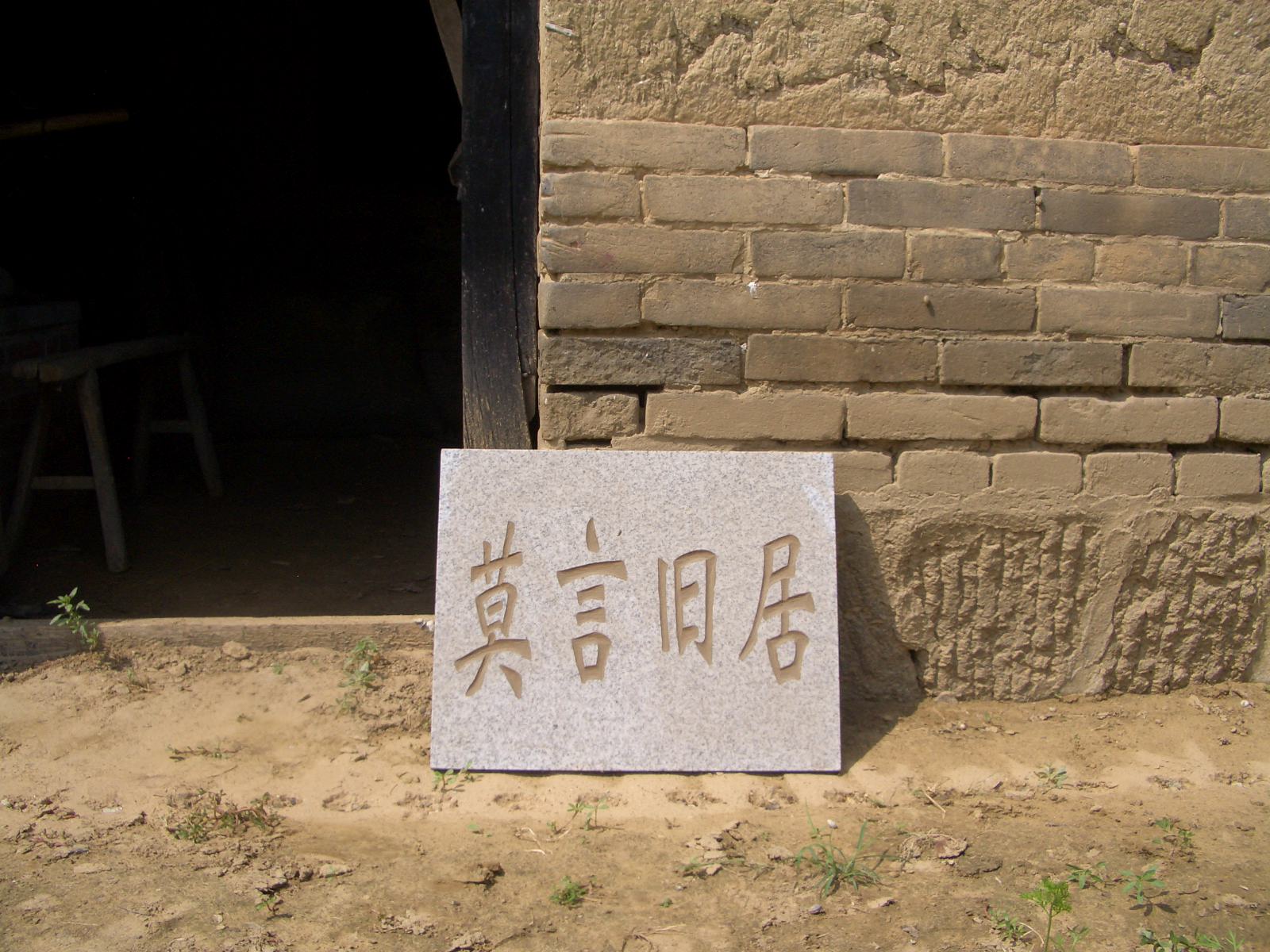
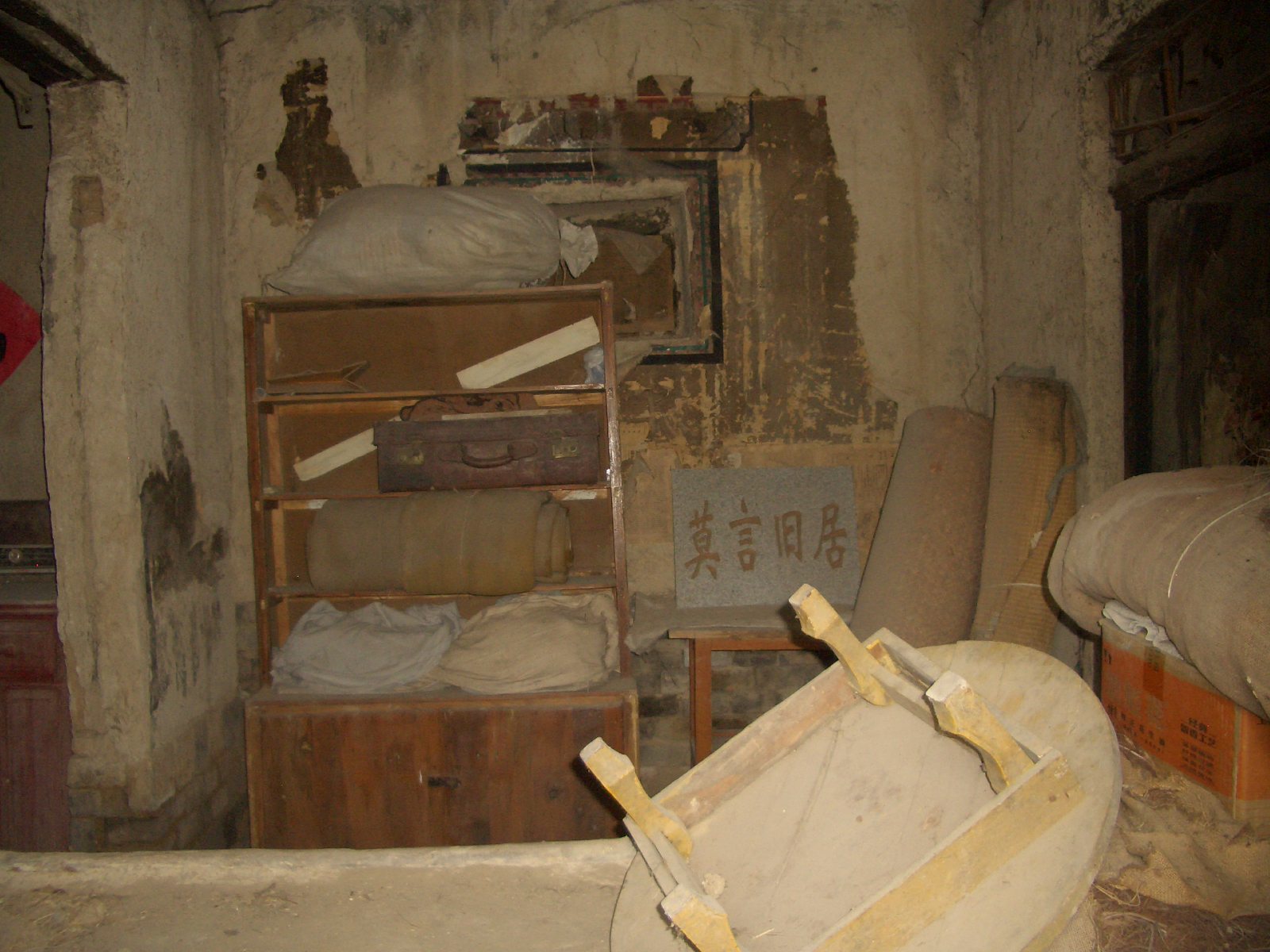
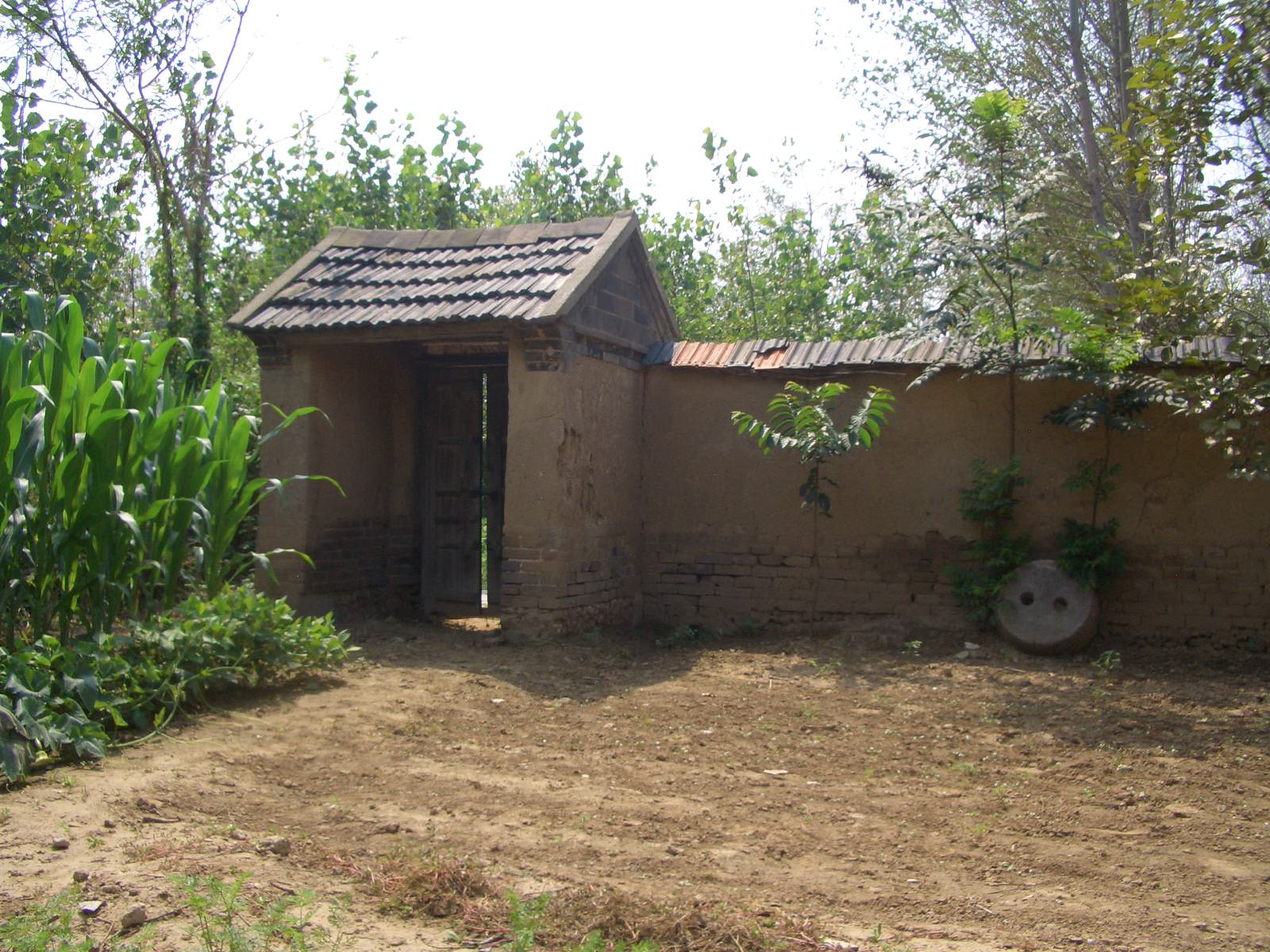
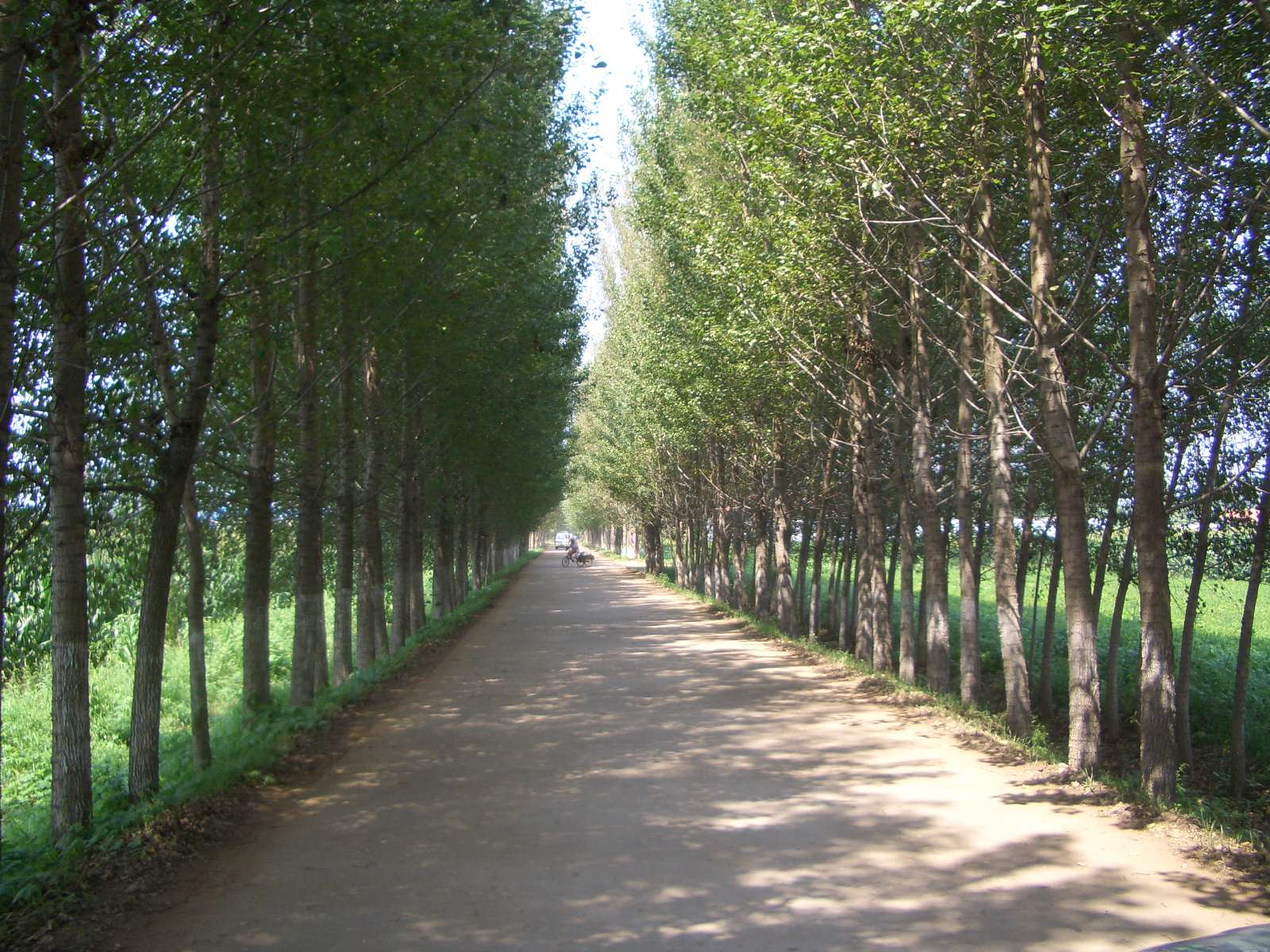











 中国大好き
中国大好き 