Posts Tagged ‘culture’
2月 18, 2016
南行记: FROM SOUTHERN CHINA THROUGH SOUTHEAST ASIA

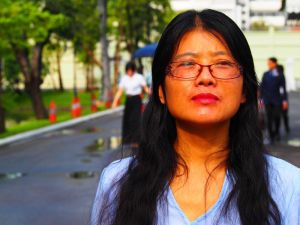



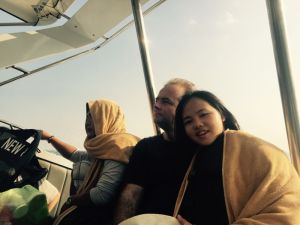


THE MOON IS FASTER THAN OTHER PEOPLE
people are slow here
says our guide
you have to get used to them
then it’s dark in a jump
and the moon climbs very fast
to her highest position
guess she is happy
to serve Chinese tour groups
so these few years
she runs faster and faster
January 2016


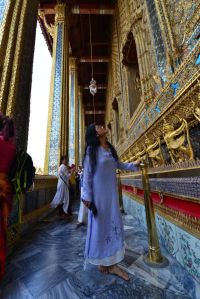
SLEEPING PALACE
actually the palace is very still
tourists stream in and out
serious people stay in their pictures
the palace is sleeping
in history
Bangkok, January 2016

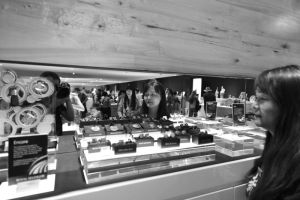
IN THE EMPORIUM OF PRECIOUS STONES
In the emporium of precious stones
there is a smoking room,
looks a bit like a prison.
Men who need separation
quietly gather,
with their heavy hearts
just for a short spell;
then go on buying things.
January 2016

TRANSVESTITES IN THAILAND
“Some are half-demon,
half-demon, half human.”
I am sure our guide is a man.
He is open-minded, just like his country.
“We in China this, China that …”
I wish his China was a real country.
MW January 2016

VACATION
Let us go diving into the deep.
Last year in August
someone in Tianjin
said one thousand people had died.
He was put in jail.
Let us go diving.
Elections this year in Taiwan,
first female president.
Let’s go now, let’s go.
These few days
someone gave an interview
voice of freedom or something.
Said the city he lived in
was not free,
autonomous region was not autonomous.
Let us go diving now.
He got fourteen years.
He wasn’t the first.
Let’s go now, go.
There’ll be other things
planned for the afternoon.
January 2016

SHE HAS TO BE PERFECT
In Singapore
we have a new guide.
Her name means “swallow”.
She explains about their laws.
Sounds a bit like Thailand
talks about Buddhism.
“You have to be careful,
you can’t just sit down anywhere.”
We get in very late
but we still call a reading.
Across the street from the hotel
you can sit outside,
you can even smoke.
Long as you don’t toss the butt.
When you order a beer,
one bottle per person may be too much.
Where is the moon?
In Singapore
she obeys the law to the letter,
otherwise they beat her behind.
She steps out of the clouds
in her most perfect poise.
January 2016

POETRY READING IS GOOD
Poetry Reading’s good,
Poetry Reading’s good.
In our New Poetry Canon, people’s dignity is high.
System clique’s in the dregs,
state-sanctioned writers scurry with their tails between their legs!
January 2016 (to the tune of Socialism Is Good)


MOSQUE & CASINO
Mosque and casino
both have Adam and Eve.
The casino in Singapore
at the Botanical Garden
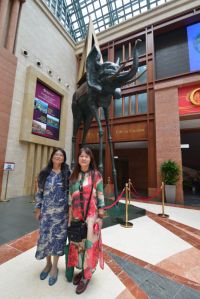
greets you with Dali and with Botero.
Botero’s sculptures Adam and Eve
at the gate of the casino.
What would the artist think of this sight?
Art is a rather ambivalent thing.
Poetry makes you a better person?
The mosque in Malaysia’s government district
is a sight to behold.
I am folding my hands.
An old lady asks me if I am a Muslim.
I just bow and keep silent,
so she lets me go in
and helps me taking pictures.
She sees I don’t know how to pray
so she gives me a folder and tries to explain.
There’ll be prayer time in forty minutes.
Men at the bottom, women up there.
She hopes I can make it.
The folder says
Adam and Eve were also Muslims.
Adam was the first Prophet.
The Mosque has Quran editions in English.
I flip through a section.
Allah bestows many signs on mankind.
Sleep is also a sign,
along with creation
and languages and different colours.
We haven’t had enough sleep on this trip.
Soaring up with my eyes,
I think being a Muslim is good.
I know why it’s forbidden to make any idols.
Half an hour later we are drinking beer.
I am still a believer
in beauty in art.
Poetry and art are signs of Allah.
January 2016


HEROES’ MONUMENT OF MALAYSIA
Was it a glorious thing when they died?
Did they go to war
for peace and freedom?
In World War I
In World War II
In civil war
they hardly had any choice.
In 1966
Malaysia’s prime minister had them erected
a park of monuments.
They already had one from World War I.
With names from Europe, also from India.
Probably officers.
To make this park for all those who died,
all those who gave their lives in the wars.
In 1966.
I was born in that year.
Maybe this monument
was a good idea.
January 2016

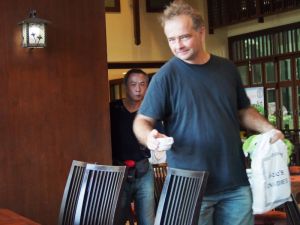
COMING BACK FROM ABROAD, LADEN WITH TREASURE
Coming back from abroad, laden with treasure.
Thanks everybody!
Thanks to Rong Bin,
to Niu Yihe, to 3A.
Thank you, Li Zhenyu.
You said my diarrhoea
was as fast as my poetry.
Thank you, Benben.
You made me eat Durian.
Thank you, Jun Er.
You bought me beer.
Thank you, Xiang Lianzi,
you offered me coffee.
Let’s all thank Jiang Tao
helping us to get back on the bus.
Thank you, Gao Ge
you helped me smuggle pillows.
Thank you, An Qi,
you helped me buy a mattress.
Thank you, Ru Ye,
we slept in one bed,
you recited erotic poetry for me.
Thank you, Xing Hao.
You sang praise to my body hair.
Thanks everyone for beautiful poetry.
Let’s say thanks to our guides,
A Fu and A Ping, Ms. Yan, Ms. Chen –
and on our last day
Mr. Chen, who had studied in Canada.
They taught us how to speak,
how to say thank you.
Kap kun ka – your credit card is empty.
Dai ni ma kan xi – take your mom to a theatre.
Our guides taught us history
and facts about Chinese minorities.
The Chinese platoon #93
in the Golden Triangle.
The Singapore Church of The Law.
Their story of independence.
The state of Malaysia,
elections and tribes.
Thank you, Yi Sha!
We had so many readings.
We broke every record.
We come back from the south,
laden with treasure.
January 2016

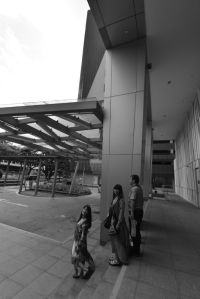
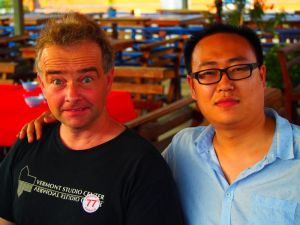

《南行記》
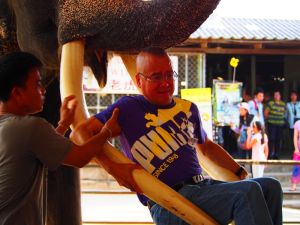
《月亮比别人快》
泰国月亮比别人快
导游说
这里人比较慢
你们要习惯
可天一下子就黑了。
月亮很快
爬得最高的位置。
我看月亮很积极
迎接中国的游客。
这几年大概
越来越快了。
2016. 1. 20


《皇宫睡覺》
泰國皇宫其實很安静。
游客游來游去。
遗像的人物
都比較嚴肅。
皇宫睡覺
在歷史裏。
2016.1.21

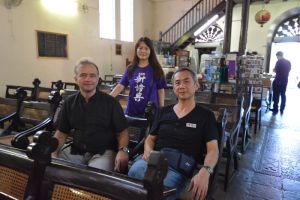
《寶石店吸煙室》
寶石店吸煙室
像臨時監獄。
需要隔開的男人
懷著沉重的氣氛
都自愿地集合。
關起來幾分鐘
然後繼續購物。
2016.1.22

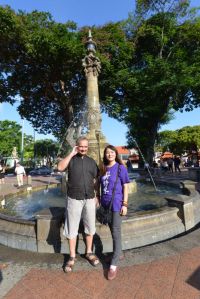
《泰国人妖》
“有的是半妖,
半人半妖。”
我们华裔导游
肯定全是人。
而且思想开放,
就像他的国家。
“我们中国
怎么样怎么样…”
但愿中国
真是他的国家。
2016.1.22

《度假》
我们去潜水吧
去年八月份
有人说天津
死了一千
被关起来。
我们去潜水吧。
今年台灣选举
第一位女总统。
去吧, 去吧。
这几天
有人接受访问
自由之声
说他所在的城市
不自由
自治区不自治。
我们去潜水吧。
他被判十四年。
也不是第一人。
去吧, 去吧。
等到下午
还有别的项目。
2016.1.23


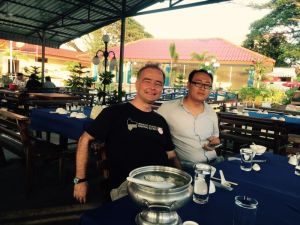
《不敢不完美》
到了新加坡
燕子导游解释
最严格的法律
听来崇拜法规
像泰国拜佛。
到了旅馆很晚。
还是開詩會。
过马路坐外面
可以抽烟。
只要烟蒂不扔。
点啤酒不能
一人一次一瓶那么多。
月亮在哪儿
在新加坡
月亮遵守严厉法律
否则打她的后面
月亮出彩云
就剛恰当。
2016.1.25


《詩會主義》
詩會主义好,
詩會主义好。
我们的新詩典人民地位高。
体制派被打倒,
作家协会夹着尾巴逃跑了。
2016.1.26
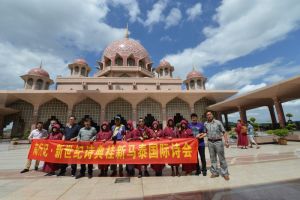

《赌场跟清真寺》
赌场跟清真寺有什么关系?
都有亚当和夏娃。
新加坡植物园赌场
有西班牙、哥伦比亚
艺术家 DALI, BOTERO
的作品。
BOTERO 的雕塑亚当和夏娃
放在赌场门前
艺术家自己会怎么想?
艺术是很暧昧的东西。
诗歌让你做更好的人吗?
马来西亚行政中心大清真寺
非常壮观
老年纪女人让我进去做礼拜
問我是穆斯林吗
我沉默不否认
可以随便进去
也可以照相。
她看出来我不知道怎么祈祷
就給我指示, 还解释很多。
不到一个小时有礼拜的时间。
男士下面, 女士在上。
欢迎我参加。
她給我的手册裏寫着
亚当和夏娃是穆斯林。
亚当就是第一位先知。
清真寺裏有古兰经
英语版读一片段
上帝安拉給人类的指示。
睡觉也是安拉的指示,
像创造世界所有的现象
包括不同的肤色和语言。
这几天我们都睡觉太少。
站在让你眼睛翱翔的大厅
我愿意做穆斯林
并明白為什麽禁止做偶像。
半个小时以后我们喝啤酒。
我这个虔诚的穆斯林
崇拜艺术的美丽。
美丽就是安拉的指示。
2016.1.28 凌晨3:27
《马来西亚英雄纪念碑》
他死得很光荣吗?
他去打仗都是
為自由、 和平?
第一次世界大战
第二次世界大战
还有内战
他反正都是无奈的。
一九六六年
马来西亚首相让他们做
综合的纪念碑公园。
一战的碑已经有,
上面的名字都來自欧洲和印度。
給所有去打仗献出生命的同胞们
立纪念雕塑、 修一场公园
在我出生的一九六六年
也许好主义。
2016.1.28


《從東南亞满载而歸》
从东南亚满载而归
谢谢大家
谢谢荣斌
牛依河、三个A
谢谢李振羽
说我寫詩跟拉稀一样快
谢谢笨笨
給我吃榴莲
谢谢君儿
給我买啤酒
谢谢湘莲子
催我喝咖啡
谢谢蒋涛
催大家上车
谢谢高歌
替我走私枕头
谢谢安琪
替我买床垫
谢谢如也
跟我过夜
读色情诗歌
谢谢邢昊
赞颂我的毛
等等
谢谢很多人寫我
谢谢导游
阿福阿平燕子小陈
还有最后一天
从加拿大留学回来的马来西亚导游
导游们教我们
怎么说谢谢
卡空卡
带你妈看戏
教我们
他们国家当代历史
和华人情况
金三角93军队
芭提雅人妖
新加坡崇拜法规
含泪宣布独立
马来西亚民族和选举
谢谢伊沙
到处開詩會
肯定破了记录
我们大家
满载而归
2016.1.29



http://v.youku.com/v_show/id_XMTQ3NDM4MzA5Ng==.html
标签:air, autonomy, Bangkok, beer, body, border, bus, Casino, china, chocolate, coffee, companionship, culture, dance, diving, expression, fast, fear, food, freedom, friendship, fun, government, guide, hair, heritage, heroes, history, ideology, independence, Kuala Lumpur, language, law, Malacca, Malaysia, memory, mind, mosque, Nanning, news, palace, Pattaya, plane, poetry, politics, river, shopping, Singapore, sky, sleep, society, speech, temperature, thailand, tourism, tradition, travel, trees, vacation, violence, water
发表在 February 2016, January 2016, NPC, poetry, Translations, Uncategorized, Yi Sha, 新世纪诗典 | 1 Comment »
2月 9, 2016
FLÜCHTLINGE
wieviele sind es jetzt jeden tag?
ich will informationen
keine politiker
anfang jänner haben noch tausend
oder paar tausend die grenze erreicht
das war damals in kärnten.
die meisten wollen nach deutschland
manche bleiben
deutschland hat in einem halben jahr
eine million aufgenommen
hört man jedenfalls immer.
schweden auch ziemlich viel.
manche wollen nach finnland
zu jemandem von ihrer familie.
jetzt reden fast jeden tag die politiker.
wie soll man begrenzen?
wie sorgt man dafür dass nicht alle bleiben?
wie kann man möglichst einfach zurückschicken?
in welches land ist nicht so wichtig.
fast niemand hat jemals gefragt
warum deutschland und österreich?
was haben deutschland und österreich
denn gemacht im letzten krieg?
und was ist mit ungarn und tschechien und so weiter?
unsere eu hat sie auch aufgenommen
das ist gut für deutschland
für große konzerne
vielleicht gibt es nachteile.
vielleicht sagen manche
die haben unsere wirtschaft geschluckt
sollen die drüben sich darum kümmern.
wieviele sind es jetzt jeden tag?
MW Anfang Februar 2016
《难民》
现在每天多少人?
我要具体的数字
不要政客的宣布。
一月初每天至少一千
也许三千到奥地利。
他们多半想继续到德国 。
有的留下。
德国半年裏
收留一百万。
瑞典也收留很多。
有的难民想到达芬兰
因为那边有亲戚。
现在政客们到处说
怎么限制。
怎么不让他留下。
怎么让他回去
无论回去到哪儿。
几乎没有人問
为什么原来是德国
和奥地利。
德国和奥地利
二战时候做什么?
也许有关系。
那么匈牙利, 捷克等等东欧国家
为什么不想让他们进来?
欧盟收留了他们
對德国经济很好
對跨国公司很好
對他们自己也许有短处。
也许有人说
他们吃了我们的经济
让他们管难民。
现在每天多少人?
2016.2.4
标签:action, culture, Europe, history, language, memory, poetry, politics, protest, questions, refugees, solidarity, talk
发表在 August 2015, February 2016, January 2016, November 2015, October 2015, poetry, September 2015, Translations, Uncategorized, Welcome! | Leave a Comment »
1月 15, 2016
悼大衛鮑伊
惦記他
故他在
记得9/11以後
他在紐约唱保羅西蒙的歌
America
惦記盧·里德
兩三年前聽他的現場
惦記臺灣老朋友
廖瑞銘臺灣語教授
记得88年在臺灣買崔健的卡带
惦記傳聲頭像
AC-DC 酒吧
平克·弗洛伊德
寫在BUFFALO TOWN 天花板
惦記臺灣摇滚
以及所有抵抗强暴的聲音
2016.1.11

————————————
星期六七月26号去了鲍勃.迪伦现场 – Bob Dylan concert 在 Wiesen, 奥地利 Austria.
Rather good. Full raspy voice. Lots of ambivalence in the songs. Experimenting with old songs, making it new.
Songs from the albums TIME OUT OF MIND, WORLD GONE WRONG, BLOOD ON THE TRACKS and others. “Love Sick” was the last song. Very, very good. Before that, a new version of Blowin’ in the Wind.
Dylan was rather like Cui Jian 崔健 when he’s good – new songs every time, all of it – especially the classics.
Dylan mostly played piano. Good band. Each song a surprise. We saw Lou Reed two years ago. Also very good. Experimental, still.
That was the last chance I would get to experience Lou Reed live. He was himself, as far as I could tell. They also had what was left of The Doors – still with Ray Manzarek – and Ian Anderson and others. Doors trying to sound like on the records. Oh well. Ian Anderson coherent for one song only. Sad. Lou Reed strong. Like Dylan this time.
标签:1989, 9/11, austria, Bars, Bob Dylan, china, concert, Cui Jian, culture, Dawid Bowie, death, Discos, Doors, Ian Anderson, language, life, Lou Reed, memory, music, New York, performance, Pink Floyd, poetry, politics, Taipei, taiwan, Talking Heads, Wiesen, 崔健
发表在 1988, 2001, January 2016, Uncategorized | Leave a Comment »
9月 18, 2015
WARSCHAU
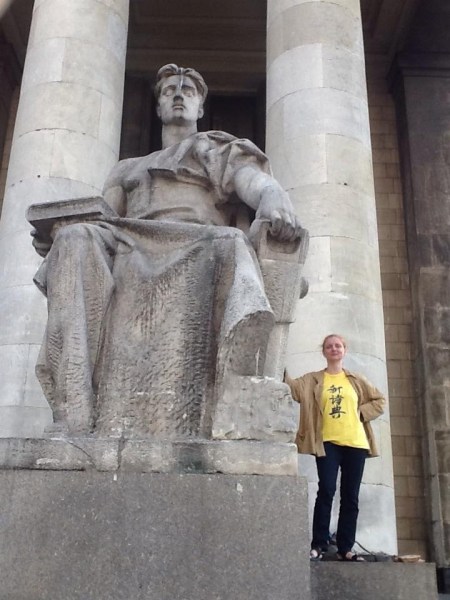
ich finde den adler nicht schön
nur den schatten des adlers
in der kapelle für katyn
gegenüber vom platz der aufständischen
es war ein tapferer aufstand
sie haben auch gewonnen zuerst
die rote armee stand bereit
auf der anderen seite des flusses
aber die rote armee hat gewartet
und die deutschen kamen zurück
sie haben die stadt abgerissen
die rote armee hat gewartet
das war 1944
der aufstand im ghetto war vorher
auf dem platz wo das ghetto war
steht stalins kulturpalast
das ghetto war noch viel größer
katyn
das war 1940
zehntausende polnische offiziere
vom geheimdienst getötet
vom sowjetischen geheimdienst
auch ukrainische offiziere
in der kapelle für katyn
gegenüber vom platz der aufständischen
zehntausende namen
und ein schöner adler
so steht es geschrieben
ich mag seinen schatten
MW Juli 2015, dt. Sept. 2015
标签:army, betrayal, chapel, city, culture, death, eagle, Germans, ghetto, history, Katyn, massacre, memory, names, orders, Poland, Red Army, river, second world war, secret service, shadow, translation, travel, uprising, uprising square, war, Warsaw, world war II
发表在 July 2015, poetry, September 2015, Translations, Uncategorized, Welcome! | Leave a Comment »
8月 3, 2015
WARSAW
the eagle is not beautiful
the shadow of the eagle is
they have a chapel for Katyn
across from uprising square
the uprising was very brave
they won at first
the Red Army was there
just across the river
but the Red Army waited
then the Germans came back
they razed Warsaw City
the Red Army waited
that was in 1944
before that was the Ghetto
the Ghetto uprising
Stalin’ s culture palace stands in its place
in the place of the Ghetto
Katyn
was in 1940
tens of thousands of Polish officers
killed by Soviet intelligence
Ukrainians too
they have a chapel for Katyn
across from Uprising Square
tens of thousands of names
and a beautiful eagle
they say
I like its shadow
MW July 2015

SUNSHINE IN WARSAW
Jacqueline Winter
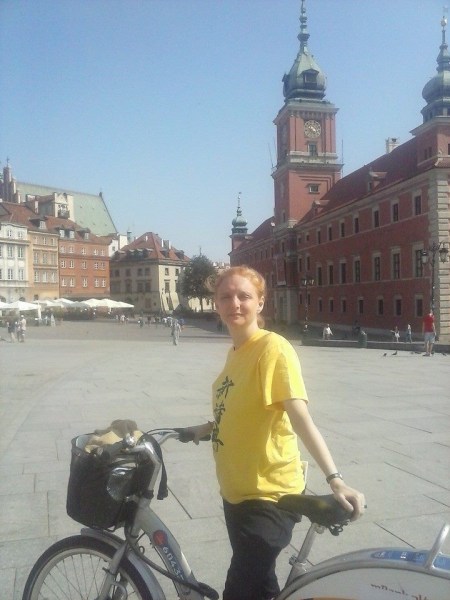
A beautiful summer morning. Biking through the historical center. The bike return station is next to the monument of the 1944 uprising against the Nazis. HOW many dead and wounded, while the Red Army literally stood by on the outskirts of town? And the city dynamited and emptied of its population…you would never think it, looking at it now.
Across the street, inside a church, a simple and gut- wrenching memorial to the Katyn massacre victims. With a side memorial for the Smolensk plane crash of 2010, which I fail to understand. Must ask a local where they see the connection- if they do.
And what a tough people: exiled, murdered, bombed, map redrawn…yet they rebuilt splendidly from the rubble while still dirt- poor and were the first to put up meaningful nonviolent resistance to the Soviets back in 1980. And had free elections as soon as they could.
Swinoujscie – Swinemünde had public exhibits around town about their common history with Germany, bilingual. A strongly German city which was bombed flat 55% for being a naval base. No mention of the pre-war German population in Warsaw, though…
The Warsaw “Stalin cake” / Palace of Culture and Science is still on the grounds of the Jewish ghetto. That uprising was in 1943. A few meters of markings on the ground to show where its outer wall once stood. That is all.

ATTITUDE, EMPATHY AND SO ON
Martin Winter
People are trying to get by everywhere. First World vs. Third World (or Second World) creates issues of privilege. Just like different kinds of background, experience, heritage make for issues of disconnect within a common country or region. Why are people stupid enough to vote for or even work with racist rightist arseholes in Hitler-spawning Austria? Austria-Hungary-Germany whatever? My friends in China try to get by. Like people everywhere. Some get to express how they detest the state they are in. Some more than others. Like people anywhere, more or less. Some have their audience, as famous poets or fiction writers. Yes, things have improved very much in Taiwan, and in China there is the same repression going on in some ways. Yes, everyone is taking part more or less, including foreigners. All in all, foreign media is a good influence. Most of it. Everywhere probably, in every country, reporting from any outsider’s stance or background can be very refreshing. I was privileged in Taiwan and in China, in Eastern Europe, even in America. On the other hand, I am in between. Every day I talk and work with people and texts from different worlds. It’s a great life, all in all.
标签:betrayal, bombed, brave, chapel, culture, death, documentation, eagle, elections, Germans, ghetto, history, intelligence, jews, Katyn, Katyn massacre, life, memory, message, names, palace, plaque, poetry, Poland, Red Army, reporting, resistance, river, shadow, site, Stalin, translation, travel, uprising, uprising square, waiting, war, Warsaw
发表在 August 2015, July 2015, poetry, Uncategorized | Leave a Comment »
4月 2, 2015

Xi Wa 《吃塔》
EAT A PAGODA
somewhere in the south on a restaurant table
I saw a pagoda
of red shining pork
(I hope I don’t remember its name)
when it appeared
I gazed on that thing
couldn’t take off my eyes
all the other dishes
had become worshippers
I was a worshipper
until I remembered
where I was born
in tibet
all those believers around a pagoda
their heads on the ground, offering incense
I was one of them
now I am one of them here
all those years, I kept my respect
for the mystery of a pagoda
I also kept my taboos about foods
looking at this pagoda of pork
red dazzling meat
I understand what appetite means:
people will eat all they can eat
and they will eat up all things they can’t
raising their chopsticks, sharing the food
the shining pagoda
pork dazzling red
I didn’t hear any sound
but it was as if I could see the dust
the rumbling dust
of our beliefs prostate on the ground
shoved down the throats of other people
their juices have no taboos
they clear it up without any sound
Tr. MW, Febr. 2014
标签:birth, chopsticks, culture, dust, eating, 西娃, food, memory, pagoda, pork, religion, tibet, worship, Xi Wa, 新世纪诗典, 伊沙
发表在 February 2014, poetry, Translations, Uncategorized | Leave a Comment »
3月 3, 2015
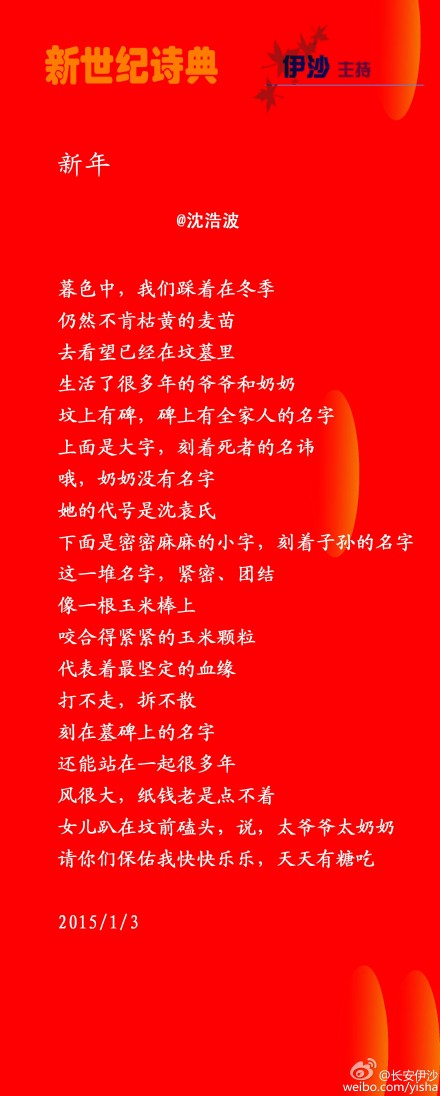
Shen Haobo
NEUES JAHR
im abendlicht treten wir auf weizensprossen
die sind im winter auch noch nicht gelb
oma und opa gehen wir besuchen,
wohnen schon viele jahre im grab.
am grab ist ein grabstein, der stein hat die namen der ganzen familie.
oben die großen zeichen sind liebe toten
oh, oma hat keinen eigenen namen
sie heißt einfach shen, geborene yuan
unten sind ganz viele ganz kleine zeichen, das sind die enkel
ein haufen namen, ganz dicht beisammen
wie korn an korn verzahnt ineinander
auf einem maiskolben
die stärkste art von blutsverbindung
nicht zu vertreiben, nicht zu zerstören
all die namen auf dem grabstein
stehen zusammen noch viele jahre
der wind ist stark, das totengeld brennt immer schlecht
vor dem grab kniet meine tochter. “uropa, uroma!
bitte beschützt mich, macht mich ganz ganz froh, jeden tag hab ich zuckerl!”
Übersetzt von MW am 1. März 2015
标签:blood, candy, collective, corn, culture, death, family, grave, heritage, kids, life, name, names, new year, poetry, ritual, Shen Haobo, speech, stone, sugar, women, writing, 新世纪诗典, 沈浩波, 伊沙
发表在 February 2015, March 2015, poetry, Translations, Welcome! | Leave a Comment »
1月 22, 2015
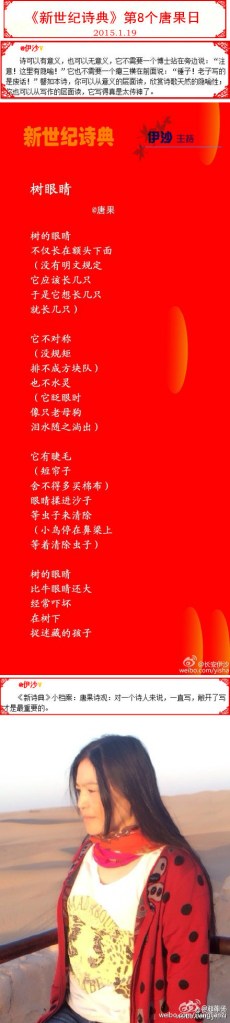
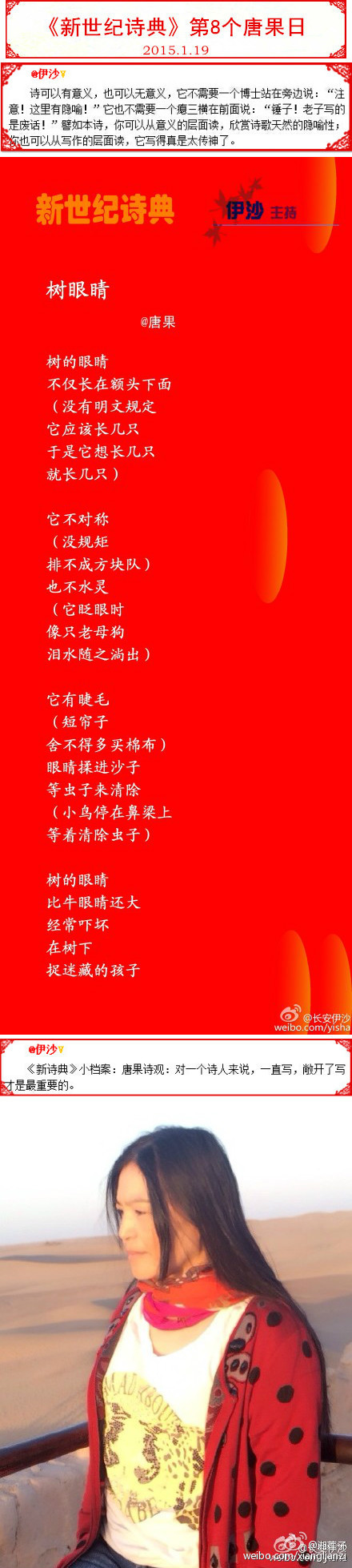
Tang Guo
BAUMAUGEN
baumaugen
wachsen nicht nur unter der stirn
(es ist nicht kulturell festgelegt
wieviele ein baum haben darf
also hat er ebenso viele
wie er grad mag)
sie passen auch nicht zueinander
(es gibt keine muster
sie stellen sich nicht in ein rechteck)
und strahlen auch nicht
(sie blinzeln eher
wie alte hündinnen
ihnen rinnen die tränen)
sie haben wimpern
(ein kurzer vorhang,
kauf nicht soviel stoff)
und schlaf in den augen
warten auf käfer, die machen sauber
(vögel oben am nasenrücken
putzen die käfer weg)
baumaugen
größer als kuhaugen
deshalb erschrecken sie
kinder, die spielen
in bäumen verstecken
Erschienen in
Yi Shas Gedichte des Neuen Jahrhunderts
am 19. 1. 2015
Übersetzt von MW im Jänner 2015
标签:aesthetics, birds, bugs, children, civilization, cleaning, cotton, cows, culture, expectations, eyes, pattern, poetry, rules, tree
发表在 January 2015, poetry, Translations, Uncategorized | Leave a Comment »
10月 24, 2014

X & Y
(nix & kiss, mao & zhou …)
x was cruel
butt is sore
y was able
and suave
both loved culture
both destroyed
hundred million
butts are cold
MW March 2007
【奥地利】维马丁
伊沙译
《一搭一挡》
X贪残暴虐
死而后已
Y才华横溢
风度翩翩
博古通今
焚书坑儒
亿万人民
生灵涂炭
2007.3
标签:chairman, culture, death, destruction, diplomacy, history, kissinger, nixon, poetry, politics, premier
发表在 2007, October 2013, Translations, Uncategorized | 2 Comments »
10月 16, 2014
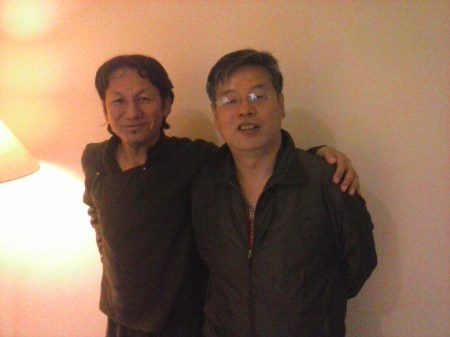
Yi Sha
SONG FROM NEXT DOOR
next door to my studio
a tibetan poet from india
when he was ten
he fled with his parents
writes in english and in tibetan
does not speak chinese
everyday he brings a guitar
actually it’s his own three-stringed instrument
when inspired
he breaks out in song
music goes through the walls
I don’t feel
he is disturbing me
I often prick up my ears
oh, it comes again
he is singing
I feel like I am going to cry
he sings in tibetan
but it is the tune
“nothing is more red then the sun,
no-one is closer than chairman mao…”
Tr. MW Oct. 2014
伊沙
《隔壁的歌声》
我工作室隔壁
是一位印籍藏裔诗人
在他十岁那年
随爹妈逃到印度
用藏、英双语写作
不通汉语
他每天怀抱一把
六弦琴来到工作室
兴之所至
便弹唱起来
歌声穿墙而过
我不觉得
打扰了我
常常侧耳谛听
哦,此时此刻
他又唱起来了
听得我差点泪奔
他唱的是藏文版
《太阳最红,毛主席最亲》
标签:china, culture, feeling, grief, history, india, language, music, poetry, politics, song, tibet
发表在 October 2014, poetry, Uncategorized | 3 Comments »
10月 13, 2014

Ai Hao
WAITING IN LINE
at the hospital waiting in line
to pay for registration
suddenly he tells me
he wants to go to the bathroom
I let him stand in line
while I go to ask at the counter
then I come back to tell him
go to the second floor, take a left then go straight
it is on the right side
when you keep to the right you can see it
after a while he comes back
all confused.
“I couldn’t find it,
you know I can’t read
everywhere they’re waiting in line
and I didn’t smell
anything like a toilet!”
Tr. MW, Oct. 2014
标签:Ai Hao, culture, 艾蒿, family, hospital, reading, toilet, waiting, writing, yi sha, 新世纪诗典
发表在 October 2014, poetry, Translations | 1 Comment »
6月 27, 2014
Yi Sha
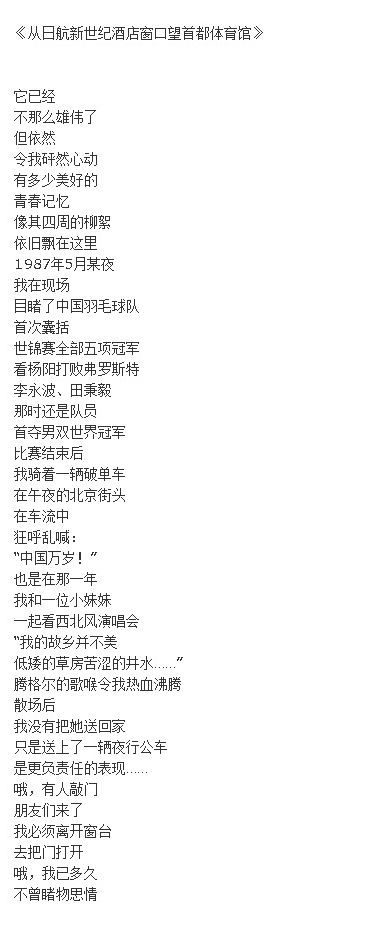
WATCHING THE BEIJING CAPITAL INDOOR STADIUM FROM A WINDOW OF THE JAPAN AIRLINES NEW CENTURY HOTEL
It isn’t as grand
as it was before;
but still my heart
goes pounding.
So many beautiful
youthful memories;
like the willows around it,
they are still blowing.
One evening in May, 1987
I was here watching the game
when the Chinese badminton team
won all five world championship titles
for the first time.
I saw Yang Yang beat Morten Frost
Li Yongbo and Tian Bingyi
They were still in the team
and won the men’s doubles for the first time.
After the games
I rode a shoddy bicycle
through Beijing’s midnight streets
shouting and screaming
“Long live China!”
in between the traffic.
In the same year
I went with a girl
to the Northwest folk rock concert
“My hometown is not beautiful,
low straw houses, bitter well water …”
Tengger’s voice, my blood went boiling.
After the concert
I didn’t bring her home,
just up to the night bus;
that was the more responsible way …
Oh, someone’s knocking,
my friends are here.
I have to leave the window
and open the door.
Oh, I haven’t thought
of that time for a while.
Tr. MW, June 2014
标签:1980s, 1987, badminton, beijing, culture, feelings, folk music, memory, music, night, patriotism, pop music, rock music, sport, youth
发表在 June 2014, May 2014, Uncategorized | 1 Comment »
11月 7, 2013

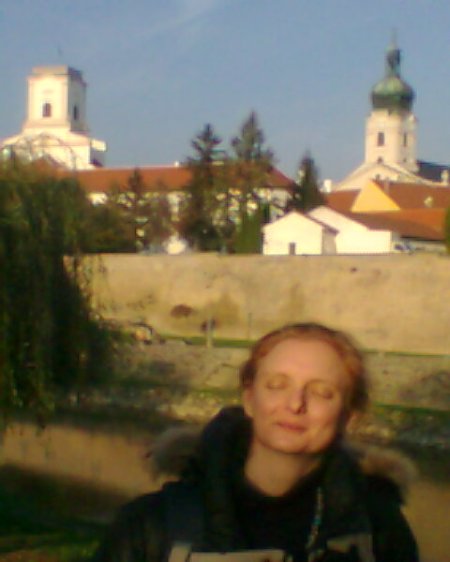
EIN VOGEL IN GYÖR
ein vogel sein
ein vogel im baum
im baum auf der mauer
auf der mauer am fluss
in der sonne im november
ein vogel sein
eine ente im fluss
ein schmetterling
ein löwenzahn
oder ein mann
oder ein großer glänzender baum
MW November 2013
<焦尔一只鸟>
作一只鸟
树上的鸟
城墙上的树
河边的城墙
十一月晒太阳
作一只鸟
河里一只鸭子
作一只蝴蝶
一朵蒲公英
要不作一个人
要不作一棵灿烂大树
2013/11, 于匈牙利焦尔
 <匈牙利焦尔>
焦尔是很漂亮的城市
吃饭非常好
温泉很舒服
还有一座惊人的音乐厅
很现代的楼
几乎维也纳音乐厅那么大
只外面墙上不向往德意志民族
不过也许演奏过瓦格纳
音乐厅原来是犹太庙
目前旁边有小小的犹太学校
这座小城市
五千犹太人迁往
奥斯威辛集中營毒气室
也很多小孩
焦尔是很漂亮的城市
国家歌剧院两片
瓦萨雷里的马赛克
我们看了门德尔松
写的莎士比亚
仲夏夜之梦
匈牙利人鼓掌的方式有特点
焦尔有很多教堂
一九四五年
苏联军队
杀死一位教主
他让妇女避难
牧师学校的地下
焦尔是很漂亮的城市
吃饭非常好
温泉很舒服
还有一座惊人的音乐厅
2013/11, 于匈牙利焦尔
GYÖR
györ ist eine schöne stadt
das essen ist köstlich
die therme ist herrlich
es gibt ein wunderschönes konzerthaus
was du ererbt hast von deinen vätern
erwirb es um es zu besitzen
ein schönes konzerthaus
ererbt von den toten
eine große synagoge
ein modernes konzerthaus
fast so groß wie das in wien
nur ohne deutschtum an der fassade
vielleicht spielen sie auch wagner
in der schule an der seite
existiert eine kleine gemeinde
aus dieser kleinstadt
wurden 5000 in ausschwitz vergast
auch viele kinder
györ ist eine schöne stadt
es gibt ein theater mit vasarely
an der fassade vorne und hinten
von oben wirkt es wie eine schanze
vom turm des priesterseminars
eine chance für die kultur
wir sahen ein wunderschönes ballett
mendelssohns sommernachtstraum
sokrates sagte in politeia
es brauche eine gemeinde
eine stadt beschützt von den göttern
von etwas gutem
etwas gedacht als gütige gottheit
gott der gerechten
es gibt die kirchen
es gab auch märtyrer unter den priestern
der bischof beschützte frauen im keller
und wurde erschossen
sokrates sagte in politeia
dass ein einzelner gerecht sei
sei nicht begründet
in einzelnen menschen
sondern in der ganzen gemeinde
in einem gott der ganzen stadt
was du ererbt hast von deinen vätern
erwirb es um es zu besitzen
ererbt von den toten
trebic und györ
mikulov und kosice
friedhof altstadt synagoge
viele juden fielen im weltkrieg
im ersten weltkrieg
für österreich-ungarn
oder für deutschland
was 1944 geschah
deportation und dann die bomben
das leben danach
in kleinen städten ist es recht deutlich
györ ist eine schöne stadt
das essen ist köstlich
die therme ist herrlich
es gibt ein wunderschönes konzerthaus
MW November 2013

标签:art, ausschwitz, austria, ballet, baths, bombing, cemetery, church, city, collaboration, community, concert hall, culture, czech republic, deportation, diary, food, Germany, god, goethe, györ, heritage, hungary, jesuits, jews, justice, konzerthaus, kosice, martyrs, memory, mendelssohn, mikulov, music, old city, philosophy, plato, poetry, priests, renovation, resistance, shakespeare, slovakia, synagogue, theatre, thermal baths, travel, trebic, vasarely, war, wine
发表在 November 2013 | Leave a Comment »
8月 12, 2013
The Globe and Mail article quoted by Paul Manfredi is well informed and sympathetic. But it doesn’t spell out any concrete reasons for Ai Weiwei’s singular status. Ai Weiwei’s status, even after his imprisonment, is that of a “princeling”. It seems to be easier to get rid of Bo Xilai. Bo’s father was one of the “eight immortals” of the Communist Party. Ai Weiwei’s father Ai Qing was a persecuted Communist writer, persecuted under Communist rule since the 1940s. Persecuted before, that’s where he got his name. Most of his colleagues denounced each other. Among famous writers, few seem to have been as obstinate as Ai Qing. He was banished to an army town in Xinjiang, a huge city today. There he cleaned toilets, together with little Weiwei. But after Deng Xiaoping came to power in 1978, Ai Qing became an icon. Unlike Bo Xilai and his henchmen, Ai Weiwei did not build labor camps and organ-harvested Falungong-followers. Before he was arrested, Global Times had published many sympathetic articles about his civil rights activism. And even after his abduction and imprisonment at an unknown location, Ai Weiwei gets to keep his comparatively huge house and grounds and most of his fortune. If he was persecuted too much, the main reason for Ai Weiwei’s status would come out too clearly: It would be awkward to discuss his father’s fate in detail. Cultural policy since the 1940s is no secret to anybody in and around the arts in China. But still. Maybe it would come out too clearly how control over art and literature and everything connected to culture was deemed even more important than in other Socialist countries. How idealism had been betrayed again and again, most effectively with broad domestic and international participation in economic growth after 1989. Ai Weiwei is very different from his father Ai Qing in many aspects, as well from his older brother Ai Xuan, who is also a well-known artist in China. But like his father, Ai Weiwei remains an icon of idealism. It would be awkward and politically dangerous to challenge such icons too much and thus revive ideals in a big way.
The Globe and Mail article quoted by Paul Manfredi gives convincing evidence of Ai Weiwei’s civil disobedience and civil rights engagement. Another good recent piece on Ai Weiwei, his imprisonment in 2011 and comparable phenomena elsewhere around the world is a TED-talk by An Xiao Mina.
Ai Weiwei wrote an indignant indictment of the US behaviour in the Snowden case in The Guardian back in June. That was before the plane carrying Bolivia’s president was refused airspace by France, Spain and Italy on US orders on July 3.
标签:Ai Qing, Ai Weiwei, Ai Xuan, art, canada, childhood, china, civil rights, civil society, contact, culture, dialogue, Global Times, history, Japan, literature, media, memory, nation, politics, prison, repression, rights, Snowden, USA
发表在 August 2013, Uncategorized | Leave a Comment »
2月 9, 2013
《新诗典》以本诗为天下苍生祈福! //@老纪微波:抄送@长安伊沙
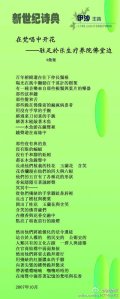
Zhan Che
Chanting sutras, blossoms opening
– stopping by the shrine of the Le Sheng Old People’s Home
[to be demolished]
100 year old banyan tree stretching its roots
sunlight in the wind tipping millions of leaves
some kind of music comes from these instruments
from strings and keys
from hairs and tongues
lepers kneeling before Buddha statues
wrists without hands
wrists that had knives tied to them for cutting vegetables
wrists, mallets tied to them beating wooden fish
– wooden fish swimming in sounds of bells
sounds of bells swimming in rain
those fish without noses
bats with no eyes
earthworms with no hands or feet
by the sound of those wooden fish
growing into whatever they planted
osmanthus smiles magnolia
scents through their four elements six roots of desire
through their five sensory organs in forms of flowers
scents drawing in sutra chanting
in the unseen world –
from their deformed hands feet noses lips
growing twigs and leaves
osmanthus blossoms magnolia smiles
smiling bodhisattvas
in scents of sandalwood and flowers
lighting lanters to walk through the night
but they will be banished by rigid laws
this cultural heritage for all mankind fits into
colonial history public health human rights
they are helpless in this official-commercial structure
but they will take to the streets kneeling and praying
with their deformed blood-swollen hands and feet
kneeling praying entreating towering authorities
bringing their muttering whispering groaning
flower scents and chanting sutras
drip into memory drop in the rain
Published in Unitas Daily (Taiwan) June 23, 2006
http://www.wretch.cc/blog/htycy/4055637
Tr. MW Febr. 9, 2013
詹撤
在梵唱中開花
-駐足於樂生療養院佛堂邊
【2006/06/23 聯合報】 【詹澈】
百年榕樹還在往下伸長鬚根
陽光在風中翻動百千萬計的樹葉
有一種音樂來自那些根鬚與葉片的樂器
那些弦和鍵
那些髮和舌
那些跪在佛像前的痲瘋病患者
用沒有手掌的手腕
綁過菜刀切菜的手腕
綁著木槌敲著木魚
──木魚游在鐘聲裡
鐘聲遊在雨絲中
那些沒有鼻的魚
沒有眼的蝙蝠
沒有手和腳的蚯蚓
都在木魚鐘聲中
長成他(她)們植栽的桂花 玉蘭花 含笑
花香瀰漫在他(她)們的四大與六根
他(她)們的五官有了各種花的形狀
香氣隱隱引著誦經聲
冥冥中──
從他(她)們殘缺的手掌腳趾鼻脣裡
長出了樹枝與樹葉
開出了桂花 玉蘭花與含笑
含笑的佛菩薩們
在檀香與花香交融中
點亮了暗夜前行的路燈
然而他(她)們將被僵化的法令遷徒
這合於人權的 殖民史的 公衛史的
人類共有的文化古蹟 一群與建築
在官商結構中弱弱無依
然而他(她)們將要去跪拜遊行
用殘缺的紅腫膿血的手腳
向著尖聳的權勢跪拜懇求
帶著噥噥喃喃 嘸嘸唔唔的
在雨聲中滴答著記憶的梵唱與花香
标签:age, china, culture, demolition, literature, new year, poetry, protest, religion, sickness, solidarity, Taipei, taiwan, translation
发表在 February 2013, Translations, Uncategorized | 1 Comment »
10月 22, 2012
I want to thank Charles Laughlin for his recent posts on the MCLC list and on Facebook. His conclusion included these words: “Mo Yan’s critics are expecting the same of him that Mao Zedong would have: the political subservience of writers and their responsibility to serve as the political conscience of the nation”. Now I have written another blog post about this. 罗老师多谢!
Mo Yan’s 莫言 situation is ironic, as Charles Laughlin says. But serving “as the political conscience of the nation” is not the same as “political subservience”. It is rather the opposite. As we know, Murakami Haruki 村上春树 and his colleagues can be “the political conscience” of Japan, making “politically progressive gestures”, but Chinese writers in China, because of “political subservience” cannot be “the political conscience of the nation”, except obliquely in their fiction, poetry etc. Or in the first few days after they win a Nobel.
Along with Charles and many other people I am very glad that after Mo Yan was announced as a Nobel winner, he finally felt up to, or forced to open his mouth as a public intellectual, in contrast to the meaning of his pen name. Now he can be a public figure, like Murakami in Japan, not just an ambivalent functionary and a reclusive writer. Or can he? Is he going to say anything more on China-Japan relations or political prisoners? Is he going to mention Liu Xiaobo 刘晓波 in Stockholm? He will certainly be asked about other Chinese Nobel winners. That’s the nature of this particular prize, whether you like it or not.
Murakami and his colleagues can “serve” as public intellectuals, when their conscience tells them to do something additional to their writing. The irony is that under CCP 中国共产党 rule, there are no public intellectuals in China. There are occasional trouble-makers and commentators, like Ai Weiwei 艾未未 and Murong Xuecun 慕容雪村, Yu Hua 余华 and Wang Shuo 王朔. But can any of them speak their mind in public at length about Sino-Japanese relations or other sensitive topics? Apart from these writers and artists, there are professors like Cui Weiping 崔卫平, who issued the call to turn back to reason in Sino-Japanese relations, which got censored on Sina Weibo 新浪微波. She has often been prevented from traveling abroad. And there are some civil rights lawyers, who sometimes disappear.
Murakami and his colleagues can “serve as the political conscience” of Japanese society in and out of their books. Mo Yan has to be very circumspect with his topics. The Garlic Ballads was censored and supressed for a while. Mao’s “Talks” 讲话 at the “Yan’an Forum” 延安文艺座谈会 helped to make sure writers and artists could not speak their conscience. Vague documents like this have played an important role as instruments of obedience inforcement in one-party societies, as Anne Sytske Keijser and Maghiel van Crevel have shown in a recent article in “De Groene Amsterdammer” (10/17/2012). Mo Yan knows about this dilemma. His comments after he won the Nobel, and even some comments before, suggest he cannot find hand-copying and displaying Chairman quotes quite as harmless as Charles. That would be the difference between working with political realities in China and teaching about them in the US. The conditions of these political realities are still determined by largely the same factors as decades ago. As Keijser and Van Crevel put it, Mao’s “Talks” and other directives are up on the shelf, routinely mentioned in speeches by present leaders, and ready to be enforced again as needed. Yes, Mo Yan and his colleagues fought successfully for enough freedom to write great literature. Isn’t that enough? Not outside the realm of fiction, unfortunately. The cultural achievements of the 1980s couldn’t prevent the 1989 crackdown and everything that stays vague and threatening in theory and practice today.
Mo Yan writes “stupendous” novels, as Charles Laughlin says. Yes, he does. His development as a writer was influenced by the threat of starvation, the brutality in the name of revolution, and by the ideology. Yes, including the Yan’an “Talks”, as Charles shows. Now, Charles says, “China’s writers are receiving much-deserved international recognition simply because they are devoting their souls wholly to literary art.” Yes, they do. Liao Yiwu’s 廖亦武 speech in Frankfurt was in Sichuan dialect 四川方言. The text is available on the Internet. Try to find a video not dubbed into German. The German translation was fine, it just wasn’t dialect or even colloquial German. And it didn’t sound half as humble as Liao himself did. Politics made him into the writer, musician, poet and activist he is now. And his temper, his foolhardiness, as he readily admits. Not a hero, as Jonathan Stalling suggested. The German Book Trade’s Peace Prize has often been awarded to writers such as Orhan Pamuk.
The irony is that in theory, as taught by Charles, “Mao Zedong would have” reminded writers of their “responsibility to serve as the political conscience of the nation.” In practice, he silenced them. Virtually all, in time. So there would be no political conscience. That’s what Orwell’s Nineteen-Eighty-Four is about. Words like “Ministry of Truth” 真理部 are very well-known in China. 1984 is a vision of the closed world of a one-party state. Some moments of life in other societies can feel just as eerie, like a progressive college professor who turns into a cult leader, as in Murakami’s 1Q84, or, even more so, the perfectly cultured killer with secret roots in Korea. But on the whole, Japan in the 1980’s, evocatively and masterfully portrayed, is not ironic enough for connecting to Orwell’s 1984. I guess Taiwan under martial law 台灣戒嚴, in 1984, could have just made it.
Hu Ping 胡平, elected as independent candidate in Beijing’s Haidian district towards the end of the brief Beijing Spring over 30 years ago, recently circulated an excerpt from Mo’s “Life and Death Are Wearing me Out” (Shengsi pilao 生死疲勞). The novel was already well-known before the Nobel. A land owner who had his head blown off in the land reform in 1950 is born again as a farm animal several times, most famously as a donkey. In this excerpt, the donkey/landlord laments his unreasonable and unnecessarily bloody execution, until the guy who shot him tells him he acted with expressive backing from local and provincial authorities, to make sure the revolution was irreversible. So was it “a matter of historical necessity”? I don’t know what Hu Ping meant by circulating the email that somehow ended up forwarded in my inbox, because I don’t follow Chinese exile communications very closely. To me, the excerpt sounds just as absurd, evocative, tragic and yes, “stupendous”, as Mo Yan’s novels usually do. And thus rather close to Orwell’s 1984, or Wang Xiaobo’s 王小波 2015, in a way. I don’t think most readers would think that the author wants to commend, recommend or even excuse such acts of brutality.
There is another irony. Gao Xingjian 高行健 was awarded the Nobel prize for literature in 2000 even though, or maybe because, he did not and does not make himself available for political comments. Gao emigrated to France in the late 1980s and rescinded his Party membership in 1989, and it doesn’t seem he wants to come to terms with the powers that be in China in his lifetime. But on the whole, Gao has made about as many explicit political comments in the last 20 years as Yang Mu 楊木.
Chinese writing in 2012 is very complex. At least there is “much-deserved international recognition”, finally. Yu Hua’s essays “China In 10 Words” 《十個詞彙里的中國》 were serialized in the New York Times 紐約時報, among other international papers. And now Yang Mu, Mo Yan and Liao Yiwu appear together in headlines, also in the New York Times. What more could we wish for?
标签:china, culture, fiction, German Book Trade Peace prize, history, Japan, literature, memory, Newman prize, Nobel prize, politics, taiwan, theory
发表在 October 2012, Uncategorized | 2 Comments »
2月 23, 2012
“My father made me stand on a table when I was small, and recite ancient classical Chinese. I could only climb down after I was able to recite the whole thing by heart. I was only 3 or four years old, maybe. I hated my father.” This is how 廖亦武 Liao Yiwu began to talk to the students and teachers of 國立成功大學 National Ch’engkung University in 台南 Tainan, after he played a wooden flute, a very basic instrument he had learned in prison. Very basic sounds, mute and suppressed at times. Loss and regret. No uplifting fable. “I am not going to tell you very much about the time when I went into prison. You would have no way to understand everything. I was like any young person. I didn’t want to listen to anybody from older generations. And I had gone through 文革 the Cultural Revolution, when my parents couldn’t take care of me. For me, classical Chinese belonged into the rubbish bin, along with many other things. My father was 84 years old when he died”, Liao Yiwu said. Or was it 88 years? Only a few hours of dialogue and open exchange between father and son, in all those years.
Dialogue and open exchange. Between 四川 Sichuan and 台南 Tainan. Between Taiwan and China. Between languages and experiences. Feeling lost, between clashing dialects, conflicting histories. Feeling rooted, at the bottom of society.
On the podium, scholars of 台灣閩南語文學 Taiwanese literature sat along with Liao Yiwu. They spoke in Taiwanese. One professor recited a poem by a high school student. Before Dawn, or something like that. About the massacre from 1947, February 28th. I didn’t understand the words. But you could understand the feeling. The answer is very simple, he said, when a 客家 Hakka student asked what she should do, because the words and songs of her grandmother would die with her. There were too few people who could still speak with her in 客家話 Hakka, she was afraid her mother tongue, her grandmother’s words would become extinct. The answer is very simple, the professor said very gently. He spoke mostly in Taiwanese, so I didn’t understand it all. But he said you just have to study, you can even major in Hakka now. It’s not easy, but there is a common effort.
It was very simple, Liao Yiwu said, when people asked him how he fled from China. I went to 雲南 Yunnan province, bordering Vietnam, Laos, Myanmar and Tibet. I had made lots of interviews there many years before, with people at the bottom of society. You turn off your mobile. You could also bring extra mobile phones. You get lost in small towns. And then one day I was across the border in 越南 Vietnam, very wobbly on my legs. There was a small train, like in China at the beginning of the 1980s. I knew such trains from drifting around China when I was young. In Vietnam, I was afraid of a lot of things, getting on the train, of simple things to eat. But I could communicate by writing numbers on a piece of paper. 500, wrote the innkeeper. 100, I wrote below. And so on. Finally I was in 河內 Hanoi, in a simple inn. And then I went on-line and contacted my friends and family in China. When I got on the plane to Poland, I was still afraid. The year before, military police in full military gear had come and taken me out of the plane in 成都 Chengdu. But then I realized, although this was a Socialist country, I was in the capital of another country, not in China. And the plane took off.
The lecture hall was full. I sat on the floor in the aisles, like many others. It was a very welcoming atmosphere. “We have a few books to give away for students asking questions in the second part of the lecture.” What is 流浪 liulang? What is 流亡 liuwang? What is 旅行 lüxing? These three words sound rather similar in Chinese. This was another professor speaking. He had studied in Russia. He was from a Taiwanese faculty in 台中 Taichung, but at this occasion, to clarify this question, he spoke in Mandarin. What is drifting about? What is exile? What is traveling? When you are drifting around, you don’t know where you are coming from, and you don’t know where you’re going. When you are going into exile, you know where you are coming from, but you don’t know where you are going, where they will let you stay. When you are traveling, you know where you come from, and you know where you’re going. Very simple differences. But what about us here in Taiwan? 我們是否知道自己從哪裡來,到哪裡去? Do we know where we are coming from, and where we are going? In the 1960s and 1970s, many writers and intellectuals in Taiwan were in prison. It was very hard, but you knew what you were fighting for. Just like the writers and lawyers in China, they know they are fighting for freedom. Now in Taiwan we are very free, in comparison. But we can still be marginalized.
One of the professors was my landlord from 1988 to 1990 in Taipei. He is the chairman of the Taiwanese PEN. In 1988 he was a doctoral candidate in history, and a stage decorator. We hadn’t seen each other or heard from each other for 22 years.
标签:china, culture, Europe, exile, history, literature, memory, politics, religion, Sichuan, society, Tainan, taiwan, travel, Yunnan
发表在 February 2012, Uncategorized | 1 Comment »
2月 23, 2012
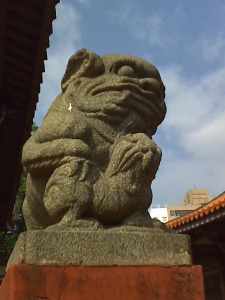
haus der patriotischen frauen
(unter japanischer herrschaft)
fuer Tong Yali
ein baum, ein hof,
der wind, die stadt.
es ist ein warmer wintertag.
in tainan ist es immer warm.
die stadt der tempel, der kultur;
die erste stadt: erinnerung.
MW 22. Februar 2012
彤雅立
記憶旅車
車子駛進了記憶
雪天里繾綣的石頭
海平面沒有風
巨浪在海底洄流
車子駛進從前的風
旋進黑色漩渦
《月照無眠》,二零一二年, 台北南方家園出版社,一三一頁
Tong Yali
erinnerung, wagen
der wagen faehrt los.
steine, in schnee eingerollt.
kein wind auf dem meer.
wogen tuermen sich darunter.
der wagen faehrt in den frueheren wind,
in den dunklen strudel.
Aus dem Gedichtband Schlaflos im Mondlicht (Yue zhao wu mian), Nanfang Jiayuan -Homeward Publishing, Taipei 2011, S. 131. MW Uebers. Febr. 2012
Tainan, city of temples. Temples everywhere, many lanes, full of flowers, blossoms, improvised housing, ancient and dated, broken and new. Squares in front of temples for breakfast stands, temple fairs, opera, evening barbecue. Temples complete with public toilets. The main Catholic church of the city is a beautiful traditional temple from 1960. Right across from the temple grounds dedicated to Koxinga, a Chinese-Japanese pirate’s son who fled from the mainland, drove out the Dutch and established the first Chinese kingdom on Taiwan, all in one year, he died rather young. And there is an Earth God’s temple next to the Catholic church. There was a wagon on the square in front of the church, with a few rows of plastic chairs. Very gaudy colors on the wagon, Taiwanese opera. A female warrior with a huge sword, ancient costumes. Tomorrow is the Earth God’s birthday, the church custodian said. Happy birthday! He was in his element, explaining the rich Tainan heritage. Sometimes people come and kneel on the steps of the church, he said, and only then they ask me which important god of the city is housed inside this magnificent temple. And when I tell them this is the Catholic church, they say sorry, we prayed at the wrong place, we didn’t know. Your prayers are very welcome, the custodian replies, and beckons them inside, like he did with us. They had been eating lunch, he and a woman, his wife maybe. Their little chamber next to the door was open. We had looked at the statue first, climbing over stoves and vats with food and cooking utensils, in preparation for the Earth God’s birthday. Mary looks very graceful in a simple and elegant robe, very Chinese, holding her naked baby Jesus. On the mosaic over the main altar inside they look more regal. But it is a very welcoming church. A traditional temple, I-Ching octagon tower with glass windows, couplets left and right written on columns, and boards, wooden and stone. An incense censer in front of the main altar. And an altar on one side for ancestor worship. “Oh, it’s from the 1970s, I didn’t know”, my friend said when we opened the gate, encouraged by the Earth God’s cooks, and looked at the statue more closely. Yes, she has traditional looks, like from the Qing Dynasty, but she is comparatively new, from the times of martial law. White Terror was still practiced on Taiwan when the church was built in 1960. Today, Tainan remembers founding fathers of its modern history inside the Japanese-era house of the Patriotic Women’s Association. These founding fathers of Tainan’s modern era are Japanese and British. Father of water taps and sewage, father of dams and canals, and so on. There is also one guy form the 16th century, sent from China. ”The soldiers who came from China after 1945 and took over from the Japanese didn’t even know houses with running water, they didn’t know taps!” That’s what a poet and scholar told me at the Taipei Book Fair, full of Taiwanese pride.
The last Japanese mayor of Tainan restored the main temples and historic sites. He prevented the Japanese troops from requisitioning and melting the huge bell from Kaiyuan Temple, which is still rung on important holidays. One of the main signs of the Confucius Temple, when you enter the temple grounds, was written by him. The temple grounds are sprawling, open and welcoming. Only the innermost part of the temple is guarded, and the entrance fee is 25 NT, 65 Euro Cents maybe. The city hall and seat of the provincial government from Japanese times is the Taiwan Literature Museum now, very modern and welcoming inside, lots of audio and other impressive installations, beautiful children’s rooms, extensive library, very accessible. This place was our destination when we came down from Taipei and Kaohsiung, an important stop in our one-month stay on Taiwan as translators into German.
标签:culture, history, literature, memory, religion, society, Tainan, taiwan
发表在 February 2012, Uncategorized | 2 Comments »
2月 28, 2011
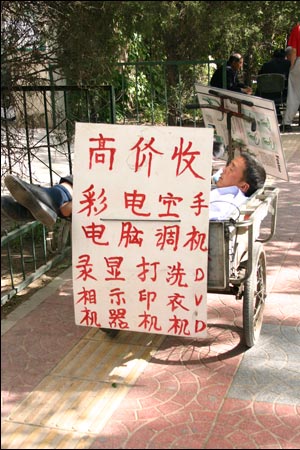 In 2004/2005 or so in Beijing, my wife and I became friends with some parents of other kids at the local kindergarten. One mother had studied art in Japan and introduced me to blogging. Since early 2008 I have a website at Yahoo Japan. (I had spent a few weeks in Japan in early 1993, on a boat trip from Shanghai.) There is a blog I maintain at Langmates (translation and localization), another one for poems only (almost) and a harmonized teaser, among others. My translations of poems and various signs and banners in China can also be found on websites set up by Sam Brier (2004) and by Charles Laughlin (Ma Lan’s poetry). MCLC (Modern Chinese Literature and Culture), edited by Kirk Denton, has not only spawned an extensive treasure trove of Modern Chinese Literature and Culture sources, but also an Email-list server which has maintained professional and other exchange services for the international Chinese Studies community and beyond, including some very lively discussions. Recently, list members have introduced their blogs, such as Anne Henochowicz, Andrew Field, Jeanne Boden and Charles Laughlin. The initiative was started by Paul Manfredi.
标签:beijing, china, Chinese Studies, culture, life, literature, poetry, politics, Shanghai, travel, writing
发表在 March 2011, Uncategorized, Welcome! | Leave a Comment »
7月 28, 2010

nice
we’re not that nice
we suck up ants
or vacuum them if you prefer
the proper word
…
标签:all, children, culture, familie, history, life, poetry, rain, religion, wind
发表在 July 2010 | Leave a Comment »
8月 4, 2009
Ana Escobedo, founder of the Facebook Cause Save Kashgar, has written a blog article for Saving Antiquities. It can be found at http://safecorner.savingantiquities.org/2009/08/saving-kashgar.html. I like Ana’s article very much, and I have great respect for her dedication. As Ana suggests, it is apparent that a lack of awareness for cultural heritage is directly connected to the social problems behind the July 5 incident. There is a lack of respect for culture that goes back to the Cultural Revolution and earlier. Tianjin is being destroyed, too, like many, many culturally rich places in China. There is no “rational” progress behind much of the demolition, but it’s always a great step forward for the developing companies and the party secretaries in their pay. Yes, many old streets and houses in many cities were in a sorry condition due to decades of neglect. It’s not easy to renovate them. Beijing has finally begun to rebuild some courtyard houses. At the same time they tore down the whole Qianmen area at the south of Tian’anmen Square and replaced it with a sort of Disneyland. Protests and suicides because of the demolitions in various cities have been in the news for years. In China, Southern Weekend (Nanfang Zhoumo) and other media have often reported on housing and cultural heritage problems. Most of the time they are allowed to do that. They cannot report on the arrest of dissidents such as Prof. Ilham Tohti of Central Nationalities University in Beijing. He has been detained since August 8. Amnesty International has issued an appeal for writing petitions in English and Chinese to the Chinese Prime Minister and other figures, because Prof Tohti has not been heard of since his arrest, raising fears for his health. Cases of torture and death in police custody are not unheard of in many parts of China (and other countries, of course). See http://www.chinafreepress.org/publish/Othernews/Petition_for_Ilham_Tohti_under_detention_presented_by_Wang_Lixiong.shtml, or http://bit.ly/q3BX4.
Yes, I think that Ana is right, raising awareness is crucial. One thing that has been lacking on the Uyghur support groups side is an outspoken condemnation of the massive looting and killing on July 5th in Urumqi. Yes, the demonstrations may have been peaceful in the beginning, just like in Lhasa last year, and maybe the police could have prevented them from turning violent, or maybe they could have at least contained them. And yes, thousands of Uyghurs have been arrested, some have been killed, and no one knows how many of them didn’t have any connection to the violence at all. But still: Both the Dalai Lama and Mrs. Rebiya Kadeer should have condemned the looting and killing in Lhasa and in Urumqi. The Dalai Lama said he prayed for victims on all sides, but that’s not enough. And the Uighur support groups such as Save Kashgar should have swiftly and loudly condemned the massive looting and killing by Uyghurs. Instead, Ana told us on Facebook that many Uyghurs may have died in Urumqi. Just that, as far as I have noticed. It was the same lack of awareness that was apparent after the Lhasa riot last year. So maybe there is a lack of awareness on both sides. Anyway, let us try to help in any way we can think of. Unfortunately, social websites such as Facebook and Twitter and their Chinese equivalents have been widely blocked and closed in China. The blocking of Facebook was said to be in response of aggressive Uighur support groups. They were mostly not aggressive at all, but they did fail to condemn the Uyghur looting and killing. As I have mentioned, Chinese media and intellectuals are sometimes able to speak out against social and cultural problems. Sometimes Chinese intellectuals in China can speak out in the international media and get noticed. See Asia Times (7/8/09): http://www.atimes.com/atimes/China/KG08Ad02.html, Ghost of Marx haunts China’s riots, By Jian Junbo. We concerned individuals and groups outside of China should support these efforts, and at the same time help to show the connection to Human Rights cases. And we should have condemned the Uyghur looting and killing first, and/or more loudly. The more we show our awareness on this side, the more we are credible on all sides. I never understood why Abu Ghraib was not raised as a central question by the Democrats in the 2004 US election. Where is the connection, you might ask. At least we have Obama now. Well, I think we have to look at and work on the most painful questions on our side first, whoever we are. Yes, I am on the side of Kashgar Old City. And on the side of minorities in my home country Austria. Maybe I should have cited a painful problem in Austria’s contemporary history. We certainly don’t have a shortage there. Anyway, I like Ana’s article very much, and I have great respect for her work. Let us continue writing and signing petitions, and most importantly, like Ana says, raising awareness. Peace!
标签:Abu Ghraib, Amnesty International, arrest, austria, china, cultural heritage, culture, Democrats, detention, elections, human rights, Kashgar, killing, looting, media, Obama, police, riots, torture, unrest, Urumqi, Uyghurs
发表在 August 2009 | Leave a Comment »
3月 20, 2008
Two days ago I went to Wikipedia in Chinese and stumbled on a photo of the Dalai Lama. The browser started generating error messages. When I tried to get there again, my screen went black. Then it was blue, with a message from Microsoft about a serious system failure. “Starting memory dumping” was at the bottom. I had been using Gladder, a Firefox extension for circumventing the Great Firewall when you’re in China.
In the 1980s, when I was an undergraduate student, we had a Chinese reading class. It was mostly Chinese government-issued information on Tibet. There was one phrase I remember. The soldiers of the Chinese People’s Liberation Army were generous, so they didn’t ask the Tibetan people immediately to pay back the cost of pacifying their land. That was a memorable sentence. Then in 2001 or so I was translating and dubbing films for the Ministry of Culture in Beijing. There was a report on celebrating 50 years of liberating Tibet. Somebody important called me and asked me to please finish it quickly. It was a very important piece. Hu Jintao, who was already very important back then, had led a central party delegation on a fact-finding trip through Tibet to prepare for the celebrations. They stayed at ordinary people’s homes. And when they left in the morning, they gave the peasant family gifts to thank them for letting them stay. They gave them framed pictures of the core leaders of the Chinese Communist Party. Chairman Mao Zedong, Chairman Deng Xiaoping and Chairman Jiang Zemin. That was a memorable scene.
What is art? What is music? Music makes you dance or cry. Art is truth. It’s the truth in the ear of the beholder. Or in other orifices. Or somewhere in between. They call it the heart. There have always been found objects. And pictures of leaders.
标签:china, culture, 音樂,文化,藝術,生活,文學,閱讀,ï, literature, music, news, politics, reading, tibet
发表在 March 2008 | 1 Comment »








 中国大好き
中国大好き 