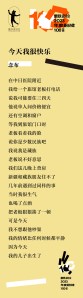
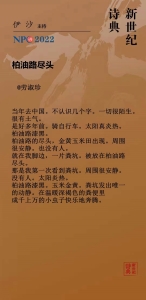
Close to the Chinese-Japanese Hospital
I call the owner of a hotel,
saying I may want to stay three, four days.
He says he has singles for a good price,
with windows and air conditioning.
When I arrive at the hotel,
the boss looks at my face
and says, you must be a minority person.
I am Tibetan, I say.
The boss says sorry,
they check the rooms here at night,
people from Xinjiang and Tibet can’t stay.
I ran into something like this years ago.
I got very angry,
had drunk some alcohol,
so I beat up that boss.
But today
I don’t want to get into a fight.
My feelings are more peaceful than ever.
Because today
my son was born.
Saurierschuh schmeckt nach Orange,
Entchenschwimmreifen nach Mango.
Holzklötzchenauto schmeckt nach Tomate.
Blümchenkleid hat Erdbeergeschmack.
Seifenblasenbär schmeckt nach Trauben.
Blutsuppe mit Tofu schmeckt nach Schokolade.
Honigpfirsich schmeckt nach Mama.
Das sind übertragene Worte,
absurde Begriffe.
Das ist eine Freude im Herzen,
die ich nie erreiche.
Das ist die Sprache
von meinem zweijährigen Sohn.
Damals nach China. Kaum Zeichen gekonnt. Alles fremd. Sehr erdig.
Vor vielen Jahren. Fahrradfahren. Hitze in der Sonne. Pechschwarzer Asphalt.
Am Asphaltstraßenende, goldgelber Mais. Rundherum Stille. Auch keine Leute.
Zu meinen Füßen eine Jauchegrube. Angelegt am Asphaltstraßenende.
Die erste Jauchegrube, die ich gesehen hab. Rundherum Stille. Keine Leute. Sonnenhitze.
Pechschwarzer Asphalt. Goldgelber Mais. Nur in der Jauchegrube Bewegung. In dem warmen dunkelbraunen Kot viele tausend Insekten, die tummeln sich froh.
Übersetzt von MW aus dem Chinesischen am 7. März 2022
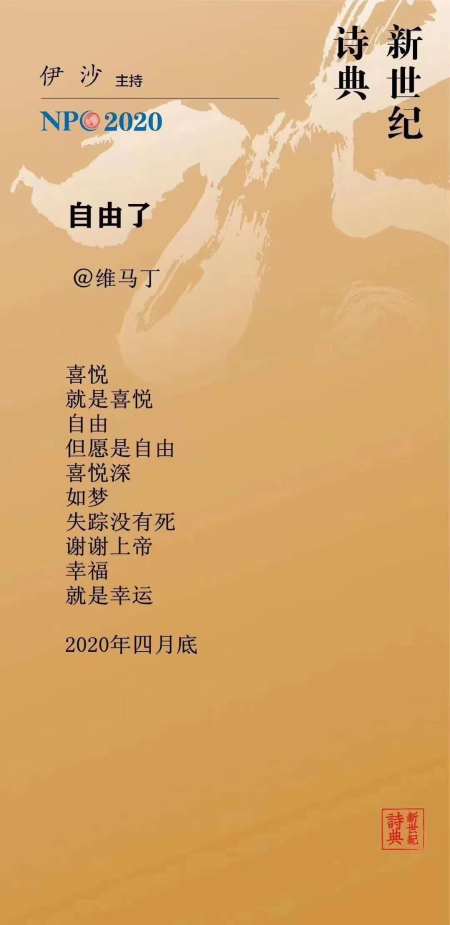
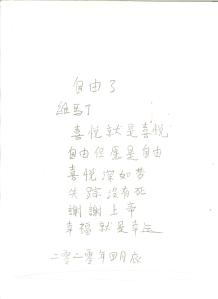
I wrote this poem in response to photos of a lawyer in China, reunited with his family after years in detention. That was one year ago at the end of April. Liao Yiwu wrote a poem, and I wrote mine in response. I wrote the poem in Chinese and in German, later also in English. When I posted the Chinese version in China, many people thought the poem was about the end of the first Covid lockdown in Austria. That’s okay. Poetry is poetry. Freedom, let’s hope it is freedom. Heartfelt thanks to Farzaneh Dorri for the Persian translation!
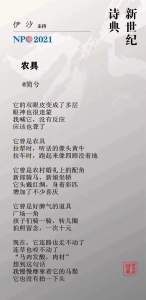
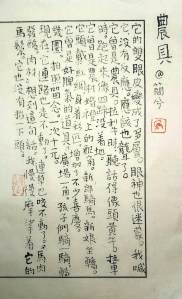
Seine doppelten Lidfalten sind ganz viele geworden,
sein Blick ist sehr unklar.
Ich rufe ihn, er reagiert nicht,
wahrscheinlich ist er schon taub.
Er war ein Ackergerät,
hat den Pflug gezogen, folgsam wie ein Ochse;
hat den Wagen gezogen, die Hufe sind alle auf einmal geflogen.
Er hat auf Hochzeiten seine Rolle gespielt,
Bräutigam hoch zu Ross, die Braut in der Sänfte.
Am Kopf rote Seide, am Rumpf bunte Farben,
er hat viel beigetragen zur Freude.
Er war ein gemütliches Spielgerät,
in einer Ecke des großen Platzes.
Reiten für Kinder, jedesmal ein paar Runden
und ein paar Fotos, pro Kopf für zehn Yuan.
Jetzt kann er nicht einmal gehen,
sogar Gras frisst er nicht mehr.
„Pferdefleisch wird sauer, Gewürze dafür“
fällt mir auf einmal ein.
Ich streichle langsam durch seine Mähne,
er hebt nicht einmal den Kopf.
Übersetzt von MW im Februar 2021
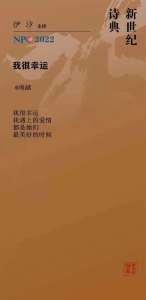
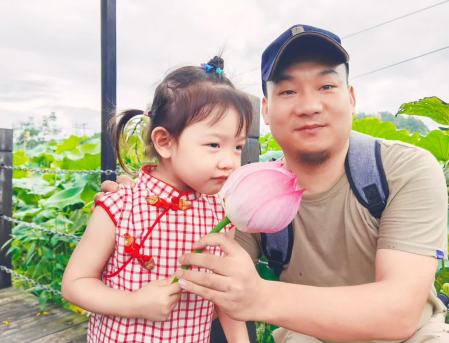
Jian Xi, geb. in den 1970er Jahren, kommt aus Changzhi, Provinz Shanxi. Lehrerin, liebt Lyrik. 《新诗典》小档案:简兮,女,七零后,山西省长治人,教师,喜欢诗歌。
11 years ago I was happy. Our daughter had her first day of school, she was just turning 7. We knew she was smart, talented, beautiful. We were rather worried about her brother, he had hardly started to talk and wasn’t always well treated in Kindergarten. But we found a new place where he was happy, and we were happy for Maia. Our kids are born in Beijing, 2002 and 2005. China will always be part of their identity. Both of them know that. They don’t want to lose their Chinese, although there are lots of other problems. Maia’s primary school wasn’t good for her. Leo’s primary school wasn’t bad, he just takes a very long time for reading and writing. Both of them are native speakers of English. German is taken for granted, although it’s harder than English and Chinese. Yeah, I know, it takes so much effort to write in Chinese, to read and write. But maybe Leo would have done better in Chinese at first, maybe not. English for sure. Anyway, we had other problems. Leo is doing better now, and Maia is in a good high school. She is 18. Guess I should be happy.
Freude ist einfach Freude Freiheit ist hoffentlich Freiheit Freude ist tief wie ein Traum Verschwunden war gottseidank nicht tot Glück ist einfach Glück
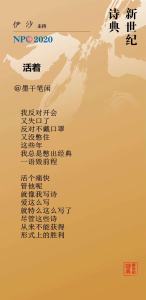
I am against holding a meeting, but here I am shooting my mouth off. I am against not wearing a mask and don’t hold that back. These years I always hold it till there’s a classic, one statement ruining my future.
I live how I like it, so what! Just like I write how I love to, exactly like that, even though these poems won’t ever take any prize for their form.
spring wind, a pair of cattle trying to mate
first time it won’t work
second time, with the help of the holder
they finish the old rite of life
joy is so short, giving birth takes so long
spring wind, please give this moaning cow
a reason not to cry
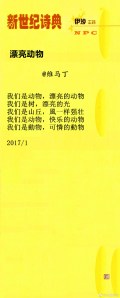
animals are we, beautiful animals
trees are we, fair as the light
ranges are we, strong as the wind
animals are we, frolicking animals
animals are we, miserable animals
우리는 동물, 아름다운 동물
우리는 나무, 아름다운 빛
우리는 산언덕, 바람처럼 건장하고
우리는 동물, 즐거운 동물
우리는 동물, 가련한 동물
2017/1
(韓)郭美蘭 译
SCHÖNE TIERE
tiere sind wir, schön wie die tiere
bäume sind wir, schön wie das licht
hänge sind wir, stark wie der wind
tiere sind wir, froh wie die tiere
tiere sind wir, erbärmliche tiere
MW Januar 2017
JOHN GRISHAM
the firm
the not-so-firm
the altogether weak
the dead
(oh! that last one is by mr. james joyce, another great american writer!)
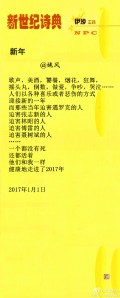
Gesang und Schampus, Riesen-Fraß;
Raketen, Böller, rasender Tanz;
Ecstasy, Auszählen, Sex oder Streit, Traurigkeit …
Mit Freude und Schmerz, auf alle möglichen Arten
begeht man Neujahr.
Und jene Leute, die damals den Dissidenten Yu Luoke,
die Dissidentinnen Zhang Zhixin und Lin Zhao,
den Übersetzer Fu Lei,
den 1995 hingerichteten Nie Shubin
und so weiter
verfolgt haben,
die leben alle noch;
schreiten ins neue Jahr rüstig wie ich.
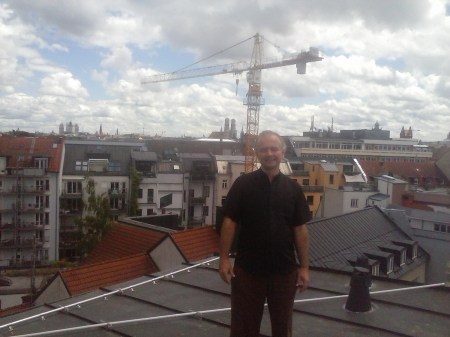
durch münchen rollen
und dann chinesisch
auf dem turm der tu.
oben im freien
dachauer straße,
brienner straße
sind doch drei silben?
wie erkennt man gedichte?
dachauer straße,
ankunft in münchen.
vogelgezwitscher.
vögelgezwitscher?
was kann man sagen?
das haus der kunst
der englische garten
der kunst ihre freiheit
die surfer im bach
durch münchen rollen
die junisonne
vollmond, fast vollmond.
sinologie.
eine veranstaltung zur poesie.
ich bin der einzige mann in der runde.
sinologie und sdi.
forschen und dolmetschen.
wie erkenn ich den rhythmus?
wie mach ich meine eigene sprache?
auf dem balkon steht ein hirsch
dort oben hinten steht eine frau
oder was ist das?
tot wie die sonne
die warme sonne
eine lebendige kommt jetzt heraus
hebt etwas auf
auf dem balkon.
dachauer straße.
brienner straße
wieviele silben?
muss ich etwas erklären?
vögel üben den ganzen tag.
vögelgezwitscher
sinologie
der kunst ihre freiheit.
dachauer straße
kindertheater
julia radelt mit mir durch münchen
das war ludwig der erste
das waren die nazis
die musikhochschule
was macht ein gedicht aus?
ich heiße fiona. ich heiße anna.
ich arianna. ich heiße helga.
bei uns auf spanisch.
das ist ganz neu
zur nationalsozialistischen herrschaft
ein schöner kubus
mit vielen fenstern
ich bin der heiße mann der gedichte
angerollt aus der ferne.
ich bin aus wien.
danke, Rebecca!
danke Armin und Julia.
Danke Euch allen.
MW Juni 2016
LANGE JENSEITS

ich sitze im zug
zwei alte frauen reden von kleidern
sind die nicht lange jenseits
schießt mir durch den kopf
lange jenseits von schönheit
außer für alte
alte für alte
junge für junge
ich bin 50 jahre
fünfziger für fünfziger
meine frau hat noch zwei, drei jahre
jedenfalls sind wir jung
jenseits kann warten

MW Juni 2016

















 中国大好き
中国大好き 