Hinter dem Bahnhof das Hotel Fuchs.
Fuchsgasse hat meine Oma gewohnt.
Die Wohnung war von einem Juden.
Ihr Mann war im Krieg.
Ist im Krieg geblieben.
Eine Wohnung mit Wasser draußen am Gang.
Meine Oma mit Kind.
Sie ist fast verhungert gleich nach dem Krieg.
Läuft nackt aus dem Haus und kommt nach Steinhof.
Steinhof war ein Ort des Schreckens in Wien.
Eine schöne Kirche von Otto Wagner.
Meine Oma hat viel gearbeitet.
Der Jude ist lange noch dort gestanden.
Mariahilferstraße.
Hat hingeschaut zu seiner Wohnung.
Noch mehrere Tage.
Meine Oma wars nicht hat sie gesagt.
Niemand in der Familie.
Niemand den sie gekannt hat.
Der Jude ist tagelang noch dortgestanden.
Meine Oma hat Maria geheißen.
MW 1. August 2015
KATASTROPHE
maia gibt leo eine schallende ohrfeige
ich gebe maia eine schallende ohrfeige
alle weinen
MW Juli/August 2015
DAS WICHTIGSTE
– für Daniel
das wichtigste war nicht das klo
das klo war wichtig und interessant
es ging um gerechtigkeit
ich hab das gedicht dann ganz übersetzt
wir haben es diskutiert
am lcb in berlin
ein workshop für übersetzer
das wichtigste war die gretchenfrage
wie hältst du es mit der religion
ich sing gerne mit
beim abendmahl bin ich gern dabei
aber ich bin nicht in der kirche
es hat sich so ergeben
ich glaube gern an die revolution
in china glaub ich nicht an die linke
an den widerstand ja
aber nicht an die linken
bevor sie nicht kacken
auf den vorsitzenden
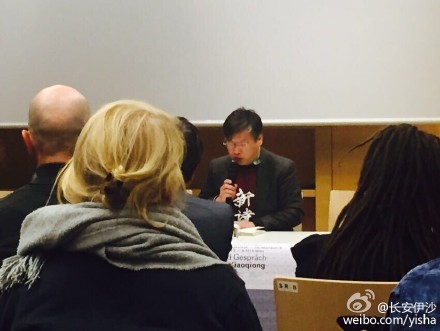
wie hält es yi sha
mit der religion?
er glaubt an poesie
poesie macht dich zu einem besseren menschen
stimmt leider nicht immer
hab ich ihm gesagt
schau dir nur deinen papiertiger an
MW 2. August 2015
OSTERN
Christus starb 1944.
Christus starb 1943.
Christus starb 1942.
Christus starb 1941.
Leider auch früher
und später.
Christus starb im Holocaust.
Marc Chagall hat es gemalt.
Shen Haobo 《差点入狱的那一年之有事烧纸》 IN DEM JAHR ALS ICH FAST IM GEFÄNGNIS WAR HAB ICH PAPIER VERBRANNT
wenn ich es erzähle wirst du mich auslachen
aber auf dieser geheiligten erde
sag am besten nicht
dass du nie und nimmer
so etwas machen wirst
ich ging zum schluss zu einem großen wahrsager
er hat seinen stand beim lamatempel
drei geheiligte kupfermünzen
hält er in seiner hand
sie entscheiden über mein schicksal
“in den trigrammen steht es ganz klar,
für dich gibt es unglück, gefängnis
wenn nicht ein jahr
dann gleich zehn jahre.
einen hat es schon vorher erwischt,
stimmt es nicht?”
— es stimmt verdammt zu genau
“du bist geboren zur mitternachsstunde
im monat der dieser zeit zugehört
wir haben ein hasenjahr
da gibt es einen konflikt
und deine beiden mitternachtszeiten
das macht es noch schlimmer
du hast durch die jahre
behörden geärgert
jemand im amt will dich zurichten
oder stimmt es nicht?”
— es stimmt verdammt zu genau
meister, gibt es noch ein mittel?
der meister brummt vor sich hin
ist es das?
meister, wieviel geld?
ist es das?
… …
so hab ich drei tage
mit meiner frau
um mitternacht
draußen geistergeld verbrannt
108 weisse seiten
aufgetürmt als silberbarren
an der ersten kreuzung südostwärts
von unserer wohnung
in richtung nordwesten verbrannt
433 weisse seiten
aufgetürmt als silberbarren
an der ersten kreuzung nordwestwärts
von unserer wohnung
in richtung südosten verbrannt
im november im kalten wind
wir sind dick eingewickelt
wie ein zottelbärpaar
hocken wir an der kreuzung, verbrennen papier
murmeln heiligen zauber
… …
du sagst am besten nicht
dass du nie und nimmer so etwas tust
die klinge fürs heu
sitzt an deiner kehle
die schüssel fürs blut macht ihren mund auf
der abschied ist nahe
es gibt noch zeit fürs zappeln
irgendwas musst du tun
dir etwas vormachen
dass du noch kämpfst
I n-need t-to b-b-break out
f-f-from y-y-your s-sp-pout-ting s-song
b-break o-out o-of y-your h-house
m-m-my sh-shoot-t-ting t-t-tongue
m-m-mach-chine g-g-gunn f-fire
it feels so good
i-in m-m-my s-st-tut-t-ter-ring l-life
the-there a-are n-no g-ghosts
ju-just l-llook at-t m-my f-face
I d-d-don’t c-care!
1991
Tr. MW, 2015
Yi Sha 《结结巴巴》 ST-STO-TO-TT-TERN
m-mein st-sto-to-tt-ternd-der m-mund
b-b-behind-dderter schschlund
b-b-bei-sst- s-ich wund
an m-meinem r-rasenden hirn
und m-meine b-beine –
euer t-trief-fend-der,
schschimmliger schschleim
m-meine l-lunge
i-ist m-müd’ und hin
i-ich w-will r-r-aus
aus eurem g-gross-a-artiggen rh-rhythmus
a-aus eurem h-haus
m-m-meine
sch-schp-prache
m-masch-schinengewehr-s-salven
es tut so gut
in m-meinem st-stott-ttoterndem r-reim
auf m-mein l-leben g-gibt es k-keine l-leich-chen
s-s-seht m-mich a-an
m-m-mir i-ist all-les g-gleich!
1991
Übersetzt von MW im April 2013
<結結巴巴>
結結巴巴我的嘴
二二二等殘廢
咬不住我狂狂狂奔的思維
還有我的腿
你們四處流流流淌的口水
散著霉味
我我我的肺
多麼勞累
我要突突突圍
你們莫莫莫名其妙
的節奏
急待突圍
我我我的
我的機槍點點點射般
的語言
充滿快慰
結結巴巴我的命
我的命裡沒沒沒有鬼
你們瞧瞧瞧我
一臉無所謂
1991
Photos and videos by Beate Maria Wörz
Yi Sha 《精神病患者》 GEISTESKRANKE
theoretisch
weiß ich nicht
wie es sich äußert
wenn eine geisteskrankheit ausbricht
ich hab nur gesehen
in diesem land
in dieser stadt
wenn ein geisteskranker loslegt
streckt er den arm hoch und bricht aus
in parolen
der revolution
theoretically
I don’t know
how it should be
when a mental patient
suffers an outbreak
but what I have seen
in this country
in this city –
a mental patient suffers an outbreak:
up goes his arm
out come the slogans of revolution
1994
Tr. MW, 2013-2014
Photos and videos by Beate Maria Wörz
Yi Sha 《我想杀人》 ICH MÖCHTE JEMANDEN UMBRINGEN
ich fühle mich etwas komisch
ich will jemanden töten
oh! das war letztes jahr
herbst kroch über das laub
zwanzig todeskandidaten
am flussufer nördlich der stadt
“peng! peng!”
einer wurde aufgeschnitten
in der folgenden operation
erhielten WIR eine niere
I am feeling a little strange
– I want to kill someone
Oh! It was last year
autumn crept over the leaves
twenty death candidates lined up
at the river north of the city
„Peng! peng!“
One of them was cut open
and in the following operation
We got a kidney
1994
Tr. MW, 2015
Yi Sha 《9/11心理报告》 9/11 AUF DER COUCH
erste sekunde mund offen scheunentor
zweite sekunde stumm wie ein holzhuhn
dritte sekunde das ist nicht wahr
vierte sekunde kein zweifel mehr da
fünfte sekunde das brennt nicht schlecht
sechste sekunde geschieht ihnen recht
siebte sekunde das ist die rache
achte sekunde sie verstehen ihre sache
neunte sekunde die sind sehr fromm
zehnte sekunde bis ich drauf komm
meine schwester
wohnt in new york
wo ist das telefon
bitte ein ferngespräch
komme nicht durch
spring zum computer
bitte ins internet
email ans mädl
zitternde finger
wo sind die tasten
mädl, schwester!
lebst du noch?
in sorge, dein bruder!
2001
Übersetzt 2013 von Martin Winter
Yi Sha 9.11 REPORT FROM THE COUCH
Ist second: mouth barn-door open
2nd second: wooden-chicken stiff
3rd second: couldn’t believe it
4th second: it must be true
5th second: what a great fire
6th second: well they deserve it
7th second: this is retribution
8th second: these buggers have guts
9th second: must be their religion
10th second: before I realize
my own little sister
lives in new york
I need a telephone
long distance call!
can’t get a connection!
I go storming for a computer
where is the internet
typing out characters
writing an email
shaky fingers
“sister, sister!
are you alive?
your elder brother is worried sick!”
somewhere in the south on a restaurant table
I saw a pagoda
of red shining pork
(I hope I don’t remember its name)
when it appeared
I gazed on that thing
couldn’t take off my eyes
all the other dishes
had become worshippers
I was a worshipper
until I remembered
where I was born
in tibet
all those believers around a pagoda
their heads on the ground, offering incense
I was one of them
now I am one of them here
all those years, I kept my respect
for the mystery of a pagoda
I also kept my taboos about foods
looking at this pagoda of pork
red dazzling meat
I understand what appetite means:
people will eat all they can eat
and they will eat up all things they can’t
raising their chopsticks, sharing the food
the shining pagoda
pork dazzling red
I didn’t hear any sound
but it was as if I could see the dust
the rumbling dust
of our beliefs prostate on the ground
shoved down the throats of other people
their juices have no taboos
they clear it up without any sound
Please take a look at my previous translations of Jun Er’s poems:以前翻譯了《針織廠》 KNITTING MILL、《鼠鈔》 RAT NOTES、《海棠花開》 CRABAPPLE BLOSSOMS。Today I have translated five poems – two into English, three into German. 今天翻譯了《懷念》、《色與空》、《啤酒花的來歷》、《給不在世的姐姐算命》、《一天》。別的也很喜歡。《歌鐘》、《體內異端》。。。
都因為碰到《熱愛讓我擁抱了它們的名字》很喜歡,一時不能翻譯,就翻到其他的。。。
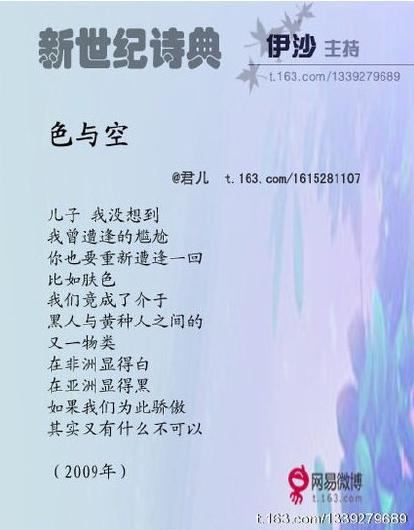
Jun Er COLOR AND SPACE
my son – I hadn’t thought
the embarrassment I had met with
you would know it all over
our skin for example
we are those mesons
another kind
between black and yellow people
white in africa
dark in asia
what if we feel proud of ourselves?
and why the hell not?
2009
Tr. MW, 2015
Jun Er ONE DAY
sometimes I admire foreign women
sometimes I shop at taobao.com
sometimes I come home with garbage
sometimes my half soles come out of my shoes
May 2013
Tr. MW, March 2015
Jun Er SEHNSUCHT
lass mich hier im zimmer sitzen
sehnsucht verstehen
sehnsucht nach fremden phänomenen
leuchten zwanzigtausend jahr
in der ferne
in zwanzigtausend stillen jahren
bist du gekommen
bist verflogen
hast mir lauter blüten gemalt
auf meinen sutren
lass andere generationen
riechen und einander finden
om mani padme hum
lass meine gebetsmühlen fliegen
2004
Übers. v. MW, 2015
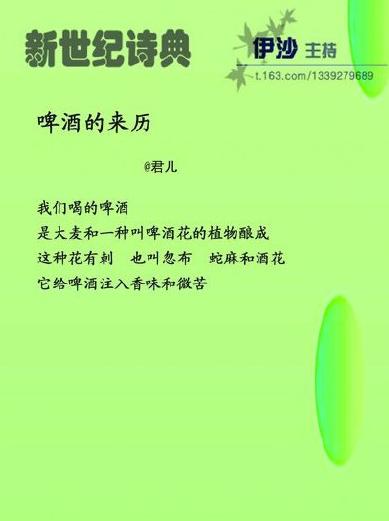
Jun Er WOHER KOMMT DAS BIER?
das bier das wir trinken
ist aus gerste gebraut und einem kraut namens hopfen
das kraut hat dornen und viele namen bei uns schlangenhanf
es bringt den geschmack ein bisschen bitter
Übers. v. MW im März 2015
Jun Er WAHRSAGEN FÜR MEINE SCHWESTER IM HIMMEL
große schwester
früher hab ich bücher verwendet
jetzt sitz ich am computer
rechne dein schicksal aus
ein horoskop
für jemanden der nicht mehr auf der welt ist
gibt es etwas absurderes
du hattest 46 punkte
ich 58
wir hatten beide zuwenig
12 punkte unterschied
du besuchst die gelben quellen
ich kleb noch am staub dieser welt
faul. schläfrig. wehr mich…
große schwester
schnee auf dem bildschirm
find dein gesicht, deine stimme nicht mehr
wo du jetzt bist
was ist das für eine welt
braucht man dort auch sechzig punkte
um durchzukommen
wie viele wiedergeburten
haben wir dann zuwenig punkte gemeinsam
in der wievielten komma wievielten
wievielten welt
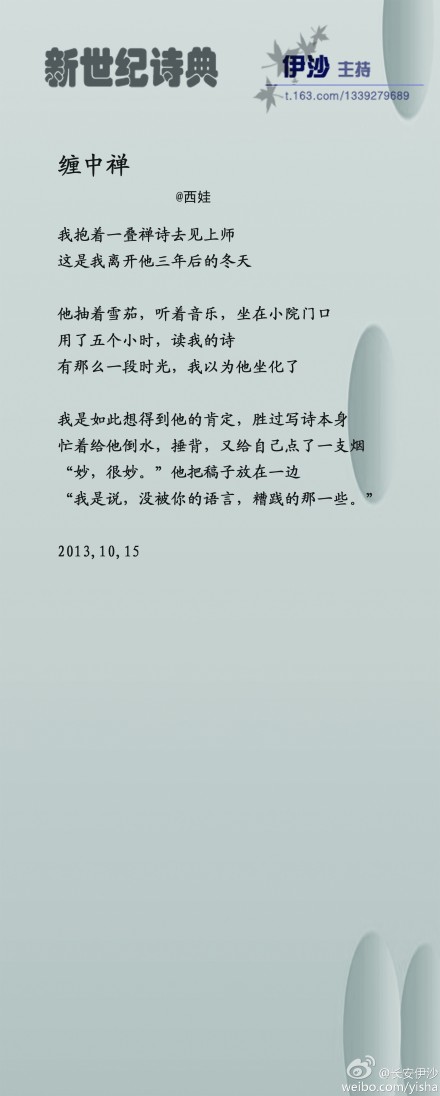
I’m carrying a pack of poems to see my master.
In winter, three years since I left him.
He’s smoking cigars, listening to music he sits at the gate.
Takes all five hours to read my poems,
sometimes I think he has passed away.
I love his approval more than my poetry.
So I pour him tea, pat his back; then I light up my cigarette.
“Fine, very fine,” puts my papers aside,
“I am saying, some are not spoiled by your language.”
at vermont studio center
in front of maverick writing studio
a squirrel
shoots up a big maple tree
I think of you
I want to prove
to the world
in our time
there is still one person
who was unhappy
‘cause he did not become a poet
he could not find peace
that person was you
how does that sound
like a winter’s tale
but here in our world
there are no fairy tales
in fact you told me
25 years ago
“I am a hedonist
and would not be content
to become a poor poet …”
so I have to say
you did what you wanted
you followed the masses
went like all the people
so I relax
and the squirrel
jumps from the tall maple tree
to look at me
in his little eyes
I see only joy
no fear at all
it must be you
your soul is in heaven
the organ and the choir begin
the people on the house are dead
the people at the bank are dead
the people at the post are dead
the houses in the town are old
the alleys and the streets are old
the organ and the choir begin
the children from the town are dead
the old ones from the town are dead
the women from the town are dead
the menfolk from the town are dead
the organ and the choir begin
the angels in the church are dead
the figures in the light are dead
the figures in the dark are dead
the alleys and the streets are old
the houses in the town are old
the organ and the choir begin
Yi Sha
HAVING MY VISA REFUSED AT THE AMERICAN EMBASSY
all morning till noon
one hundred people in a small room
like smuggled in a container
among boring figures and faces
a beautiful girl studying ballet
brings us all to attention
before my meeting with the official
I have a bit of bad feeling
among the people who get a visa
not one man under 50
only two men
an old guy with his wife
and one so small he doesn’t reach to the counter
America’s scared
they are really afraid
must be scared of our men!
holy shit! visa-official with a big beard
looks like a muslim, much more than me
much more like a terrorist
he doesn’t deliberate
he’s very sure he’s refusing my visa
must have seen something in my eyes
we say big apes cherish each other
he saw some deep hidden blood lust
an intention to immigrate
he’s reading the signs
the great li taibo from the tang dynasty moving to persia
no fucking international jokes please
holding my head up while taking my leave
I see the ballet girl was also refused
at another counter by a black woman
but she’s one happy duckling
flying outside with a song on her lips
“her parents were forcing her to go to america …”
someone from the crowd knows how it is
I say, there are some films and TV-series nowadays not bad at all,
like those hand-pulled demons.
Pulling those demons comes after the demons chop down people,
comes after they are still happy from having chopped down people.
Those Japanese demons come from across the sea,
they loose their souls anyway on the long journey.
Actually, I have only seen chicken ripped apart with bare hands,
they also have duck meat in handy bits, and then pulled beef, pork, dog legs.
“Pulled demons”, must be the will of the gods.
Pulled demons, that’s really not very easy.
If we see them one day, let us have some together!
heiliges licht wo immer du bist
lass mich stehen stille schauen
du bist ein baum ein busch ein strauch
du bist ein haus
du bist der glanz
du bist die pracht
im vogelruf
heiliges licht wo immer du bist
lass uns stehen stille schauen
du bist die zeit
du bist der ort
du bist der himmel
in unseren herzen
heiliges licht wo immer du bist
gib uns stille gib uns staunen
gib uns arbeit
gib uns muße spiel gespräche
gib uns aufeinanderhören
amen
gäbe es keine weltmeisterschaft
schaute ich heute nacht in die sterne
dächte an große fragen der menschheit
meditierte im dunklen zimmer
im großen und weichen
simmonsbett säße ich
und sagte sutren auf
bis im osten der tag anbräche
morgenrot den himmel erfüllte
aber —
gäbe es keine weltmeisterschaft
wäre ich sicher nicht wach
in my first two days in lhasa
I bought two lighters
one with a picture of robben
the other with messi
they were both useless
breathless entirely
on this snowy highland
on the roof of the world
even lighters
show a reaction
even soccer stars
can’t keep up the flame
but on the third day
we went up the potala
when we came down again
at the bottom
in a small shop
I bought another one
this lighter had no problem at all
it showed a picture
of a living buddha
May 2012
Tr. MW, June 2014
Yi Sha 3 FEUERZEUGE
in meinen ersten zwei tagen in lhasa
kaufte ich zwei feuerzeuge
eines mit robben
eines mit messi
beide nutzlos
ausser atem
auf der hochebene
auf dem dach der welt
sogar feuerzeuge
werden höhenkrank
sogar fußballstars
geht hier das feuer aus
aber am dritten tag
waren wir im potala
und darunter
auf dem rückweg
in einem kleinen laden
kaufte ich ein feuerzeug
das funktionierte einwandfrei
auf ihm war ein
lebender buddha
Lovely town. Sleepy. Great central square. Or main street. Everybody out there on Friday night, who is not in the other beer gardens. Or begging. First rain-free night in ages, maybe. Rivers all full. Still chilly, just a little. Blankets on the seats outside. Great cathedral, we haven’t been inside yet. They had a great mass, with TV. People standing on the steps outside, and kneeling. Wonder how it was under Socialism. Much sleepier? Sleep of reason breeds … how does that go? What reason? Goya. Modernism, Kosice Modernism. An exhibition advertised around town, or a book, or an event. In Slovak, so I’m not sure. 。。。(click for more)
ostermontag ist schön.
man kann die autos zählen
man geht nach emmaus
klingt gar nicht hebräisch.
die meisten sind weg.
ich mein’ nicht die hebräer.
es gibt wirklich nicht viele.
da gibt es den schönberg.
das zentrum dort oben.
ostermontag ist schön.
am schwarzenbergplatz
den stalin umrunden
per roller, zu fuß.
der brunnen geht wieder.
und jemand spielt auf.
das kino spielt das paradies.
das kino kommt weg.
wir geh’n eh viel zu selten.
paradies hat drei teile.
sie heißen glaube, liebe, hoffnung.
ostermontag ist schön.
《新诗典》以本诗为天下苍生祈福! //@老纪微波:抄送@长安伊沙
Zhan Che Chanting sutras, blossoms opening
– stopping by the shrine of the Le Sheng Old People’s Home
[to be demolished]
100 year old banyan tree stretching its roots
sunlight in the wind tipping millions of leaves
some kind of music comes from these instruments
from strings and keys
from hairs and tongues
lepers kneeling before Buddha statues
wrists without hands
wrists that had knives tied to them for cutting vegetables
wrists, mallets tied to them beating wooden fish
– wooden fish swimming in sounds of bells
sounds of bells swimming in rain
those fish without noses
bats with no eyes
earthworms with no hands or feet
by the sound of those wooden fish
growing into whatever they planted
osmanthus smiles magnolia
scents through their four elements six roots of desire
through their five sensory organs in forms of flowers
scents drawing in sutra chanting
in the unseen world –
from their deformed hands feet noses lips
growing twigs and leaves
osmanthus blossoms magnolia smiles
smiling bodhisattvas
in scents of sandalwood and flowers
lighting lanters to walk through the night
but they will be banished by rigid laws
this cultural heritage for all mankind fits into
colonial history public health human rights
they are helpless in this official-commercial structure
but they will take to the streets kneeling and praying
with their deformed blood-swollen hands and feet
kneeling praying entreating towering authorities
bringing their muttering whispering groaning
flower scents and chanting sutras
drip into memory drop in the rain
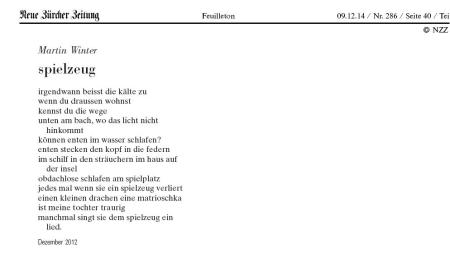
Yi Sha became well-known in the 1990s for acerbic remarks on other poets. He has been widely criticized himself. Spring is a time of hope. The Chinese moon year begins with Spring Festival, the biggest holiday of the year. Typically for Yi Sha, this poem sounds rather mundane, laconic and depressing, dashing most expectations connected with poetry. The line “For suicides tomorrow morning” is a little truncated in my German version that was printed in the Neue Zürcher Zeitung (see image). “Für die Selbstmörder von morgen” makes a better rhythm than “Für die Selbstmörder von morgen früh”. In English I wasn’t tempted to leave out the morning. But you could say “dear god/for suicides in the morning/ let it snow once more.” In German there is something like a rhyme within the first two lines. When I was prepared/ To stride into spring/ it snowed again. Does it sound better this way in English too? You decide.
Why did I pick this particular poem? I didn’t pick it for publication. Andreas Breitenstein at NZZ (Neue Zürcher Zeitung) likes to print poems whenever he can wrangle a little space in any particular day’s edition. They have to be short. I had translated another poem by Yi Sha about snowfall in 2008. Mr. Breitenstein liked it, but it was too long. So I looked through Yi Sha’s collection Niao Chuang 尿床 (Wetting the bed), published in Taiwan in 2009. It’s a very nice edition. Huang Liang 黃梁, a critic in Taiwan, has brought out two ten-volume Series of Mainland Avantgarde Poetry 大陸先鋒詩叢, in 1999 and 2009. A great resource. I just picked some of the shortest poems in there.
My favourite comments on Mo Yan in the last few months are in the article by Liu Jianmei (刘剑梅), published in FT Chinese on Dec. 11 and posted on the MCLC list on Dec. 19. The title asks something like ‘Does literature still work like a shining light?’ Maybe my translation is not too bright. Should literature be a shining lantern? That’s one of the questions in Liu’s article. Literature and art were thought of as relevant to society and the nation in the 1980s. Liu talks about different approaches and relationships of life and art. Mo Yan deserves careful reading, just like Yan Lianke and Lu Xun. Nothing more or less. Liu uses “Save the cildren”, the last line from Lu Xun’s Diary of a Madman, for a close look into Mo‘s works as well as Yan Lianke’s latest novel Four Books (not published in Mainland China). The main characters of Republic Of Wine and Frogs are unable to save the children, like Lu Xun’s narrator. Republic of Wine features cannibalism and a riotous carnival of language. It’s my favorite among Mo Yan’s novels, along with The Garlic Ballads.
What is art? What is it for? A little more than 100 years ago now, the Dadaists (in voluntary exile in Switzerland and other places) concocted a virtual antidote to the First World War. Words, ordinary and exalted speech, had lost any meaning in the collective carnage. Not much later, Hu Shi, Zhou Zuoren, Lu Xun etc. attempted to change the Chinese language, in written form and on stage. Yomi Braester shows in Witness Against History how Lu Xun’s most famous passages retain ambiguities that belie any straight nationalist reading, even if the author himself would have read them that way. I like the crazed language of the Madman. Republic of Wine, more experimental than any other works by Mo (to my knowledge), goes into that direction. In Bei Dao’s Rose of Time (Shijian de meigui), a collection of essays that appeared in Shouhuo (Harvest) magazine in the early 2000s, when Bei slowly became acceptable in China again, he writes about Pasternak and Mandelstam. In his youth, Pasternak praised Stalin. Later he tried to extricate other writers from the Gulag, with mixed success. Mandelstam believed in Communism all the way to his death in a labor camp. Bei Dao doesn’t say that. But the chapter on Pasternak invokes Russian Formalism and Structuralism that grew out of the abortive 1905 revolution. Art makes reality appear strange and different, enabling the spectator to perceive it more clearly. And the flag of art is always different from the flag on the citadel.
Republic of Wine is wilder than the real Mo Yan on the Nobel stage. When the real Mo (sounds funny, doesn’t it? The real NO, or the real NOT, like NOT A WORD), when the real Mo Yan talked about his mother, I was moved. It sounded like my grandmother in rural Austria around 1920. Sometimes she couldn’t go to school in winter because she had no shoes. But Mo Yan also said his mother was afraid he would “leave the collective” with his storytelling. Qunti 群体, the masses, the collective, could that be called an example of Mao wenti or Mao-ti, Mao-Speak in this usage? Actually not, qunti 群體 is an older word, could have been used by Li Dazho and other founders of the Chinese Communist Party, before Mao, Prof. Weigelin told me recently here in Vienna. She was right, I encountered qunti in another text I liked very much, was it by Yu Hua? Anyway, I was rather baffled when Perry Link related how a mother would tell her child on the bus to “jianchi 堅持”, to hold it until the driver could stop and let the child out to go to take a leak. Would “jianchi” really sound strange outside of Mainland China? But the discussions about Mao-style are still relevant – Mo Yan is an establishment figure nowadays, and generates critique of China’s established system in general.
I was a little surprised when Chinese critics of Mo Yan talked about the carnivalesque language in his novels. As if you had to be careful not to lose yourself in there. I did think of Mikhail Bakhtin and his concept of carnival in Dostoyevsky’s novels when I read Republic of Wine. But as far as I remember, Bakhtin had defended language and storytelling that would sound strange and crazy, as opposed to Socialist Realism. So when was Mo Yan’s writing first associated with carnival? Maybe in the 1980s? And how did this association evolve?
A few days after the recent massacre in a primary school in Connecticut, Ross Douthat in the New York Times talked about Dostoyevsky’s Brothers Karamazov. Although Dostoyevsky was a Christian, Douthat says, the senseless cruelty against children in the novel is just cruelly senseless, there is no “rhetorical justification of God’s goodness”. You have to look at the behaviour of characters who show “Christian love” to find any counterpoint. Below this op-ed, there are 121 reader’s comments, all within one day. Many say they want to talk about guns, not literature.
What is literature for? Why is there a Nobel for literature, but not for music or fine art? Or films? Nobels make for debate. Very much debate, in this case. Great.
Chen Kohua und Lai Hsiangyin sind im Oktober zu Gast im Literarischen Colloquium Berlin. Außerdem werden sie an der Universität Heidelberg aus ihren Werken lesen.
Chen Kohua und Lai Hsiangyin treten am 29. Oktober um 20 Uhr im Hörsaal SIN 1, Ostasieninstitut Universität Wien auf. (Campus Altes AKH, Hof 2, Eingang 2.3)
Übersetzung: Martin Winter
Eine Veranstaltung des Österreichischen P.E.N. – Clubs
Daniele Kowalsky showed me a very interesting interview with Jonathan Campbell in the L.A. Review of Books. Jonathan Campbell talks with Jeffrey Wasserstrom about 盤古 Pangu,崔健 Cui Jian,無聊軍隊 Wuliao Jundui and other details of rock music and punk in China.
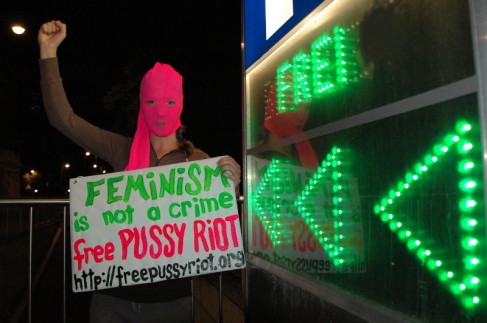
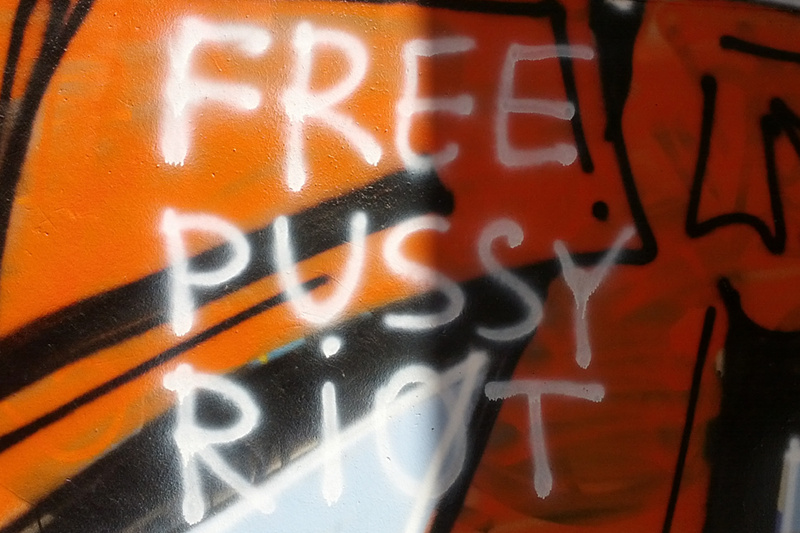
Unfortunately, I can’t agree with Jonathan that yaogun 摇滚 (Chinese rock music) could galvanize China like Pussy Riot seems to have galvanized opposition in Russia. Cui Jian 崔建 did have some very memorable moments, and people in China do remember them, and they will tell you readily about the parts before 1989, mostly. But those moments in 1989 were so painful in the end that no one knows if there will ever be a similar broad-based protest movement again. 1989 brought hope in Europe. Risk, very risky change, and some very ugly violence in Romania. But overall there was hope, and whatever came out of it, 1989 is generally remembered as a year of wonder. In China it’s a trauma. A wound that is usually covered up, but even China is very much connected to the world nowadays, and the world knows. And there are much deeper and older traumata, which can be accessed and shared via 1989. So in that way, there is hope. Connected to underground music. Like the kind that Liao Yiwu’s 廖亦武 music comes from.
There are parallels, certainly. Parallels between Pussy Riot and Ai Weiwei 艾未未, in the pornography. Parallels in the way of some Ai Weiwei news or other embarrassing news everyone gets to know about, and the dark stuff below. The disappearances, the longer ones, see Gao Zhisheng 高智晟. And the corpses. I learned about the late attorney Sergei Magnitsky via Pussy Riot. He died in jail in 2009, and among people concerned with Russia he is as famous as Gao is in and outside China, which means not so many people want to talk about him or even admit they’ve heard of cases like that. Of course, there are corpses under the carpets in every country. Only China is the oldest 5000 year old one, of course.
Aug. 22
2 years for singing in church. Perfectly absurd. Punk music, controversial art. Public space and religion. Russia, Africa, China. What is art? Depends where you are, what you are, who you are, who is with you. What you believe.
One week ago I read two books. A few months before I got to know a poet. Still haven’t seen her. A Jewish poet in Germany, soon to be teaching in Vienna. Esther Dischereit.
Last month I finally got around to pick up a book that contains many poems I translated. Freedom of writing. Writers in prison. A beautiful anthology, edited by Helmuth Niederle, currently head of Austrian PEN.
Connections. Connected to China. Punk music isn’t all that subversive, not in a big way, usually. What if musicians insult the government on stage. Well, I’ve been to about 300 concerts in China, said Yan Jun. Sometimes someone was screaming something in that direction. But they aren’t big stars. They can be ignored.
Christa Wolf. Stadt der Engel. The Overcoat of Dr. Freud. Long and convoluted. Gems in there. How she was loyal to the Party in 1953. And insisted on protest against Party policy. How and what they hoped in 1989. How and what Germany was and is.
Aug. 21
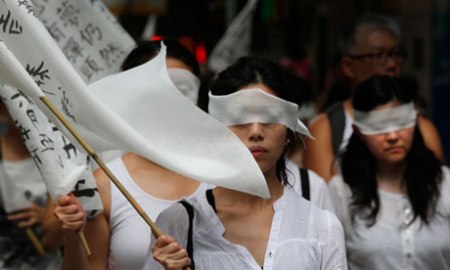
2 years for singing in church. And many more arrested. It does sound more like China than Russia, doesn’t it? The case of Li Wangyang李旺陽 (李汪洋) comes to mind. Li Wangyang died around June 4th 2012 in police care after being released from over 20 years of jail. He was a labor activist in the 1989 protests that ended with the massacre on June 4th in Beijing. Li Wangyang supposedly killed himself, but the police report was disputed in China and in Hong Kong, where tens of thousands of people protested. Li’s relatives and friends are still being persecuted. One has been formally arrested and accused of revealing state secrets, because he photographed Li’s body.
Parallels between Russia and China were drawn in media comments after the verdict in Moscow. One comment wondered whether Russia is trying to emulate China, where the word civil society is banned on the Internet. China has had economic success for decades. People put up with authoritarian one-party rule there, the comment said. But it won’t work in Russia, because the economy depends on natural resources, not on industry. The comment contained the old misunderstanding that in China, government policy and enforced stability have caused economic success. Beijing wants the world to think that, of course. However, the prominent law and economy professors Qin Hui 秦暉 and He Weifang 賀衛方 have been saying for years that the economic miracle of the 1980s depended on a consensus to move away from the Cultural Revolution, as well as on investment from Taiwan, Hong Kong and overseas. After 1989, there has been no comparable social consensus. After 1989, the social drawbacks and the gap between rich and poor may have grown faster than the economy. But the middle class has also grown. Regional protests are frequent but limited. Or the other way ’round. The Internet remains vibrant. With Weibo microblogs inside the Great Firewall, and very much Chinese going on outside. Not because the government initiates it. They let it happen. The economy, the art, the internet. Even protests, when they are against Japan, and/or not too big. And they profit. The oligarchy is the Party.
Religion and more or less independent art have been growing in China, about as much as the social conflicts. Art brings huge profits, so they let it happen. In Russia, Pussy Riot have succeeded in connecting independent art, oppositional politics and religion in a highly visible way. Art, political activism and religion are voluble factors, so much that societies where everyday news has been fixated on finance for at least four years now could almost grow jealous.
Pussy Riot were not mentioned in our church on Sunday, as far as I could tell. I had to look after the children. But the preacher drew on her experiences from jail work. She championed the rights of refugees and was a prominent anti-governmental figure in Austria in the 1990s. Direct relevance for religion in Austrian politics is rare. We had Catholic Austro-Fascism in the 1930s, paving the way for Hitler. Some Protestant Nazis as well. After the Holocaust, religion in Austria has a somewhat undead quality. A bit like traditional opera in China, which is rallying, hopefully.
For international discussion about the relevance of underground art, music and religion, China has Liao Yiwu 廖亦武. And Russia has Pussy Riot.
Photo by Vincent Yu/AP
Aug. 17
Worldwide empathy for Pussy Riot is great. The trial in Moscow ends today, so I don’t know yet if three women have to remain in jail for years after singing in a church. There was a lot of worldwide attention last year as Ai Weiwei 艾未未 was abducted and detained by Chinese state security. He was released and voted most influential artist worldwide. I have seen graffiti in support of Pussy Riot here in Vienna in the last few days. One at newly renovated Geology Institute. Not very nice. And there was some kind of happening at the Vienna Russian Orthodox church, I heard. Church authorities not amused. Well, hopefully worldwide support can help enough this time. Quite recently, many political prisoners in China have been sentenced to more than 10 years. There was a lot of attention abroad in one case. And a Nobel.
Austria is a nice place, generally. Sometimes it’s uglier than Germany. Generally uglier, in terms of police abusing, even killing people, always getting away with it. Have been reading Vienna Review and Poetry Salzburg Review in the last few days. News and poetry. Many of our friends here in Vienna are not from Austria. Coming from abroad often provides a clearer perspective.
Aug. 14
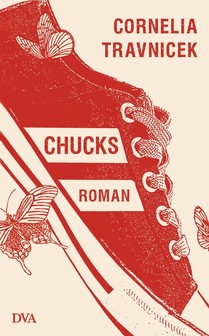
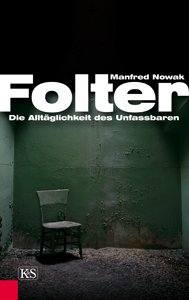
Read two good books. Not in Chinese. Ok, in Chinese I’m reading poetry. And other books, not enough. Anyway. Cornelia Travnicek and Manfred Nowak. Both in German. Non-Fiction and Fiction. No connection. Like Liao Yiwu 廖亦武, Bei Ling 貝嶺 and that Berlin novel, what was it called? Plan D. Ok, there was a connection. Taipei Bookfair 台北國際書展. Ok or not, no connection. A novel. Punks in Austria. Young and female. Male protagonists dead or dying. Ok, not all of them. Anyway, good novel. Vienna, occupied, death, youth, love, society, 1980s, 1990s, 2000s. 2012 exhibition at Wien Museum. Empathy. And the other book? Torture. Human Rights, UN, Austria, torture in Austria (see this newspaper report, also in German), Moldavia, Equatorial-Guinea or how do you call that country, Uruguay and so on. Neglect. Conditions of/for empathy. Ok, so both books are about empathy. Good. And in German. Oh well, maybe some people who read this read German. Or they’ll get translated. The books, not you. Manfred Nowak’s books and other written sources are available in several other languages than German. You can get some very useful stuff in English for free here.
the air is crisp.
the streets are clear.
the sun is out.
we go to church.
halleluja, praise the air.
halleluja, praise the light.
halleluja, praise the space.
praise the people, praise the cake.
what on earth is happiness?
should we ask a fairy mother?
should we ask important people?
god is with us.
is he happy?
praise the lady
with the pizza.
i miss the organ.
i miss the prayer.
we used to be new.
are the animators happy?
do we have an e-mail address?
why are we here?
where do you come from?
when did you start to learn chinese?
the light is always different
if you’re in taipei or beijing
if you’re on kinmen in the wind,
in hualien, kaohsiung or tainan.
the air is crisp
here in the city, in vienna
where I grew up
and hardly ever feel at home.
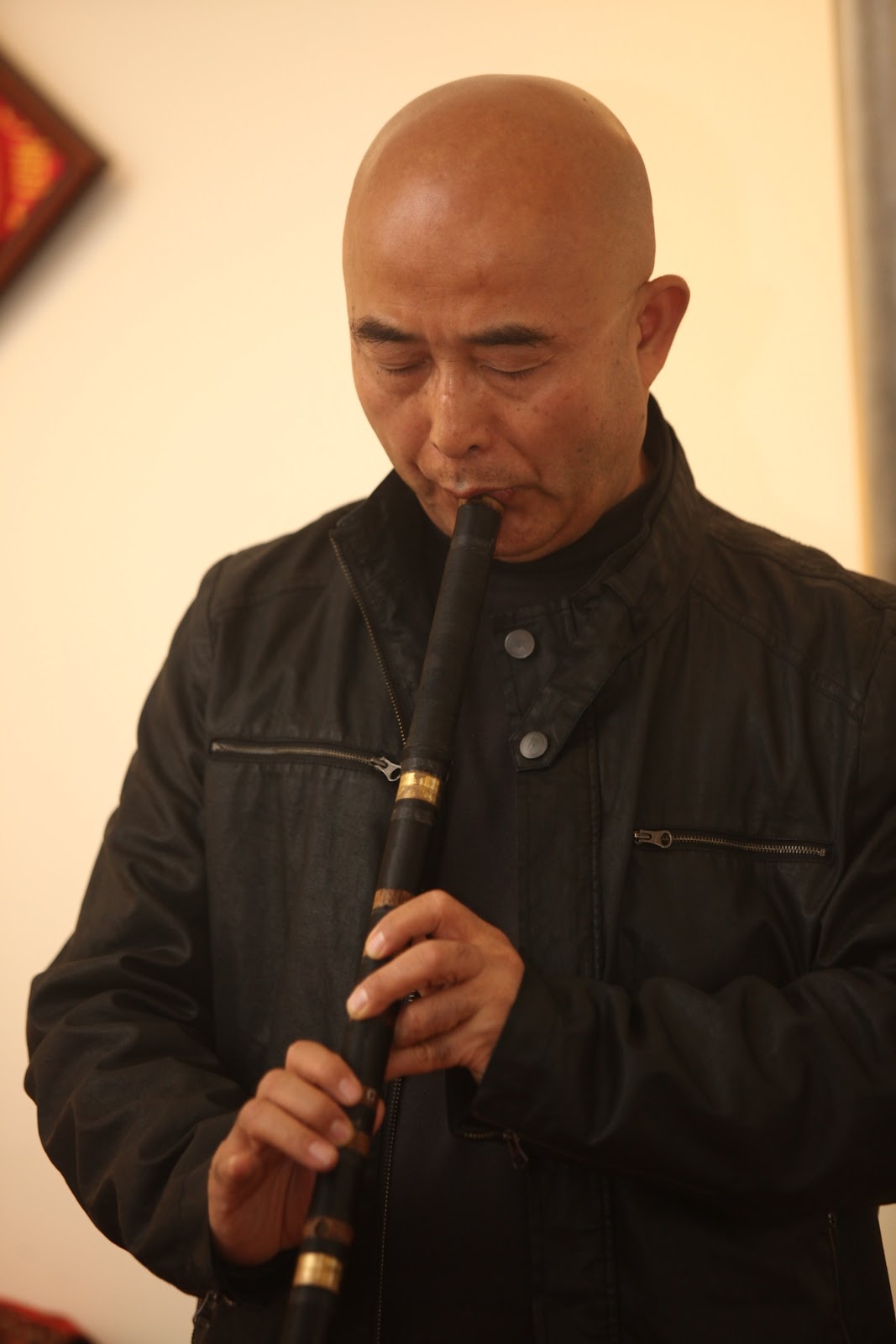
“My father made me stand on a table when I was small, and recite ancient classical Chinese. I could only climb down after I was able to recite the whole thing by heart. I was only 3 or four years old, maybe. I hated my father.” This is how 廖亦武 Liao Yiwu began to talk to the students and teachers of 國立成功大學 National Ch’engkung University in 台南 Tainan, after he played a wooden flute, a very basic instrument he had learned in prison. Very basic sounds, mute and suppressed at times. Loss and regret. No uplifting fable. “I am not going to tell you very much about the time when I went into prison. You would have no way to understand everything. I was like any young person. I didn’t want to listen to anybody from older generations. And I had gone through 文革 the Cultural Revolution, when my parents couldn’t take care of me. For me, classical Chinese belonged into the rubbish bin, along with many other things. My father was 84 years old when he died”, Liao Yiwu said. Or was it 88 years? Only a few hours of dialogue and open exchange between father and son, in all those years.
Dialogue and open exchange. Between 四川 Sichuan and 台南 Tainan. Between Taiwan and China. Between languages and experiences. Feeling lost, between clashing dialects, conflicting histories. Feeling rooted, at the bottom of society.
On the podium, scholars of 台灣閩南語文學 Taiwanese literature sat along with Liao Yiwu. They spoke in Taiwanese. One professor recited a poem by a high school student. Before Dawn, or something like that. About the massacre from 1947, February 28th. I didn’t understand the words. But you could understand the feeling. The answer is very simple, he said, when a 客家 Hakka student asked what she should do, because the words and songs of her grandmother would die with her. There were too few people who could still speak with her in 客家話 Hakka, she was afraid her mother tongue, her grandmother’s words would become extinct. The answer is very simple, the professor said very gently. He spoke mostly in Taiwanese, so I didn’t understand it all. But he said you just have to study, you can even major in Hakka now. It’s not easy, but there is a common effort.
It was very simple, Liao Yiwu said, when people asked him how he fled from China. I went to 雲南 Yunnan province, bordering Vietnam, Laos, Myanmar and Tibet. I had made lots of interviews there many years before, with people at the bottom of society. You turn off your mobile. You could also bring extra mobile phones. You get lost in small towns. And then one day I was across the border in 越南 Vietnam, very wobbly on my legs. There was a small train, like in China at the beginning of the 1980s. I knew such trains from drifting around China when I was young. In Vietnam, I was afraid of a lot of things, getting on the train, of simple things to eat. But I could communicate by writing numbers on a piece of paper. 500, wrote the innkeeper. 100, I wrote below. And so on. Finally I was in 河內 Hanoi, in a simple inn. And then I went on-line and contacted my friends and family in China. When I got on the plane to Poland, I was still afraid. The year before, military police in full military gear had come and taken me out of the plane in 成都 Chengdu. But then I realized, although this was a Socialist country, I was in the capital of another country, not in China. And the plane took off.
The lecture hall was full. I sat on the floor in the aisles, like many others. It was a very welcoming atmosphere. “We have a few books to give away for students asking questions in the second part of the lecture.” What is 流浪 liulang? What is 流亡 liuwang? What is 旅行 lüxing? These three words sound rather similar in Chinese. This was another professor speaking. He had studied in Russia. He was from a Taiwanese faculty in 台中 Taichung, but at this occasion, to clarify this question, he spoke in Mandarin. What is drifting about? What is exile? What is traveling? When you are drifting around, you don’t know where you are coming from, and you don’t know where you’re going. When you are going into exile, you know where you are coming from, but you don’t know where you are going, where they will let you stay. When you are traveling, you know where you come from, and you know where you’re going. Very simple differences. But what about us here in Taiwan? 我們是否知道自己從哪裡來,到哪裡去? Do we know where we are coming from, and where we are going? In the 1960s and 1970s, many writers and intellectuals in Taiwan were in prison. It was very hard, but you knew what you were fighting for. Just like the writers and lawyers in China, they know they are fighting for freedom. Now in Taiwan we are very free, in comparison. But we can still be marginalized.
One of the professors was my landlord from 1988 to 1990 in Taipei. He is the chairman of the Taiwanese PEN. In 1988 he was a doctoral candidate in history, and a stage decorator. We hadn’t seen each other or heard from each other for 22 years.
haus der patriotischen frauen
(unter japanischer herrschaft)
fuer Tong Yali
ein baum, ein hof,
der wind, die stadt.
es ist ein warmer wintertag.
in tainan ist es immer warm.
die stadt der tempel, der kultur;
die erste stadt: erinnerung.
MW 22. Februar 2012
彤雅立
記憶旅車
車子駛進了記憶
雪天里繾綣的石頭
海平面沒有風
巨浪在海底洄流
車子駛進從前的風
旋進黑色漩渦
《月照無眠》,二零一二年, 台北南方家園出版社,一三一頁
Tong Yali
erinnerung, wagen
der wagen faehrt los.
steine, in schnee eingerollt.
kein wind auf dem meer.
wogen tuermen sich darunter.
der wagen faehrt in den frueheren wind,
in den dunklen strudel.
Aus dem Gedichtband Schlaflos im Mondlicht (Yue zhao wu mian), Nanfang Jiayuan -Homeward Publishing, Taipei 2011, S. 131. MW Uebers. Febr. 2012
Tainan, city of temples. Temples everywhere, many lanes, full of flowers, blossoms, improvised housing, ancient and dated, broken and new. Squares in front of temples for breakfast stands, temple fairs, opera, evening barbecue. Temples complete with public toilets. The main Catholic church of the city is a beautiful traditional temple from 1960. Right across from the temple grounds dedicated to Koxinga, a Chinese-Japanese pirate’s son who fled from the mainland, drove out the Dutch and established the first Chinese kingdom on Taiwan, all in one year, he died rather young. And there is an Earth God’s temple next to the Catholic church. There was a wagon on the square in front of the church, with a few rows of plastic chairs. Very gaudy colors on the wagon, Taiwanese opera. A female warrior with a huge sword, ancient costumes. Tomorrow is the Earth God’s birthday, the church custodian said. Happy birthday! He was in his element, explaining the rich Tainan heritage. Sometimes people come and kneel on the steps of the church, he said, and only then they ask me which important god of the city is housed inside this magnificent temple. And when I tell them this is the Catholic church, they say sorry, we prayed at the wrong place, we didn’t know. Your prayers are very welcome, the custodian replies, and beckons them inside, like he did with us. They had been eating lunch, he and a woman, his wife maybe. Their little chamber next to the door was open. We had looked at the statue first, climbing over stoves and vats with food and cooking utensils, in preparation for the Earth God’s birthday. Mary looks very graceful in a simple and elegant robe, very Chinese, holding her naked baby Jesus. On the mosaic over the main altar inside they look more regal. But it is a very welcoming church. A traditional temple, I-Ching octagon tower with glass windows, couplets left and right written on columns, and boards, wooden and stone. An incense censer in front of the main altar. And an altar on one side for ancestor worship. “Oh, it’s from the 1970s, I didn’t know”, my friend said when we opened the gate, encouraged by the Earth God’s cooks, and looked at the statue more closely. Yes, she has traditional looks, like from the Qing Dynasty, but she is comparatively new, from the times of martial law. White Terror was still practiced on Taiwan when the church was built in 1960. Today, Tainan remembers founding fathers of its modern history inside the Japanese-era house of the Patriotic Women’s Association. These founding fathers of Tainan’s modern era are Japanese and British. Father of water taps and sewage, father of dams and canals, and so on. There is also one guy form the 16th century, sent from China. ”The soldiers who came from China after 1945 and took over from the Japanese didn’t even know houses with running water, they didn’t know taps!” That’s what a poet and scholar told me at the Taipei Book Fair, full of Taiwanese pride.
The last Japanese mayor of Tainan restored the main temples and historic sites. He prevented the Japanese troops from requisitioning and melting the huge bell from Kaiyuan Temple, which is still rung on important holidays. One of the main signs of the Confucius Temple, when you enter the temple grounds, was written by him. The temple grounds are sprawling, open and welcoming. Only the innermost part of the temple is guarded, and the entrance fee is 25 NT, 65 Euro Cents maybe. The city hall and seat of the provincial government from Japanese times is the Taiwan Literature Museum now, very modern and welcoming inside, lots of audio and other impressive installations, beautiful children’s rooms, extensive library, very accessible. This place was our destination when we came down from Taipei and Kaohsiung, an important stop in our one-month stay on Taiwan as translators into German.
the light, the angel gabriel.
the evening light, the west, the east.
the train, the streetcar from the west.
the many towers of the town.
we don’t know where the light comes from.
the sun appears, the ancient stars.
we sleep, we wake,
we learn, we teach,
give birth and work.
we don’t know when the light goes out.
we know the morning comes again.
we don’t know where the light comes from.
many stars are out tonight
many clouds around the moon
i can’t see her from this house
she must be around the corner
must be round the neighborhood
it is pentecost today
and we heard a lovely sermon
dorothea’s going soon
there is too much distance here
people cannot feel the spirit
god vibrating on the water
jewish men from different countries
like it says there in the bible
can we understand each other
although we don’t speak the language
many men from different places
many people in vienna
are we very far from jesus
everything looks very nice
and the weather has been lovely
are we safe here in vienna
can we feel the holy spirit
dorothea preached a sermon
and we felt at home a little
some of them don’t come to church
but they are for renovation
dorothea is a priestess
and christine is a priestess
and they have a lot of spirit
so they even made us welcome
i don’t understand the people
those who dominate the churches
i don’t care for them at all
we come for the weekly service
for the singing, for the organ
for a certain tolerance
it was better for the children
when it looked a little shabby
it’s a little bit like china
there’s not much democracy
and not very much religion
god is in the organ music
the vibration on the water
it is pentecost this weekend
lovely little holiday
so we’re going to the water
at the danube, for the children
we meet friends and we meet strangers
kari astrid jennifer
dorothea babtized maia
pentecost one year ago
leo’s doing better now
we had many languages
for vienna’s night of churches
it was dorothea’s project
we will have the taiwan choir
it’s an ordinary church
we are strangers in vienna
although we belong here now
venice (written on a city map) one yard of scents, with blossoms filled / one passage through the midday sun / one house, one water, one whole town / one thousand years become one day / they know it here, you’ll die quite soon / and everyone will come and say / what you may claim, and what remains / and then they’re ready to depart / cause what we are stays in this world / what we have done, what we have heard / one scent, one stone, one sound, one plan / a plea that says please understand
MW June 2010
venedig (auf einem stadtplan notiert) ein hof im duft, mit blüten voll / ein durchgang in der mittagszeit / ein haus, ein wasser, eine stadt / als wären tausend jahr ein tag / man weiss es hier, man stirbt recht bald / und alle kommen, es zu sehen / was bleibt, und was man noch erwirbt / dann wollen sie auch wieder gehen / denn was wir sind, bleibt in der welt / was wir getan, was wir geschaut / ein duft, ein stein, ein laut, ein plan / und eine bitte um verstehen MW 5. Juni 2010
prayer flags are fluttering
it is just a kindergarten
little flags are fluttering
all the way across the yard
prayer flags are fluttering
it is just the wind today
does it help against the night
does it help against the day
does it help against the people
does it help against their words
does it bring you daily bread
does it help against your rulers
does it help against your rules
does it bring you any warmth
does it help against yourself
does it help to say the words
does it help you to believe
does it help you to remember
does it help you to regret
does it help you to explain
does it help you to expect
does it help you to forget
does it help you in the morning
does it help you in the night
have you ever seen the light?
did it help?
i wouldn’t know.
ist er wieder rausgekommen
ist er wieder auferstanden
ist er wieder aufgewacht
hat man ihn ans kreuz geflochten
hat man ihn ins grab gesperrt
was ist dabei rausgekommen
fruehling ist herausgekommen
sonne wieder aufgestanden
mond ist wieder aufgewacht
letzte woche war palmsonntag
kathrins vater ist gestorben
unser sohn ist drei geworden
und in lhasa war ein aufstand
und an vielen andern orten
was ist denn herausgekommen
wer ist schuld an diesem aufstand
wer war schuld in 1960
oder 1989
wer war schuld am tod der juden
wer ist wieder auferstanden
auferstanden ist die hoffnung
sie ist wieder aufgestanden
er ist wieder rausgekommen
er ist wieder aufgewacht
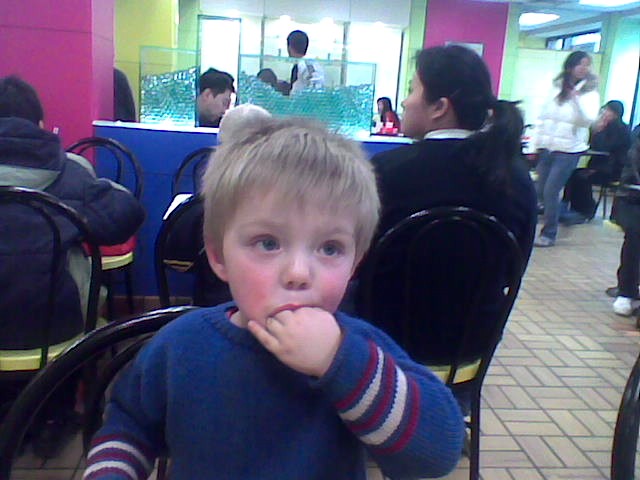
How are you doing? This is Leo at the local McDonald’s. They are bigger than the local KFC, and have a good playground inside. Actually, the weather has been warm enough to play outside for a long time now. Yesterday we went to the Meishuguan, the National Gallery. They’re having a very popular Dunhuang exhibition. I co-translated a book on Dunhuang last year, and I have been there in 2000. This time we went with a painter (Zhuang Zhuang’s mother), who had worked in Dunhuang with her father. The great thing about this exhibition is that they have gathered reconstructions and copies of the murals from the last 60 or 70 years. Many copies and cave reconstructions are very good. The really tried to transform the whole museum into a replica of the site, as far as possible. The caves in Dunhuang are only unlocked when a tourist group comes through, and then the cave is locked again after five minutes. So you have to stay the whole day and follow many different groups, like I did. But here in Beijing it is all spread out for everybody. Buddhism for the masses. It’s great.
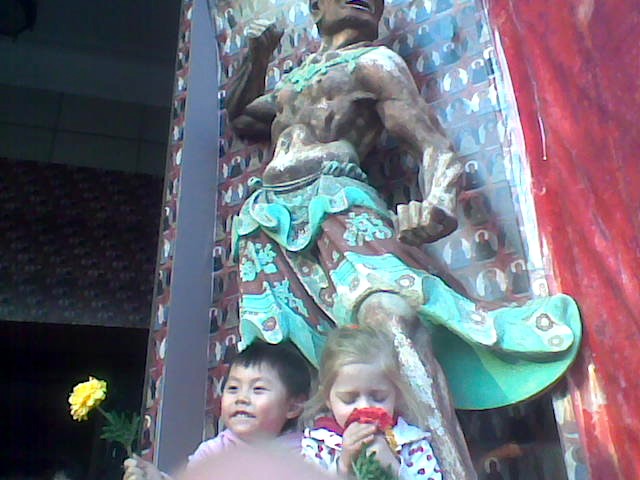
And here are Maia and Zhuang Zhuang at the Meishuguan entrance. This used to be a museum for Chinese stalinist oil paintings, mostly. They still have them somewhere. But in the last two years or so they have had some very interesting exhibitions. They had the Zhou brothers, who come from the 1970s, emigrated in the 1980s and made it big. They gave the whole building a big makeover. The canteen in the backyard is clean and good. There are a lot of military police stationed in the northwest backyard. I don’t know if they are only there to protect the art. Maybe it’s their local headquarter. The whole city is swarming with police guards, and even more with construction workers. They are having the yearly National People’s Congress and Chinese People’s Political Consultative Conference meetings in the Great Hall of the People on Red Square. The construction workers are transforming the old streets immediately south of the Square into a great faux antique theme park. Qianmen Dajie, the south part of the north-south axis going through the city since Mongol times 800 years ago, is completely evacuated and blocked off, including all the side alleys for half a mile in each direction. You can see the theme park buildings rising behind the construction fences, which are decorated walls. Decorated with old city photos from 100 years ago, in part. Everybody moved out, and make it all new, for the foreigners.
Southwest of Qianmen, closer to Hepingmen and the west part of Dazhalan, there are some Hutongs left. They are being renovated. Some old buildings are torn down, but they are being rebuilt with plumbing. You can see the swarms of Mingong (migrant workers) busy in all the Hutongs in the city that are still intact. Maybe they are doing a good job. So it seems that some parts of old Beijing will remain. Some of them are tourist streets already. Nan Luoguo Xiang is a creative quarter, to some extent. They have torn down some streets there too, east of Shichahai lake. Maybe there will be a canal side park. The remaining Hutongs southwest of Qianmen retain some features of the former Qianmen area, complete with cheap hotels. Maybe the mosque is still there, too. People are friendly, the real ones that remain. Friends of us got robbed in some Hutong cul-de-sac near the Square and the Forbidden City last year. Bicycle cab took them for a ride. Not surprising when huge areas in the city center are instant ruins and construction sites. The whole Qianmen walled-off theme park construction site reminded me of Dali, Yunnan province. In 2006, they had been building a six-lane freeway next to the west side of the old city for a few years already. There is a big new highway on the east side already, all the way around the lake. But this is the old Burma road, so they want to show off all the way to the border. And about half of the old city was still off-limits. Some are plants and factories, but some parts are just old streets being torn down and replaced with malls for foreigners. And Chinese tourists, of course. Why did we go all the way to the south of the city at all? The daughter of an office colleague of Jackie was baptized in the Catholic church at Xuanwumen.
This is Maia in the chapel for the baptism ceremonies. No, she’s not baptized yet. They do it later in the Lutheran churches. Jackie is Protestant, and we have frequented Lutheran services since our wedding. Christianity in China is a very interesting topic. The old church buildings, both in the cities and in remote places all the way into the Himalayas, are all worth visiting, even if you are not religious at all. More than half of Tian Zhuangzhuang’s film on the old tea road in Yunnan is about churches, temples and believers in remote mountain valleys.
And here we are at the McDonald’s again. I don’t have a photo from Qianmen Dajie construction street, because I was carrying Leo asleep around the theme park wall when we passed the south gate of that construction site which is at least as big as the Forbidden City. Would have been a great picture, with a real camera. But there was a guard, who was just closing the gate. Leo will be three on Friday. He has grown, but he still doesn’t say more than five clearly discernible words in any language, although he understands a lot and tells you very forcefully when he needs something. He needs to run around a lot. Not fussy with food at all though, and very mild in his temper in general, compared with Maia, or his parents. But Maia can play rather quietly with a friend for hours now. She did that last Friday night in our yard downstairs, with Yang Yang, the daughter of a Chinese neighbour on staircase #2 in our building. Yang Yang goes to the same Kindergarten group as Zhuang Zhuang, Maia and Leo.
Yang Yang’s father went with her to the Water Cube and the Bird’s Nest, the two big new Olympic sites. They had asked for photos with the kids in front of the new sites at Kindergarten. Last week, at the last parent’s meeting, they appealed again for photos. Yang Yang’s father advised us against going. Most of the area is still a construction site, he said. Oh well. I have photos of slogans for the Olympics, in the Hutongs and on banners at highway construction sites. They probably don’t want those. They had asked for a small gift for Women’s Day also, for the kids to pass them around the women in the neighbourhood. I didn’t come up with anything, and Jackie was too busy. On the bus on the way back from Qianmen East street on Saturday there was a long speech for Women’s Day on TV. The guy holding the speech was very important at the National People’s Congress and The Chinese People’s Political Consultative Conference. I couldn’t see the screen. The conductor made people get up to give us two seats when we got on. Leo was still sleeping. Maia sat down on the space above a wheel. Then Jackie stood up for an old man and sat there on the wheel with Maia. It was a long trip. Beijing bus lines go on forever. And then there is the traffic. The 120 makes a detour around Guomao, probably in an effort to ease the congestion on Jianguomenwai.
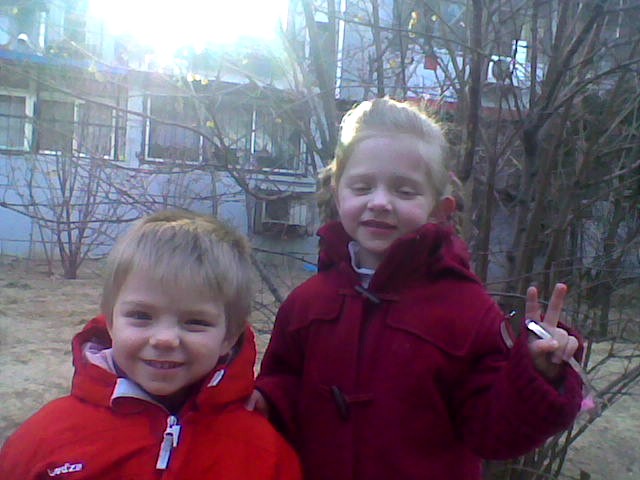
Kids in developing countries often make a victory sign in photos. Maybe they learn it in Kindergarten. This was in Beili, on the way to the Kindergarten, just across the road from our place. By the way, if you are in Beijing, please come to Leo’s birthday party on Saturday. The houses in Beili are the same as in Nanli. We live at the top of staircase #5 in house 6. The compound is not too bad. Children can run around, and there are some trees. But even here in our compound we have some Olympic activism. The residents’ committee got rid of all private additions to the greenery on ground level. Our terrace is to high, thankfully. The mulberry tree is still standing, but they removed the trellises that held up the lower branches, and so they had to cut off the lower branches this weekend. Have a good spring!


























 中国大好き
中国大好き 