in the summer three years ago
my son and I
used to play soccer
on empty spaces in our block
there was this boy
must have been around ten
always came running to play with us
he was the grandchild
of the bicycle guard in our apartment block
he had a bit of a lisp
that hot summer
belonged to the soccer world championship
we had reckless matches
they sued me two times
then we stopped playing
Three years later
I’m always alone
in the hot sun
walking around our apartment block
avoiding the mobsters
“You you you
why why don’t you play football no more?”
from his lisping
I recognize him
he is three years older
now I can see it
he’s soft in the head
“Where do you go to school?”
“I I I …. don’t go to school.”
In the evening
a stifling hot night between our buildings
a jerky tune played on an erhu
You can just recognize
Blind Abing’s famous piece
The Moon Reflected in Second Spring
I guess no-one knows
except me
it is that kid not right in the head
downstairs in the garage
taught by his grandpa
July 2013
Tr. MW, March 2014
(click on the picture above to read the Chinese original)
auf einmal wird es eine stimme in einer wahl des präsidenten
auf dem großen bildschirm redet live
martin luther king:
“ich habe einen traum …”
2014-01
Übersetzt von MW 2014-02
《梦(362)》
我在投一项 诗歌奖的选票
投着投着
就投成了
选举总统的一票
现场的大屏幕上
马丁·路德·金
在演讲: “我有一个梦……”
TRAUM 1
ich hab einen brief an den onkel geschrieben
und will den brief zum postamt tragen
die mutter erinnert mich:
“du schreibst unsere telefonnummer
hinten aufs kuvert”
“auf das kuvert darf nur die adresse”
geb ich der mutter genervt zurück
auf dem weg zum postamt
denk ich hin und her:
“gibt es eigentlich diese vorschrift?”
auf dem einzigen weg zum postamt
straße der kämpfe aus meiner kindheit
kommt mir die frau vom onkel entgegen
ich rufe: “tante! tante!”
sie ignoriert mich
schaut als ob sie mich nicht kennt
da fällt mir erst ein: sie ist schon gestorben
im katastrophenjahr der familie 1997
ich habe kalten schweiß auf der stirn
nimm das handy heraus und ruf daheim an
“mama, jetzt glaub ich an geister!
ich hab auf der straße die tante gesehen!”
aus dem telefon kommt über-echt die stimme der mutter:
“kind! wie kannst du das vergessen?
mama ist auch schon längst tot —
im selben jahr wie die tante gestorben!”
ich schlafe in
einem riesigen zelt
wie das von 1976
von der einheit meiner eltern
wegen des erdbebens
wir erfuhren fast einen monat
den kommunismus
das kollektiv
nach dem aufstehen
ist von meinen schuhen
nur einer übrig
mit nacktem fuß
such ich im zelt
such überall
am ende
find ich unter irgendeinem feldbett
einen fuchs
mit einem schuh
in seinem maul
im sportfest meiner volksschule
gab es einen bewerb
handgranaten werfen
ich war der erste
gestern im traum
die ganze szene des werfens
worum es ging bei der bewegung
und meine damaligen gedanken:
“ich bin besser als sie,
aber setze ich nicht meine ganze kraft ein
kann es auch sein
dass ich nicht gewinne …
es hat lange gedauert
warum erst jetzt
am ball ist jetzt
die öffentlichkeit
am 8. mai
sind sie schon weg
die schlagenden
beispiele
argumente gründe beweise
sind sie schon weg
es hat lange gedauert
warum erst jetzt
am ball sind jetzt
die öffentlichkeit
alle anderen parteien
jeder aufrechte mensch
jede kämpferin für dieses land
der duft der blueten
erinnert an omi
es ist lange her
gar nicht so lang
sie kann bald in den garten
gut eingepackt
anfang februar kommen die blueten
von weitem wie die baeume in taiwan
die baeume in japan
rosa blueten, manchmal weisse
am donaukanal ist auch ein strauch
in zwei tagen ist valentin
This is the first news of the day. They killed a poet and civil rights activist. By order of the president, along with some others. It happened two weeks ago already. Now we have Olympics in Russia. Austrian skiers are winning, along with Putin, who is drinking Schnapps with the Austrian team. No, they didn’t kill that poet in Russia. It was in Iran. By order of the president, supposedly a reformer. I was just reading Marjane Satrapi and Guy Delisle. Iran and Jerusalem. Gaza. Nothing on China. My children are watching Teenage Mutant Ninja Turtles with breakfast. Beijing suspended up in the stratosphere. Michealangelo, Donatello, Leonardo and Raphael have to reach Tian’anmen Square on a tricycle, before it’s too late.
Die US-amerikanische Poetry Foundation teilt mit, daß am 27.1. auf Anweisung des iranischen Präsidenten Hassan Rohani der Dichter und Aktivist Hashem Shaabani hingerichtet wurde. Laut Radio Free Europe habe ein Islamisches Revolutionstribunal ihn und 14 weitere Personen im vergangenen Juli zum Tode verurteilt, u.a. weil sie einen “Krieg gegen Gott” führten. Nach Presseberichten sei die Todesstrafe durch Hängen vollstreckt worden.
Shaabani war während seiner dreijährigen Haft schwer gefoltert worden. Human Rights Voices schreibt:
Seine Freunde kannten ihn als einen Mann des Friedens und der Verständigung, der innerhalb des despotischen Khomeinisystems dafür kämpfte, individuelle Freiheitsräume auszuweiten. In einem Brief aus dem Gefängnis, den seine Familie zugänglich gemacht hat, schrieb er, er habe nicht schweigen können, wenn Menschen willkürlich und unrechtsmäßig verurteilt und hingerichtet wurden. Er habe versucht, das Recht jeden Volkes auf ein freies Leben mit vollen Bürgerrechten zu verteidigen. “Die einzige Waffe, die ich in meinem Kampf gegen diese…
YAN LI! Yesterday I posted his THREE POEMS FROM THE 1980s. Prominent words and themes in GIVE IT BACK (1986), YOU (1987) and YOU (1989) are “love” and “citizen”. The most prominent news story from China in January 2014 was the trial and sentencing of XU ZHIYONG 许志永, a legal scholar and leading activist of the New Citizen movement. Trials, everything connected with rule of law has been very much in the news for a long time in China. See Han Zongbao’s poem 韩宗宝 from fall 2013, for example.
Xu’s statement in court was titled “FOR FREEDOM, JUSTICE AND LOVE“. I was rather surprised at “love” being evoked as a core political value like “freedom” and “justice”. Liberté, Egalité, Amour? Xu’s statement and the accompanying account of how authorities had tried to warn and intimidate him before he was arrested make it clear that he is not only an activist for the rights of migrant workers and for greater openness about public servants’ financial assets. “Can you explain what you mean by Socialism?”, he asks. This is certainly a very important question. China is a Socialist country, at least by name, just like Vietnam, North Korea and Laos. Are there any others? Socialism for China is like Shiite Islam for Iran. But what does Socialism mean, apart from one-party-rule? I think it’s something to believe in, and to practice, to change the fates of working people through actions of solidarity. Isn’t that what the New Citizen movement was trying to do? But Xu has all but dismissed Socialism and has not tried to invoke it as something originally worth believing in. This is understandable, under the circumstances. But can you imagine someone standing up in court in Iran and asking “Can you explain what Islam entails?” Maybe people do it, I don’t know. They probably wouldn’t dismiss religion.
Actually, it is more complicated. I think Xu is testing what is possible. how far the system will go to crush opposition. In his obstinacy he could be compared to Shi Mingde (Shih Ming-te) 施明德 in Taiwan in the 1980s. But Xu is much younger than Shi was in the late 1980s, he was only 15 in 1989.
C:我知道一时半会改变不了你的观点。看过你的档案,你这个人多年来就像一根针一样那么恒定,立场就在那里一动不动。下次接着谈吧。明天后天下午什么时候你觉得合适?
我:明天吧。[words marked by me, see below]
This dialogue between Xu and Beijing State Security official C is very interesting. There is a measure of mutual respect. Xu has spunk, he is brave and obstinate. He mentions “数千万人饿死”, tens of millions died of hunger, as one of the main reasons for not “loving the party” 爱党, as suggested by his interrogator. This dialogue should be very good material for studying Chinese. This section is from the end of the first day (June 25) of Xu’s interrogations in June 2013. You can compare the original to the translation on http://Chinachange.org. In the translation, I could not access the link to Xu’s patriotic article Go Back To China 《回到中国去》, written in New York a few years ago, but it seems to be available on several blogs readily accessible in China.
Words like “citizen” and “love”, and any other words or means of expressions, actually, become something remarkably different in a work of art, different from every-day-usage, and usage in political statements. I find Xu’s use of “love” baffling. “Love” strikes me as rather imprecise, compared to “justice”, for example. Love, simply love, not compassion or caritas. Not bo’ai 博爱, just aì 愛, as in Wo ai ni 我愛你。Imprecise, but endearing, as something obviously non-political. And thus closer to poetry, literature, art? Ubi caritas et amor, deus ibi est. All You Need is Love. And so on.
“If I had a hammer I’d hammer in the morning/ I’d hammer in the evening all over this land/ I’d hammer out danger, I’d hammer out warning/ I’d hammer out love between my brothers and my sisters/ All over this land …” Pete Seeger (May 3, 1919 – January 27, 2014)
er und sie
sind daheim
und sie streiten
deine mutter
nein die deine
fick deine mutter
du fick deine
du fick zuerst wenn du kannst
er beginnt dinge zu zerbrechen
sie bleibt ihm nichts schuldig
hebt etwas billiges auf und wirft es
am ende sind beide müde
keuchend
liegen sie da
einerseits schimpfend
andererseits fickend
bis es erlischt
das feuer des krieges
a cricket is calling outside my window
I would like to call in this way
holding you in my mouth very softly
you in a teardrop
my feelings for you are certainly not
more crystal clear than the sounds of a cricket
I hope those lending their ears to these crickets
forget how life hurts and the years vanish like water
unterm fenster ruft eine grille
ich möchte auch so rufen
im rufen hab ich dich ganz leicht im mund
in einer träne
mein fühlen für dich ist überhaupt nicht
schöner kristallener als dieses rufen
mögen die deren ohren ihm lauschen
vergessen wie leben verrinnt und ihr leid
Li Cuimei, do you remember,
we came to the threshing ground
in featherlight snow.
I built a castle for you.
You were 11.
You helped me building that castle forever.
Li Cuimei, it was awfully late when we got home.
The castle froze and got very hard.
We were really awfully late.
Li Cuimei, your face was red
frozen like a hot glowing apple.
I wanted to wolf it down in one bite.
Yi Sha’s New Century Poetry Canon, Oct. 23, 2013
Tr. MW, Oct. 24, 2013
Xing Hao
LI CUIMEI
Li Cuimei, kannst du dich erinnern?
Wir kamen zum Dreschplatz
In wehenden Gänsefedern aus Schnee.
Ich hab’ dir eine Schneeburg gebaut.
Du warst erst 11.
Das war eine tolle Schneeburg,
Du hast lange mitgebaut.
Li Cuimei, wir sind sehr spät nach Hause gekommen.
Die Schneeburg wurde eisig und fest;
Wir sagten, sie würde niemals schmelzen.
Es war wirklich sehr spät, viel zu spät.
Li Cuimei, deine Wangen waren
Gefroren wie Bratäpfel.
Ich wollte so gerne hineinbeißen.
a chair is missing
in the self-study classroom
this is not a big deal
every classroom has many chairs
they all look the same
if a few people die in africa
you would think it’s nothing special
because to you
they all look the same
but this missing chair
is right next to my seat
this time it’s ok
every day once I don’t look
my chair will get moved
I have to stick
a tag on my chair
otherwise
what can I do
next day I can’t find my chair
just like at night african migrants can’t find their comrades
im klassenraum zum selbststudium
fehlt ein stuhl
das ist gar keine große sache
im klassenraum gibt es so viele stühle
alle sehen gleich aus
sterben in afrika ein paar menschen
regst dich das auch nicht besonders auf
du denkst dir
die sehen auch alle gleich aus
aber der fehlende stuhl
ist gleich neben meinem platz
diesmal ist es gut ausgegangen
jeden tag wenn ich nicht aufpasse
wird mein sitz verschoben
also muss ich auf meinem stuhl
einen zettel anbringen
oder was
soll ich machen?
untertags suche ich vergebens meinen sitz
wie in der nacht afrikanische flüchtlinge ihre kameraden
in meiner anthologie des neuen jahrhunderts
erhebt ein rechtsabweichler
seinen kahlen sträflingsschädel
seine gedichte
versteh ich überhaupt nicht
jedesmal bleib ich stecken beim lesen
wie ist er hineingekommen?
weil er rechtsabweichler war
hab ich ihn etwa nur deshalb genommen?
auf dem balkon
bin ich beim schauen
mitten im schauen
fällt mir bald ein
ich mag das schauen
immer nur schauen
ich weiss ich hab
sehr viel geschaut
aber wohin
weiss ich nicht mehr
Übers. v. MW, 1. Okt. ’13
《眺望》
阳台之上
我在眺望
在眺望中
我想起来
我爱眺望
总是眺望
记忆之中
充满眺望
但想不起
眺望什么
VERSUCHUNG
auf drei wegen
kann man in unseren wohnblock hinein
ich komme immer wieder vom westen
die route ist nicht beliebt
und zwar aus einem einfachen grund
man merkt es gleich
man geht vorbei
an einem feuertopfrestaurant
und zwar von hinten
der ausguss der küche
das nimmt dir den atem
da wird dir übel
aber ich weiß es
halt mir die nase zu
und geh vorbei
dann kommen weiden
ich werd empfangen
von grünen schönen
den ganzen weg lang
dort wo es schmal wird
steht eine reihe
und alle neigen sich tief vor mir nieder
zeigen ihr langes leuchtendes haar
ich bin daheim
Lydia and Julia. My tastes are simple, mostly. No Fehlschmelzen. Although that word makes me think of Ai Weiwei. Rare words. Rare earths. Che, fourth tone. Like the chai of demolition, but with earth instead of hand. In a famous poem by Du Fu, On Top Of Yueyang Pagoda. Che, separation. Of Wu and Chu. Still great realms, 1300 years later. Wu is Shanghai, Suzhou, Hangzhou and so on. Wu-dialect of Chinese, as different from Mandarin as French is different from German or Dutch, at least. Wu and Chu. Chu is Sichuan and so on. Dongting lake separates Wu and Chu. Dongting lake seen from the pagoda. Heaven and earth, blablabla, the light on the lake. No letters from home. North still at war. Writing this, leaning at the railings, crying. 昔聞洞庭水, 今上岳陽樓. 吳楚東南坼, 乾坤日夜浮. 親朋無一字, 老病有孤舟. 戎馬關山北, 憑軒涕泗流. Xi wen Dongting shui, jin shang Yueyang lou. Don’t know what kind of dialect Du Fu used. Not Mandarin, that’s for sure. More something like Wu, probably. Which I don’t speak and can’t write. Heard of Dongting lake, now I climb the stairs. Wu Chu dong nan che, qian kun ri ye fu. Here comes the “che”. Rare word, in present Mandarin. Dong nan, east and south. Wu is southeast from Chu. Heard of Dongting lake, now I climb the stairs. Wu and Chu divorced; Sky reflected, night. Not a word from home. Sick and old, a boat. War steeds roam the north. I lean here and cry. Five syllables per verse. Yes, much like Haikus. Yi Sha has space poems. 2 from 2003. One about first signs of spring, lunar new year, mahjong, the space shuttle Columbia, fear of flying, freedom. The other one about space, father and son, skies at night, North Korea. This 2nd 1 was in the FAZ on June 26, 2013, when the Shenzhou 10 capsule returned to earth.
Last week, in the run up to our website relaunch and the live event, we started an open call and asked for your short ‘Space Poems’. The call is closed now and we would like to thank everyone who took part!! We received 15 poems, sent to us in English and German via twitter, facebook and as blog comments and enjoyed reading the poems a lot. We hope you all do!
… and here are the Space Poems …
daybreak
when we credulously
reached for the clouds
a clamour
from the mouth of
a careless fish
–
by Achim Wagner (via twitter)
words are vinds which blow roofs
–
Daiga Mežaka (via blog comment)
There’s no sound in a space poem, only the charged particles of solar wind.
The Globe and Mail article quoted by Paul Manfredi is well informed and sympathetic. But it doesn’t spell out any concrete reasons for Ai Weiwei’s singular status. Ai Weiwei’s status, even after his imprisonment, is that of a “princeling”. It seems to be easier to get rid of Bo Xilai. Bo’s father was one of the “eight immortals” of the Communist Party. Ai Weiwei’s father Ai Qing was a persecuted Communist writer, persecuted under Communist rule since the 1940s. Persecuted before, that’s where he got his name. Most of his colleagues denounced each other. Among famous writers, few seem to have been as obstinate as Ai Qing. He was banished to an army town in Xinjiang, a huge city today. There he cleaned toilets, together with little Weiwei. But after Deng Xiaoping came to power in 1978, Ai Qing became an icon. Unlike Bo Xilai and his henchmen, Ai Weiwei did not build labor camps and organ-harvested Falungong-followers. Before he was arrested, Global Times had published many sympathetic articles about his civil rights activism. And even after his abduction and imprisonment at an unknown location, Ai Weiwei gets to keep his comparatively huge house and grounds and most of his fortune. If he was persecuted too much, the main reason for Ai Weiwei’s status would come out too clearly: It would be awkward to discuss his father’s fate in detail. Cultural policy since the 1940s is no secret to anybody in and around the arts in China. But still. Maybe it would come out too clearly how control over art and literature and everything connected to culture was deemed even more important than in other Socialist countries. How idealism had been betrayed again and again, most effectively with broad domestic and international participation in economic growth after 1989. Ai Weiwei is very different from his father Ai Qing in many aspects, as well from his older brother Ai Xuan, who is also a well-known artist in China. But like his father, Ai Weiwei remains an icon of idealism. It would be awkward and politically dangerous to challenge such icons too much and thus revive ideals in a big way.
The Globe and Mail article quoted by Paul Manfredi gives convincing evidence of Ai Weiwei’s civil disobedience and civil rights engagement. Another good recent piece on Ai Weiwei, his imprisonment in 2011 and comparable phenomena elsewhere around the world is a TED-talk by An Xiao Mina.
under mao zedong
we had starry nights
we had vast starry skies
people lifting their heads
one summer night
it was father and i
father told me
about the universe
about a cosmonaut
yuri gagarin
flying in space
my mouth stood open
like a barn door
thank you, father
my heavenly father
in a dark corner
of north korea
measuring 9,600,000
square kilometers
among hundreds of millions
malnourished blockheads
i was the smartest
did not see the future
but i saw space
Concentrating on private impressions and conversations in published poems is self-evident for many, maybe for most people who read, write, translate, edit such stuff. But China, and also Taiwan to a certain extent, have put into question art, books, beauty, skills, traditions, language- anything had to serve the Party, and what the Party couldn’t use could not exist. Capitalism does it too, everything that doesn’t pay, that we can’t finance, cannot remain. They get along splendidly, finance and centralized state, Mao and the Mammon. That’s how the modern world was developed.
“Beneath our feet, we couldn’t see through dust and ash, rank growth of old. Father holding his iron staff, asking me: ‘Are you afraid?’ Oh, I raised my head, Orion sparkling right in the middle, space reverberations sounding from eons– falling silently, are those meteors, one blue whiplash after the other?” 流星記事, Meteor Account, or Meteor Accounts, by Zhu Fengming 祝凤鸣 (Oct. 1996). Nick Kaldis just showed me his translation of Meteor Account, from a dozen Chinese poems in the magazine Dirty Goat (#24 February 2011).The quote above is in my own translation, I couldn’t resist. Rank growth of old – 古蟒 or 古莽? Nick Kaldis thinks there might be a misprint. (“古蟒 would refer to a snake known from fossil remains, the Paleopython, while 古莽 refers to rank grass.”). 祝凤鸣,男,1964年生于安徽宿松县… Zhu Fengming (born 1964) is a geologist from Anhui.
《流星記事》
祝鳳鳴
有一次,丘崗夜色正濃,二月還未清醒,
我踏著回家的羊腸小徑,在山坡
白花花的梨樹下,碰見鄰村
淒涼的赤腳醫生,面孔平和。
“剛從李灣回來,那個孩子怕是不行了。”
他說,藥箱在右肩閃著棗紅的微光。
路邊的灌叢越來越黑,細沙嗖嗖——
我們站在風中,談起宅基,柳樹,輪轉的風水。
陰陽和天體在交割,無盡的秘密,使人聲變冷,
“……生死由命。”這時,藍光一閃
話語聲中,一群流星靜靜地布滿天空﹔
還有一次,我和父親走在冬月下
曠野的一切彷彿在錫箔中顫抖。
腳下是隱形的塵土和古蟒的灰燼。
父親拿著鐵棒,問我:“你怕不怕?”
哦,我抬起頭來,獵戶星座在中天閃耀,
空中傳來千秋的微響——
那無聲垂落的,是流星,還是一道道藍色的鞭影?
The existence of space. Of God(s). Yin-yang, fengshui. Existence of wonder. Or the other way, wonder of existence. Outside the Party. Very much among the common people on the other hand, in the countryside, barefoot doctors, and so on, in the rest of Zhu Fengming’s poem.
Yes, 蟒 (mang3) may be a misprint for the homophonous character 莽 (mang3). 古莽之國, the ancient uncultured state. The Book of Liezi. 古莽之國,出《列子周穆王第三》,屬迺古三國。三國者何也?古莽之國、中央之國、阜落之國也。蓋處天地之外、神話之中,事未可徵,史未可考。古莽之地,陰陽不交,寒暑不辨;民不衣不食而多眠,五旬一覺,而以夢為真,真為妄也。(Wikipedia)
Space, spaceflight. A great achievement. “Sister killed her baby ’cause she couldn’t afford to feed it we are sending people to the moon.” Prince, Sign o’ the Times. Really, I think they should have written more about this in the international papers. Yes, it worked, no-one died, Wang Yaping 王亞平 teaching from space, tens of millions watching and listening to her. A great leap, a giant leap, really. Responsibility, great responsibility. How many things could go wrong, in space, for the nation. Planning everything, the very opposite of wu wei. That’s how the famine came. No space for real wondering. Everything organized, all propaganda, all of the nation. They are planning, they have begun to move hundreds of millions more to the cities. Destroying small farms, villages, settlements, temples. Like they destroyed the ancient cities.
They should write about spaceflight, every time. I have to get back to my daughter. Show her the videos from Shenzhou 10.
Yi Sha’s poem is from 2003, from the beginning of these missions 10 years ago.
Lovely town. Sleepy. Great central square. Or main street. Everybody out there on Friday night, who is not in the other beer gardens. Or begging. First rain-free night in ages, maybe. Rivers all full. Still chilly, just a little. Blankets on the seats outside. Great cathedral, we haven’t been inside yet. They had a great mass, with TV. People standing on the steps outside, and kneeling. Wonder how it was under Socialism. Much sleepier? Sleep of reason breeds … how does that go? What reason? Goya. Modernism, Kosice Modernism. An exhibition advertised around town, or a book, or an event. In Slovak, so I’m not sure. 。。。(click for more)
What is Chinese literature about? Exile, inner exile. Inside China, banished. Happened to many poets through the ages, including the most famous. Or voluntary exile, to be somewhere else, not among the people. 别有天地非人間。Teaching Latin in a high school in Vienna, a friend of our uses Du Fu 杜甫. Du Fu, Brecht, Theodor Kramer, Guido Zernatto. She teaches Latin, so exile comes from Ovid. Epistulaes ex ponto. From Casablanca. No, it’s that port city on the Black Sea, in Romania. Constantza. Like Tristan Tzara. Z or S? Whatever. Du Fu. They use an old edition from the 1930s. Brought into verse by H. Not just translated, not directly. That’s how they used to do it. Gustav Mahler’s 馬勒 Song of the Earth 大地之歌 came from Li Bai 李白 (Li Tai-po), Wang Wei 王維 and Meng Haoran 孟浩然, through many versions in different languages in between. Mahler wrote the final versions to fit his music. Two poems by different poets merged into one, at the end. No, that Du Fu edition is very accurate, from the feel of it. Two great volumes, large and thick. Not rhymed. But rather formal. Not luosuo 羅嗦. No superfluos words. Hardly. Again, from the feel of it, I haven’t checked, just listened and read. Listened, our friends read well. Very down-to-earth, daily details. Ants, chicken. Fencing in chicken, thinking about it. A reference to the times, the circumstances. Suddenly becoming political, as our friend says. Towards the end. A moral at the end, maybe more in this German version than in Chinese. Circumstances, Du Fu’s circumstances. He always complains, says our friend. Very down-to-earth, very daily life. Strife, poverty, famine. Starving on the streets. We have a master’s thesis on Tang Poetry social critique in Vienna, from 1990. Anna Maria Eigner. Bai Juyi 白居易, many different poets. Li Shangyin 李商隐 wrote a lot about poverty in the countryside. Not in is most famous poems, unfortunately.
Daddy, who is this?
He is called Li Bifeng. I just translated a poem by him. He is in prison. They are all in prison. This one is a writer, too.
Why is he in prison?
He took part in protests, demonstrations. Demonstration, you remember what that is? Yes, we were in one together this year.
Where is this?
This is in China.
What else did he do?
He organized strikes. Do you know what strikes are?
No.
Strikes are when workers in a factory say they won’t work, all of them. To get better pay. To get insurance, you know what that is? When you are sick, to get money from insurance so you can get a doctor, go to hospital.
Daddy, are there any places with no government?
Good question. There are some places where women are in charge. They own the land, they run things. Used to. Sometimes still do. Places in China.
Well, they should. Women are important. Women bear children.
I don’t know if there are any places with no government. There are some places with not many people at all. Deserts, mountains.
he jumped from the top of the building
peng!
he was dead
it wasn’t like he had seen it
on tv
on tv
the contractor who owed migrant workers
when he heard someone would jump
right away he came out with his pay
but this time
no-one held him back
that’s how he died
peng!
Olomouc diary
March 27, 2013
Train connection from vienna worked just fine. Half an hour at the border station of břeclav, used it for a short walk, had a big laugh over buying powidl kolačni or so. Tram to down town, found the hostel immediately. Friendly aussies, still.
Weather better than in vienna- at least no snow, and a little bit of sun.
Went out to have lunch in a micro brewery first, then on to the art museum, which has free admission on wednesdays and sundays. Some very strong and original modern stuff here, as well as a lot of boring derivatives.
Tired, both from the museum and the beer with lunch.
Waiting for martin, who went back up to photograph a couple of paintings.
Started talking about all the things we want done in a week- time alone, time together, dissertation writing… I think there just aren’t enough hours in a week. But we will keep working on it.
Went home, Martin quite exhausted. i had gotten a second wind and went out for pizza, which was quite sufficient after a late and massive lunch.
March 28, 2013, olomouc
Next day martin got yoghurt and pastries for breakfast, in a little shop right around the corner, one of these super- narrow slots in a lovely pink art nouveau building with white friezes round the windows.
Did some soul searching on whether to stay one more night. Martin phoned his parents, and they said, fine. Private room was booked already, so we got a dorm room to ourselves, at 600 crowns instead of 900 (24 vs. 36 EUR).
Went to see the town some more, including the noon-day astronomical clock, playing music on its bells and showing happy members of the working classes. Sent postcards to our respective parents. Asked tourist info about concerts that day. No, we would not drive to Brno for that. Girl in the tourist office slightly clueless. Post office right on the square.
Also bought some chapstick, found a minimalist czech version, good quality, but just a tiny amount stuck in a plastic holder. If it gets warm, you have one mess. But hey, it is still winter, and at 11 crowns i am not going to complain.
Had lunch in a place at the university, bishop’s square. Then went home to veg out a bit and even sleep some.
Caught a little concert in the museum of modern art, 50 crown entrance fee. For that, a middle aged lady who sang chansons in czech, her friend the guitar player, the pianist, and the hand drum (hang drum?) player. All very spontaneous, family- like, with the audience humming or singing along occasionally. Not too long, either, stopped just in time for dinner. Back at the lovely micro brewery, which was packed with young people. Another lovely dinner.
And so off to the hostel, chatting a bit to some finnish and portuguese travellers, and off to the bunk beds.
Olomouc art museum collection
Olomouc art museum collection
Olomouc art museum collection
March 30, 2013, train from olomouc to vienna.
Bit cold in the morning,woke up from that. Snow/ sleet falling. Managed a shower, and breakfast, and were out at the railway station in good time. Trains a bit delayed, but we should be home on time. Nice lunch at the breclav railway station canteen, new and clean place with the loveliest bathrooms.
In the summer of 1992, in a vegetable garden on the roof of a shed housing inmates of the Sichuan Province Prison # 1, I spent three days alone with the old prisoner Zhang Fafu, who had been transferred to this prison at Nanchong from forced labor at a coal mine. Our task was to build a wall out of plastic parts and wire at the side where the roof garden faced the bathing pool, to prevent other prisoners from secretly watching the women taking their baths down below. I got this assignment at that time because my sentence was short, I was working at the kiosk of my unit and wasn’t considered a common criminal. So the cadre chose that old prisoner from the coal mine and me.
From the second day on he told me everything about himself. From his talking, I could feel the jolts in his soul. He had attended high school before Liberation in 1949, he loved reading and understood a lot of things; he even liked poetry. He asked me so often until I had no choice but to give him one of the poems I had written. A few days later, I was transferred. After I arrived at Prison # 3, someone from # 1 came to go over my accounts. That’s when I heard something happened to Zhang Fafu. He had taken the plastic parts from our wall, tied them to is arms and jumped from a building. He wasn’t dead, but he became a vegetable.
I don’t know if he read my poem. Later, when I was released from Prison # 3 upon completion of my sentence, I stuffed the original manuscript of this poem into a bamboo flute I had got from Liao Yiwu, and blocked the hole at the bottom with soap. This way I got to take the poem with me. All these years, whenever I think of Zhang Fafu, I think of our plastic wall. It’s not the same as the wall in my poem, but now I cannot separate the poem from Zhang Fafu.
Tr. MW, 2013
Translator’s note: Li Bifeng’s NOTE and the following poem (http://wp.me/PczcX-zk) are part of his novel Wings In The Sky (天空中的翅膀). One chapter is available on the LIBIFENG2012 WordPress site. The main characters are an old prisoner, a bird and a woman who lives in a shed not far from the prison with her daughter. The plot is rather interesting.
By calling for a worldwide reading on 4 June 2013 for the Chinese underground poet, Li Bifeng, the international literature festival berlin is demanding that the Chinese government release him from prison.
The poet and campaigner for democracy, Li Bifeng, wrote a report in 1998 about a courageous group of textile workers who blockaded a Chinese motorway and sent a video recording of it to foreign human rights organisations. In 1989, after he had been involved in the protest on Tiananmen Square and on the run for six months, Li Bifeng was captured and sentenced to twelve years imprisonment for ³economic crimes². In November 2012, the 48-year-old was sentenced to another 12 years, with no good reason, without evidence and despite worldwide protests. The authorities
suspect him of having helped his friend, the author Liao Yiwu and holder of the Peace Prize of the German Book Trade 2012, to escape to Germany in 2011.
In the short phases in which Li Bifeng has been able to write, he has written numerous poems, prose texts and plays as well as a novel. On the anniversary of the massacre on Tiananmen Square in Beijing, which took place on 4 June 1989, the Peter-Weiss Foundation for Art and Politics e.V. and the international literature festival berlin have initiated a
worldwide reading for Li Bifeng.
Appeal, texts by and about Li Bifeng: www.worldwide-reading.com, http://libifeng2012.wordpress.com
Some new translations into English and German
AERGER
aerger noch aerger noch aerger noch aerger rauch aerger noch aerger noch aerger jedes jahr fuer jahrzehnte aerger organisation gegen organisation alle machen mit es gibt endlich nach 70 jahren am 8. mai in wien am heldenplatz einen sieg mit musik mit dem heer mit ueberlebenden mit einer freude von beethoven strauss einem tanz einem stolz
I am starting to understand the pain in my poems comes from myself
you don’t have the despair and confusion you are accustomed
working overtime sleeping getting paid sending money
going back home every year or two like a clockwork
you are used to the rhythm you came from a village in a different province
you didn’t face the bewildering city the temporary residence permit’s
iniquity didn’t think of putting down roots in the city
weren’t going to ponder anything a little more distant
or resist you are used to “government rules
or everyone does it that way” so they are always right
all those years being best friends but you could never
comprehend my anger and I could never understand
how you swallowed it all and kept silent “to dream is the greatest right of the age”
and exactly the opposite “why would you dream of anything unrealistic”
facing reality coming from the countryside I feel so
futile and helpless inappropriate alone sometimes
“life is about getting through every day” you tell me
we talk about outfits the weather distant Sichuan
or how we are going to go far in the factory
defective products. staying close to the factory’s wages… life
being used to repeat every day twenty-four hours
sixty minutes per hour this is life finding
work in the fields in the factory getting married giving birth
raising kids getting old like your parents your whole life
you never lose which means you never win it remains
to keep alive keep it simple breaking up endless repetitive
life being dull or pure I think of these words
and of your smile actually your life is getting less
peaceful worrying your husband far away
could he get out of hand and your kids might
obey less and less and your burden grows heavier
wearing you down sometimes you sit at the window
silent alone brooding
moments nobody notices
Leben in täglichen Kleinigkeiten. Voller Rußgeruch.
Gewalt und Denken als zufällige Gewürze.
Die Gewalt des Beraubtwerdens hast du vergessen. Ich müh’ mich
Noch ab unterm Schatten des Denkens. Du sagst jedesmal
Das Leben mache dich viel zu müde. “Warum noch an diese Dinge denken”,
“Man kann ja doch nichts ändern. Die Realität macht nur Kopfschmerzen.”
Genau. In dieser gleichgültigen Welt. Sind wir
Winzig und schwach. All die Jahre. Hat jemand gelesen
Den Zorn und die Trauer in meinen Gedichten. Mir setzt man
Einen seltsamen Hut auf. Über das Denken und die Politik
Hab ich mir nie Gedanken gemacht. Aber zur Gerechtigkeit,
Ich kann nicht tatenlos zusehen. Es muss Aussichten geben.
Du beschwerst dich über mittlere Kader in der Fabrik.
Manchmal sind sie korrupt….Aber am Ende
Seufzt du immer und sagst: “Leider wissen ihre Vorgesetzten
Nichts davon. Sonst…. Damit wir nicht
Verzweifeln. Machen wir uns über unerreichbare Vorgesetzte
Schöne und gütige Gedanken. Bis irgendein Chef mit den Geldern durchbrennt
und dir noch drei Monate schuldet, dann bist du baff. Egal ob
Wir beraubt oder betrogen wurden. Wir stehen der Welt gegenüber
Voller Begeisterung und Vertrauen. Von Anhui bis Dongguan. Ganze sechs Jahre
Hast du lauter Fabriken gewechselt. Von Dongkeng bis Changping. Und Huangjiang
Wir waren nicht weit voneinander getrennt. Dein blinkendes Logo, wir haben gechattet,
Du hast mir dauernd etwas erzählt.
Dass die Fabrik bankrott ging. Dass die Bestellungen verschwanden.
Du hast mir erzählt, dass dein Chef, wegen der Wirtschaftskrise
Jeden Tag buckliger aussah. Du sagtest, als du ihn sahst,
Standest du deinem Vater gegenüber, im Feld nach der Missernte.
Painting by Sara Bernal (untitled, mixed media, 2013)
ANGST AND FEAR
– for Ernst Jandl
FEAR
fear. fear.
fear is. fear.
fear is a. fear.
fear is a bad. fear.
fear is a bad advisor. fear.
fear is a bad advisor, you. fear.
fear is a bad advisor, you lock. fear.
fear is a bad advisor, you lock yourself. fear.
fear is a bad advisor, you lock yourself in. fear.
fear is a bad advisor, you lock yourself in a. fear.
fear is a bad advisor, you lock yourself in a cage. fear.
fear is a bad advisor, you lock yourself in a cage and. fear.
fear is a bad advisor, you lock yourself in a cage and cannot. fear.
fear is a bad advisor, you lock yourself in a cage and cannot even. fear.
fear is a bad advisor, you lock yourself in a cage and cannot even pee. fear.
fear. fear.
fear is. fear.
fear is a. fear.
fear is a bad. fear.
fear is a bad advisor. fear.
fear is a bad advisor in. fear.
fear is a bad advisor in a. fear.
fear is a bad advisor in a tight. fear.
fear is a bad advisor in a tight dress in. fear.
fear is a bad advisor in a tight dress in a. fear.
fear is a bad advisor in a tight dress in a tight. fear.
fear is a bad advisor in a tight dress in a tight cage. fear.
fear is a bad advisor in a tight dress in a tight cage and. fear.
fear is a bad advisor in a tight dress in a tight cage and cannot. fear.
fear is a bad advisor in a tight dress in a tight cage and cannot even. fear.
fear is a bad advisor in a tight dress in a tight cage and cannot even pee. fear.
MW April 2013
ANGST
angst. angst.
angst ist. angst.
angst ist ein. angst.
angst ist ein schlechter. angst.
angst ist ein schlechter rat. angst.
angst ist ein schlechter ratgeber. angst.
angst ist ein schlechter ratgeber, du. angst.
angst ist ein schlechter ratgeber, du sperrst. angst.
angst ist ein schlechter ratgeber, du sperrst dich. angst.
angst ist ein schlechter ratgeber, du sperrst dich in. angst.
angst ist ein schlechter ratgeber, du sperrst dich in einen. angst.
angst ist ein schlechter ratgeber, du sperrst dich in einen engen. angst.
angst ist ein schlechter ratgeber, du sperrst dich in einen engen käfig. angst.
angst ist ein schlechter ratgeber, du sperrst dich in einen engen käfig ein. angst.
angst ist ein schlechter ratgeber, du sperrst dich in einen engen käfig ein und. angst.
angst ist ein schlechter ratgeber, du sperrst dich in einen engen käfig ein und kannst. angst.
angst ist ein schlechter ratgeber, du sperrst dich in einen engen käfig ein und kannst nicht. angst.
angst ist ein schlechter ratgeber, du sperrst dich in einen engen käfig ein und kannst nicht einmal. angst.
angst ist ein schlechter ratgeber, du sperrst dich in einen engen käfig ein und kannst nicht einmal pinkeln. angst.
MW April 2013
ANGST
angst. angst.
angst ist. angst.
angst ist eine. angst.
angst ist eine schlechte. angst.
angst ist eine schlechte ratgeberin. angst.
angst ist eine schlechte ratgeberin in. angst.
angst ist eine schlechte ratgeberin in einem. angst.
angst ist eine schlechte ratgeberin in einem engen. angst.
angst ist eine schlechte ratgeberin in einem engen kleid in. angst.
angst ist eine schlechte ratgeberin in einem engen kleid in einem. angst.
angst ist eine schlechte ratgeberin in einem engen kleid in einem engen. angst.
angst ist eine schlechte ratgeberin in einem engen kleid in einem engen käfig. angst.
angst ist eine schlechte ratgeberin in einem engen kleid in einem engen käfig und. angst.
angst ist eine schlechte ratgeberin in einem engen kleid in einem engen käfig und kann. angst.
angst ist eine schlechte ratgeberin in einem engen kleid in einem engen käfig und kann nicht. angst.
angst ist eine schlechte ratgeberin in einem engen kleid in einem engen käfig und kann nicht einmal. angst.
angst ist eine schlechte ratgeberin in einem engen kleid in einem engen käfig und kann nicht einmal pinkeln. angst.
gut und böse, deutsch und china,
wenn es doch so einfach wär.
manchmal ist es wirklich einfach.
light is china. deutsch ist schwer.
dissonanz ist gut und wichtig,
harmonie ist selten echt.
deshalb ist das allermeiste,
was kubin sagt, falsch und schlecht.
denn er sagt ja stets dasselbe,
wenn man in die zeitung schaut.
in der forschung ist es anders.
was sich in der forschung staut,
was in vielen tausend jahren
dissonant war oder schön
ist halt nicht sehr kompatibel,
sieht man in die medien.
wer ist harmoniebedürftig,
wer ist forscher, dissident,
wer ist dichter, wer ist denker,
wer ist stiller, und wer rennt,
wer ist renitent und fuchtelt,
drängt sich stets ins rampenlicht,
ob in china oder deutschland,
wer ist prächtig, wer ein wicht?
gut und böse, deutsch und china,
wenn es doch so einfach wär.
manchmal ist es wirklich einfach.
blue is china. deutsch ist schwer.
廖亦武本來不想流亡。在中國沒工夫學德語,現在也許都沒工夫。寫作、關心李必豐、當大國敵人很費心。
Die Faszination der Wirtschaft, des Exotischen, der Kunst, der Literatur, der Wanderarbeiterinnen, der Bürger- und Menschenrechte. Die Faszination China/ Lenovo als Big Blue Chip/ Ai Weiwei/ Liu Xiaobo/ Liao Yiwu. Gao Xingjian, Liu Xiaobo, Mo Yan (und Liao Yiwu). Exil und Sprache, Dokumentation und Fiktion, Sprache(n) der unteren Schichten, der Kader, der SchriftstellerInnen drinnen und draußen. Ein mediensüchtiger Professor, der die Sinologie in die Klatschspalte der Nachrichten zerrt. Ein großer Forscher, Vermittler und eifriger Übersetzer als aufdringliche, absurd-komische Fußnote. Schweden und Norwegen sind für die heutige chinesische Literatur viel, viel wichtiger als Deutschland. Als Österreicher stört mich das naturgemäß ganz und gar nicht. Obwohl Deutschland durch die Popularität von Ai Weiwei und Liao Yiwu, in letzter Zeit wegen der Präsenz von und wegen des Preises für Liao Yiwu doch auch nicht unwichtig dasteht. Österreich und die Schweiz kommen sowieso nicht vor. Die Schriftstellerin Yu Luojin 遇罗锦 hat eine Zeitlang in Wien gewohnt, die Dichterin Shu Ting 舒婷 hat in Wien meine Frau und mich miteinander bekannt gemacht. Sheng Xue 盛雪 ist in Kanada. Und Hofmannsthal liegt in Wien begraben. Idol mancher, auch eines bekannten Sinologen. Großer Dichter, vor und im ersten Weltkrieg und nachher agitatatorisch zwischen Österreich und Deutschland gespalten. Von Stefan Zweig gepriesen, der Avantgarde hasste und faschistische Marschgruppen erst einmal faszinierend diszipliniert und schneidig fand, bevor er draufkam, wofür und wogegen sie waren. Avantgarde, Futurismus, Faschismus, Formalismus, Shklovski und Trotzki, Suprematismus, Stalinismus, Surrealismus, Pop-Art, Maoismus. Trakl, Rilke, Bei Dao, Ingeborg Bachmann, Paul Celan, Ernst Jandl, Erich Fried, Mira Lobe, Christine Nöstlinger, Elfriede Gerstl, Rosa Pock, Friederike Mayröcker, Marlen Haushofer, Christine Lavant, Hilde Spiel, Elfriede Jelinek, Robert Schindel, Maja Haderlap, Esther Dischereit, Josef Winkler. Lichtungen. Lichtblau.
ostermontag ist schön.
man kann die autos zählen
man geht nach emmaus
klingt gar nicht hebräisch.
die meisten sind weg.
ich mein’ nicht die hebräer.
es gibt wirklich nicht viele.
da gibt es den schönberg.
das zentrum dort oben.
ostermontag ist schön.
am schwarzenbergplatz
den stalin umrunden
per roller, zu fuß.
der brunnen geht wieder.
und jemand spielt auf.
das kino spielt das paradies.
das kino kommt weg.
wir geh’n eh viel zu selten.
paradies hat drei teile.
sie heißen glaube, liebe, hoffnung.
ostermontag ist schön.
Liao Yiwu reading his poem “The Massacre”, Meng Huang 孟煌 reading his “Letter to Liu Xiaobo in Prison” and Maria Rosén singing the Swedish folksong “Ballad from Roknäs”, 19th March 2013, 9 pm, Sergels Torg, Stockholm, Sweden
Click here for texts and lyrics in Chinese, and to access the FREE LI BIFENG 釋放李必丰 page:
One call
One pine
One snowy path
The wind in the pine
The pines on the square
The crows in the air
The snow all around
The monument. To end the war.
As futile as easter.
Quite lasting, you know.
The sun from afar.
Ask not what Quan Ju De Peking Duck restaurants can do for you, ask what you can do for Quan Ju De Peking Duck restaurants!
“Dear reporters, after today’s press conference, you will believe in God.”
And here are two more pictures. Waiting for a miracle, doing crazy things in the meantime. Like going shopping.
Photo by Kai Strittmatter
Photo by Kai Strittmatter
Or taking to the streets. Last autumn, all through the first chairmen transition period, China was full of demonstrations and looting because of an island dispute. One Politbureau contender had stumbled over his wife and his police chief. Populist mobilizer for Maoist songs. Then they came up with the Chinese Dream. Same ducks, same colors.
Boycott sushi! Defend Quan Ju De Peking Duck Restaurant!
Time To Say No! is an initiative inspired by Malala Yousafzai. There is a presentation in Brazil today. Yesterday there was a press conference and poetry reading in Vienna, organized by Austrian PEN. Time to Say No! is about rights. Education and dignity, which means not to be violated, are basic rights of all human beings. We heard female writers from Kenya, Sudan, Iran, India, Bulgaria, a wonderful male voice from former Yugoslavia, Austrian voices: Philo Ikonya, Ishraga Hamid, Sarita Jemanani, Boško Tomašević, Dorothea Nürnberg…. And two poems from China. The first one was “YOUR RED LIPS, A WORDLESS HOLE” 你空洞無聲的欲言紅唇 by Sheng Xue 盛雪, English translation by Maiping Chen and Brenda Vellino, German translation by Angelika Burgsteiner. The second poem from China was Lily’s Story 丽丽传 by Zhao Siyun 赵思云. The book Time To Say No, edited by Philo Inkonya and Helmuth Niederle, also contains poems by Ana Schoretits, Chantelle Tiong 张依蘋, Hong Ying 虹影, Reet Kudu, Wu Runsheng 吴润生 and many, many others.
Chat with an old friend in Beijing who works in Chinese media. Thursday, Feb. 28, 2013 7:50 am GMT
hello dear
bonjour. 早上好。
how are you ??
還可以
你好嗎?
空氣很臭嗎?
feeling nauseated, pollution is above maximum level again 855 right now
他們兩會喘氣一點也好
disgusting
+o(
you know the article i translated a few days ago to tackle the pollution? they want to forbid the barbecues !!
*^o)
like 羊肉串?
dui !!
太可笑
可悲
the state of the air is the state of the art of ruling the country. we had a guy from shanghai here at the university yesterday, there is a un conference on middle east in the city, and he is a chinese expert on jews in china and relations to middle east. very pragmatic, realist guy, sounds like some of his israeli friends. we don’t want another libya chaos, so we veto.
😐
but who are they defending in the security council? sudan was massacring their own people. China supports any regime that suppresses their own population by military means.
yeaah, so now it is too late for the international community to shine, and the ones who help in Syria are the radical islamist, Al qaida etc..
exactly.
when the war will be over, do we really want an other country ruled by Al Qaida, because china did not want chaos ? such short term vision lets not forget the dearest firend poutine such a nice guy to help his economy by boosting the weapons and jets industry
yes. the chinese love to cooperate on weapons with israel and do all sorts of research. he likes to talk about such things. but nobody asked tough questions. stephane hessel died two days ago in france, wasn’t it? the old guy who survived the nazis and inspired recent civil movements. it’s not easy. arab spring was risky. doesn’t look good now, on the whole.
yes, he passed away, just learned about it a few minutes ago, i just cried watching the news
every revolution takes time, the french one lasted more than 20 years to really settle down
the name arab spring comes from prague spring 1968. there are always risks with popular movements for democracy from the bottom up. participation, human rights, civil rights, civil society.
but the good thing in the chaos in egypt and algeria and tunisia, is that now, people know they can make a difference, and wont take bullshit and abuse like sheep
so, all those who just had personal ambitions are aware that they too can be put down by civilians if they don t act according with the will of the people.
yes. two and a half years ago it looked like mubarak and gaddafi etc. would rule forever.
it will take time, but in the end, we, the basic people all want the same: quiet, freedom, work, and education for the kids
it was more convenient for everybody to support the status quo.
for us, china, eu, diplomats….
you are right. to be left in peace by the government, to have basic rights and freedom, to have work, and education for the kids. in tibetan. in mongolian. in uighur. etc. not very difficult.
it’s very disgusting. the poem is from last october. it didn’t look as if she would get justice. remarkably well-written report in the newspaper when you follow the link., very detailed.
my chinese is too bad to understand the original text, but i will have some of my colleagues help me understand. I am getting ready for the NPA and CCPPC. 3 weeks with no day of for this occasion.
at austrian PEN-club they have a special activity Time To Say No. Started after Malala was shot in Pakistan. I am helping them with Chinese texts. http://www.penclub.at/
One Chinese writer who lives in Canada sent a much more horrible poem than Lily’s Story. Very good poem, too. Her name is Sheng Xue 盛雪. I can send it to you, if you like. Women’s day on March 8 is a good occasion to pay attention to the real world.
yes, please, it is always good to make people aware of these facts
too many people with power still think they can get away from their acts, thank god internet is there so nobody forgets
i can’t stand that these murderous pigs can get away with it !!
i am not for violence, but sometimes i think …
:@
please send it around, if you like.
i will
the english translation is not bad. but the original is even better.
or worse, of course.
i passed them around
what are your colleagues saying? Maybe they know some of the names in the poem by Sheng Xue. I didn’t know the names, but it sounds very real.
i did not hear anything from my colleagues
i guess many chinese just prefer to ignore that kind of things
like the ostrich digging its head in the sand
at least one or two of the names in the poem by Sheng Xue would get results even in English at Google or Baidu. Lily’s Story was reported in China. Even in newspapers, though not very big.
i think the more they hear about this kind of things, the more rebellious they will be towards those jerks
yes. but it isn’t big news every day. the pollution is. that’s the good thing about it. easy to say for me when I don’t smell it right now.
Happy year of the snake! How are you doing? I have just finished translating an essay on bonsais in jail. From Chinese into German. Spring in a Prison Cell, by Shi Mingde (Shih Ming-te) 施明德, written in August 1989. He was Taiwan’s Liu Xiaobo. Released in the early 1990s, after 25 years in jail. Nearly executed in 1980 after organizing the Formosa protests. Arrested again in 1997, campaigning for direct presidential elections. Organized protests against corruption in 2006.
His older brother Shi Mingzheng died in a hunger strike in August 1988.
If you feel like it, please tell me how you like the following poem. Or the translation. Shorter words are easier to fit in a rhythm.
Have a good year!
Martin
Shi Mingzheng (1982)
BIRDS OF PASSAGE
Yes, we are September birds, arriving
on this western pacific island, panting;
marveling at the island’s beauty;
riding the breeze, changing into the foam, soaring over Green Island’s blue skies
We have wings to adore.
We don’t need passports or border controls.
We don’t have professions or housing,
picking grain anywhere, sleeping where we can rest.
We don’t have jails, no informing and framing,
no scaffolds or labor camps, no exploitation.
We eat what we find, at most we have children exploiting their parents.
We don’t have assassinations.
And so we don’t have police and informers.
We don’t have thugs performing as agents.
We have the freedom you people are craving, but if you catch us
We end up on sticks for your peace-loving teeth.
《新诗典》以本诗为天下苍生祈福! //@老纪微波:抄送@长安伊沙
Zhan Che Chanting sutras, blossoms opening
– stopping by the shrine of the Le Sheng Old People’s Home
[to be demolished]
100 year old banyan tree stretching its roots
sunlight in the wind tipping millions of leaves
some kind of music comes from these instruments
from strings and keys
from hairs and tongues
lepers kneeling before Buddha statues
wrists without hands
wrists that had knives tied to them for cutting vegetables
wrists, mallets tied to them beating wooden fish
– wooden fish swimming in sounds of bells
sounds of bells swimming in rain
those fish without noses
bats with no eyes
earthworms with no hands or feet
by the sound of those wooden fish
growing into whatever they planted
osmanthus smiles magnolia
scents through their four elements six roots of desire
through their five sensory organs in forms of flowers
scents drawing in sutra chanting
in the unseen world –
from their deformed hands feet noses lips
growing twigs and leaves
osmanthus blossoms magnolia smiles
smiling bodhisattvas
in scents of sandalwood and flowers
lighting lanters to walk through the night
but they will be banished by rigid laws
this cultural heritage for all mankind fits into
colonial history public health human rights
they are helpless in this official-commercial structure
but they will take to the streets kneeling and praying
with their deformed blood-swollen hands and feet
kneeling praying entreating towering authorities
bringing their muttering whispering groaning
flower scents and chanting sutras
drip into memory drop in the rain
der mond ist ungeheuer oben.
der drache ist bald nicht mehr da.
am spielplatz sehen wir noch den mond.
es war ein schoener nachmittag
mit kleinem bob im belvedere.
der schnee ist jetzt schon laenger da.
die rampe bei den stufen rechts
wenn man hinaufgeht. leo fuhr
auf maias kleinem leichtem bob
vom schiurlaub in kaernten noch.
es war ein schoener ruhiger platz
und niemand stoerte sich an uns.
und eine mexikanerin.
der erste schnee, ganz frisch in wien
mit ihrem freund. der kann gut deutsch
er wohnt auch hier. sie fragten uns
und leo liess sie einmal fahren
und sogar beide je einmal.
der mond ist ungeheuer oben
ein bisschen hoeher als im herbst.
der letzte mond im drachenjahr
das fruehlingsfest ist heuer spaet
es kommt am zehnten februar
der mond ist ungeheuer oben
ein bisschen hoeher als im herbst.
das drachenjahr war ganz ok
mehr wasser als beim letzten mal
es rannte damals jiang zemin
mit fackel in die neue zeit
auf dem milleniumsmonument
jetzt gibt es schon den xi jinping
viel wichtiger: es gibt mo yan
man ahnte beides lang davor
beim letzten mal wars gao xingjian
das war im letzten drachenjahr
recht lang ists her. 12 jahre frueher
da war ich in taiwan
die 80er jahre
das letzte jahr vor 89
hat da shen congwen noch gelebt?
der haett es auch noch fast gekriegt
in stockholm, aus des koenigs hand
fuer literatur aus den vierziger jahren
und dreissiger jahren. vor 49.
jetzt gibts in deutschland liao yiwu
aus taiwan kamen lai hsiangyin
und chen kohua unlaengst nach wien
in taiwan ist viel hoffnung da
in china ist die luft recht dick
der mond ist ungeheuer oben
ein bisschen hoeher als im herbst
das drachenjahr war ganz ok
mehr wasser als beim letzten mal
in peking wars sogar zuviel
im juli, mit ertrunkenen.
zum abschluss wurde es sehr kalt
am ende kam ein schlimmer smog.
war es ein gutes drachenjahr?
ich weiss es nicht. wir sind in wien
in wien gibts haeupl weiterhin
und bundesheer. an seinem platz
und wenigstens nicht fuer den krieg.
der mond ist ungeheuer oben
den fluechtlingen ist ziemlich kalt
vor 20 jahren: lichtermeer
ich war in china. doch davor
nach 89 bald danach
war ich in wien. da war der loeschnak an der macht.
der cap war auch schon funktionaer.
das boot war voll. das sagte wer.
es gab die plakate
gesetze statt hetze
als auslaenderhetze.
das als das das statt war
das wollte ich kleben
auf alle plakate. in einer nacht.
ein bisschen wie bei ai weiwei.
ich hatte nicht genuegend freunde.
dann kam der krieg. jugoslawienkriege.
und ich war in shanghai.
dann war ich zivildiener, lehrer
fuer fluechtlinge aus bosnien.
doch nur weil ich wollte.
der grissemann hat nichts getan.
vielleicht aber spaeter.
es gibt nichts gutes. man tut es.
von kaestner. wie war das?
dann ging ich nach wuhan.
und spaeter nach chongqing.
dazwischen war rumaenien.
wir lernten und lehrten.
wir kamen nach peking.
und jackie ging zum militaer.
militaer in der botschaft.
und alles ganz friedlich.
und ich uebersetzte
dann waren schon die kinder da.
der mond ist ungeheuer oben
ein bisschen hoeher als im herbst
der letzte mond im drachenjahr.
ich muss jetzt endlich schlafen gehen.
Yi Sha became well-known in the 1990s for acerbic remarks on other poets. He has been widely criticized himself. Spring is a time of hope. The Chinese moon year begins with Spring Festival, the biggest holiday of the year. Typically for Yi Sha, this poem sounds rather mundane, laconic and depressing, dashing most expectations connected with poetry. The line “For suicides tomorrow morning” is a little truncated in my German version that was printed in the Neue Zürcher Zeitung (see image). “Für die Selbstmörder von morgen” makes a better rhythm than “Für die Selbstmörder von morgen früh”. In English I wasn’t tempted to leave out the morning. But you could say “dear god/for suicides in the morning/ let it snow once more.” In German there is something like a rhyme within the first two lines. When I was prepared/ To stride into spring/ it snowed again. Does it sound better this way in English too? You decide.
Why did I pick this particular poem? I didn’t pick it for publication. Andreas Breitenstein at NZZ (Neue Zürcher Zeitung) likes to print poems whenever he can wrangle a little space in any particular day’s edition. They have to be short. I had translated another poem by Yi Sha about snowfall in 2008. Mr. Breitenstein liked it, but it was too long. So I looked through Yi Sha’s collection Niao Chuang 尿床 (Wetting the bed), published in Taiwan in 2009. It’s a very nice edition. Huang Liang 黃梁, a critic in Taiwan, has brought out two ten-volume Series of Mainland Avantgarde Poetry 大陸先鋒詩叢, in 1999 and 2009. A great resource. I just picked some of the shortest poems in there.
Für Zivildienst. Und ein Bundesheer mit breiter Bevölkerungsbasis. Wenn überhaupt ein Heer. Aber zur Polizei hab ich kaum Vertrauen. Wir sind neutral. Nicht bei der NATO. Vertrau ich der Polizei? Warum soll ich einem Berufsheer vertrauen? Wir gehen jetzt zur Flüchtlingsdemo. 13:30 beim Volkstheater. Bis dann, alles Gute. Martin
We had a vote about our military in Austria on the weekend. And a demonstration for refugees on hunger strike. Complete with a huge Sachertorte. For the protesters. In commemoration of the “Lichtermeer” against racism and xenophobia in Vienna 20 years ago. I didn’t know if I was going to vote, on Sunday morning. So I got Jackie to call our old friend, Gen. A., her employer in Beijing. The Social Democrats wanted to abolish the draft. But some prominent Social Democrats wanted to keep it, incl. the president. General A. is Social Democrat. But he said if the draft is abolished, they will only get certain segments of the population as recruits. You can do all sorts of other things instead of going to the army. Work in a hospital, teach German to refugees (what I did), even go to Qiqiha’er 齊齊哈爾 for a year. (Here is another report in German, translated from 齊齊哈爾日報)。 It’s not that bad if every healthy young man is required to do something for the community. That was my reasoning. When I did that alternative community service thing, we had to do some training at first for being able to help in case of floods, storms etc. That boat thing was fun. The guy in our group whose parents were in the far-right Freedom Party volunteered and was the first to try and row to an island in the icy Danube. Boat leaked. He didn’t get very far. They sent him to hospital. He was ok. Later on he had to teach German to refugees, helping me. He wasn’t bad, they liked him. He really tried, and I’m quite sure his attitude to refugees etc. changed.
Every country or region has repressed issues. 有時候被壓抑的事偶爾出頭。奧地利前內政部長剛被判4年徒刑。 A 14-year old boy was shot dead for breaking into a supermarket in Austria in 2009. The policeman who ran after him and shot him in the back is still on duty. The facade of the Konzerthaus in Vienna says “Honor your German masters and ban good spirits”. Whom or what did they ban in the 1930s and 1940s? This poem is from Beijing. We lived in Beijing 1999-2008.
Photo by Andreas Landwehr, dpa
reden (und sonnenschein)
reden fegt der wind im winter
fegt der wind im winter weg
reden hilft bei starker sonne
hilft bei starker sonne kaum
reden haelt der sturm im fruehjahr
haelt der sturm im fruehjahr nicht
reden kommt im herbst in beijing
kommt in beijing oft zu spaet
Das tal ist angefüllt mit schnee so sieht es aus am vormittag um sieben wird es langsam hell um acht uhr geht die sonne auf um vier uhr sind die berge rot der runde mond kommt gross und grau.
Wir fahren heut zurück nach wien es war ein wunderschöner tag ein boot im ossiacher see den grossen wörthersee entlang das licht war einfach ideal und manchmal gibt es auch noch schnee.
Thanks to Charles Laughlin for his eloquent and far-reaching defense of literature. A defense, at least a deeper discussion of art and literature, is what has been missing from the debate. We’ve had apologies of Mo Yan 莫言, or the Nobel prize 諾貝爾獎. From himself, in his storied speech. From commentators, including me. I said debate in China is the best thing, perhaps the only thing, that comes from this prize. But what kind of debate? And why? Shouldn’t we be glad about the attention for Chinese literature, and for literature in China? Isn’t it enough to read more, and read more carefully?
Nick Kaldis has observed that Anna Sun’s article was the first attempt to debate Mo Yan and the current situation of Chinese literature in literary terms. Charles has pointed out the crucial flaws. The concept of Mao-speak or Mao-ti 毛體 came up in the 1980s in the context of a renaissance of culture, writing, philosophy, debate- everything that had been missing in the Mao-aftermath. Charles has emphasized that new literature in the 1980s, like the fiction of Yu Luojin 遇羅錦, Dai Houying 戴厚英, Zhang Wei 張煒, Zheng Yi 鄭義, Zhang Jie 張潔, A Cheng 阿城, Wang Anyi 王安憶, Liu Suola 劉索拉, Zhang Xianliang 張賢亮, Han Shaogong 韓少功, Jia Pingwa 賈平凹, Can Xue 殘雪, Ma Yuan 馬原, Yu Hua 余華, Ge Fei 格非 and many others, along with the critical writing, philosophy etc. around it, was supposed to overcome the effects of Mao-speak. Charles has also shown how Anna Sun’s view deliberately blocked out major portions of Chinese literature in many centuries, including the last 100 years.
But let us go back to the 1980s. In hindsight, it was very naive to believe that art and literature could renew the nation. What nation? What kind of nation, stemming from which revolution? It’s very easy and futile now to say all the hope of renewal was naive. The hope ended in 1989, and has been ending ever since, in the selling off of land 地, air 空氣, culture 文化, heritage 傳統, water 水, people 人 – with steadily worsening consequences. On the other hand, art and literature are still involved in an ongoing renewal, with very interesting results.
The only flaw in Charles’ essay, from my point of view, is what I’ve said before, too many times perhaps. I believe that ideology isn’t harmless. Questions involving ideology and philosophy aren’t harmless. At least they were thought of as relevant in the 1980s. Copying Mao’s seminal 1942 speech on literature and art in 2012 is just a ritual, yes. But what do Mao Zedong, the “Yan’an Talks” 延安講話, the involved concepts and the furious critique of ritual obeisance signify in the first place?
Are they all more important than reading more art 藝術? Maybe not. Still, how about a little theory 理論? What is ideology 意識形態? Lacan’s 拉岡 answer, according to Žižek 齊澤克, comes down to emptiness 空虛. No, this is not about Buddhism 佛教. Ideology is what people hold on to in their hearts and minds, in order to belong. To belong to a group. To have an answer, the hope of an answer, a meaning. Do you need to know what your ideology is all about, where it came from, what it involves? Not really. It’s there. Like the believe that everyone is entitled to buy automatic weapons. Every citizen.
In the 1980s, such questions, or more intelligent ones than I can elaborate here, there and anywhere, were asked a lot. A very, very big hope was involved. That’s where Liu Xiaobo 劉曉波 comes from. That’s where Wang Shuo 王朔 comes from. That’s where Yu Hua 余華 comes from. With some writer’s, it’s not always obvious where they come from. Liu Zhenyun 劉震云 and Feng Xiaogang 馮小剛, who are known for lively comedies, with sometimes well-hidden serious issues, have just released “1942”, a film about famine 飢荒. Man-made famine, mostly. And campaigns. Campaigns to unite the nation, to beat intruding foreigners.
It is rather obvious where Gao Xingjian 高行健 comes from, when you hear him speak. Some Weibo 微博 users did that last weekend, for a comparison in Nobel literature speeches 諾貝爾文學演講. Gao’s Nobel speech was available, copied on Chinese servers, which had not been policed very severely in this case, apparently. Gao Xingjian’s Mandarin has a southern accent. He is not hard to understand, but it’s not the kind of Mandarin Mo Yan commands, rather effortlessly, it seems. Mo Yan is the Writer’s Association’s 作家協會 vice chairman 副主席. The chairwoman is Tie Ning 鐵凝. I like her stories, they are very much about memory. But I haven’t heard her speak in public. Don’t know if a shining, booming Mandarin like Mo Yan’s is the standard at official cultural associations these days.
Is it obvious where Mo Yan comes from? Everybody knows where he comes from, we know his aunt, father, wife and brother, as far as they have been interviewed and compared to how they might appear in his novels. That’s what Mo Yan said in his speech. Is that all we need to know? Mo Yan spoke about is mother. It was very moving, at least to me. It’s a great text, that speech. Censorship-resistant. Available in six or seven languages on the official website. Which is blocked 被阻擋 in China, of course.
Gao Xingjian and Mo Yan are very different in their language. Everyone who has read Soul Mountain 靈山 and One Man’s Bible 一個人的聖經 in the original knows that. Mo Yan and Gao Xingjian are very different in their attempts to overcome Mao-ti. Both have written great novels, in my experience. Both stay away from day-to-day political issues and debates. But Gao Xingjian emigrated in order to write and paint in peace, comparatively. Mo Yan worked on his spoken Mandarin. Ok, that was unfair, I don’t know how he sounded in the 1980s. His novels from back then are great, especially The Garlic Ballads. Liu Xiaobo liked Red Sorghum 紅高粱, because it was very sexy, in the 1980s. I like The Garlic Ballads 天堂蒜薹之歌, and The Republic of Wine 酒国. Life and Death Are Wearing Me Out 生死疲勞 and Big Breasts And Wide Hips 丰乳肥臀 are fascinating, too. All stories about more or less recent decades. Sandalwood Death 檀香刑 is a 19th-century-story. Sex, gore and folklore. Very well done. And maybe as moving as Mo Yan’s words about his mother.
Yu Hua’s first novel Cry In The Drizzle 在細雨中呼喊 has a guy running amok in China’s 1970s. The hero’s father, if I remember correctly. Gao Xingjian’s Nobel made many exiled and self-exiled writers and other culture workers think about their paths. Maybe the prize was for all of them, in a way. Is Mo Yan’s prize, in a symbolic way, a reward for everyone in China? Depends on your ideology.
(Sorry, I am not sure where exactly Žižek 齊澤克 published what I’ve related above. Maybe in Has Someone Said Totalitarianism?)
weiss und rosa leuchtend schweben
fortgetragen in die tage
unter allen irren menschen
bluehen zweifellos die baeume
wachsen, fallen, reifen, stehen
atmen, oeffnen sich im wind
MW April 2011
blossom
shine and float in white and pink
carried forth into the day
all among the loony people
certainly the trees are blooming
growing, falling, ripening
standing, breathing in the wind
The situation is maddening for every serious literature critic who cannot acknowledge the encroachment of such a hyper-prize-situation on their territory. On the other hand, this is the perfect opportunity to see, and maybe even acknowledge, the impossible challenge of writing a balanced political or literature and art history of the last 100 years, or even 20 or 30. You could see the huge discrepancy between the international relevance of China and its surroundings and the impossibility for Chinese Studies (and Taiwan Studies etc.) of doing it justice in research, of reacting in adequate or satisfying ways. Actually, Anna Schonberg has found a convincing personal way of talking about Mo Yan’s work and the current debate. Goenawan Mohamad has written an article on Mo Yan and Yu Hua, seen from Indonesia. And Yang Jisheng’s investigation of the Great Leap famine is spawning documentary work in villages in the way of writing “people’s histories” in the People’s Republic. Howard Zinn’s People’s History of the US came out in 1979. China is catching up. There is Yang Xianhui, and there is 1942, a new film centered on famine, after the story Remember 1942 Liu Zhenyun wrote in 1992. But how relevant is literature on the whole?
Li Bai, China’s most famous poet, has been constructed as a would-be useful patriotic official in a recent play. I remember one or two other political readings of his poems. The political role of all literature and art that the CCP ostensibly demanded led to, or enforced overwhelmingly political reading of everything. Now Mo Yan cannot escape political criticism because he is a CCP official. He has written great literature. But because he got this larger-than-anything-even-China-in-a-way-prize, on one hand he can finally be a public intellectual, let his conscience speak and speak out for a return to reason in Chinese-Japanese relations and for a release of Liu Xiaobo, both taboo topics. A voice of reason after “street protests” against Japan (?), somehow evoking both Cultural Revolution and Fascism. Tolerated and stoked by a system in the midst of a supposedly tightly choreographed leadership transition. Leaders of the Bo Xilai generation installed. They’re different, of course.
Yang Jisheng in the international media is the perfect contrast, or antidote, to the 18th Party Congress spectacle. Another good contrast is running a detailed article on the One Child policy, like Die Zeit did. Speaking of family planning, Mo Yan’s Frogs is coming out soon in English and German. Granta magazine has an excerpt online.
Mo Yan spoke out, but he still was attacked because he didn’t speak out before, which is kind of unfair, because it would mean every writer has to be like Liao Yiwu, every artist like Ai Weiwei etc. The Nobel prize is very unique, because it entails so much international attention. And so especially societies with a huge inferiority complex, stemming at least in part from a rather recently constructed nation (as in Turkey) have to turn the recipient into an anointed emblem. The only alternative is to deny, like in Gao Xingjian’s case, that he/she belongs at all to the country he/she comes from and the language he/she wrote most of his/her works in, as Anne Sytske Keijser and Maghiel van Crevel have pointed out in a recent article in “De Groene Amsterdammer” (10/17/2012). In today’s China, for a virtual, fleeting audience online, you can show you are not part of this official face. Up to a point, that is. No mentioning of other recent Chinese Nobel laureates. But you can criticize Mo Yan, no matter if you have read his fiction or not. So anyone interested in freedom of speech has to be thankful to the Nobel prize and to Mo Yan for all the national and international attention they have generated. Mo Yan has chosen to speak out, so he should be respected. You can speak about your own impression of his work, as you should, according to Kant, if the question is “whether it is beautiful” (Critique of Judgement, Book 1). Or you can speak about your personal relationship with him and his work, as Howard Goldblatt has done. But you can also write about Mo Yan in a political light, which is what everybody has done, including me. Reading “Republic of Wine”, for example, both in Chinese and in translation, is much more rewarding.
The debate after Mo Yan won the Nobel is about debate. How much debate is allowed? How does debate get allowed or possible at all? It’s obedience vs. disobedience. What Charles Laughlin said on the MCLC list sounds like this: Demanding outspokenness from Mo Yan now is the same as demanding, in effect, obedience to the Party line in 1942. This is how it sounds like, not only to me, I am afraid. Obedience and disobedience are thus blurred. One-party systems enforce obedience and silence. Draconically, as the 8-year sentence on Oct.31 in Kunming of a young father of an unborn child for talking about a multi-party-system online shows. Multi-party systems include and tolerate traditions of disobedience. In some countries, civil disobedience is highly valued- think of Thoreau and Ghandi. Doesn’t mean these places are always better in every area and aspect.
It was great. Lai Hsiangyin 賴香吟 read part of her story about a member of a former underground movement who has to confront his own weakness when his divorced wife needs his attention. I read Julia Buddeberg’s translation. Chen Kohua 陳克華 read three poems. First came Nothing 無, very Buddhist. Then a couple of last things. The last café 最後的咖啡館. The last motel 最後的汽車旅館. Very Taiwanese kind of motel dive. Secrete details, medical details, scientific details included in all three poems. Questions and answers. Audience members asked a few questions, and we had an interesting discussion. How and why did Ms. Lai write the story? What comes first, life or politics? And so on. Students, immigrants, veterans maybe, of Taiwan politics. Chinese Studies, East Asian Studies Institute, Vienna University 維也納大學東亞文化系. Austrian PEN. Two days in Vienna. Two nights. 維也納卌八小時左右。Arriving, getting lost on the airport. Translator’s fault. Translator’s idea, the whole thing. Not lucrative. I am sorry. Not smooth. Interesting, yes. Freezing. Exhausting. Fun. Fruitful, hopefully. Thanks very much! To the organizers. Thank you! Everyone who helped us. But above all 賴香吟、陳克華多謝!辛苦你們!Liebe. Liebe und Erinnerung. 愛和記憶。Love and memory. 賴香吟小說的主要題材。維也納很適合你們。柏林也是。柏林比較像現在的台北,相當開放、國際化的。柏林非常重視記憶。維也納的過去其實比柏林可怕,因為沒有柏林那麼公開的重視記憶。
So we had Q&A. Then the encore. We had Vienna in the café, in my translation. Apocalypse. Pouring coffee, to the last. Tabori. Hitler and Freud. Is there a Freud statue? There is his private clinic. Oh well. Statues of Strauss, Beethoven. Vivaldi, very recent. With his orphan students, all girls. Musicians, composers. When Aids broke out in Taiwan, the government forbade intercourse with foreigners. As well as doing it from behind. That’s how Chen Kohua thought of the poem. As a medical man. And risk group member. No intercourse with foreigners, no sex from behind, and we’ll be fine. Right. That’s where the quotation marks in the title come from. Freud and Jelinek. Dreams of Vienna. Love and memory.
陳克華 今生
我清楚看見你由前生向我走近
走入我的來世
再走入來世的來世
可是我只有現在。每當我
無夢地醒來
便擔心要永久地錯過
錯過你,啊–
我想走回到錯誤發生的那一瞬
將畫面停格
讓時間靜止:
你永遠是起身離去的姿勢。
我永遠伸手向你。
1985
Chen Kohua
DIESES LEBEN
Du näherst dich aus meinem früheren Leben.
Ich seh’ dich ganz klar, du gehst in meine Zukunft.
In die Zukunft der Zukunft.
Aber ich hab’ nur die Gegenwart. Wenn ich
traumlos aufwache,
hab’ ich jedesmal die Sorge,
dass ich dich verpasse, für immer —
Ich möchte zurück in den Augenblick des Fehlers,
den Film anhalten,
die Zeit und das Bild:
Für immer stehst du auf, um zu gehen.
Ich streck’ dabei die Arme aus.
I want to thank Charles Laughlin for his recent posts on the MCLC list and on Facebook. His conclusion included these words: “Mo Yan’s critics are expecting the same of him that Mao Zedong would have: the political subservience of writers and their responsibility to serve as the political conscience of the nation”. Now I have written another blog post about this. 罗老师多谢!
Mo Yan’s 莫言 situation is ironic, as Charles Laughlin says. But serving “as the political conscience of the nation” is not the same as “political subservience”. It is rather the opposite. As we know, Murakami Haruki 村上春树 and his colleagues can be “the political conscience” of Japan, making “politically progressive gestures”, but Chinese writers in China, because of “political subservience” cannot be “the political conscience of the nation”, except obliquely in their fiction, poetry etc. Or in the first few days after they win a Nobel.
Along with Charles and many other people I am very glad that after Mo Yan was announced as a Nobel winner, he finally felt up to, or forced to open his mouth as a public intellectual, in contrast to the meaning of his pen name. Now he can be a public figure, like Murakami in Japan, not just an ambivalent functionary and a reclusive writer. Or can he? Is he going to say anything more on China-Japan relations or political prisoners? Is he going to mention Liu Xiaobo 刘晓波 in Stockholm? He will certainly be asked about other Chinese Nobel winners. That’s the nature of this particular prize, whether you like it or not.
Murakami and his colleagues can “serve” as public intellectuals, when their conscience tells them to do something additional to their writing. The irony is that under CCP 中国共产党 rule, there are no public intellectuals in China. There are occasional trouble-makers and commentators, like Ai Weiwei 艾未未 and Murong Xuecun 慕容雪村, Yu Hua 余华 and Wang Shuo 王朔. But can any of them speak their mind in public at length about Sino-Japanese relations or other sensitive topics? Apart from these writers and artists, there are professors like Cui Weiping 崔卫平, who issued the call to turn back to reason in Sino-Japanese relations, which got censored on Sina Weibo 新浪微波. She has often been prevented from traveling abroad. And there are some civil rights lawyers, who sometimes disappear.
Murakami and his colleagues can “serve as the political conscience” of Japanese society in and out of their books. Mo Yan has to be very circumspect with his topics. The Garlic Ballads was censored and supressed for a while. Mao’s “Talks” 讲话 at the “Yan’an Forum” 延安文艺座谈会 helped to make sure writers and artists could not speak their conscience. Vague documents like this have played an important role as instruments of obedience inforcement in one-party societies, as Anne Sytske Keijser and Maghiel van Crevel have shown in a recent article in “De Groene Amsterdammer” (10/17/2012). Mo Yan knows about this dilemma. His comments after he won the Nobel, and even some comments before, suggest he cannot find hand-copying and displaying Chairman quotes quite as harmless as Charles. That would be the difference between working with political realities in China and teaching about them in the US. The conditions of these political realities are still determined by largely the same factors as decades ago. As Keijser and Van Crevel put it, Mao’s “Talks” and other directives are up on the shelf, routinely mentioned in speeches by present leaders, and ready to be enforced again as needed. Yes, Mo Yan and his colleagues fought successfully for enough freedom to write great literature. Isn’t that enough? Not outside the realm of fiction, unfortunately. The cultural achievements of the 1980s couldn’t prevent the 1989 crackdown and everything that stays vague and threatening in theory and practice today.
Mo Yan writes “stupendous” novels, as Charles Laughlin says. Yes, he does. His development as a writer was influenced by the threat of starvation, the brutality in the name of revolution, and by the ideology. Yes, including the Yan’an “Talks”, as Charles shows. Now, Charles says, “China’s writers are receiving much-deserved international recognition simply because they are devoting their souls wholly to literary art.” Yes, they do. Liao Yiwu’s 廖亦武 speech in Frankfurt was in Sichuan dialect 四川方言. The text is available on the Internet. Try to find a video not dubbed into German. The German translation was fine, it just wasn’t dialect or even colloquial German. And it didn’t sound half as humble as Liao himself did. Politics made him into the writer, musician, poet and activist he is now. And his temper, his foolhardiness, as he readily admits. Not a hero, as Jonathan Stalling suggested. The German Book Trade’s Peace Prize has often been awarded to writers such as Orhan Pamuk.
The irony is that in theory, as taught by Charles, “Mao Zedong would have” reminded writers of their “responsibility to serve as the political conscience of the nation.” In practice, he silenced them. Virtually all, in time. So there would be no political conscience. That’s what Orwell’s Nineteen-Eighty-Four is about. Words like “Ministry of Truth” 真理部 are very well-known in China. 1984 is a vision of the closed world of a one-party state. Some moments of life in other societies can feel just as eerie, like a progressive college professor who turns into a cult leader, as in Murakami’s 1Q84, or, even more so, the perfectly cultured killer with secret roots in Korea. But on the whole, Japan in the 1980’s, evocatively and masterfully portrayed, is not ironic enough for connecting to Orwell’s 1984. I guess Taiwan under martial law 台灣戒嚴, in 1984, could have just made it.
Hu Ping 胡平, elected as independent candidate in Beijing’s Haidian district towards the end of the brief Beijing Spring over 30 years ago, recently circulated an excerpt from Mo’s “Life and Death Are Wearing me Out” (Shengsi pilao 生死疲勞). The novel was already well-known before the Nobel. A land owner who had his head blown off in the land reform in 1950 is born again as a farm animal several times, most famously as a donkey. In this excerpt, the donkey/landlord laments his unreasonable and unnecessarily bloody execution, until the guy who shot him tells him he acted with expressive backing from local and provincial authorities, to make sure the revolution was irreversible. So was it “a matter of historical necessity”? I don’t know what Hu Ping meant by circulating the email that somehow ended up forwarded in my inbox, because I don’t follow Chinese exile communications very closely. To me, the excerpt sounds just as absurd, evocative, tragic and yes, “stupendous”, as Mo Yan’s novels usually do. And thus rather close to Orwell’s 1984, or Wang Xiaobo’s 王小波 2015, in a way. I don’t think most readers would think that the author wants to commend, recommend or even excuse such acts of brutality.
There is another irony. Gao Xingjian 高行健 was awarded the Nobel prize for literature in 2000 even though, or maybe because, he did not and does not make himself available for political comments. Gao emigrated to France in the late 1980s and rescinded his Party membership in 1989, and it doesn’t seem he wants to come to terms with the powers that be in China in his lifetime. But on the whole, Gao has made about as many explicit political comments in the last 20 years as Yang Mu 楊木.
Chinese writing in 2012 is very complex. At least there is “much-deserved international recognition”, finally. Yu Hua’s essays “China In 10 Words” 《十個詞彙里的中國》 were serialized in the New York Times 紐約時報, among other international papers. And now Yang Mu, Mo Yan and Liao Yiwu appear together in headlines, also in the New York Times. What more could we wish for?
I like both Mo Yan’s 莫言 and Murakami Haruki’s 村上春樹 novels. But 1Q84 left me disappointed, although it’s brilliantly written. Great evocation of ordinary lives and neighborhoods. But not very much connection to Orwell. No prison. The two lovers escape at a terrible price. Maybe I sort of hoped neither Mo Yan nor Murakami would get it. Although I think they’re both great writers. Murakami deserves great credit for his political candor, both in some of his novels and otherwise. He recently spoke out for a return to reason in Chinese-Japanese relations. After Mo Yan got the Nobel, he also said something in this direction. Mo Yan has never made political comments before. Now he can do it. So maybe it is a good thing that he got the prize.
Making handwritten copies of the speech that was the reference point for decades of repression in literature is an absurd, shameful act.
On the other hand, Mo Yan’s novels could be called an important continuation of the magical realism tradition. The realism of The Garlic Ballads clearly shows the helplessness of peasants and ordinary people in the 1980s. The Republic of Wine is a fantastically powerful indictment of official corruption. Some other novels have broader historic scope. The stories take place in many different periods, under CCP rule as well as before and even in the 19th century. But they are all fantastic tales of familiar people in villages and small towns. Ma Lan’s 馬蘭 How We Killed a Glove 我們如何殺一隻手套 employs different techniques, but when you are in the middle of reading you also realize the details refer to massacres and tragedies that seem very fantastic in hindsight but which are actually quite familiar still for many people even now. So I have great respect for Mo Yan 莫言 and Tie Ning 鐵凝, even though they chair the Chinese Writer’s Association. They don’t even have Party members in their stories, as far as I recall. There are no chairmen or even higher functionaries at all in recent Chinese literature. There are no vindications of official policy, in contrast to the 1950s and 1960s. As to the Yan’an Talks or Yan’an Forum 延安文藝座談會, it was not really a discussion with different voices being respected. Maghiel van Crevel 克雷 has put the whole context together in his book on Duo Duo 多多 in 1995, on the basis of Bonnie McDougall etc. The Chairman had remarkable rhetoric skill, but it can’t be separated from the context of writers disappearing, getting imprisoned and killed, not to speak of other people, right then and there in 1942, on the grounds of what Mao was saying. It’s not the kind of literary theory you can discuss on its own. Socialist realism with its many facets and developments in Hungary, Czechoslovakia, GDR etc. is certainly worth a great deal of attention and discussion, but it is always very directly connected with politics. In some countries, like the former Soviet Union and China, this connection was compounded by dictators considered as intellectuals. Marxism, Socialism and Communism were taboo in the US for a long time. This kind of repression is still quite visible in the propaganda against Obama, who isn’t really leftist at all. And because of this, literary and social theory have a very strong and special status in US academia. Infatuation with China and/or what was perceived as its politics is an additional factor, also in other countries. When I look at the social and political context of literature in China, I prefer Yu Hua 余華 to Mo Yan. But it’s not that simple. Mo Yan is a soldier, joining the PLA was the only way for him to become a writer. He has done and is doing what is possible in his position, and deserves respect.
My name is Lili Wu
Nine years old
born in North Zhufeng, Tongshi;
Pingyi County, Linyi City district.
When I was very small
My parents were divorced.
I went to live with Mama and Grandma.
Now I am in 3rd grade at South Fuwan primary school.
I like English.
Got 80% in my last exam.
The math teacher is nice to me.
The ethics teacher is nice to me.
But
I haven’t gone to school for 4 months.
On May 30 this year
During Chinese lesson with our class advisor
Vice-principal Jiang Feng
Called me to the music classroom,
Principal Wang Jiasheng was there, too.
They gave me sweet pills
And took off my pants.
Wang Jiasheng put his weewee into my little hole
When Wang Jiasheng came out
Jiang Feng went in
They told me
Not to tell Mama
Otherwise they wouldn’t let me go to school here
And they would kill me and my mom.
They told me many times.
(Then I must have fainted.
Hearing screams
Class advisor Chen Yongxiang came running.
She pulled up my pants.
Then someone lifted me up
Put me in Wang Jiasheng’s car
And brought me to the clinic on the right side of the gate.
My classmate Xiao Wen wrote all this down on paper.
She said
Other kids saw it too.
On that day
I should have been home at twelve
When I came home at 1:30 p.m
Tottering left and right all the way to our door
Grandma had been waiting on the corner for a long time.
When I was home I wanted to throw up
Didn’t want to eat
Mama wasn’t home
She was at the county hospital visiting a relative
Didn’t come home till the evening
My face, hands and feet were all white
That evening
A nice teacher called Mama
Told her I had been raped by Wang Jiasheng and Jiang Feng
I liked going to school before
Now I don’t dare to go
When school is mentioned I break out in sobs
I am afraid
I took a rest at home for a month
On July 2nd, Mama went with me
To the Pingyi County People’s Hospital for a checkup
The medical record was written a follows
Patient complains of small bleeding in vagina
Accompanied by discharge for over one month.
Recent medical history:
Complains of vaginal pain, red spots, much discharge,
feels like another person forced in his sexual organ
Physical examination:
Normal vulva development
Hymen opening greatly slackened
Old fissures at #3, #8
No other …(I cannot read the writing)
Initial diagnosis:
Hymen ruptured, slackened
Actually
From last winter
I had been bleeding
One day I came home in the evening
There was blood on my legs
I wiped it off with paper
Mama has also helped me wipe it
Last winter
Wang Jiasheng and Jiang Feng
Put their cocks into my little hole several times
After school
I felt dizzy, sick, burning
Mama didn’t know then
She took me to the clinic to get some cold medicine
All winter
I got shots, took pills
Mama went to the police
People’s Police Uncles from the criminal police
Went to Xiao Wen’s home several times
So her folks complained at our house
They said Xiao Wen was frightened
And would hardly dare to go to school
So Xiao Wen said her testimony was instigated by my mom
The teacher who had called my mom that evening
Also denied it
The doctor at the clinic said first I was brought in unconscious
But then they said I came in with the principal and two classmates for checkups and shots
Reporters from the province came to our village
They interviewed six children on their way home from school
Five said they didn’t know anything
Another girl
Did not say a word
Our class advisor said
She took a bribe from my mom
She said my mom made her give false testimony
She said I was in class all day as always
She never pulled up my pants
Over one month later
I had another checkup at Pingyi County People’s Hospital
The results were the same
On Sept. 19th, 2012
Wang Jiasheng declared online
The whole affair was all defamation
Jiang Feng also declared
It was a frame-up, made up
To attain some unspeakable purpose
The Pingyi police
Said conditions were not fulfilled
For prosecution
the sun is streaming
against the mosaic.
the fountain’s broken,
turned off.
the people are busy, most of them.
it’s 9 am.
shopping, smoking.
high heels. maybe productive.
in jackets and scarves.
it’s chilly compared with a few days ago.
for a moment, the sun.
the warm morning sun.
MW August 2012
From August 28. 周二,8月28日。 The sun was on the door at eight or nine. In the afternoon it’s around the corner. The door to the street is over 100 years old, like the house. Military officer’s quarters, originally. Our apartment is downstairs, ground floor. Still expensive, inner city. The picture is from May. The pictures below are from Beijing. Click on them and get to a song of healthy food.
the moon was very big at first
the moon at first was hardly there
we saw it rising from the train
one strip above, one strip below
must be the moon, it will come out
they say it’s very full and round
it doesn’t look a quarter full
the moon comes out, the train moves on
the train is full and rather short
the tired people on the train
the air is bad, the bathroom’s blocked
and then the moon comes out again
the train has crossed the danube bridge
the hiking day was beautiful
the fields, the woods, the paths, the wine
the day was fine, the moon is gone
I hope our friends across the world
are feeling well around the moon.
300 Modern Chinese Poems (Chinese-English) 汉英对照版《中国新诗300首》
Zhao Siyun 赵思运, who was introduced on the MCLC list by Michael Day a while ago with a poem called June 5th 六月五日, has a list of authors and poems on his Blog, for a Chinese-English anthology of over 300 modern Chinese poems 中国新诗300首. Compiled by an institution called International Poetry Translation and Research Centre, IPTRC. Very welcoming, diverse and expansive. Including writers from Taiwan, and many young voices. Liao Yiwu 廖亦武 is included, though not with his most representative work, probably. Lü Yuan 绿原 is there, he did a Chinese-German anthology, introducing Yu Jian 于坚 in 1990, rather early. Bei Dao 北岛 was included in there, but with a comparatively insignificant poem. He is better represented in this new effort, although I miss the mosquito. It’s very hard to include one or two significant poems from an author who is obviously politically significant.
Interesting to compare this with other anthologies, in Chinese and other languages. Zhongguo Xin Shi 中国新诗 (Fudan UP 2000), ed. Zhang Xinying 张新颖, has two poems by Zhou Zuoren 周作人, one against unnecessary water dams and a drinking song, both very impressive. Zhou Zuoren has not made it onto the IPTRC list. Of course it’s rather easy to come up with some of your favorites who are not represented, compared to shifting through many thousand poems and coming up with such a list. Huang Xiang 黄翔 is included, despite his dissident status, but he is already in Zhongguo Xin Shi 中国新诗. As usual, I am looking at newer people first, although I only recognize two from those born in 1970 or later. Zhou Yunpeng 周云蓬 is there, the blind folk singer. But not Cui Jian 崔健. Woeser 唯色 is there, which is great! But in general there are hardly any poets from minority nations in China.
Ha Jin 哈金 is missing, but he writes in English. Gao Xingjian 高行健 does not appear, but is mostly known for fiction and drama. So who else hasn’t made it? Yang Ze 楊澤、Hsiang Yang 向陽、Hung Hung 鴻鴻、Mai Mang 麦芒 (Huang Yibing 黄亦兵), who sometimes writes in English and teaches at Connecticut (there is another Mai Mang 麦芒 in China, known for one-liners).
On with the non-list: Sun Wenbo 孙文波、Li Nan 李南、Yang Jian 杨键、Zhu Wen 朱文、Yin Lichuan 尹丽川、Zheng Xiaoqiong 郑小琼、Ma Lan 马兰、Hong Ying 虹影、Pang Pei 庞培、Che Qianzi 车前子、Yan Jun 顏峻. I would have included Yan Jun’s 反对 Against All Organized Deception (translated by Maghiel van Crevel) and Ma Lan’s 事故和理由 The accident and the reason, maybe even combined with 仿佛 As If. And How We Kill a Glove 我们如何杀一只手套, if it wouldn’t be too long. Hong Ying’s 饥饿 Hunger, also written abroad. And one of Zheng Xiaoqiong’s 郑小琼 new female migrant worker’s portraits.
I have been reading a great anthology of Lithuanian poetry in the last few days. And there are beautiful anthologies of recent Chinese poetry in English, like the online treasure in the Spring/Summer 2006 issue of thedrunkenboat.com, edited by Inara Cedrins, or the Atlanta Review China issue. Without any Chinese characters, unfortunately. But these are important collections, with some great translations. The Drunken Boat collection is very diverse, including minority people in China, extra sections on Hong Kong, Macau and Singapore, as well as very much else from abroad. Even half of the non-minority nation poets in China who are in The Drunken Boat are not in the IPTRC 300. The Antlanta Review China collection, edited by George O’Connell, contains some of the best Chinese poetry I’ve read in translation anywhere in any language. And there is a good volume in English of Che Qianzi’s 车前子 poems and some of his friends, with a note in the back that the Chinese text can be found in some university library. Oh well. Many contemporary poets from China, including some world-famous ones, are not easily found in China. This has been going on for decades. Anyway, there is not enough modernity, not enough experiment in Chinese literature in general, especially in China. So it would be great to include some people like Che Qianzi 车前子 in any anthology. There is also not enough performance, that’s where Yan Jun 颜峻 and other sound and music stuff would come in.
The Lithuanian anthology mentioned above is from Poetry Salzburg Press. I love the long hallucinating love poem Bird in Freedom by Vytautas Bložė, written while imprisoned and “treated” in a Soviet psychiatric hospital. And the song-like evocations of Vilnius’ old city and the empty Jewish ghetto by Judita Vaičiūnaitė. The translations of these poems and many others by Laima Sruoginis are hauntingly beautiful. Much of the identity of the Baltic countries is built on songs, a great foundation for poetry.
Daniele Kowalsky showed me a very interesting interview with Jonathan Campbell in the L.A. Review of Books. Jonathan Campbell talks with Jeffrey Wasserstrom about 盤古 Pangu,崔健 Cui Jian,無聊軍隊 Wuliao Jundui and other details of rock music and punk in China.
Unfortunately, I can’t agree with Jonathan that yaogun 摇滚 (Chinese rock music) could galvanize China like Pussy Riot seems to have galvanized opposition in Russia. Cui Jian 崔建 did have some very memorable moments, and people in China do remember them, and they will tell you readily about the parts before 1989, mostly. But those moments in 1989 were so painful in the end that no one knows if there will ever be a similar broad-based protest movement again. 1989 brought hope in Europe. Risk, very risky change, and some very ugly violence in Romania. But overall there was hope, and whatever came out of it, 1989 is generally remembered as a year of wonder. In China it’s a trauma. A wound that is usually covered up, but even China is very much connected to the world nowadays, and the world knows. And there are much deeper and older traumata, which can be accessed and shared via 1989. So in that way, there is hope. Connected to underground music. Like the kind that Liao Yiwu’s 廖亦武 music comes from.
There are parallels, certainly. Parallels between Pussy Riot and Ai Weiwei 艾未未, in the pornography. Parallels in the way of some Ai Weiwei news or other embarrassing news everyone gets to know about, and the dark stuff below. The disappearances, the longer ones, see Gao Zhisheng 高智晟. And the corpses. I learned about the late attorney Sergei Magnitsky via Pussy Riot. He died in jail in 2009, and among people concerned with Russia he is as famous as Gao is in and outside China, which means not so many people want to talk about him or even admit they’ve heard of cases like that. Of course, there are corpses under the carpets in every country. Only China is the oldest 5000 year old one, of course.
Aug. 22
2 years for singing in church. Perfectly absurd. Punk music, controversial art. Public space and religion. Russia, Africa, China. What is art? Depends where you are, what you are, who you are, who is with you. What you believe.
One week ago I read two books. A few months before I got to know a poet. Still haven’t seen her. A Jewish poet in Germany, soon to be teaching in Vienna. Esther Dischereit.
Last month I finally got around to pick up a book that contains many poems I translated. Freedom of writing. Writers in prison. A beautiful anthology, edited by Helmuth Niederle, currently head of Austrian PEN.
Connections. Connected to China. Punk music isn’t all that subversive, not in a big way, usually. What if musicians insult the government on stage. Well, I’ve been to about 300 concerts in China, said Yan Jun. Sometimes someone was screaming something in that direction. But they aren’t big stars. They can be ignored.
Christa Wolf. Stadt der Engel. The Overcoat of Dr. Freud. Long and convoluted. Gems in there. How she was loyal to the Party in 1953. And insisted on protest against Party policy. How and what they hoped in 1989. How and what Germany was and is.
Aug. 21
2 years for singing in church. And many more arrested. It does sound more like China than Russia, doesn’t it? The case of Li Wangyang李旺陽 (李汪洋) comes to mind. Li Wangyang died around June 4th 2012 in police care after being released from over 20 years of jail. He was a labor activist in the 1989 protests that ended with the massacre on June 4th in Beijing. Li Wangyang supposedly killed himself, but the police report was disputed in China and in Hong Kong, where tens of thousands of people protested. Li’s relatives and friends are still being persecuted. One has been formally arrested and accused of revealing state secrets, because he photographed Li’s body.
Parallels between Russia and China were drawn in media comments after the verdict in Moscow. One comment wondered whether Russia is trying to emulate China, where the word civil society is banned on the Internet. China has had economic success for decades. People put up with authoritarian one-party rule there, the comment said. But it won’t work in Russia, because the economy depends on natural resources, not on industry. The comment contained the old misunderstanding that in China, government policy and enforced stability have caused economic success. Beijing wants the world to think that, of course. However, the prominent law and economy professors Qin Hui 秦暉 and He Weifang 賀衛方 have been saying for years that the economic miracle of the 1980s depended on a consensus to move away from the Cultural Revolution, as well as on investment from Taiwan, Hong Kong and overseas. After 1989, there has been no comparable social consensus. After 1989, the social drawbacks and the gap between rich and poor may have grown faster than the economy. But the middle class has also grown. Regional protests are frequent but limited. Or the other way ’round. The Internet remains vibrant. With Weibo microblogs inside the Great Firewall, and very much Chinese going on outside. Not because the government initiates it. They let it happen. The economy, the art, the internet. Even protests, when they are against Japan, and/or not too big. And they profit. The oligarchy is the Party.
Religion and more or less independent art have been growing in China, about as much as the social conflicts. Art brings huge profits, so they let it happen. In Russia, Pussy Riot have succeeded in connecting independent art, oppositional politics and religion in a highly visible way. Art, political activism and religion are voluble factors, so much that societies where everyday news has been fixated on finance for at least four years now could almost grow jealous.
Pussy Riot were not mentioned in our church on Sunday, as far as I could tell. I had to look after the children. But the preacher drew on her experiences from jail work. She championed the rights of refugees and was a prominent anti-governmental figure in Austria in the 1990s. Direct relevance for religion in Austrian politics is rare. We had Catholic Austro-Fascism in the 1930s, paving the way for Hitler. Some Protestant Nazis as well. After the Holocaust, religion in Austria has a somewhat undead quality. A bit like traditional opera in China, which is rallying, hopefully.
For international discussion about the relevance of underground art, music and religion, China has Liao Yiwu 廖亦武. And Russia has Pussy Riot.
Photo by Vincent Yu/AP
Aug. 17
Worldwide empathy for Pussy Riot is great. The trial in Moscow ends today, so I don’t know yet if three women have to remain in jail for years after singing in a church. There was a lot of worldwide attention last year as Ai Weiwei 艾未未 was abducted and detained by Chinese state security. He was released and voted most influential artist worldwide. I have seen graffiti in support of Pussy Riot here in Vienna in the last few days. One at newly renovated Geology Institute. Not very nice. And there was some kind of happening at the Vienna Russian Orthodox church, I heard. Church authorities not amused. Well, hopefully worldwide support can help enough this time. Quite recently, many political prisoners in China have been sentenced to more than 10 years. There was a lot of attention abroad in one case. And a Nobel.
Austria is a nice place, generally. Sometimes it’s uglier than Germany. Generally uglier, in terms of police abusing, even killing people, always getting away with it. Have been reading Vienna Review and Poetry Salzburg Review in the last few days. News and poetry. Many of our friends here in Vienna are not from Austria. Coming from abroad often provides a clearer perspective.
Aug. 14
Read two good books. Not in Chinese. Ok, in Chinese I’m reading poetry. And other books, not enough. Anyway. Cornelia Travnicek and Manfred Nowak. Both in German. Non-Fiction and Fiction. No connection. Like Liao Yiwu 廖亦武, Bei Ling 貝嶺 and that Berlin novel, what was it called? Plan D. Ok, there was a connection. Taipei Bookfair 台北國際書展. Ok or not, no connection. A novel. Punks in Austria. Young and female. Male protagonists dead or dying. Ok, not all of them. Anyway, good novel. Vienna, occupied, death, youth, love, society, 1980s, 1990s, 2000s. 2012 exhibition at Wien Museum. Empathy. And the other book? Torture. Human Rights, UN, Austria, torture in Austria (see this newspaper report, also in German), Moldavia, Equatorial-Guinea or how do you call that country, Uruguay and so on. Neglect. Conditions of/for empathy. Ok, so both books are about empathy. Good. And in German. Oh well, maybe some people who read this read German. Or they’ll get translated. The books, not you. Manfred Nowak’s books and other written sources are available in several other languages than German. You can get some very useful stuff in English for free here.
you get off and drink with me
and i ask you where you’re riding
you have not been satisfied
turn to southern border mountains
and i won’t ask you again
clouds are streaming without end.
I don’t think Murong Xuecun exaggerates, like one commentator suggested on the MCLC list. Yes, you could encompass many alarming, saddening, embarrassing stories in one speech in other places than China, and people do it all the time, naming names, practices, products. The difference is that in China you will be silenced more swiftly and harshly. Yes, there are exceptions.
Does Mo Yan revel in cruelty like Dan Brown? Does Yu Hua make better use of the cruel parts in his novels? Ok, I’m an interested party, I can’t really say. Would be interesting to analyze in detail. Mo Yan’s novels are great works, at least those I have read, he has written a lot. Deep, cathartic, even accusing use of cruel events and structures. I love Yu Hua’s tone. And I associate Liu Zhenyun in Remember 1942, and Murong Xuecun’s Sky and Autumn speech.
We had Jeremiah in church today, along with that story where a guy goes abroad and gives his gold and silver to his servants. The ones that receive more trade with it, and when their lord comes back, they can give him double. The one who received very little buries it, and when the lord comes back, he digs it out and says, I know you are a harsh governor and reap where you haven’t sown, so I was afraid to lose what you gave me, and kept it double safe. His colleagues get to join the big party, and are rewarded with great posts. He is cast out into the darkness, which is filled with howling and chattering teeth. It’s a horrible story. Yes, it’s a parable, and if you have very little reason for faith, you should still risk it and try to make more, because if you bury it deep in your heart you might lose the little trust you had and received and be cast out into the darkness. But if you are the one who has reason to be afraid, how can you trust your lords? The ones who have more and get more have it easy. Even if they lose everything, they are often rewarded – those powerful managers and functionaries. And if there are enough of those who are cast out, and they get organized, maybe some bishops or other lords might dangle from lamp posts. A Hussite reading, said my wife. Yeah, maybe. No shortage of horrible stories in Chinese literature, like in the Bible.
Jeremiah is even worse, it’s a much bigger story, infinitely more horrible. And there is a detail, not in the Jeremiah parts used in church today, but in the songs in exile. By the rivers of Babylon, where we sat down, where we wept when we remembered Zion. And in the end the singer wishes, or the singers wish they will one day brutally kill the children of the oppressors. That’s the detail in Murong Xuecun’s speech I was thinking about.
The calling of Jeremiah, where he says he’s too young, and God says he has to go and obey, and open his mouth, and God will put His words into his mouth, and he will be set above nations and kingdoms, so he can pluck out and demolish, ruin and destroy, as well as plant and build. The preacher said she thought of parting and setting off to other posts, and how the Marschallin in Hugo von Hofmannsthal’s and Richard Strauss’ Rosenkavalier sings of what she will have to give up. What a horrible comparison! There is nothing light in Jeremiah. There are no waltzes. Ok, Rivers of Babylon, yes. But with Jeremiah, if you have to mention Austrian writers, Franz Werfel would be much more apt. Werfel was Jewish and used Jeremiah, a lot. Ok, she did mention, much too briefly how nobody would heed Jeremiah, and that it’s actually the most terrible story.
Anyway, when I heard Jeremiah, I thought of Bob Dylan. Masters of War. “How much do I know, to talk out of turn? You might say that I’m young; you might say I’m unlearned. But there is one thing I know, though I’m younger than you, it’s that Jesus would never forgive what you do. […] And I’ll watch while you’re lowered onto your deathbed, and I’ll stand on your grave and make sure that you’re dead.” I don’t know if Dylan thought of Nixon and Kissinger explicitly, when he wrote this song. America’s Vietnam War was raging, and I think the song came out when Nixon and Kissinger where in power. Anyway, there is that Monty Python song about Kissinger. Very explicit. Dylan and Monty Python would not be able to sing these songs in China on stage today, to say nothing about what Chinese artists can do. No, Murong Xuecun doesn’t exaggerate.
x and y
x was cruel
butt is sore
y was able
and suave.
both loved culture
both destroyed
hundred million
butts are cold
MW March 2007
Yes, I thought of Mao and Nixon, and their sidekicks. But x and y could stand for many people, and could be mentioned anywhere, at least today. Almost anywhere, probably. Anyway, it’s about smoking, you know. Littering. OK, enough for today.
I like Murong Xuecun‘s recent essay (or speech) The Water in Autumn And The Unending Sky very much. He quotes Lu Xun, very aptly. All the quotations are apt, within the text, of course. This kind of essay very easily gets misunderstood as a mere pamphlet. It is a pamphlet. It is meant as a very sharp critique. But just like Lu Xun’s non-fiction pieces, this one is also meant to be read and listened to very carefully.
The Republican era in the decades before 1949 was roundly condemned for its society and government by many writers. Its downfall was expected, and there was so much contempt, in retrospective, that it seemed the new era after 1949 had to be something better, simply because the war and the state of China before had been such disasters. The Chinese writers and commentators of the Late Qing and Republican eras very often understood themselves as patriots, especially in their most acerbic writings. Lu Xun is the most famous example.
I’m not interested in whether Murong Xuecun could write as well or could become as famous as some Republican writers. He is one among many present writers who are publicly critical of the PRC government. Many of the most critical ones are mostly or permanently abroad. I don’t know if Murong Xuecun can continue to live mostly in China. He is certainly more consequent than Han Han, for example. I don’t know what exactly has driven Murong Xuecun to non-fiction. Seems it has been a gradual process.
The present state and the more or less contemporary history of the PRC have been described and inscribed very starkly by many writers ever since the late 1970s, basically by almost everybody in the world of letters, whether or not they still go through the motions of hand-copying Mao’s totalitarian directives in 2012, as some of the most famous have done.
The Republican era was roundly condemned, in fiction and non-fiction. On the other hand, some people see it as an era of freedom, in retrospect. Both could be justified, it seems. Liu Zhenyun, who could be seen as just another member of the establishment and as a non-serious TV- and popular movie-collaborator, is actually very eager to mention the famine of around 1960 in his works. Remember 1942, Liu’s non-fiction story from 1992, has just been filmed. The story is about remembering a local famine that occurred in 1942. It was a terrible year around the globe. The Holocaust in Europe was coming into full swing. War was raging in many places. Total war was going to be proclaimed. 1942 is a year that has received a lot of historical attention. But the context of Chiang Kaishek’s and his government’s decisions about the famine in Henan is not very widely discussed. Liu Zhenyun manages to combine the Republican era and the PRC in a piece of stunning critique of both. The PRC part is mostly implied, but it works. I don’t know how or if this works in the film as well. Anyway the film, wherever it will be shown, will make some people want to dig out the text.
Liu Zhenyun, Murong Xuecun and Yu Hua have something in common in their tone. They are very close to the common people, aside from some stylistic differences. Yu Hua has only recently become well known for his non-fiction, which is not published in the PRC, but available on the internet. Maybe Murong Xuecun will turn to fiction again, and maybe he will continue to live in Mainland China. Doesn’t look like it at the moment, but it seems more feasible than, say, Liao Yiwu returning to China.
Murong Xuecun, Liu Zhenyun and Yu Hua are very conversational in their non-fiction. These pieces are written for popular appeal. They could be seen as very patriotic, in a way. Many very popular works in other languages are patriotic, like Dan Brown’s The Lost Symbol. Non-fiction in Chinese won’t become quite as world-famous, but it has come a long way in the last few years.
Murong Xuecun‘s text is a speech held in Hong Kong. There is a lot of classical Chinese at the end, although it is still very clear. The fragile heart sounds very 19th century to a Western reader. To me, at least. But so what? It’s not Wordsworth or Blake or one of the Shelleys, but it’s going in that direction. There have always been many kinds of writing at one particular time.
Gute Nacht, Mond
Die Straße geht den Berg hinauf.
Dort steht ein Baum.
Vom Baum aus ist der Platz nicht weit.
Man überquert den Platz und kommt
Zum Karlsplatz. Die Kirche und der Teich davor,
Die Spielplätze sind auch nicht schlecht.
Gute Nacht, Mond. Der Wind ist kalt.
Heut geh ich nicht den Berg hinauf.
Du gehst ins Bett. Ich sing ein Lied.
Ich sag schlaf gut. Ich leg mich hin.
Der Kleine schläft. Die Frau ist müd.
Gute Nacht, Mond.
MW Ende Mai 2012
Holunderblüten
Wären gut in der Pfanne
So viele, vom Zug
MW Juni 2012
Ein Mädchen erzählt in einer neuen Wohnung. Der Mond ist fast voll.
Mittwoch der sechste Juni 2012, 19:30, Hörsaal Sinologie 1, Ostasieninstitut der Univ. Wien, Campus Altes AKH, Hof 2, Eingang 2.
Liu Hong 柳红 liest das Gedicht “Drachenabend, Tian’anmen“ von Ziyou 子尤.
橫穿長城的頭顱
Vorstellung der Nummer 62 des Literaturmagazins “Wienzeile”. Mit Texten von Hsia Yü 夏宇, Yan Jun 顏峻, Hung Hung 鴻鴻, Zheng Xiaoqiong 鄭小瓊, Yu Jian 于堅, Ma Lan 馬蘭, Qi Ge 七格, Wu Yinning 吳音寧, Lin Weifu 林維甫, Tong Yali 彤雅立, Pang Pei 厖培, Liao Yiwu 廖亦武 und vielen anderen. Grafik und Bilder von Yang Jinsong 楊勁松, Chen Xi 陳熹, Emy Ya 葉宛玲, Ursula Wolte und anderen mehr.
Es lesen Helmut Opletal (ehem. ORF-Korrespondent in China, lehrt an der Uni Wien), Ingrid Fischer-Schreiber (ars electronica Linz, Sinologin und Übersetzerin http://yingeli.net), Liu Hong , Zhu Jiaming 朱嘉明, Angelika Burgsteiner, Bettina Müller, Martin Winter und andere. Dazu gibt es Sichuan Guokui 四川鍋盔 und andere Erfrischungen.
时间:6月6日晚7:30
地点:汉学系第1教室
作者:Ziyou 子尤, Hsia Yü 夏宇, Yan Jun 顏峻, Hung Hung 鴻鴻,
Zheng Xiaoqiong 鄭小瓊, Yu Jian 于堅, Ma Lan 馬蘭,
Qi Ge 七格, Wu Yinning 吳音寧, Lin Weifu 林維甫, Tong Yali 彤雅立,
An diesem Tag ging ich an einen Ort und jemand sagte mir, ich solle nicht mehr kommen. Ich sagte ihm, das wolle ich auch nicht. Jemand wird gehen, das ist etwas Anderes. Zurück in meiner Mietwohnung kochte ich einen Fisch. Ein Freund kam zum Essen. Nach dem Fisch gestand er, es gehe ihm schlecht. Er verlor seinen Job und verpasste einen Zug in den Süden auf der Suche nach Arbeit. Diese Jobs verbrauchen Kraft, Geist und Licht, verbrauchen alles, was da ist, sagte er. „Dann zahlst du in Raten, kaufst ein Haus, einen Wagen, findest eine Frau. Ihr kriegt einige Kinder, geraten sie zu sehr nach dir, ist es peinlich, geraten sie gar nicht nach dir ist es ebenso peinlich.” Wir besprachen den Unterschied zwischen Vermieter und Mieter. Dann taten wir es. Er fragte wieviele Liebhaber ich habe und was bei ihm anders sei. Ich sagte „Quatsch, natürlich bist du anders.” Er bestand darauf und fragte inwiefern. Ich sagte: “Du bist einfach anders. Aber wenn du unbedingt wissen willst was bei dir anders ist, dann muss ich dir sagen, du bist gar nicht anders.” „Ich hab’s ja gewusst”, sagte er. „Du erwartest einfach das Schlimmste”, sagte ich. „Genau, dann habe ich Ruhe”. Wir sahen zusammen ein Video, die kleine Meerjungfrau. Als Arielle ihre Stimme verlor, weinte er. Wir spulten den Film immer wieder zurück und sahen unsere Lieblingsabschnitte. Außerdem kochten wir noch einen Fisch und aßen ihn auf. Ich legte Tarockkarten, um zu sehen, ob er eine Arbeit finden und was aus uns werden würde. „Du findest keine Arbeit”, sagte ich. „Aha, keine Arbeit?” „Genau, du brauchst es gar nicht versuchen.” „Na was mache ich dann?” „Du machst gar nichts, dann hast du mehr Ruhe”, sagte ich. „Werden wir heiraten?”, fragte er. „Nein”, sagte ich. „Die Karten stimmen nicht. Wie soll ich wissen, ob sie recht haben?” „Du weißt es nicht, ich kann es dir auch nicht sagen.” „Warum glaubst du dann daran?” „Genau in der Sekunde, in der ich die Karten lege, sind alle karmischen Beziehungen seit Anbeginn von Himmel und Erde von selbst auf einmal ausgerechnet.” „Hör auf mit deinem Universum”, sagte er. Wäre das Universum nicht so beschaffen, sagte ich, säßen wir nicht hier und spielten Karten. Außerdem habe ich es ein bisschen satt, ich wolle umziehen. „Dann frag die Karten, ob du eine Wohnung findest.” Ich legte die Karten. Die Karten sagten, ich werde eine Wohnung finden. „Dann frag noch, ob ich mit dir zusammen einziehen kann.” „Die Karten sagen, das geht nicht.” Wir taten es noch einmal. Wir wussten sowieso nicht, was wir tun sollten. Dann ging er. Seither habe ich ihn nicht mehr gesehen. Vielleicht ergibt sich noch etwas Anderes, ich weiß es nicht. Eine Freundin ruft an. „Ai, ich weiß wirklich nicht, ob er mich liebt.”„Er liebt dich”, sage ich. „Wieso weißt du das?”„Weil er mich nicht liebt.” Da legt sie auf. Ich lege noch einmal die Karten. Ich weiß, sie wird gleich wieder anrufen und fragen, ob ich ihn liebe. Sie ruft an. Ich sage „Ja”, um sie zu ärgern. Ich weiß, sie wird sofort ihn anrufen und ihn fragen, warum er mich nicht liebt, wo ich ihn doch liebe. Sie erwartet, dass er sagt, er liebe mich. Sie erwartet auch das Schlimmste. Dann hat sie Ruhe. Denn sie liebt sowieso keiner. Sie ist ganz erschöpft. Wir sind es auch. Dann bin ich umgezogen. Ich habe sie nicht mit einem Korb Obst besucht.
Die Nummer 62 des Literaturmagazins “Wienzeile” ist gedruckt! Mit Texten von Hsia Yü 夏宇, Yan Jun 顏峻, Hung Hung 鴻鴻, Zheng Xiaoqiong 鄭小瓊, Yu Jian 于堅, Ma Lan 馬蘭, Qi Ge 七格, Wu Yinning 吳音寧, Lin Weifu 林維甫, Tong Yali 彤雅立, Pang Pei 厖培, Liao Yiwu 廖亦武 und vielen anderen. Dazu gibt es Grafik und Bilder von Yang Jinsong 楊勁松, Chen Xi 陳熹, Emy Ya 葉宛玲, Ursula Wolte und anderen mehr.
Wu Yinning 吳音寧, Hsia Yü 夏宇, Hung Hung 鴻鴻 und mehrere andere SchriftstellerInnen und KünstlerInnen in dieser Nummer sind aus Taiwan. Gedichte von Wu Yining gibt es auch hier. Zwei der sieben Gedichte, die ich von ihr übersetzt habe, zitieren taiwanische Rockmusik. Eines ist über einen Kanalarbeiter. Die lokalen Details in Verbindung mit Wu Yinnings starkem sozialen Engagement machen die Faszination aller ihrer Texte aus. Sie war z.B. 2001 in Chiapas in Mexico und berichtete von der zapatistischen Revolte.
Wir haben Texte über Wahlen und Demokratie, 1979 – zur Zeit der Demokratiemauer – und heute. Helmut Opletal, langjähriger Rundfunk- und Fernsehkorrespondent, berichtet von den politischen Verhältnissen im Peking der Demokratiemauer und zieht Vergleiche mit aktuellen Ereignissen. Wir haben Han Hans 韓寒 Essay über Demokratie, übersetzt von Ingrid Fischer-Schreiber. Das ist einer von drei Texten – über Revolution, Demokratie und über Freiheit- die Ende Dezember 2011 herauskamen, gerade als wieder einige Dissidenten zu hohen Freiheitsstrafen verurteilt wurden. Han Hans Texte wurden weltweit heftig diskutiert, unter anderem im Zusammenhang mit 100 Jahre Chinesische Revolution/ Abdankung des letzten Kaisers 1911/1912, auch bei einer großen Konferenz an der Universität Wien Anfang dieses Jahres. Wir haben einen Text des Computer- und Internetexperten Hu Yong 胡泳, ebenfalls übersetzt von Ingrid Fischer-Schreiber 殷歌麗, Kuratorin der Ars Electronica in Linz, Übersetzerin zahlreicher chinesischer Artikel und Bücher aus politisch-sozialen und wissenschaftlich-technischen Bereichen. Nicht zuletzt enthält diese Sonderausgabe einen Vergleich zweier hochbrisanter politischer Texte, der Charta 77 aus der damaligen Tschechoslowakei und der chinesischen Charta 08, erstellt von einer Politologin und Sinologin aus Tschechien.
Das Cover ist von Linda Bilda, einer Künstlerin aus Wien. Innerhalb der Redaktion war es von Anfang an umstritten. Aber eine wichtige chinesische Schriftstellerin, die in dieser Ausgabe vertreten ist, findet es gut, gerade auch wegen der Gewalt. Heutiges China, sagt sie.
Ein weiterer Punkt, der zuletzt heftig diskutiert wurde, war die Inkludierung von Texten von und über Wanderarbeiterinnen in China. Im September letzten Jahres war hier in Wien eine große Konferenz über Arbeitskonflikte in China. Vorträge und Berichte gibt es online auf den Konferenzwebseiten und bei Transform! . Eine der Vortragenden war Astrid Lipinsky vom Ostasieninstitut der Univ. Wien, die schon 2008 in der Zeitschrift Frauensolidarität über Arbeitsmigrantinnen, ihre Sprache und ihr Schreiben berichtet hat. In der Wienzeile haben wir den ersten Teil eines langen Gedichtes von Zheng Xiaoqiong 鄭小瓊. Sie ist Arbeitsmigrantin in Dongguan 東莞 und hat neben ihrer Fabrikarbeit seit ungefähr 10 Jahren viele literarische Texte veröffentlicht, die nicht nur auf dem chinesischen Festland, sondern auch in Taiwan und darüber hinaus bekannt und geschätzt sind. Für Hung Hung 鴻鴻, Regisseur und Schriftsteller in Taipeh, erinnern manche Gedichte von Zheng Xiaoqiong an “Akte 0” von Yu Jian 于堅, einem der renommiertesten chinesischen Dichter, der ebenfalls in dieser “Wienzeile” vertreten ist.
Mit dem Kopf durch die Chinesische Mauer – 橫穿長城的頭顱。Der chinesische Titel stammt von Liu Jixin 劉紀新 aus Peking. Liu Jixin unterrichtet klassisches und modernes Chinesisch am Ostasieninstitut der Universität Wien. Im jetzigen gesprochenen und geschriebenen Chinesisch sind klassische Wendungen durchaus häufig, und auch heute sind Bildung, Erziehung und Sprache in vielen Aspekten brisante Themen. Liu Jixin hat einen kleinen, recht subjektiven Artikel über Schulen in Wien und in Peking geschrieben. Die in Peking tätige Architektin Chen Ing-tse 陳穎澤 aus Taiwan schreibt über Lang- und Kurzzeichen in der chinesischen Schrift. Sie hat eine sehr prononcierte Meinung. 100 Jahre nach den ersten Ansätzen der Sprachreform, die eine enorme Kluft zwischen gesprochener und geschriebener allgemeiner Verkehrssprache und eine hohe Schriftunkundigen-Rate beseitigen wollte, gibt es auch auf dem Gebiet der Sprachen und Schriften im chinesischen Sprachraum viele aktuelle Konflikte.
Josef Goldberger interviewt eine chinesische Absolventin eines Studiums in Wien.
Wer erinnert sich noch an 1990? “Keine Mauern mehr” hieß der österreichische Beitrag zum Eurovisions-Songcontest. Leider begannen noch im selben Jahr die Jugoslawien-Kriege der 1990er Jahre, die 1999 auch China berührten, mit dem NATO-Bombardement der chinesischen Botschaft in Belgrad. Diese “Wienzeile” enthält eine Erzählung von Tamara Kesic, die 1990 in Kroatien spielt. Außerdem haben wir weitere literarische Beiträge von deutschsprachigen Autoren, etwa Gedichte von Isa Breier und einen Text von Thomas Losch.
Die Wienzeile 62 wird am 17. Mai im Venster 99 in Wien mit einer Multimedia-Lesung präsentiert (siehe Plakat). Der Dichter und Musiker Yan Jun 顏峻 tritt live auf. Die Zeitschrift ist bei der Redaktion, im Sekretariat der Abteilung Sinologie des Ostasieninstituts an der Univ. Wien und auch bei mir (Martin Winter) erhältlich.
Wienzeile, a literature magazine coming out in Vienna, Austria, with entries in Chinese, English and German. Lots of new literature by Hsia Yü 夏宇、Yan Jun 顏峻、Hung Hung 鴻鴻、Zheng Xiaoqiong 鄭小瓊、Yu Jian 于堅、Ma Lan 馬蘭、Qi Ge 七格、Wu Yinning 吳音寧、Lin Weifu 林維甫、Tong Yali 彤雅立、 Pang Pei 龐培、Liao Yiwu 廖亦武 and many others.
Art work and photos by Linda Bilda, Yang Jinsong 楊勁松, Chen Xi 陳熹, Emy Ya 葉宛玲 and others.
Articles by Han Han 韓寒 and Hu Yong 胡泳. And an article comparing Charter 08 to Charter 77, written by Helena Nejedla, Czech Republic. If you get hungry while reading, we have a recipe for 四川鍋盔.
Simon Urban’s Plan D appeared in August 2011, Bei Ling’s Ausgewiesen has come out in March 2012. Both are tied to my experiences in Taiwan, in different ways. Simon Urban is a young German author. He is not from the East, the former GDR, and there seems to be nothing in his biography to make him destined for writing a novel on history. And yet he belongs to a continuing thread of history in German literature, told in various forms, often through family stories. Female authors tell family stories, and there are many immigrants writing in German. Their writings are often set in the regions where they come from, and many tell histories of families. History is a topic that just doesn’t seem to go away in Germany and Austria. Nobel prize laureates Elfriede Jelinek and Herta Müller both write about painful topics from the recent histories of their countries. Herta Müller is from Romania. She is a Romanian author writing in German, mostly about Romanian contemporary history. And she’s living in Germany, for historical reasons. Elfriede Jelinek writes on Austria’s contemporary history, through her plays and novels. She writes in a very special language, a language that unmasks the thoughtless style of the media and contemporary discourse throughout Austrian society. One of her plays is called Winterreise, evoking Schubert, in her own special way. Another play relives a murderous party in the small town of Rechnitz in 1944.
Simon Urban’s novel is a thriller. It is the story of an East German police officer who has to find the murderer of a mysterious man, hanged near the Berlin Wall. The wall still exists, the GDR still exists, in 2011. Agents and counter-agents, state security and the Energy Ministry. Don’t trust anyone. Including your colleagues from the West. It’s a thick book, bursting with very evocative descriptions of situations in Berlin inside a frustrated policeman’s mind. Often funny, as well as haunting.
Simon Urban attended a creative writing academy in Leipzig. One of his teachers was the Austrian Writer Josef Haslinger, who also became famous through writing a thriller. It’s about a terrorist coup at the Opera Ball, related to Austrian contemporary history, of course. But Mr. Haslinger was not supportive of Mr. Urban’s project. “The GDR is deader than dead”, he used to say. Mr. Urban has proven him wrong. Plan D will come out in English in early 2013.
Bei Ling’s memoir begins in 2009, the year he got famous in Germany. He was invited as an exiled Chinese writer to speak at a panel at the China-focus Frankfurt book fair, then asked not to attend, along with Dai Qing, a veteran female writer and environment activist in Beijing. Both of them gate-crashed Frankfurt, with German media support. The book then jumps back to 1979 and the Beijing Democracy Wall. Activism and literature are inseparable for Bei Ling. He gives a very personal account of the 1980’s underground poetry scene, and goes on through his years in the US and his friendship with Susan Sontag, who helps him out when he is imprisoned for printing an illegal literature journal in Beijing.
Suhrkamp deserves credit for recognizing some of Bei Ling’s potential. They certainly helped to make him known in Germany. The translation of “Ausgewiesen” is good. Most of the book reads very similar to Bei Ling’s essays in the FAZ (Frankfurter Allgemeine Zeitung) and in Der Spiegel. The empathy, the little details, the very personal atmosphere. Bei Ling can make you feel as if you were there with him in Beijing in the early 1980s. Maybe you know some of the names, like all the famous Misty Poets. But nobody has told it in such an intimate way, not even Bei Dao, in his fascinating recollections. When “Ausgewiesen” came out in March, the FAZ carried the first review. It was dominated by the complaint that Bei Ling didn’t include much, much more about all these fascinating topics. That’s the fault of his editors at Suhrkamp, of course. The original manuscript was easily twice as long. I’ve seen it. And like other publishers, they don’t have an editor who reads Chinese. Maybe you know Jung Chang, who wrote Wild Swans. I am pretty sure Bei Ling mentions her, but in the German text she becomes a man called Zhang Rong. Hu Ping, editor of Beijing Spring and one of the oldest Chinese exiles in New York, becomes Hu Pingzheng.
Plan D is a rather thick book. Well edited, nothing important peeled away. Simon Urban is a maniac for detailed descriptions, and you always feel these locations in action. Urban succeeds in creating a Berlin that can feel at least as real as the one you know. It is all there, this is how it could have turned out. How it is, behind the surface, at many places.
So how are these books related to Taiwan? Simon Urban was at the 2012 Taipei book fair. His book was very well received, and many people asked questions. They have a real life Communist country to deal with, which is related to them in various ways. Bei Ling runs a small press in Taiwan called Tendency, which grew out of the literature journal with the same name. They print works by Havel and Celan, among others. Taiwan is a place that accommodates many different ventures and makes many things possible. A long tradition of immigration, everything thrown together. They had a one-party dictatorship themselves, and an economic miracle too. But since 1987 they have an ongoing process of democratization, including recognition of their own history, their various ethnicities and so on. It makes one think of recent history and present times in parts of Europe and elsewhere. These are the connections, between the late Vaclav Havel and a fictional Undead GDR, between Paul Celan, exile and reckoning with the past, between poetry and stories of spies.
Addendum: Exiled Chinese writers, like Ma Jian and Bei Ling, have protested against official China monopolizing the China focus at the London book fair this spring. Click here for press coverage in Dutch, English and German.
6 on the beach near the northern tip of the island in the danube at vienna, march 20, 2012
island
the danube flows
vienna starts
somewhere downstream.
the island goes
a couple miles
or maybe four.
they have an ice-cream stand today
with buttermilk and radio.
i came to see the cherry trees.
they’re fast asleep.
they need another month or so.
in april we may still have snow.
the cherry trees are from japan.
i went there 19 years ago.
it was before i knew my wife.
i went by boat.
it took two days.
and almost everyone was sick
except the crew.
a boat from china to japan
in january, in ’93.
the plum trees bloomed among the snow.
in february, when i was there.
it’s nice and warm.
the danube flows.
a month ago the cherry trees
and rhododendrons were in bloom
in taiwan, just a month ago.
it was quite warm. we even swam
in mountain streams.
and austria had lots of snow.
today they read for liu xiaobo
they have a day for poetry
when spring begins, from the un
the 18th was for prisoners
in china and america.
for prisoners of politcs.
they have a day for everyone.
the danube flows.
i brought my son to therapy.
he goes to school. there’s progress now.
he speaks much more.
our daughter doesn’t read a lot
but on the whole we’re doing fine.
the danube flows.
this city is a crying shame.
they say it’s very beautiful.
a neonazi gets a third,
a little less.
a rightist. just like hungary.
a little bit more affluent.
How are poetry and music combined? What differences and what similarities are there within and between China and Taiwan in today’s relationships of music and poetry?
Yan Jun (Lanzhou/ Beijing) has become well known since 2003, both for his sound projects and for his poems. Yan Jun wrote about parts of the music scene in China in 2010. His article is collected in the book Culturescapes China (Basel 2010), with other representative texts on recent music and literature.
Some of Yan Jun’s poems are related to political events and concerns. All poetry is political, he once said, which may evoke discussions about art and politics in general, by Adorno and others. On the other hand, Yan Jun has tried to maintain a stance that avoids direct confrontation with the government and negotiates a largely underground breathing space for art and music.
Singers, musicians and poets, artists in general have to organize themselves and work in a way that gets noticed, without going to jail. The ones that do become dissidents and end up imprisoned or in exile are a small minority. Some are more concerned with politics than with art. Others, like Liao Yiwu, have made experiences that have linked their art and their concerns for society in a way that makes it hard for them to continue working, publishing and living in China. Liao Yiwu is a famous example. His approaches to poetry and music are inextricably linked to his experiences at the bottom of society in China. Liao Yiwu left China last year and currently lives on a scholarship in Berlin. He visited Taiwan in January and February 2012. I was fortunate to witness two of his performances in Taipei and Tainan. It was exciting to witness how fast people in Taiwan were able to connect with Liao Yiwu. In Tainan, the reading was at a university, introduced by professors teaching Taiwanese and Hakka, not Mandarin Chinese. The dynamics of music, history, language and poetry were very remarkable.
At the end of Liao Yiwu’s reading in Taipei, he asked Lo Sirong to sing a traditional song in Hakka, a lullaby sung by a working mother, sung mostly to placate herself, perhaps. Lo Sirong is part of a mostly female network of poets and musicians who collaborate on different projects in Taiwan and beyond. One recent project is Fullmoon (Sleepless in moonlight), a six-edition online poetry-sound magazine organized by Tong Yali. In Spring 2012, I translated seven poems by Wu Yining, a Taiwanese reporter, local activist and poetess. She first came to prominence in 2001, reporting from an uprising in Mexico. Wu Yinning quotes rock songs sung in Taiwanese, among other sources.
Singing in different languages, and the use of different languages in general are well integrated in today’s Taiwanese society. There is a general consensus on the protection of cultural diversity. But although Mandarin is no longer the only official language, social and economic conditions nevertheless serve to favor its use.
Cooperation with singers/ songwriters from Mainland China is increasing; there were many concerts by Mainland singers/ songwriters in Taiwan in February 2012. These artists were introduced in the magazine POTS (Weekly supplement Nr. 699, Feb. 24 – March 4, 2012, p. 14/15)
The famous Taiwanese poetessHsia Yü (Xia Yu) is also famous for her song lyrics, published under pseudonyms. There is a history of pop, rock and DJ culture in Beijing behind Yan Jun’s sound projects, and there is a history of pop songs from Taiwan and Hong Kong since the end of the 1970s that has influenced Mainland China. People who were young at the beginning of the 1980s remember the pop songs of Teresa Teng (Deng Lijun). After the Cultural Revolution, such songs supplanted the Maoist propaganda – they were subversive because they were not political at all. Hou Dejian, who ran away from Taiwan to Mainland China, became the most important cultural figure in the 1989 Beijing Tian’anmen protests that ended with the June 4th massacre in the city. Other artists also performed on Tian’anmen Square, most notably “Rock Music Godfather” Cui Jian. But Hou Dejian was actually crucial to the outcome of the protests. He galvanized the protests in the last few days, along with Liu Xiaobo, Zhou Duo and Gao Xin. And because of his popularity, because even the soldiers knew his songs, Hou Dejian was able to help negotiating the retreat of thousands of students from the square in the early hours of June 4th.
Poetry and music, in traditional forms, such as opera, and in present projects, show the differences and similarities between more official and more informal settings and occasions. Present-day connections between poetry and music in China and in Taiwan enable informal and spontaneous social connections.
Just read a post by a guy called Doug 陀愚。It begins with a child’s drawing from preschool, and ends with the words 日本は絶対復しますので、それまで頑張りましょう。Nihon wa zettai fukushimasu no de, sore made ganbari mashoo. I don’t know if everything can or should be like it was before after such a big catastrophe. I do have great respect for the spirit Doug talks about. Last year in spring I wrote two poems that were inspired or influenced by the Japan 東北 Toohoku earthquake. I am going to put the second one first here. It was translated recently by a Taiwanese friend, and we both read it in public at a bookstore in Taipei on Febr. 26th.
shine and float in white and pink
carried forth into the day all among the loony people
certainly the trees are blooming
growing, falling, ripening
standing, breathing in the wind
weiss und rosa leuchtend schweben
fortgetragen in die tage
unter allen irren menschen
bluehen zweifellos die baeume
wachsen, fallen, reifen, stehen
atmen, oeffnen sich im wind
8 syllables in every line, five trochaic lines, first syllable of every line stressed, then the third syllable, and so on. This is how the German version works, with an additional shorter seven-syllable verse that ends with a stressed syllable, so it’s six lines in all. And in the English version most lines only have seven syllables, except the two in the middle: “all among the loony people/ certainly the trees are blooming”.
the days of the blossoms
the yellow the white
the shoots and the air
and the birds and the bees
the flies and the beetles
the earth and the trembling
the cars that come floating
the buildings come tumbling
the life that sprouts
die tage die blueten
die spitzen die gruenen
die weissen die gelben
die bienen die fliegen
die wogen die steigen
die wagen die treiben
die erde die bebt und
das leben das keimt
Photo by 莊豐嘉, Febr. 2012. Plum blossoms & waterfall in Wulai, Taipei County.
Taiwan and China. Taipei, Hong Kong, Canton and Europe. Kalt & warm.
Taiwan can easily contain China. China cannot contain Taiwan. Because Taiwan is many things that China is not. Taiwan is open in ways that China cannot afford. These make it prosper. And attractive, also for China.
Just saw some great pictures from a snow-white Berlin, taken on Febr. 22. I was in Tainan on Feb. 21 & 22. Very warm. Ran around barefoot on a public track next to the Confucius Temple. Stopped at a monument with a missile. They are not sure where and when it came from. It didn’t explode, and it won’t. But they are keeping it, like the temples and alleys. Went into the Patriotic Women’s Association. Nice place, from Japanese times. Sat around with a friend, wrote a poem into her notebook. Had been swimming in the mountains the week before, with another friend. Nice and warm there, too. It was cold on some days in Taipei, and in the wind on the island of Kinmen. But nothing like in Europe. Some of the people I went around with in Taiwan came from Berlin. Literarisches Kolloquium. Simon Urban was there, author of Plan D. Great novel, hilarious. Was just presented at Taipei Book Fair and will be translated into English, maybe also into other languages. It’s about a GDR detective, in late 2011. Yes, Communist East Germany still exists in this book. Now I am back in Vienna. The sun is out, but it’s cold. Was grateful for gloves yesterday on my bicycle in the afternoon.
Simon Urban and Tang Wei in Jiufen, Taiwan. Feb.5th, 2012
An den Rändern und in den Ländern rundherum habe ich mindestens ebenso viel über China bemerkt wie in den Jahren in chinesischen Städten. Das ist auch bei Österreich so. In Taiwan hab ich viele Leute kennengelernt, auch einige, die schreiben und übersetzen. Auch alte Freunde wieder getroffen, einen ganz zufällig, nach 22 Jahren. Er war 1988-1990 mein Vermieter in Taipei. Die abendlichen Gespräche mit ihm waren sehr wichtig und lehrreich. Er unterrichtet heute in Taichung und ist Vorsitzender des PEN-Klubs für Autoren, die auf Taiwanisch schreiben. Taiwan ist ganz ähnlich wie Österreich, in mancher Hinsicht. Kleines Land. Viel Geschichte. Schöne Berge. Zeitgeschichte, je nachdem. Lang unterdrückte Sprachen und Volksgruppen. Und so weiter.
the air is crisp.
the streets are clear.
the sun is out.
we go to church.
halleluja, praise the air.
halleluja, praise the light.
halleluja, praise the space.
praise the people, praise the cake.
what on earth is happiness?
should we ask a fairy mother?
should we ask important people?
god is with us.
is he happy?
praise the lady
with the pizza.
i miss the organ.
i miss the prayer.
we used to be new.
are the animators happy?
do we have an e-mail address?
why are we here?
where do you come from?
when did you start to learn chinese?
the light is always different
if you’re in taipei or beijing
if you’re on kinmen in the wind,
in hualien, kaohsiung or tainan.
the air is crisp
here in the city, in vienna
where I grew up
and hardly ever feel at home.
The sun is up above the clouds.
It is a national holiday,
the saddest day in Taiwan’s year.
I’m sad I have to leave this place.
We had a month, and it was great.
We went around for literature.
I have 100 business cards
and many books and magazines
and work for months and maybe years
and hopes of contracts and so on.
And we have lots of memories
of friendly people, rain and sun,
of Kinmen, Gaoxiong and Tainan,
of readings, talks and interviews,
of temples, tours and wonderment.
It is a national holiday,
the saddest day in Taiwan’s year.
The sun is up above the clouds.
I’m sad I have to leave this place.
“My father made me stand on a table when I was small, and recite ancient classical Chinese. I could only climb down after I was able to recite the whole thing by heart. I was only 3 or four years old, maybe. I hated my father.” This is how 廖亦武 Liao Yiwu began to talk to the students and teachers of 國立成功大學 National Ch’engkung University in 台南 Tainan, after he played a wooden flute, a very basic instrument he had learned in prison. Very basic sounds, mute and suppressed at times. Loss and regret. No uplifting fable. “I am not going to tell you very much about the time when I went into prison. You would have no way to understand everything. I was like any young person. I didn’t want to listen to anybody from older generations. And I had gone through 文革 the Cultural Revolution, when my parents couldn’t take care of me. For me, classical Chinese belonged into the rubbish bin, along with many other things. My father was 84 years old when he died”, Liao Yiwu said. Or was it 88 years? Only a few hours of dialogue and open exchange between father and son, in all those years.
Dialogue and open exchange. Between 四川 Sichuan and 台南 Tainan. Between Taiwan and China. Between languages and experiences. Feeling lost, between clashing dialects, conflicting histories. Feeling rooted, at the bottom of society.
On the podium, scholars of 台灣閩南語文學 Taiwanese literature sat along with Liao Yiwu. They spoke in Taiwanese. One professor recited a poem by a high school student. Before Dawn, or something like that. About the massacre from 1947, February 28th. I didn’t understand the words. But you could understand the feeling. The answer is very simple, he said, when a 客家 Hakka student asked what she should do, because the words and songs of her grandmother would die with her. There were too few people who could still speak with her in 客家話 Hakka, she was afraid her mother tongue, her grandmother’s words would become extinct. The answer is very simple, the professor said very gently. He spoke mostly in Taiwanese, so I didn’t understand it all. But he said you just have to study, you can even major in Hakka now. It’s not easy, but there is a common effort.
It was very simple, Liao Yiwu said, when people asked him how he fled from China. I went to 雲南 Yunnan province, bordering Vietnam, Laos, Myanmar and Tibet. I had made lots of interviews there many years before, with people at the bottom of society. You turn off your mobile. You could also bring extra mobile phones. You get lost in small towns. And then one day I was across the border in 越南 Vietnam, very wobbly on my legs. There was a small train, like in China at the beginning of the 1980s. I knew such trains from drifting around China when I was young. In Vietnam, I was afraid of a lot of things, getting on the train, of simple things to eat. But I could communicate by writing numbers on a piece of paper. 500, wrote the innkeeper. 100, I wrote below. And so on. Finally I was in 河內 Hanoi, in a simple inn. And then I went on-line and contacted my friends and family in China. When I got on the plane to Poland, I was still afraid. The year before, military police in full military gear had come and taken me out of the plane in 成都 Chengdu. But then I realized, although this was a Socialist country, I was in the capital of another country, not in China. And the plane took off.
The lecture hall was full. I sat on the floor in the aisles, like many others. It was a very welcoming atmosphere. “We have a few books to give away for students asking questions in the second part of the lecture.” What is 流浪 liulang? What is 流亡 liuwang? What is 旅行 lüxing? These three words sound rather similar in Chinese. This was another professor speaking. He had studied in Russia. He was from a Taiwanese faculty in 台中 Taichung, but at this occasion, to clarify this question, he spoke in Mandarin. What is drifting about? What is exile? What is traveling? When you are drifting around, you don’t know where you are coming from, and you don’t know where you’re going. When you are going into exile, you know where you are coming from, but you don’t know where you are going, where they will let you stay. When you are traveling, you know where you come from, and you know where you’re going. Very simple differences. But what about us here in Taiwan? 我們是否知道自己從哪裡來,到哪裡去? Do we know where we are coming from, and where we are going? In the 1960s and 1970s, many writers and intellectuals in Taiwan were in prison. It was very hard, but you knew what you were fighting for. Just like the writers and lawyers in China, they know they are fighting for freedom. Now in Taiwan we are very free, in comparison. But we can still be marginalized.
One of the professors was my landlord from 1988 to 1990 in Taipei. He is the chairman of the Taiwanese PEN. In 1988 he was a doctoral candidate in history, and a stage decorator. We hadn’t seen each other or heard from each other for 22 years.
haus der patriotischen frauen
(unter japanischer herrschaft)
fuer Tong Yali
ein baum, ein hof,
der wind, die stadt.
es ist ein warmer wintertag.
in tainan ist es immer warm.
die stadt der tempel, der kultur;
die erste stadt: erinnerung.
MW 22. Februar 2012
彤雅立
記憶旅車
車子駛進了記憶
雪天里繾綣的石頭
海平面沒有風
巨浪在海底洄流
車子駛進從前的風
旋進黑色漩渦
《月照無眠》,二零一二年, 台北南方家園出版社,一三一頁
Tong Yali
erinnerung, wagen
der wagen faehrt los.
steine, in schnee eingerollt.
kein wind auf dem meer.
wogen tuermen sich darunter.
der wagen faehrt in den frueheren wind,
in den dunklen strudel.
Aus dem Gedichtband Schlaflos im Mondlicht (Yue zhao wu mian), Nanfang Jiayuan -Homeward Publishing, Taipei 2011, S. 131. MW Uebers. Febr. 2012
Tainan, city of temples. Temples everywhere, many lanes, full of flowers, blossoms, improvised housing, ancient and dated, broken and new. Squares in front of temples for breakfast stands, temple fairs, opera, evening barbecue. Temples complete with public toilets. The main Catholic church of the city is a beautiful traditional temple from 1960. Right across from the temple grounds dedicated to Koxinga, a Chinese-Japanese pirate’s son who fled from the mainland, drove out the Dutch and established the first Chinese kingdom on Taiwan, all in one year, he died rather young. And there is an Earth God’s temple next to the Catholic church. There was a wagon on the square in front of the church, with a few rows of plastic chairs. Very gaudy colors on the wagon, Taiwanese opera. A female warrior with a huge sword, ancient costumes. Tomorrow is the Earth God’s birthday, the church custodian said. Happy birthday! He was in his element, explaining the rich Tainan heritage. Sometimes people come and kneel on the steps of the church, he said, and only then they ask me which important god of the city is housed inside this magnificent temple. And when I tell them this is the Catholic church, they say sorry, we prayed at the wrong place, we didn’t know. Your prayers are very welcome, the custodian replies, and beckons them inside, like he did with us. They had been eating lunch, he and a woman, his wife maybe. Their little chamber next to the door was open. We had looked at the statue first, climbing over stoves and vats with food and cooking utensils, in preparation for the Earth God’s birthday. Mary looks very graceful in a simple and elegant robe, very Chinese, holding her naked baby Jesus. On the mosaic over the main altar inside they look more regal. But it is a very welcoming church. A traditional temple, I-Ching octagon tower with glass windows, couplets left and right written on columns, and boards, wooden and stone. An incense censer in front of the main altar. And an altar on one side for ancestor worship. “Oh, it’s from the 1970s, I didn’t know”, my friend said when we opened the gate, encouraged by the Earth God’s cooks, and looked at the statue more closely. Yes, she has traditional looks, like from the Qing Dynasty, but she is comparatively new, from the times of martial law. White Terror was still practiced on Taiwan when the church was built in 1960. Today, Tainan remembers founding fathers of its modern history inside the Japanese-era house of the Patriotic Women’s Association. These founding fathers of Tainan’s modern era are Japanese and British. Father of water taps and sewage, father of dams and canals, and so on. There is also one guy form the 16th century, sent from China. ”The soldiers who came from China after 1945 and took over from the Japanese didn’t even know houses with running water, they didn’t know taps!” That’s what a poet and scholar told me at the Taipei Book Fair, full of Taiwanese pride.
The last Japanese mayor of Tainan restored the main temples and historic sites. He prevented the Japanese troops from requisitioning and melting the huge bell from Kaiyuan Temple, which is still rung on important holidays. One of the main signs of the Confucius Temple, when you enter the temple grounds, was written by him. The temple grounds are sprawling, open and welcoming. Only the innermost part of the temple is guarded, and the entrance fee is 25 NT, 65 Euro Cents maybe. The city hall and seat of the provincial government from Japanese times is the Taiwan Literature Museum now, very modern and welcoming inside, lots of audio and other impressive installations, beautiful children’s rooms, extensive library, very accessible. This place was our destination when we came down from Taipei and Kaohsiung, an important stop in our one-month stay on Taiwan as translators into German.
I went to a great reading/ concert/ political happening by Liao Yiwu in Taipei tonight. It was organized by Wang Dan’s New School for Democracy. First time Liao performed his legendary poem Massacre from the night before June 4th, 1989 in public for a Chinese-speaking audience. Very memorable experience. People wept and remembered the White Terror and the Feb. 28, 1947 massacre in Taiwan. The case of Zhu Yufu, who got 7 years for a poem in China, was mentioned several times. Liao Yiwu was asked for his opinions about the controversy around the boss of the Want Want conglomerate and media czar (China Times etc.) who recently denied there was a major massacre in 1989. Liao Yiwu reaffirmed the answer he had given at Taipei International Book Fair. He just said he wasn’t very interested what some merchant would have to say. They would say anything to please Beijing, and unfortunately they would get away with it very easily. Liao was also very critical of the book fair. Glossy and haphazard in many ways, that was his impression. No dignity for authors, no thorough organisation of readings. Well, I must say I liked all the events I saw or participated in. The show girls and the people walking around advertising discounts did not give the impression of a very cultured event, rather like some market selling everything aside from books, just like Liao said. But they certainly did have some well organized readings, and international highlights in French and German, for example. Anyway, Liao Yiwu’s performance tonight was a very exceptional event. I think they recorded it, and I heard it was broadcasted live on the Internet. Don’t know where exactly. Liao was asked what he thought about the relation of literature and politics. He spoke about reading Orwell’s 1984 in jail, and talked about the parts leading up to the end of the novel, how Winston is broken with the use of a rat and made to rat out his girlfriend, and how he loves Big Brother as he is taken away to be shot. Perfect example for his own aesthetics, Liao said. He still supports people doing ‘pure literature’, goes to poetry readings about the Full Moon Sound Magazine (http://fullmoonsoundmagazine.tumblr.com/) and stuff like that. He was not interested in politics until 1989, he said. The Hakka songstress Luo Sirong sung a very poignant lullaby at the end. This part would not have been forbidden in China. Liao’s performance was so intense it made you vary of police barging in. But the most precious thing was the whole event together, the songs and the music, the talks and discussions. The strong interaction made it all very special and rare.
Qing Dynasty school in Qionglin, Kinmen. Photo: 蔡亦菱
viele, viele, viele farben
muschelsplitter, alte flaschen
ewigkeiten in spiralen
gelber sand und viel geschichte
in granaten, in den menschen
tunnel und gemuesemesser
aus granaten fuer jahrzehnte
fuer den frieden, fuer besucher
viele, viele, viele voegel
fliegen untertags aufs festland
kehren heim und ueberwintern
women kin-men kaiser-candy
我們金門一條根
Lantern festival was today, or now it’s yesterday, Mon. 6th, 2012. All the best and many happy moons to all we love!
2 recent poems
vienna’s flat
frankfurt a mat
above the clouds.
a sea of wool.
flying is cool.
somewhere there’s a big bird
or another plane.
then we dive
through the mist
and arrive.
frankfurt is long.
i like hong kong.
MW Jan. 29/30, 2012
grosze rosa azaleen
schmetterlinge, blaetter fallen
geigenklaenge, bass, klavier
zeit der groszen stoerungen
endlich sonne ueber taipei
flohmarkt, festival der kuenste
blaetter wachsen in den himmel
it is the last day of the year
the 30th, almost the last.
a year of freedom full of fear.
a year of 99%,
of arab spring and ai weiwei.
financial worries every day
a hope for fundamental change
in pockets, maybe for a while
a fear of fundamental change.
a fitful and decisive year
with days of truth and days of deaths.
dictators dead, and protesters
are dead or maimed or put away-
almost like 1989
in egypt and tunesia
in libya and in bahrain
in yemen and in syria.
a year of death, a year of pain.
a giant earthquake in japan
a tsunami, and power plants
not quite like 1986
but lots of damage, lots of fear.
in china, there is no big change
and many towns remain in debt.
a high-speed train derails and kills
the silence and the confidence
at least in pockets for a while.
a village full of protesters
in wukan, and the end is good,
or so it seems.
and dissidents remain in jail
and north korea stays the same,
a huge display of pomp and tears.
we went to trebic and to prague
to znojmo, jaromerice
to jihlava, to synagogues.
and vaclav havel passed away.
i saw the light, the evening light
in brno, almost like today.
the wind is cold, i see the moon
at four o’clock. with rosy clouds.
the lights are on. the light remains,
the darkness falls.
the children play.
they sing and pray against assad.
with flags of freedom, chants of hope
in exile, singing loud and clear.
a group of thirty, not a threat.
vienna almost stays the same.
let us drink to days of freedom
let us think of rays of change
let us hope and work and play.
in wenigen tagen
die blaetter sind rot
in wenigen tagen
die blaetter sind gelb
in wenigen tagen
bald wirbelt der schnee
in wenigen tagen
heut ist es noch mild
fuer ein paar minuten
der mond steigt herauf
fuer ein paar minuten
man sieht noch ganz gut
fuer ein paar minuten
wer kostet das licht
fuer ein paar minuten
wir fahren nach haus
knowing doesn’t make you better,
reading doesn’t make you good.
discipline can make you stronger,
make you breathe a little longer,
teach you how to wear your hood.
you would think that’s understood.
die leute sagen es sei schwuel
es ist gerade angenehm
es sind auch wenig leute da
musik gibts immer noch genug
manchmal zuviel auf einem platz
in beijing gibt es viel musik
im park und oft auch nicht fuer geld
im stillen an der autobahn
das leben ist nicht leichter hier
fuer geld fuer leute fuer die kunst
fuer waerme und fuer die musik
much is fondling, much is wine
much is light and much is darkness
sometimes there can be reflection
sometimes you can see a star
sometimes you can rent a terrace
sometimes you can watch the moon
every day there is a morning
every time you see the birds
every time the rain comes pounding
every time you see the door
door you’re passing years and years
there is light and there is shadow
there are details in reflection
there are flowers, there’s the moon.
Liebe Freunde,
Ai Weiwei_Martin Winter
(Basler Zeitung Di., 27. Juli 2011)
Ai Weiweis Gedicht "Wir sprechen uns später" ist in der aktuellen Ausgabe der Zeit (7.-14. Juli). Kam am Donnerstag
heraus, nach China kommt die aktuelle Ausgabe immer erst am Montag, wenn sie kommt. Dann kostet sie 120 Volkstaler,
dreimal so viel wie in Deutschland. Die Übersetzung ist von Angelika Burgsteiner und mir. In den Tagen nach Ai Weiweis
Freilassung war dazu ein Artikel von Bei Ling, den ich übersetzt habe, in der FAZ, in der Presse und auf derstandard.at.
Das Gedicht erschien 1987 in der von Yan Li herausgegebenen chinesischsprachigen Zeitschrift Yi Hang (oder Yi Xing, d.h.
Eine Zeile/ Eine Gruppe) in New York. Ai Weiwei erinnert sich an das Gedicht, weil es das einzige ist, das er je geschrieben
hat, sagt er.
Zeit_2011_7.Juli_AiWeiwei
Wir haben Ai Weiwei am Freitag in der Früh besucht. Er wirkte noch ziemlich mitgenommen. Ich bekam den Eindruck, er wurde
eher zu von der Staatssicherheit vermuteten politischen Hintergründen von alten Fotos aus New York befragt als zu steuerlichen
Vorwürfen gegen ihn. Aber wir haben nicht viel gefragt. Für die Aktionen zu seiner Unterstützung war er sehr dankbar, obwohl
er bei manchen Sachen auch etwas skeptisch ist. Die aktuelle Ausstellung in Winterthur kommt bald nach Graz, und die Sache in
Bregenz fängt auch in diesem Monat an. Aber er kann ja leider nirgends selbst hinfahren. Manche Projekte, die er vorher begonnen
hat, scheinen ihm jetzt fast fremd geworden zu sein. Er möchte gerne gastfreundlich sein und frei reden wir früher. Aber wie er
selbst sagt, jetzt geht es ihm eben wie vielen anderen, und eher wie vielen gewöhnlichen Leuten, die auch nicht zuviel
den Mund aufmachen dürfen. Als Wegzehrung für den Rückweg haben wir ein paar Sonnenblumenkerne mitbekommen.
Herzliche Grüße, mw
http://www.newyorker.com/online/blogs/newsdesk/2011/07/liao-yiwu-leaves-china.htmlSilence of the dissidentsThe Ancient Roots of Chinese Liberalism台灣自由時報副刊全版刊〈草泥馬時代的艾未未〉文,照竟也全刊出了
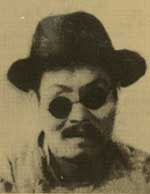 请按图片看原文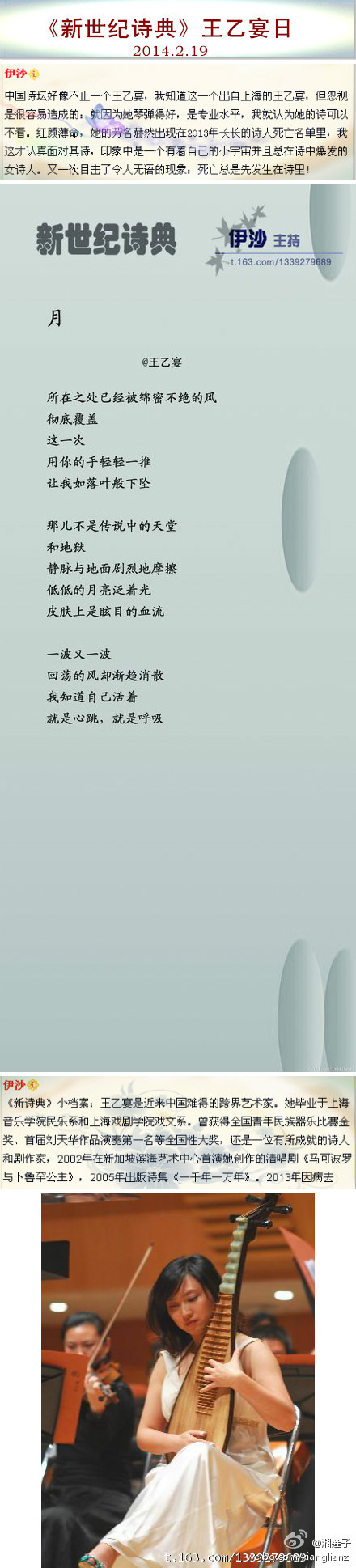


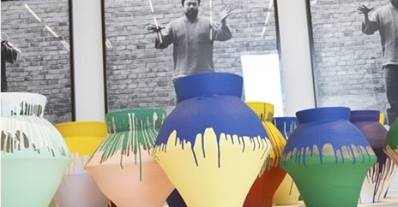





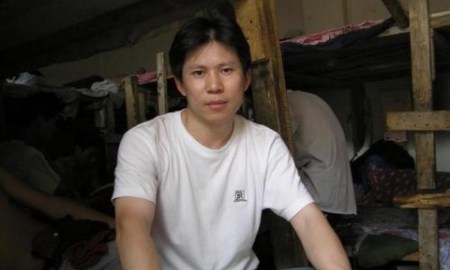
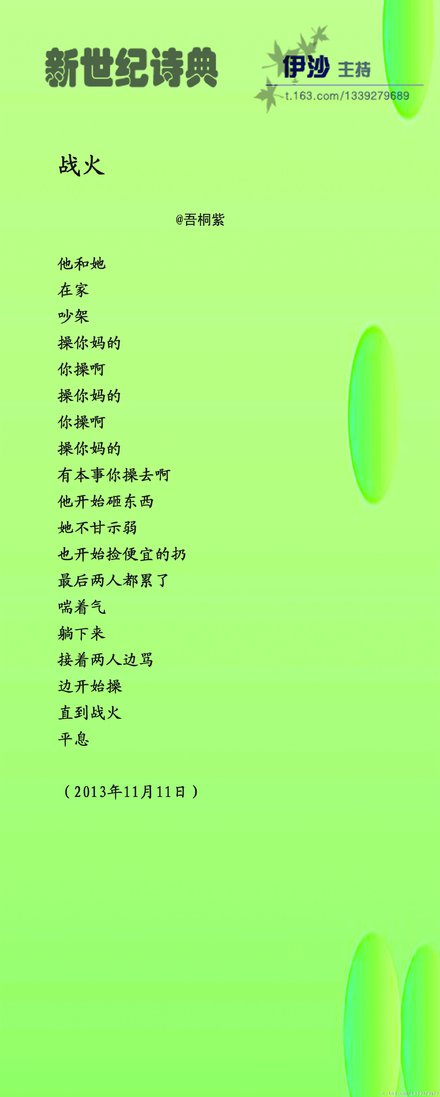

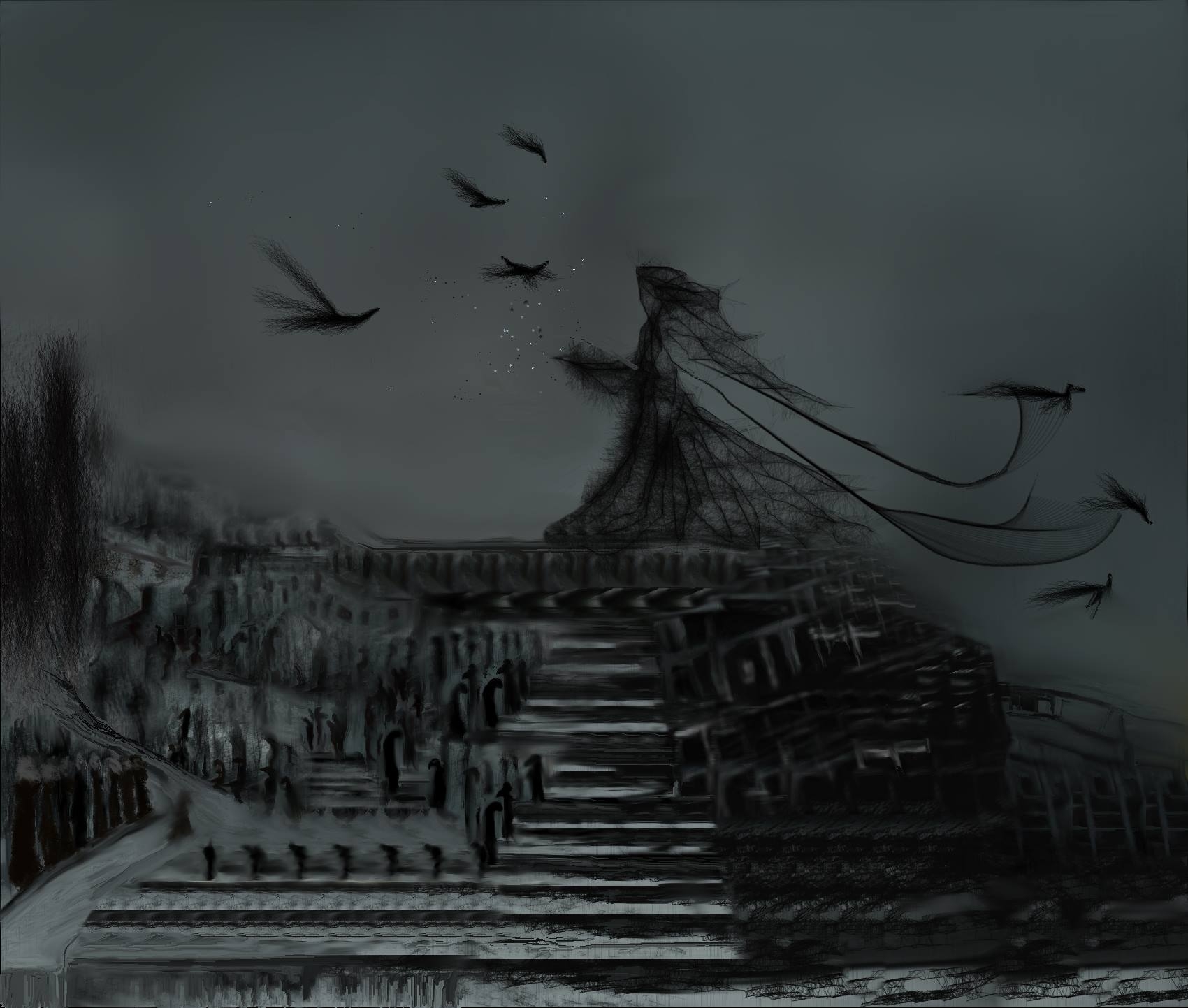
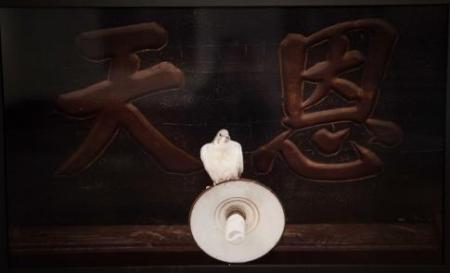

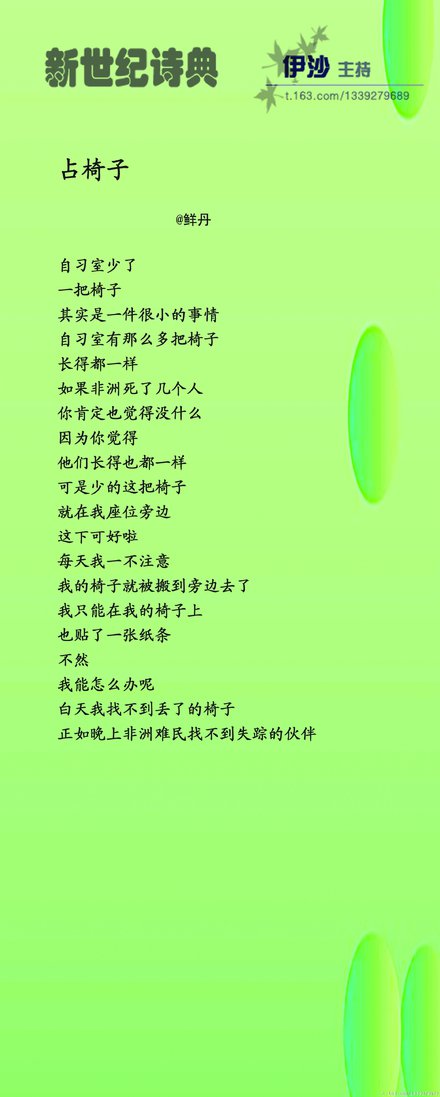


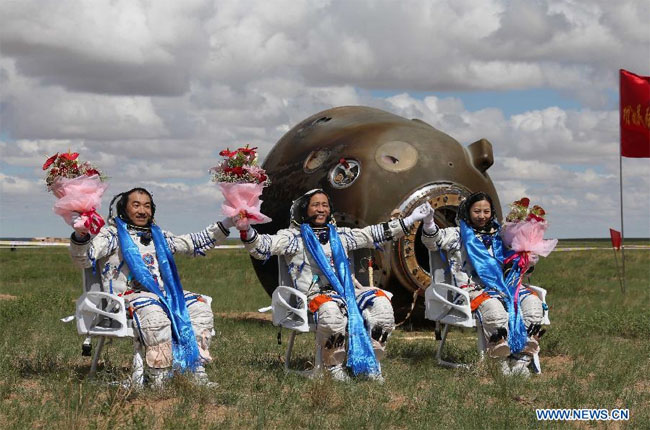

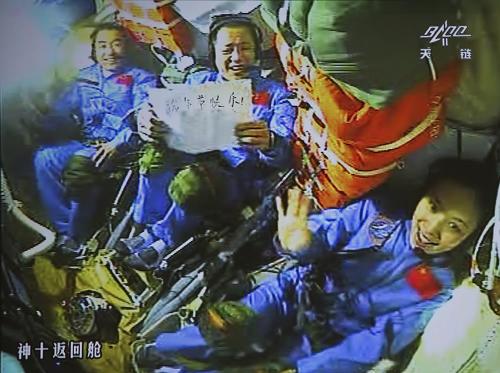


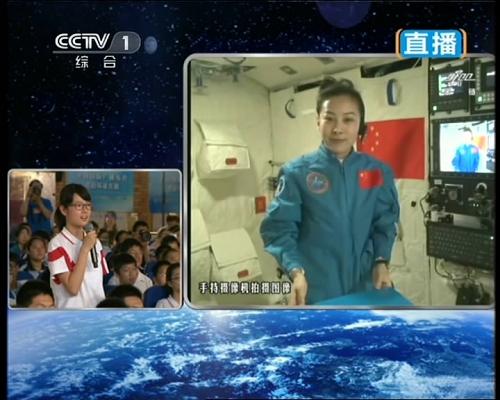

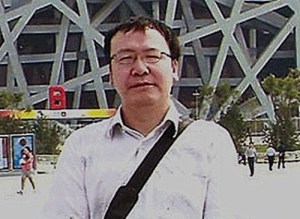


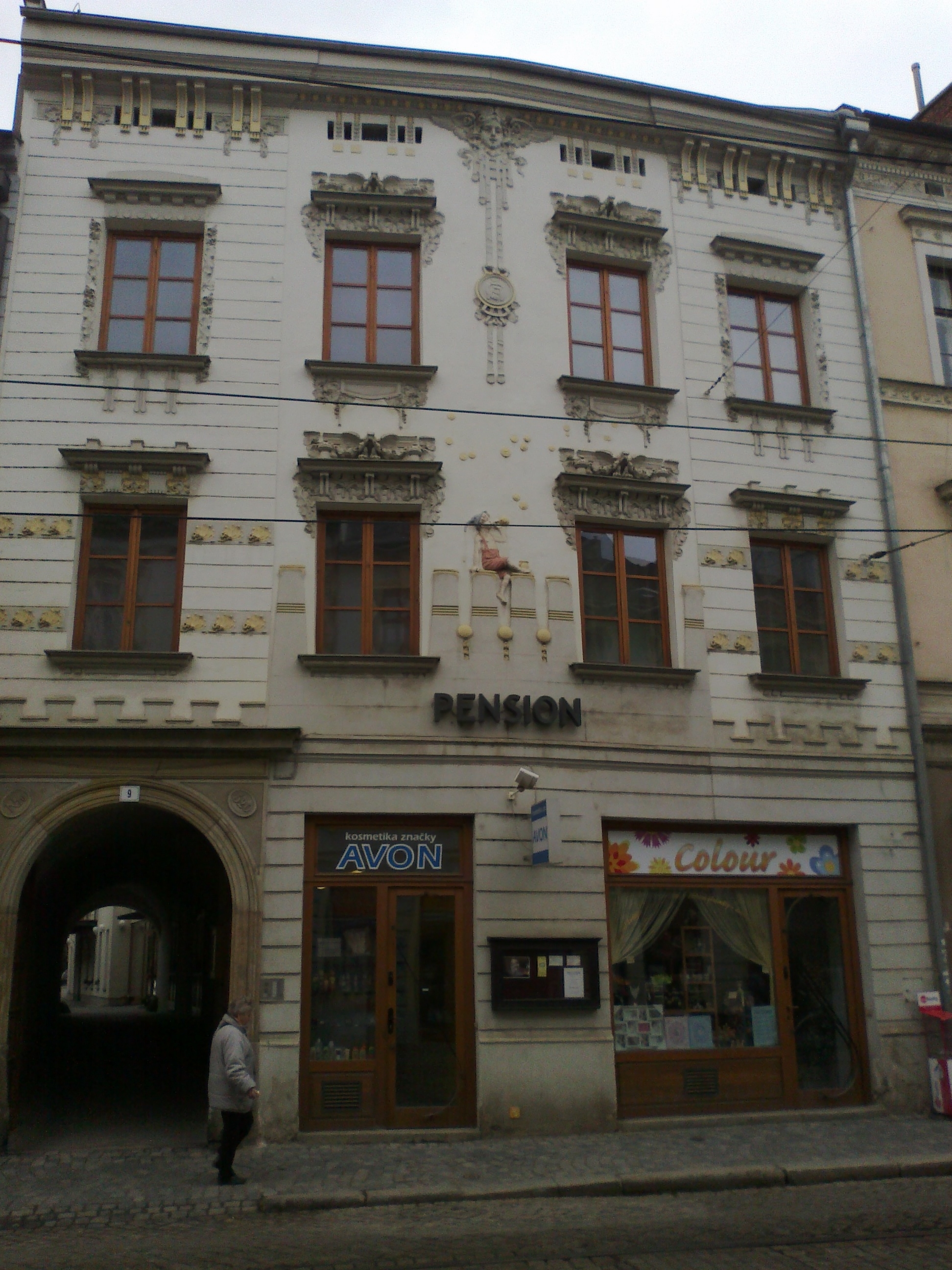

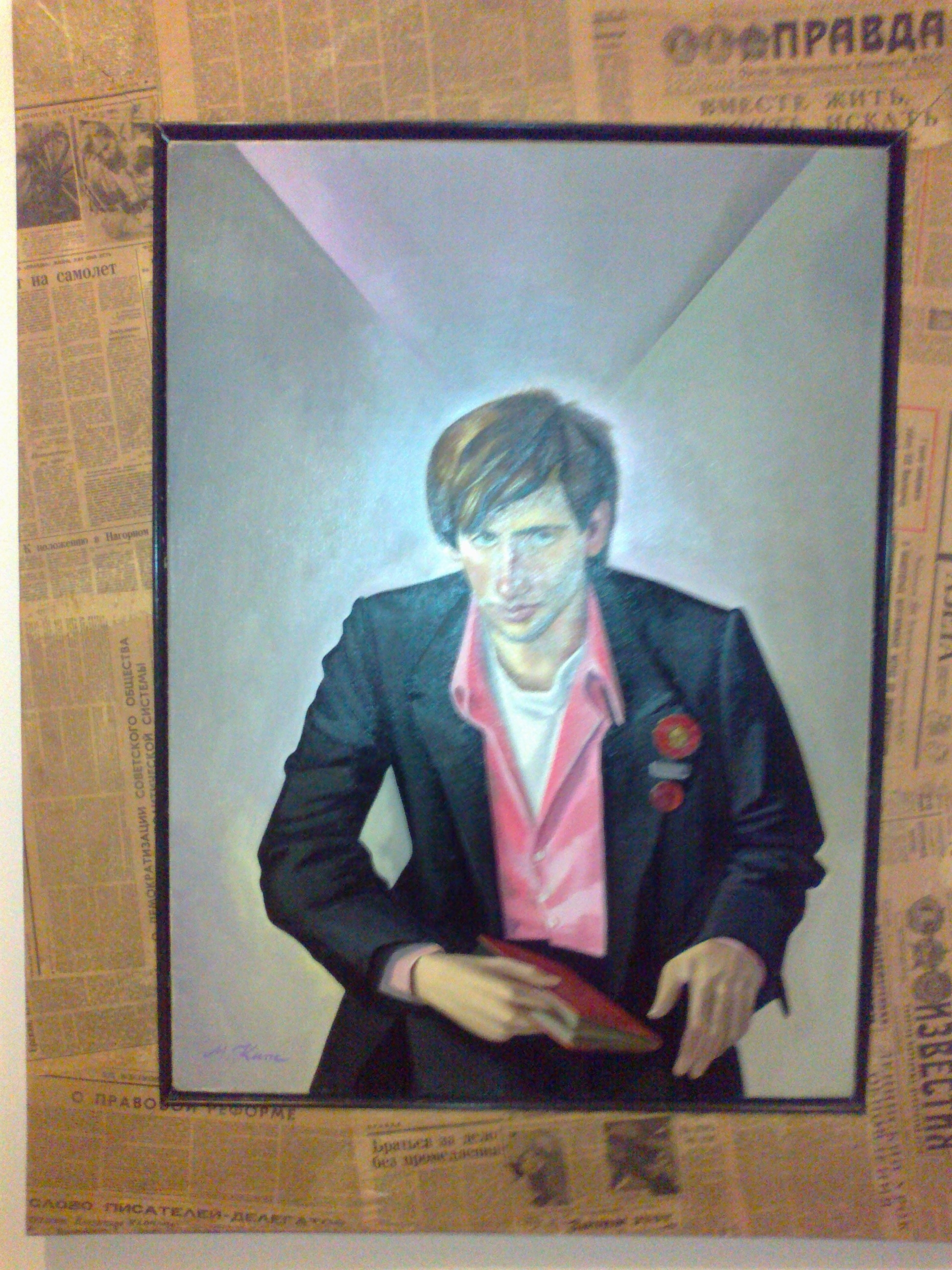
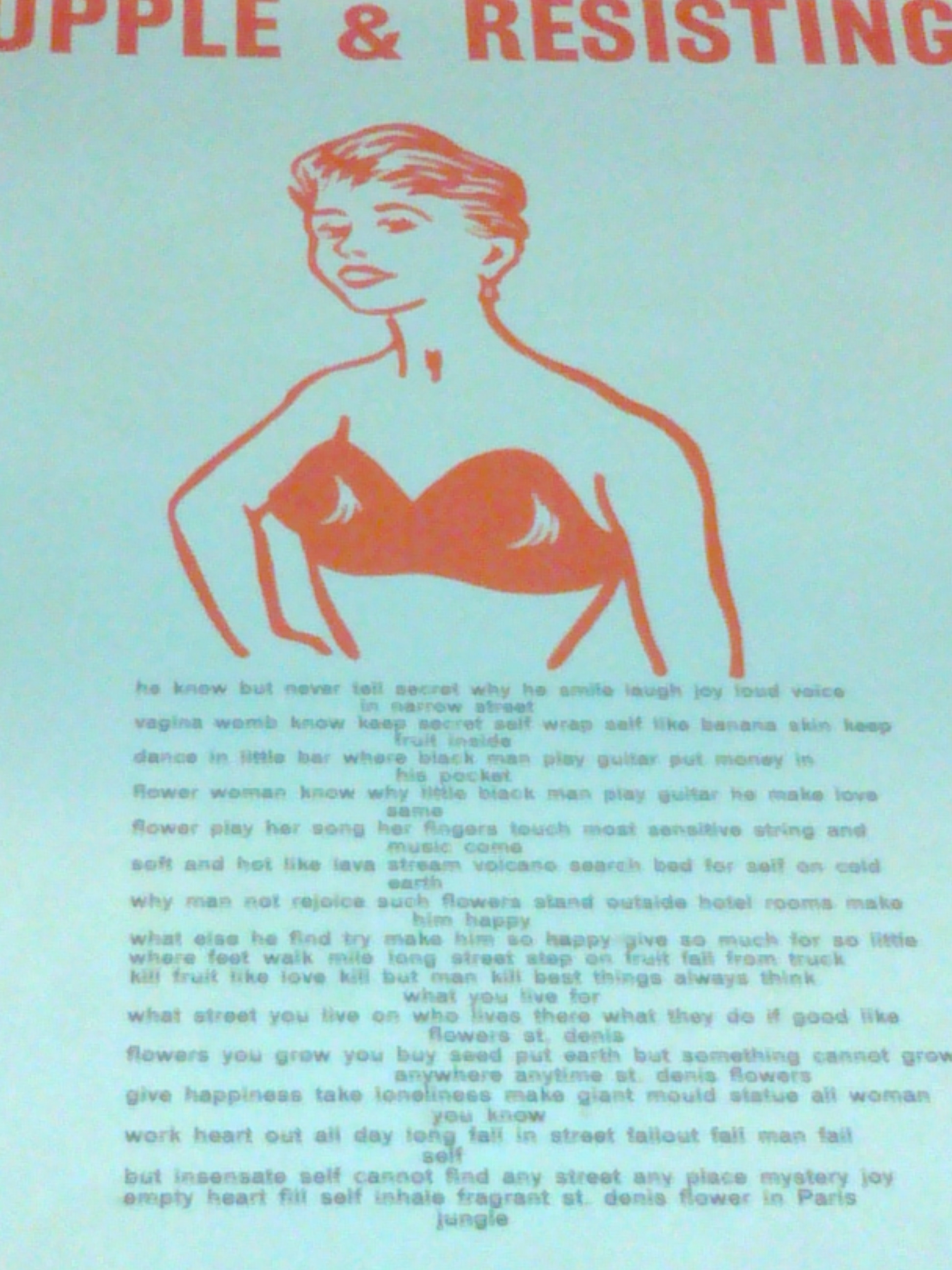

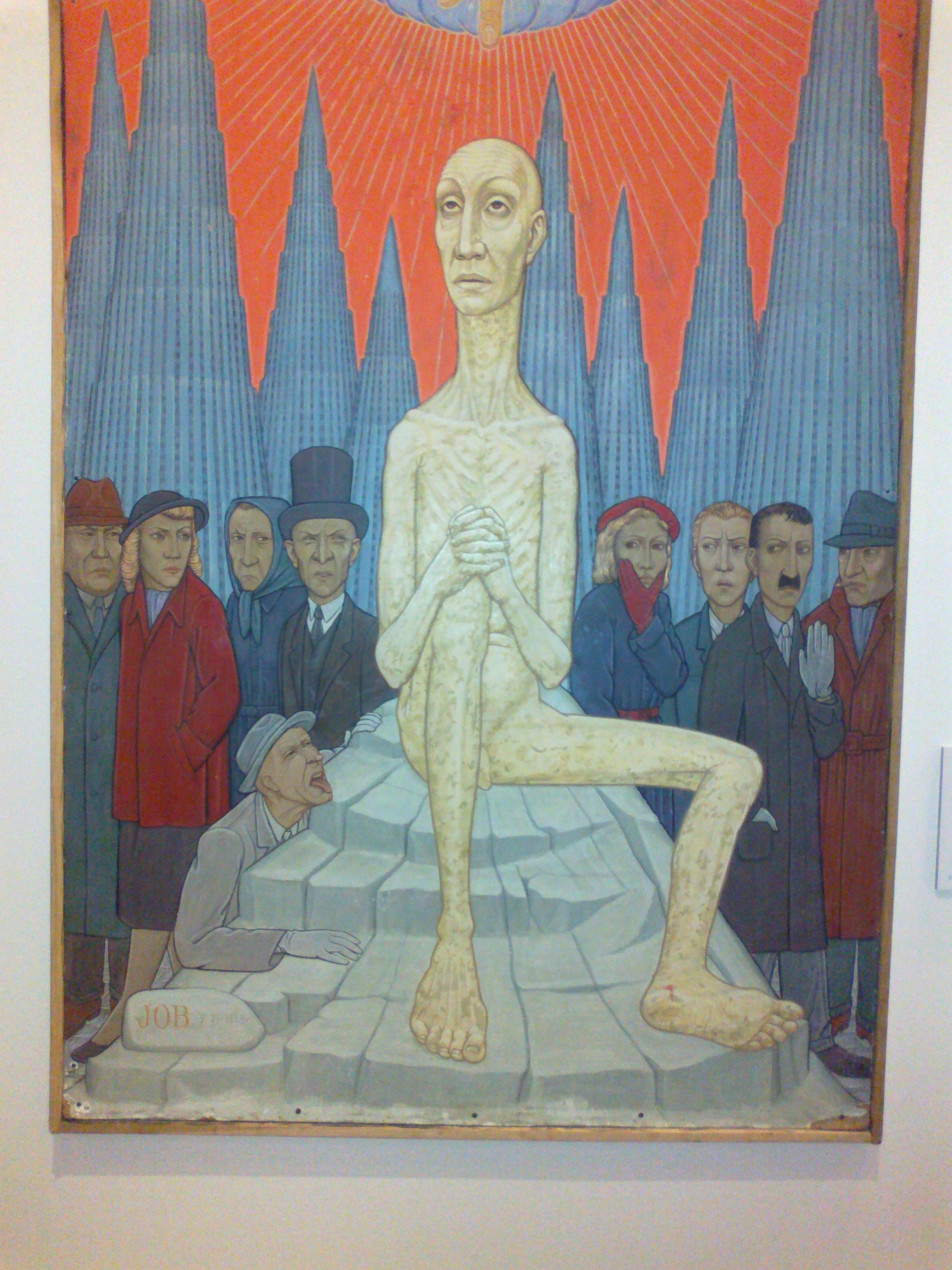


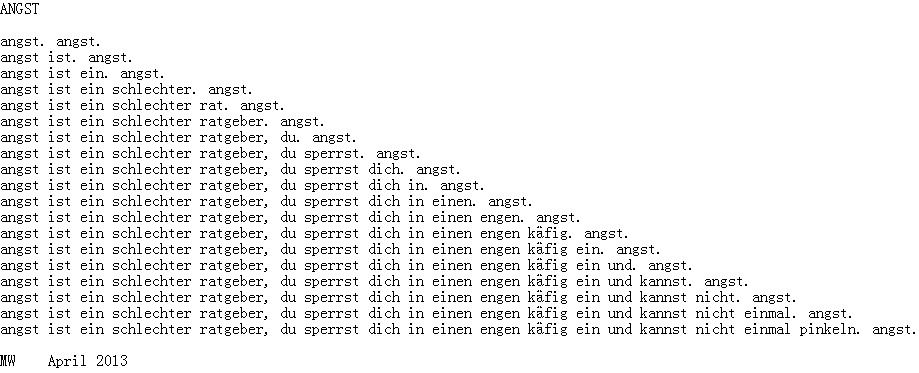


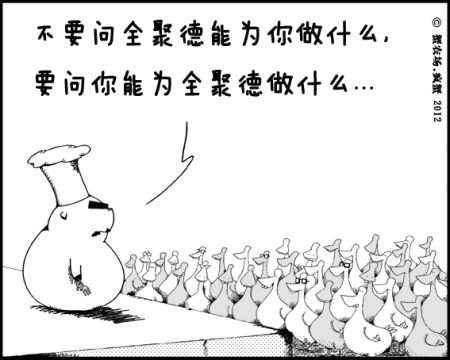
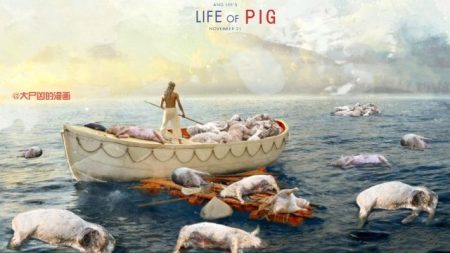




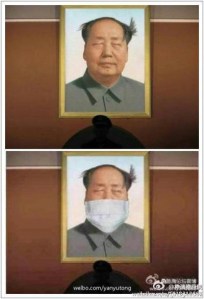



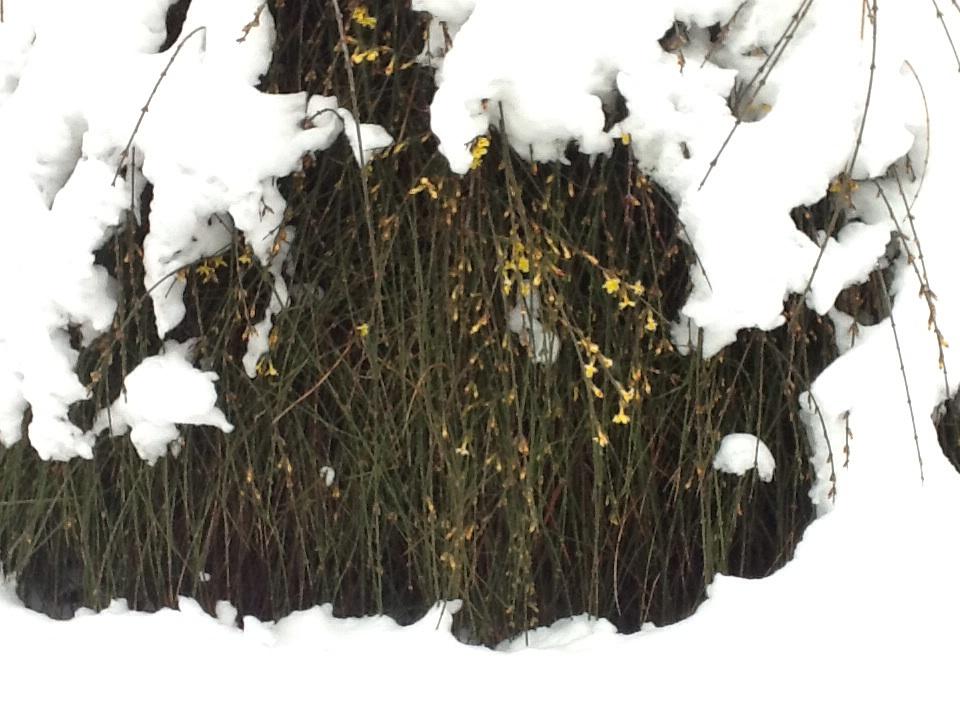


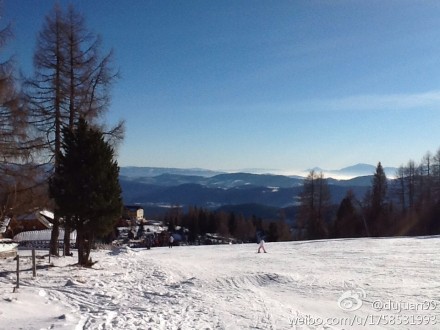
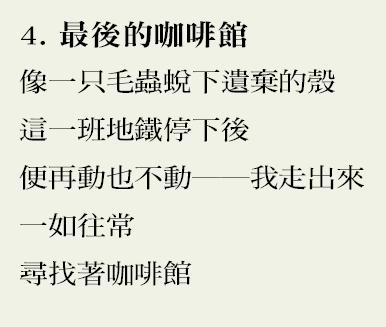

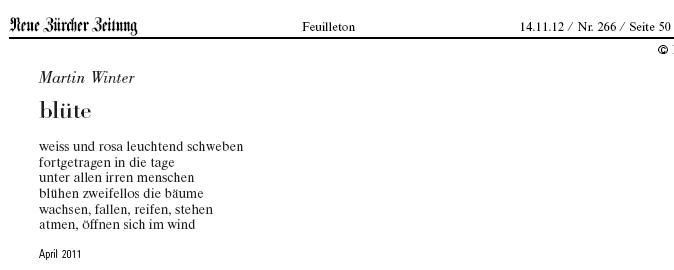


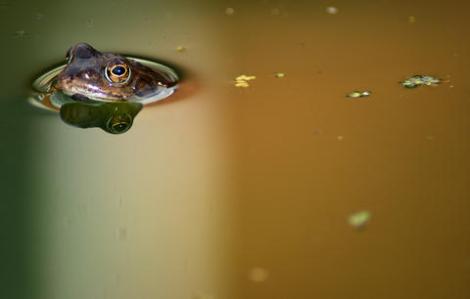
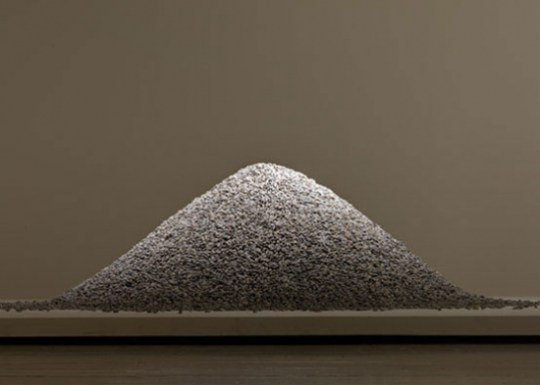
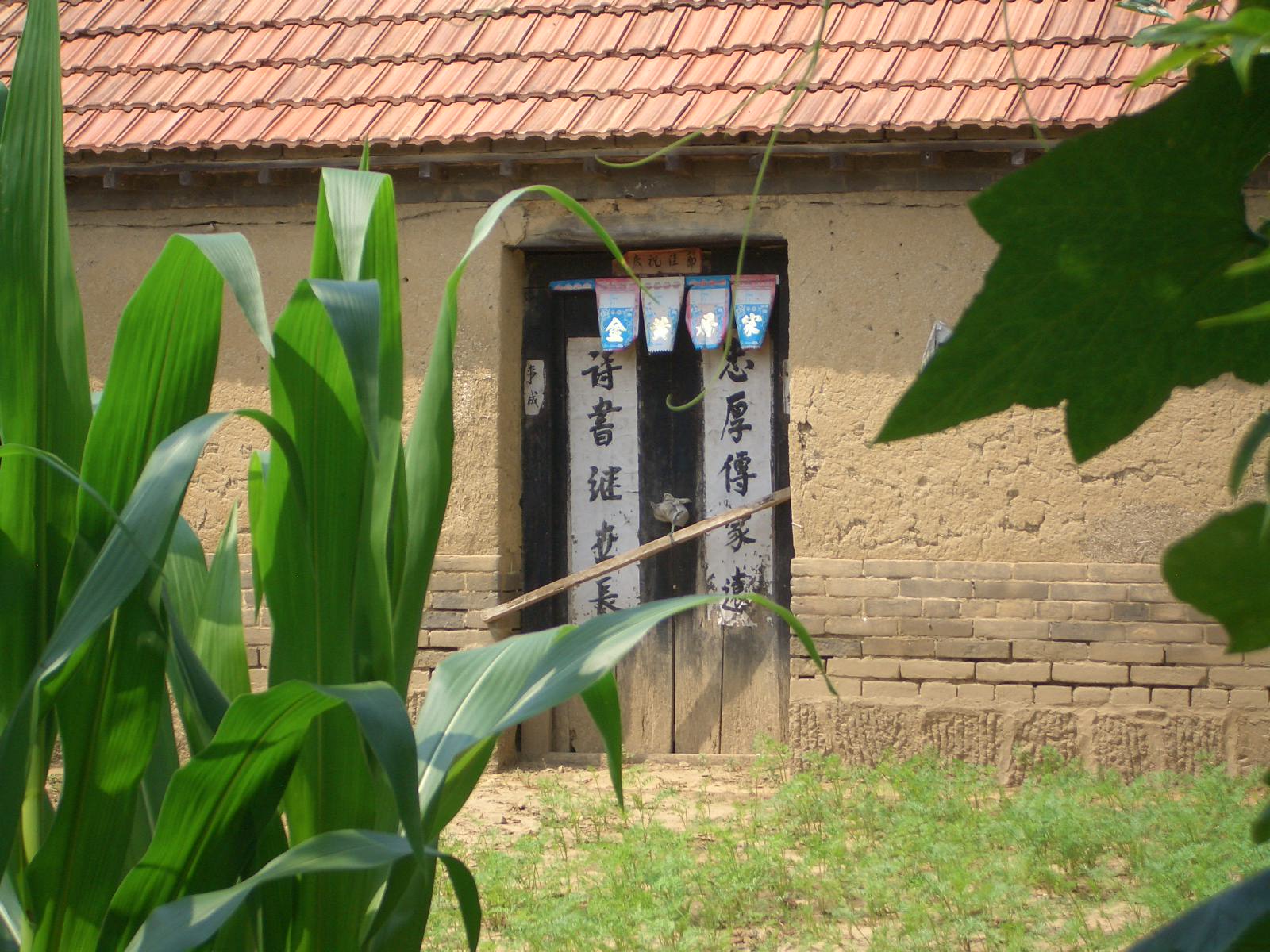
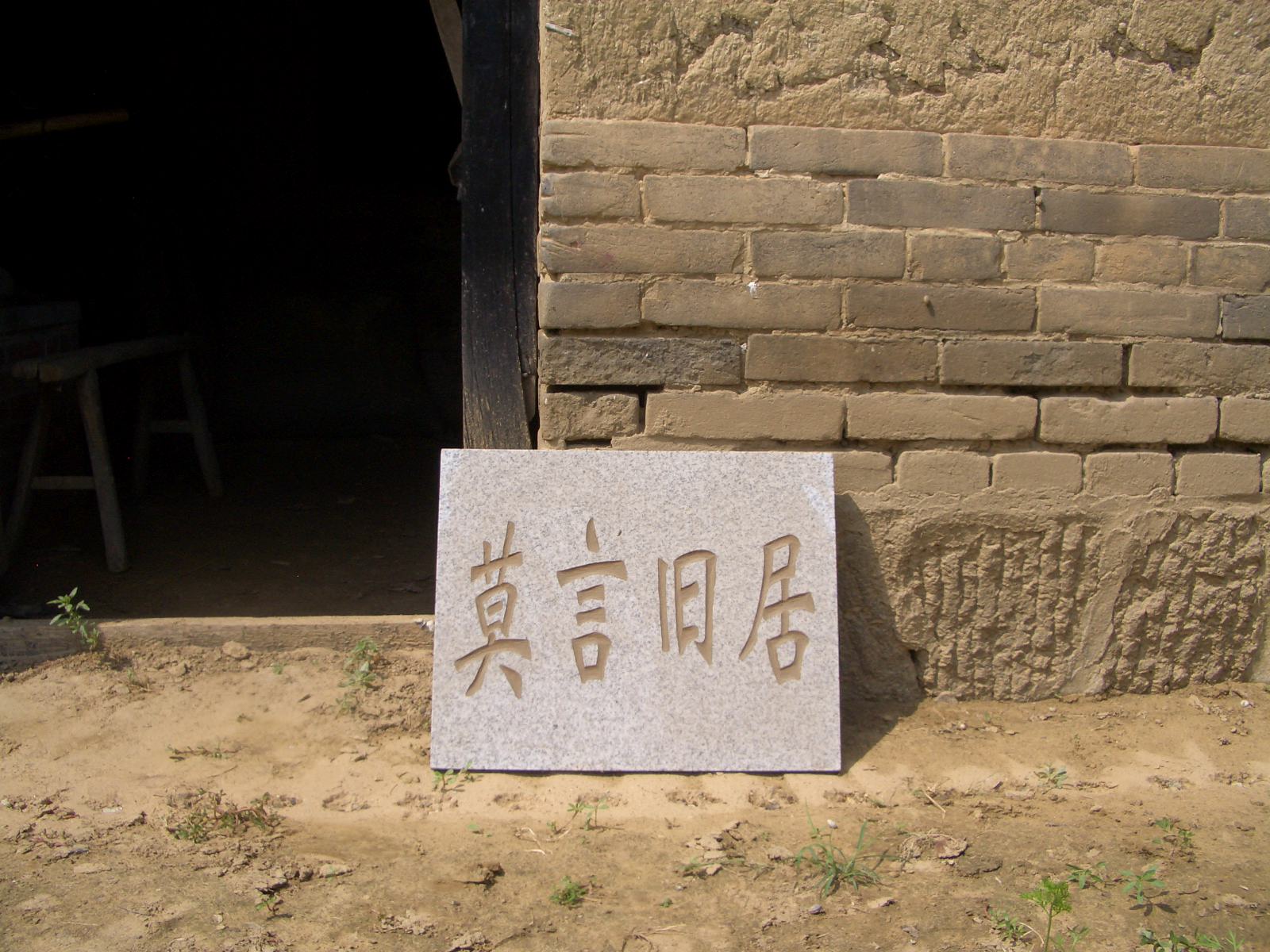
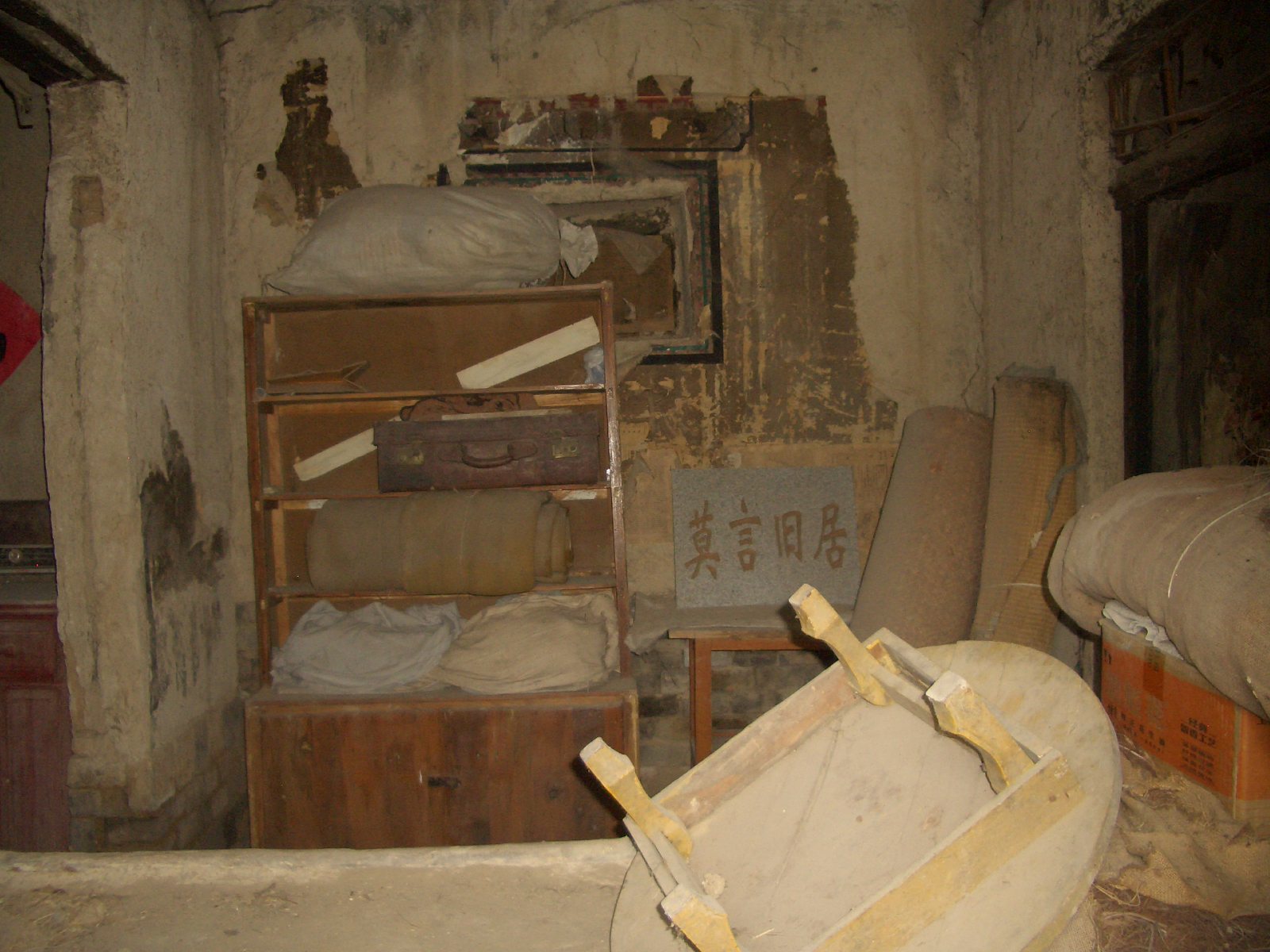

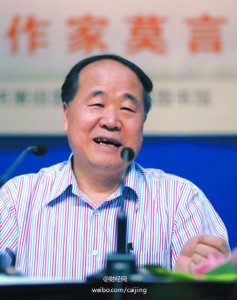


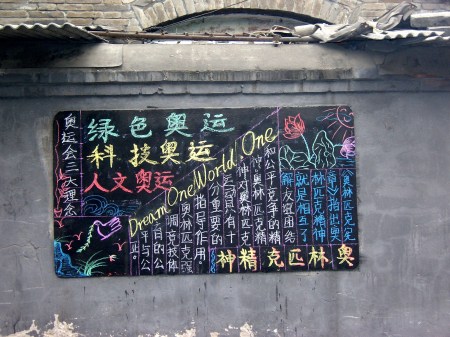
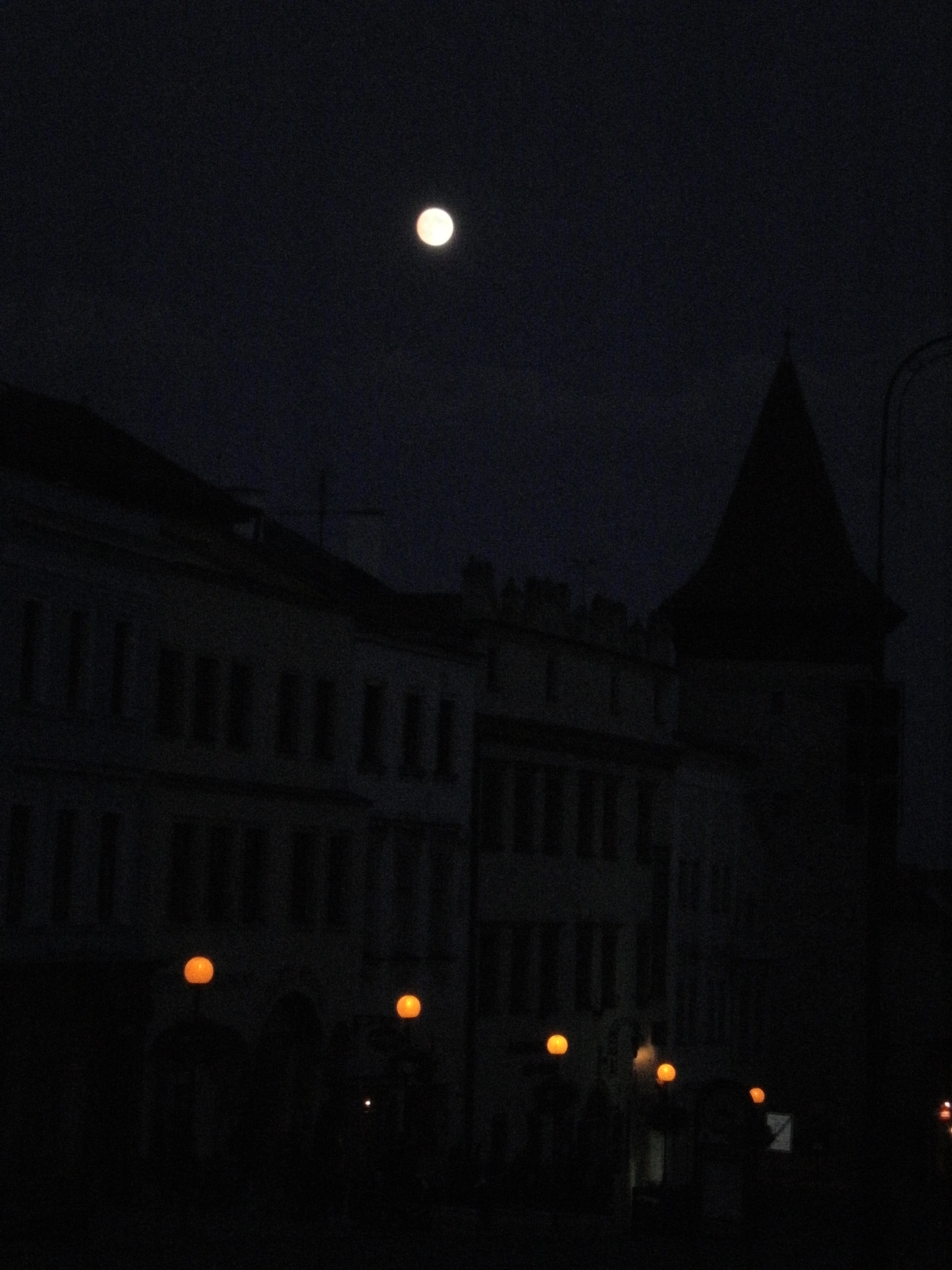

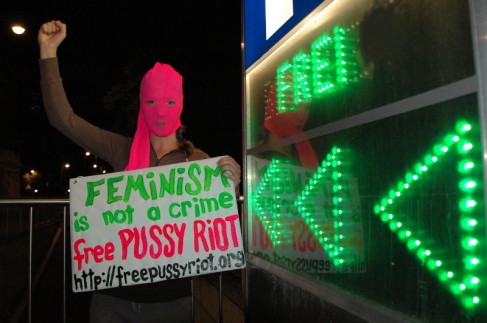

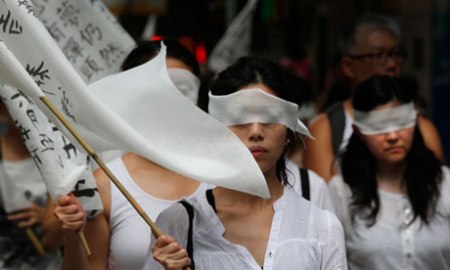
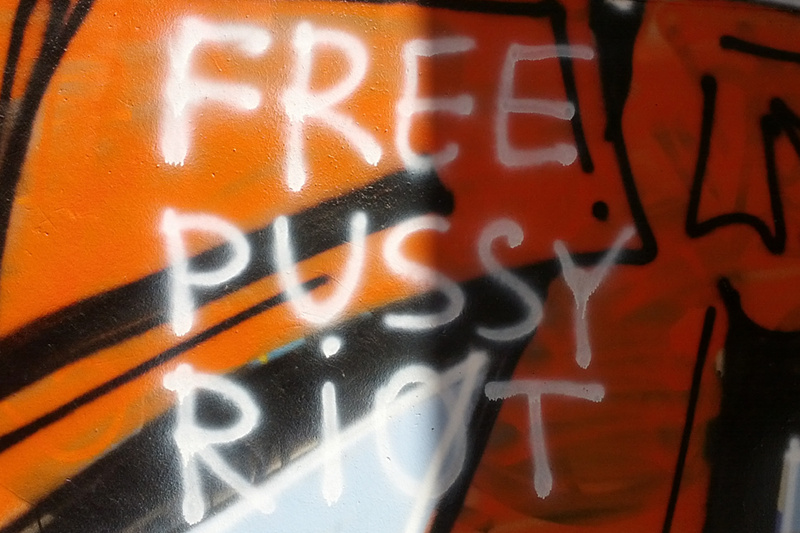
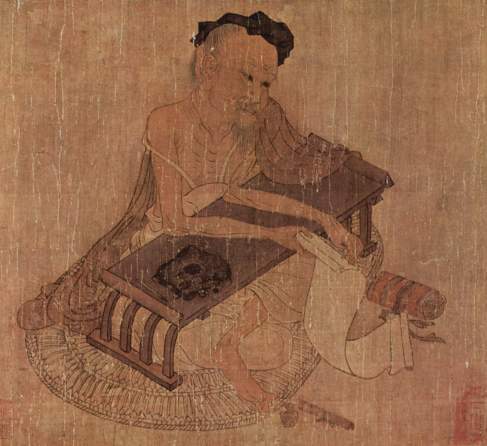 王維
王維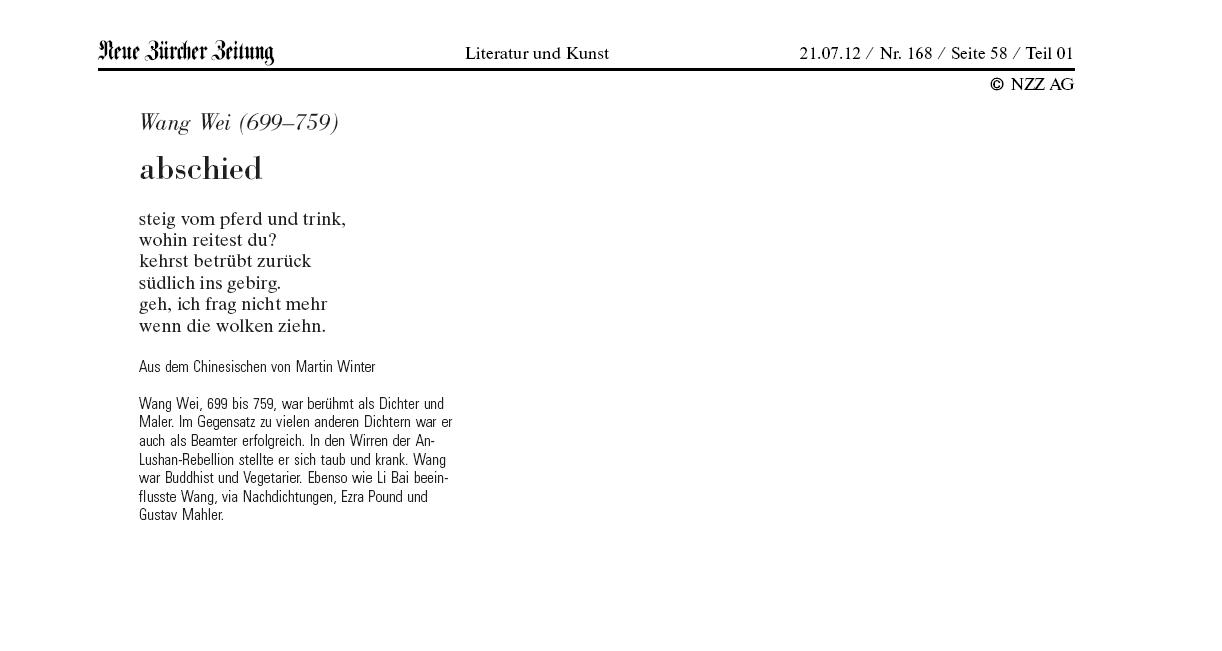



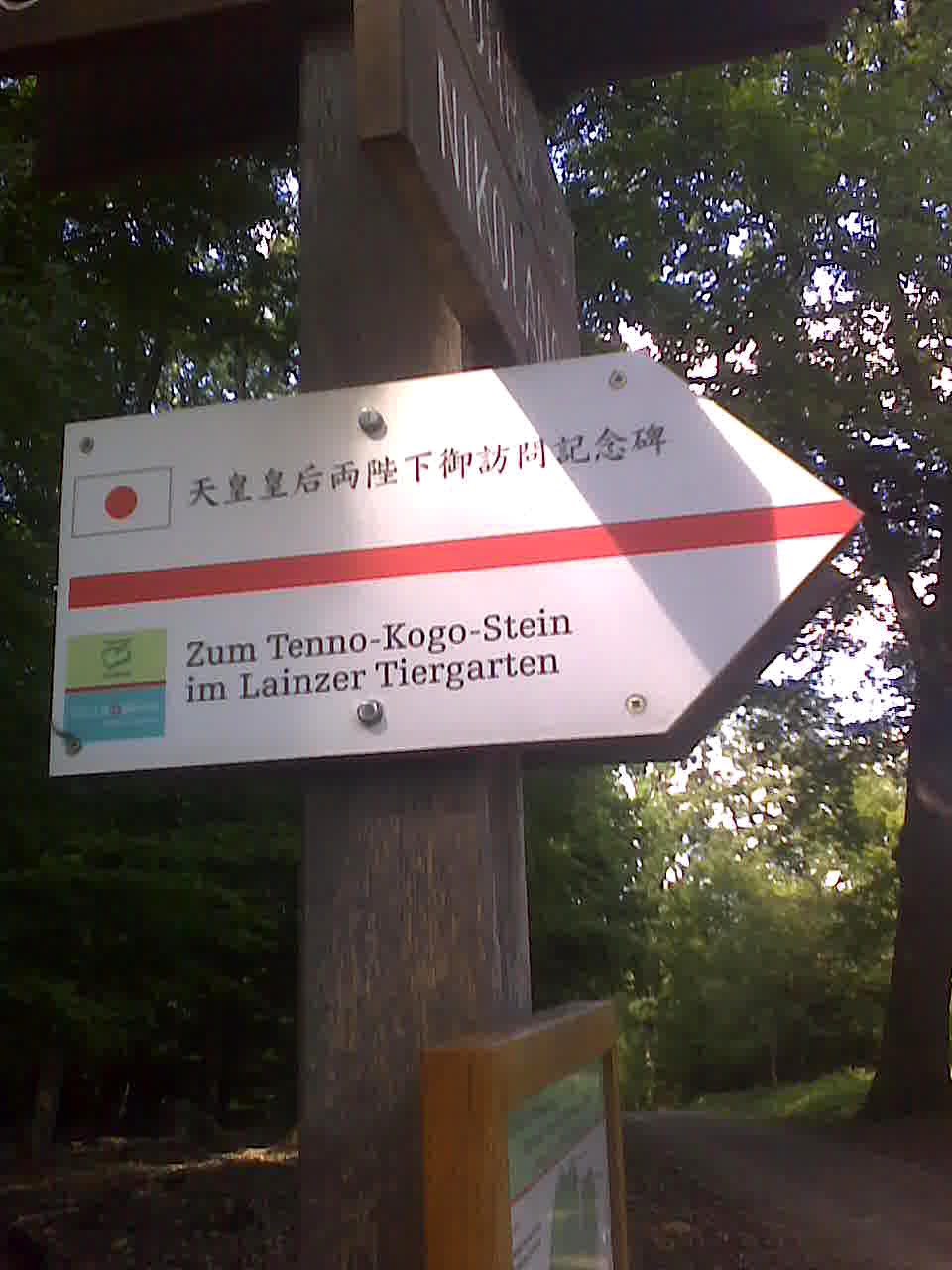




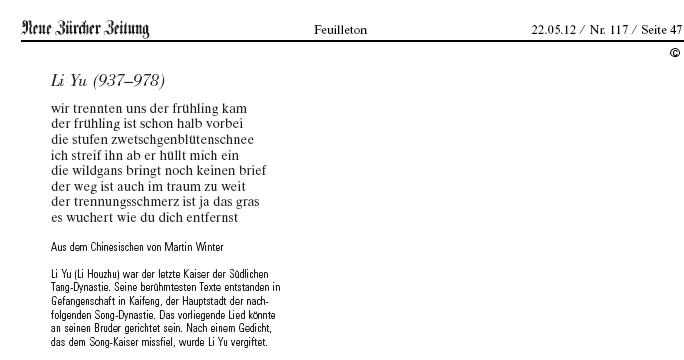
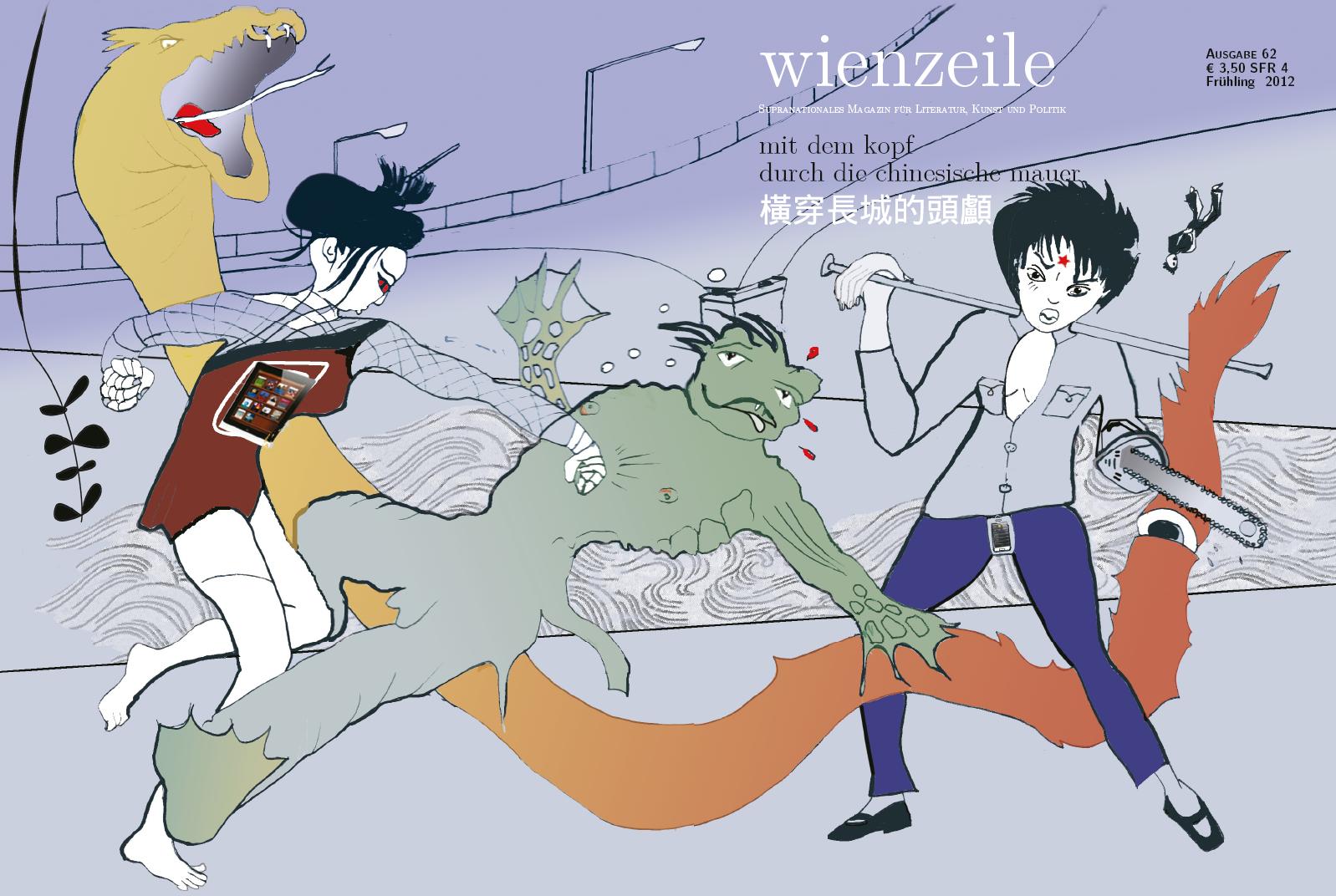
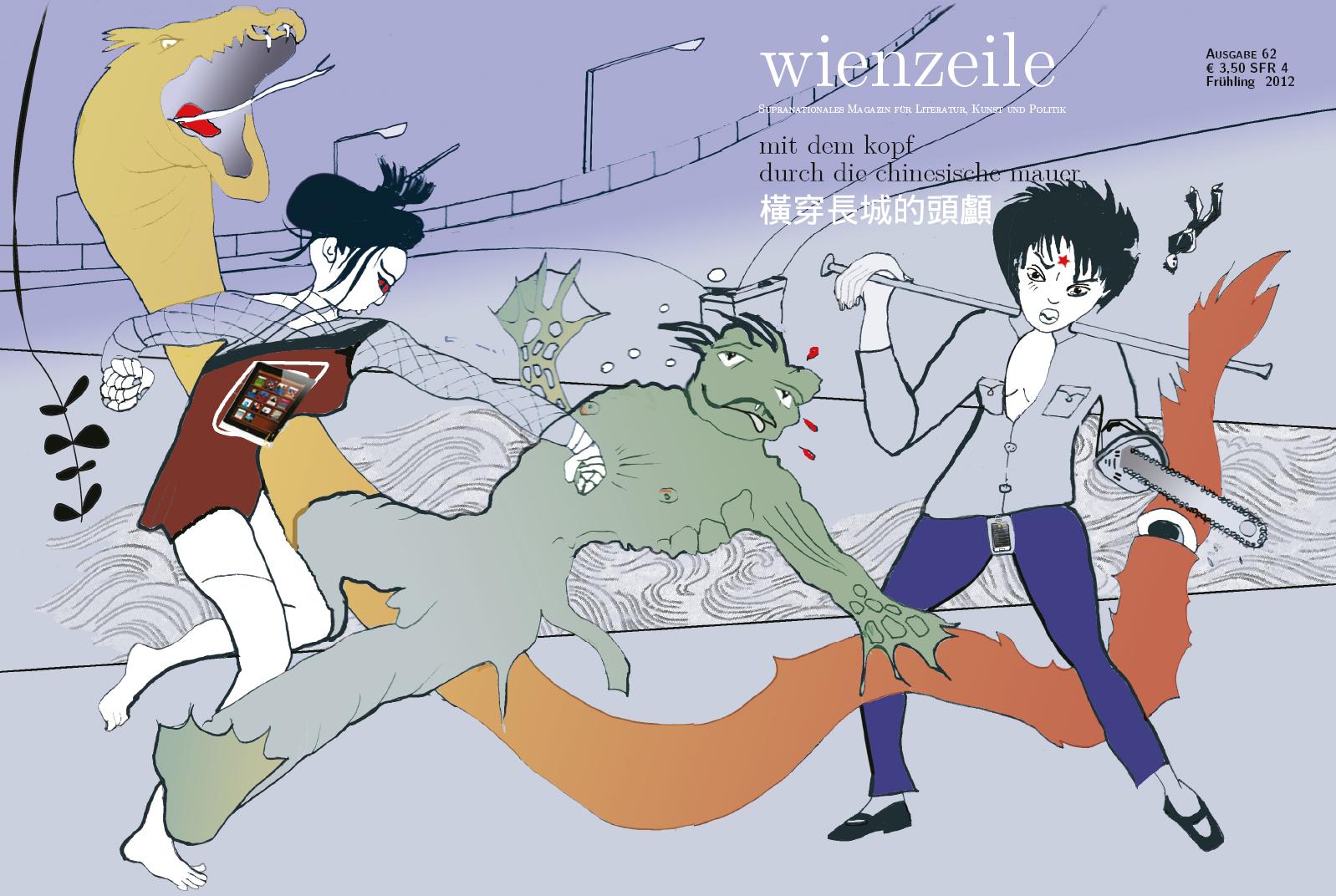


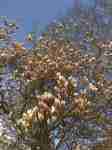

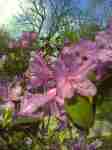

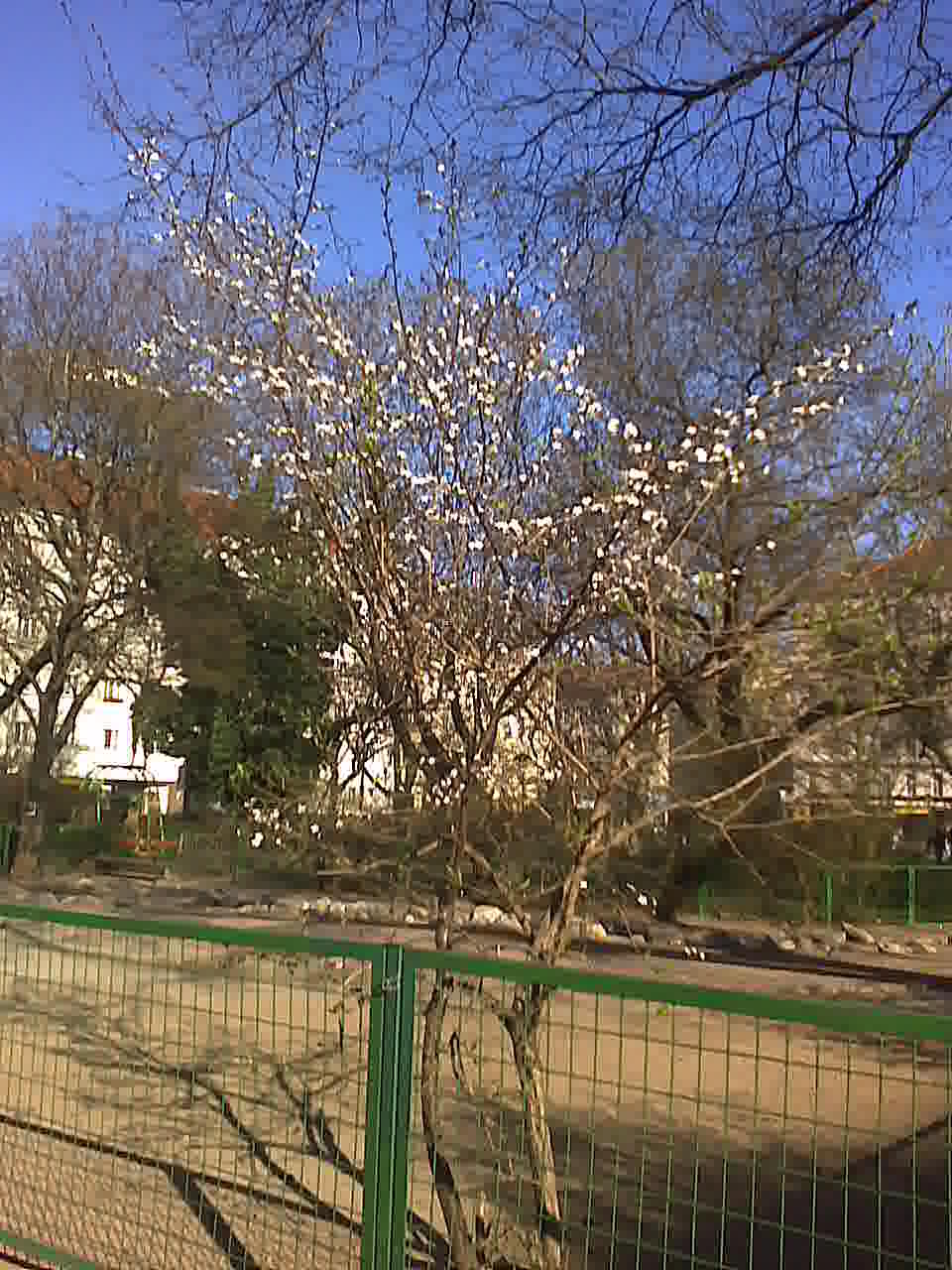


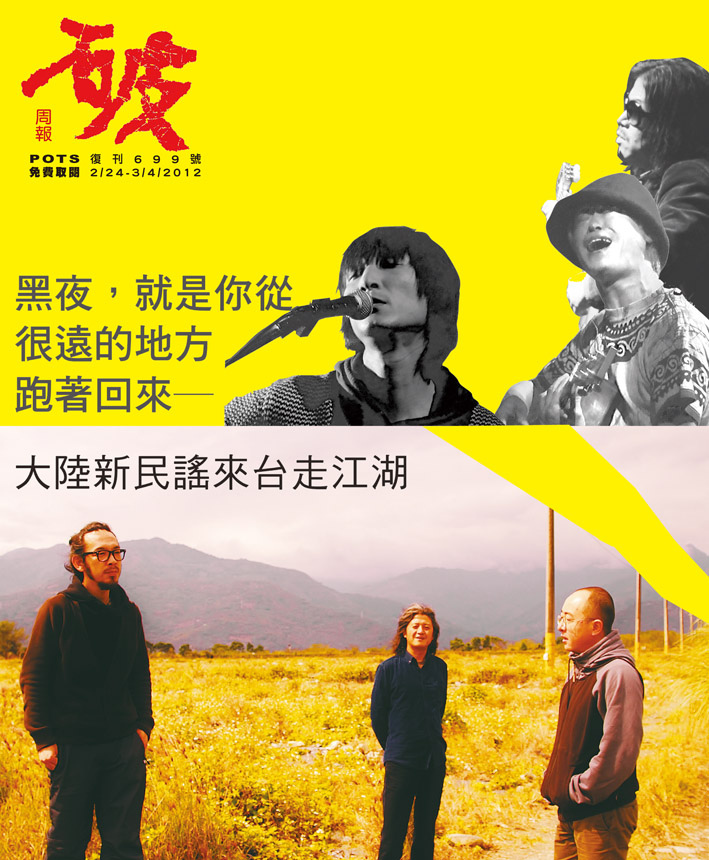




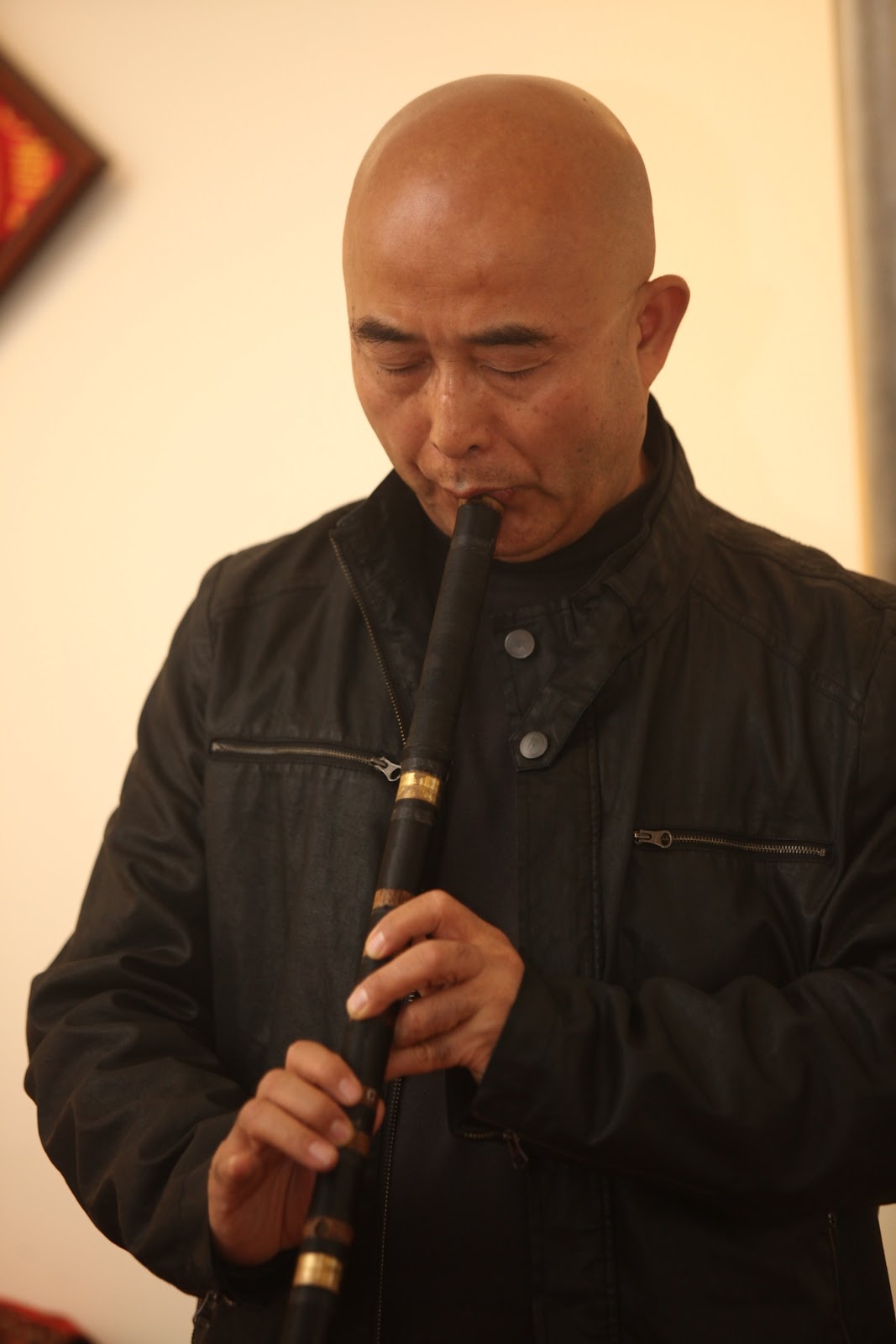




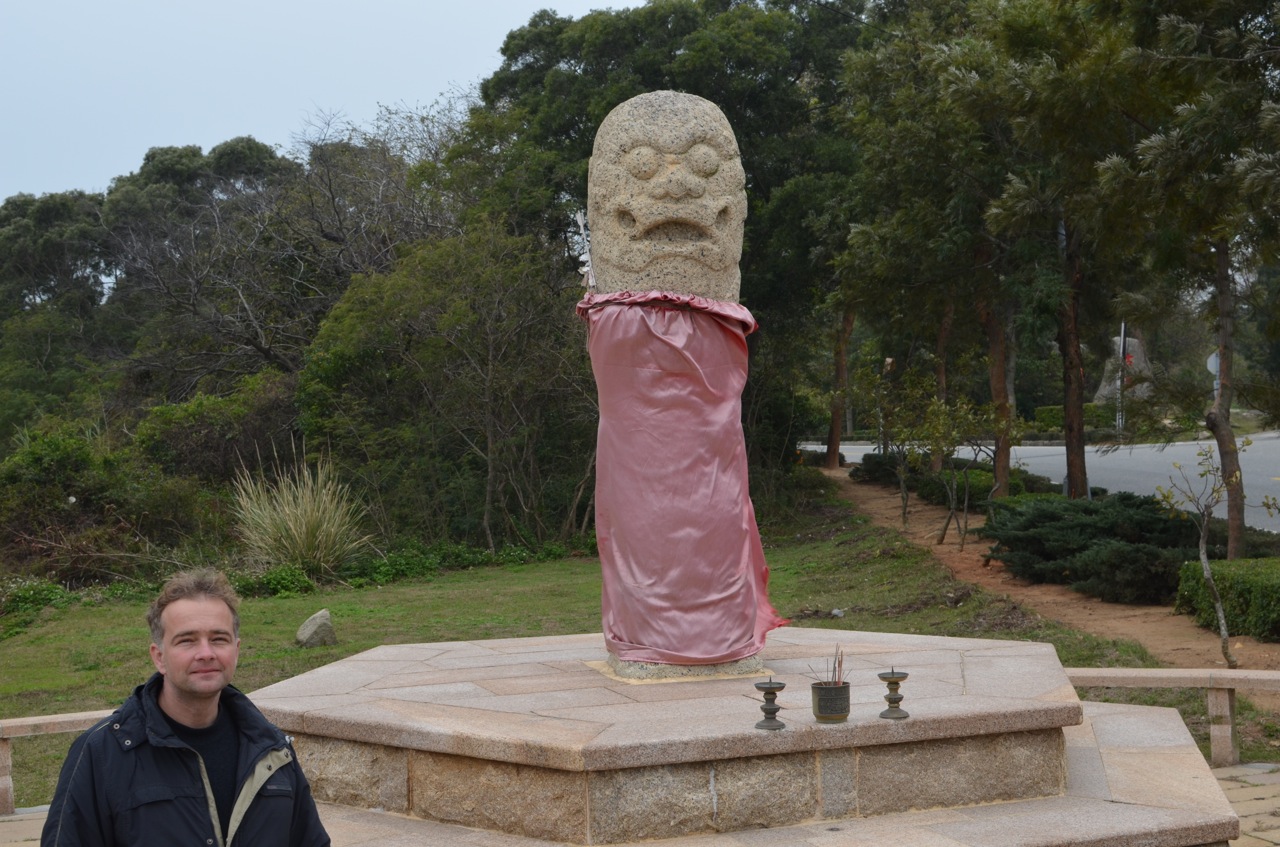

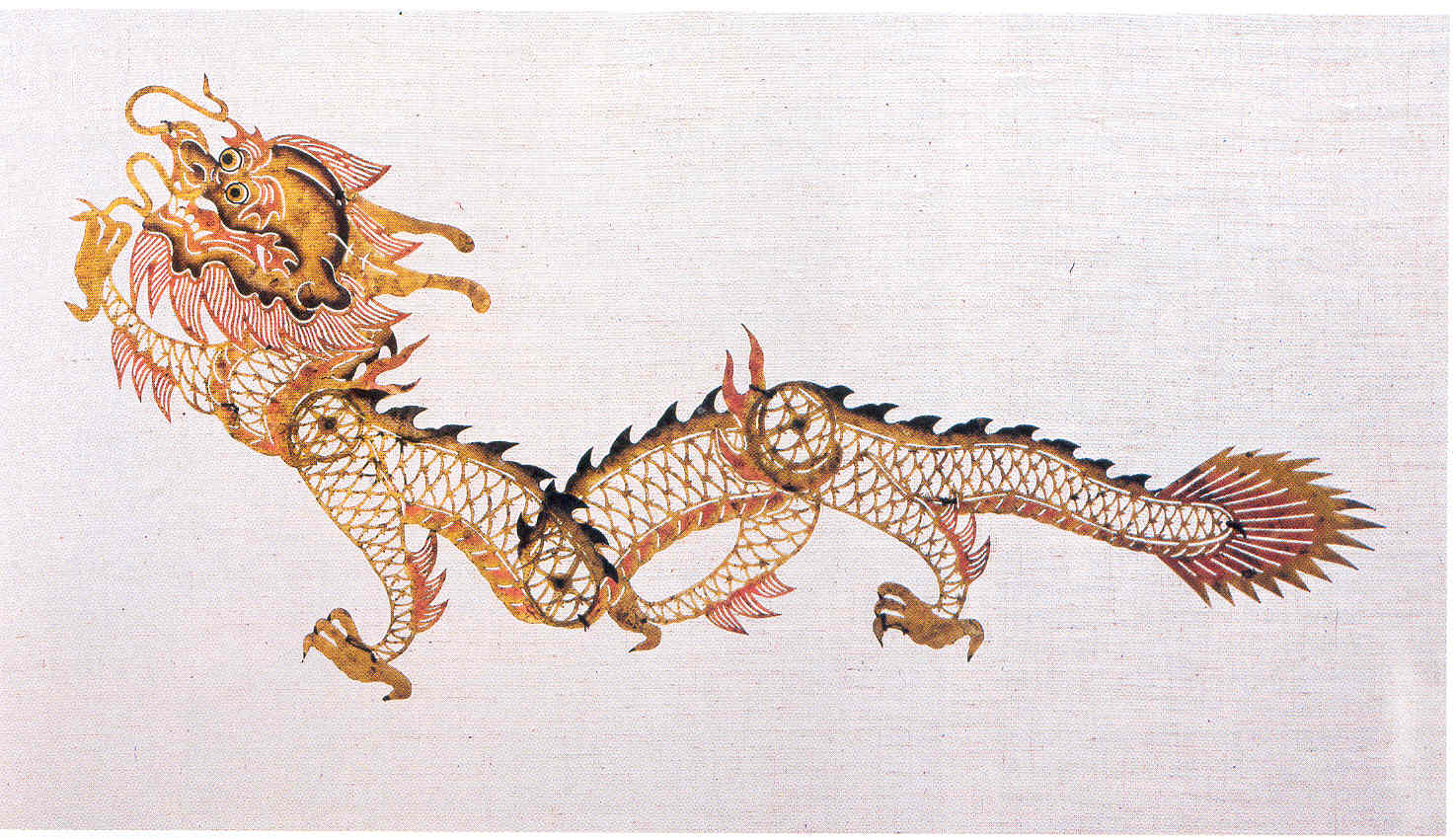






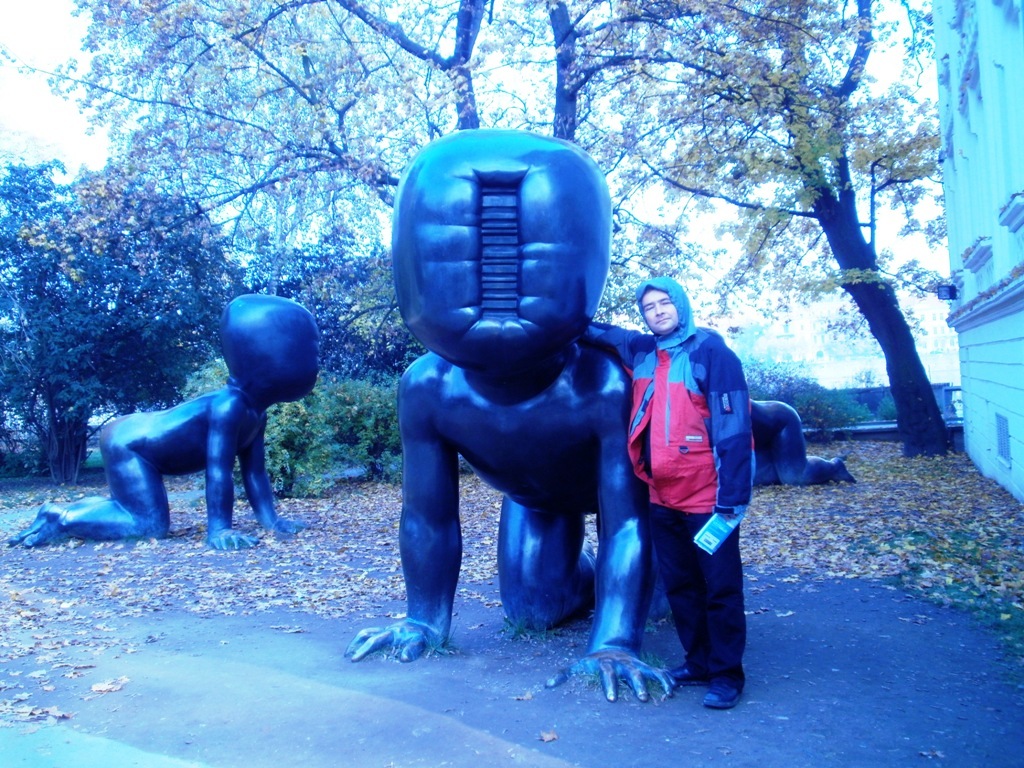

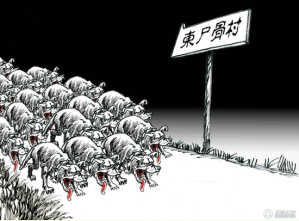
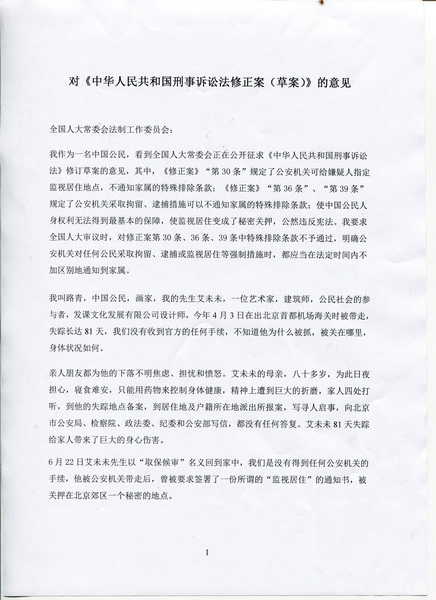



 中国大好き
中国大好き 