11月 3, 2012
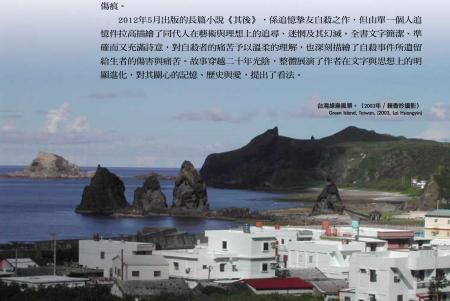
It was great. Lai Hsiangyin 賴香吟 read part of her story about a member of a former underground movement who has to confront his own weakness when his divorced wife needs his attention. I read Julia Buddeberg’s translation. Chen Kohua 陳克華 read three poems. First came Nothing 無, very Buddhist. Then a couple of last things. The last café 最後的咖啡館. The last motel 最後的汽車旅館. Very Taiwanese kind of motel dive. Secrete details, medical details, scientific details included in all three poems. Questions and answers. Audience members asked a few questions, and we had an interesting discussion. How and why did Ms. Lai write the story? What comes first, life or politics? And so on. Students, immigrants, veterans maybe, of Taiwan politics. Chinese Studies, East Asian Studies Institute, Vienna University 維也納大學東亞文化系. Austrian PEN. Two days in Vienna. Two nights. 維也納卌八小時左右。Arriving, getting lost on the airport. Translator’s fault. Translator’s idea, the whole thing. Not lucrative. I am sorry. Not smooth. Interesting, yes. Freezing. Exhausting. Fun. Fruitful, hopefully. Thanks very much! To the organizers. Thank you! Everyone who helped us. But above all 賴香吟、陳克華多謝!辛苦你們!Liebe. Liebe und Erinnerung. 愛和記憶。Love and memory. 賴香吟小說的主要題材。維也納很適合你們。柏林也是。柏林比較像現在的台北,相當開放、國際化的。柏林非常重視記憶。維也納的過去其實比柏林可怕,因為沒有柏林那麼公開的重視記憶。
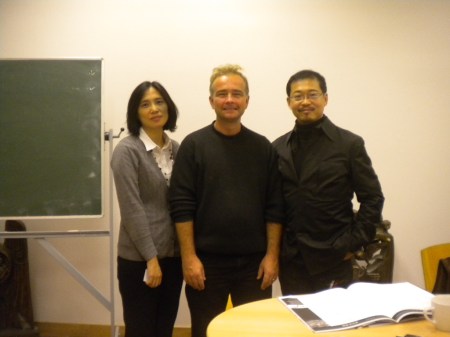
So we had Q&A. Then the encore. We had Vienna in the café, in my translation. Apocalypse. Pouring coffee, to the last. Tabori. Hitler and Freud. Is there a Freud statue? There is his private clinic. Oh well. Statues of Strauss, Beethoven. Vivaldi, very recent. With his orphan students, all girls. Musicians, composers. When Aids broke out in Taiwan, the government forbade intercourse with foreigners. As well as doing it from behind. That’s how Chen Kohua thought of the poem. As a medical man. And risk group member. No intercourse with foreigners, no sex from behind, and we’ll be fine. Right. That’s where the quotation marks in the title come from. Freud and Jelinek. Dreams of Vienna. Love and memory.
陳克華
今生
我清楚看見你由前生向我走近
走入我的來世
再走入來世的來世
可是我只有現在。每當我
無夢地醒來
便擔心要永久地錯過
錯過你,啊–
我想走回到錯誤發生的那一瞬
將畫面停格
讓時間靜止:
你永遠是起身離去的姿勢。
我永遠伸手向你。
1985
Chen Kohua
DIESES LEBEN
Du näherst dich aus meinem früheren Leben.
Ich seh’ dich ganz klar, du gehst in meine Zukunft.
In die Zukunft der Zukunft.
Aber ich hab’ nur die Gegenwart. Wenn ich
traumlos aufwache,
hab’ ich jedesmal die Sorge,
dass ich dich verpasse, für immer —
Ich möchte zurück in den Augenblick des Fehlers,
den Film anhalten,
die Zeit und das Bild:
Für immer stehst du auf, um zu gehen.
Ich streck’ dabei die Arme aus.
1985
Übersetzt von Martin Winter im November 2012
标签: aids, austria, Chinese, contact, Elfriede Jelinek, 陳克華, 賴香吟, fiction, German, intercourse, life, literature, love, medicine, memory, poetry, politics, revolution, sex, Sigmund Freud, taiwan, translation, underground, Vienna, 國際交流
发表在 November 2012, October 2012, Uncategorized | 2 Comments »
10月 22, 2012
I want to thank Charles Laughlin for his recent posts on the MCLC list and on Facebook. His conclusion included these words: “Mo Yan’s critics are expecting the same of him that Mao Zedong would have: the political subservience of writers and their responsibility to serve as the political conscience of the nation”. Now I have written another blog post about this. 罗老师多谢!
Mo Yan’s 莫言 situation is ironic, as Charles Laughlin says. But serving “as the political conscience of the nation” is not the same as “political subservience”. It is rather the opposite. As we know, Murakami Haruki 村上春树 and his colleagues can be “the political conscience” of Japan, making “politically progressive gestures”, but Chinese writers in China, because of “political subservience” cannot be “the political conscience of the nation”, except obliquely in their fiction, poetry etc. Or in the first few days after they win a Nobel.
Along with Charles and many other people I am very glad that after Mo Yan was announced as a Nobel winner, he finally felt up to, or forced to open his mouth as a public intellectual, in contrast to the meaning of his pen name. Now he can be a public figure, like Murakami in Japan, not just an ambivalent functionary and a reclusive writer. Or can he? Is he going to say anything more on China-Japan relations or political prisoners? Is he going to mention Liu Xiaobo 刘晓波 in Stockholm? He will certainly be asked about other Chinese Nobel winners. That’s the nature of this particular prize, whether you like it or not.
Murakami and his colleagues can “serve” as public intellectuals, when their conscience tells them to do something additional to their writing. The irony is that under CCP 中国共产党 rule, there are no public intellectuals in China. There are occasional trouble-makers and commentators, like Ai Weiwei 艾未未 and Murong Xuecun 慕容雪村, Yu Hua 余华 and Wang Shuo 王朔. But can any of them speak their mind in public at length about Sino-Japanese relations or other sensitive topics? Apart from these writers and artists, there are professors like Cui Weiping 崔卫平, who issued the call to turn back to reason in Sino-Japanese relations, which got censored on Sina Weibo 新浪微波. She has often been prevented from traveling abroad. And there are some civil rights lawyers, who sometimes disappear.
Murakami and his colleagues can “serve as the political conscience” of Japanese society in and out of their books. Mo Yan has to be very circumspect with his topics. The Garlic Ballads was censored and supressed for a while. Mao’s “Talks” 讲话 at the “Yan’an Forum” 延安文艺座谈会 helped to make sure writers and artists could not speak their conscience. Vague documents like this have played an important role as instruments of obedience inforcement in one-party societies, as Anne Sytske Keijser and Maghiel van Crevel have shown in a recent article in “De Groene Amsterdammer” (10/17/2012). Mo Yan knows about this dilemma. His comments after he won the Nobel, and even some comments before, suggest he cannot find hand-copying and displaying Chairman quotes quite as harmless as Charles. That would be the difference between working with political realities in China and teaching about them in the US. The conditions of these political realities are still determined by largely the same factors as decades ago. As Keijser and Van Crevel put it, Mao’s “Talks” and other directives are up on the shelf, routinely mentioned in speeches by present leaders, and ready to be enforced again as needed. Yes, Mo Yan and his colleagues fought successfully for enough freedom to write great literature. Isn’t that enough? Not outside the realm of fiction, unfortunately. The cultural achievements of the 1980s couldn’t prevent the 1989 crackdown and everything that stays vague and threatening in theory and practice today.
Mo Yan writes “stupendous” novels, as Charles Laughlin says. Yes, he does. His development as a writer was influenced by the threat of starvation, the brutality in the name of revolution, and by the ideology. Yes, including the Yan’an “Talks”, as Charles shows. Now, Charles says, “China’s writers are receiving much-deserved international recognition simply because they are devoting their souls wholly to literary art.” Yes, they do. Liao Yiwu’s 廖亦武 speech in Frankfurt was in Sichuan dialect 四川方言. The text is available on the Internet. Try to find a video not dubbed into German. The German translation was fine, it just wasn’t dialect or even colloquial German. And it didn’t sound half as humble as Liao himself did. Politics made him into the writer, musician, poet and activist he is now. And his temper, his foolhardiness, as he readily admits. Not a hero, as Jonathan Stalling suggested. The German Book Trade’s Peace Prize has often been awarded to writers such as Orhan Pamuk.
The irony is that in theory, as taught by Charles, “Mao Zedong would have” reminded writers of their “responsibility to serve as the political conscience of the nation.” In practice, he silenced them. Virtually all, in time. So there would be no political conscience. That’s what Orwell’s Nineteen-Eighty-Four is about. Words like “Ministry of Truth” 真理部 are very well-known in China. 1984 is a vision of the closed world of a one-party state. Some moments of life in other societies can feel just as eerie, like a progressive college professor who turns into a cult leader, as in Murakami’s 1Q84, or, even more so, the perfectly cultured killer with secret roots in Korea. But on the whole, Japan in the 1980’s, evocatively and masterfully portrayed, is not ironic enough for connecting to Orwell’s 1984. I guess Taiwan under martial law 台灣戒嚴, in 1984, could have just made it.
Hu Ping 胡平, elected as independent candidate in Beijing’s Haidian district towards the end of the brief Beijing Spring over 30 years ago, recently circulated an excerpt from Mo’s “Life and Death Are Wearing me Out” (Shengsi pilao 生死疲勞). The novel was already well-known before the Nobel. A land owner who had his head blown off in the land reform in 1950 is born again as a farm animal several times, most famously as a donkey. In this excerpt, the donkey/landlord laments his unreasonable and unnecessarily bloody execution, until the guy who shot him tells him he acted with expressive backing from local and provincial authorities, to make sure the revolution was irreversible. So was it “a matter of historical necessity”? I don’t know what Hu Ping meant by circulating the email that somehow ended up forwarded in my inbox, because I don’t follow Chinese exile communications very closely. To me, the excerpt sounds just as absurd, evocative, tragic and yes, “stupendous”, as Mo Yan’s novels usually do. And thus rather close to Orwell’s 1984, or Wang Xiaobo’s 王小波 2015, in a way. I don’t think most readers would think that the author wants to commend, recommend or even excuse such acts of brutality.
There is another irony. Gao Xingjian 高行健 was awarded the Nobel prize for literature in 2000 even though, or maybe because, he did not and does not make himself available for political comments. Gao emigrated to France in the late 1980s and rescinded his Party membership in 1989, and it doesn’t seem he wants to come to terms with the powers that be in China in his lifetime. But on the whole, Gao has made about as many explicit political comments in the last 20 years as Yang Mu 楊木.
Chinese writing in 2012 is very complex. At least there is “much-deserved international recognition”, finally. Yu Hua’s essays “China In 10 Words” 《十個詞彙里的中國》 were serialized in the New York Times 紐約時報, among other international papers. And now Yang Mu, Mo Yan and Liao Yiwu appear together in headlines, also in the New York Times. What more could we wish for?
标签: china, culture, fiction, German Book Trade Peace prize, history, Japan, literature, memory, Newman prize, Nobel prize, politics, taiwan, theory
发表在 October 2012, Uncategorized | 2 Comments »
10月 19, 2012
标签: chinese language and literature, death, fiction, gender, history, hualien, literature, love, memory, poetry, reading, Tainan, Taipei, taiwan, translation, Vienna
发表在 October 2012, Uncategorized | 2 Comments »
10月 16, 2012
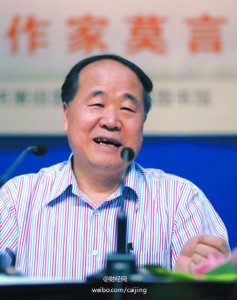
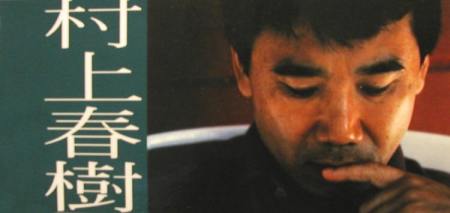
I like both Mo Yan’s 莫言 and Murakami Haruki’s 村上春樹 novels. But 1Q84 left me disappointed, although it’s brilliantly written. Great evocation of ordinary lives and neighborhoods. But not very much connection to Orwell. No prison. The two lovers escape at a terrible price. Maybe I sort of hoped neither Mo Yan nor Murakami would get it. Although I think they’re both great writers. Murakami deserves great credit for his political candor, both in some of his novels and otherwise. He recently spoke out for a return to reason in Chinese-Japanese relations. After Mo Yan got the Nobel, he also said something in this direction. Mo Yan has never made political comments before. Now he can do it. So maybe it is a good thing that he got the prize.
Making handwritten copies of the speech that was the reference point for decades of repression in literature is an absurd, shameful act.
On the other hand, Mo Yan’s novels could be called an important continuation of the magical realism tradition. The realism of The Garlic Ballads clearly shows the helplessness of peasants and ordinary people in the 1980s. The Republic of Wine is a fantastically powerful indictment of official corruption. Some other novels have broader historic scope. The stories take place in many different periods, under CCP rule as well as before and even in the 19th century. But they are all fantastic tales of familiar people in villages and small towns. Ma Lan’s 馬蘭 How We Killed a Glove 我們如何殺一隻手套 employs different techniques, but when you are in the middle of reading you also realize the details refer to massacres and tragedies that seem very fantastic in hindsight but which are actually quite familiar still for many people even now. So I have great respect for Mo Yan 莫言 and Tie Ning 鐵凝, even though they chair the Chinese Writer’s Association. They don’t even have Party members in their stories, as far as I recall. There are no chairmen or even higher functionaries at all in recent Chinese literature. There are no vindications of official policy, in contrast to the 1950s and 1960s. As to the Yan’an Talks or Yan’an Forum 延安文藝座談會, it was not really a discussion with different voices being respected. Maghiel van Crevel 克雷 has put the whole context together in his book on Duo Duo 多多 in 1995, on the basis of Bonnie McDougall etc. The Chairman had remarkable rhetoric skill, but it can’t be separated from the context of writers disappearing, getting imprisoned and killed, not to speak of other people, right then and there in 1942, on the grounds of what Mao was saying. It’s not the kind of literary theory you can discuss on its own. Socialist realism with its many facets and developments in Hungary, Czechoslovakia, GDR etc. is certainly worth a great deal of attention and discussion, but it is always very directly connected with politics. In some countries, like the former Soviet Union and China, this connection was compounded by dictators considered as intellectuals. Marxism, Socialism and Communism were taboo in the US for a long time. This kind of repression is still quite visible in the propaganda against Obama, who isn’t really leftist at all. And because of this, literary and social theory have a very strong and special status in US academia. Infatuation with China and/or what was perceived as its politics is an additional factor, also in other countries. When I look at the social and political context of literature in China, I prefer Yu Hua 余華 to Mo Yan. But it’s not that simple. Mo Yan is a soldier, joining the PLA was the only way for him to become a writer. He has done and is doing what is possible in his position, and deserves respect.
标签: army, china, freedom of speech, Japan, literature, Nobel prize, politics
发表在 October 2012, Uncategorized | 1 Comment »
10月 9, 2012
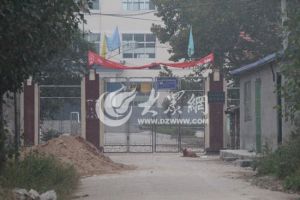
Zhao Siyun
Lili’s Story
My name is Lili Wu
Nine years old
born in North Zhufeng, Tongshi;
Pingyi County, Linyi City district.
When I was very small
My parents were divorced.
I went to live with Mama and Grandma.
Now I am in 3rd grade at South Fuwan primary school.
I like English.
Got 80% in my last exam.
The math teacher is nice to me.
The ethics teacher is nice to me.
But
I haven’t gone to school for 4 months.
On May 30 this year
During Chinese lesson with our class advisor
Vice-principal Jiang Feng
Called me to the music classroom,
Principal Wang Jiasheng was there, too.
They gave me sweet pills
And took off my pants.
Wang Jiasheng put his weewee into my little hole
When Wang Jiasheng came out
Jiang Feng went in
They told me
Not to tell Mama
Otherwise they wouldn’t let me go to school here
And they would kill me and my mom.
They told me many times.
(Then I must have fainted.
Hearing screams
Class advisor Chen Yongxiang came running.
She pulled up my pants.
Then someone lifted me up
Put me in Wang Jiasheng’s car
And brought me to the clinic on the right side of the gate.
My classmate Xiao Wen wrote all this down on paper.
She said
Other kids saw it too.
On that day
I should have been home at twelve
When I came home at 1:30 p.m
Tottering left and right all the way to our door
Grandma had been waiting on the corner for a long time.
When I was home I wanted to throw up
Didn’t want to eat
Mama wasn’t home
She was at the county hospital visiting a relative
Didn’t come home till the evening
My face, hands and feet were all white
That evening
A nice teacher called Mama
Told her I had been raped by Wang Jiasheng and Jiang Feng
I liked going to school before
Now I don’t dare to go
When school is mentioned I break out in sobs
I am afraid
I took a rest at home for a month
On July 2nd, Mama went with me
To the Pingyi County People’s Hospital for a checkup
The medical record was written a follows
Patient complains of small bleeding in vagina
Accompanied by discharge for over one month.
Recent medical history:
Complains of vaginal pain, red spots, much discharge,
feels like another person forced in his sexual organ
Physical examination:
Normal vulva development
Hymen opening greatly slackened
Old fissures at #3, #8
No other …(I cannot read the writing)
Initial diagnosis:
Hymen ruptured, slackened
Actually
From last winter
I had been bleeding
One day I came home in the evening
There was blood on my legs
I wiped it off with paper
Mama has also helped me wipe it
Last winter
Wang Jiasheng and Jiang Feng
Put their cocks into my little hole several times
After school
I felt dizzy, sick, burning
Mama didn’t know then
She took me to the clinic to get some cold medicine
All winter
I got shots, took pills
Mama went to the police
People’s Police Uncles from the criminal police
Went to Xiao Wen’s home several times
So her folks complained at our house
They said Xiao Wen was frightened
And would hardly dare to go to school
So Xiao Wen said her testimony was instigated by my mom
The teacher who had called my mom that evening
Also denied it
The doctor at the clinic said first I was brought in unconscious
But then they said I came in with the principal and two classmates for checkups and shots
Reporters from the province came to our village
They interviewed six children on their way home from school
Five said they didn’t know anything
Another girl
Did not say a word
Our class advisor said
She took a bribe from my mom
She said my mom made her give false testimony
She said I was in class all day as always
She never pulled up my pants
Over one month later
I had another checkup at Pingyi County People’s Hospital
The results were the same
On Sept. 19th, 2012
Wang Jiasheng declared online
The whole affair was all defamation
Jiang Feng also declared
It was a frame-up, made up
To attain some unspeakable purpose
The Pingyi police
Said conditions were not fulfilled
For prosecution
2012-10-06
Tr. MW Oct. 2012
Source material
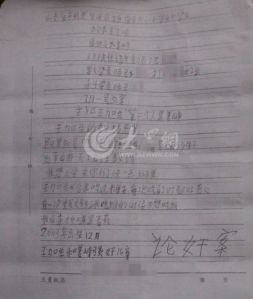
赵思运//丽丽传/我叫吴丽丽/9岁/出生在临沂市平邑县铜石镇北诸冯村/我很小的时候/爸爸妈妈就离婚了/我一直跟着妈妈姥姥过/现在南阜完小学读三年级/我喜欢英语/考了80分/数学老师对我好/品德老师对我好/但是/我已经4个多月没有上学了//今年5月30日/在上班主任的语文课时/副校长姜锋/把我叫到了音乐教室/校长王加生也在/他们喂我吃糖丸/脱了我的裤子/王加生把他的鸡鸡放到我的窝窝里/王加生出来后/姜锋又进去的/他们跟我说/到家不能告诉俺妈/要不就不让我在这上学了/把我跟俺妈都弄死/这话说过好多次了/(后来我被他们弄得昏迷了/听到喊叫声/班主任沈永祥老师跑过来/给我穿上裤子/然后有人把我扛起来/塞到王加生的车里/送到大门右侧的诊所/这些都是我同学小文后来在纸上写的/她说/班上还有其他小孩看到了)/那天/我原本应该在十二点回家的/一直到下午一点半还未到家/我东斜西歪地回到家门口时/姥姥在路口已经等了很久很久了/回到家我就想吐/不想吃饭/妈妈没有在家/她正在县城医院陪护亲人/直到晚上才回家/我脸和手脚都发白/当晚/学校有位好心的老师曾打电话给妈妈/告诉她我被王加生和姜锋强奸了/本来我很喜欢上学/现在我不敢去学校了/一提上学我就哇哇大哭/害怕/在家休息了一个月/7月2日,妈妈带着我/去平邑县人民医院做了检查/病历诊断是这样写的/主诉:/阴道少量流血,伴分泌物多一个月/现病史:/自述近一个月来,外阴疼,少量见红,分泌物多,觉别人用生殖器强进/体检:/外阴发育正常/阴道处女膜口大松弛/见3点、8点出有陈旧性裂口/其他不……(此处字迹看不清楚)/初步诊断:/处女膜外口破裂松弛/其实/从去年冬天/我下身就出血/有一次晚上回家后/腿上有血/我自己拿纸擦了擦/妈妈也给我擦过/去年冬天/王加生和姜锋/就有几次把鸡鸡放进我的窝窝里/放学的时候/我头晕恶心身子发热/妈妈那时什么都不知道/就带我到诊所开点感冒药/上个冬天/我一直都在打针吃药/妈妈报案了/刑警大队的民警叔叔/几次到过小文家里询问/小文的家人就到我家吵闹/说小文吓得/都快不敢去上学了/小文就说那证词是我妈妈教唆的/那天晚上电话提醒我妈妈的老师/也不承认了/诊所的医生第一次说我是昏迷中去的/后来说是校长跟两个同学陪我去打针看病的/省里的记者到俺村头了/问了6个回家的学生/有5个说不知道/另一个女孩/从头至尾一句话也不说/班主任老师说/她接受了我妈妈的贿赂/说我妈妈让她作伪证/她说我一天都在正常上课/她没有给我穿裤子/一个多月之后/我又到平邑县人民医院做检查/这两次的检查结果是一样的/2012年9月19日/王加生在网上发布声明/说这事纯属污蔑/姜锋也发了声明/说这事是诬告、陷害/是为了达到不可告人的目的/平邑警方/说是条件不足/没有立案/2012年10月6日
素材源自人民网 http://edu.people.com.cn/n/2012/0930/c1006-19159472-1.html
标签: children, china, 臨沂, internet, justice, life, linyi, literature, media, medicine, poetry, police, rape, school, Zhao Siyun
发表在 October 2012, Uncategorized | 5 Comments »
10月 3, 2012

Marokkanergasse, Vienna
the sun is streaming
against the mosaic.
the fountain’s broken,
turned off.
the people are busy, most of them.
it’s 9 am.
shopping, smoking.
high heels. maybe productive.
in jackets and scarves.
it’s chilly compared with a few days ago.
for a moment, the sun.
the warm morning sun.
MW August 2012
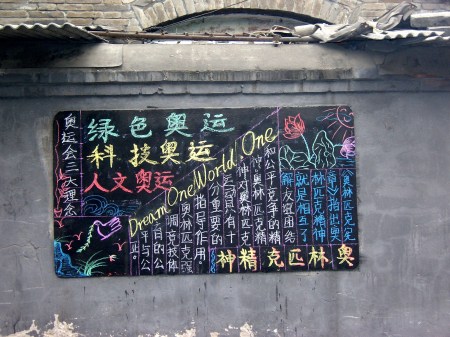
From August 28. 周二,8月28日。 The sun was on the door at eight or nine. In the afternoon it’s around the corner. The door to the street is over 100 years old, like the house. Military officer’s quarters, originally. Our apartment is downstairs, ground floor. Still expensive, inner city. The picture is from May. The pictures below are from Beijing. Click on them and get to a song of healthy food.

标签: beijing, building, life, military, Morocco, people, police, Vienna, walls, water
发表在 April 2011, April 2012, August 2012, March 2011, March 2012, May 2012, September 2012, Uncategorized | 1 Comment »
10月 1, 2012
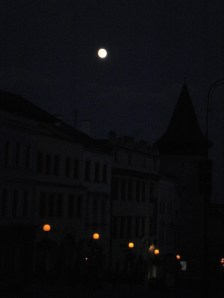
Sept. 30, 2012
the moon was very big at first
the moon at first was hardly there
we saw it rising from the train
one strip above, one strip below
must be the moon, it will come out
they say it’s very full and round
it doesn’t look a quarter full
the moon comes out, the train moves on
the train is full and rather short
the tired people on the train
the air is bad, the bathroom’s blocked
and then the moon comes out again
the train has crossed the danube bridge
the hiking day was beautiful
the fields, the woods, the paths, the wine
the day was fine, the moon is gone
I hope our friends across the world
are feeling well around the moon.
MW September 2012
moon again
秋
月
Wann kommt heut der Mond hervor?
As if
月夜穿过丛林 Moonlight going through the woods (Liao Yiwu 廖亦武)

Hope you had a happy moon! (Moon 2011 and 9/11)
頑張る
the danube flows
late night wrap
标签: austria, fall, family, life, light, moon, Vienna
发表在 October 2012, September 2012, Uncategorized | 1 Comment »
9月 13, 2012

Click here to read a few poems.
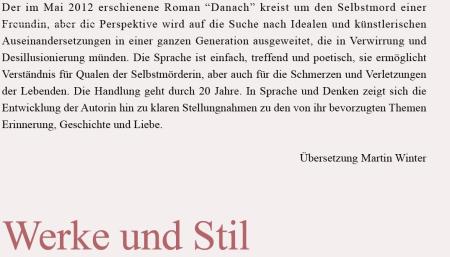
Chen Kohua und Lai Hsiangyin sind im Oktober zu Gast im Literarischen Colloquium Berlin. Außerdem werden sie an der Universität Heidelberg aus ihren Werken lesen.
Chen Kohua und Lai Hsiangyin treten am 29. Oktober um 20 Uhr im Hörsaal SIN 1, Ostasieninstitut Universität Wien auf. (Campus Altes AKH, Hof 2, Eingang 2.3)
Übersetzung: Martin Winter
Eine Veranstaltung des Österreichischen P.E.N. – Clubs
Mit Unterstützung des BMUKK


标签: body, civil society, death, gender, identity, life, literature, love, memory, poetry, religion, sex, society, taiwan, translation
发表在 September 2012 | 1 Comment »
9月 7, 2012
中國大陸漢英對照版《中国新詩300首》初選篇目
當代詩歌很難選,就是因為比較未經沉澱。即將出的漢英對照《中國新詩300首》選詩歌盡力剔除非詩因素。讀一首詩就知道是否感人、聽到節奏、結構、語言啟示。不用曉得誰寫的。不過為什麼讀、在哪裡、經過什麼條件的介紹等等都是非這首詩的因素,而不能避免。
如果把周作人在2000年出來的那本《中國新詩1916-2000》裡的兩首當例子,<小河>寫自然環保,<飲酒>寫肉體和心理、精神的欣賞和共鳴,很濃的一首,節奏很強。不過盡力剔除非詩因素還是會有些社會中、讀書人中都存在的前提。我自己覺得如果有人問我家鄉奧地利現在最好的作家,隻說女作家,包括兒童書,都已經夠了,比如說寫話劇、小說、散文的E.Jelinek(得了諾貝爾獎),還有三位女詩人Elfriede Gerstl、Friederike Mayroecker、Rosa Pock。剛才說第一E. Gerstl已經逝世,她來自猶太家庭,二戰時被藏起來幸存。第二位F.Mayroecker已經80歲,第三位R.Pock不像前兩位著名,但也已經很久寫出風格很獨特的詩作。女詩人還可以加早一點已經去世的Hertha Kraeftner和Christine Lavant,不過加她們當然得加八十年代初去世的,曾經跟策蘭同居的Ingeborg Bachmann英格褒‧巴赫曼。還要加一兩位寫小說的,比如Marlen Haushofer。她寫的長篇《牆》Die Wand寫一位女性敘述者在山中一個人生活,突然碰到透明的牆。說了這幾位加三位寫兒童書的,年紀最老的Mira Lobe, 自己小時候最喜歡,現在還覺得她寫得最好聽、最感人,加上我當小孩就非常喜歡的畫圖。還有Christine Noestlinger,她寫了大人讀的詩,也寫了很多很多兒童文學。我最喜歡她的詩,還有兩本自傳式的,寫小女孩在二戰結束時的經驗,很寫實、很直接、不加修飾的感覺。她來自工人家庭,一輩子都寫工人和小資產階級等家庭的故事,從孩子的角度、從非權力的角度來講。昨天帶孩子到牙科醫生,盡力讓孩子合作不讓他痛苦。等候時看到了自己小時候聽父母念的一本<雨水筒快樂洒洒歌唱>(Lustig singt die Regentonne,作家Vera Ferra-Mikura), 都是兒童詩歌,畫圖也非常好。兒童書還可以增加很好的女作家,先暫時不說。
介紹這些女作家就很自然地介紹了當代奧地利社會。她們的作品毫無遜色男作家。但如果開頭隻說當代文學,我會先想到別人,很多都是男的,而不會像隻說女作家那麼直接可以包括時間和社會很廣的一面。剛才隻注意女作家,也應該看看非德語寫作的奧地利文學,結果從社會和文學方面都會比較全面,先注意女作家和少數民族比先注意一般先想到的奧地利德語男作家結果還是會更廣泛。
所以我讀目前寫作的中文詩人除了已經得到共識的西川等等盡量找女詩人,找非漢族詩人。你們有周雲蓬、沈浩波已經超過一般的詩壇。我建議加上馬蘭、顏峻都是因為自己翻譯了他們,所以知道一些力作。我也翻譯了車前子的作品,但是太少,不能點出他最厲害的詩作。說到翻譯,從中文譯成外語一般應該找外文為母語的譯者。比如我在上面英語裡提到的綠原,他在1990年左右作出選當代中國詩歌中德雙語本,介紹了於堅等等那時候在西方世界還比較不那麼著名的詩人,所以我覺得那本很寶貴。但是譯者都是中國德語系學者,內容可以翻譯出來,但節奏就漏了。英語不同,有很多雙語。還是覺得找一些已經得共識的西方譯者也許最佳。不過翻譯跟原作同樣總會存一些非詩意的因素。
标签: austria, china, Chinese poetry, ingeborg bachmann, language, life, literature, people, poetry, translation
发表在 September 2012 | 1 Comment »
9月 2, 2012
300 Modern Chinese Poems (Chinese-English) 汉英对照版《中国新诗300首》
Zhao Siyun 赵思运, who was introduced on the MCLC list by Michael Day a while ago with a poem called June 5th 六月五日, has a list of authors and poems on his Blog, for a Chinese-English anthology of over 300 modern Chinese poems 中国新诗300首. Compiled by an institution called International Poetry Translation and Research Centre, IPTRC. Very welcoming, diverse and expansive. Including writers from Taiwan, and many young voices. Liao Yiwu 廖亦武 is included, though not with his most representative work, probably. Lü Yuan 绿原 is there, he did a Chinese-German anthology, introducing Yu Jian 于坚 in 1990, rather early. Bei Dao 北岛 was included in there, but with a comparatively insignificant poem. He is better represented in this new effort, although I miss the mosquito. It’s very hard to include one or two significant poems from an author who is obviously politically significant.
Interesting to compare this with other anthologies, in Chinese and other languages. Zhongguo Xin Shi 中国新诗 (Fudan UP 2000), ed. Zhang Xinying 张新颖, has two poems by Zhou Zuoren 周作人, one against unnecessary water dams and a drinking song, both very impressive. Zhou Zuoren has not made it onto the IPTRC list. Of course it’s rather easy to come up with some of your favorites who are not represented, compared to shifting through many thousand poems and coming up with such a list. Huang Xiang 黄翔 is included, despite his dissident status, but he is already in Zhongguo Xin Shi 中国新诗. As usual, I am looking at newer people first, although I only recognize two from those born in 1970 or later. Zhou Yunpeng 周云蓬 is there, the blind folk singer. But not Cui Jian 崔健. Woeser 唯色 is there, which is great! But in general there are hardly any poets from minority nations in China.
Ha Jin 哈金 is missing, but he writes in English. Gao Xingjian 高行健 does not appear, but is mostly known for fiction and drama. So who else hasn’t made it? Yang Ze 楊澤、Hsiang Yang 向陽、Hung Hung 鴻鴻、Mai Mang 麦芒 (Huang Yibing 黄亦兵), who sometimes writes in English and teaches at Connecticut (there is another Mai Mang 麦芒 in China, known for one-liners).
On with the non-list: Sun Wenbo 孙文波、Li Nan 李南、Yang Jian 杨键、Zhu Wen 朱文、Yin Lichuan 尹丽川、Zheng Xiaoqiong 郑小琼、Ma Lan 马兰、Hong Ying 虹影、Pang Pei 庞培、Che Qianzi 车前子、Yan Jun 顏峻. I would have included Yan Jun’s 反对 Against All Organized Deception (translated by Maghiel van Crevel) and Ma Lan’s 事故和理由 The accident and the reason, maybe even combined with 仿佛 As If. And How We Kill a Glove 我们如何杀一只手套, if it wouldn’t be too long. Hong Ying’s 饥饿 Hunger, also written abroad. And one of Zheng Xiaoqiong’s 郑小琼 new female migrant worker’s portraits.
Then there would be others. Not compatible, maybe. Wu Yinning 吳音寧 and Li Ch’in’an 李勤岸 are very much from Taiwan. Wu Yinning 吳音寧 is more well-known for her reportages. The poems contain many fascinating local expressions, hard to translate. I’ve only read two poems by Li Ch’in’an 李勤岸, in a three-volume anthology of about 100 years of poetry in Taiwan. One of these two poems is a personal favorite, 解嚴以後 – 一九八七年七月十五日臺灣解嚴紀念 After Martial Law Was Lifted – In Commemoration of Lifting Martial Law in Taiwan on July 15th, 1987.
I have been reading a great anthology of Lithuanian poetry in the last few days. And there are beautiful anthologies of recent Chinese poetry in English, like the online treasure in the Spring/Summer 2006 issue of thedrunkenboat.com, edited by Inara Cedrins, or the Atlanta Review China issue. Without any Chinese characters, unfortunately. But these are important collections, with some great translations. The Drunken Boat collection is very diverse, including minority people in China, extra sections on Hong Kong, Macau and Singapore, as well as very much else from abroad. Even half of the non-minority nation poets in China who are in The Drunken Boat are not in the IPTRC 300. The Antlanta Review China collection, edited by George O’Connell, contains some of the best Chinese poetry I’ve read in translation anywhere in any language. And there is a good volume in English of Che Qianzi’s 车前子 poems and some of his friends, with a note in the back that the Chinese text can be found in some university library. Oh well. Many contemporary poets from China, including some world-famous ones, are not easily found in China. This has been going on for decades. Anyway, there is not enough modernity, not enough experiment in Chinese literature in general, especially in China. So it would be great to include some people like Che Qianzi 车前子 in any anthology. There is also not enough performance, that’s where Yan Jun 颜峻 and other sound and music stuff would come in.
The Lithuanian anthology mentioned above is from Poetry Salzburg Press. I love the long hallucinating love poem Bird in Freedom by Vytautas Bložė, written while imprisoned and “treated” in a Soviet psychiatric hospital. And the song-like evocations of Vilnius’ old city and the empty Jewish ghetto by Judita Vaičiūnaitė. The translations of these poems and many others by Laima Sruoginis are hauntingly beautiful. Much of the identity of the Baltic countries is built on songs, a great foundation for poetry.
标签: anthologies, china, Chinese poetry, experiment, history, language, Latvia, life, literature, Lithuania, music, performance, poetry, politics, reading, Salzburg, taiwan, translation, writing, Zhao Siyun
发表在 September 2012, Uncategorized | 3 Comments »
8月 17, 2012
Aug. 25
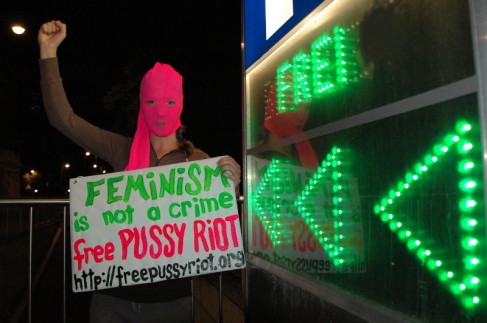
Daniele Kowalsky showed me a very interesting interview with Jonathan Campbell in the L.A. Review of Books. Jonathan Campbell talks with Jeffrey Wasserstrom about 盤古 Pangu,崔健 Cui Jian,無聊軍隊 Wuliao Jundui and other details of rock music and punk in China.
Unfortunately, I can’t agree with Jonathan that yaogun 摇滚 (Chinese rock music) could galvanize China like Pussy Riot seems to have galvanized opposition in Russia. Cui Jian 崔建 did have some very memorable moments, and people in China do remember them, and they will tell you readily about the parts before 1989, mostly. But those moments in 1989 were so painful in the end that no one knows if there will ever be a similar broad-based protest movement again. 1989 brought hope in Europe. Risk, very risky change, and some very ugly violence in Romania. But overall there was hope, and whatever came out of it, 1989 is generally remembered as a year of wonder. In China it’s a trauma. A wound that is usually covered up, but even China is very much connected to the world nowadays, and the world knows. And there are much deeper and older traumata, which can be accessed and shared via 1989. So in that way, there is hope. Connected to underground music. Like the kind that Liao Yiwu’s 廖亦武 music comes from.
There are parallels, certainly. Parallels between Pussy Riot and Ai Weiwei 艾未未, in the pornography. Parallels in the way of some Ai Weiwei news or other embarrassing news everyone gets to know about, and the dark stuff below. The disappearances, the longer ones, see Gao Zhisheng 高智晟. And the corpses. I learned about the late attorney Sergei Magnitsky via Pussy Riot. He died in jail in 2009, and among people concerned with Russia he is as famous as Gao is in and outside China, which means not so many people want to talk about him or even admit they’ve heard of cases like that. Of course, there are corpses under the carpets in every country. Only China is the oldest 5000 year old one, of course.
Aug. 22
2 years for singing in church. Perfectly absurd. Punk music, controversial art. Public space and religion. Russia, Africa, China. What is art? Depends where you are, what you are, who you are, who is with you. What you believe.
One week ago I read two books. A few months before I got to know a poet. Still haven’t seen her. A Jewish poet in Germany, soon to be teaching in Vienna. Esther Dischereit.
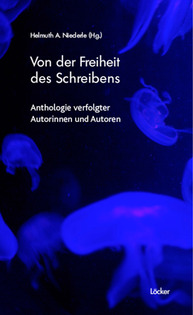
Last month I finally got around to pick up a book that contains many poems I translated. Freedom of writing. Writers in prison. A beautiful anthology, edited by Helmuth Niederle, currently head of Austrian PEN.
Connections. Connected to China. Punk music isn’t all that subversive, not in a big way, usually. What if musicians insult the government on stage. Well, I’ve been to about 300 concerts in China, said Yan Jun. Sometimes someone was screaming something in that direction. But they aren’t big stars. They can be ignored.
Christa Wolf. Stadt der Engel. The Overcoat of Dr. Freud. Long and convoluted. Gems in there. How she was loyal to the Party in 1953. And insisted on protest against Party policy. How and what they hoped in 1989. How and what Germany was and is.
Aug. 21
2 years for singing in church. And many more arrested. It does sound more like China than Russia, doesn’t it? The case of Li Wangyang 李旺陽 (李汪洋) comes to mind. Li Wangyang died around June 4th 2012 in police care after being released from over 20 years of jail. He was a labor activist in the 1989 protests that ended with the massacre on June 4th in Beijing. Li Wangyang supposedly killed himself, but the police report was disputed in China and in Hong Kong, where tens of thousands of people protested. Li’s relatives and friends are still being persecuted. One has been formally arrested and accused of revealing state secrets, because he photographed Li’s body.
Parallels between Russia and China were drawn in media comments after the verdict in Moscow. One comment wondered whether Russia is trying to emulate China, where the word civil society is banned on the Internet. China has had economic success for decades. People put up with authoritarian one-party rule there, the comment said. But it won’t work in Russia, because the economy depends on natural resources, not on industry. The comment contained the old misunderstanding that in China, government policy and enforced stability have caused economic success. Beijing wants the world to think that, of course. However, the prominent law and economy professors Qin Hui 秦暉 and He Weifang 賀衛方 have been saying for years that the economic miracle of the 1980s depended on a consensus to move away from the Cultural Revolution, as well as on investment from Taiwan, Hong Kong and overseas. After 1989, there has been no comparable social consensus. After 1989, the social drawbacks and the gap between rich and poor may have grown faster than the economy. But the middle class has also grown. Regional protests are frequent but limited. Or the other way ’round. The Internet remains vibrant. With Weibo microblogs inside the Great Firewall, and very much Chinese going on outside. Not because the government initiates it. They let it happen. The economy, the art, the internet. Even protests, when they are against Japan, and/or not too big. And they profit. The oligarchy is the Party.
Religion and more or less independent art have been growing in China, about as much as the social conflicts. Art brings huge profits, so they let it happen. In Russia, Pussy Riot have succeeded in connecting independent art, oppositional politics and religion in a highly visible way. Art, political activism and religion are voluble factors, so much that societies where everyday news has been fixated on finance for at least four years now could almost grow jealous.
Pussy Riot were not mentioned in our church on Sunday, as far as I could tell. I had to look after the children. But the preacher drew on her experiences from jail work. She championed the rights of refugees and was a prominent anti-governmental figure in Austria in the 1990s. Direct relevance for religion in Austrian politics is rare. We had Catholic Austro-Fascism in the 1930s, paving the way for Hitler. Some Protestant Nazis as well. After the Holocaust, religion in Austria has a somewhat undead quality. A bit like traditional opera in China, which is rallying, hopefully.
For international discussion about the relevance of underground art, music and religion, China has Liao Yiwu 廖亦武. And Russia has Pussy Riot.
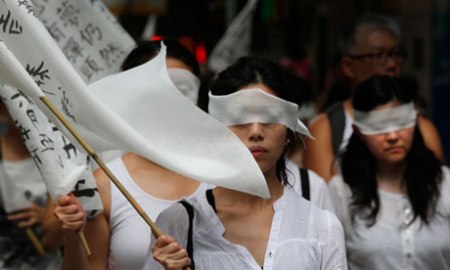
Photo by Vincent Yu/AP
Aug. 17
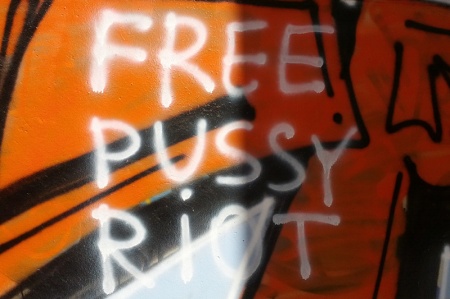
Worldwide empathy for Pussy Riot is great. The trial in Moscow ends today, so I don’t know yet if three women have to remain in jail for years after singing in a church. There was a lot of worldwide attention last year as Ai Weiwei 艾未未 was abducted and detained by Chinese state security. He was released and voted most influential artist worldwide. I have seen graffiti in support of Pussy Riot here in Vienna in the last few days. One at newly renovated Geology Institute. Not very nice. And there was some kind of happening at the Vienna Russian Orthodox church, I heard. Church authorities not amused. Well, hopefully worldwide support can help enough this time. Quite recently, many political prisoners in China have been sentenced to more than 10 years. There was a lot of attention abroad in one case. And a Nobel.
Austria is a nice place, generally. Sometimes it’s uglier than Germany. Generally uglier, in terms of police abusing, even killing people, always getting away with it. Have been reading Vienna Review and Poetry Salzburg Review in the last few days. News and poetry. Many of our friends here in Vienna are not from Austria. Coming from abroad often provides a clearer perspective.
Aug. 14
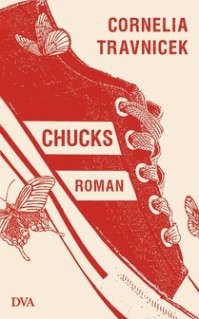
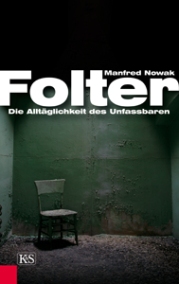
Read two good books. Not in Chinese. Ok, in Chinese I’m reading poetry. And other books, not enough. Anyway. Cornelia Travnicek and Manfred Nowak. Both in German. Non-Fiction and Fiction. No connection. Like Liao Yiwu 廖亦武, Bei Ling 貝嶺 and that Berlin novel, what was it called? Plan D. Ok, there was a connection. Taipei Bookfair 台北國際書展. Ok or not, no connection. A novel. Punks in Austria. Young and female. Male protagonists dead or dying. Ok, not all of them. Anyway, good novel. Vienna, occupied, death, youth, love, society, 1980s, 1990s, 2000s. 2012 exhibition at Wien Museum. Empathy. And the other book? Torture. Human Rights, UN, Austria, torture in Austria (see this newspaper report, also in German), Moldavia, Equatorial-Guinea or how do you call that country, Uruguay and so on. Neglect. Conditions of/for empathy. Ok, so both books are about empathy. Good. And in German. Oh well, maybe some people who read this read German. Or they’ll get translated. The books, not you. Manfred Nowak’s books and other written sources are available in several other languages than German. You can get some very useful stuff in English for free here.
标签: art, austria, books, catholic, censorship, china, death, economy, empathy, finance, internet, jail, life, literature, love, music, opera, orthodox, parties, poetry, politics, protest, protestants, punks, religion, russia, Salzburg, taipei book fair, torture, United Nations, Vienna
发表在 August 2012, Uncategorized | 2 Comments »
8月 9, 2012
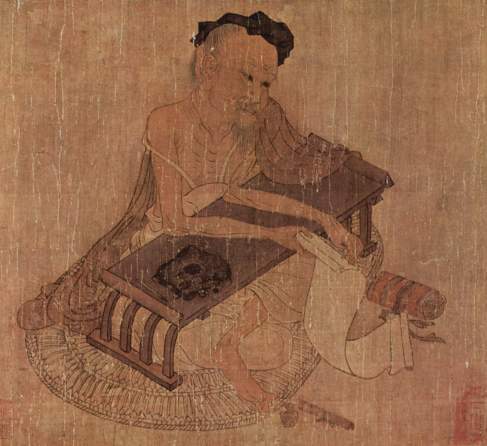 王維
王維
送别
下馬飲君酒,
問君何所之。
君言不得意,
歸卧南山陲。
但去莫复問,
白雲無盡时。
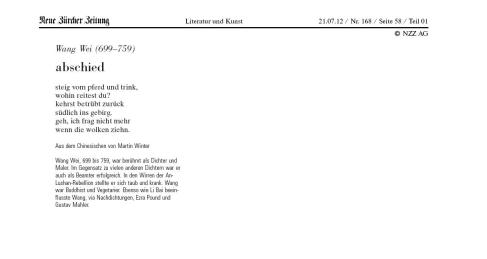
Wang Wei
abschied
steig vom pferd und trink,
wohin reitest du?
kehrst betruebt zurueck
suedlich ins gebirg.
geh, ich frag nicht mehr
wenn die wolken ziehn.
MW August 2007
Wang Wei
to see you go
you get off and drink with me
and i ask you where you’re riding
you have not been satisfied
turn to southern border mountains
and i won’t ask you again
clouds are streaming without end.
MW November 2007
标签: china, ezra pound, gustav mahler, literature, nzz, parting, poetry, publications, Tang Dynasty
发表在 July 2012, Uncategorized | 2 Comments »
8月 9, 2012
颜峻
7月19日,我
Yan Jun
July 19th, I
have mosquitoes left a piano
summer evenings like being empty
what I know nothing about
what I wore forgot fished out keys
I know emptiness is impossible
I am sweating watching myself
unsure if I really know
maybe I really don’t know
this wild beast of summer I have said too much
mosquito coil burnt to ash. patient piano
I said too much of myself
in the elevator I am empty alone
2006-07-19
MW Tr. August 2012
===============================
……只剩下蚊子和钢琴
7月的夜晚 像是空的一样
而我对此一无所知
我穿过 忘记 掏出了钥匙
我知道空也是不可能的
我出汗 看自己
不确定是否真的知道
或者 我可能真的不知道
关于7月的猛兽 我说的太多
蚊香变成了灰 钢琴在忍耐
我说了太多的我
在电梯里 我空无一人
2006.7.19
Yan Jun
19. Juli, ich
hab’ nur noch mücken und ein klavier.
abend im juli wie völlig leer.
ich weiß dazu überhaupt nichts
was ich trug vergaß such meinen schlüssel
ich weiß die leere ist auch unmöglich.
ich schwitze sehe mich selber
unsicher was ich wirklich weiß
oder wirklich nicht weiß
über das biest im juli sag’ ich zuviel.
mückengift wird zu asche. klavier kann’s ertragen.
ich sag’ zuviel über mich selbst.
ich bin im lift menschenleer.
2006-07-19
Übersetzt von Martin Winter August 2012
标签: empty, life, music, poetry, self, summer
发表在 August 2012, Uncategorized | Leave a Comment »
8月 5, 2012
I don’t think Murong Xuecun exaggerates, like one commentator suggested on the MCLC list. Yes, you could encompass many alarming, saddening, embarrassing stories in one speech in other places than China, and people do it all the time, naming names, practices, products. The difference is that in China you will be silenced more swiftly and harshly. Yes, there are exceptions.
Does Mo Yan revel in cruelty like Dan Brown? Does Yu Hua make better use of the cruel parts in his novels? Ok, I’m an interested party, I can’t really say. Would be interesting to analyze in detail. Mo Yan’s novels are great works, at least those I have read, he has written a lot. Deep, cathartic, even accusing use of cruel events and structures. I love Yu Hua’s tone. And I associate Liu Zhenyun in Remember 1942, and Murong Xuecun’s Sky and Autumn speech.
We had Jeremiah in church today, along with that story where a guy goes abroad and gives his gold and silver to his servants. The ones that receive more trade with it, and when their lord comes back, they can give him double. The one who received very little buries it, and when the lord comes back, he digs it out and says, I know you are a harsh governor and reap where you haven’t sown, so I was afraid to lose what you gave me, and kept it double safe. His colleagues get to join the big party, and are rewarded with great posts. He is cast out into the darkness, which is filled with howling and chattering teeth. It’s a horrible story. Yes, it’s a parable, and if you have very little reason for faith, you should still risk it and try to make more, because if you bury it deep in your heart you might lose the little trust you had and received and be cast out into the darkness. But if you are the one who has reason to be afraid, how can you trust your lords? The ones who have more and get more have it easy. Even if they lose everything, they are often rewarded – those powerful managers and functionaries. And if there are enough of those who are cast out, and they get organized, maybe some bishops or other lords might dangle from lamp posts. A Hussite reading, said my wife. Yeah, maybe. No shortage of horrible stories in Chinese literature, like in the Bible.
Jeremiah is even worse, it’s a much bigger story, infinitely more horrible. And there is a detail, not in the Jeremiah parts used in church today, but in the songs in exile. By the rivers of Babylon, where we sat down, where we wept when we remembered Zion. And in the end the singer wishes, or the singers wish they will one day brutally kill the children of the oppressors. That’s the detail in Murong Xuecun’s speech I was thinking about.
The calling of Jeremiah, where he says he’s too young, and God says he has to go and obey, and open his mouth, and God will put His words into his mouth, and he will be set above nations and kingdoms, so he can pluck out and demolish, ruin and destroy, as well as plant and build. The preacher said she thought of parting and setting off to other posts, and how the Marschallin in Hugo von Hofmannsthal’s and Richard Strauss’ Rosenkavalier sings of what she will have to give up. What a horrible comparison! There is nothing light in Jeremiah. There are no waltzes. Ok, Rivers of Babylon, yes. But with Jeremiah, if you have to mention Austrian writers, Franz Werfel would be much more apt. Werfel was Jewish and used Jeremiah, a lot. Ok, she did mention, much too briefly how nobody would heed Jeremiah, and that it’s actually the most terrible story.
Anyway, when I heard Jeremiah, I thought of Bob Dylan. Masters of War. “How much do I know, to talk out of turn? You might say that I’m young; you might say I’m unlearned. But there is one thing I know, though I’m younger than you, it’s that Jesus would never forgive what you do. […] And I’ll watch while you’re lowered onto your deathbed, and I’ll stand on your grave and make sure that you’re dead.” I don’t know if Dylan thought of Nixon and Kissinger explicitly, when he wrote this song. America’s Vietnam War was raging, and I think the song came out when Nixon and Kissinger where in power. Anyway, there is that Monty Python song about Kissinger. Very explicit. Dylan and Monty Python would not be able to sing these songs in China on stage today, to say nothing about what Chinese artists can do. No, Murong Xuecun doesn’t exaggerate.
x and y
x was cruel
butt is sore
y was able
and suave.
both loved culture
both destroyed
hundred million
butts are cold
MW March 2007
Yes, I thought of Mao and Nixon, and their sidekicks. But x and y could stand for many people, and could be mentioned anywhere, at least today. Almost anywhere, probably. Anyway, it’s about smoking, you know. Littering. OK, enough for today.
标签: beijing, bible, Bob Dylan, china, civil society, essays, freedom of speech, Hong Kong, literature, Liu Zhenyun, Mo Yan, Murong Xuecun, music, Nobel prize, novels, peace, poetry, politics, prize, society, songs, speech, Yu Hua
发表在 2012, August 2012, December 2012, November 2012, October 2012, prose, Uncategorized | 1 Comment »
8月 3, 2012
Click on the image to go to the English version of Murong Xuecun‘s text.
写得很好,我觉得。写得就像说话,谈话。就是演讲,但也像偶尔跟你一块走一段路,跟你分一些心事。
I like Murong Xuecun‘s recent essay (or speech) The Water in Autumn And The Unending Sky very much. He quotes Lu Xun, very aptly. All the quotations are apt, within the text, of course. This kind of essay very easily gets misunderstood as a mere pamphlet. It is a pamphlet. It is meant as a very sharp critique. But just like Lu Xun’s non-fiction pieces, this one is also meant to be read and listened to very carefully.
The Republican era in the decades before 1949 was roundly condemned for its society and government by many writers. Its downfall was expected, and there was so much contempt, in retrospective, that it seemed the new era after 1949 had to be something better, simply because the war and the state of China before had been such disasters. The Chinese writers and commentators of the Late Qing and Republican eras very often understood themselves as patriots, especially in their most acerbic writings. Lu Xun is the most famous example.
I’m not interested in whether Murong Xuecun could write as well or could become as famous as some Republican writers. He is one among many present writers who are publicly critical of the PRC government. Many of the most critical ones are mostly or permanently abroad. I don’t know if Murong Xuecun can continue to live mostly in China. He is certainly more consequent than Han Han, for example. I don’t know what exactly has driven Murong Xuecun to non-fiction. Seems it has been a gradual process.
The present state and the more or less contemporary history of the PRC have been described and inscribed very starkly by many writers ever since the late 1970s, basically by almost everybody in the world of letters, whether or not they still go through the motions of hand-copying Mao’s totalitarian directives in 2012, as some of the most famous have done.
The Republican era was roundly condemned, in fiction and non-fiction. On the other hand, some people see it as an era of freedom, in retrospect. Both could be justified, it seems. Liu Zhenyun, who could be seen as just another member of the establishment and as a non-serious TV- and popular movie-collaborator, is actually very eager to mention the famine of around 1960 in his works. Remember 1942, Liu’s non-fiction story from 1992, has just been filmed. The story is about remembering a local famine that occurred in 1942. It was a terrible year around the globe. The Holocaust in Europe was coming into full swing. War was raging in many places. Total war was going to be proclaimed. 1942 is a year that has received a lot of historical attention. But the context of Chiang Kaishek’s and his government’s decisions about the famine in Henan is not very widely discussed. Liu Zhenyun manages to combine the Republican era and the PRC in a piece of stunning critique of both. The PRC part is mostly implied, but it works. I don’t know how or if this works in the film as well. Anyway the film, wherever it will be shown, will make some people want to dig out the text.
Liu Zhenyun, Murong Xuecun and Yu Hua have something in common in their tone. They are very close to the common people, aside from some stylistic differences. Yu Hua has only recently become well known for his non-fiction, which is not published in the PRC, but available on the internet. Maybe Murong Xuecun will turn to fiction again, and maybe he will continue to live in Mainland China. Doesn’t look like it at the moment, but it seems more feasible than, say, Liao Yiwu returning to China.
Murong Xuecun, Liu Zhenyun and Yu Hua are very conversational in their non-fiction. These pieces are written for popular appeal. They could be seen as very patriotic, in a way. Many very popular works in other languages are patriotic, like Dan Brown’s The Lost Symbol. Non-fiction in Chinese won’t become quite as world-famous, but it has come a long way in the last few years.
Murong Xuecun‘s text is a speech held in Hong Kong. There is a lot of classical Chinese at the end, although it is still very clear. The fragile heart sounds very 19th century to a Western reader. To me, at least. But so what? It’s not Wordsworth or Blake or one of the Shelleys, but it’s going in that direction. There have always been many kinds of writing at one particular time.
标签: 1942, beijing, china, Dan Brown, government, Han Han, Hong Kong, Liao Yiwu, life, literature, Liu Zhenyun, Lu Xun, politics, propaganda, society, speaking, speech, Yu Hua
发表在 August 2012, Uncategorized | 2 Comments »
7月 24, 2012

Yan Jun
February 17
Like everyone parting we cry.
Like every old shirt. Dust and dirt on old clothes.
Like all days of old. Fire on snow.
For thousands of miles. The moon on the sea. Shines on old streets.
We’re parting, unlike everyone
from the night till the day we won’t cry again.
Like dust washed with snow. Words are just sound.
We talk. Flying over the sea, quietly.
2006-02-21
Tr. Martin Winter, July 2012
顏峻
2月17日
像所有要分开的人一样我们哭
像所有的旧衣服 旧衣服上的尘土
像所有旧日子 雪地上的焰火
几千里 月光照着海 照着胡同
所有人中的例外 我们分开
从夜晚 到白天 都不再哭
像尘土被雪清洗 言语也只是声音
我们说话 在海面上静静飞行
2006.2.21
Yan Jun
17. Februar
Wir weinen wie alle, wir trennen uns bald.
Wie alle alten Kleider. Der Staub in den Falten.
Wie alle alten Tage. Feuer auf Schnee.
Tausende Meilen. Der Mond scheint aufs Meer. Scheint auf alte Gassen.
Wir sind nicht wie alle. Wir trennen uns
Und weinen nicht mehr von der Nacht bis zum Tag.
Wie Staub weggewaschen vom Schnee. Alle Worte sind Klang.
Wir reden. Wir fliegen ganz still übers Meer.
2006-02-21
Übersetzt von Martin Winter Juli 2012
标签: china, Chinese poetry, 颜峻, friendship, love, poetry, translation, travel, Yan Jun
发表在 July 2012, poetry, Translations | 2 Comments »
7月 2, 2012
标签: asia, austria, china, czech republic, Europe, memory, music, poetry, taiwan, travel, Vienna
发表在 October 2011, Uncategorized | 1 Comment »
7月 1, 2012
reden (und sonnenschein)
reden fegt der wind im winter
fegt der wind im winter weg
reden hilft bei starker sonne
hilft bei starker sonne kaum
reden haelt der sturm im fruehjahr
haelt der sturm im fruehjahr nicht
reden kommt im herbst in beijing
kommt in beijing oft zu spaet
MW Dezember 2007, Beijing
http://blogs.yahoo.co.jp/dujuan99nihon/5984001.html
speech and rain
speech is swept by wind in winter
swept away by wind and gone
speech would hardly help in summer
hardly help against the sun
speeches held by storms in springtime
storms in springtime hold no speech
speech will come in fall in beijing
speech in beijing, always late
MW June 2012, Vienna
See also https://erguotou.wordpress.com/reden/
fizzdom is flower
knowing doesn’t make you better,
reading doesn’t make you good.
discipline can make you stronger,
make you breathe a little longer,
teach you how to wear your hood.
you would think that’s understood.
MW November 2011, Prague
https://erguotou.wordpress.com/2011/11/03/note-from-prague/
jewish quarter on a sunday
the organ and the choir begin
the people on the house are dead
the people at the bank are dead
the people at the post are dead
the houses in the town are old
the alleys and the streets are old
the organ and the choir begin
the children from the town are dead
the old ones from the town are dead
the women from the town are dead
the menfolk from the town are dead
the organ and the choir begin
the angels in the church are dead
the figures in the light are dead
the figures in the dark are dead
the alleys and the streets are old
the houses in the town are old
the organ and the choir begin
MW Oct. 30th 2011, Prague
https://erguotou.wordpress.com/2011/10/31/spanish-synagogue-in-prague/
jüdisches viertel am sonntag
die leute auf dem haus sind tot
die leute auf der bank sind tot
die leute auf der post sind tot
die haeuser in der stadt sind alt
die strassen in der stadt sind alt
gesang und orgel heben an
die kinder aus der stadt sind tot
die alten aus der stadt sind tot
die frauen aus der stadt sind tot
die maenner aus der stadt sind tot
die strassen in der stadt sind alt
die haeuser in der stadt sind alt
gesang und orgel heben an
die engel am altar sind tot
gesichter sind im licht und tot
gesichter nicht im licht und tot
die haeuser in der stadt sind alt
die strassen in der stadt sind alt
gesang und orgel heben an
MW 30. Okt. 2011, Prag
晚报 wan bao
wan bao, wan bao!
晚报,晚报
zao you zao bao
早有早报
wan you wan bao
晚有晚报
bu shi bu bao
不是不报
shijian wei dao
时间未到
MW 1998, Chongqing
LATE NEWS
LATE NEWS,LATE NEWS!
morning has its morning papers
early news has early returns
late news may have
its late revenge
MW 1998-2015
https://erguotou.wordpress.com/2008/03/21/late-reports/
evening news
Abendzeitung
晚報
wan bao, wan bao!
晚報,晚報!
shan you shan bao
善有善報
e you e bao
惡有惡報
bu shi bu bao
不是不報
shijian wei dao
時間未到
late news, late news!
good deeds bringing good returns
evil deeds bring retribution
not that there’s no karma coming
maybe time’s not ripe for you
Späte Nachricht, späte Nachricht!
Gute Tat bringt gutes Karma,
böse Tat bringt bösen Lohn.
Nicht dass nicht gerichtet wird,
nur die Zeit ist noch nicht reif.
wan bao, wan bao!
晚報,晚報!
zao you zao bao
早有早報
wan you wan bao
晚有晚報
bu shi bu bao
不是不報
shijian wei dao
時間未到
late news, late news!
morning bringing morning news
evening bringing evening news
it’s not that there is no news
maybe time’s not ripe for you
Späte Nachricht, späte Nachricht!
Frühnachrichten, späte Rache!
Nicht dass nicht berichtet wird,
nur die Zeit ist noch nicht reif.
MW 1998-2012. Chongqing, Beijing, Vienna
Stories of Tiananmen
那一年,这些年:与六四有关的故事/
标签: beijing, Chongqing, memory, poetry, prague, Vienna, 新世纪诗典, 晚报
发表在 1998, 2000, July 2012, September 2015 | 3 Comments »
6月 15, 2012

Gute Nacht, Mond
Die Straße geht den Berg hinauf.
Dort steht ein Baum.
Vom Baum aus ist der Platz nicht weit.
Man überquert den Platz und kommt
Zum Karlsplatz. Die Kirche und der Teich davor,
Die Spielplätze sind auch nicht schlecht.
Gute Nacht, Mond. Der Wind ist kalt.
Heut geh ich nicht den Berg hinauf.
Du gehst ins Bett. Ich sing ein Lied.
Ich sag schlaf gut. Ich leg mich hin.
Der Kleine schläft. Die Frau ist müd.
Gute Nacht, Mond.
MW Ende Mai 2012
Holunderblüten
Wären gut in der Pfanne
So viele, vom Zug
MW Juni 2012
Ein Mädchen erzählt in einer neuen Wohnung. Der Mond ist fast voll.
MW Juni 2012





标签: Cesky Krumlov, childhood, environment, food, history, housing, memory, poetry, tea, travel, Vienna
发表在 June 2012, Uncategorized | 1 Comment »
6月 3, 2012
Mittwoch der sechste Juni 2012, 19:30, Hörsaal Sinologie 1, Ostasieninstitut der Univ. Wien, Campus Altes AKH, Hof 2, Eingang 2.
Liu Hong 柳红 liest das Gedicht “Drachenabend, Tian’anmen“ von Ziyou 子尤.
橫穿長城的頭顱
Vorstellung der Nummer 62 des Literaturmagazins “Wienzeile”. Mit Texten von Hsia Yü 夏宇, Yan Jun 顏峻, Hung Hung 鴻鴻, Zheng Xiaoqiong 鄭小瓊, Yu Jian 于堅, Ma Lan 馬蘭, Qi Ge 七格, Wu Yinning 吳音寧, Lin Weifu 林維甫, Tong Yali 彤雅立, Pang Pei 厖培, Liao Yiwu 廖亦武 und vielen anderen. Grafik und Bilder von Yang Jinsong 楊勁松, Chen Xi 陳熹, Emy Ya 葉宛玲, Ursula Wolte und anderen mehr.
Es lesen Helmut Opletal (ehem. ORF-Korrespondent in China, lehrt an der Uni Wien), Ingrid Fischer-Schreiber (ars electronica Linz, Sinologin und Übersetzerin http://yingeli.net), Liu Hong , Zhu Jiaming 朱嘉明, Angelika Burgsteiner, Bettina Müller, Martin Winter und andere. Dazu gibt es Sichuan Guokui 四川鍋盔 und andere Erfrischungen.
时间:6月6日晚7:30
地点:汉学系第1教室
作者:Ziyou 子尤, Hsia Yü 夏宇, Yan Jun 顏峻, Hung Hung 鴻鴻,
Zheng Xiaoqiong 鄭小瓊, Yu Jian 于堅, Ma Lan 馬蘭,
Qi Ge 七格, Wu Yinning 吳音寧, Lin Weifu 林維甫, Tong Yali 彤雅立,
Pang Pei 厖培, Liao Yiwu 廖亦武, Liu Jixin刘纪新
朗誦者:Helmut Opletal 欧普雷
Ingrid Fischer-Schreiber 殷歌丽
Liu Hong柳红
Zhu Jiaming 朱嘉明
Angelika Burgsteiner 安吉
Bettina Müller 白玫
Martin Winter 维马丁
标签: literature, memory
发表在 June 2012, Uncategorized | 1 Comment »
5月 31, 2012
子尤(1990.4-2006.10),1990年生于北京,8岁开始创作,爱好文学、电影、话剧等;写诗歌、散文、小说、剧本。15岁出版文集《谁的青春有我狂》。 2004年,14岁时发现胸腔肿瘤,2006年去逝。2007年子尤去世百日,母亲柳红为子尤出版诗集《画天》,2011年,子尤去世五周年时,柳红为他出版讲述病中故事的遗作《英芝芬芳华蓉》。在中国大陆,子尤被视作90后写作者的代表人物。
Ziyou
Drachenabend, Tianan’men
4. Juni 2003, Drachenbootfest
Drachenabend, Tian’anmen.
Einzelne Lichter, lautlos klagende Seelen.
Weites, endlos leeres Feld,
Grab für Zorn und Widerstand.
Weint doch! Schreit durch die reißenden Jahre!
Weint doch! Hier liegt Fleisch und Blut der Jugend!
Ich will die deckenden Wolken zerreißen,
Die Sonne muss durch, durch den lastenden Himmel!
Spöttisches Lachen stört mich im Herzen,
Zynischer Witz stößt die Trauer hervor.
Wahrheit ist eingegraben im Inneren,
Spuren, die bleiben, egal was sie spinnen.
Kommt nur! Feiglinge. wo sind die Schwerter?
Ich hab’ den Stift des Gewissens, der hilft gegen noch so viel Zeit.
Mag doch der Sturm meine Würde verwehen,
Mit ihm tret ich offen das Gatter der Wahrheit!
Auf einmal heb’ ich den Kopf, durch die kläglichen Lichter
Im weißen Gewand kommt auf Flügeln des Windes der Dichter Qu Yuan, dessen Fest wir begehen.
Wenn standhafte Augen, wenn Treue und Glauben
Zerbrechen, dann bleibt er uns durch die Jahrtausende nah.
Warte! Wart’ noch ein bisschen!
Lasst uns sie wecken.
Das Blut, das einst wallte in Millionen,
Das Blut, das vergossene Blut ist noch warm.
Vor dem alten Palast, vor den uralten Mauern,
Ein gewaltiger Kampf hat die Seele getötet.
Lu Xun ist tot. Ideale sind leer.
Die Begeisterung von damals ist längst zur Taubheit verkommen.
Drachenabend, trauriger Tian’anmen,
Willenskraft, feurige Kühnheit sind längst versteckt in verständigen Blicken.
Die Seelen der Toten, opfert sie nicht der Verschwörung.
Lasst sie nicht ewig liegen in Särgen, die selbst die Friedhofswächter ermüden.
Wann können die Toten die Häupter erheben?
Wen frag ich in Tränen, ich frage die Seelen.
“Die Göttin der Demokratie ist gefallen,
der Platz wird die Schatten der Tapferen behalten.”
Übersetzung Martin Winter Mai 2012
夜幕下的天安门
子尤
2003年6月4日(癸未年端午)
夜幕下的天安门,
孤灯几盏,陪伴着无声哭泣的亡魂。
广场上空旷得如同凄凉的原野,
一片埋葬怒吼与反抗的坟。
哭吧!岁月的急流不应冲走呐喊,
哭吧!那里有带血的青春!
我要撕碎那些遮遮掩掩的乌云,
用涌出的阳光击破笼罩在天空的昏沉!
有一声讥笑扰乱了我的心灵,
有一语嘲讽碰撞出我的悲愤。
真理永远深刻在我的内心,
蜘蛛无法驱走它的裂痕。
来吧!胆小鬼,拔出利剑吧!
我有一支叫做良知的笔阻挡了时间的停顿!
狂风可以卷走我的尊严,
我却用它踢破真相的大门!
猛抬头,一身白袍的屈原在孤灯微弱的映照下乘风而来,
当他不甘流浪在无底的深渊时,刚毅的眼边有许许泪痕。
在忠诚的信念被粉碎的一刻,
过去与现实的历史间有了横亘。
等待!再等待一下!
觉醒能够唤起他们。
百万个生命的热血,
至今还能感知于逝者的体温。
在文明悠久的古老宫殿前方
一场浩大的战斗屠杀了生灵的单纯。
鲁迅死了!只留下空心的理想,
当年的活力也早变成了颓废的两耳不闻。
夜幕下的天安门何等悲凉,
刚毅沸腾的气魄已藏身在会意的眼神。
死去的亡灵不应成为阴谋的祭品
从此永远躲在棺材里,让守墓的老人也觉得发困。
何日能将出头之讯奉献于逝者的灵前,
我悲泣地向冤魂发问。
“雕塑的自由女神轰然倒下,
烈士的身影在广场上永存。”
标签: 1989, beijing, china, death, Dragon Boat festival, life, poetry
发表在 Uncategorized | Leave a Comment »
5月 31, 2012

Hsia Yü
Mit einem Korb Obst
An diesem Tag ging ich an einen Ort und jemand sagte mir, ich solle nicht mehr kommen. Ich sagte ihm, das wolle ich auch nicht. Jemand wird gehen, das ist etwas Anderes. Zurück in meiner Mietwohnung kochte ich einen Fisch. Ein Freund kam zum Essen. Nach dem Fisch gestand er, es gehe ihm schlecht. Er verlor seinen Job und verpasste einen Zug in den Süden auf der Suche nach Arbeit. Diese Jobs verbrauchen Kraft, Geist und Licht, verbrauchen alles, was da ist, sagte er. „Dann zahlst du in Raten, kaufst ein Haus, einen Wagen, findest eine Frau. Ihr kriegt einige Kinder, geraten sie zu sehr nach dir, ist es peinlich, geraten sie gar nicht nach dir ist es ebenso peinlich.” Wir besprachen den Unterschied zwischen Vermieter und Mieter. Dann taten wir es. Er fragte wieviele Liebhaber ich habe und was bei ihm anders sei. Ich sagte „Quatsch, natürlich bist du anders.” Er bestand darauf und fragte inwiefern. Ich sagte: “Du bist einfach anders. Aber wenn du unbedingt wissen willst was bei dir anders ist, dann muss ich dir sagen, du bist gar nicht anders.” „Ich hab’s ja gewusst”, sagte er. „Du erwartest einfach das Schlimmste”, sagte ich. „Genau, dann habe ich Ruhe”. Wir sahen zusammen ein Video, die kleine Meerjungfrau. Als Arielle ihre Stimme verlor, weinte er. Wir spulten den Film immer wieder zurück und sahen unsere Lieblingsabschnitte. Außerdem kochten wir noch einen Fisch und aßen ihn auf. Ich legte Tarockkarten, um zu sehen, ob er eine Arbeit finden und was aus uns werden würde. „Du findest keine Arbeit”, sagte ich. „Aha, keine Arbeit?” „Genau, du brauchst es gar nicht versuchen.” „Na was mache ich dann?” „Du machst gar nichts, dann hast du mehr Ruhe”, sagte ich. „Werden wir heiraten?”, fragte er. „Nein”, sagte ich. „Die Karten stimmen nicht. Wie soll ich wissen, ob sie recht haben?” „Du weißt es nicht, ich kann es dir auch nicht sagen.” „Warum glaubst du dann daran?” „Genau in der Sekunde, in der ich die Karten lege, sind alle karmischen Beziehungen seit Anbeginn von Himmel und Erde von selbst auf einmal ausgerechnet.” „Hör auf mit deinem Universum”, sagte er. Wäre das Universum nicht so beschaffen, sagte ich, säßen wir nicht hier und spielten Karten. Außerdem habe ich es ein bisschen satt, ich wolle umziehen. „Dann frag die Karten, ob du eine Wohnung findest.” Ich legte die Karten. Die Karten sagten, ich werde eine Wohnung finden. „Dann frag noch, ob ich mit dir zusammen einziehen kann.” „Die Karten sagen, das geht nicht.” Wir taten es noch einmal. Wir wussten sowieso nicht, was wir tun sollten. Dann ging er. Seither habe ich ihn nicht mehr gesehen. Vielleicht ergibt sich noch etwas Anderes, ich weiß es nicht. Eine Freundin ruft an. „Ai, ich weiß wirklich nicht, ob er mich liebt.”„Er liebt dich”, sage ich. „Wieso weißt du das?”„Weil er mich nicht liebt.” Da legt sie auf. Ich lege noch einmal die Karten. Ich weiß, sie wird gleich wieder anrufen und fragen, ob ich ihn liebe. Sie ruft an. Ich sage „Ja”, um sie zu ärgern. Ich weiß, sie wird sofort ihn anrufen und ihn fragen, warum er mich nicht liebt, wo ich ihn doch liebe. Sie erwartet, dass er sagt, er liebe mich. Sie erwartet auch das Schlimmste. Dann hat sie Ruhe. Denn sie liebt sowieso keiner. Sie ist ganz erschöpft. Wir sind es auch. Dann bin ich umgezogen. Ich habe sie nicht mit einem Korb Obst besucht.
Aus „Salsa”, Taipei 1999/2000
Übersetzung Martin Winter Mai/Juni 2012

夏宇
帶一籃水果去看她
今天我去一個地方有人告訴我下次不要再來了/我告訴他反
正我也不想去了/有人會去但那是另一回事/我回到租來的
公寓蒸一條魚/一個朋友來和我一起吃魚/吃完魚他說他最
近不好/丟了工作/又錯過一班火車南下找工作/那些工作
都花力氣花精神花光所有的存在他說/如何你就分期付款買
房子和買車子然後找到一個女人/你們生一些小孩小孩長得
太像你不好意思不像你也不好意思/我們講了一下當房東和
房客的差別/然後我們就做了/他問你有几個愛人我有什麼
不一樣/我說廢話你當然不一樣/他堅持問那里不一樣/我
說你就是不一樣如果你一定要知道那里不一樣我只好說好吧
你沒什麼不一樣/你看我就知道他說/你反正等最壞的我說
/對這樣我就安靜了他說/我們一起看錄影帶人魚公主/人
魚公主失去聲音的時候他哭了/我們不斷倒帶看我們喜歡的
段落/又蒸一條魚吃/我把塔羅牌翻開看他會不會找到工作
及看看我們會怎麼樣/你找不到工作的我說/啊找不到嗎他
說/對試也不用試/那我怎么辦/沒怎么辦你會比較安靜我
說/那我們會結婚嗎他問/也不會我說/牌不准他說我怎么
知道它說的是真的/你是不知道我說我也無法讓你知道/那
你為什么相信它/就在我把牌翻開的那一秒鐘我說開天辟地
以來所有的因果關系都暗中自行推算加減了一翻/少來宇宙
那一套他說/如果宇宙不是這樣一套我們就不會坐在這里玩
牌我說/我有點膩了我又說我想搬家了/那你翻一張看看你
找不找得到房子他說/牌翻開/牌說我找得到房子/那你再
問它我可不可以跟你一起住他說/牌說不可以/我們又做了
一次/反正不知道做什麼好/然後他走了/我再也沒有看見
過他從此以後/可能還有別的結論但是我還不知道/另一個
朋友打電話來說唉我真的不知道他愛不愛我/他愛的我說/
你怎麼知道她說/因為他不愛我我說/她掛了電話/我又把
牌翻開/我知道等一下她還會打電話問那你愛不愛他/果然
她打來了/我說愛因為想讓她生氣/我知道她會馬上打電話
問他她愛你為什麼你不愛她/她等著他說我愛她/她也在等
最壞的/然後她就安靜了/因為反正大家都不愛她/她疲倦
極了/我們也是/後來我就搬家了/沒有帶一籃水果去看她
标签: cards, cooking, fish, housing, life, love, poetry, telephone, universe, work
发表在 May 2012, Uncategorized | Leave a Comment »
5月 23, 2012
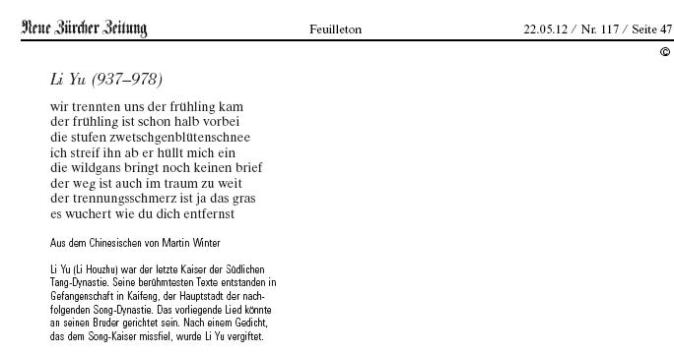
李煜
清平樂
别来春半,
觸目愁腸斷。
砌下落梅如雪亂,
拂了一身還滿。
雁来音訊無憑,
路遥歸夢難成。
離恨恰似春草,
更行更遠還生。
标签: blossoms, life, love, parting, poetry, politics, seasons, snow, Song Dynasty, spring, Tang Dynasty
发表在 May 2012, Uncategorized | 1 Comment »
5月 9, 2012

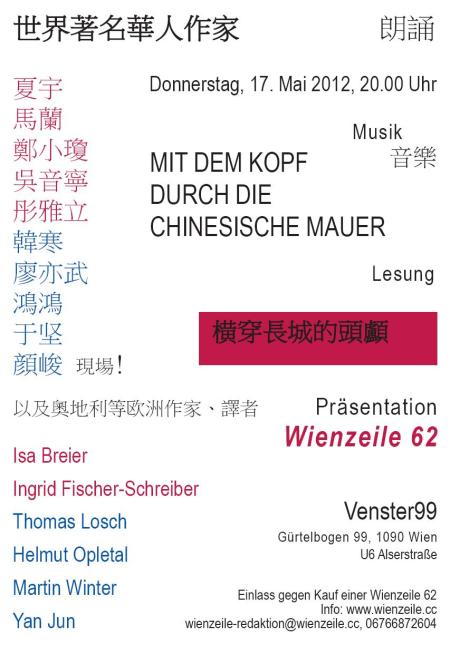
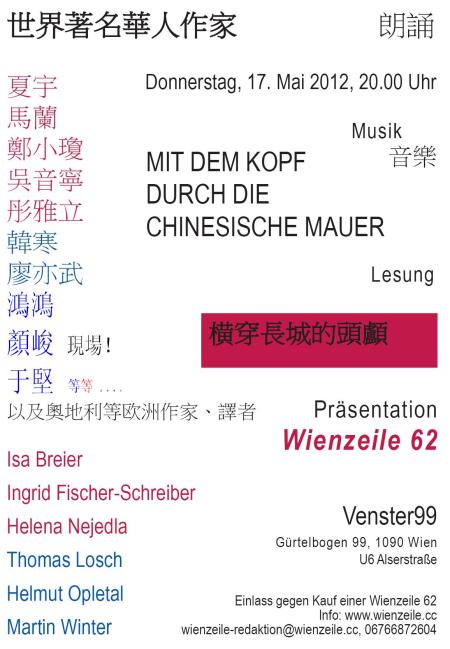
Die Nummer 62 des Literaturmagazins “Wienzeile” ist gedruckt! Mit Texten von Hsia Yü 夏宇, Yan Jun 顏峻, Hung Hung 鴻鴻, Zheng Xiaoqiong 鄭小瓊, Yu Jian 于堅, Ma Lan 馬蘭, Qi Ge 七格, Wu Yinning 吳音寧, Lin Weifu 林維甫, Tong Yali 彤雅立, Pang Pei 厖培, Liao Yiwu 廖亦武 und vielen anderen. Dazu gibt es Grafik und Bilder von Yang Jinsong 楊勁松, Chen Xi 陳熹, Emy Ya 葉宛玲, Ursula Wolte und anderen mehr.
Wu Yinning 吳音寧, Hsia Yü 夏宇, Hung Hung 鴻鴻 und mehrere andere SchriftstellerInnen und KünstlerInnen in dieser Nummer sind aus Taiwan. Gedichte von Wu Yining gibt es auch hier. Zwei der sieben Gedichte, die ich von ihr übersetzt habe, zitieren taiwanische Rockmusik. Eines ist über einen Kanalarbeiter. Die lokalen Details in Verbindung mit Wu Yinnings starkem sozialen Engagement machen die Faszination aller ihrer Texte aus. Sie war z.B. 2001 in Chiapas in Mexico und berichtete von der zapatistischen Revolte.
Wir haben Texte über Wahlen und Demokratie, 1979 – zur Zeit der Demokratiemauer – und heute. Helmut Opletal, langjähriger Rundfunk- und Fernsehkorrespondent, berichtet von den politischen Verhältnissen im Peking der Demokratiemauer und zieht Vergleiche mit aktuellen Ereignissen. Wir haben Han Hans 韓寒 Essay über Demokratie, übersetzt von Ingrid Fischer-Schreiber. Das ist einer von drei Texten – über Revolution, Demokratie und über Freiheit- die Ende Dezember 2011 herauskamen, gerade als wieder einige Dissidenten zu hohen Freiheitsstrafen verurteilt wurden. Han Hans Texte wurden weltweit heftig diskutiert, unter anderem im Zusammenhang mit 100 Jahre Chinesische Revolution/ Abdankung des letzten Kaisers 1911/1912, auch bei einer großen Konferenz an der Universität Wien Anfang dieses Jahres. Wir haben einen Text des Computer- und Internetexperten Hu Yong 胡泳, ebenfalls übersetzt von Ingrid Fischer-Schreiber 殷歌麗, Kuratorin der Ars Electronica in Linz, Übersetzerin zahlreicher chinesischer Artikel und Bücher aus politisch-sozialen und wissenschaftlich-technischen Bereichen. Nicht zuletzt enthält diese Sonderausgabe einen Vergleich zweier hochbrisanter politischer Texte, der Charta 77 aus der damaligen Tschechoslowakei und der chinesischen Charta 08, erstellt von einer Politologin und Sinologin aus Tschechien.
Das Cover ist von Linda Bilda, einer Künstlerin aus Wien. Innerhalb der Redaktion war es von Anfang an umstritten. Aber eine wichtige chinesische Schriftstellerin, die in dieser Ausgabe vertreten ist, findet es gut, gerade auch wegen der Gewalt. Heutiges China, sagt sie.
Ein weiterer Punkt, der zuletzt heftig diskutiert wurde, war die Inkludierung von Texten von und über Wanderarbeiterinnen in China. Im September letzten Jahres war hier in Wien eine große Konferenz über Arbeitskonflikte in China. Vorträge und Berichte gibt es online auf den Konferenzwebseiten und bei Transform! . Eine der Vortragenden war Astrid Lipinsky vom Ostasieninstitut der Univ. Wien, die schon 2008 in der Zeitschrift Frauensolidarität über Arbeitsmigrantinnen, ihre Sprache und ihr Schreiben berichtet hat. In der Wienzeile haben wir den ersten Teil eines langen Gedichtes von Zheng Xiaoqiong 鄭小瓊. Sie ist Arbeitsmigrantin in Dongguan 東莞 und hat neben ihrer Fabrikarbeit seit ungefähr 10 Jahren viele literarische Texte veröffentlicht, die nicht nur auf dem chinesischen Festland, sondern auch in Taiwan und darüber hinaus bekannt und geschätzt sind. Für Hung Hung 鴻鴻, Regisseur und Schriftsteller in Taipeh, erinnern manche Gedichte von Zheng Xiaoqiong an “Akte 0” von Yu Jian 于堅, einem der renommiertesten chinesischen Dichter, der ebenfalls in dieser “Wienzeile” vertreten ist.
Mit dem Kopf durch die Chinesische Mauer – 橫穿長城的頭顱。Der chinesische Titel stammt von Liu Jixin 劉紀新 aus Peking. Liu Jixin unterrichtet klassisches und modernes Chinesisch am Ostasieninstitut der Universität Wien. Im jetzigen gesprochenen und geschriebenen Chinesisch sind klassische Wendungen durchaus häufig, und auch heute sind Bildung, Erziehung und Sprache in vielen Aspekten brisante Themen. Liu Jixin hat einen kleinen, recht subjektiven Artikel über Schulen in Wien und in Peking geschrieben. Die in Peking tätige Architektin Chen Ing-tse 陳穎澤 aus Taiwan schreibt über Lang- und Kurzzeichen in der chinesischen Schrift. Sie hat eine sehr prononcierte Meinung. 100 Jahre nach den ersten Ansätzen der Sprachreform, die eine enorme Kluft zwischen gesprochener und geschriebener allgemeiner Verkehrssprache und eine hohe Schriftunkundigen-Rate beseitigen wollte, gibt es auch auf dem Gebiet der Sprachen und Schriften im chinesischen Sprachraum viele aktuelle Konflikte.
Josef Goldberger interviewt eine chinesische Absolventin eines Studiums in Wien.
Wer erinnert sich noch an 1990? “Keine Mauern mehr” hieß der österreichische Beitrag zum Eurovisions-Songcontest. Leider begannen noch im selben Jahr die Jugoslawien-Kriege der 1990er Jahre, die 1999 auch China berührten, mit dem NATO-Bombardement der chinesischen Botschaft in Belgrad. Diese “Wienzeile” enthält eine Erzählung von Tamara Kesic, die 1990 in Kroatien spielt. Außerdem haben wir weitere literarische Beiträge von deutschsprachigen Autoren, etwa Gedichte von Isa Breier und einen Text von Thomas Losch.
Die Wienzeile 62 wird am 17. Mai im Venster 99 in Wien mit einer Multimedia-Lesung präsentiert (siehe Plakat). Der Dichter und Musiker Yan Jun 顏峻 tritt live auf. Die Zeitschrift ist bei der Redaktion, im Sekretariat der Abteilung Sinologie des Ostasieninstituts an der Univ. Wien und auch bei mir (Martin Winter) erhältlich.
标签: art, china, democracy, elections, food, internet, language, life, literature, migrants, music, poetry, politics, resistance, sex, society, sound, taiwan, Vienna, violence
发表在 May 2012, Uncategorized | 2 Comments »
4月 25, 2012
Wienzeile, a literature magazine coming out in Vienna, Austria, with entries in Chinese, English and German. Lots of new literature by Hsia Yü 夏宇、Yan Jun 顏峻、Hung Hung 鴻鴻、Zheng Xiaoqiong 鄭小瓊、Yu Jian 于堅、Ma Lan 馬蘭、Qi Ge 七格、Wu Yinning 吳音寧、Lin Weifu 林維甫、Tong Yali 彤雅立、 Pang Pei 龐培、Liao Yiwu 廖亦武 and many others.
Art work and photos by Linda Bilda, Yang Jinsong 楊勁松, Chen Xi 陳熹, Emy Ya 葉宛玲 and others.
Articles by Han Han 韓寒 and Hu Yong 胡泳. And an article comparing Charter 08 to Charter 77, written by Helena Nejedla, Czech Republic. If you get hungry while reading, we have a recipe for 四川鍋盔.

标签: apple, art, books, china, death, democracy, elections, food, history, internet, language, life, literature, memory, migrants, music, occupy, poetry, politics, resistance, sex, society, sound, taipei book fair, taiwan, Vienna, violence
发表在 April 2012, May 2012, Uncategorized | 2 Comments »
4月 25, 2012
Two books in German
Simon Urban’s Plan D appeared in August 2011, Bei Ling’s Ausgewiesen has come out in March 2012. Both are tied to my experiences in Taiwan, in different ways. Simon Urban is a young German author. He is not from the East, the former GDR, and there seems to be nothing in his biography to make him destined for writing a novel on history. And yet he belongs to a continuing thread of history in German literature, told in various forms, often through family stories. Female authors tell family stories, and there are many immigrants writing in German. Their writings are often set in the regions where they come from, and many tell histories of families. History is a topic that just doesn’t seem to go away in Germany and Austria. Nobel prize laureates Elfriede Jelinek and Herta Müller both write about painful topics from the recent histories of their countries. Herta Müller is from Romania. She is a Romanian author writing in German, mostly about Romanian contemporary history. And she’s living in Germany, for historical reasons. Elfriede Jelinek writes on Austria’s contemporary history, through her plays and novels. She writes in a very special language, a language that unmasks the thoughtless style of the media and contemporary discourse throughout Austrian society. One of her plays is called Winterreise, evoking Schubert, in her own special way. Another play relives a murderous party in the small town of Rechnitz in 1944.


Simon Urban’s novel is a thriller. It is the story of an East German police officer who has to find the murderer of a mysterious man, hanged near the Berlin Wall. The wall still exists, the GDR still exists, in 2011. Agents and counter-agents, state security and the Energy Ministry. Don’t trust anyone. Including your colleagues from the West. It’s a thick book, bursting with very evocative descriptions of situations in Berlin inside a frustrated policeman’s mind. Often funny, as well as haunting.
Simon Urban attended a creative writing academy in Leipzig. One of his teachers was the Austrian Writer Josef Haslinger, who also became famous through writing a thriller. It’s about a terrorist coup at the Opera Ball, related to Austrian contemporary history, of course. But Mr. Haslinger was not supportive of Mr. Urban’s project. “The GDR is deader than dead”, he used to say. Mr. Urban has proven him wrong. Plan D will come out in English in early 2013.
Bei Ling’s memoir begins in 2009, the year he got famous in Germany. He was invited as an exiled Chinese writer to speak at a panel at the China-focus Frankfurt book fair, then asked not to attend, along with Dai Qing, a veteran female writer and environment activist in Beijing. Both of them gate-crashed Frankfurt, with German media support. The book then jumps back to 1979 and the Beijing Democracy Wall. Activism and literature are inseparable for Bei Ling. He gives a very personal account of the 1980’s underground poetry scene, and goes on through his years in the US and his friendship with Susan Sontag, who helps him out when he is imprisoned for printing an illegal literature journal in Beijing.
Suhrkamp deserves credit for recognizing some of Bei Ling’s potential. They certainly helped to make him known in Germany. The translation of “Ausgewiesen” is good. Most of the book reads very similar to Bei Ling’s essays in the FAZ (Frankfurter Allgemeine Zeitung) and in Der Spiegel. The empathy, the little details, the very personal atmosphere. Bei Ling can make you feel as if you were there with him in Beijing in the early 1980s. Maybe you know some of the names, like all the famous Misty Poets. But nobody has told it in such an intimate way, not even Bei Dao, in his fascinating recollections. When “Ausgewiesen” came out in March, the FAZ carried the first review. It was dominated by the complaint that Bei Ling didn’t include much, much more about all these fascinating topics. That’s the fault of his editors at Suhrkamp, of course. The original manuscript was easily twice as long. I’ve seen it. And like other publishers, they don’t have an editor who reads Chinese. Maybe you know Jung Chang, who wrote Wild Swans. I am pretty sure Bei Ling mentions her, but in the German text she becomes a man called Zhang Rong. Hu Ping, editor of Beijing Spring and one of the oldest Chinese exiles in New York, becomes Hu Pingzheng.
Plan D is a rather thick book. Well edited, nothing important peeled away. Simon Urban is a maniac for detailed descriptions, and you always feel these locations in action. Urban succeeds in creating a Berlin that can feel at least as real as the one you know. It is all there, this is how it could have turned out. How it is, behind the surface, at many places.
So how are these books related to Taiwan? Simon Urban was at the 2012 Taipei book fair. His book was very well received, and many people asked questions. They have a real life Communist country to deal with, which is related to them in various ways. Bei Ling runs a small press in Taiwan called Tendency, which grew out of the literature journal with the same name. They print works by Havel and Celan, among others. Taiwan is a place that accommodates many different ventures and makes many things possible. A long tradition of immigration, everything thrown together. They had a one-party dictatorship themselves, and an economic miracle too. But since 1987 they have an ongoing process of democratization, including recognition of their own history, their various ethnicities and so on. It makes one think of recent history and present times in parts of Europe and elsewhere. These are the connections, between the late Vaclav Havel and a fictional Undead GDR, between Paul Celan, exile and reckoning with the past, between poetry and stories of spies.
Addendum: Exiled Chinese writers, like Ma Jian and Bei Ling, have protested against official China monopolizing the China focus at the London book fair this spring. Click here for press coverage in Dutch, English and German.
标签: austria, berlin, china, detective novel, frankfurt, Germany, history, literature, memory, poetry, romania, spy thriller, taipei book fair, taiwan, translation
发表在 April 2012, Uncategorized | Leave a Comment »
4月 10, 2012
was gesagt werden koennte
warum drucken sie, verbreiten sie alle,
was legitim ist und waffenverkaeufen
begegnet, die fragwuerdig sind?
nichts anderes tut grass. mit einem gedicht
gegen die tatsache, dass deutschland
u-boote an israel liefert,
die fuer atomraketen gebaut sind.
sollte deutschland das tun?
viele, die aufwuchsen
unter raketen
mit vaetern,
als kinder gebrannt
von verbrechen bekannter
und oder verschollener vaeter;
manche, die aufwachsen unter raketen
die immer noch da sind
verstehen wahrscheinlich
dass jemand angst hat.
ob israel anlagen im iran
aus denen atomwaffen kommen koennten
bombardieren sollte
hat grass nicht gesagt.
er wollte kontrolle
iranischer atomanlagen,
israelischer bomben.
das ist legitim.
koennen gedichte
so etwas bewirken?
aufmerksamkeit
ist jedenfalls da.
MW Ostermontag, 9. April 2012
“Was gesagt werden muss” von Günter Grass hat mich inspiriert, es war in der Zeitung, zu Ostern, am Ostersonntag in Österreich, ein bisschen später als in Deutschland. Ich habe die Silben gezählt, die meisten Zeilen haben ungefähr zehn. Ich höre immer auf einen Rhythmus.
Das interessanteste an dem Gedicht von Grass- Wolf Biermann nennt es “Gedacht”– ist natürlich die Diskussion, die wochenlange Verbreitung und Diskussion durch so viele Medien, Foren etc. Maybe you know the poem by Leon de Winter, a rather violent reaction. And the interview with Marcel Reich-Ranicki in the Frankfurt FAZ, very interesting.
Mich erinnert dieser Text von Grass an die Friedensbewegung, also an die 80er Jahre, ungefähr 1984, da war ich 18. Da hab ich an meiner ersten Demo teilgenommen, mit meiner Russischlehrerin. Vielleicht war es zu Ostern, es gab die Ostermärsche der Friedensbewegung, gegen die neuerliche Aufrüstung mit Atomraketen. Auf der Seite der Rechten, also nicht nur bei den Republikanern in Amerika, sondern auch bei den Leuten, die in Deutschland, Frankreich etc. an der Macht sind- hoffentlich ändert sich das bald, hoppauf, Holland! – auf der Seite der Rechten hatte Reagan recht, der habe mit diesen Pershing-Raketen (Petting statt Pershing, ein Slogan von damals) Gorbatschow besiegt. In Wirklichkeit war Gorbatschow der Gute, und Reagan der Böse. Relativ halt. Russisch war ein Wahlpflichtfach in meiner Mittelschule. Realgymnasium, Schwerpunkt Mathematik. Leider. Latein wär besser gewesen, weiss man nachher. Russisch war gut. Aus Ungarn, die Lehrerin. Frau Professor Elisabeth Waldmann, unterrichtet noch dort, soviel ich weiss. Deutsch, hauptsächlich. Hatte sie studiert, in Ungarn. Unlängst war ein Interview im Radio, mit György Dalos, Romancier und Gorbatschow-Biograph. Dass die Auflösung des Warschauer Pakts und die Desintegration der Sowjetunion relativ unblutig waren – im Vergleich zu den Jugoslawienkriegen der 90er Jahre- , dafür müsse man Gorbatschow danken. Klang recht schlüssig. Dalos war damals sehr aktiv, als Oppositioneller in Ungarn in den 80er Jahren, mit vielen Kontakten in die DDR. Und jetzt kann er wahrscheinlich recht gut einschätzen, wieviel schöner es für Ungarn wäre, jemanden wie den jetzigen BRD-Präsidenten Gauck an der Spitze zu haben, als jemanden, der seine Doktorarbeit abgeschrieben hat und auch deshalb als schwaches Aushängeschild der rechtspopulistischen Regierung angesehen wird.
Grass regt zum Nachdenken an. Und zwar sehr viele. Das ist schon nicht wenig. Er hat halt Angst vor Atomraketen und vermisst die Ostermärsche der Friedensbewegung. Glaubt er, dass Israel den Weltfrieden bedroht? Klingt absurd, wahrscheinlich auch für ihn. Atomraketen sind böse, generell. Raketen überall, ausser auf dem Mond, vielleicht. Aber, aber ….
Nix aber. Grass hat halt Angst. Und erinnert (sich) an die 80er Jahre. Pessach und Ostern und Frieden sind halt verknüpft. Das ist nicht seine Schuld. Ausser, dass er halt im Krieg war, als Deutscher. Auf der falschen Seite, das sagt er eh. Aber er hat halt was Arges verschwiegen, und war derweil sehr viel politisch aktiv.
Und mir ist halt die Sprache wichtig, deshalb derweil. Wie bei Robert Schindel. Ciao derweil.
标签: Günther Grass, history, hungary, media, memory, poetry, politics, war
发表在 April 2012 | Leave a Comment »
4月 2, 2012
-
-

-
-
Botanischer Garten Wien, 1. April 2012
reis, palmsonntag
das reis bist du
du bist der baum
du bist was keimt
was treibt was traegt
bist was sich wiegt
was liegt was steht
was wiederkommt
wenn es vergeht
MW 1. April 2012

Botanischer Garten Wien, 1. April 2012
标签: easter, resistance, spring
发表在 April 2012, Uncategorized | 1 Comment »
3月 31, 2012
Wrap and listen
Listen to the rainy night
wrap yourself around me now
wind will sway the blooming tree
night will pass and rain may stay
it’s alright we’re very close
it’s alright we’re very far
we were rather far away
far around and far ahead
far behind and far between
listen to the rainy night
it’s alright we’re very close
close to madness close to rage
close to breaking close to gold
wrap yourself around the rain
wrap your mind around the wind
I am very close to you
I am very far behind
I was rather far away
MW 1:20 March 31, 2012
Fo Iran same as fo China same as follow your own country’s past, present & whatever future you cannot know. aiww, ai not yet. ai intl
标签: night, rain, wind
发表在 March 2012, Uncategorized | 4 Comments »
3月 21, 2012
6 on the beach near the northern tip of the island in the danube at vienna, march 20, 2012
island
the danube flows
vienna starts
somewhere downstream.
the island goes
a couple miles
or maybe four.
they have an ice-cream stand today
with buttermilk and radio.
i came to see the cherry trees.
they’re fast asleep.
they need another month or so.
in april we may still have snow.
the cherry trees are from japan.
i went there 19 years ago.
it was before i knew my wife.
i went by boat.
it took two days.
and almost everyone was sick
except the crew.
a boat from china to japan
in january, in ’93.
the plum trees bloomed among the snow.
in february, when i was there.
it’s nice and warm.
the danube flows.
they had an earthquake in japan
a year ago, a little more.
the biggest one they ever had
or maybe not. but very big
with 20.000 people dead
and nuclear power plants kaput.
and still the trees bloomed like before.
it’s nice and warm.
the danube flows.
a month ago the cherry trees
and rhododendrons were in bloom
in taiwan, just a month ago.
it was quite warm. we even swam
in mountain streams.
and austria had lots of snow.
today they read for liu xiaobo
they have a day for poetry
when spring begins, from the un
the 18th was for prisoners
in china and america.
for prisoners of politcs.
they have a day for everyone.
the danube flows.
i brought my son to therapy.
he goes to school. there’s progress now.
he speaks much more.
our daughter doesn’t read a lot
but on the whole we’re doing fine.
the danube flows.
this city is a crying shame.
they say it’s very beautiful.
a neonazi gets a third,
a little less.
a rightist. just like hungary.
a little bit more affluent.
the danube flows.
MW March 20, 2012
This one’s for all the bloggers out there
Susan Sontag: Pay attention to the world
Elfriede Jelinek
政治與戲劇 Vaclav Havel/文 董恆秀/譯
- March 21, Kardinal Nagl Square, U3 subway, Vienna. Many bees in the tree.
岛
多瑙河滔滔不绝
从维也纳开始
顺流而下到某处
在这座岛上
行走几英里
也许四英里
有个卖冰淇淋摊点
还有牛奶和收音机
我来看樱花
它们睡得很熟
它们还需要大约一个月
四月份可能还会下雪
樱花树来自于日本
我19年前去过那里
在我认识我妻子之前
我坐船去的
花了两天时间
几乎所有人都生病了
除了船员
1993年1月
一艘从中国到日本的船
梅花在雪中开放
二月,我在那里的时候
天气美好怡人
多瑙河滔滔不绝
日本发生了地震
一年多一点点之前
他们有过的最大的一次地震
或许不是。但已经算是很大了
有两万人死亡
以及核电站泄露
树依旧像先前一样开花
天气美好怡人
多瑙河滔滔不绝
一个月前樱花
杜鹃花盛开
在台湾,就在一个月前
天气相当暖和,我们甚至在山溪里
游泳
而奥地利还白雪皑皑
今天他们为刘晓波读诗
在他们的诗歌日
春天到来时,联合国规定
18日是囚犯日
在中国和美国
因为政治犯
他们给每个人指定一天
多瑙河滔滔不绝
我带儿子去治疗
他去上学了,现在有了进步
他话说得更多了
我们女儿阅读不多
但总的来说我们做得很好
多瑙河滔滔不绝。
这座城市令人蒙羞
都说它非常漂亮
新纳粹占三分之一
少一点点
极右分子像匈牙利一样
稍微富裕一点
多瑙河滔滔不绝
2012年3月20日
伊沙、老G 译
标签: america, austria, bicycles, blossoms, buttermilk, cherry blossoms, children, china, earthquake, hungary, ice-cream, islands, Japan, literature, memory, nazis, poetry, politics, prisoners, rightists, snow, speech, spring, sun, taiwan, trees, Vienna, 桜
发表在 March 2012, Uncategorized | 3 Comments »
3月 16, 2012
Hung Hung
Sommer nebenan
Tiefschlaf einen Fuß tief unterm Bett
Hab vergessen aufzustehen
Vogelschau mit dir am Himmel
Hab vergessen zu landen
Allein unterwegs auf der Kreuzung Zhongxiao Ost und Dunhua Süd
Auf der endlosen Steppe
Hab vergessen zurückzukommen
Ein Buchhaltungsfräulein fliegt über die Tasten
Eine Betelnuss-Helena blickt auf die perlende Glastür des Kühlschranks
Ein Gecko ruft
Ein Gecko ruft
Endlos streckt sich die Kindheit
2000
Übers. MW, 2009-2012
+++++++++++++++++++++++++++++++++++++++++++++++++++++++++
Vgl.
https://erguotou.wordpress.com/m-a-k-e-l-o-v-e-n-o-t-w-o-r-d-s/
+++++++++++++++++++++++++++++++++++++++++++++++++++++++++

Photo by Tong Yali
鴻鴻
夏天在隔壁
沉睡在床下一尺深處
忘了起身
在天空和你一起俯瞰
忘了降落
一個人走在忠孝東路敦化南路路口
那一望無際的草原
忘了回來
會計小姐飛快打著鍵盤
檳榔西施望著水珠滑過冰櫃的玻璃
壁虎叫了
壁虎叫了
童年無限延長
2000
标签: childhood, poetry, summer, taiwan
发表在 March 2012, Uncategorized | 1 Comment »
3月 16, 2012

Yan Jun
Two Poems from 2007
Febr. 13 (For those who have never seen rain)
time difference carrying luggage going into the rainbow
the travellers the sleepy-heads
the cats in thailand fishing folk in shanxi
corpses in books female warriors coming up
seven o’clock in the morning darkness leaving these faces
they all have their names
in their passports in the papers
new babies awaken accordeons destroying a jail
taipei raindrops dancing calling me back
Febr. 13th, 2007
Tr. MW, March 2012

June 28
they all flew away from the moma development
over xidan over tanggu over berlin and cologne
it rained on the way bird flu broke out peach blossoms fell
stock market softly extinguished babies were born
central station capetown tea hawkers taking the lift
dusk finally changing into the night
they closed down lufthansa center the workers’ stadium
bombed olympic park they did it for love
but for the sleepless heart but jardin du luxembourg
but butterflies flying on lantau over the temple of heaven
but hashish bees helicopters took them away
all of urumqi changed into a park
finally changing into the night and they sighed
they changed into her they love her they flew
into another dream
June 28, 2007
Tr. MW, March 2012
标签: airplanes, beijing, china, day, 顏峻, lanzhou, life, music, night, poetry, sound, taiwan
发表在 March 2012, Uncategorized | 1 Comment »
3月 16, 2012
Music and poetry in present-day China and Taiwan
How are poetry and music combined? What differences and what similarities are there within and between China and Taiwan in today’s relationships of music and poetry?
Yan Jun (Lanzhou/ Beijing) has become well known since 2003, both for his sound projects and for his poems. Yan Jun wrote about parts of the music scene in China in 2010. His article is collected in the book Culturescapes China (Basel 2010), with other representative texts on recent music and literature.
Some of Yan Jun’s poems are related to political events and concerns. All poetry is political, he once said, which may evoke discussions about art and politics in general, by Adorno and others. On the other hand, Yan Jun has tried to maintain a stance that avoids direct confrontation with the government and negotiates a largely underground breathing space for art and music.
Singers, musicians and poets, artists in general have to organize themselves and work in a way that gets noticed, without going to jail. The ones that do become dissidents and end up imprisoned or in exile are a small minority. Some are more concerned with politics than with art. Others, like Liao Yiwu, have made experiences that have linked their art and their concerns for society in a way that makes it hard for them to continue working, publishing and living in China. Liao Yiwu is a famous example. His approaches to poetry and music are inextricably linked to his experiences at the bottom of society in China. Liao Yiwu left China last year and currently lives on a scholarship in Berlin. He visited Taiwan in January and February 2012. I was fortunate to witness two of his performances in Taipei and Tainan. It was exciting to witness how fast people in Taiwan were able to connect with Liao Yiwu. In Tainan, the reading was at a university, introduced by professors teaching Taiwanese and Hakka, not Mandarin Chinese. The dynamics of music, history, language and poetry were very remarkable.

At the end of Liao Yiwu’s reading in Taipei, he asked Lo Sirong to sing a traditional song in Hakka, a lullaby sung by a working mother, sung mostly to placate herself, perhaps. Lo Sirong is part of a mostly female network of poets and musicians who collaborate on different projects in Taiwan and beyond. One recent project is Fullmoon (Sleepless in moonlight), a six-edition online poetry-sound magazine organized by Tong Yali. In Spring 2012, I translated seven poems by Wu Yining, a Taiwanese reporter, local activist and poetess. She first came to prominence in 2001, reporting from an uprising in Mexico. Wu Yinning quotes rock songs sung in Taiwanese, among other sources.

Singing in different languages, and the use of different languages in general are well integrated in today’s Taiwanese society. There is a general consensus on the protection of cultural diversity. But although Mandarin is no longer the only official language, social and economic conditions nevertheless serve to favor its use.
Cooperation with singers/ songwriters from Mainland China is increasing; there were many concerts by Mainland singers/ songwriters in Taiwan in February 2012. These artists were introduced in the magazine POTS (Weekly supplement Nr. 699, Feb. 24 – March 4, 2012, p. 14/15)

The famous Taiwanese poetess Hsia Yü (Xia Yu) is also famous for her song lyrics, published under pseudonyms. There is a history of pop, rock and DJ culture in Beijing behind Yan Jun’s sound projects, and there is a history of pop songs from Taiwan and Hong Kong since the end of the 1970s that has influenced Mainland China. People who were young at the beginning of the 1980s remember the pop songs of Teresa Teng (Deng Lijun). After the Cultural Revolution, such songs supplanted the Maoist propaganda – they were subversive because they were not political at all. Hou Dejian, who ran away from Taiwan to Mainland China, became the most important cultural figure in the 1989 Beijing Tian’anmen protests that ended with the June 4th massacre in the city. Other artists also performed on Tian’anmen Square, most notably “Rock Music Godfather” Cui Jian. But Hou Dejian was actually crucial to the outcome of the protests. He galvanized the protests in the last few days, along with Liu Xiaobo, Zhou Duo and Gao Xin. And because of his popularity, because even the soldiers knew his songs, Hou Dejian was able to help negotiating the retreat of thousands of students from the square in the early hours of June 4th.

Poetry and music, in traditional forms, such as opera, and in present projects, show the differences and similarities between more official and more informal settings and occasions. Present-day connections between poetry and music in China and in Taiwan enable informal and spontaneous social connections.
标签: china, hakka, literature, music, poetry, taiwan, 夏宇, 崔健,侯德健,羅思容,顏峻,鄧麗君,彤雅立, 廖亦武
发表在 March 2012, Uncategorized | Leave a Comment »
3月 12, 2012
Just read a post by a guy called Doug 陀愚。It begins with a child’s drawing from preschool, and ends with the words 日本は絶対復しますので、それまで頑張りましょう。Nihon wa zettai fukushimasu no de, sore made ganbari mashoo. I don’t know if everything can or should be like it was before after such a big catastrophe. I do have great respect for the spirit Doug talks about. Last year in spring I wrote two poems that were inspired or influenced by the Japan 東北 Toohoku earthquake. I am going to put the second one first here. It was translated recently by a Taiwanese friend, and we both read it in public at a bookstore in Taipei on Febr. 26th.
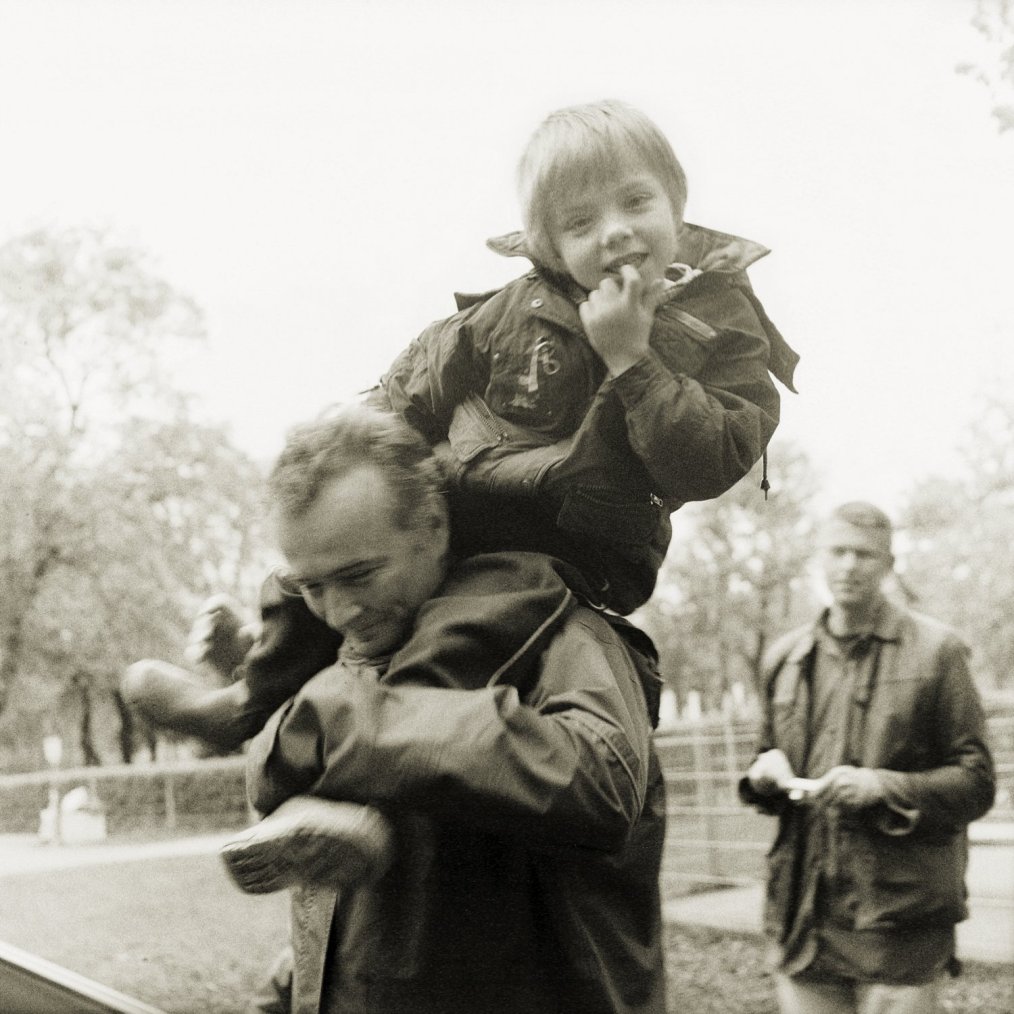
櫻(開花)
英、德文/維馬丁
中譯/彤雅立、維馬丁
白與玫瑰色漂浮
透著光進入一日
在狂人群中
樹木兀自開花
生長、垂落、成熟
佇立,迎風呼吸
=========
桜
blossom
shine and float in white and pink
carried forth into the day
all among the loony people
certainly the trees are blooming
growing, falling, ripening
standing, breathing in the wind
MW April 2011
bluete
weiss und rosa leuchtend schweben
fortgetragen in die tage
unter allen irren menschen
bluehen zweifellos die baeume
wachsen, fallen, reifen, stehen
atmen, oeffnen sich im wind
MW April 2011
Photo by Ronnie Niedermeyer
8 syllables in every line, five trochaic lines, first syllable of every line stressed, then the third syllable, and so on. This is how the German version works, with an additional shorter seven-syllable verse that ends with a stressed syllable, so it’s six lines in all. And in the English version most lines only have seven syllables, except the two in the middle: “all among the loony people/ certainly the trees are blooming”.
Zhan Bing 詹冰(綠血球 Taipei: 笠, 1965), from http://chinaavantgarde.com/

hold it
(quakes, tsunamis, nuclear threats …)
the days of the blossoms
the yellow the white
the shoots and the air
and the birds and the bees
the flies and the beetles
the earth and the trembling
the cars that come floating
the buildings come tumbling
the life that sprouts
MW March 2011
innehalten
(fuer japan, yunnan, burma …)
die tage die blueten
die spitzen die gruenen
die weissen die gelben
die bienen die fliegen
die wogen die steigen
die wagen die treiben
die erde die bebt und
das leben das keimt
MW Maerz 2011
标签: blossoms, catastrophies, cherry blossoms, 生活,gedichte, disaster, earthquake, easter, Gedichte, Japan, life, memory, poetry, spring, translation, trauma, trees
发表在 March 2012, Uncategorized | 5 Comments »
3月 6, 2012

Photo by 莊豐嘉, Febr. 2012. Plum blossoms & waterfall in Wulai, Taipei County.
Taiwan and China. Taipei, Hong Kong, Canton and Europe. Kalt & warm.
Taiwan can easily contain China. China cannot contain Taiwan. Because Taiwan is many things that China is not. Taiwan is open in ways that China cannot afford. These make it prosper. And attractive, also for China.
Just saw some great pictures from a snow-white Berlin, taken on Febr. 22. I was in Tainan on Feb. 21 & 22. Very warm. Ran around barefoot on a public track next to the Confucius Temple. Stopped at a monument with a missile. They are not sure where and when it came from. It didn’t explode, and it won’t. But they are keeping it, like the temples and alleys. Went into the Patriotic Women’s Association. Nice place, from Japanese times. Sat around with a friend, wrote a poem into her notebook. Had been swimming in the mountains the week before, with another friend. Nice and warm there, too. It was cold on some days in Taipei, and in the wind on the island of Kinmen. But nothing like in Europe. Some of the people I went around with in Taiwan came from Berlin. Literarisches Kolloquium. Simon Urban was there, author of Plan D. Great novel, hilarious. Was just presented at Taipei Book Fair and will be translated into English, maybe also into other languages. It’s about a GDR detective, in late 2011. Yes, Communist East Germany still exists in this book. Now I am back in Vienna. The sun is out, but it’s cold. Was grateful for gloves yesterday on my bicycle in the afternoon.

Simon Urban and Tang Wei in Jiufen, Taiwan. Feb.5th, 2012
An den Rändern und in den Ländern rundherum habe ich mindestens ebenso viel über China bemerkt wie in den Jahren in chinesischen Städten. Das ist auch bei Österreich so. In Taiwan hab ich viele Leute kennengelernt, auch einige, die schreiben und übersetzen. Auch alte Freunde wieder getroffen, einen ganz zufällig, nach 22 Jahren. Er war 1988-1990 mein Vermieter in Taipei. Die abendlichen Gespräche mit ihm waren sehr wichtig und lehrreich. Er unterrichtet heute in Taichung und ist Vorsitzender des PEN-Klubs für Autoren, die auf Taiwanisch schreiben. Taiwan ist ganz ähnlich wie Österreich, in mancher Hinsicht. Kleines Land. Viel Geschichte. Schöne Berge. Zeitgeschichte, je nachdem. Lang unterdrückte Sprachen und Volksgruppen. Und so weiter.
标签: china, politics, society, taiwan
发表在 March 2012, Uncategorized | 1 Comment »
3月 6, 2012
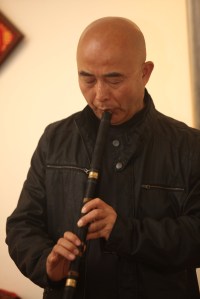
廖亦武吹簫,張振山拍攝
lent, returned
the air is crisp.
the streets are clear.
the sun is out.
we go to church.
halleluja, praise the air.
halleluja, praise the light.
halleluja, praise the space.
praise the people, praise the cake.
what on earth is happiness?
should we ask a fairy mother?
should we ask important people?
god is with us.
is he happy?
praise the lady
with the pizza.
i miss the organ.
i miss the prayer.
we used to be new.
are the animators happy?
do we have an e-mail address?
why are we here?
where do you come from?
when did you start to learn chinese?
the light is always different
if you’re in taipei or beijing
if you’re on kinmen in the wind,
in hualien, kaohsiung or tainan.
the air is crisp
here in the city, in vienna
where I grew up
and hardly ever feel at home.
MW March 2012
标签: austria, life, music, religion, taiwan
发表在 Uncategorized | Leave a Comment »
3月 6, 2012
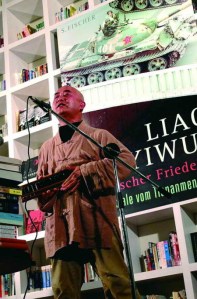
廖亦武,撥算盤吟詩,圖片來源新新聞
廖亦武不是基督徒。也不是台灣的客家人、本省人、原住民、民進黨、工會、長老教會等等。不用支持美國右派,不用支持伊拉克戰爭等等。不用一直當知識分子。甚至不用當海外異議分子。因為不是基督徒,所以《上帝是紅色的》更自然地當報告文學。廖亦武不知是是流亡作家,是流浪漢、囚犯等等,可以引用《三國》的開頭說無論生活在哪裡都是四川人,不用關心一個中國等等政治詞彙。廖亦武無論在哪裡都可以當作家、詩人、音樂手、行為藝術家等等。詩歌朗誦繼承金斯堡、狄蘭·托馬斯等等,甚至讓我想起維也納已故的詩人Ernst Jandl和其他擅長上場並同樣擅長把自己的經歷和記憶配合反對專政、尊敬和承認社會底層的寫作。讀廖亦武不意味不可以讀任何其他作家或詩人。台灣作家可以讀小說家甘耀明、詩人夏宇、戲劇家和詩人鴻鴻等等。有很多作家,非常多元的文化,非常複雜的問題。而有了廖亦武就不用擔心中國會怎麼樣。社會底層的人關心的不是政治。是關心很多生活最基本的事。心、記憶、家、天氣、吃飯、來往。無論在哪裡,無論什麼時候都有作家等等人士讓你欣賞和注意比政治、歷史、國家等等更基本的生活瑣事。包括魯迅,也包括張愛玲。他們的文學裡、生活裡顯然都有社會、經濟、國家、戰爭等等大問題。不過文學、藝術不是為了先解決大問題。是為了不忘記每個人都有一些基本的、大家需要關心的東西。
讀廖亦武,同樣可以讀中國大陸小說家余華或莫言、詩人于堅、鄭小瓊、龐培等等。香港、海外作家顯然亦可以讀很多,包括用英語、法語等等寫作的華人。讀廖亦武也許就不會覺得如果讀北島就不應該讀劉曉波、不會覺得聽顏峻的詩和聲音就不用聽任何地方的民謠、跟踪艾未未就不用跟踪在台灣、奧地利等等地方藝術跟社會、政治、經濟等方面的關係。所以我2012年二月份在台灣的文學經驗跟廖亦武在台北、台南等地方的朗誦會在我的記憶裡是分不開的。很多作家很難跨越寫作和關心公民權利。你博客的讀者也許很多, 而真正喜歡你的詩或你的小說的人比起來可能就少了,或者說有很多人只關心你的博客,根本沒工夫多注意你的詩或小說,無論你是北京的西藏詩人唯色或上海的賽車作家韓寒。廖亦武跟很多作家、評論家等等不同,他不用說他喜歡誰,除非說他喜歡的四川民間歌手。
我各人喜歡的書有很多種。詩歌、偵探小說。。。最近讀了西蒙·無邦(Simon Urban)的《Plan D》。主要的主人公為一名東柏林警察。在這篇小說裡,德意志民主共和國2011年底還存在。很喜歡。黑色幽默。一月份,還未去台灣的時候讀了村上春樹去年的大作《1Q84》. 人物、地點、日常生活都寫得很棒。以前也讀了他的小說,都很喜歡,短片和長篇都很欣賞。很喜歡的長篇包括《舞!舞!舞!》、《世界盡頭與冷酷仙境》、《挪威森林》等等。《1Q84》的故事開一部分始在1968年的東京大學示威,就像《挪威森林》。我很喜歡《挪威森林》。但是讀完《1Q84》就覺得把社會的一些基本的問題只顧在一些局外者的生活裡會產生很大的矛盾。因為《1Q84》裡沒有《一九八四》這篇小說。沒有監獄、沒有博愛部,根本沒有烏托邦。只有兩個月亮。1980年代的東京的一些小街頭等等地方描寫得非常好,生生有味。有恐懼,有人懷疑她是否生活在1984年。可以說有大哥。但他不是人人都知道的人物。只有相當小的教派裡的人在某段時間裡認識那位原來在1968年當大學教授的領導。總共來說我還是非常喜歡喬治·歐威爾的《一九八四》,也很喜歡瑪格麗特·愛特伍(Margaret Atwood)寫的《使女的故事》。跟那兩本書比起來,《1Q84》就比較無害。廖亦武在監獄裡讀了《一九八四》。最近在台北演出的時候,廖亦武也提到《一九八四》跟他自己的經驗的關係。總共來說, 廖亦武可以讓你喚醒,讓你感覺到一些各人的問題和一些各國社會的問題。總會比只讓你感覺到1980年代的日本一些生活細節強。但廖亦武自己大概不會想到這樣的比較,因為根本不需要。
标签: art, china, freedom, literature, music, nineteen-eighty-four, politics, prison, religion, Sichuan, society, taiwan
发表在 March 2012, Uncategorized | 2 Comments »
3月 1, 2012
the sun is bright,
we’re going down.
we’re late one day,
a little less.
or maybe more.
it was the strike
or maybe not.
it’s morning now
or not yet noon.
I thought I could be home last night.
The lounge in Guangzhou was not bad.
The second one, the luxury.
You need an effort to get in.
Once you’re inside, they’re very nice,
if they decide to let you stay.
And all the others will be fine
without a shower or warm food.
That’s how it works in China, too.
MW Febr. 29, 2012
從台北回維也納的旅途不能說順利。一共整整兩天,坐六架飛機,昨天29日晚上到維也納,今天早上維也納機場把行李送過來了。主要是因為德國法蘭克福機場罷工,不過也是因為德國漢莎航空飛機從香港起飛後不能收取輪子,這樣也不能飛十個多小時,必須回香港,還好降落相當順利。在香港大家都要過境、拿出行李。帶台灣護照的人還必須簽證!然後只能呆一天或著票改成其他旅途。都要很積極地找漢莎航空在港具最能幹、服務態度最活力的人員。都是港人,英語很好,找到了最能幹的拿到了經過廣州到法蘭克福的機票。還有她們的人員幫經過廣州的小組盡快找閘門。到了廣州發現去法蘭克福的飛機第二天早上才能起飛,因為法蘭克福機場人員罷工。所以又得跟廣州機場人員商量,要他們代表漢莎航空給我們提供能夠吃飯、休息的空間。機場相當新,不過最好的空間不一定給熬夜的客人,得反复很積極地跟人家商量。晚上十一點終於吃飯,也拿到舒服的椅子和乾淨的空間,竟竟還提供洗澡、上網。早上上了飛機,到德國發現去維也納的飛機取消了,其他航空到維也納也都客滿,不過我給他們建議經過奧地利其他城市。經過Linz,那邊換飛機才終於到達了維也納。總共因為德國機場罷工、德國漢莎飛機配件不足之處的原因,坐了六架飛機才能兩天之內從台北回維也納。
标签: austria, china, frankfurt, Germany, guangzhou, Hong Kong, linz, taiwan, Vienna
发表在 March 2012, Uncategorized | Leave a Comment »
2月 28, 2012
台灣再見!
The sun is up above the clouds.
It is a national holiday,
the saddest day in Taiwan’s year.
I’m sad I have to leave this place.
We had a month, and it was great.
We went around for literature.
I have 100 business cards
and many books and magazines
and work for months and maybe years
and hopes of contracts and so on.
And we have lots of memories
of friendly people, rain and sun,
of Kinmen, Gaoxiong and Tainan,
of readings, talks and interviews,
of temples, tours and wonderment.
It is a national holiday,
the saddest day in Taiwan’s year.
The sun is up above the clouds.
I’m sad I have to leave this place.
MW Feb. 28, 2012
标签: friendship, holiday, literature, memory, taiwan, work
发表在 February 2012, Uncategorized | Leave a Comment »
2月 27, 2012

這几天都下雨,昨天還可以,不像前天晚上那麽大。昨天晚上觀眾不超過十五人。放假了到二月28日,所以有的人不在台北。開始有一點慢,介紹古詩和慢性的音 樂。不過氣氛越來越好,觀眾和朗讀者溝通很活潑。說道寫作和翻譯的背景、技巧、論點。也說到政治。讀了我在北京寫得反映北京大量拆遷和民工等等社會問題兩 首詩,還讀了李勤安為1987年台灣解嚴寫的那首。發現他說得現在依然很重要。台灣改變了,但也許不太想承認二十几年前的日常細節。而那些細節也很像現在 的中國大陸等等地方。念出一首詩仔細聽你才發現詩歌的作用和力量。朗讀以后在樓上吃飯、聊天到半夜。林維甫已經把2004年和2007年在北京寫得兩首譯成中文,准備發表。
德語詩、英語詩、漢語詩──維馬丁與彤雅立的翻譯雙聲 2012-02-26
标签: history, language, poetry, politics, reading, society, taiwan, translation, writing
发表在 February 2012, Uncategorized | Leave a Comment »
2月 23, 2012
“My father made me stand on a table when I was small, and recite ancient classical Chinese. I could only climb down after I was able to recite the whole thing by heart. I was only 3 or four years old, maybe. I hated my father.” This is how 廖亦武 Liao Yiwu began to talk to the students and teachers of 國立成功大學 National Ch’engkung University in 台南 Tainan, after he played a wooden flute, a very basic instrument he had learned in prison. Very basic sounds, mute and suppressed at times. Loss and regret. No uplifting fable. “I am not going to tell you very much about the time when I went into prison. You would have no way to understand everything. I was like any young person. I didn’t want to listen to anybody from older generations. And I had gone through 文革 the Cultural Revolution, when my parents couldn’t take care of me. For me, classical Chinese belonged into the rubbish bin, along with many other things. My father was 84 years old when he died”, Liao Yiwu said. Or was it 88 years? Only a few hours of dialogue and open exchange between father and son, in all those years.
Dialogue and open exchange. Between 四川 Sichuan and 台南 Tainan. Between Taiwan and China. Between languages and experiences. Feeling lost, between clashing dialects, conflicting histories. Feeling rooted, at the bottom of society.
On the podium, scholars of 台灣閩南語文學 Taiwanese literature sat along with Liao Yiwu. They spoke in Taiwanese. One professor recited a poem by a high school student. Before Dawn, or something like that. About the massacre from 1947, February 28th. I didn’t understand the words. But you could understand the feeling. The answer is very simple, he said, when a 客家 Hakka student asked what she should do, because the words and songs of her grandmother would die with her. There were too few people who could still speak with her in 客家話 Hakka, she was afraid her mother tongue, her grandmother’s words would become extinct. The answer is very simple, the professor said very gently. He spoke mostly in Taiwanese, so I didn’t understand it all. But he said you just have to study, you can even major in Hakka now. It’s not easy, but there is a common effort.
It was very simple, Liao Yiwu said, when people asked him how he fled from China. I went to 雲南 Yunnan province, bordering Vietnam, Laos, Myanmar and Tibet. I had made lots of interviews there many years before, with people at the bottom of society. You turn off your mobile. You could also bring extra mobile phones. You get lost in small towns. And then one day I was across the border in 越南 Vietnam, very wobbly on my legs. There was a small train, like in China at the beginning of the 1980s. I knew such trains from drifting around China when I was young. In Vietnam, I was afraid of a lot of things, getting on the train, of simple things to eat. But I could communicate by writing numbers on a piece of paper. 500, wrote the innkeeper. 100, I wrote below. And so on. Finally I was in 河內 Hanoi, in a simple inn. And then I went on-line and contacted my friends and family in China. When I got on the plane to Poland, I was still afraid. The year before, military police in full military gear had come and taken me out of the plane in 成都 Chengdu. But then I realized, although this was a Socialist country, I was in the capital of another country, not in China. And the plane took off.
The lecture hall was full. I sat on the floor in the aisles, like many others. It was a very welcoming atmosphere. “We have a few books to give away for students asking questions in the second part of the lecture.” What is 流浪 liulang? What is 流亡 liuwang? What is 旅行 lüxing? These three words sound rather similar in Chinese. This was another professor speaking. He had studied in Russia. He was from a Taiwanese faculty in 台中 Taichung, but at this occasion, to clarify this question, he spoke in Mandarin. What is drifting about? What is exile? What is traveling? When you are drifting around, you don’t know where you are coming from, and you don’t know where you’re going. When you are going into exile, you know where you are coming from, but you don’t know where you are going, where they will let you stay. When you are traveling, you know where you come from, and you know where you’re going. Very simple differences. But what about us here in Taiwan? 我們是否知道自己從哪裡來,到哪裡去? Do we know where we are coming from, and where we are going? In the 1960s and 1970s, many writers and intellectuals in Taiwan were in prison. It was very hard, but you knew what you were fighting for. Just like the writers and lawyers in China, they know they are fighting for freedom. Now in Taiwan we are very free, in comparison. But we can still be marginalized.
One of the professors was my landlord from 1988 to 1990 in Taipei. He is the chairman of the Taiwanese PEN. In 1988 he was a doctoral candidate in history, and a stage decorator. We hadn’t seen each other or heard from each other for 22 years.
标签: china, culture, Europe, exile, history, literature, memory, politics, religion, Sichuan, society, Tainan, taiwan, travel, Yunnan
发表在 February 2012, Uncategorized | 1 Comment »
2月 23, 2012
haus der patriotischen frauen
(unter japanischer herrschaft)
fuer Tong Yali
ein baum, ein hof,
der wind, die stadt.
es ist ein warmer wintertag.
in tainan ist es immer warm.
die stadt der tempel, der kultur;
die erste stadt: erinnerung.
MW 22. Februar 2012
彤雅立
記憶旅車
車子駛進了記憶
雪天里繾綣的石頭
海平面沒有風
巨浪在海底洄流
車子駛進從前的風
旋進黑色漩渦
《月照無眠》,二零一二年, 台北南方家園出版社,一三一頁
Tong Yali
erinnerung, wagen
der wagen faehrt los.
steine, in schnee eingerollt.
kein wind auf dem meer.
wogen tuermen sich darunter.
der wagen faehrt in den frueheren wind,
in den dunklen strudel.
Aus dem Gedichtband Schlaflos im Mondlicht (Yue zhao wu mian), Nanfang Jiayuan -Homeward Publishing, Taipei 2011, S. 131. MW Uebers. Febr. 2012
Tainan, city of temples. Temples everywhere, many lanes, full of flowers, blossoms, improvised housing, ancient and dated, broken and new. Squares in front of temples for breakfast stands, temple fairs, opera, evening barbecue. Temples complete with public toilets. The main Catholic church of the city is a beautiful traditional temple from 1960. Right across from the temple grounds dedicated to Koxinga, a Chinese-Japanese pirate’s son who fled from the mainland, drove out the Dutch and established the first Chinese kingdom on Taiwan, all in one year, he died rather young. And there is an Earth God’s temple next to the Catholic church. There was a wagon on the square in front of the church, with a few rows of plastic chairs. Very gaudy colors on the wagon, Taiwanese opera. A female warrior with a huge sword, ancient costumes. Tomorrow is the Earth God’s birthday, the church custodian said. Happy birthday! He was in his element, explaining the rich Tainan heritage. Sometimes people come and kneel on the steps of the church, he said, and only then they ask me which important god of the city is housed inside this magnificent temple. And when I tell them this is the Catholic church, they say sorry, we prayed at the wrong place, we didn’t know. Your prayers are very welcome, the custodian replies, and beckons them inside, like he did with us. They had been eating lunch, he and a woman, his wife maybe. Their little chamber next to the door was open. We had looked at the statue first, climbing over stoves and vats with food and cooking utensils, in preparation for the Earth God’s birthday. Mary looks very graceful in a simple and elegant robe, very Chinese, holding her naked baby Jesus. On the mosaic over the main altar inside they look more regal. But it is a very welcoming church. A traditional temple, I-Ching octagon tower with glass windows, couplets left and right written on columns, and boards, wooden and stone. An incense censer in front of the main altar. And an altar on one side for ancestor worship. “Oh, it’s from the 1970s, I didn’t know”, my friend said when we opened the gate, encouraged by the Earth God’s cooks, and looked at the statue more closely. Yes, she has traditional looks, like from the Qing Dynasty, but she is comparatively new, from the times of martial law. White Terror was still practiced on Taiwan when the church was built in 1960. Today, Tainan remembers founding fathers of its modern history inside the Japanese-era house of the Patriotic Women’s Association. These founding fathers of Tainan’s modern era are Japanese and British. Father of water taps and sewage, father of dams and canals, and so on. There is also one guy form the 16th century, sent from China. ”The soldiers who came from China after 1945 and took over from the Japanese didn’t even know houses with running water, they didn’t know taps!” That’s what a poet and scholar told me at the Taipei Book Fair, full of Taiwanese pride.
The last Japanese mayor of Tainan restored the main temples and historic sites. He prevented the Japanese troops from requisitioning and melting the huge bell from Kaiyuan Temple, which is still rung on important holidays. One of the main signs of the Confucius Temple, when you enter the temple grounds, was written by him. The temple grounds are sprawling, open and welcoming. Only the innermost part of the temple is guarded, and the entrance fee is 25 NT, 65 Euro Cents maybe. The city hall and seat of the provincial government from Japanese times is the Taiwan Literature Museum now, very modern and welcoming inside, lots of audio and other impressive installations, beautiful children’s rooms, extensive library, very accessible. This place was our destination when we came down from Taipei and Kaohsiung, an important stop in our one-month stay on Taiwan as translators into German.
标签: culture, history, literature, memory, religion, society, Tainan, taiwan
发表在 February 2012, Uncategorized | 2 Comments »
2月 12, 2012

I went to a great reading/ concert/ political happening by Liao Yiwu in Taipei tonight. It was organized by Wang Dan’s New School for Democracy. First time Liao performed his legendary poem Massacre from the night before June 4th, 1989 in public for a Chinese-speaking audience. Very memorable experience. People wept and remembered the White Terror and the Feb. 28, 1947 massacre in Taiwan. The case of Zhu Yufu, who got 7 years for a poem in China, was mentioned several times. Liao Yiwu was asked for his opinions about the controversy around the boss of the Want Want conglomerate and media czar (China Times etc.) who recently denied there was a major massacre in 1989. Liao Yiwu reaffirmed the answer he had given at Taipei International Book Fair. He just said he wasn’t very interested what some merchant would have to say. They would say anything to please Beijing, and unfortunately they would get away with it very easily. Liao was also very critical of the book fair. Glossy and haphazard in many ways, that was his impression. No dignity for authors, no thorough organisation of readings. Well, I must say I liked all the events I saw or participated in. The show girls and the people walking around advertising discounts did not give the impression of a very cultured event, rather like some market selling everything aside from books, just like Liao said. But they certainly did have some well organized readings, and international highlights in French and German, for example. Anyway, Liao Yiwu’s performance tonight was a very exceptional event. I think they recorded it, and I heard it was broadcasted live on the Internet. Don’t know where exactly. Liao was asked what he thought about the relation of literature and politics. He spoke about reading Orwell’s 1984 in jail, and talked about the parts leading up to the end of the novel, how Winston is broken with the use of a rat and made to rat out his girlfriend, and how he loves Big Brother as he is taken away to be shot. Perfect example for his own aesthetics, Liao said. He still supports people doing ‘pure literature’, goes to poetry readings about the Full Moon Sound Magazine (http://fullmoonsoundmagazine.tumblr.com/) and stuff like that. He was not interested in politics until 1989, he said. The Hakka songstress Luo Sirong sung a very poignant lullaby at the end. This part would not have been forbidden in China. Liao’s performance was so intense it made you vary of police barging in. But the most precious thing was the whole event together, the songs and the music, the talks and discussions. The strong interaction made it all very special and rare.
董恆秀的感想
标签: 1989, austria, china, Germany, literature, past, poetry, politics, Taipei, taiwan, translation
发表在 February 2012, Uncategorized | 4 Comments »
2月 11, 2012
Qing Dynasty school in Qionglin, Kinmen. Photo: 蔡亦菱
viele, viele, viele farben
muschelsplitter, alte flaschen
ewigkeiten in spiralen
gelber sand und viel geschichte
in granaten, in den menschen
tunnel und gemuesemesser
aus granaten fuer jahrzehnte
fuer den frieden, fuer besucher
viele, viele, viele voegel
fliegen untertags aufs festland
kehren heim und ueberwintern
women kin-men kaiser-candy
我們金門一條根
Photo by Johannes Fiederling

Photo by Johannes Fiederling

Photo by Cai Yiling 蔡亦菱
Photo: Johannes Fiederling
More photos

Photo: Johannes Fiederling
标签: Kinmen, literature, taiwan, translation
发表在 February 2012, Uncategorized | 2 Comments »
2月 7, 2012

Thanks to Ursula Wolte!
Lantern festival was today, or now it’s yesterday, Mon. 6th, 2012. All the best and many happy moons to all we love!
2 recent poems
vienna’s flat
frankfurt a mat
above the clouds.
a sea of wool.
flying is cool.
somewhere there’s a big bird
or another plane.
then we dive
through the mist
and arrive.
frankfurt is long.
i like hong kong.
MW Jan. 29/30, 2012
grosze rosa azaleen
schmetterlinge, blaetter fallen
geigenklaenge, bass, klavier
zeit der groszen stoerungen
endlich sonne ueber taipei
flohmarkt, festival der kuenste
blaetter wachsen in den himmel
MW Februar 2012
标签: literature, poetry, taipei book fair, taiwan, translation
发表在 February 2012, Uncategorized | Leave a Comment »
2月 6, 2012

未說出要害
今天六月四日下午翻譯討論會我們四個人都說了翻譯的使命、條件、樂趣、難點、技巧等等。主持人唐薇讓我們報告自己怎么選擇了中文、怎么來到了翻譯文學一行業。其實我們有一部分說出來根本不是選擇中文、選擇文學。一步一步地碰到了機會而已。自己從小對文學感興趣,從十一歲左右開始讀詩歌,一開始就讀不衕語言。八九歲以后父母對亞洲的食物,對打坐、太極拳等等很投入。一方面想保著身體健康、一方面尋找生命的意義。奧地利第二次世界大戰結束重新建立經濟以后在六十年代末、七十年代初開始尋找、開始重新反省國家、社會、藝朮等等在這個世界上的意義。其實一直都得反省,一直必須自問我們到底從哪里來,到哪里去。只是大部分人未說出,沒功夫說出、沒辦法說出我們從納罪制度、從倫理、宗教、道德根本跨了的世界上從未發現的巨大罪惡出來。柏林文學學會代表東格斯(Thorsten Dönges) 昨天在另外的、也是書展的場合簡單地介紹德語戰后和現在的文學,他說得很清楚,德國在二十世紀兩次想控制歐洲,結果是在全世界發動了戰爭。沒說日本在亞洲有衕樣的目的,衕樣地發動了第二世界大戰在亞洲的一面。東格斯代表說當代德語寫作非常重視曆史。在二戰以后第一代作家,像君特·格拉斯(Günther Grass)、海因里希·伯爾(Heinrich Böll)等等他們講戰爭和戰后的恐怖,講納罪德國軍隊和支持他們的人在東歐作出的災難、以后德語民族被驅除的后果。很多作家都講曆史,克里斯塔·沃尔夫(Christa Wolf)等等`民主德國』作家都是。那麽第二、第三代作家,他們就講自己的生活和他們一代的社會嗎?不,很多還是講曆史,講當代曆史,包括奧地利的艾芙烈‧葉利尼克(Elfriede Jelinek)和從羅馬尼亞來的赫塔.慕勒(Herta Müller)等等。而且很多年輕作家這几十年都講家庭的曆史,以講出家庭的曆史講整個社會的曆史。柏林代表沒說奧地利老作家多德勒爾(Heimito von Doderer,1896~1966)他也講曆史,不過主要不是講二戰和奧地利人的罪惡。他有自己的原因,他在三十年代曾經有點支持納罪黨,不過戰后支持進步的、積極的實驗文學,像恩斯特·揚德爾(Ernst Jandl)等等。反正東格斯代表講出了要害,人家作品里到處都是曆史,包括他介紹的新作家西蒙.吾邦(Simon Urban)。吾邦在他第一本長篇(德語叫Plan D)把最近二十几年的曆史改寫,好像1989、1990的變化從未發生,德國仍被分割,2011年秋天還有民主德意志共和國,兩個德國的秘密警察和間諜在仍然分割的柏林勾心斗角、殺人等等。
未說出要害,其實未說出要點。台北書展講中文和德語之間的文學翻譯和介紹工作很好。但不只是文學,根本沒有人只作文學翻譯。譯者衕樣也是學者、當老師、當口譯,做其他方面各種東西的筆譯。其實我們都說出,只是自己未說我研究最近二十年,尤其是2000年以后的中國文學。自己未說出要點,是沒說出要害,沒說出研究得不夠,不夠清楚。也應該包括當代台灣的文學。
唐薇念了周夢蝶的詩,我念了我的翻譯,以后也講了翻譯詩歌像演奏音樂,每個人有不衕的演奏方式和風格,也得看場合、觀眾、編輯的需求等等。台灣當代文學跟德語文學一樣帶著當代曆史沉重的負擔。想到台灣這几十年的社會,就很快想到本省人和外省人。不過台灣文學不只是有中國和台灣的問題、有台灣當日本殖民地的事實、有漢人各種文化和原住民文化的問題。台灣當代文學跟中國大陸進二十几年的詩歌一樣可以分學朮性寫作和民間寫作。當然實際上不那麽簡單,有很多混合,朦朧詩人不是學者,有很多直接從民間生活拿來的寫法。所以也不能說於堅發明了民間寫作。但畢竟中國大陸這几十年有民間寫作和所謂知識分子寫作的分割,而且翻譯進來詩歌也有支持民間寫作和支持學朮派寫作的分區。說知識分子寫作和民間寫作的區別其實不如說學朮寫作和民間寫作的分割,雖然不是那麽簡單、有很多混合等等。廖亦武肯定是民間寫作,但他也是知識分子,坐牢的知識分子,雖然他坐牢的條件比他的老朋友劉曉波更慘烈。聽到廖亦武的朗誦就是非常特殊的經驗,跨越音樂和文學,跨越舒展和民間街上小巷生活、市場等等,明明涉及到社會和政治。
廖亦武在朗誦會被問對旺旺集團董事長最近好像否定六四屠殺的看法。回答了很好,說他一般不估計商人對政治說一些什麽,因為按照需要很 快就會變。如果明天劉曉波當中國總統,商人都會贊美民主。政治家也一樣,包括目前你們的台灣總統,廖亦武說。人家問廖亦武以后屬於什麽國家,他回答屬於永 遠屬於四川,也引用了《三國》開頭。以后中國因為制度不行了而分開了,我們四川就關心對陝西、湖北等等的外交關系,不那麽注意台灣。
其實今天已經二月五日。這几天睡覺沒規律,這次根本沒有入睡,先是樓下現場音樂未結束,后來出汗,也想到上說的要害和要點。廖亦武的朗誦以后有作家在出版社展位簽字的機會。以后廖亦武去跟他的朋友楊曉斌見面,晚上要回新竹。廖亦武在他的書里面給我簽字以后我就有機會跟新竹的詩人倪國榮先生談話。倪國榮老師給我講他的太太翻譯愛蜜莉.狄金生(Emily Dickinson)几十年的經驗,還介紹他怎麽分學朮寫作和民間寫作。說周夢蝶、亞弦、七等生等等詩人都比較屬於民間寫作。而余光中、樣牧、王文興等等比較都是學朮的寫作。
鴻鴻和他編輯的雜志《衛生紙+》里那些年輕詩人多半該屬於民間寫作吧。夏宇呢?屬於宇宙吧。那彤雅立呢?其實我不清楚。兩種都有,可能是。她辦的《月照無眠》詩聲雜志里有布萊希特(Bertolt Brecht)、有魯迅、有周夢蝶、有不少宋詞。為了詩聲雜志,我給她把一些詩譯成英語,包括周夢蝶寫恆河的那首。是的,我詩歌寫作和翻譯的目的語言是英語和德語,兩種都是。
那麽要點的要害在哪里?翻譯是中間人。而有時候必須明明站在一邊。就這兩點而已。
不過最后什麽叫做文學、什麽叫做藝朮等等往往都是重新被討論的話題,永遠講不完。我自己屬於什麽? 待續。
照相:Benny Au (Hong Kong)
标签: austria, china, Germany, literature, poetry, taipei book fair, taiwan, translation
发表在 February 2012, Uncategorized | 1 Comment »
1月 24, 2012

Photo by Ronnie Niedermeyer
祝大家2012龍年一切順利,願比2000年更好!
這幾天記得2000年,那時候我們第一年一直住在北京,住靜安裡,挨著左家莊。2000年天氣特別壞,到六月份才下雨。元旦電視上記得那时候的主席帶火把跑上世紀壇台階。也許有點像去年在台灣慶祝辛亥革命100年的奢侈。台灣聽說費用非常大,很多人大概不覺得記住1911年的一些象徵值得花他們交稅的錢。
那時候在北京很多民房可以看到支持那時候流行的氣功教會、詛咒那时候的主席和执政黨的塗鴉。不只是小區裡牆上樓梯裡等等,也有三環的地下通道等地方。那時候北京還禁止放炮,但越來越多人不管,包括警察。給他們這樣一點的自由就是很好的活門。2000 war auch ein Drachenjahr. In Beijing hat es im Juni zum ersten Mal richtig geregnet, die Sandstürme waren dementsprechend. Jiang Zemin lief am Neujahrstag mit einer Fackel das brandneue Milleniumsmonument hinauf. An vielen Hauswänden, in Stiegenhäusern, aber auch in Unterführungen unter den größten Straßen gab es Graffiti gegen Jiang und die KP, und für Falungong. Feuerwerk in der Stadt war noch nicht wieder erlaubt, wurde aber immer mehr toleriert. Die Blockfrauen fuhren mit einem VW-Bus durch den Hof und kämpften mit einem Megaphon gegen die Knaller. Sie wurden völlig eingenebelt und kamen kaum durch. Aber vielleicht war das 2002, 2000 wohnten wir noch in einem kleineren Hof.
大陸慶祝2000年的費用比起來也許不算多。共產黨慶祝2000年,因為馬恩主義肯定19世紀的西方發展,西方日曆就是共用的日曆。所有國家和地區都要跟著西方發展,並盡量超過西方。只是把黑格爾的歷史觀變成為無產階級當基本的社會制度。其實物產階級都是基本,每有便宜的工人無論什麼社會都不能發展很快。中國大陸改革開放的經濟模式肯定西方19世紀的一些經驗。因為有很多便宜的工人,經濟上到現在一直發展讓人嫉妒。只是價值上還一直停止在19世紀的西方。馬克思、恩格斯講的造反真的有理,可以說就是實現人類最基本的權利,而且馬克思、恩格斯關心整個世界,比現在德國、奧地利等等地方差不多到了週末都是說我們的社會怎樣那樣,所講的“我們”必定是歐盟最富裕的小組,哪怕說窮人,用“我們”這個詞彙就是奧地利說德語看講究的報紙的“我們”,要不就是歐盟裡有功夫搞理想的青年和有錢的大人,還有那兩種之間的一些讀者。馬克思、恩格斯在一百五十年前已經有很開放的世界觀,比現在很多人都開放。那時候馬克思、恩格斯的價值跟2011年在世界各地講革命、講更換社會制度有很基本的共識。他們那時候知道那時候歐美經濟制度的一些短處和限制。2011年、2012年的思想,至少在大部分媒體所看到、聽到的思想,大部分都肯定西方19世紀的想法。很少有人像馬克思、恩格斯挑戰經濟、社會的體制。中國大陸在天安門有世界人民團結起來的標語,是19世紀理想主義者的回音,包括馬克思、恩格斯等等。從現在看到他們是理想主義者,不像20世紀的革命家主要實現自己利益集團小組的權利,順便也講究思想。思想當實現小組的權利的工具。所以天安門二十多年來國際上都當悲劇的象徵。
中國大陸繼續肯定一些西方19世紀的經濟和價值,肯定不是理想的價值。歐洲媒體都比較自由,都報到去年阿拉伯之春、“我們是99%”等等運動都很興奮。但他們有一些基本的限制。2009年奧地利警察故意射死一個14歲的孩子,另一個孩子重傷。他們在超級市場偷東西,沒有武器。奧地利大部分報刊都站在警察的一邊。最後法官雖然判斷追獵和從後面殺死孩子做得不對,但還是讓的那位射手繼續工作,持續帶槍。在經濟方面,奧地利媒體和社會體制同樣顯得很限制。2012年一月份美國 Standard & Poor (名字直接翻譯就是“標準和貧窮”)財政顧問組織判定歐洲很多國家不是最好的投資對象。像他們那樣的財政顧問集團還有Moody’s、Finch等等,都在美國。他們在2011年一直說歐洲很多國家,包括最大的和最富裕的經濟當投資對象都不如美國。同時在無論什麼地區的媒體,無論美國、歐洲、亞洲等等都沒聽說過美國經濟和財政很健康,比法國等等健康的道理。但歐洲各地還是都繼續跟美國財政顧問組織合作,很缺乏講體制問題的討論。
不願意討論自己社會的體制問題,所以每次因為阿拉伯之春、因為艾未未、劉賢斌,因為2011年12月和2011年一月份中國大陸判重刑的知識分子有或大或小一點的新聞,有的讀者也許一時很興奮,但總編輯每次很快都健忘。反正有經濟問題。MIT DEM KOPF DURCH DIE CHINESISCHE MAUER lautet der Titel der Ausgabe 62. Bitte Beiträge (Prosa, Lyrik, Drama, Essay, Foto, Grafik, Kunst) als Openoffice-Dokument (zur Not MS-DOC, maximal circa 10.000 Zeichen/Text) beziehungsweise *.JPG / *.TIFF per email an wienzeile-redaktion@wienzeile.cc Wir können kein Honorar zahlen, die ausgewählten Autoren erhalten Belegexemplare. Das Copyright bliebt wie immer bei den Autoren. Einsendeschluss ist der 25.3.2012
跟你們說過,維也納文學雜誌 Wienzeile 在2012年春天有中華專輯。我們對中華文化涉及的所有地區的問題都感興趣,包括中國大陸和台灣的異族,等於不是漢人或不是漢語、不倡導國語的文化,也包括本人或家族從中國等地區來的,在世界各地生存的文化,只要在某種方面跟中華文化、歷史等等有關係的。德語題名為 Mit dem Kopf durch die Chinesische Mauer。直接翻譯就是人頭穿長城。低頭撞牆本來不是很健康的做法吧。但這幾年來無論中國大陸的官方或歐洲等地方的限制都沒辦法完全活埋社會的一些討論,包括所謂新媒體,像中國的微博。我們編輯這份雜誌請大家提供自己做的文章和圖案。投稿可以用中文或英語,我們會譯成德語。目前我們不能給稿酬,但每位作者會收到幾分雜誌。
而且請你們提供你們想這分專輯也許能收容的作家和信息的線索,多謝!
維馬丁 敬上
标签: austria, beijing, celebrations, children, china, economy, holidays, justice, media, police, politics, prison, protests, security, taiwan, Vienna
发表在 January 2012 | Leave a Comment »
12月 31, 2011
Dec. 30, 2011
it is the last day of the year
the 30th, almost the last.
a year of freedom full of fear.
a year of 99%,
of arab spring and ai weiwei.
financial worries every day
a hope for fundamental change
in pockets, maybe for a while
a fear of fundamental change.
a fitful and decisive year
with days of truth and days of deaths.
dictators dead, and protesters
are dead or maimed or put away-
almost like 1989
in egypt and tunesia
in libya and in bahrain
in yemen and in syria.
a year of death, a year of pain.
a giant earthquake in japan
a tsunami, and power plants
not quite like 1986
but lots of damage, lots of fear.
in china, there is no big change
and many towns remain in debt.
a high-speed train derails and kills
the silence and the confidence
at least in pockets for a while.
a village full of protesters
in wukan, and the end is good,
or so it seems.
and dissidents remain in jail
and north korea stays the same,
a huge display of pomp and tears.
we went to trebic and to prague
to znojmo, jaromerice
to jihlava, to synagogues.
and vaclav havel passed away.
i saw the light, the evening light
in brno, almost like today.
the wind is cold, i see the moon
at four o’clock. with rosy clouds.
the lights are on. the light remains,
the darkness falls.
the children play.
they sing and pray against assad.
with flags of freedom, chants of hope
in exile, singing loud and clear.
a group of thirty, not a threat.
vienna almost stays the same.
let us drink to days of freedom
let us think of rays of change
let us hope and work and play.
MW December 2011

Photo by Lonnie Hodge
标签: art, life, news, poetry, politics, travel
发表在 December 2011, Uncategorized | 1 Comment »
12月 10, 2011
song
the song the tree the moon the night
the streets the cars the moon is bright
the air is right one star is there
I hope we sleep all through the night
MW December 2011
 all among the loony people… today is the day the nobel peace prize gets awarded. this year it goes to three women in different places and positions in africa. maybe a little less pointless and pathetic than the prize-great big vain hope obama manunkind not. last year the prize went to loony old liu xiaobo. not very peaceful guy, doesn’t give the chinese government any peace with his charta 08. rather removed from most people in china for 11 years, locked away in the northeast. but instead they have ai weiwei. and we have liao yiwu. great loony poetry. thrown out of china. so it stays hole.

vielleicht
vielleicht has(s)t du noch einen tag
vielleicht hast du noch eine nacht
vielleicht liebst du noch eine nacht
vielleicht liebt dich jemand
auch nachher noch weiter
du spuerst es und du spuerst es nicht
MW Dezember 2011

标签: art, Chinese poetry, death, moon, poetry, political prisoners, politics, prison, translation
发表在 December 2011 | 3 Comments »
11月 7, 2011

if
if we could kiss & love all day
maybe we wouldn’t go astray;
maybe we wouldn’t break our vows,
maybe we wouldn’t break our necks,
maybe we would not break our words,
maybe we would not break our heads.
it’s worth a try for you and I
a day in love,
a day regained,
a day at work,
a day with child.
with sun and wind both rather mild.
a normal day. it’s not so bad.
we cope. we function. we’re not mad
at anyone if we can help
ourselves to coffee, smoking, beer
or maybe lips. or maybe arms.
if we could piss and fart all night
maybe our troubles would be light
compared to other people’s fear.
we seldom write our nightmares down.
the pencil is not right at hand.
if we can tell it we are good.
if someone listens we are fine.
if we could telephone all day
if we could dance or read all night
maybe we wouldn’t go astray
maybe we couldn’t go and fight
each other in a different way.
each day is full of work and fright
and light and kisses
in our heads
till we are dead.
i love you.
see you soon, take care.
MW Nov. 2011
New painting by Yang Jinsong. Would love to see it up close. No melons, cats or fish, very simple drawing style, concentrated. The two figures are just arriving.
标签: art, life, love
发表在 November 2011 | Leave a Comment »
11月 7, 2011

ansprache
die sprache ertappen
die sprach zu ersuchen
die sprache erflehen
die sprach anzurufen
die sprache erbitten
die sprach zu erfahren
die sprache erwaegen
die sprach aufzubahren
die sprach anzutreffen
die sprach zu erlernen
die sprache der titten
die sprach in den sternen
die sprache des mondes
die rede des himmels
den atem der wolken
die luft in den baeumen
das licht in den zweigen
das gras auf den feldern
die sprache erfinden
die sprache erhoeren
den abend erwarten
mit kraehen und staren
mit waeldern und graeben
und wasser in wegen
mit blaettern und kaefern
mit schwingen und beinen
noch einen dann reicht es
fuer heut gute nacht
MW November 2011
 Please sign the petition for Chen Guangcheng at http://chn.ge/nb4olQ 自由光诚!: 网友Sarcastic-O寄来一封支持墨镜肖像项目的呼吁信 http://freecgc.blogspot.com/2011/10/sarcastic-o.html
标签: fall, language, life
发表在 November 2011 | 2 Comments »
11月 6, 2011
去捷克三天,在布拉格犹太庙里印象很深的有小孩在集中营做的画和其他艺术品,还有诗歌。
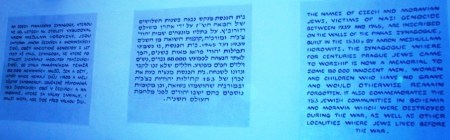
Čtrnáctiletý Hanuš Hachenburg a s ním i ostatní nově hledají své místo na světě, které jim bylo
ukradeno.
„Co jsem?
Ke kterému patřím z národů?
Já děcko bloudící?
Je mojí vlastí hradba ghett,
či země zrající,
spějící, malá, spanilá,
jsou Čechy vlastí, svět?“ [8]
 Odpovědí na Hanušovy otázky mohou být verše Františka Basse. Tento chlapec vyjadřuje hrdost na svůj
původ a neochotu poddat se. Promlouvá ke všem Židům, podněcuje je k tomu, aby se nestyděli za to
kým jsou a aby po zemi vždy kráčeli se vzpřímenou hlavou.
“Jsem žid
Jsem žid a židem zůstanu
i když já hlady umírati budu
tak nepodám se národu
Bojovat já vždy budu
za můj národ na mou čest
Nikdy se stydět nebudu
za můj národ na mou čest.
Pyšný já jsem na svůj národ
jakou má ten národ čest
Vždy já budu utlačený
Vždy já budu zase žít.“[9]
 Upstairs in the Pinkas Synagogue at the Old Jewish Cemetery of Prague, they have a collection of children’s art works from Theresienstadt (Terezin), where the Jews from Bohemia, Moravia and other regions were imprisoned before further deportation. Very few children, about 100 of 50.000, survived. I don’t remember the exact numbers, please check the links in the pictures, there is a lot of information, and there are pictures of the synagogues in Prague, some of the children’s art works, and so on. At the other end of the Old Jewish cemetery, at the Klausen Synagogue, in a glass case somewhere among the explanations about Jewish holidays, customs and traditions, was a little poem that begins with “Jsem žid“, “I am Jewish”. It was written by František Bass, or Franz Bass, don’t know how they called him at home. Franz Bass sounds very much like Franz Kafka. Many Jews spoke German, or Jiddish, others spoke Czech, many spoke and wrote all three and more. František Bass was 11 years old. The poem is not very long, and rather conventional, as a patriotic poem. It is very forceful, very powerful, in the circumstances. So I wrote it down, in Czech, tried to copy all those letters and symbols exactly. There was an English translation next to the original poem. But although I don’t speak Czech, I could tell that the original was a real poem, there is economy in the words, there are very few words compared to the clumsy translation. I wrote it down, and a few days later I got around to Google the poem. So I found this paper online, a thesis or a dissertation at a Czech university, just a text file. The little poem by Franz Bass is quoted in full, and it is put in context with another poem by the 14-year-old Hanuš Hachenburg. Hanush Hachenburg asks, asks himself and the listener what he his, which country or nation he could belong to. He should be Czech, at least he writes in Czech. But no, Hachenburg is answered by Frantishek Bass, he can only say for certain that he’s Jewish. And you can be proud of being Jewish, says Frantishek Bass. That’s what his poem is about, so I’ve called it patriotic. I think it’s very powerful. Jsem žid a židem zůstanu, i když já hlady umírati budu, tak nepodám se národu. I am Jewish, I will stay Jewish, even if I die of hunger, I won’t give up my nation. Or I won’t give in to any other nation, it doesn’t really matter, you’ll see. Bojovat já vždy budu, za můj národ na mou čest, Nikdy se stydět nebudu, za můj národ na mou čest. I’ll always be fighting, for my nation, on my honor. I’ll never be ashamed of my nation, on my honor. Big words. I grew up in Austria, and I’ve lived in China for a long while, and there is ample reason in Austria and in China and in many other places to be suspicious of such words. But in this Czech Jewish poem, they are different words, their meaning is different. Pyšný já jsem na svůj národ, jakou má ten národ čest. I am proud of my nation, an honorful nation. Vždy já budu utlačený, Vždy já budu zase žít. I will always be oppressed and killed, and I’ll always live again.
标签: austria, china, czech republic, holocaust, language, memory, patriotism, prague, synagogues, travel, war
发表在 November 2011 | Leave a Comment »
11月 6, 2011

herbst
in wenigen tagen
die blaetter sind rot
in wenigen tagen
die blaetter sind gelb
in wenigen tagen
bald wirbelt der schnee
in wenigen tagen
heut ist es noch mild
fuer ein paar minuten
der mond steigt herauf
fuer ein paar minuten
man sieht noch ganz gut
fuer ein paar minuten
wer kostet das licht
fuer ein paar minuten
wir fahren nach haus
MW Nov. 2011
标签: autumn, fall, seasons
发表在 November 2011, Uncategorized | 1 Comment »
11月 3, 2011
fizzdom is flower
knowing doesn’t make you better,
reading doesn’t make you good.
discipline can make you stronger,
make you breathe a little longer,
teach you how to wear your hood.
you would think that’s understood.
MW November 2011

Chen Guangcheng is turning 40 on Nov. 12.
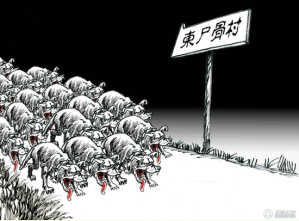
标签: life, poetry, travel
发表在 November 2011, Uncategorized | 1 Comment »
10月 31, 2011
PRAGUE:JEWISH QUARTER ON A SUNDAY
the organ and the choir begin
the people on the house are dead
the people at the bank are dead
the people at the post are dead
the houses in the town are old
the alleys and the streets are old
the organ and the choir begin
the children from the town are dead
the old ones from the town are dead
the women from the town are dead
the menfolk from the town are dead
the organ and the choir begin
the angels in the church are dead
the figures in the light are dead
the figures in the dark are dead
the alleys and the streets are old
the houses in the town are old
the organ and the choir begin
MW Oct. 2011
JÜDISCHES VIERTEL AM SONNTAG
die leute auf dem haus sind tot
die leute auf der bank sind tot
die leute auf der post sind tot
die häuser in der stadt sind alt
die strassen in der stadt sind alt
gesang und orgel heben an
die kinder aus der stadt sind tot
die alten aus der stadt sind tot
die frauen aus der stadt sind tot
die männer aus der stadt sind tot
die strassen in der stadt sind alt
die häuser in der stadt sind alt
gesang und orgel heben an
die engel am altar sind tot
gesichter sind im licht und tot
gesichter nicht im licht und tot
die häuser in der stadt sind alt
die strassen in der stadt sind alt
gesang und orgel heben an
MW Oktober 2011
标签: czech republic, death, faces, figures, holocaust, life, light, organ, people, prague, song, travel
发表在 October 2011, poetry | 2 Comments »
10月 21, 2011
标签: Chinese literature, Chinese Studies, frankfurt, ljubljana, munich, reading, translation, travel, Vienna, work
发表在 October 2011 | Leave a Comment »
10月 10, 2011
Ni hao, hope this finds you well. We are fine, the kids are in school. The new issue of the magazine Wienzeile has come out in Vienna, with a few of my poems. Die Zeitschrift Wienzeile ist gerade erschienen, inkl. einer Doppelseite mit Gedichten von mir. In den letzten Monaten sind Übersetzungen von mir in vielen Zeitungen und Zeitschriften in Hongkong, Deutschland, in der Schweiz und in Österreich erschienen, inkl. FAZ, Die Zeit, Neue Zürcher Zeitung, South China Morning Post, Lichtungen, Dianmo. Am Montag, 17.10 um 13 Uhr war ich im Radio. (39:08-49:08)
Am Freitag 21. Oktober 19:30 war die Lesung. 10月21日有朗誦會,請看圖。保重,有空請跟我們聯絡一下!
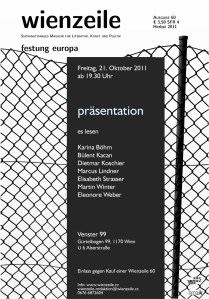 There is a China issue planned for spring. Could be titled Die Chinesische Mauer. Please start thinking of contributions!
标签: china, literature, poetry, Translations, Vienna
发表在 October 2011 | 2 Comments »
9月 30, 2011
Lu Qing’s letter to China’s National People’s Congress from Sept. 28 (working translation)
Expressing an opinion on Amendments to The People’s Republic of China’s Criminal Procedure Code (draft legislation)
To the Working Committee For The Rule of Law of the Standing Committee of the National People’s Congress:
As an ordinary citizen, I have seen that the Standing Committee of the National People’s Congress has publicly requested opinions on draft legislation for amendments to The People’s Republic of China’s Criminal Procedure Code. Paragraph 30 of the amendment stipulates that public security organs can, under special exceptions, set up a place for a suspect to live under surveillance without notifying the family. Paragraphs 36 and 39 stipulate the special exceptions in which arrest or detention by public security organs can take place without family notification. This means that a Chinese citizen cannot have protection of his or her most basic rights. Residential Surveillance [originally conceived as house arrest] thus becomes secret detention, this is a blatant violation of the constitution. I ask the National People’s Congress, when you debate paragraphs 30, 36 and 39 of the amendment, not to pass the special exemptions. In this way you can clearly state that when public security organs take up forceful measures of detention, arrest or surveillance against any citizen, they should notify the family without exemption and within the period stipulated by law.
My name is Lu Qing, citizen of China, I am a painter. My husband Ai Weiwei, artist, architect and participant in civil society, designer for FAKE Cultural Development Ltd., was taken away at customs at Beijing International Airport. He disappeared for 81 days. We did not receive any notification from the authorities. We did not know why he was kidnapped, where he was held, or about his health condition.
Family and friends were all very worried and angry about his disappearance. Ai Weiwe’s mother, who is over 80 years old, worried day and night. She could hardly sleep or eat and had to take medication. It was a huge mental and physical strain on her. Family members have tried to get information from any direction, reported the case at police stations both where he disappeared, where he had lived and where he was registered. We wrote Missing Person ads and sent letters to the Beijing City Police Bureau, the Procurator’s Office, the Politics and Law Commission, the Discipline Inspection Commission and the Ministry of Public Security, without receiving any answer. Ai Weiwei’s disappearance for 81 days was very harmful for the physical and mental state of his family.
On June 22, Ai Weiwei was “released on bail to await trial” and returned home. [Again], we have not received any notice from the public security organs. After he was taken away by public security organs, they demanded he sign a notice about “residential surveillance” before they brought him to a secret place in the outskirts of Beijing.
When a citizen is taken away by public security, the family should be notified, to honor one the most basic human rights of a citizen. Family members are not co-defendants. They should have a right to know. If a society loses the protection of a citizen’s most basic rights, this is harmful for the whole society.
A cultured nation should respect the most basic rights of a person. If the above measures are passed, it will be a regression for China’s legal system, the deterioration of human rights, and will be a hindrance to the progress of our civilization. I hope that the current modification of amendments to the Criminal Procedure Code could restrain the arbitrariness the public security organs display in upholding law and order. I hope that citizens receive legal protection before the arm of the law, so that the basic human rights as they appear in the constitution are truly recognized.
Signed: Lu Qing, 2011-09-28
See the Reuters article
See the original Chinese text
Photos by Ai Weiwei, from Google+

标签: art, beijing, china, Chinese Studies, chinese translation, law, life, police, politics, translation
发表在 October 2011, September 2011, Translations, Uncategorized | Leave a Comment »
9月 21, 2011

Ma Lan
Als ob – Fuer W
Als waer es ein anderes Leben, das Wasser kocht spaeter.
Als ginge man anderswo sterben, man saehe nur Blueten am Suedhang.
Als bewegten sich Baeume am anderen Ufer, wir haben die Bruecke nicht informiert.
Als werde der Himmel gerollt fortgetragen, wir koennten Froesche am Brunnengrund sehen.
Als floege der Klang, der Schmetterling eile zur uralten Bluete.
Als saesse die Schoene aus Tamba am Tor deines Traums, wer kostet die Frauen.
Als rase ein Wurfeisen auf deiner Handflaeche, du sitzt gelassen.
Als werde ein Satz durchbrochen, wenn das Licht stark genug sei.
Als falle Schnee vom Himmel herunter, wir sitzen im Hochhaus und warten aufs Schicksal.
Als braeche ein Apfel durch einen Apfel, und nehme nicht einen Faden von Fett mit.
Als mache man Revolution bis zum Ende, man fuehre die Liebe durch bis zum Ende.
Als sage man einen vollstaendigen Satz, das Herz uebersteige den Himmel.
Als waere September ein Traum, man steht auf der Bruecke, sieht niemand darunter.
Als schwebe die Wirklichkeit von links nach rechts, schwarze Wolken im Mondlicht.
Also ob der Tod eines Dichters unsere Einsamkeit gegenseitig erhelle.
Als hoeben wir Steine, die traefen auf Fussruecken, seien bloss Watte.
Als kaeme ein Moench aus dem Sueden, wende sich laechelnd, winke und mache sich auf den Weg.
Als waeren wir Ausserirdische, im Traum genauso allein.
Als stoehnten wir mit den Zaehnen.
Als waere das Leben des Falters Verwandlung, ich will nicht dich, nur dein Herz.
MW Uebers. Sept. 2011
Als ob – 仿佛
仿佛 – Als ob
Als ob
劳侃的世界
发布: 2010-4-29 22:57 | 作者: 马兰
马兰
仿佛-给W
仿佛生活是另外一个样子,如迟开的水
仿佛到别处去死,只见桃落南坡
仿佛树木在彼岸游动,我们不通知桥梁
仿佛天空席卷而去,我们才看见井地之蛙
仿佛声音起飞之时,蝴蝶正奔赴一朵古花
仿佛丹巴的美人在理想之口,谁和女人尽欢
仿佛暗器在掌心奔驰,你坐怀不乱
仿佛一个句子被攻破,只要有足够的灯光
仿佛雪从天降,我们在高楼等候命运
仿佛苹果穿过苹果,不带走一丝脂肪
仿佛将革命进行到底,也就是把性交进行到底
仿佛说一句完整的话,就是心比天高
仿佛九月如梦,桥头人看不见桥下人
仿佛现实从左到右,乌云在月光下漂泊终生
仿佛诗人之死,照亮了彼此的寂寞
仿佛我们搬起石头,砸到脚背原是棉花
仿佛南来的僧人,回头一笑,招手上路
仿佛我们是外星人,做梦一样的孤独
仿佛用牙齿去呻吟
仿佛蝴蝶一生变态,我不要你,我只要你的心
2010-3-22

标签: butterflies, Chinese poetry, chinese translation, dreams, life, poetry
发表在 September 2011, Translations | 1 Comment »
9月 9, 2011
杜甫
絕句四首(選一)
三
兩個黄鹂鳴翠柳,
一行白鷺上青天。
窗含西岭千秋雪,
門泊東吴万里船。
Du Fu (712-770)
Short impressions (one of four poems, four lines each)
(three)
two orioles calling from willows,
one file of egrets up to the blue.
ranges of snow caught from my window,
docked at our gate is a passage to wu.
MW Tr. Sept. 2011
Photo by Angelika Burgsteiner
标签: all, blue, china, Chinese literature, Chinese poetry, Chinese Studies, close, distance, east, egret, emerald, fall, far, four, friendship, green, hearing, home, life, literature, long distance, mountains, neighborhood, one, oriole, passage, poetry, snow, ten thousand, thousand, three, time, translation, travel, two, view, vision, west, willow, window, yellow
发表在 August 2008, August 2011, July 2011, September 2008, September 2011, Translations | Leave a Comment »
8月 22, 2011
August 28: South China Morning Post Magazine,Bei Ling 貝嶺 on Ai Weiwei 艾未未
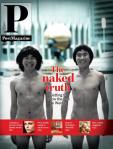 Ai Weiwei SCMP cover

Ai1
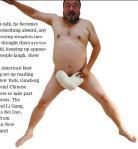
Ai2
 Ai3
Ai3
 Ai4
Ai4
++++++++++++++++++++++++++++++++++++++++++++++++
最近在德语报刊发表的翻译 (唐诗、顏峻、艾未未)
August 13: Du Fu,Auf der Yueyang-Pagode
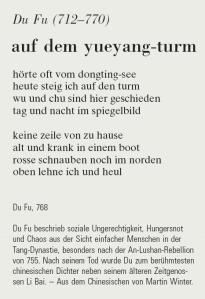
登岳阳楼
杜甫
昔闻洞庭水,今上岳阳楼。
吴楚东南坼,乾坤日夜浮。
亲朋无一字,老病有孤舟。
戎马关山北,凭轩涕泗流。
MW Übersetzt im August 2008
See also du, brief etc.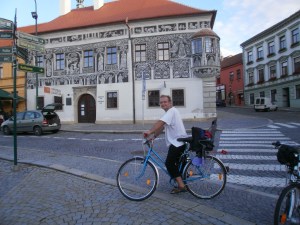
July: Bai Juyi, gras

Neue Zürcher Zeitung Mittwoch, 20. Juli 2011
草 (赋得古原草送别)
白居易
离离原上草,一岁一枯荣。
野火烧不尽,春风吹又生。
远芳侵古道,晴翠接荒城。
又送王孙去,萋萋满别情。
MW Übersetzt im September 2008
++++++++++++++++++++++++++++++++++++++++++++++++
the streets around our house in this old part of vienna have grass growing in the pavement between the cobbles. the grass is there, even though the cars drive on it every day. there was a lot of rain lately, so the air is good, you can smell the trees in the park and in the backyards. and there are weeds growing on the sidewalks. my daughter picks up chestnuts and makes them into necklaces and animals, at home and in kindergarten.
++++++++++++++++++++++++++++++++++++++++++++++++
2011年七月德國萊比錫大學中文系雜誌《點墨》發表了顏峻的詩歌
July: Poems by Yan Jun 顏峻, published in Dianmo 12, p.32-33. English versions see Yan Jun’s poetry in translation.
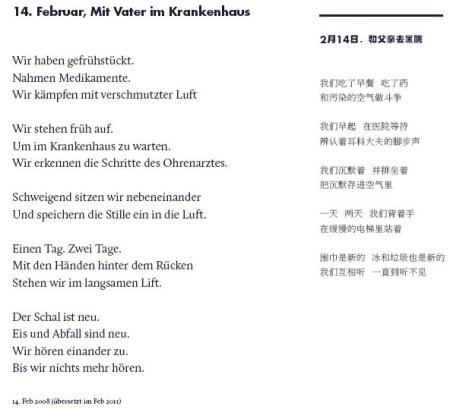
English version see Yan Jun’s poetry in translation
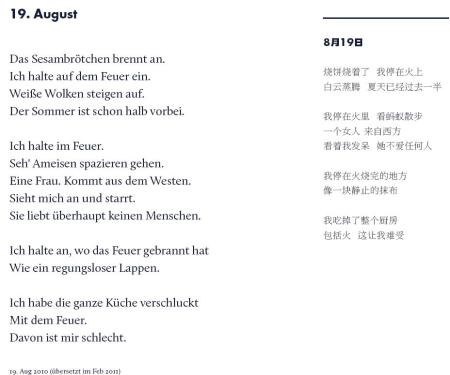
English version see Yan Jun’s poetry in translation

English version see Yan Jun’s poetry in translation
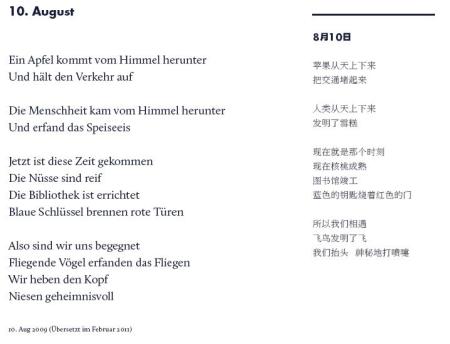 English version see Yan Jun’s poetry in translation
 English version see Yan Jun’s poetry in translation
++++++++++++++++++++++++++++++++++++++++++++++++
July: Ai Weiwei 艾未未 Talk to you later 過一會再說 (incl. English version)
This poem by Ai Weiwei appeared in New York in 1987 in the first number of the Chinese-language magazine 一行 One Line/ Our Group [Yi hang/ Yi xing]
See United Daily News, Taiwan 2011.06.07
German Version (Die Zeit, July 7th, 2011)

德国《明镜周刊》披露艾未未被捕八十一天情况
The City: Beijing
Ai Weiwei speaks out – The Daily Beast, August 28, 2011. For context: China Takes Aim at Rural Influx -NY Times
81 Tage Haft – Der Spiegel 32/2011
Ein Besuch bei Ai Weiwei: Der Künstler und sein Blog-Buch (Basler Zeitung Di., 27. Juli 2011)
标签: all, beijing, china, Chinese literature, Chinese poetry, art, life, literature, media, poetry
发表在 August 2008, August 2011, July 2011, September 2008 | Leave a Comment »
8月 18, 2011
BRNO: PETROV – PETER AND PAUL CATHEDRAL
the light, the angel gabriel.
the evening light, the west, the east.
the train, the streetcar from the west.
the many towers of the town.
we don’t know where the light comes from.
the sun appears, the ancient stars.
we sleep, we wake,
we learn, we teach,
give birth and work.
we don’t know when the light goes out.
we know the morning comes again.
we don’t know where the light comes from.
MW August 2011
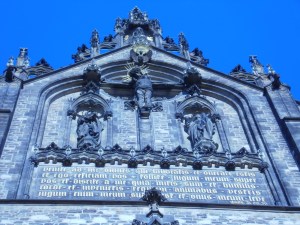
《布尔诺:彼得与保罗大教堂》
【奥地利】维马丁著
伊沙、老G译
这光明,这天使加百利。
这夕光,这西方,这东方。
这火车,这从西边驶来的街车。
这城市的众塔林立。
我们不知道光明来自何方。
太阳升起,群星永恒。
我们沉睡,我们苏醒,
我们学习,我们教育,
我们生育,我们劳作。
我们不知道光明何时熄灭。
我们只知道太阳照常升起。
我们不知道光明来自何方。
2011.8
标签: Brünn, Brno, cathedral, life, light, Petrov, religion, travel, 布爾諾, 伊沙
发表在 August 2011, Translations, 伊沙 | 1 Comment »
8月 15, 2011
Trebic
its dry again
at least the road
it doesn’t rain
and monday is in swing outside
we haven’t climbed the tower yet
and haven’t seen the old big church
they only let you in at times
with tours in Czech. That’s quite ok
but we were hungry yesterday.
this is a very special town
the Jewish side is well preserved
the church is big. you should go in
and under ground. and in the back
behind the altar, painted walls
and ceiling, 13th century.
St. Procop is the guardian
subdues a Vulcan, chained and black.
it all ends here. that’s what they say
for harry potter, in 3D.
the alleys right behind the square
have dramas with the local gangs.
don’t worry, there’s enough police.
the railway bridge, the cemetery
the hills around this scarred old town
the swallows in the corridors
the traveller’s inn, in znojmo too
the walls of Jevišovice
Hluboké Mašůvky and such
the venus and the pottery
well worth a visit, everything.
MW August 2011

特热比奇
又干了
至少在路上
不再下雨
星期一在外面荡秋千
我们仍未爬上这座塔
还没见到那座古老的大教堂
他们只是有时让你进来
与捷克游客一起。那很好
但我们昨天很饿。
这是座很特别的城镇
关于犹太人的一面保存得很好
教堂很大。你应该进去
到地下。在祭坛
后面,粉刷过的墙壁
天花板,13世纪。
圣普罗科普是监护人
征服火神、铁链与黑色。
一切在这里结束。他们如此说
哈利•波特,3D版。
广场后面的小巷
与当地黑帮有染。
别担心,有足够多的警察。
铁路桥,墓地
这座伤痕累累的老城周围的小山
走廊里的燕子
位于兹诺基摩的旅行者旅馆
耶维绍维采的墙
胡布克马维奇等
维纳斯和陶器
这一切很值得到此一游。
(2011)
【奥地利】维马丁著
伊沙、老G译

标签: travel
发表在 August 2011 | 1 Comment »
8月 8, 2011
标签: art, beijing, china, Chinese literature, Chinese Studies, family planning, life, poetry, politics, translation
发表在 August 2011 | Leave a Comment »
8月 8, 2011
wiener luft
die leute sagen es sei schwuel
es ist gerade angenehm
es sind auch wenig leute da
musik gibts immer noch genug
manchmal zuviel auf einem platz
in beijing gibt es viel musik
im park und oft auch nicht fuer geld
im stillen an der autobahn
das leben ist nicht leichter hier
fuer geld fuer leute fuer die kunst
fuer waerme und fuer die musik
MW August 2011
标签: air, art, austria, beijing, music, people, Vienna, weather
发表在 August 2011, Uncategorized | Leave a Comment »
7月 25, 2011
evening
much is fondling, much is wine
much is light and much is darkness
sometimes there can be reflection
sometimes you can see a star
sometimes you can rent a terrace
sometimes you can watch the moon
every day there is a morning
every time you see the birds
every time the rain comes pounding
every time you see the door
door you’re passing years and years
there is light and there is shadow
there are details in reflection
there are flowers, there’s the moon.
MW July 2011
标签: all, birds, light, moon, night, poetry
发表在 July 2011, Uncategorized | Leave a Comment »
7月 18, 2011
land
unser land, ein wunderland
unser land, die besten zahlen
unser land, die meisten menschen
unser land, die schoensten schaefchen
unser land, ein schoenes land
unser land, die hoechste bahn
unser land, die laengste schnellste
unser land, ein grosses land
unser land, ein stolzes land
niemand hat uns was zu sagen
sagen alle grossen koepfe
unser land, ein armes land
unser land, ein enges land
rechtsanwaelte sind verschwunden
dissidenten arbeitslager
unser land, ein strenges land
unser land, ein altes land
drachen kinder gelber kaiser
sesambroetchen, hefekloesse
unser land, ein reiches land
unser land, ein wunderland
unser land, die besten zahlen
unser land, die meisten menschen
unser land, der goldne mond
MW Juli 2011
标签: animals, china, country, food, Gedichte, gold, high-speed, law, life china beijing vienna austria family work children translation sport travel business boredom politics literature poetry all, moon, people, propaganda, sheep, train
发表在 July 2011 | 1 Comment »
6月 26, 2011
Liebe Freunde,
Ai Weiwei_Martin Winter
(Basler Zeitung Di., 27. Juli 2011)
Ai Weiweis Gedicht "Wir sprechen uns später" ist in der aktuellen Ausgabe der Zeit (7.-14. Juli). Kam am Donnerstag
heraus, nach China kommt die aktuelle Ausgabe immer erst am Montag, wenn sie kommt. Dann kostet sie 120 Volkstaler,
dreimal so viel wie in Deutschland. Die Übersetzung ist von Angelika Burgsteiner und mir. In den Tagen nach Ai Weiweis
Freilassung war dazu ein Artikel von Bei Ling, den ich übersetzt habe, in der FAZ, in der Presse und auf derstandard.at.
Das Gedicht erschien 1987 in der von Yan Li herausgegebenen chinesischsprachigen Zeitschrift Yi Hang (oder Yi Xing, d.h.
Eine Zeile/ Eine Gruppe) in New York. Ai Weiwei erinnert sich an das Gedicht, weil es das einzige ist, das er je geschrieben
hat, sagt er.
Zeit_2011_7.Juli_AiWeiwei
Wir haben Ai Weiwei am Freitag in der Früh besucht. Er wirkte noch ziemlich mitgenommen. Ich bekam den Eindruck, er wurde
eher zu von der Staatssicherheit vermuteten politischen Hintergründen von alten Fotos aus New York befragt als zu steuerlichen
Vorwürfen gegen ihn. Aber wir haben nicht viel gefragt. Für die Aktionen zu seiner Unterstützung war er sehr dankbar, obwohl
er bei manchen Sachen auch etwas skeptisch ist. Die aktuelle Ausstellung in Winterthur kommt bald nach Graz, und die Sache in
Bregenz fängt auch in diesem Monat an. Aber er kann ja leider nirgends selbst hinfahren. Manche Projekte, die er vorher begonnen
hat, scheinen ihm jetzt fast fremd geworden zu sein. Er möchte gerne gastfreundlich sein und frei reden wir früher. Aber wie er
selbst sagt, jetzt geht es ihm eben wie vielen anderen, und eher wie vielen gewöhnlichen Leuten, die auch nicht zuviel
den Mund aufmachen dürfen. Als Wegzehrung für den Rückweg haben wir ein paar Sonnenblumenkerne mitbekommen.
Herzliche Grüße, mw
http://www.newyorker.com/online/blogs/newsdesk/2011/07/liao-yiwu-leaves-china.html
 Silence of the dissidents
The Ancient Roots of Chinese Liberalism
台灣自由時報副刊全版刊〈草泥馬時代的艾未未〉文,照竟也全刊出了
Silence of the dissidents
The Ancient Roots of Chinese Liberalism
台灣自由時報副刊全版刊〈草泥馬時代的艾未未〉文,照竟也全刊出了
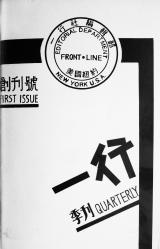
The source for Ai Weiwei’s poem
严力:说说艾未未(之二) (2011.5)
严 力:说说艾未未(之三)
严力:说说艾未未(之四)
Hu Jia released after years in Chinese prison
@faz_net Weit hinter der chinesischen Firewall http://t.co/LIbIuTv 貝嶺 Bei Ling (June 25). http://derstandard.at/1308679661187/Die-Freilassung-Ai-Weiweis-Ai-Weiweis-Zukunft Ai Weiwei mit Maulkorb: Wie lange wird er das aushalten? Der Aktionskünstler ist wieder auf freiem Fuß, aber unter scharfen Auflagen: Gibt es echte Freiheit für ihn nur um den Preis des Exils?
中文刊於6月24日台灣蘋果日報
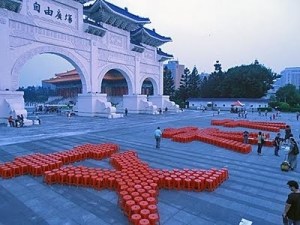
英譯刊於6月25日台北時報(Taipei Times): What will be the price of Ai Weiwei’s freedom? By Bei Ling 貝嶺
Berliners for Ai Weiwei (He lost a lot of weight in prison, so he might as well have some!)
See also Berlin’s Tagesspiegel from June 23rd 柏林《每日鏡報》6月24日文化版
标签: Ai Weiwei, art, beijing, china, Der Standard, Die Presse, dissident, FAZ, freedom, HuJia, law, literature, politics
发表在 July 2011, June 2011, Uncategorized | Leave a Comment »
6月 15, 2011
pentecost
many stars are out tonight
many clouds around the moon
i can’t see her from this house
she must be around the corner
must be round the neighborhood
it is pentecost today
and we heard a lovely sermon
dorothea’s going soon
there is too much distance here
people cannot feel the spirit
god vibrating on the water
jewish men from different countries
like it says there in the bible
can we understand each other
although we don’t speak the language
many men from different places
many people in vienna
are we very far from jesus
everything looks very nice
and the weather has been lovely
are we safe here in vienna
can we feel the holy spirit
dorothea preached a sermon
and we felt at home a little
some of them don’t come to church
but they are for renovation
dorothea is a priestess
and christine is a priestess
and they have a lot of spirit
so they even made us welcome
i don’t understand the people
those who dominate the churches
i don’t care for them at all
we come for the weekly service
for the singing, for the organ
for a certain tolerance
it was better for the children
when it looked a little shabby
it’s a little bit like china
there’s not much democracy
and not very much religion
god is in the organ music
the vibration on the water
it is pentecost this weekend
lovely little holiday
so we’re going to the water
at the danube, for the children
we meet friends and we meet strangers
kari astrid jennifer
dorothea babtized maia
pentecost one year ago
leo’s doing better now
we had many languages
for vienna’s night of churches
it was dorothea’s project
we will have the taiwan choir
it’s an ordinary church
we are strangers in vienna
although we belong here now
MW June 2011

Thanks to Malika Saulnier!

Thanks to Malika Saulnier!

A spirits outlet in Vienna's 16th district. Thanks to Thomas Palfinger!

A spirits outlet in Vienna's 16th district. Thanks to Thomas Palfinger!
A spirits outlet in Vienna's 16th district. Thanks to Thomas Palfinger!
标签: friends, life, pauluskirche, pentecost, people, religion, spirit, strangers, Vienna
发表在 June 2011, Uncategorized | Leave a Comment »
6月 13, 2011
According to Xinhua and Global Times, the newly published second volume of “History of the Chinese Communist Party” (1949-1978) is “seen as objective”. So what’s the objective of this book? What are the objectives of this new “objective” party history? Was it written by party members? Does anyone among them, or among the people who planned, published, and distributed this book, think the PRC should evolve into something different from a one-party dictatorship/autocracy? (I find it hard to believe that many non-party members would use their own money to buy such a book. Or is it really that different? Why was it published, then?) Which major bookstores have had their sales rankings dominated by this book? Ok, the main objective seems to be seen as objective. “Experts say that objectivity, a founding principle of the CPC, was virtually banished during the late 1950s and 1960s, when “extreme leftist” thought dominated the governing ideology of the Party.” Founding principle? There must be some historians who can answer this question. Anyway, they still write their party with a capital P.
In Taiwan, there seems to have been pressure for change in the late 1970s and early 1980s. China was changing. Taiwan was and is still called Republic of China, but in the 1970s they lost their UN-Security Council seat to the
PRC. Because of that ping-pong tournament between Nixon, Zhou Enlai, Mao and Kissinger, or something like that. Yes, sports events have always been very important. So there was pressure on Taiwan to open up politically, to democratize. They couldn’t just go on calling themselves The Free China team. No-one was ever going to help them liberate the Mainland anyway. So the Chiang Ching-kuo administration eventually lifted martial law in 1987, and allowed real opposition. A real opposition party. In 1988 or 1989, you still had to be a Party member (GMD/KMT) to get into certain positions in Taiwan. In 1988 or 1989, even very liberal Party members still said that in 1947, maybe 200 people might have been killed after the February 28th incident, but it was an armed uprising anyway. In 1991, President Li Denghui publicly admitted that probably more than 20.000 people had been killed in 1947 by government forces, and apologized to surviving relatives.
Going back to China: If there is any real discussion about The Great Leap Forward famine, in conjunction with all the other campaigns, including the anti-rightist “movement” and the ones before and after, including the CR,
wouldn’t that mean one-party autocracy would have to be abandoned at some time? In 2011, we’re having 90 years of CCP, in addition to 45 years after 1966, the beginning of the CR. In 2009, we’ve had The Founding of a Republic (1949), and in addition 1959 (famine), 1969 (CR), 1979 and 1989 (In 1979, economic reform was ushered in under Deng Xiaoping, who prevailed over Hua Guofeng in the late 1970s, although Hua had been appointed by Mao. Does that mean Hua and Mao were part of the “‘extreme leftist’ thought [that] dominated the governing ideology of the Party” […] “during the late 1950s and 1960s”?).
The student demonstrators in 1989 explicitly stated in slogans on banners etc. that they supported the CCP. Even after they were called counter-revolutionaries in the The People’s Daily. (See the article by Su Yang 蘇陽 in the HK Xin Bao). But because protest leaders emphasized loyalty to the state, three peasants who hurled red paint at the Mao portrait at Tian’anmen were apprehended by the students and handed over to Public Security. They were from Hunan, where Mao came from. They got 17-20 years. After the massacre of June 3rd and June 4th in the streets of Beijing, who would still think that political reform would be possible under the Party?

“Objectivity” sounds rather like the 1980s. Objectivity and political reform, or at least pressure for political reform are interdependent. Any kind of national and international pressure, especially the latter. “Chinese
Communist Party seen as objective in writing its history” – doesn’t that sound like “Vatican seen as objective in writing its history”? Yan Lianke cannot publish his latest novel Four Books in mainland China, because it’s about the Great Leap Forward famine. Opposition party founder Liu Xianbin has been sentenced to another 10 years in March. He has been sentenced to 26 years since 1989. There are a few other people like him. They are not as famous as Liu Xiaobo and Ai Weiwei. And there are people in detention or in labor camps for political reasons who are not intellectuals or dissidents. Like Ai Weiwei’s cook and his driver. Anyway, would anyone call the present political and social climate in China hopeful? So what are the objectives?
标签: anniversary, art, CCP, china, CPC, everything, history, July 1, parties, political prisoners, politics, revolution, Tian‘anmen
发表在 July 2011, June 2011 | Leave a Comment »
6月 2, 2011
so (children’s day)
it is children’s day today
so i’m very very tired
as i’ve been for many years
so i don’t appear so often
so i’m very very late
so i’m here like anyone
so we’re doing what we can
so i’ll have another birthday
so we’ve china to remember
so we’ve 1989
so we’re doing what we can
MW June 1st, 2011

标签: 1989, 6.4, 6/4, Ai Weiwei, birthday, children, Children's Day, china, dissident, Elfriede Jelinek, family, June, justice, kids, life, Liu Xiaobo, memory
发表在 June 2011, Uncategorized, Welcome! | 1 Comment »
4月 12, 2011
bluete
weiss und rosa leuchtend schweben
fortgetragen in die tage
unter allen irren menschen
bluehen zweifellos die baeume
wachsen, fallen, reifen, stehen
atmen, oeffnen sich im wind
MW April 2011
blossom
shine and float in white and pink
carried forth into the day
all among the loony people
certainly the trees are blooming
growing, falling, ripening
standing, breathing in the wind
MW April 2011

Photo by Ronnie Niedermeyer
标签: all, april, earthquake, easter, 艾未未, life, poetry, spring, 四月, 桜, 津波, 海嘯, 清明
发表在 April 2011 | 3 Comments »
4月 8, 2011
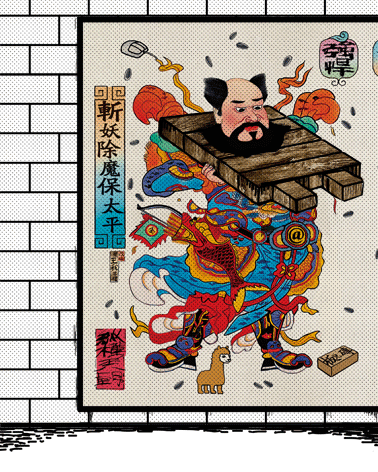
Interesting. Please click on the Global Times link (also at the bottom), read the article and then click on the “Related” links under the article. These other stories add a lot of perspective, through earlier and mostly positive Global Times coverage of Ai Weiwei’s various projects and activities. I remember seeing Lian Chan 連戰 on TV in Taiwan in the 1980s*. He was prime minister then, I think. Kept saying “Yi fa bali! 依法辦理”. To be handled according to law. Everything should be handled according to law. This was already after martial law 戒嚴 was lifted 解嚴 in 1987. But many opposition figures and activists were still in prison (they had a prison island, “Green Island” 綠島, for example) or barred from returning to Taiwan. Martial law had been lifted, but many laws from the One-Party-rule were still on the books, and actually still enforced (See the poem “After Martial Law Was Lifted – In Commemoration of Lifting Martial Law in Taiwan on July 15th, 1987” by Li Qin’an [李勤岸 – 解嚴以後 – 一九八七年七月十五日臺灣解嚴紀念] http://blogs.yahoo.co.jp/dujuan99nihon/30163376.html). Now which law is the Global Times article referring to? Let US bake our cake of social progress and eat it at the same time, and have it OUR way, and let nobody in the world talk too much about it, because this is the LAW. Right?
Very interesting how they keep on contradicting themselves. “Was said to have been detained”. Was he, or was he not? Maybe just kidnapped? “It was reported his departure procedures were incomplete.” Interesting. So which law will not concede before Ai Weiwei? Which departure procedures law? No, it’s THE LAW. Shoot first, deflect questions later.* Happens in every society.
Martin
======================================
Global Times (4/6/11):
http://en.huanqiu.com/opinion/editorial/2011-04/641187.html
Law will not concede before maverick
法律不会为特立独行者弯曲_评论_环球网: http://bit.ly/hwH7G4, most discussed on @dujuan99/china (http://bit.ly/evC5Ka) See also China Geeks (4/8/11).
魏京生: 从艾未未事件看中国法制的演变
Geremie Barme on Ai Qing and Ai Weiwei
Nude photos and other incriminating activities of Ai Weiwei
It’s really very simple, and even seems a bit tedious when you think about it. Yet I go on watching these shows. What else would you have me look at, dear readers?
Salman Rushdie
Who is afraid of Ai Weiwei?(Language Log)
貝嶺:裸體公民艾未未 (China Times, also in Ming Pao)
Photo by Katharina Hesse
There are many relations of this case to other arrests like the one on April 8 of Zhao Lianhai 趙連海, speaker for parents whose children had been poisoned by tainted milk.
Zhao had been released on parole after beeing imprisoned for “disturbing the peace”. But on April 6, he uplaoded a moving video, holding his child and trying to make a public statement at home.

*This blog entry started out as a post on the MCLC email listserv. A lively discussion ensued. Andrew Field pointed out that Lu Xun 魯迅 and many other modern writers were banned in Taiwan under martial law. James Dew, Tim Wong, Kirk Denton, Christopher Lupke and others remembered how foreign students read these writers in a special room at Taiwan University, and how Chen Yingzhen 陳映真 connected to Lu Xun and the May Fourth tradition. Chen was imprisoned for “pro-communist activities”. Tai Jingnong 台静农 (1903~1990), a well-known writer and painter in Taiwan, was originally a student of Lu Xun.
* Jerome Cohen uses a similar expression in the South China Morning Post (4/27/11): “Second, it also seems clear that, whatever the evidence being assembled about tax evasion or other charges, this was not the motivation for Ai’s detention. This case started out on a ‘detain first and look for justification later’ basis.”

 Chinese rock music related to Ai Weiwei: http://www.zuoxiaozuzhou.com/, via Jeroen Groenewegen
标签: Ai Weiwei, art, china, civil rights, 环球时报, 纽约, 艾未未, 裸照, 魯迅, 贝岭, FAZ, Global Times, Hong Kong, human rights, law, lawyers, Lu Xun, martial law, May 2011, Ming Pao weekly, nude pictures, nudity, prison, protests, rights, taiwan, 明報, 法兰克福汇报
发表在 April 2011, May 2011, Uncategorized | 3 Comments »
4月 5, 2011
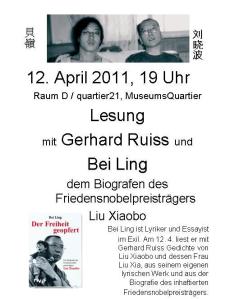
Stichworte Lesung 12.4. Gerhard Ruiss – Bei Ling
Verhaftungswelle – Ai Weiwei, vorher schon andere Künstler wie Wu Yuren; auch Ran Yunfei und viele andere Blogger, Teng Biao und viele andere Menschenrechtsanwälte …
Gao Zhisheng (Anwalt) seit Jahren verschwunden, vorher mehrfach inhaftiert und gefoltert
Viele unter Hausarrest und abgeschirmt, in letzter Zeit verschärft, auch Liu Xia, Frau von Liu Xiaobo.
Seit Oktober durfte niemand Liu Xiaobo besuchen, auch seine Frau nicht. Falls Bruder oder Eltern doch einmal hindurften, dann unter Geheimhaltung, alles abgeschirmt, jeder Kontakt nach außen wird strengstens verhindert.
Liu Xianbin wurde letzte Woche wieder zu 10 Jahren wegen Anstiftung zur Untergrabung der Staatsgewalt verurteilt. Seit 1989 bekam er insgesamt 25 1/2 Jahre, u.a. wegen Gründung einer Oppositionspartei. Solche wie ihn gibt es noch mehrere, sie sind halt alle nicht so bekannt wie Liu Xiaobo. Liu Xianbin kam erst 2008 frei, unterschrieb aber sofort die Charta 08 und wurde 2009 wieder erhaftet. Er hat eine Tochter im Teenageralter, die ihren Vater hauptsächlich von Besuchen im Gefängnis her kennt. Es gibt einen sehr interessanten Text von Liu Xianbins Frau Chen Mingxian (leider nur auf Chinesisch), in dem sie von ihrem Leben seit 1995 erzählt. Sie ist einfache Lehrerin, lernte zufällig Liu Xianbin kennen, wurde langsam in die Dissidentenszene hineingezogen, beschreibt sehr eindringlich ihr tägliches Leben in einer kleineren Stadt, mit häufigen Polizeibesuchen.
Seit Februar gibt es im Internet Aufrufe, in 10-15 Städten auf die Straße zu gehen, jeden Sonntag, gegen hohe Lebensmittelpreise, Korruption und viele Misstände; ohne Transparente, einfach Spazierengehen an bestimmten Orten, höchstens manchmal Sprechchöre; darauf wird jedoch mit großem Polizeiaufgebot, Brutalität und vielen teils willkürlichen Verhaftungen reagiert.
Der Dichter Liao Yiwu, der 1989 wegen einer Radioausstrahlung seines Gedichts “Massaker” ins Gefängnis kam, die 90er Jahre hauptsächlich in Lagern verbrachte, dort viel Stoff für Reportagen und Erzählungen fand, die auch ins Deutsche übersetzt wurden, und von einem alten Mönch Flüte spielen lernte, durfte im Herbst 2010 erstmals ins Ausland, nach den Solidaritätslesungen am 20. März (Tag der politischen Lüge, Authors for Peace, Internationales Literaturfestival Berlin) und nachdem sich sogar Angela Merkel für ihn einsetzte. September und Oktober 2010 war er in Deutschland, dann ging er zurück nach Sichuan. Sofort wurde er wieder überwacht, öfters zur Polizei beordert, etc. Heuer wurde er in die USA zu einer Lesereise eingeladen, durfte aber im März wieder nicht ausreisen. Auf diese Weise wird er auch die folgende Reise nach Australien, wo er dasselbe Buch vorstellen sollte, nicht antreten können. Seit den 90er Jahren wurde er 16 Mal in verschiedene Länder zu literarischen Veranstaltungen und Konzerten eingeladen, 1 mal (im Vorjahr) durfte er ausreisen, 15 mal nicht. Liao Yiwu ist nicht das einzige Beispiel; der Dichter Bai Hua durfte lange Zeit ebenfalls nicht ausreisen; ich habe noch von anderen Fällen gehört.
Zhao Wei, der Student, der unlängst auf einer Zugfahrt umkam, ist auch ein Fall, der einen an viele ähnliche Fälle erinnert, von denen man ebenfalls in China gehört hat.
Liu Xiaobo, Ai Weiwei und Bei Ling kennen einander aus den 80er Jahren. Alle Künstler, Musiker, Schriftsteller etc., die jetzt über 30 sind, sind durch das Proteste-Desaster und Massaker von 1989 miteinander verbunden, auch wenn sie künstlerisch, intellektuell etc. überhaupt nicht miteinander übereinstimmen. Dissidenten, auch im Ausland, sind teilweise sehr zerstritten. Liu Xiaobo wird von manchen nicht als geeignet angesehn, die Arbeiter, ArbeitsmigrantInnen etc. zu vertreten, die in den letzten Jahren mit Streiks, Selbstmorden und schon länger auch durch die vielen Arbeitsunfälle in den großen Fabriken in den Industriestädten um Kanton und anderswo von sich reden gemacht haben. Aber auch da gibt es eine Verbindung: Zheng Xiaoqiong, die Arbeitsmigrantin und Dichterin, die 2003/2004 bekannt wurde. 2009 kam eine Auswahl ihrer Gedichte in Taiwan heraus, in einer Serie, in der auch Gedichte der tibetischen Schriftstellerin Woeser erschienen. Am 5. April 1976 begann die Öffnung Chinas, noch vor Maos Tod, auf dem Tian’anmen-Platz mit Gedichten. Auch heute ist Lyrik bedeutender und integrativer, als man glauben möchte. Natürlich ist nicht alles davon immer ‘nur’ Literatur – Kunst und Politik sind in Wirklichkeit weiterhin sehr eng miteinander vebrunden, auch wenn seit den 90er Jahren alle sagen, alles sei nur noch kommerziell geworden. Unter Mao war allles Politik. In den 80er Jahren waren die Verbindungen noch sehr deutlich. Jetzt sind sie auch sehr deutlich, wenn man die Nachrichten hört.

12.4. 19 Uhr
Lesung mit Gerhard Ruiss und Bei Ling (Lyriker, Essayist, Dissident, Biograf des Friedensnobelpreisträgers Liu Xiaobo)
–
Raum D / quartier21
Gedichte von Liu Xiaobo und Liu Xia
Auszüge aus Essays von Bei Ling und aus der Biografie von Liu Xiaobo
Gedichte von Bei Ling
Es lesen Gerhard Ruiss (IG Autorinnen Autoren) und Bei Ling
Nach der Solidaritäts-Lesung für den inhaftierten chinesischen Friedensnobelpreisträger Liu Xiaobo am 20. März (mit Gerhard Ruiss im Radio – siehe
http://archiv.literadio.org/get.php?id=766pr1602) kommt sein Biograf Bei Ling zu einer Lesung nach Wien ins Museumsquartier. Der Versuch der Überwindung von Zeit und Raum ist für Bei Ling seit mehr als einem Jahrzehnt bittere Realität. Der Lyriker war – wegen der Veröffentlichung einer Literaturzeitschrift – selbst in Haft, wurde 2000 auf internationalen Druck hin freigelassen und aus China ausgewiesen. Seither lebt er im Exil.
„Es gibt keine Wahl mehr. Das Blut vieler junger Menschen, jene Seelen, jene eingekerkerten Menschen, und dann noch Xiaobo im Gefängnis – er wird mich verfolgen und auch das, was ich schreibe. Er wird mein Verhalten bestimmen“, das schrieb Bei Ling vor 22 Jahren als er erfuhr, dass sein Freund Liu Xiaobo nach dem Massaker vom 4. Juni 1989 verhaftet worden war – und er scheint recht behalten zu haben. Die Biografie seines Weggefährten Liu Xiaobo ,Der Freiheit geopfert´ ist erst kürzlich auf Deutsch erschienen.
Am 12. April liest Bei Ling mit Gerhard Ruiss Gedichte von Liu Xiaobo und Liu Xia (der Frau des inhaftierten Nobelpreisträgers, die seit Oktober in ihrer Wohnung festgehalten wird). Außerdem trägt Bei Ling aus seinem lyrischen Werk vor und liest aus der Biografie über den Friedensnobelpreisträger.
Die Veranstaltung in Kooperation mit dem quartier21/ MQ wird von der IG Autorinnen Autoren mitgetragen.
Der Freiheit geopfert. Die Biografie des Friedensnobelpreisträgers Liu Xiaobo
© Angelika Burgsteiner und Martin Winter
Martin Winter
0043-650-7209592
标签: art, china, civil rights, detention, disappearance, human rights, law, lawyers, literature, poetry, politics, prison, rights
发表在 April 2011, Welcome! | Leave a Comment »
3月 30, 2011
innehalten
(fuer japan, yunnan, burma …)
die tage die blueten
die spitzen die gruenen
die weissen die gelben
die bienen die fliegen
die wogen die steigen
die wagen die treiben
die erde die bebt und
das leben das keimt
MW Maerz 2011

http://tokyowriter.wordpress.com/2011/03/30/quakebook/、http://en.wordpress.com/tag/quakebook/、
hold it
(quakes, tsunamis, nuclear threats …)
the days of the blossoms
the yellow the white
the shoots and the air
and the birds and the bees
the flies and the beetles
the earth and the trembling
the cars that come floating
the buildings come tumbling
the life that sprouts
MW March 2011
标签: Burma, earthquake, Japan, life, quakebook, spring, tsunami, Yunnan
发表在 March 2011, Uncategorized, Welcome! | 2 Comments »
3月 23, 2011
The world-wide reading on March 20 was a big success. In Leipzig, as far as I heard. In Vienna, it was interesting. Instructive. Great experts. Reporters Without Borders. Amnesty International. Writers in Prison, with Helmuth Niederle from the Austrian PEN. Professors from the East Asia departments of Vienna and Bratislava. Poetry. Protesters in China, in prison. Women, peasants, workers. In spirit. In between. Over 90 cities in 33 countries on six continents. At least. Gerhard Ruiss and Bei Ling read in Leipzig. At the book fair.
Herta Müller’s speech on March 20 in Berlin was published in the FAZ on March 26. Very good speech. She has read the biography. Maybe a little too fast. The labour camp didn’t come immediately after the first prison term. He wrote the confession in prison at the end of 1990 and went free in January 1991. Everything else is correct. The episode with his father, who wanted him to give in. And the labour camp. She does take a side, very emphatically. The last sentence is the most important one. “More and more supporters of Charter 08 are disappearing in jail.” Liu Xianbin was sentenced to 10 years a few days ago. Altogether he has been sentenced for more than 25 years since 1989. His most serious crime seems to have been one of the founders of an opposition party at the end of the 1990s. Liu Xianbin’s wife Chen Mingxian chronicles her life in the last 20 years in this account: http://08charterbbs.blogspot.com/2010/10/blog-post_23.html
There is also a good piece in the NY Times by Geng He, wife of the human rights lawyer Gao Zhisheng: http://www.nytimes.com/2011/03/28/opinion/28geng.html
Teng Biao has disappeared, Ran Yunfei has been detained for a while, and now Liu Xianbin has been sentenced to 10 years, to name but a few. The situation is very clear. No progress, just the opposite.
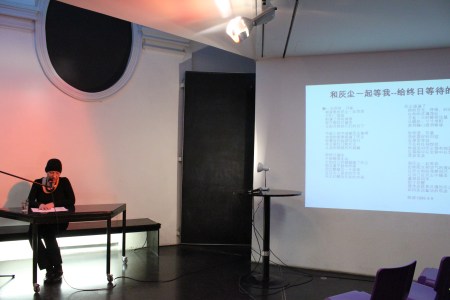
MuseumsQuartier Wien, Raum D / quartier21 - Photo by Pernille Koldbech Fich
There will be a reading with Bei Ling, poet and publisher, in Vienna at the same location on April 12.
标签: Amnesty International, austria, Bei Ling, beijing, china, church, freedom of speech, Gerhard Ruiss, Helmuth Niederle, Japan, Liao Yiwu, Libya, literature, Liu Xiaobo, love, Nobel Peace prize, PEN, poetry, politics, prison, protests, raoul findeisen, Reporters Without Borders, reporting, Rubina Möhring, spring, Vienna, Vienna University, weigelin-schwiedrzik, writers
发表在 March 2011, Translations | Leave a Comment »
3月 12, 2011
标签: austria, beijing, china, chinese translation, life, literature, money, poetry, translation, Translations, Vienna, work
发表在 March 2011 | Leave a Comment »
3月 12, 2011
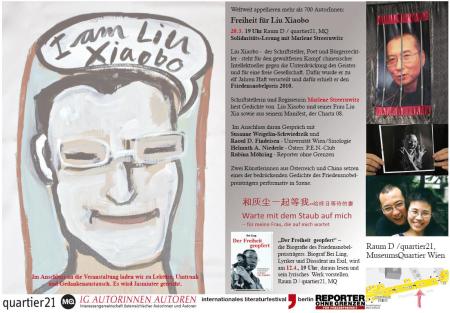
Vienna, March 20, 2011
标签: Charta 08, Charter 08, china, Chinese poetry, Jasmine Tee, literature, Liu Xiaobo, poetry, political prisoners, politics, prison, prisoners of conscience
发表在 March 2011 | Leave a Comment »
3月 2, 2011
One of the best texts I have read in a long time is Murong Xuecun‘s recent speech in front of the Foreign Correspondent’s Club in Hongkong. It was a speech he had wanted to give at the occasion of receiving the People’s Literature magazine’s “special action award”. But they didn’t let him speak at the ceremony. Time magazine has the full text, they say (acc.2011-03-02). Please read this text. If you like it, maybe you’ll agree that literature is a very good indicator of the state (of a nation), exactly because you can’t really know what it states. This is true for art in general, or a capacity for innovative culture. You can’t really know what it states, or maybe you’re sure you know, but you can’t really say, or what you can say is only one aspect. You can analyze the structure. You can try to translate it, and still keep the spirit. I haven’t read the original text, haven’t had time to look for it. Is there an original text in Chinese? Did he write it in English? He probably gave the speech in English, because it was at the foreign correspondent’s club. If the text in Time magazine is a translation, I’m pretty sure it is translated well. Yes, maybe there is something universal about it. Maybe Chinese writers have said similar things through the centuries. And millenia. But not only Chinese writers. And I am pretty sure, on the other hand, that this text is a very powerful indicator for the present state (of things). It’s both. Perfect example for Yomi Braester’s Witness Against History. Art has something else, something that goes far beyond History. Or also keeps record more faithfully.

标签: china, literature, politics, speech
发表在 March 2011, Uncategorized | 1 Comment »
2月 28, 2011
 In 2004/2005 or so in Beijing, my wife and I became friends with some parents of other kids at the local kindergarten. One mother had studied art in Japan and introduced me to blogging. Since early 2008 I have a website at Yahoo Japan. (I had spent a few weeks in Japan in early 1993, on a boat trip from Shanghai.) There is a blog I maintain at Langmates (translation and localization), another one for poems only (almost) and a harmonized teaser, among others. My translations of poems and various signs and banners in China can also be found on websites set up by Sam Brier (2004) and by Charles Laughlin (Ma Lan’s poetry). MCLC (Modern Chinese Literature and Culture), edited by Kirk Denton, has not only spawned an extensive treasure trove of Modern Chinese Literature and Culture sources, but also an Email-list server which has maintained professional and other exchange services for the international Chinese Studies community and beyond, including some very lively discussions. Recently, list members have introduced their blogs, such as Anne Henochowicz, Andrew Field, Jeanne Boden and Charles Laughlin. The initiative was started by Paul Manfredi.
标签: beijing, china, Chinese Studies, culture, life, literature, poetry, politics, Shanghai, travel, writing
发表在 March 2011, Uncategorized, Welcome! | Leave a Comment »
2月 22, 2011
As rich European countries go, maybe Austria is just as bad as Italy or France. Only smaller, more provincial. Newest anti-foreigner laws package passed on Tuesday, Feb. 22nd, 2011. The protesters in Egypt didn’t really look to America or Western Europe, but to protest experiences in Serbia and such. At least that’s what I remember from reports in the NY Times, among others. A Chinese friend told me he was watching the Arab protests very much,while he was in Europe, because the pictures from Egypt reminded him of Beijing in 1989.
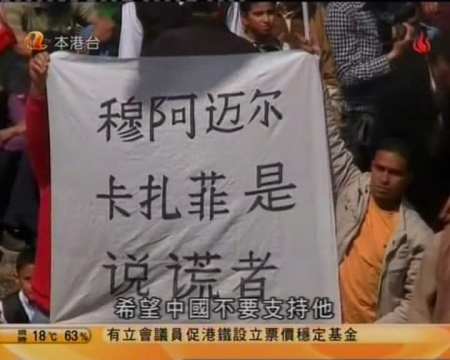 China has had too many so-called revolutions under Mao and a big failure with protests for civil rights and democracy in 1989. But there are many protests in China all the time. Labor unrest, land seizures, health hazards etc.. There may also be a big craving for stability, hence the hesitation to participate in larger protests. The op-ed in the NYT (IHT) by Daniel Bell, designated Western politics professor in Tianjin, was very academic. Or very wishy-washy. Civil rights are universal. No, China’s not so special. Reporters know, especially when they go to see the blind Women’s rights activist lawyer in Shandong and get waylay-ed and beaten. No, nobody cares about supposed academic discussions on why democracy might not work. Yes, people try to lead a good life, individually, for their family, and sometimes they notice the limits, and try to work around them, and many do talk about it. Sorry for the rambling. As I said, rich countries are no beacons. Maybe I am more politics-sensitive than before, since we moved back to Austria from China, after 10 years in Beijing and a few more in other cities. Roger Cohen is right, the EU doesn’t look very good at all these days.
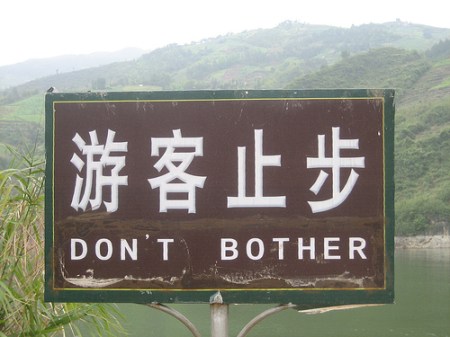
Don't bother
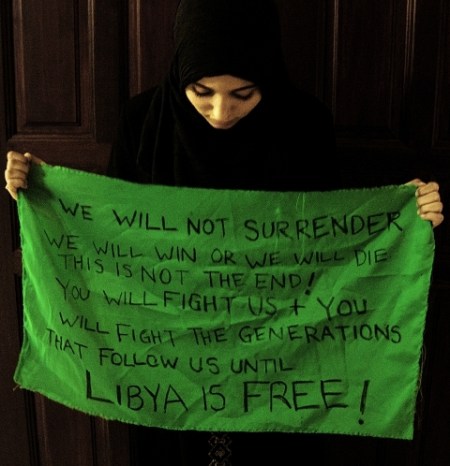
标签: 1989, 2011, activists, Africa, austria, beijing, china, civil rights, civil society, democracy, Egypt, Europe, law, lawyers, Libya, life, politics, Tunisia, Xenophobia
发表在 February 2011 | 1 Comment »
2月 15, 2011
it’s not quite spring
a bird is singing in a tree
above the snow
the children eat
or clear away for joy and play
all close to home
i didn’t get you anything
when i was small there was this store
and there we would get violets
or tulips something colourful
to bring your mom or grandmother
and that was all.
MW Febr. 2011
标签: all, birds, children, family, flowers, grandmother, home, love, memory, mother, seasons, snow, spring, time, valentine's day
发表在 Uncategorized | 1 Comment »
2月 3, 2011

Chinese sign in Cairo
Any discussion on forbidden topics is worthwhile. And this topic seems to be at least semi-forbidden on websites easily accessible in China. Social unrest is widespread and continues to grow. China is built on denial. Not on the Nile. There is no river in Beijing. I wonder if there has been any precipitation by now since fall. It was pretty bad in 2000, I remember. They dug huge canals all the way from around Nanjing and Wuhan to bring water for Beijing and Tianjin. Imagine a new canal dug through a city center, 100 meter down. That’s what I saw somewhere in Henan in 2007 or so. Maybe most people don’t take part in uprisings yet. As anywhere, people are concerned with their family and their livelihood. Not with the government. Unless something bad enough happens, you don’t need to take action. Maybe you’ll discuss something, like Premier Wen visiting the Beijing Petition Bureau. They do seem to feel the need to address some problems publicly, and not only through suppression. They continue to suppress many words, such as eleven or civil society. Actually I’m not sure if eleven is still sensitive, but it wouldn’t surprise me, since a certain dissident who was sentenced to eleven years on Dec. 25, 2009, got a lot of publicity lately. Any comparison of China with countries in volatile situations is worthwhile. It’s important not to end up in the Nile, or in denial. That’s a nice little joke I heard from our friend Liam, very nice if you’re far away, I guess. To a very large extent, China is built on denial. The same could be said about other societies, like Austria. But maybe at least there is less denial now than 30 or 40 or 50 years ago. In Austria, maybe. It’s a dialectical process, maybe. There is still a lot of denial. But in China denial is at the base of the system. In private talk, if you’re a friend, people will tell you what they went through in the 1950s, -60s, -70s and so on, or what they are doing now, even if it’s against official policy. But is there enough public discussion of past and present grievances and problems? This is already very close to the question Adam (see below) has put in his post. Adam is right, saying that China is very special and very stable and so on often gets very obnoxious. I am very wary of any big-time supportive international collaboration with institutions in China. Just look at what happened at the Frankfurt Book Fair 2009. The organizers cooperated with China’s GAPP, the general administration of pressure and prodding to toe the government line in publishing. The Ministry of Truth. Maybe they had to, to stage a China-themed fair. And the ensuing scandal was good, except for a few officials. Any kind of discussion is good, any kind of publicity, if there is a lot of denial. I wonder if the Robert Bosch trust fund and other Western sources of funding for cooperation with China learned anything. In December there was a discussion in Germany and Austria, after an article in the Sueddeutsche Zeitung suggested that Chinese Studies institutions staid away from the topic of the Nobel Peace Prize award for a Chinese dissident. Maybe some of them do, if the people in charge are too closely affiliated with the Confucius Institutes situated right inside the Chinese Studies department, as it is usually the case now. In Vienna, this wasn’t a problem. There was a big discussion on January 11 at the Sinology department of the East Asian Institute, one of the most engaged and open events at Vienna University in a while, probably. Bei Ling, author of the Liu Xiaobo biography was there, reading and talking to an enthusiastic crowd, in a very interesting discussion about the roles of intellectuals and public institutions. Professor Weigelin was fully in her element. Prof. Findeisen and Dr. Wemheuer contributed important points on literature and society. Who would have thought that in January, people around the world would spontaneously think of 1989? At least for me it feels like back then, very sudden change sweeping through several countries. So of course there are many comparisons. It is nice to live in exciting times, and important not to end up in the Nile. May they have peace and better times in Egypt soon!
Shanghai Scrap (2/1/11):
Comparing Egypt and China wrong questions, meaningless answers

From Language Log
标签: 1989, 2011, academics, Africa, army, austria, china, democracy, demonstrations, denial, discussions, dissident, Egypt, forbidden topics, Germany, international news, internet, language, media, politics, protests, Sueddeutsche Zeitung, Vienna, Vienna University
发表在 February 2011 | 6 Comments »
1月 17, 2011
Liu Xiaobo, the Chinese dissident sentenced to 11 years on Dec.25th 2009 for “inciting subversion“, was awarded the Nobel Peace prize in absentia in Oslo on Dec. 10th, 2010. Liu’s old friend and Independent Chinese PEN co-founder Bei Ling has written a biography of Liu Xiaobo. Bei Ling started off from an essay he wrote in June 1989 in New York, after Liu Xiaobo had been arrested in Beijing in the aftermath of the massacre throughout the city, as People’s Liberation Army troops forced their way through the streets blocked by protesters in the last phase of the demonstrations on Tian’anmen Square. Liu Xiaobo had returned to China from New York and led a hunger strike of intellectuals on the square, supporting the students and Beijing residents in their demands for civil liberties. Bei Ling‘s essay from 1989 was re-published in Chinese in Hongkong and Taiwan in June 2009, and in the German newspaper FAZ on October 12th, 2010, a few days after the Nobel Peace prize announcement from Oslo. Soon after, the German publisher Riva expressed interest in a biography of Liu. Bei Ling had recently written a literary memoir of his years a Beijing underground poet in the 1980s and a literary magazine editor, shuttling between China and foreign countries, in the 1990s. Liu Xiaobo and other old friends such as Liao Yiwu are important figures in Bei Ling’s memoir, to be published by Suhrkamp in Germany this year. So Bei Ling was ready to write his biography of Liu Xiaobo on short notice. It was a crazy idea, but it worked. We worked around the clock in November 2010, and in early December the book hit the shelves. In the first week, from Dec. 9 to 16, it sold 2500 volumes, according to the publisher. Since then, Bei Ling’s biography of Liu Xiaobo has been reviewed in many newspapers, magazines, on TV and radio stations etc. throughout Germany and in neighbouring countries. This month (January 2011), according to the publisher, the book has started to appear on the Spiegel magazine’s bestseller list, the standard list in the German-speaking realm. On January 11th, 2011, a symposion with Bei Ling, Prof. Weigelin-Schwiedrzik, Prof. Findeisen, Prof. Zhu Jiaming, Dr. Felix Wemheuer and others was held at Vienna University and met with great interest among students and teachers from various faculties. See here …

Liu Xiaobo biographer Bei Ling at Vienna University on Jan. 11th, 2011. Photo: Angelika Burgsteiner
标签: 11 years, censorship, china, Chinese Studies, civil rights, civil society, freedom of speech, intellectuals, literature, Liu Xiaobo, Nobel Peace prize, politics, prison, prisoners of conscience, reporting, subversion, Vienna University, writing
发表在 January 2011, Translations, Uncategorized, Welcome! | 5 Comments »
12月 10, 2010
This is a book about an absent person, who is held in prison; who has won a Nobel Peace prize and is not allowed to collect it: Liu Xiaobo. His old friend Bei Ling writes about him. He draws a many-faceted picture – only a knowledgeable friend can do that. This book is concerned with manifestos, petitions, political actions, but also with self-doubt and guilt, stubbornness and ambition. The author Bei Ling, who was imprisoned himself before, sees his duty in painting a complicated picture of this civil rights activist, with many different shades and colors. Bei Ling knows that he can see Liu Xiaobo only from one side, he can only portray him in profile, not from the front. But even if it is only part of a bigger picture, this part shows us a whole cosmos of courage and repression, of labor camps and life outside watched by security agents, like the life that the wife of this civil rights activist is forced to lead. This book offers a lot of information, but it doesn’t explain everything, because it wants you to keep asking questions. This is why I think everybody should read it.
Elfriede Jelinek, Tr. MW
Read more …
Liu Xiaobo biography published
My essay on Liu Xiaobo and the new biography
Translating the bio
Liu Xiaobo and 1984

标签: 1989, Bei Ling, biography, china, Chinese literature, civil rights, constitution, diplomacy, Elfriede Jelinek, government, human rights, law, literature, Liu Xiaobo, memory, Nobel Peace prize, philosophy, poetry, politics, prison, Tian‘anmen, translation, writers
发表在 November 2010, Translations | Leave a Comment »
11月 30, 2010
标签: biography, china, Chinese poetry, life, literature, Liu Xiaobo, Nobel prize, police, politics, prison, protest, Translations
发表在 Translations | Leave a Comment »
10月 5, 2010
No Choice – My Memories of Liu Xiaobo Before And After 1989
Keine andere Wahl – Liu Xiaobo, 1989 und heute
Bei Ling
This article was published on June 16, 2010 in Ming Pao Daily, Hong Kong and in Lianhe Bao (United Daily News), Taipei.
Die chinesische Originalfassung dieses Artikels erschien am 16. Juni 2010 in den Tageszeitungen Ming Pao (Hongkong) und Lianhe bao (United Daily News, Taiwan)
Translation/Übersetzung: Martin Winter
Source/Quelle: Lianhe Bao (United Daily News, Taipei)
http://mag.udn.com/mag/world/storypage.jsp?f_MAIN_ID=235&f_SUB_ID=4595&f_ART_ID=255134
See also
英語報紙:In English:
http://www.taipeitimes.com/News/editorials/archives/2010/11/02/2003487492
In German:
http://www.faz.net/s/Rub117C535CDF414415BB243B181B8B60AE/Doc~E3AB4F19D97FC404CB097C726A204806D~ATpl~Ecommon~Scontent.html
En espanol:
http://www.abc.es/20101010/internacional/xiaobo-1989-ahora-20101010.html
From the Noble Committee:
https://docs.google.com/View?id=dc7f6bh9_884dj3m7sfh
別無選擇——記1989年前後的劉曉波
【聯合報╱貝嶺/文】
2010.06.17 03:28 am
He is very gentle, but he cannot stand any false kindness; he emphasizes individualism, though in daily life he needs his friends very much … His unique personality highlights exactly the kind of character that is so extremely rare among Chinese intellectuals …
Er ist ein sanfter Mensch und kann doch faule Kompromisse nicht ertragen. Er tritt für die Freiheit des Individiums ein und ist doch im täglichen Leben sehr stark auf seine Freunde angewiesen. Sein eigenwilliger Charakter ist gerade unter chinesischen Intellektuellen sehr selten und kostbar…
他喜歡溫和,卻又無法容忍平庸的溫和,他強調個體,可在日常生活中他又如此地需要朋友……他獨特的個性恰恰反襯了中國知識分子極其缺乏個性……
Author’s comment:
This text has been modified. I first wrote it in New York in June 1989, after the June Fourth crackdown, and after I heard that Liu Xiaobo had been arrested in Beijing. I had to vent my feelings. The Liu Xiaobo in this article is my very personal Liu Xiaobo from over 20 years ago.
Read on …
英語報紙:In English:
http://www.taipeitimes.com/News/editorials/archives/2010/11/02/2003487492
德國報紙 Auf Deutsch:
http://www.faz.net/s/Rub117C535CDF414415BB243B181B8B60AE/Doc~E3AB4F19D97FC404CB097C726A204806D~ATpl~Ecommon~Scontent.html
西班牙報紙 En español:
http://www.abc.es/20101010/internacional/xiaobo-1989-ahora-20101010.html
挪威諾貝爾委會 Noble Comittee Communique
https://docs.google.com/View?id=dc7f6bh9_884dj3m7sfh
中國留學生 Chinese students abroad
http://www.dailyillini.com/blogs/different-perspectives/2010/10/31/chinese-illini-not-sure-how-to-feel-about-chinas-first-nobel
王超華 Wang Chaohua
http://www.thechinabeat.org/?p=2793
标签: 1989, Charta 08, china, courage, friendship, literature, Liu Xiaobo, massacre, memory, philosophy, politics, prison, shame, violence
发表在 October 2010, Translations | Leave a Comment »
9月 10, 2010

Die Literatur der Volksrepublik China ist, wie das Land selbst, vielseitig und widersprüchlich. Es ist immer schwierig, die unmittelbare Gegenwart zu beschreiben, das gilt auch für die Literatur anderer Sprachen und Gebiete. Einige Tendenzen lassen sich dennoch wahrnehmen:
1. Soziale Relevanz ist wichtiger als je zuvor, und zwar in Abgrenzung zu staatlichen Organisationen. Reportagen, Essays und ähnliche Textsorten sind dementsprechend bedeutend.
2. Film und öffentlicher Diskurs werden, wie schon in den 1980er- und 1990er-Jahren, immer wieder in Zusammenhang mit Literatur wahrgenommen. Neu sind Künstlerinnen und Künstler, die sowohl schreiben als auch Filme drehen.
3. Frauen sind in der literarischen Welt prominenter als früher.
4. Internet, Ausland und Exil sind ebenfalls wichtiger geworden. Heute gibt es nicht nur viele chinesische Autorinnen und Autoren in den USA, sondern auch in Frankreich, Deutschland und anderen Ländern. Nur einzelne Emigranten (wie etwa der Dichter Duo Duo, der inzwischen auf der Insel Hainan an einer Universität unterrichtet) konnten zurückkehren. Wegen der anhaltenden Zensur sind alle Schriftsteller, die in China leben, für eine freiere Verbreitung ihrer Werke auf Medien in Hongkong, Taiwan und anderen Ländern sowie auf das Internet angewiesen.
5. Die Ereignisse von 1989 und die Traumata der ersten Jahrzehnte der Volksrepublik sind im kulturellen Leben keinesfalls überwunden.
标签: art, china, cultural heritage, Gedichte, history, literature, poetry, reading, work
发表在 September 2010 | 3 Comments »
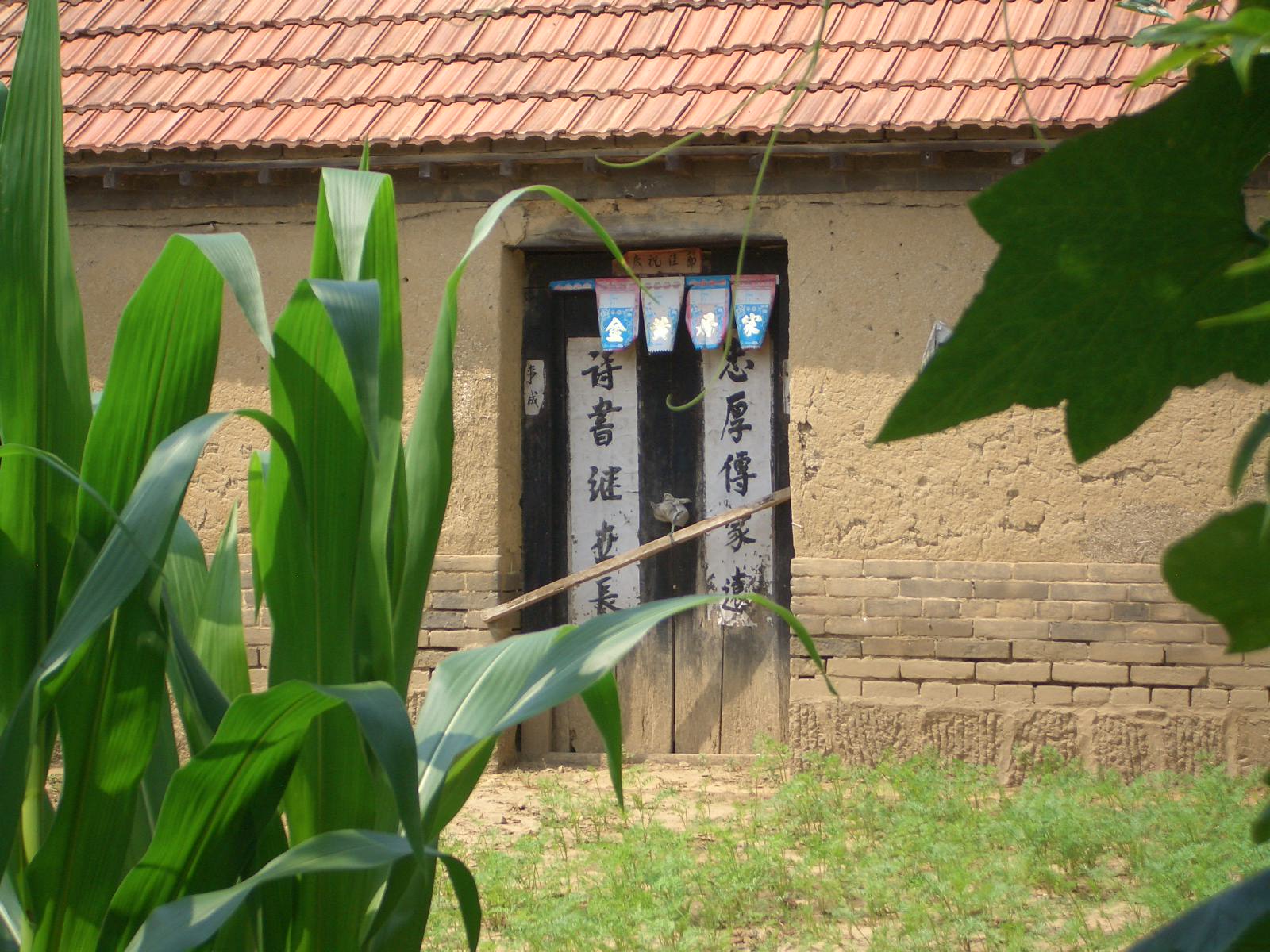
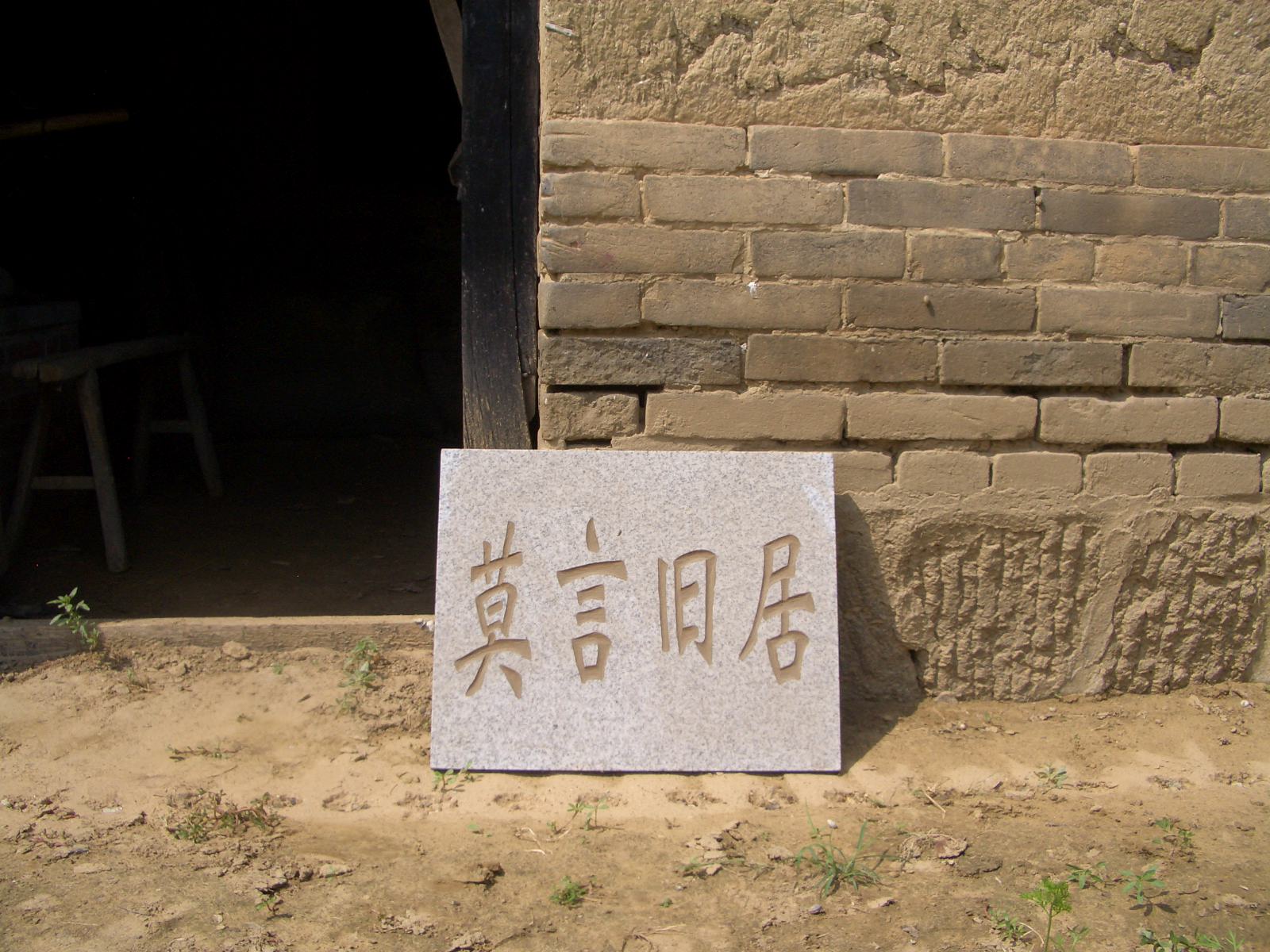
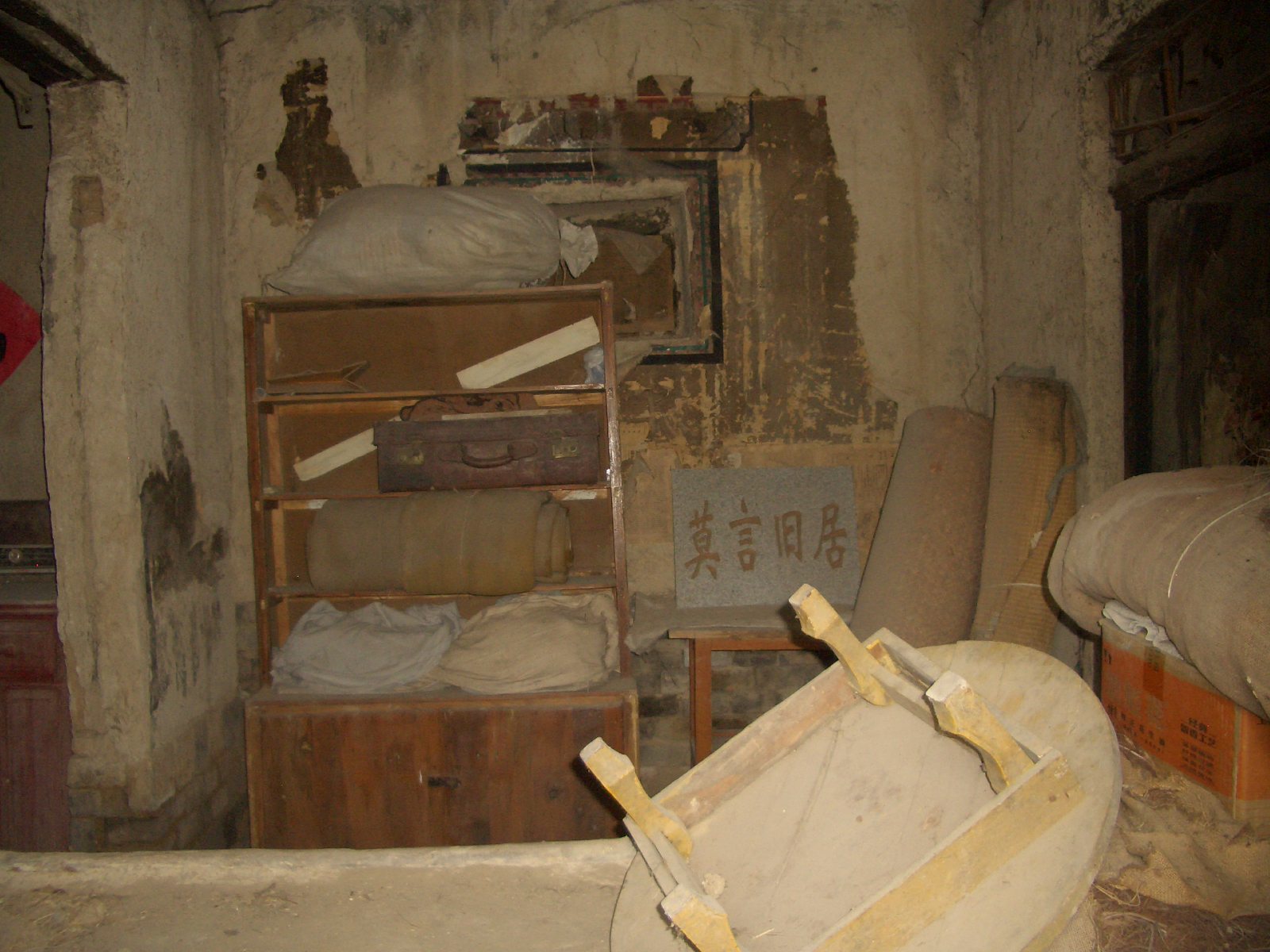


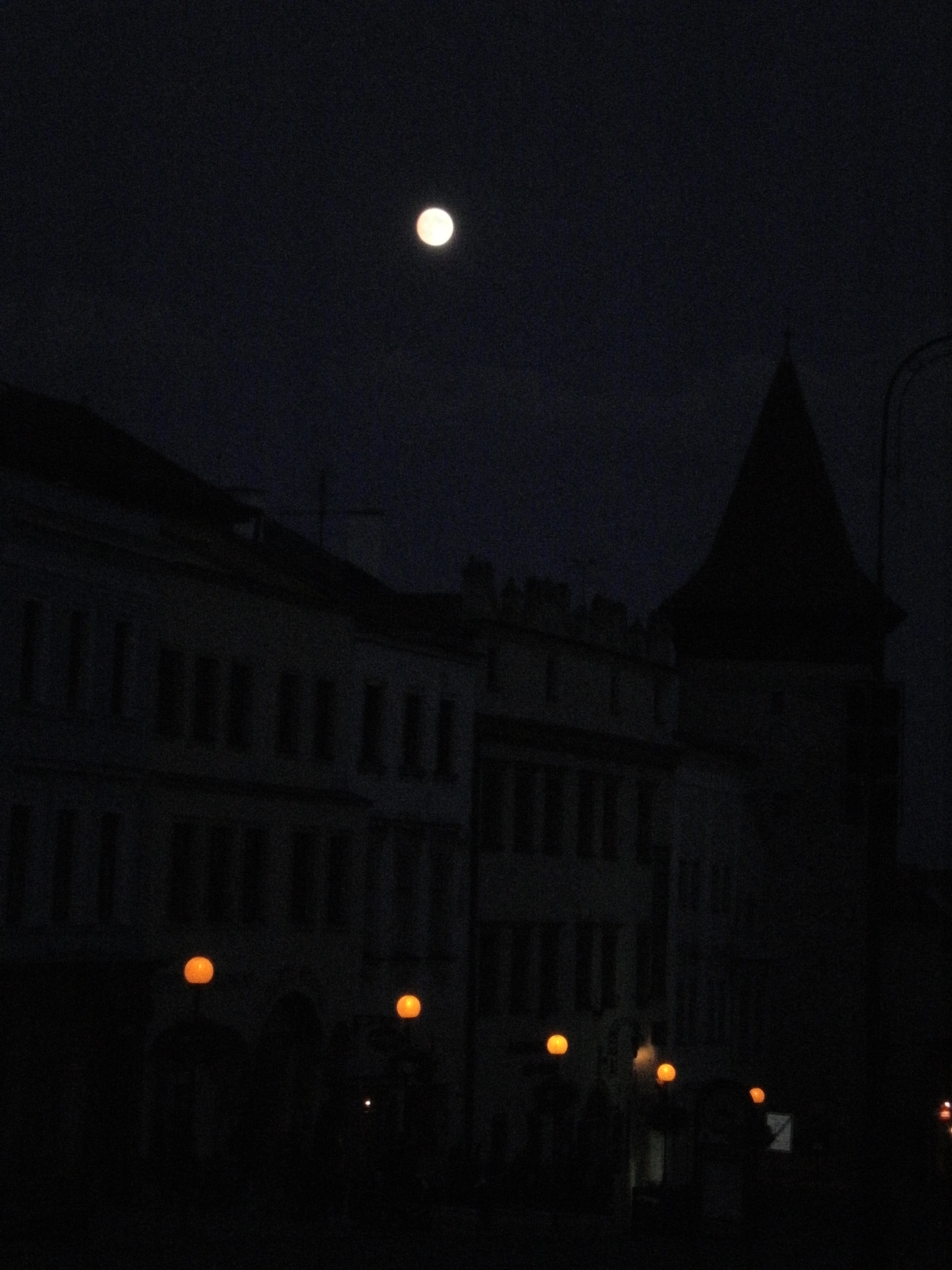
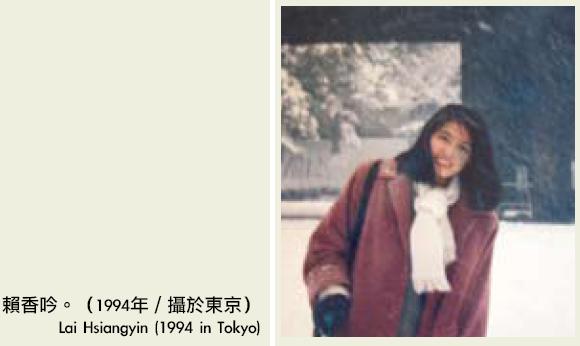
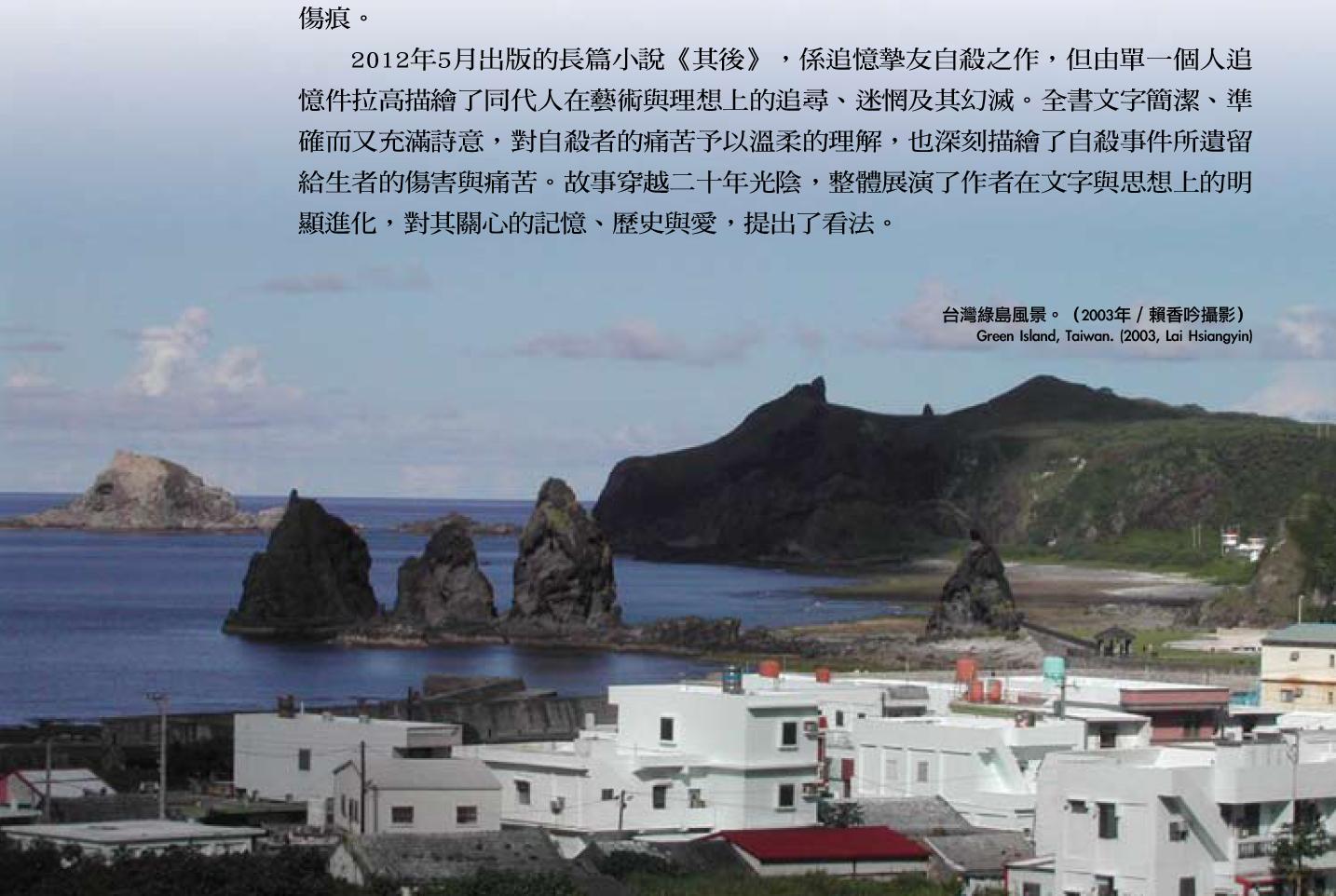
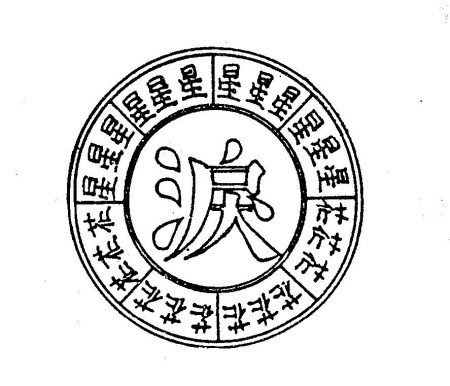

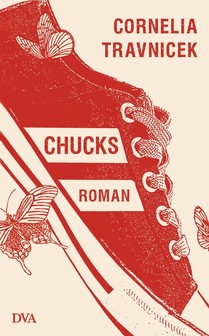
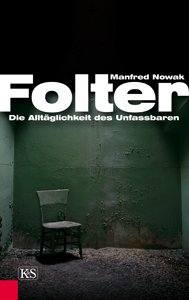
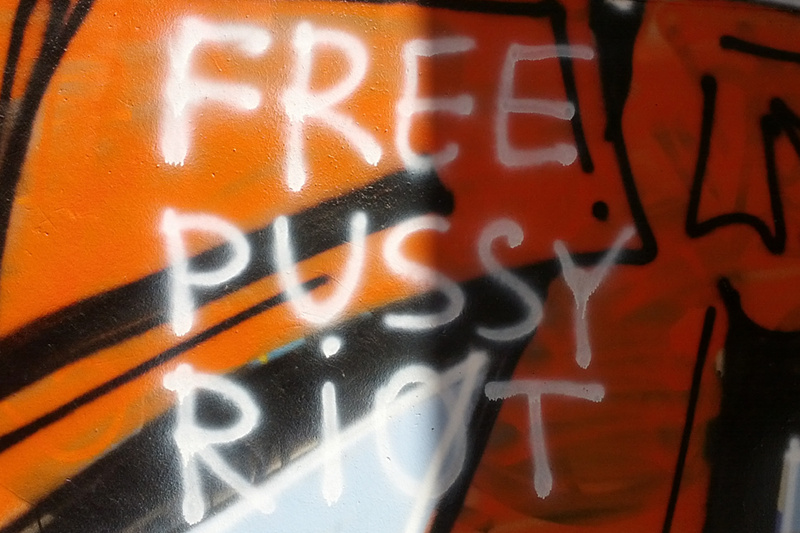
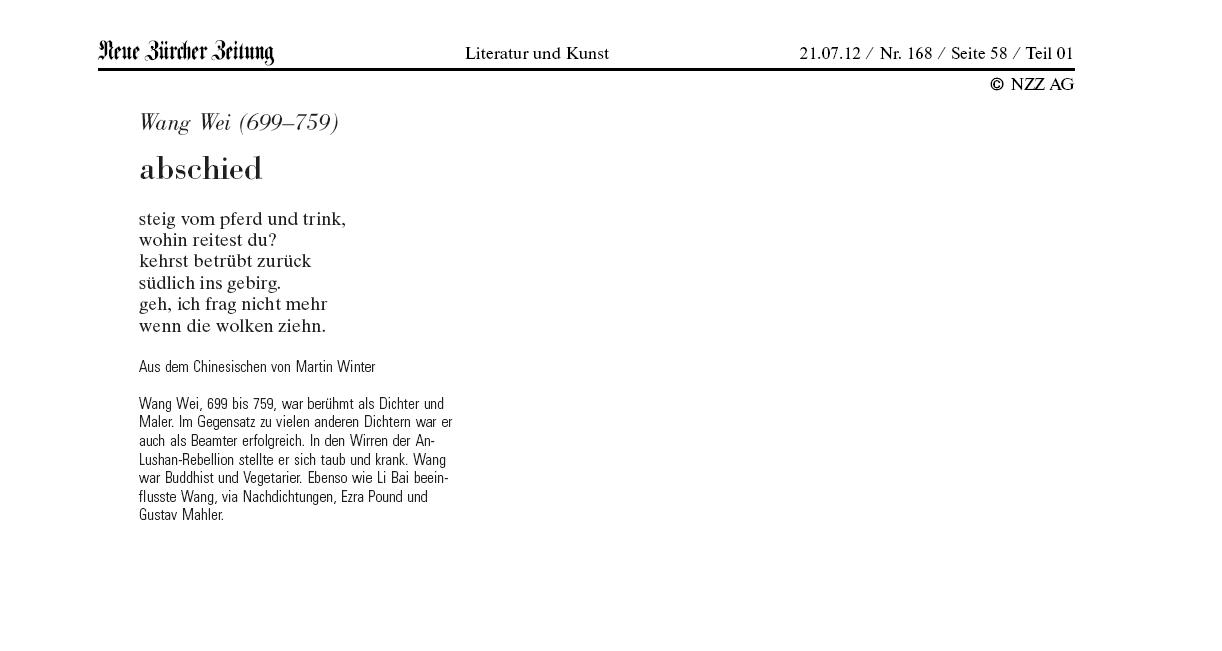




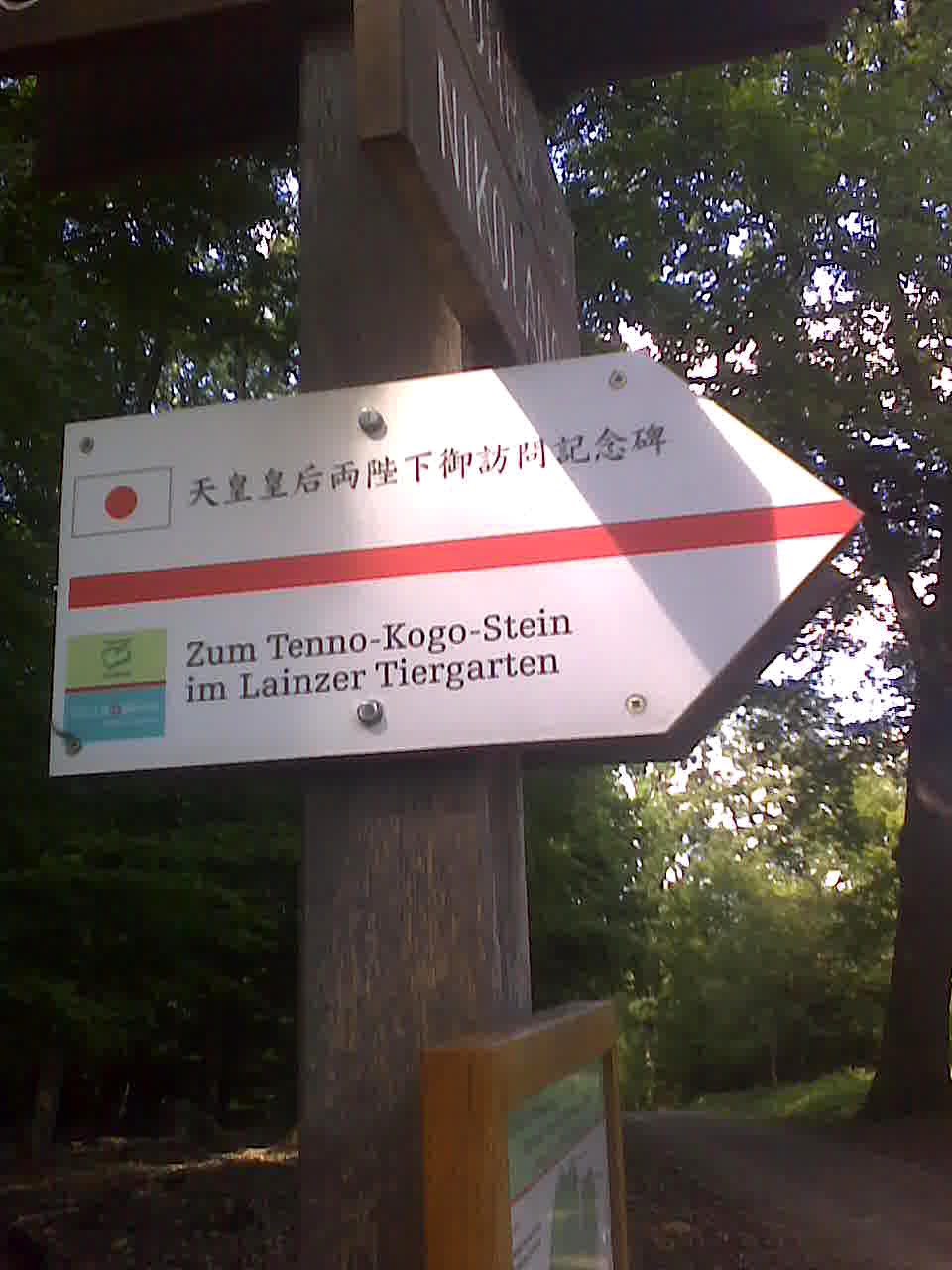




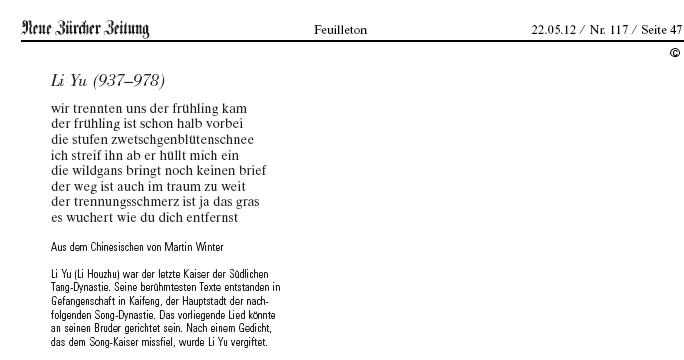
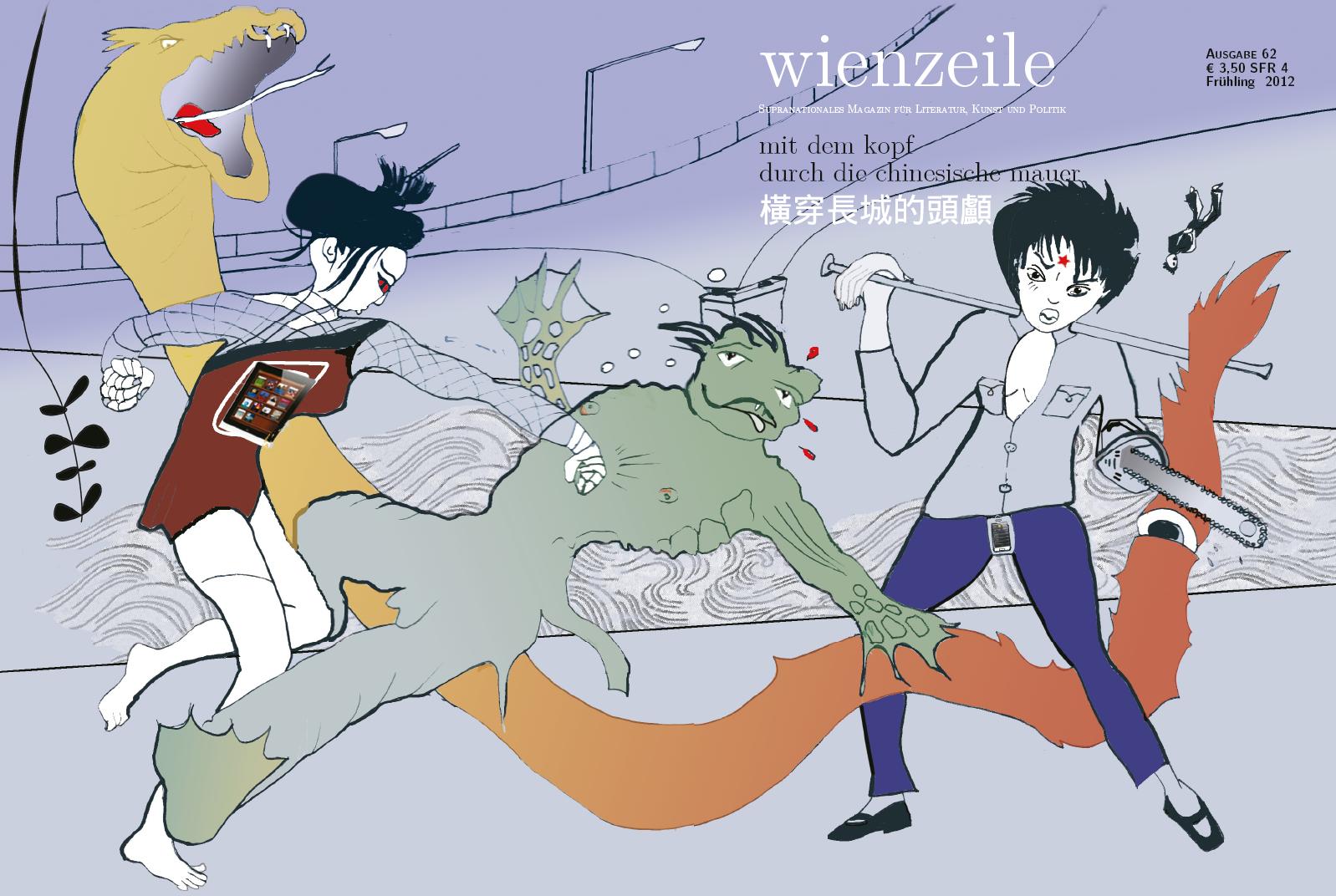
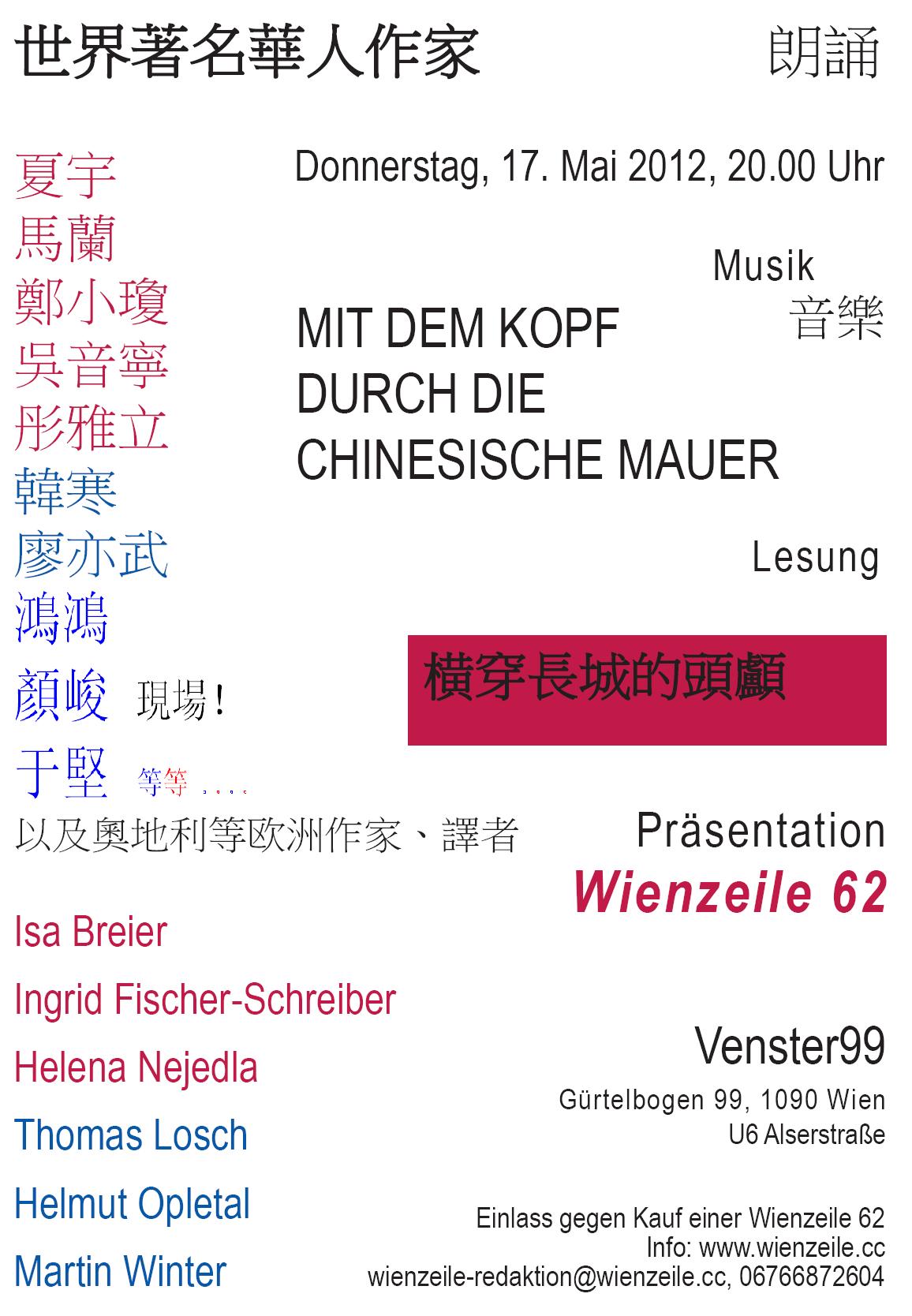
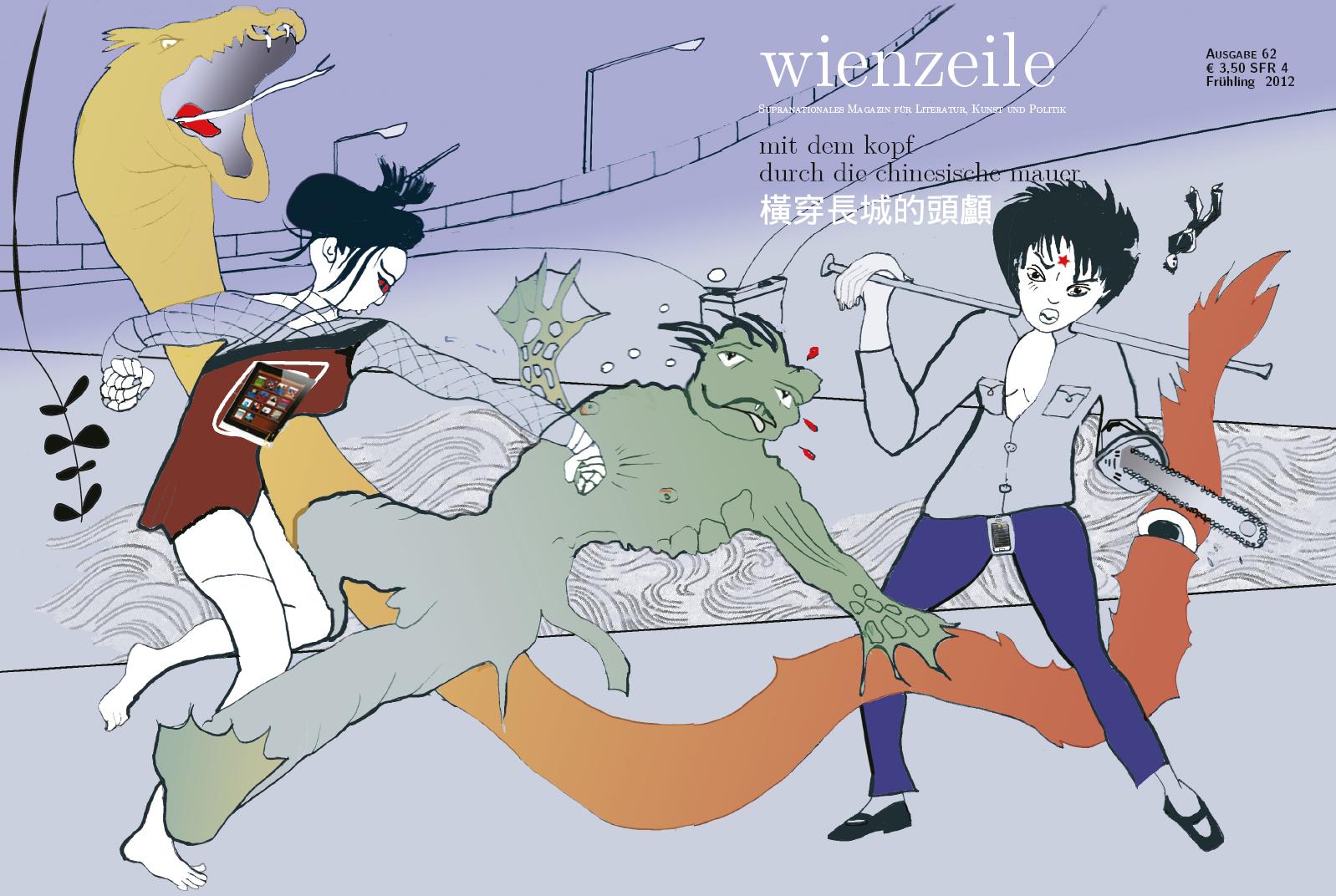



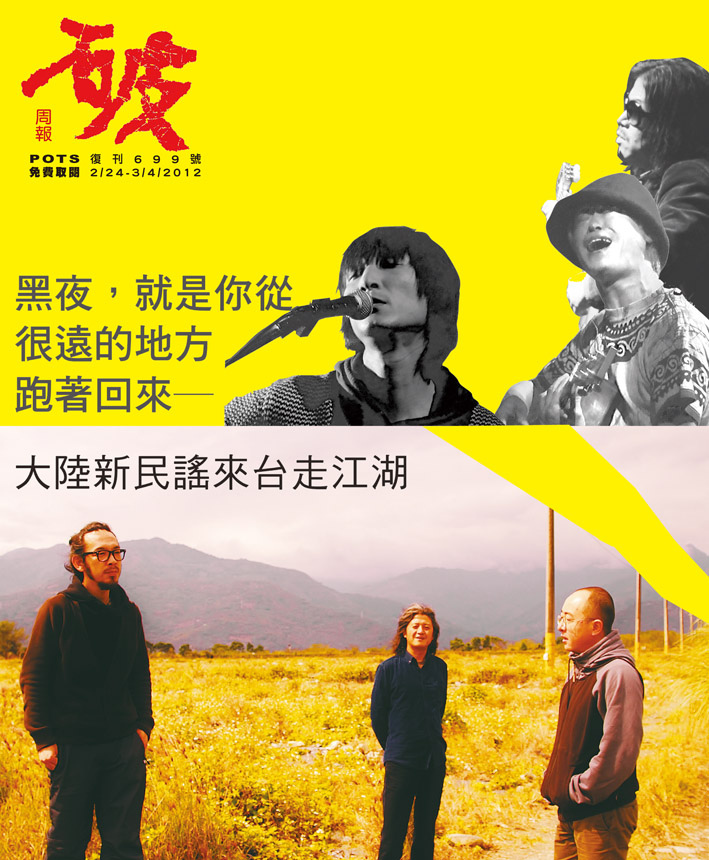
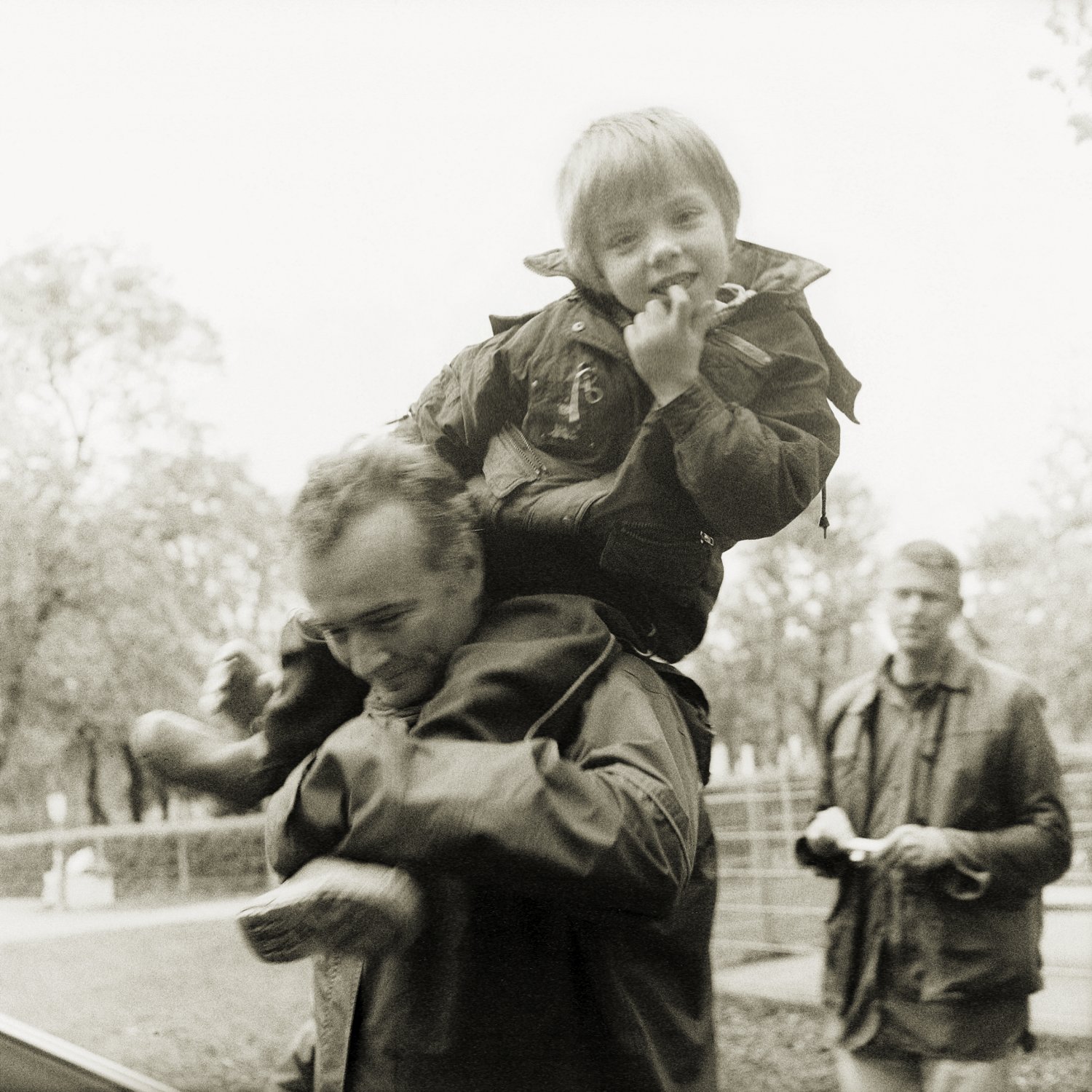

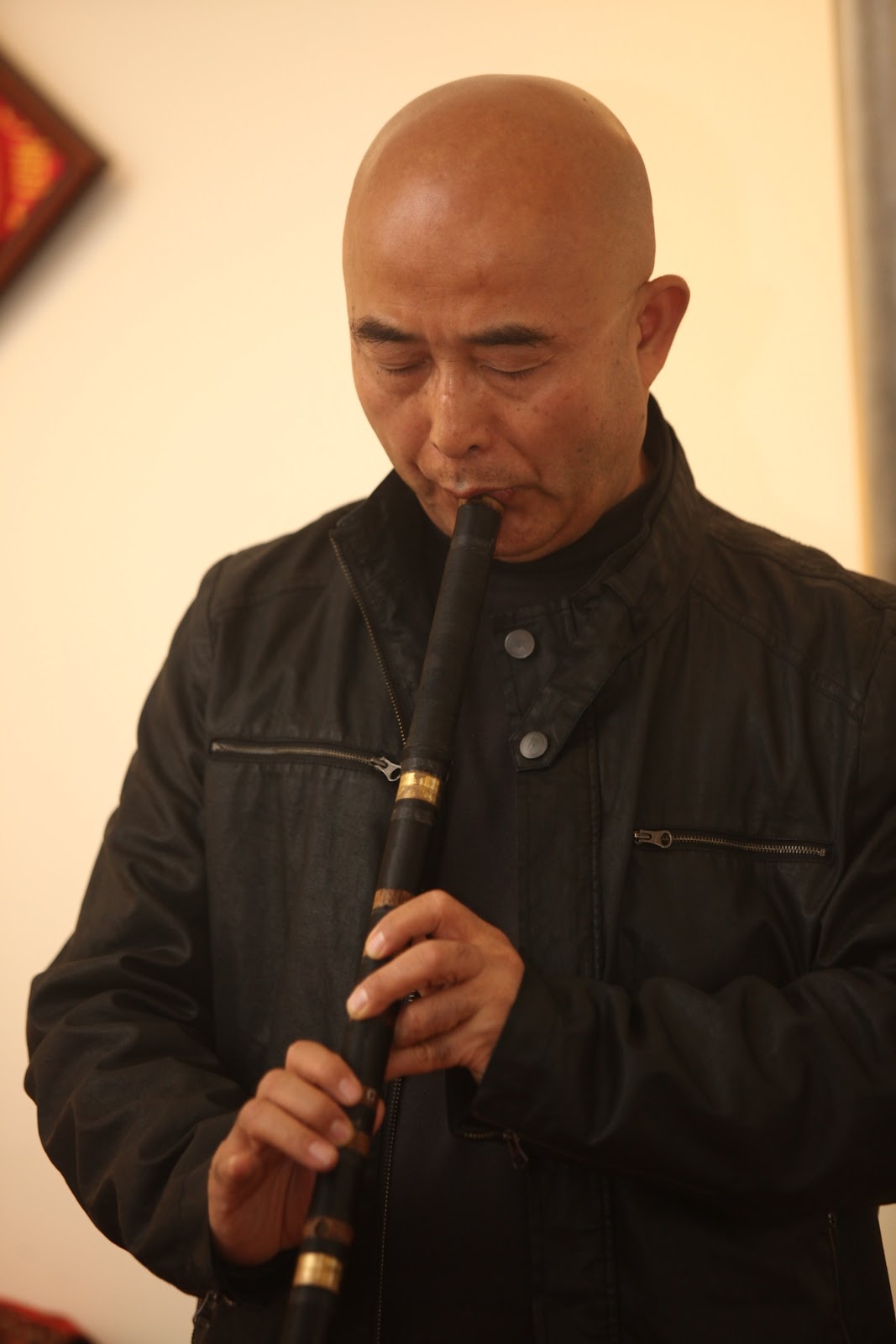


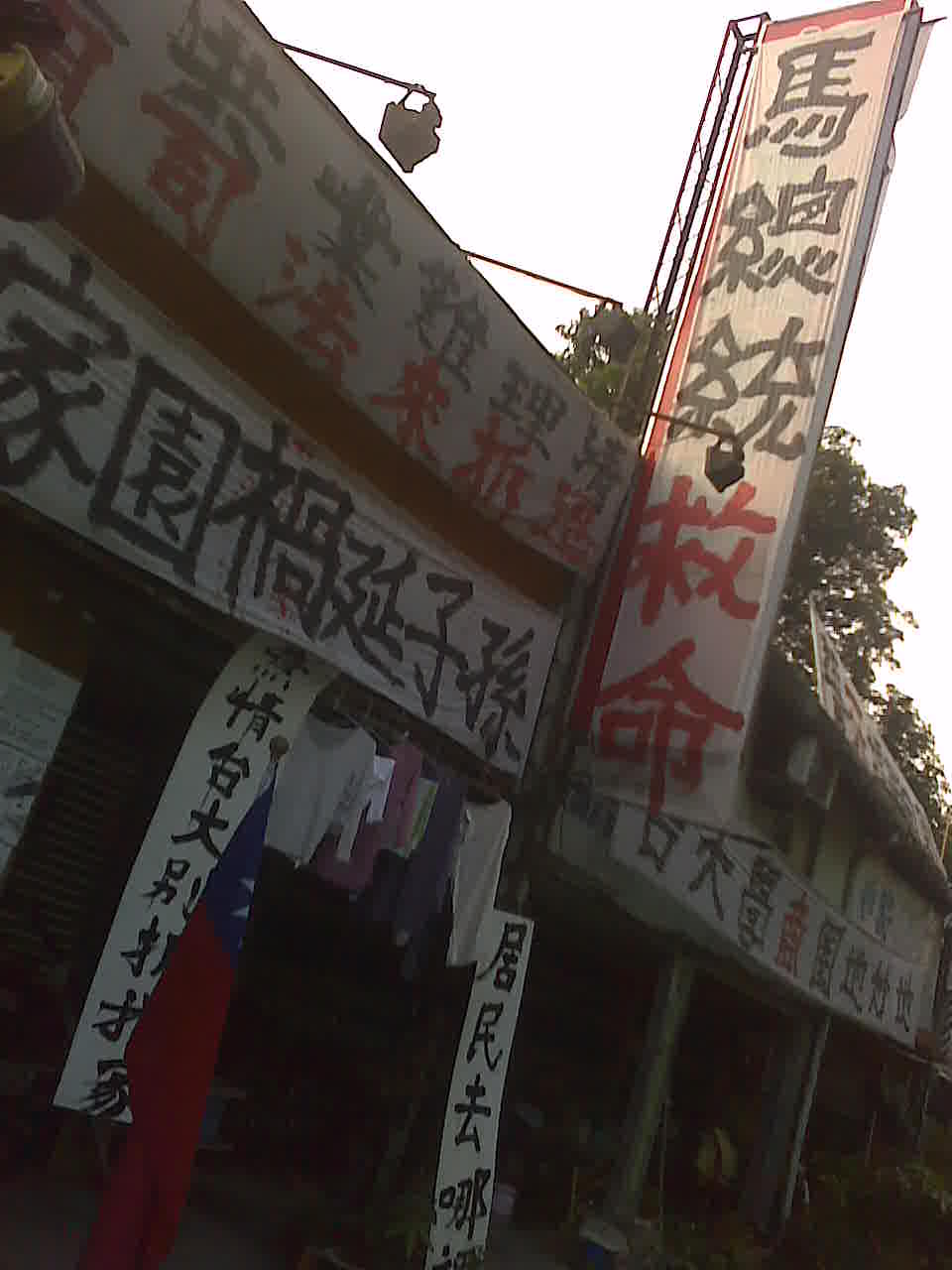
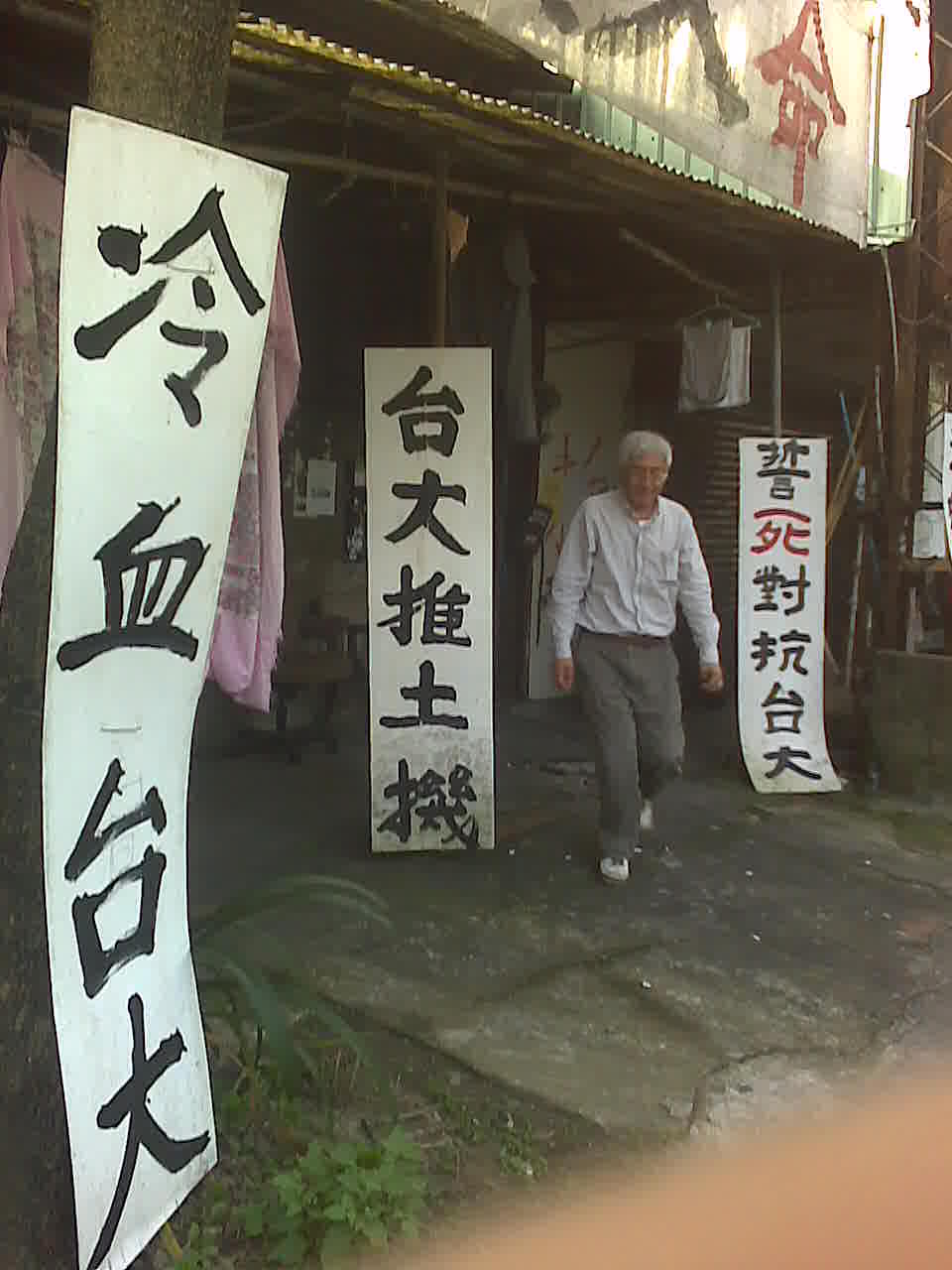
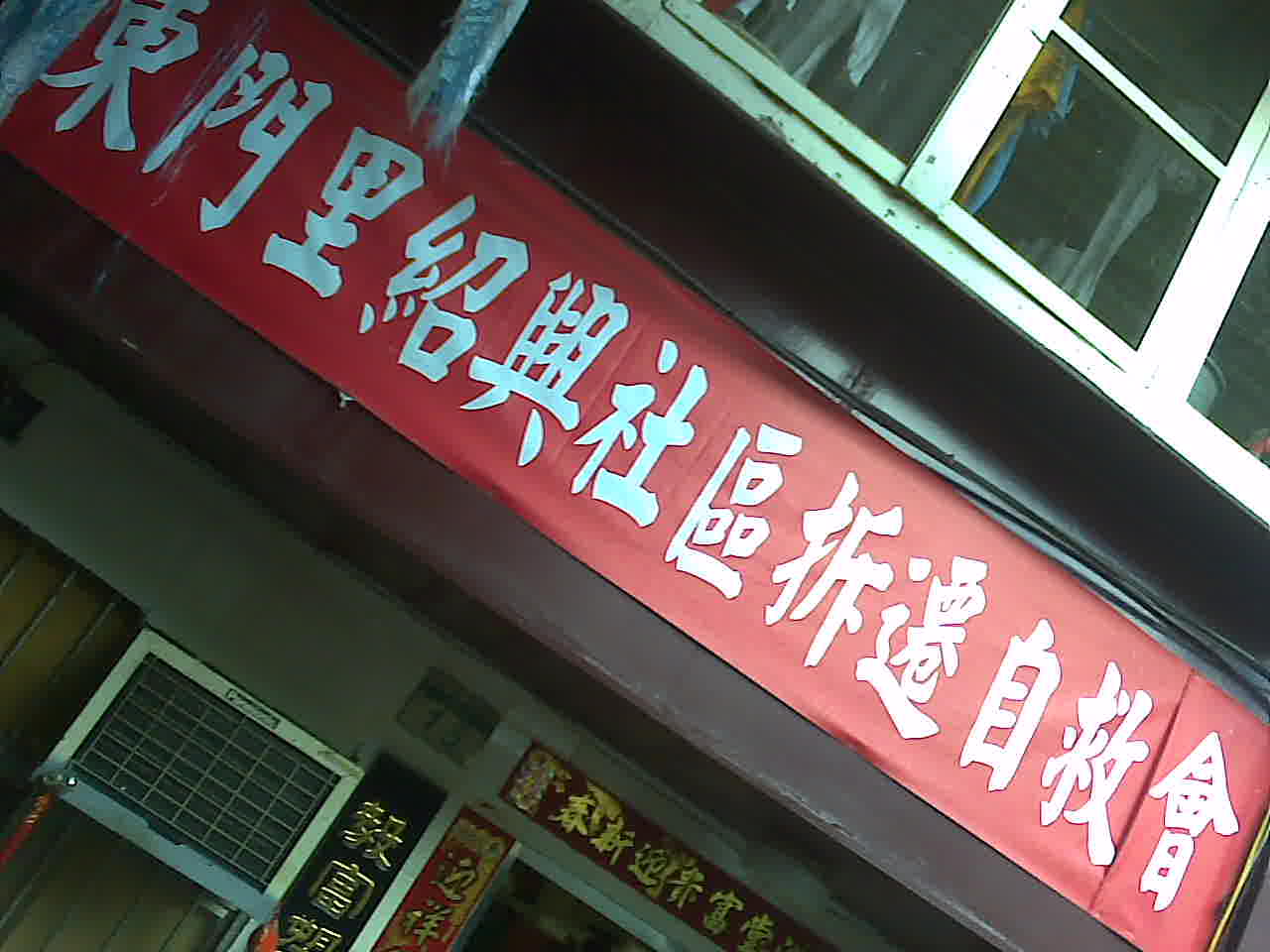


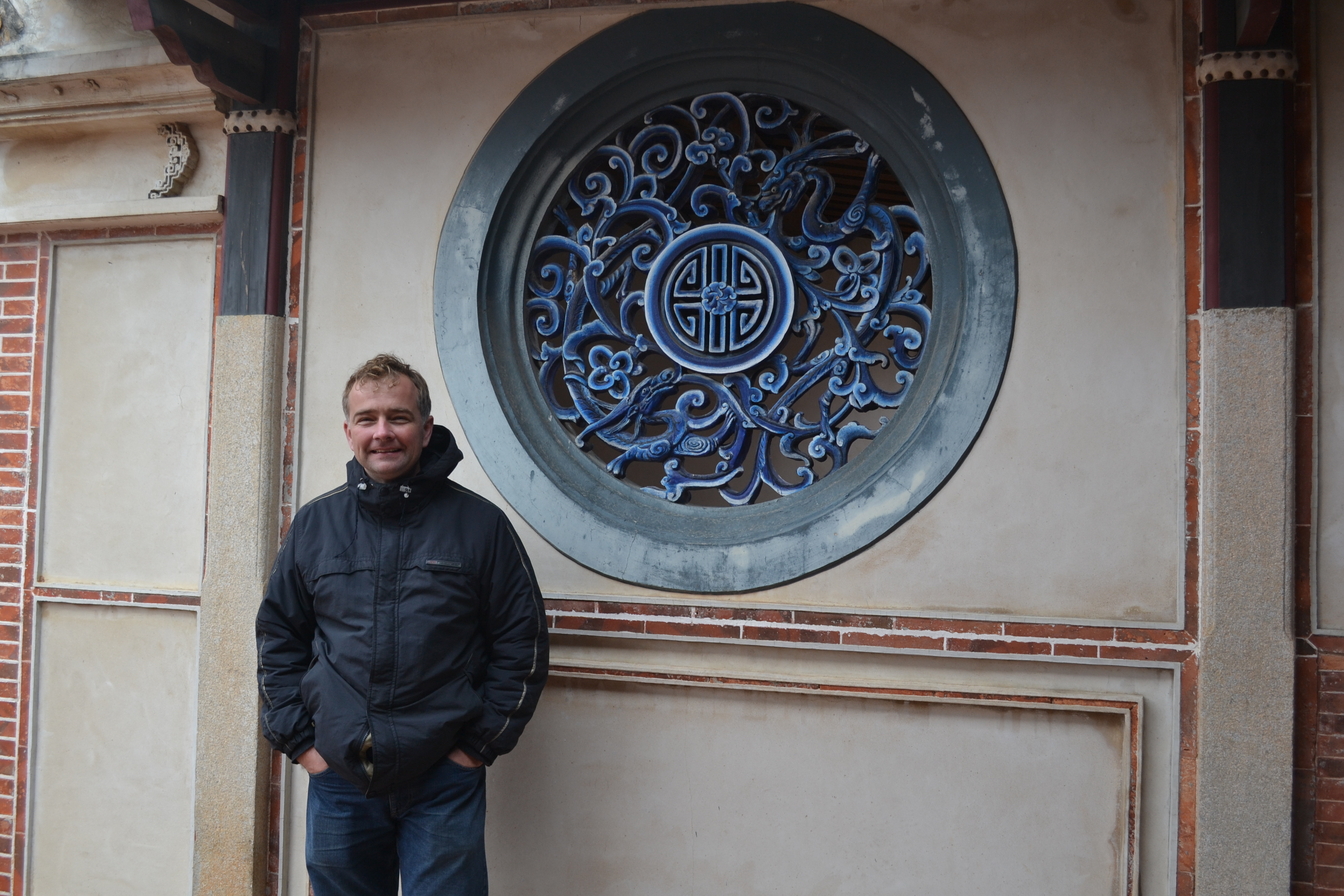


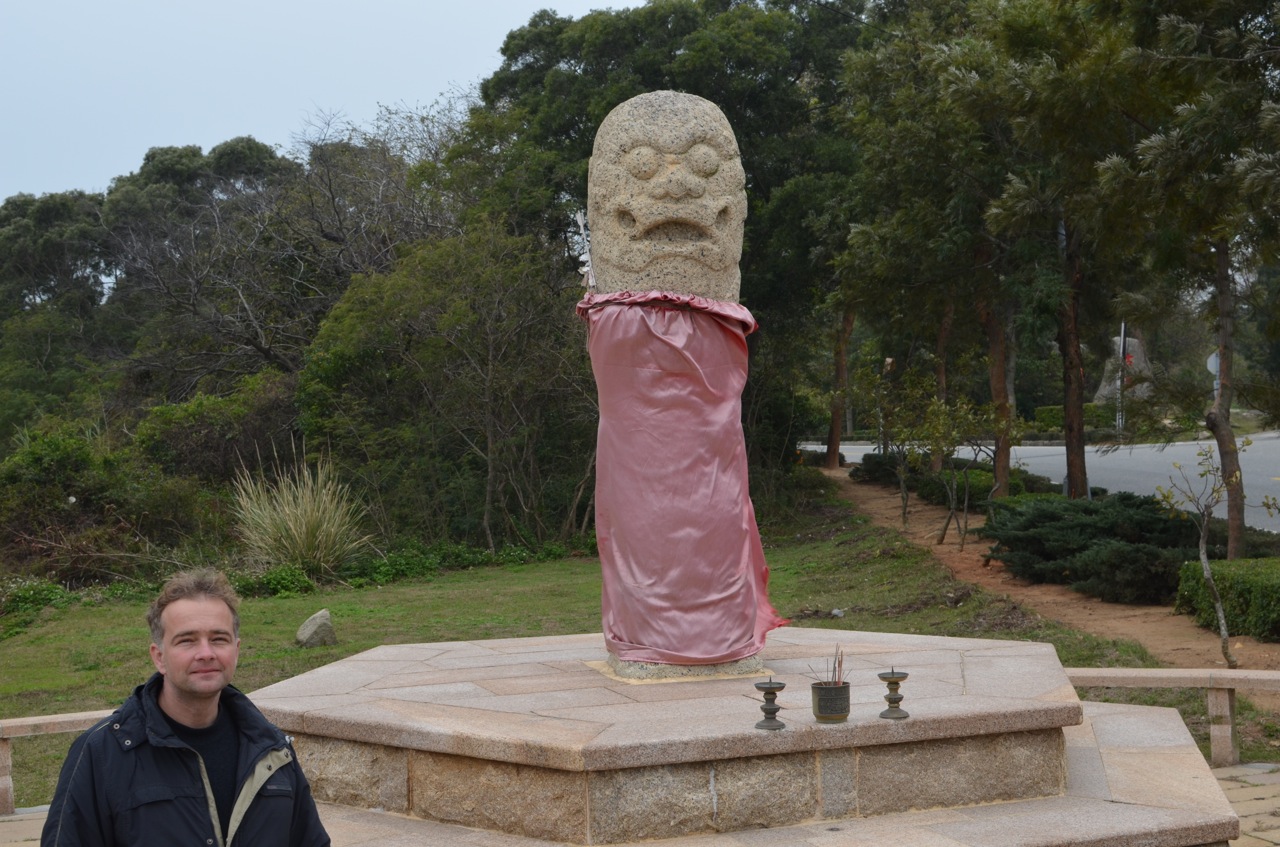

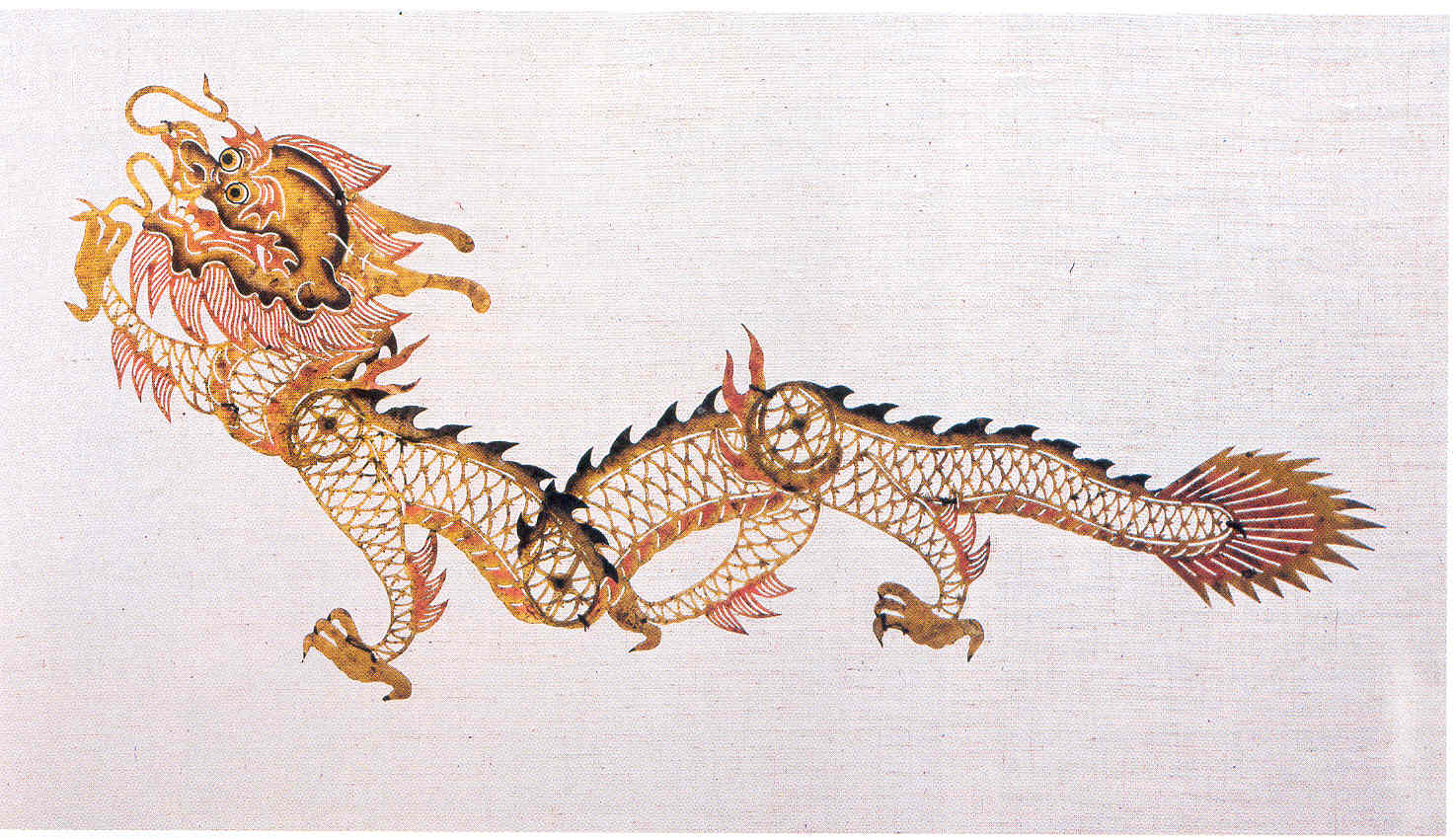














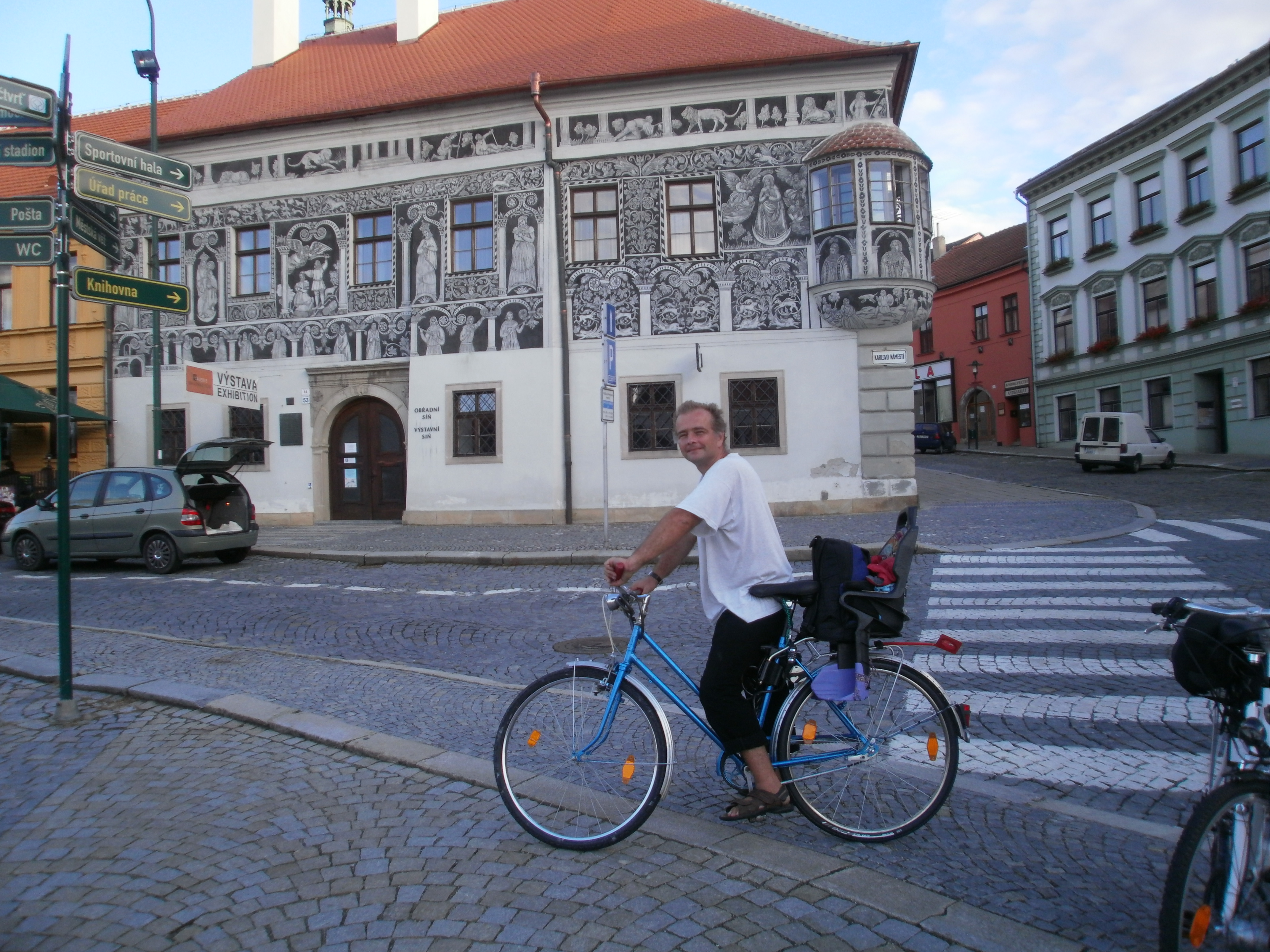









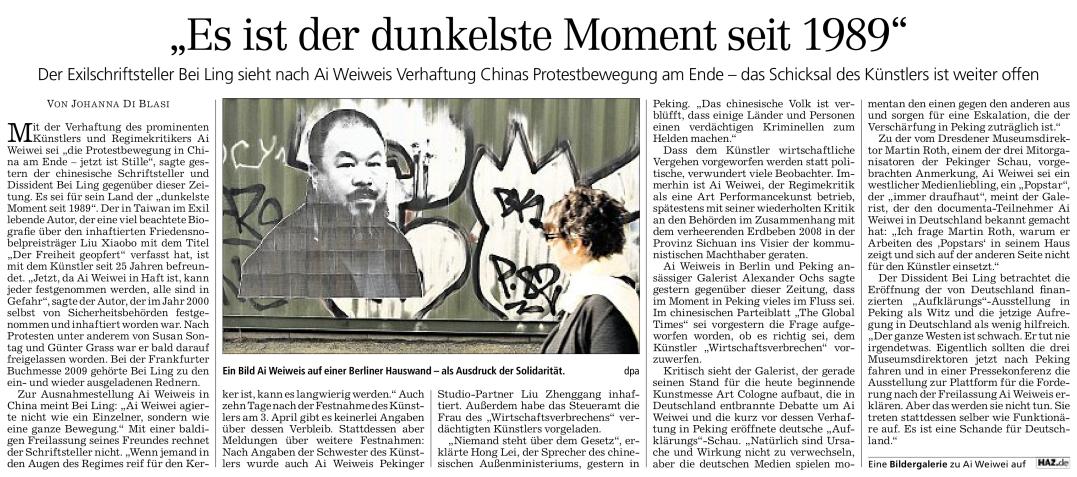
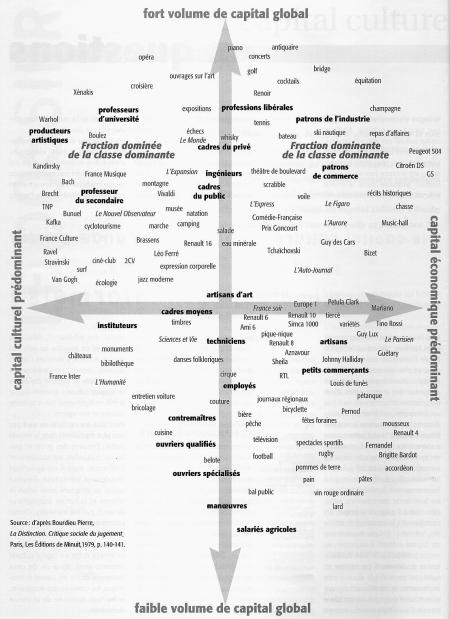

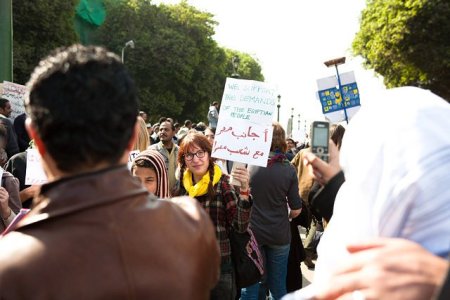
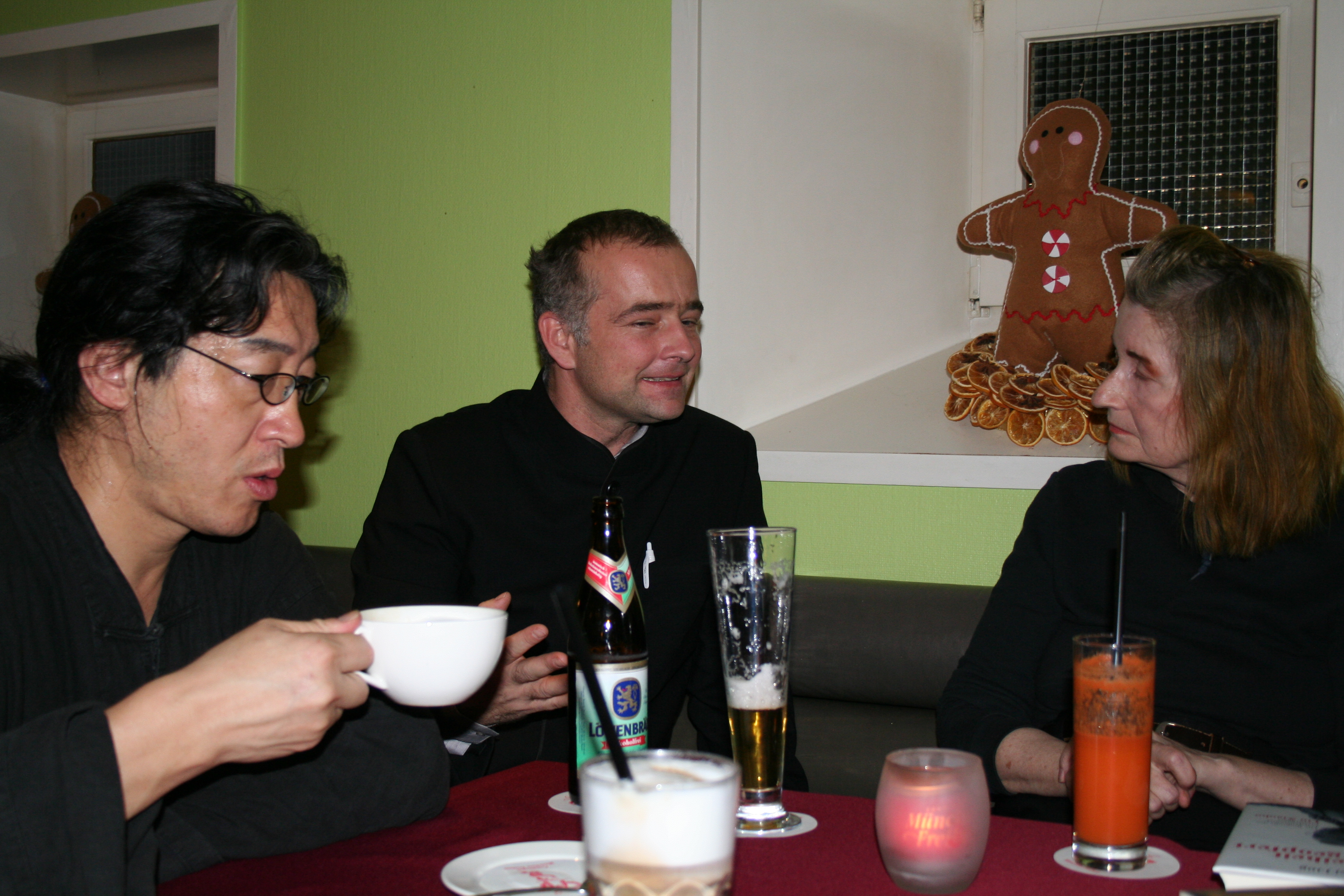


 中国大好き
中国大好き 