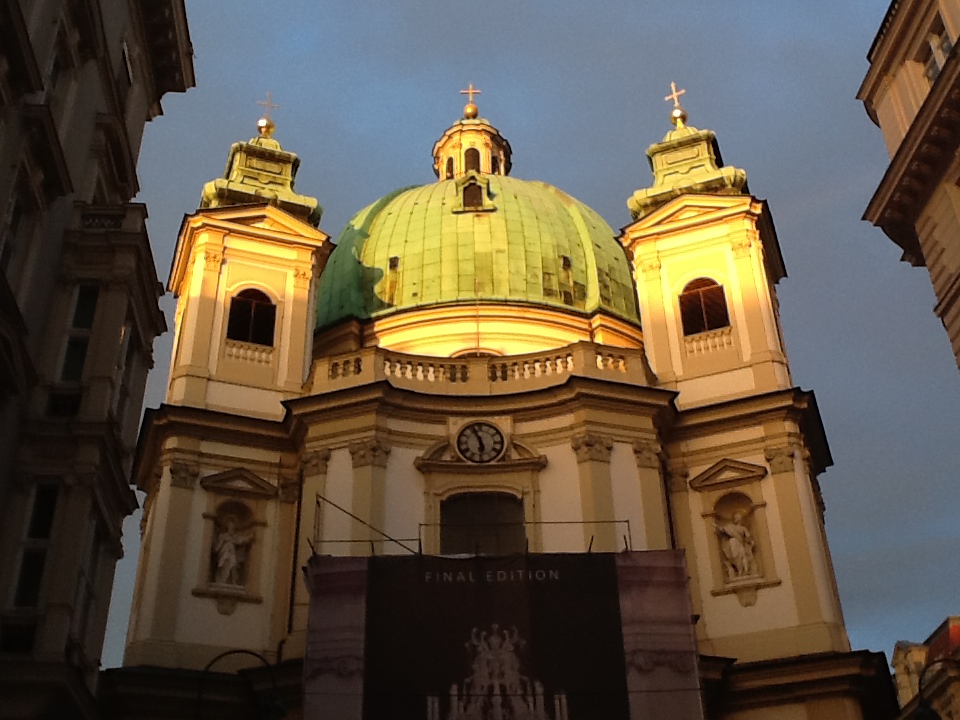
“mai hart lieb zapfen eibe hold/ er renn bohr in sees kai/ so was sieht wenn mai läuft begehen/ so es sieht nahe emma mähen/ so biet wenn ärschel grollt/ ohr leck mit ei!/ seht steil dies fader rosse mähen/ in teig kurt wisch mai desto bier/ baum deutsche deutsch bajonett schur alp eiertier”
… sowie von Odd-Duck-Ring nach High-Lee-Can-Shut – und noch viele andere Verbindungen.
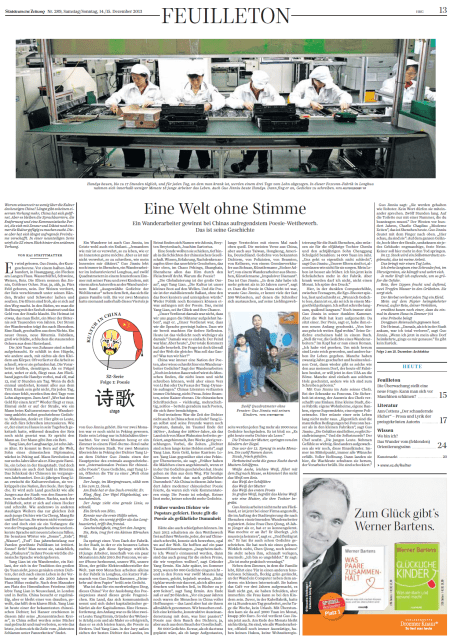
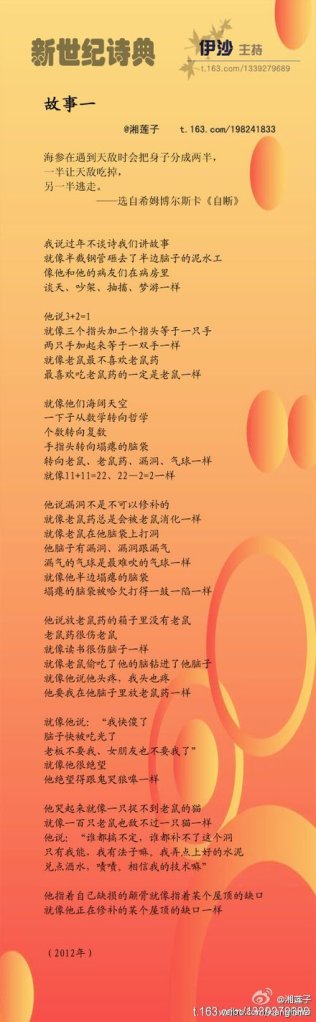
Nicht nur für Touristen hier ein Plan der Wiener U-Bahnstationen in phonetischem Englisch
Not for tourists only here’s a map of the Vienna Metro system in phonetic English.
李勤岸Li Khin-huann
Translated by Tiunn Boo-thinn 譯 …
We planted sunflowers at Parliament
To bring some sunshine inside
To bring all that mold to light
To bring the people’s rights to light
We planted sunflowers on the president’s lawn
To throw the floodgates wide open
And flood away the steel webs of a dictator
And let the young whales of democracy swim on, and on and on
We planted sunflowers in the streets
To bloom come rain and bloom come wind
To bloom for always and for all days
By the darkening roads we must yet take
We’re planting flowers in every alley and every valley
In the cities and in the country
In the mountains and by the sea
The sun will still flower
May the will of young hearts
Rise up high in our free skies
阮種日頭花
–《人面冊ê花蕊》264
李勤岸
Li Khin-huann
WE PLANT A SUNFLOWER
we plant a sunflower in parliament
to draw in the sun
stir up the poor state of our congress
stir it up for the rights of our people
we plant a sunflower in the president’s palace
to call a young sea spirit of Taiwan democracy
to stir up a flood
to sweep away the iron nets of dictatorship
we plant a sunflower on every street
to brave wind and rain
to stir and bloom
to shine a light on our dark road ahead
we plant a sunflower on every corner
in the village in the city
on the mountains at the sea
to stir and bloom
our spirit of youth
will brighten our homeland and our skies
As Ding Jiaxi’s wife, every time after the lawyers met with Jiaxi, I couldn’t wait to ask them for audio or video recordings of Jiaxi, and listen or watch eagerly when I got them. Jiaxi’s familiar voice and hearty laughter have always moved and inspired me. From these recordings, I learned more about Jiaxi, understood more about the things he did, and supported him more firmly. Sometimes I feel those people who detained and imprisoned him and will put him on trial are pretty stupid. They are scared of people who oppose them, but what they do is make more people, like me , oppose them. I have also decided to be a citizen who speaks out and who has an attitude. I say: Stop creating more unjust and false cases. Release…
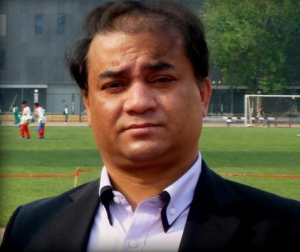
Ilham Tohti. Photo from Tibetan writer Woeser’s Twitter account @degewa.
On January 15, 2014, Chinese authorities arrested Ilham Tohti, a Uighur economics professor at the prestigious Minzu University in Beijing. Authorities formally charged him with separatism on February 25, and have so far denied him access to his attorney.For years, Tohti has discussed and commented on not only Chinese policies in the Xinjiang Uighur Autonomous Region, where the vast majority of this Turkic Muslim population lives, but also the state of Han-Uighur relations. He founded the Chinese-language website 维吾尔在线 (Uighur Online), which is meant to facilitate communication and understanding between the two peoples.The following autobiographic essay, written in January, 2011, provides a much-needed portrait of the man. In dealing with Ilham’s case, we demand that the Chinese government acts transparently and in accordance with its own Criminal Procedure Law as well…
We teach our kids to believe in justice.
You torture righteous children to death
and exonerate murderers.
We teach our kids to believe in peace.
You betray the people’s trust for your profits.
We teach our children honesty.
You swindle voters, they pay the bills.
We teach our kids democracy.
You auction off our rights on the side.
We teach our children respect.
You trample poor people under your feet
and then give out alms.
We teach our children to live in justice.
You wheel and deal and sell off their homes,
let them drink pesticides crawling and crying.
You call our children a violent mob.
Their clothes may be dirty, at heart they are pure.
Your clothes are perfect, calmly you put on your elegant ties
and wrap the filth in your hands.
You say you’re calling on education
but you let police clobber our children
and have them arrested as criminals.
What we taught our children went against facts.
They had to memorize and recite
and write it one hundred times if they failed.
Now they won’t believe what we tell them.
We put down our textbooks
to practice democracy,
exercising a spirit you never knew.
Protect our children!
Don’t let your cold-blooded thinking sentence them to death.
We are fighting to testify for all those pure and gentle hearts.
imagine many years later
can we still watch japanese cartoons
imagine letters we might receive
maybe with contents crossed out in red
imagine we could answer in peace
curious questions from our children
I will tell them about tonight
concise and in detail
so they can swiftly run to any crowded stage
I will tell them
peace is short-lived
struggle is constant
come on, go now
on this island
find your comrades
keep your loved ones
build your dream house
look for the nation of your ideals
raise all the flags
light every lamp
shout out your pursuits
warm winds will blow
coconuts sway
students, policemen sleeping together
rain will keep falling
till you wake up to a dry day
one huge silence
from teeming noise
in a cold front from the mainland
shrouding Taiwan
particulates off the charts
until one black flood
breaks worn embankments
one hard rain on the president’s palace
and the sky of tonight
and the road of tomorrow
are swept very clean
3/30/14
Tr. MW, 4/1/14
Mit “DIE GEWALT” von Erich Fried, übersetzt ins Chinesische von Hung Hung
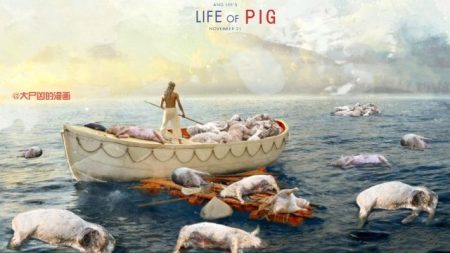
Obama gave his yearly trade report, he wants to sell American pork to Taiwan. Obama is the first African American president. Black people are saved, pigs aren’t saved. Neither are cows. No matter how many hormones they feed them, all humanity has to eat your meat, and it has to be minced, so you don’t know which piece is an eye that saw the sky or a butt tired from needles. Nowadays no-one will eat black people. But there are people who want to swallow Ukrainians, Uighurs, Tibetans. They try out nuclear bombs at Lop Nor, they shoot a movie at Chernobyl, they build a nuclear power plant in Gongliao in Taiwan. Obama is happy to sell uranium for Taiwan nuclear power, I guess Americans like to eat up Taiwanese, barbecued by the torch of the Statue of Liberty. At the beginning of Kafka’s novel “America”, Lady Liberty’s torch is mistaken for a sword, piercing the suddenly brightening sky. Actually, isn’t it really a sword? Lady Liberty wielding the sword, cowering beauty beyond compare. America the beautiful. Beautiful cows, beautiful pigs, beautiful people. But definitions of beauty are changing. Beautiful Oscar movies, a junkie or a female star in a breakdown, garbage floating in space, we have to get membership, purchase tickets online, complete with Coke and popcorn (from genetically modified American corn), and put on our 3D glasses to see it all clearly.
Tr. MW, 4/1/14
Hai Zi
BEIJING SPRING (FACE THE SEA, SPRING IN BLOOM)
from tomorrow, let me be happy
feed horses, chop wood, let me travel the world
from tomorrow, vegetables, grain
I have a house, face the sea, spring in bloom
from tomorrow, writing my family
tell everyone how I am happy
this lightning happiness tells me
what I will tell everyone
give every creek every peak a warm name
stranger, I want to bless you also
may your future be bright
may your lover become your family
may you find happiness in this world
I only want to face the sea, spring in bloom
all these good people at school want to lend you a pencil.
all these good people will rush to pull you up when you fall down.
all these good people won’t help you when you are bullied.
because to the bullies they are also good schoolmates.
all these good people at the army will polish your boots and stand guard for you.
all these good people will lend you money so you can get back to your hometown.
all these good people won’t help you if you are bullied.
because to the sergeant they are also good soldiers.
all these good people at work want to brew you a coffee.
all these good people will listen all night when you’re broken-hearted.
all these good people won’t help you if the boss shouts at you.
because to the boss they are also good workers.
all these good people on the street will pick up your things when you drop them.
all these good people want to give you directions when you are lost.
all these good people won’t help you when your house gets torn down.
because to the government they are also good citizens.
some of these good people will become good police.
some of these good police will protect you against violence.
all these good police won’t help you if there are bad policemen who beat you.
because to the bad policemen they are also good comrades.
all around us the world is full of good people.
all these good people are filled with good intentions.
our world depends on cooperation among these good people.
when it is time we need to stand up by ourselves and step past good people.
Der Vogel furzt, der Schneemann weint, die Sonne scheint. Die Mutter schreit: „Hurra! Der Frühling, der ist wieder da!” Die Kinder spielen im Garten. Der Vater schläft im harten Bett. Die Oma, die ist ziemlich fett. Der Opa kocht. Sein Herz pocht, er riecht den Frühling. Die Blumen blühen, die Farben glühen. Das Pferd sagt: „Wieher!” Es klingt wie: „Der Frühling, der ist hier!“ Anna sagt: „Das erste Schneeglöckchen, das gehört mir!“ Die Tulpe sagt zum Löwenzahn: „Hör auf, in mein Gesicht zu niesen, die Rose versucht uns aufzuspießen!“ Doch Adam pflückt die Rose ab und schenkt sie Eva. Das war knapp!
in the summer three years ago
my son and I
used to play soccer
on empty spaces in our block
there was this boy
must have been around ten
always came running to play with us
he was the grandchild
of the bicycle guard in our apartment block
he had a bit of a lisp
that hot summer
belonged to the soccer world championship
we had reckless matches
they sued me two times
then we stopped playing
Three years later
I’m always alone
in the hot sun
walking around our apartment block
avoiding the mobsters
“You you you
why why don’t you play football no more?”
from his lisping
I recognize him
he is three years older
now I can see it
he’s soft in the head
“Where do you go to school?”
“I I I …. don’t go to school.”
In the evening
a stifling hot night between our buildings
a jerky tune played on an erhu
You can just recognize
Blind Abing’s famous piece
The Moon Reflected in Second Spring
I guess no-one knows
except me
it is that kid not right in the head
downstairs in the garage
taught by his grandpa
July 2013
Tr. MW, March 2014
(click on the picture above to read the Chinese original)
all those so-called platonists
all those rotten at heart
all those taking themselves for judges and kings
all those dreaming of giving
directions to mankind
all those fat shining bugs
wagging their hidden poisonous hairs
banning lions and wolves
banning desperate youths
banning indecent wives
banning loonies and thieves
banning beggars and thugs
banning satan
banning contrary jesus
banning poets
banning me
without need
you don’t need to ban me
I was just passing by
just came looking to see how you’re doing at home
I have seen enough
your republic
holds no place for loonies and no place for me
auf einmal wird es eine stimme in einer wahl des präsidenten
auf dem großen bildschirm redet live
martin luther king:
“ich habe einen traum …”
2014-01
Übersetzt von MW 2014-02
《梦(362)》
我在投一项 诗歌奖的选票
投着投着
就投成了
选举总统的一票
现场的大屏幕上
马丁·路德·金
在演讲: “我有一个梦……”
TRAUM 1
ich hab einen brief an den onkel geschrieben
und will den brief zum postamt tragen
die mutter erinnert mich:
“du schreibst unsere telefonnummer
hinten aufs kuvert”
“auf das kuvert darf nur die adresse”
geb ich der mutter genervt zurück
auf dem weg zum postamt
denk ich hin und her:
“gibt es eigentlich diese vorschrift?”
auf dem einzigen weg zum postamt
straße der kämpfe aus meiner kindheit
kommt mir die frau vom onkel entgegen
ich rufe: “tante! tante!”
sie ignoriert mich
schaut als ob sie mich nicht kennt
da fällt mir erst ein: sie ist schon gestorben
im katastrophenjahr der familie 1997
ich habe kalten schweiß auf der stirn
nimm das handy heraus und ruf daheim an
“mama, jetzt glaub ich an geister!
ich hab auf der straße die tante gesehen!”
aus dem telefon kommt über-echt die stimme der mutter:
“kind! wie kannst du das vergessen?
mama ist auch schon längst tot —
im selben jahr wie die tante gestorben!”
ich schlafe in
einem riesigen zelt
wie das von 1976
von der einheit meiner eltern
wegen des erdbebens
wir erfuhren fast einen monat
den kommunismus
das kollektiv
nach dem aufstehen
ist von meinen schuhen
nur einer übrig
mit nacktem fuß
such ich im zelt
such überall
am ende
find ich unter irgendeinem feldbett
einen fuchs
mit einem schuh
in seinem maul
im sportfest meiner volksschule
gab es einen bewerb
handgranaten werfen
ich war der erste
gestern im traum
die ganze szene des werfens
worum es ging bei der bewegung
und meine damaligen gedanken:
“ich bin besser als sie,
aber setze ich nicht meine ganze kraft ein
kann es auch sein
dass ich nicht gewinne …
ein du steht zwischen der sonne und mir
du hast zwei arten von strahlen
ein du steht zwischen der sonne und mir
aber dein schatten geht zur sonne
ich sehe dein schatten
geht ganz gerade zur sonne
also bin ich verrückt geworden
ein du steht zwischen der sonne und mir
mit deinem schatten zur sonne beweist du
dass mein strahlen so …..
SCHÖNE SONNE AM SAMSTAG
schöne sonne am samstag
wir sitzen am nachmittag im kaffeehaus im garten
besprechen den tod besprechen reisen
besprechen selbstmörder
kommen von dieser welt in eine andere
ein selbstmörder kommt in eine andere welt
und tötet sich nochmals so kehrt er zurück
Frühe 1990er Jahre
Übersetzt von Martin Winter im Februar 2014
es hat lange gedauert
warum erst jetzt
am ball ist jetzt
die öffentlichkeit
am 8. mai
sind sie schon weg
die schlagenden
beispiele
argumente gründe beweise
sind sie schon weg
es hat lange gedauert
warum erst jetzt
am ball sind jetzt
die öffentlichkeit
alle anderen parteien
jeder aufrechte mensch
jede kämpferin für dieses land
der duft der blueten
erinnert an omi
es ist lange her
gar nicht so lang
sie kann bald in den garten
gut eingepackt
anfang februar kommen die blueten
von weitem wie die baeume in taiwan
die baeume in japan
rosa blueten, manchmal weisse
am donaukanal ist auch ein strauch
in zwei tagen ist valentin
This is the first news of the day. They killed a poet and civil rights activist. By order of the president, along with some others. It happened two weeks ago already. Now we have Olympics in Russia. Austrian skiers are winning, along with Putin, who is drinking Schnapps with the Austrian team. No, they didn’t kill that poet in Russia. It was in Iran. By order of the president, supposedly a reformer. I was just reading Marjane Satrapi and Guy Delisle. Iran and Jerusalem. Gaza. Nothing on China. My children are watching Teenage Mutant Ninja Turtles with breakfast. Beijing suspended up in the stratosphere. Michealangelo, Donatello, Leonardo and Raphael have to reach Tian’anmen Square on a tricycle, before it’s too late.
Die US-amerikanische Poetry Foundation teilt mit, daß am 27.1. auf Anweisung des iranischen Präsidenten Hassan Rohani der Dichter und Aktivist Hashem Shaabani hingerichtet wurde. Laut Radio Free Europe habe ein Islamisches Revolutionstribunal ihn und 14 weitere Personen im vergangenen Juli zum Tode verurteilt, u.a. weil sie einen “Krieg gegen Gott” führten. Nach Presseberichten sei die Todesstrafe durch Hängen vollstreckt worden.
Shaabani war während seiner dreijährigen Haft schwer gefoltert worden. Human Rights Voices schreibt:
Seine Freunde kannten ihn als einen Mann des Friedens und der Verständigung, der innerhalb des despotischen Khomeinisystems dafür kämpfte, individuelle Freiheitsräume auszuweiten. In einem Brief aus dem Gefängnis, den seine Familie zugänglich gemacht hat, schrieb er, er habe nicht schweigen können, wenn Menschen willkürlich und unrechtsmäßig verurteilt und hingerichtet wurden. Er habe versucht, das Recht jeden Volkes auf ein freies Leben mit vollen Bürgerrechten zu verteidigen. “Die einzige Waffe, die ich in meinem Kampf gegen diese…
YAN LI! Yesterday I posted his THREE POEMS FROM THE 1980s. Prominent words and themes in GIVE IT BACK (1986), YOU (1987) and YOU (1989) are “love” and “citizen”. The most prominent news story from China in January 2014 was the trial and sentencing of XU ZHIYONG 许志永, a legal scholar and leading activist of the New Citizen movement. Trials, everything connected with rule of law has been very much in the news for a long time in China. See Han Zongbao’s poem 韩宗宝 from fall 2013, for example.
Xu’s statement in court was titled “FOR FREEDOM, JUSTICE AND LOVE“. I was rather surprised at “love” being evoked as a core political value like “freedom” and “justice”. Liberté, Egalité, Amour? Xu’s statement and the accompanying account of how authorities had tried to warn and intimidate him before he was arrested make it clear that he is not only an activist for the rights of migrant workers and for greater openness about public servants’ financial assets. “Can you explain what you mean by Socialism?”, he asks. This is certainly a very important question. China is a Socialist country, at least by name, just like Vietnam, North Korea and Laos. Are there any others? Socialism for China is like Shiite Islam for Iran. But what does Socialism mean, apart from one-party-rule? I think it’s something to believe in, and to practice, to change the fates of working people through actions of solidarity. Isn’t that what the New Citizen movement was trying to do? But Xu has all but dismissed Socialism and has not tried to invoke it as something originally worth believing in. This is understandable, under the circumstances. But can you imagine someone standing up in court in Iran and asking “Can you explain what Islam entails?” Maybe people do it, I don’t know. They probably wouldn’t dismiss religion.
Actually, it is more complicated. I think Xu is testing what is possible. how far the system will go to crush opposition. In his obstinacy he could be compared to Shi Mingde (Shih Ming-te) 施明德 in Taiwan in the 1980s. But Xu is much younger than Shi was in the late 1980s, he was only 15 in 1989.
C:我知道一时半会改变不了你的观点。看过你的档案,你这个人多年来就像一根针一样那么恒定,立场就在那里一动不动。下次接着谈吧。明天后天下午什么时候你觉得合适?
我:明天吧。[words marked by me, see below]
This dialogue between Xu and Beijing State Security official C is very interesting. There is a measure of mutual respect. Xu has spunk, he is brave and obstinate. He mentions “数千万人饿死”, tens of millions died of hunger, as one of the main reasons for not “loving the party” 爱党, as suggested by his interrogator. This dialogue should be very good material for studying Chinese. This section is from the end of the first day (June 25) of Xu’s interrogations in June 2013. You can compare the original to the translation on http://Chinachange.org. In the translation, I could not access the link to Xu’s patriotic article Go Back To China 《回到中国去》, written in New York a few years ago, but it seems to be available on several blogs readily accessible in China.
Words like “citizen” and “love”, and any other words or means of expressions, actually, become something remarkably different in a work of art, different from every-day-usage, and usage in political statements. I find Xu’s use of “love” baffling. “Love” strikes me as rather imprecise, compared to “justice”, for example. Love, simply love, not compassion or caritas. Not bo’ai 博爱, just aì 愛, as in Wo ai ni 我愛你。Imprecise, but endearing, as something obviously non-political. And thus closer to poetry, literature, art? Ubi caritas et amor, deus ibi est. All You Need is Love. And so on.
“If I had a hammer I’d hammer in the morning/ I’d hammer in the evening all over this land/ I’d hammer out danger, I’d hammer out warning/ I’d hammer out love between my brothers and my sisters/ All over this land …” Pete Seeger (May 3, 1919 – January 27, 2014)
IMAGINE
you might as well give up the ghost
of a chance for change in this land
change has been very fast in this land for a while
you won’t recognize a road or a house
or a street is gone that you knew very well
a decade ago or maybe a week.
sometimes the wind clears up the smog
and you can see the sky, or even the hills
and the ranges farther afield with the walls.
there are no wars. this land is peaceful.
the army is the largest by far. there are no tanks.
a tank was burnt and some soldiers were killed.
imagine there’s no heavenly peace
and no rulers above us.
there is only sky and a kite and the doves.
it’s easy if you try.
imagine all the people …
MW January 2014
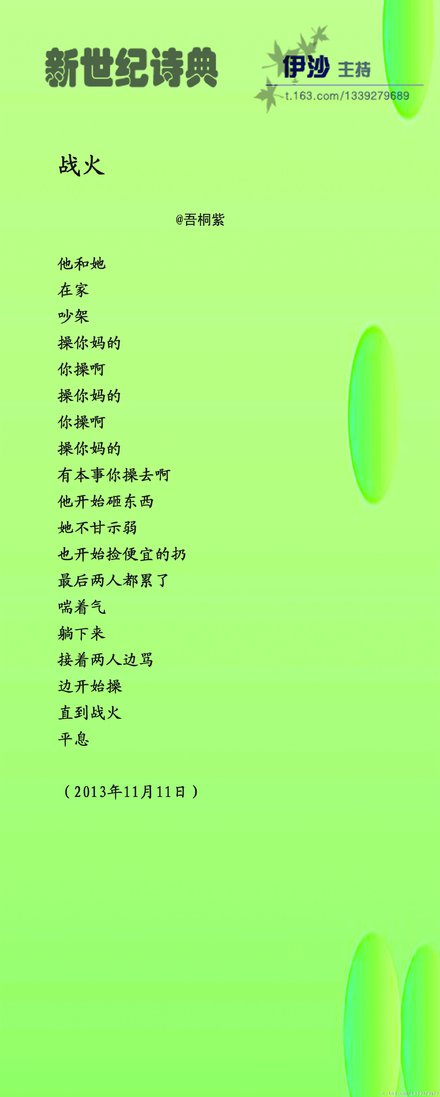
er und sie
sind daheim
und sie streiten
deine mutter
nein die deine
fick deine mutter
du fick deine
du fick zuerst wenn du kannst
er beginnt dinge zu zerbrechen
sie bleibt ihm nichts schuldig
hebt etwas billiges auf und wirft es
am ende sind beide müde
keuchend
liegen sie da
einerseits schimpfend
andererseits fickend
bis es erlischt
das feuer des krieges
a cricket is calling outside my window
I would like to call in this way
holding you in my mouth very softly
you in a teardrop
my feelings for you are certainly not
more crystal clear than the sounds of a cricket
I hope those lending their ears to these crickets
forget how life hurts and the years vanish like water
unterm fenster ruft eine grille
ich möchte auch so rufen
im rufen hab ich dich ganz leicht im mund
in einer träne
mein fühlen für dich ist überhaupt nicht
schöner kristallener als dieses rufen
mögen die deren ohren ihm lauschen
vergessen wie leben verrinnt und ihr leid
This is a tree that does what it wants,
a tree that grows at the edge of a cliff.
A tree that’s clasping and climbing the rocks.
A tree that never had milk, never heard music.
A tree that drank northwestern winds,
A tree that had wind poured in its ears.
A tree that would have liked milk, would have liked music.
A tree that stands under dark clouds, waiting for white clouds in the sky.
A tree that doesn’t stand at attention and leans where it pleases.
A tree that slacks off, like a girl out of shape.
A tree that watches the marching ants on its body and won’t get excited no more.
A tree that explores the depths of the stones.
A tree that will not get pulled out, however it sways.
A tree all alone.
A tree that stands on the edge, overlooking the forest.
A tree that can only bow to its partner if it can stay ten yards away;
it cannot grow as they do in the woods, as they hold on to each other’s shoulders.
2005 Tang Guo
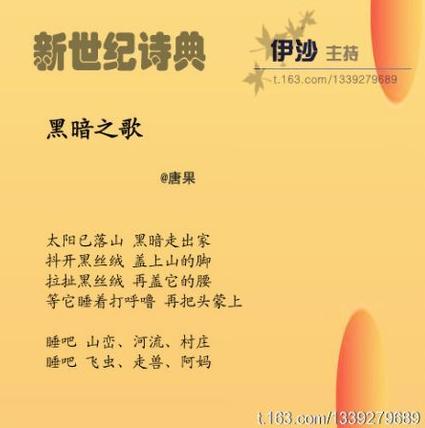
SONG OF THE DARK
the sun has gone behind the peak. darkness comes walking out of her home,
unfolds her black velvet and covers his foot.
she pulls up her velvet and covers his waist.
she waits till he’s snoring, then folds up his head.
sleep now, mountains, rivers, towns.
sleep, mosquitoes, beasts and mum.
Tr. MW, Nov. 2013
Tang Guo
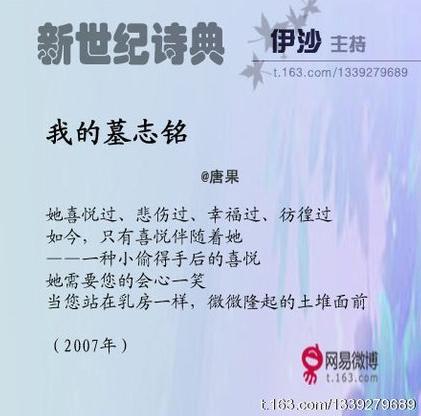
MY EPITAPH
she had joy, she was sad. she knew happiness and wandering.
today, she has only joy at her side –
– stolen joy that comes beyond.
she needs your smile,
as you stand at her breast, a little bulge in the earth.
2007
Tr. MW, Nov. 2013
Tang Guo
FOR YOU
What grows on my body, just take it away.
If you want it – what I haven’t grown yet- come tomorrow.
I will try with my life. If I don’t make it – here are the seeds.
ein vogel sein
ein vogel im baum
im baum auf der mauer
auf der mauer am fluss
in der sonne im november
ein vogel sein
eine ente im fluss
ein schmetterling
ein löwenzahn
oder ein mann
oder ein großer glänzender baum
györ ist eine schöne stadt
das essen ist köstlich
die therme ist herrlich
es gibt ein wunderschönes konzerthaus
was du ererbt hast von deinen vätern
erwirb es um es zu besitzen
ein schönes konzerthaus
ererbt von den toten
eine große synagoge
ein modernes konzerthaus
fast so groß wie das in wien
nur ohne deutschtum an der fassade
vielleicht spielen sie auch wagner
in der schule an der seite
existiert eine kleine gemeinde
aus dieser kleinstadt
wurden 5000 in ausschwitz vergast
auch viele kinder
györ ist eine schöne stadt
es gibt ein theater mit vasarely
an der fassade vorne und hinten
von oben wirkt es wie eine schanze
vom turm des priesterseminars
eine chance für die kultur
wir sahen ein wunderschönes ballett
mendelssohns sommernachtstraum
sokrates sagte in politeia
es brauche eine gemeinde
eine stadt beschützt von den göttern
von etwas gutem
etwas gedacht als gütige gottheit
gott der gerechten
es gibt die kirchen
es gab auch märtyrer unter den priestern
der bischof beschützte frauen im keller
und wurde erschossen
sokrates sagte in politeia
dass ein einzelner gerecht sei
sei nicht begründet
in einzelnen menschen
sondern in der ganzen gemeinde
in einem gott der ganzen stadt
was du ererbt hast von deinen vätern
erwirb es um es zu besitzen
ererbt von den toten
trebic und györ
mikulov und kosice
friedhof altstadt synagoge
viele juden fielen im weltkrieg
im ersten weltkrieg
für österreich-ungarn
oder für deutschland
was 1944 geschah
deportation und dann die bomben
das leben danach
in kleinen städten ist es recht deutlich
györ ist eine schöne stadt
das essen ist köstlich
die therme ist herrlich
es gibt ein wunderschönes konzerthaus
judge swallows by crows judge freedom by a bird in a cage
judge elephants by mice judge butterflies by the eye of a storm
judge ants on a tree by fish in a bowl
judge times by their fools judge jobless graduates by golden iphones
judge square by round judge sea by sky
judge cotton by iron judge sheep and grassroots by tanks
the silent lambs, how meek they are!
judge art and writing by dynamite judge people by country
judge earth by snow judge jews by hitler
judge christ on the cross by judas and the last supper
judge shoes by feet judge cities by villages
judge floods by tall dams judge water by wells
judge football by whistle judge hawkers by city security
judge temporary workers by public servants judge migrant laborers by residence permits
judge B by A judge Second by First judge crying by smiling
stars and the gunpowder in bullets have never been exposed to moisture
if the chessboard says you’re guilty then you are guilty
those people who died from secret questioning those who died
when detained or arrested they must have seen
the sullied red flag and the hands when an experienced questioner
becomes a murderer her shining and glorious life
produced how many deaths how many wrongs written in blood
what kind of terror and torture
most one go through before he prefers death to life
relentless questioning what does it mean to him or her
everyone noticed his neck must have been stuck
but on tv they aired his confession
he put on his own trial of his text and the camera
we don’t need courts we don’t need laws our nation doesn’t need them
’cause the trial is completed in this giant one-way judgment
everyone can be a criminal just have to grab them
and put them inside if they are tough bones their flesh can be done with
one after another gets thrown in jail who will be the next one
what is it that’s breaking up happy days and pleasant scenes
laws appear on worthless paper in restricted public trials
just like catwalks once the process is in motion
once you get inside your only trick is to confess
so confess the grief of an innocent man small traces of blood
and disgrace tears are so helpless just what you asked for
an innocent man in the end hangs his head in confession amen
2013-10-29
Tr. MW (10/31/13)
《审判》
韩宗宝
用老人审判孩子 用白人审判黑人
用黑审判白 用早晨审判傍晚
用乌鸦审判燕子 用笼中的鸟审判自由
用老鼠审判一头大象 用风暴眼审判蝴蝶
用缸中的金鱼审判上树的蚂蚁
用小丑审判时代 用土豪金审判蚁族
用圆审判方 用天空审判海洋
用铁审判棉花 用坦克审判绵羊和草根
这些沉默的羔羊多么温驯
用炸药审判文字和艺术 用国家审判人民
用雪审判土地 用希特勒审判犹太人
用犹大和晚餐审判十字架上的上帝
用脚审判鞋子 用村庄审判城市
用高高的堤坝审判洪水 用井审判水
用黑哨审判足球 用城管审判小贩
用公仆审判临时工 用暂居证审判民工
用A审判B 用甲审判乙 用笑审判哭
星星和弹孔中的火焰 一直不曾受潮
棋盘上标明你有罪 你就有了罪
那些死于秘密审判的人 那些死于
拘禁和逮捕的人 必定见过
被污染的红旗和手 当一个审讯能手
成为凶手 她光辉而荣耀的一生
制造了多少死亡和冤屈 血书累累
需要经历怎样恐怖可怕的折磨
一个人才会 宁死不生
无懈可击的审讯 究竟对他意味什么
大家注意到了他被狠狠卡过的脖子
但电视已经播出他的口供
他对着镜头和台词做出了自我审判
何需法庭 何需法律 国家不需要这些
因为审判业已完成 这单向式的强大审判
每一个人都可以是罪犯 不过是抓起来
再关进去 硬骨头可以从肉体上消灭
一个个的人陆续入狱 下一个是谁
有什么在崩溃 大好良辰好景虚设
法律形同废纸 有限的公开审判
仿佛秀场 那木马般的程序一旦启动
只要你进去了 你唯一的招就是招
招吧 一个无罪之人的悲伤 略带血痕
和耻辱 泪水如此无力 如你所愿
一个无罪的人最终 低头认罪 阿门
2013.10.29
This poem was written partly in response to the New Express 新快报 / Chen Yongzhou 陈永洲 incident, as the author told me after he showed his poem around on Weibo. However, this is not one of those poems which act like condensed news articles, like Zhao Siyun’s Lily’s Story or Sheng Xue’s Your Red Lips A Wordless Hole (German version see Angelika Burgsteiner’s translation). Han Zongbao‘s poem seems to be less straightforward.
“When an experienced questioner/ becomes a murderer/ her shining and glorious life/ produced how many deaths how many wrongs”
Whose glorious life? The murdering questioners? Why “her”? The female pronoun seems to indicate a particular person. Please look at the comments for answers to these questions.
Li Cuimei, do you remember,
we came to the threshing ground
in featherlight snow.
I built a castle for you.
You were 11.
You helped me building that castle forever.
Li Cuimei, it was awfully late when we got home.
The castle froze and got very hard.
We were really awfully late.
Li Cuimei, your face was red
frozen like a hot glowing apple.
I wanted to wolf it down in one bite.
Yi Sha’s New Century Poetry Canon, Oct. 23, 2013
Tr. MW, Oct. 24, 2013
Xing Hao
LI CUIMEI
Li Cuimei, kannst du dich erinnern?
Wir kamen zum Dreschplatz
In wehenden Gänsefedern aus Schnee.
Ich hab’ dir eine Schneeburg gebaut.
Du warst erst 11.
Das war eine tolle Schneeburg,
Du hast lange mitgebaut.
Li Cuimei, wir sind sehr spät nach Hause gekommen.
Die Schneeburg wurde eisig und fest;
Wir sagten, sie würde niemals schmelzen.
Es war wirklich sehr spät, viel zu spät.
Li Cuimei, deine Wangen waren
Gefroren wie Bratäpfel.
Ich wollte so gerne hineinbeißen.
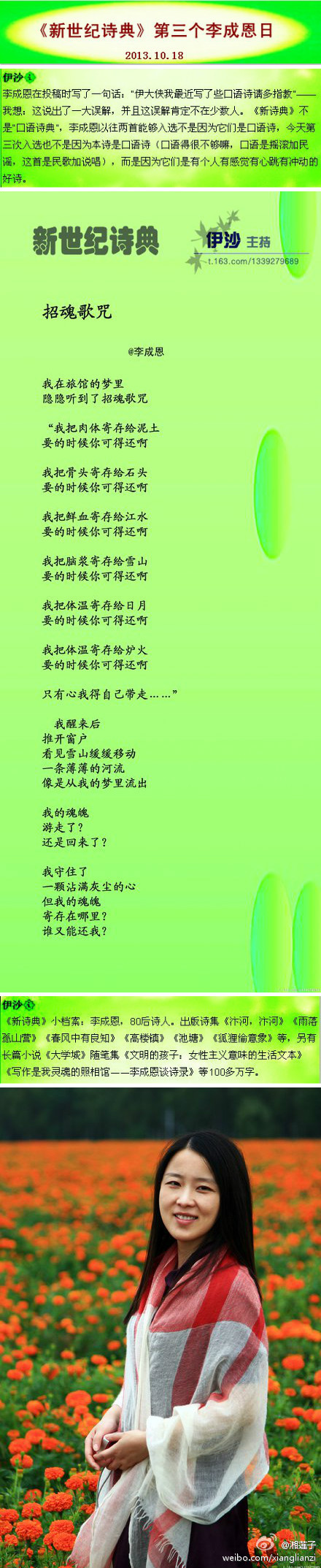
Li Cheng’en, born in the 1980s. Published poetry, essays and a novel.
As soon as I read this, I was reminded of Woeser 唯色, the Tibetan poet. Didn’t know Li Cheng’en was also a woman. All those verses with “I give” could be “I gave”. In the Chinese, there is no difference. The sentence construction is also unique. It is the “ba-construction”. Sometimes the “ba” is a “jiang”, but not here. Anyway, it’s a construction often discussed in Chinese grammar. Literally I think it’s like saying “I take my flesh and give it to the mud for keeping”. Maybe you could also just say “I put my flesh into the mud”, or into the soil. But why would you call on the mud to hold it for you? MW
My translation was originally based on this picture version sent around on Tencent Weibo and Sina Weibo as part of Yi Sha‘s regular New Century Poetry Canon. Li Cheng’en has since told me about a mistake in the copying process. In the Weibo image “warmth” or literally body warmth occurs twice. Li Cheng’en says it should be “eyes” instead of warmth the first time. So originally I had “I give my warmth to the sun and the moon. When I need it, please give it back!” I like both versions. Somehow I’m glad about the mistake. Makes for closer attention.
In German, I first had “ich borg’ meine wärme der sonne dem mond – wenn ich sie brauche, gebt mir’s zurück!”.
I am still not sure about how to translate all these “ba-construction” – verses in German. Now they sound stranger than before, but this is how I had them first. The German equivalents of “please give it back” or “please give them back” sound very colloquial. It’s not standard grammar. Some people don’t like that. Maybe I’ll find a better version later.
MW
Li Cheng’en
GEISTERBESCHWÖRUNG
im traum im hotel
hör’ ich ein lied
“ich nehme mein fleisch und geb’ es dem lehm.
wenn ich es brauche, gib mir’s zurück!
ich nehm’ meine knochen und gib sie den steinen.
wenn ich sie brauche, gebt mir’s zurück!
ich nehme mein blut und geb es den flüssen.
wenn ich es brauche, gebt mir’s zurück!
ich nehme mein hirn und geb es dem berg.
wenn ich es brauche, gib mir’s zurück.
ich borg’ meine augen der sonne dem mond –
wenn ich sie brauche, gebt mir’s zurück.
ich nehm’ meine wärme und geb sie dem herd
wenn ich sie brauche, gib mir’s zurück.
nur das herz muss ich selbst mit mir tragen … ”
ich wache auf
öffne das fenster
seh’ eine kleine bewegung am berg.
ein dünner bach
aus meinem traum.
ist es meine
wandelnde seele?
kommt sie zurück?
ich behalte
ein staubiges herz.
doch meine seele
wo ist sie verborgen?
wer gibt sie zurück?
Übersetzt von Martin Winter im Oktober 2013
Li Cheng’en, geboren in den 1980er Jahren. Publizierte einen Roman, Gedichtbände, Essays.
Picture by Sara Bernal
李成恩
招魂歌咒
我在旅馆的梦里
隐隐听到了招魂歌咒
“我把肉体寄存给泥土
要的时候你可得还啊
我把骨头寄存给石头
要的时候你可得还啊
我把鲜血寄存给江水
要的时候你可得还啊
我把脑浆寄存给雪山
要的时候你可得还啊
我把眼睛寄存给日月
要的时候你可得还啊
我把体温寄存给炉火
要的时候你可得还啊
只有心我得自己带走… …”
我醒来后
推开窗户
看见雪山缓缓移动
一条薄薄的河流
像是从我的梦里流出
我的魂魄
游走了?
还是回来了?
我守住了
一颗沾满灰尘的心
但我的魂魄
寄存在哪里?
谁又能还我?
Li Cheng’en
GEISTERBESCHWÖRUNG
im traum im hotel
hör’ ich ein lied
“ich habe mein fleisch dem lehm anvertraut.
wenn ich es brauche, gib’s mir zurück!
ich hab’ meine knochen den steinen gegeben.
wenn ich sie brauche, gebt mir’s zurück!
ich habe mein blut den flüssen gegeben.
wenn ich es brauche, gebt mir’s zurück!
ich hab’ mein gehirn dem berg anvertraut.
wenn ich es brauche, gib mir’s zurück.
ich borg’ meine wärme der sonne dem mond –
wenn ich sie brauche, gebt mir’s zurück.
ich nehm’ meine wärme und geb sie dem herd
wenn ich sie brauche, gib mir’s zurück.
nur das herz muss ich selbst mit mir tragen … ”
ich wache auf
öffne das fenster
seh’ eine kleine bewegung am berg.
ein dünner bach
aus meinem traum.
ist es meine
wandelnde seele?
kommt sie zurück?
ich behalte
ein staubiges herz.
doch meine seele
wo ist sie verborgen?
wer gibt sie zurück?
Übersetzt von Martin Winter im Oktober 2013
Li Cheng’en, geboren in den 1980er Jahren. Publizierte einen Roman, Gedichtbände, Essays.
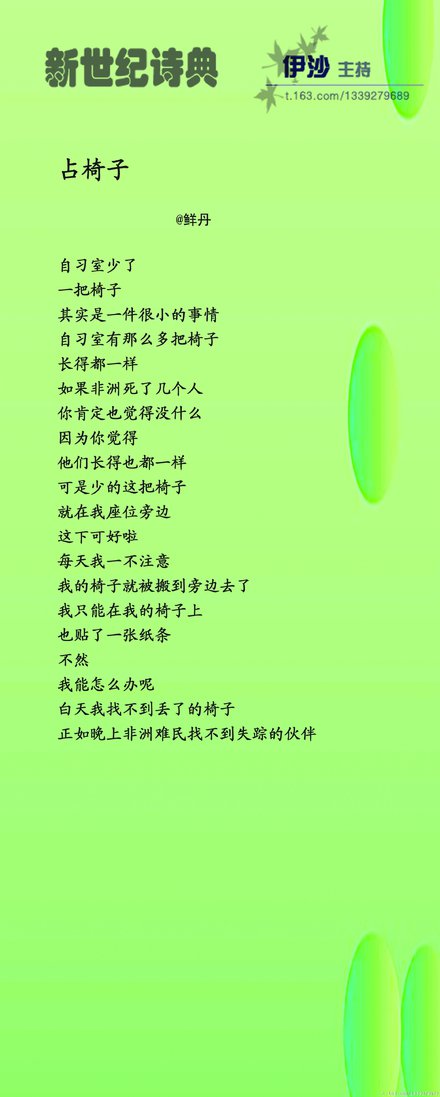
a chair is missing
in the self-study classroom
this is not a big deal
every classroom has many chairs
they all look the same
if a few people die in africa
you would think it’s nothing special
because to you
they all look the same
but this missing chair
is right next to my seat
this time it’s ok
every day once I don’t look
my chair will get moved
I have to stick
a tag on my chair
otherwise
what can I do
next day I can’t find my chair
just like at night african migrants can’t find their comrades
im klassenraum zum selbststudium
fehlt ein stuhl
das ist gar keine große sache
im klassenraum gibt es so viele stühle
alle sehen gleich aus
sterben in afrika ein paar menschen
regst dich das auch nicht besonders auf
du denkst dir
die sehen auch alle gleich aus
aber der fehlende stuhl
ist gleich neben meinem platz
diesmal ist es gut ausgegangen
jeden tag wenn ich nicht aufpasse
wird mein sitz verschoben
also muss ich auf meinem stuhl
einen zettel anbringen
oder was
soll ich machen?
untertags suche ich vergebens meinen sitz
wie in der nacht afrikanische flüchtlinge ihre kameraden
in meiner anthologie des neuen jahrhunderts
erhebt ein rechtsabweichler
seinen kahlen sträflingsschädel
seine gedichte
versteh ich überhaupt nicht
jedesmal bleib ich stecken beim lesen
wie ist er hineingekommen?
weil er rechtsabweichler war
hab ich ihn etwa nur deshalb genommen?
auf dem balkon
bin ich beim schauen
mitten im schauen
fällt mir bald ein
ich mag das schauen
immer nur schauen
ich weiss ich hab
sehr viel geschaut
aber wohin
weiss ich nicht mehr
Übers. v. MW, 1. Okt. ’13
《眺望》
阳台之上
我在眺望
在眺望中
我想起来
我爱眺望
总是眺望
记忆之中
充满眺望
但想不起
眺望什么
VERSUCHUNG
auf drei wegen
kann man in unseren wohnblock hinein
ich komme immer wieder vom westen
die route ist nicht beliebt
und zwar aus einem einfachen grund
man merkt es gleich
man geht vorbei
an einem feuertopfrestaurant
und zwar von hinten
der ausguss der küche
das nimmt dir den atem
da wird dir übel
aber ich weiß es
halt mir die nase zu
und geh vorbei
dann kommen weiden
ich werd empfangen
von grünen schönen
den ganzen weg lang
dort wo es schmal wird
steht eine reihe
und alle neigen sich tief vor mir nieder
zeigen ihr langes leuchtendes haar
ich bin daheim
cannot abandon this country, five thousand years of meager creeks and cold peaks
five thousand years having a band of whores erecting gateways for memory
its people industrious, intelligent, brave
and used by these whores, pressed to their last drop of blood
cannot abandon this country, connected from birth inseparably
my tears becoming one of its rivers, drinking its juices
slurping its blood, look at these whores telling lies as their trade
poets are used to the emperor’s new clothes, no-one plays a small child
I cannot abandon this country, nor am I having these whores banish me
getting angry is fruitless, I’d rather become another Sisyphus
and even for dying, it is on its earth where I am going to sleep
to be able to drink big gulps of warm wine
to enjoy glory days in stupor
to be able to think
behind the ticking window curtain at noon
think of trivial things
to be really embarrassed for a long time
to be able to take a walk for yourself
sit down on a chair painted green
close your eyes for a while
to be able to sigh
thinking of unpleasant things
to forget where the ash
dropped from your cigarette
to be able to lose your temper
when you are sick, to do undignified things
to be able to walk along a familiar road
walking all the way home
to have someone kiss you
wash you scrub you, to have exquisite lies
waiting for you, to be able to live in this way
would be great, any place, any time
picking flowers
mouths finding mouths
no unrests no revolution
what flows down to the ground is the sacrificed wine
to be able to live in this way
would be great, would be the ultimate thing to enjoy!
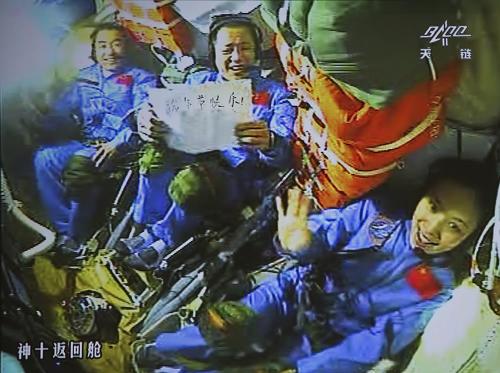
Lydia and Julia. My tastes are simple, mostly. No Fehlschmelzen. Although that word makes me think of Ai Weiwei. Rare words. Rare earths. Che, fourth tone. Like the chai of demolition, but with earth instead of hand. In a famous poem by Du Fu, On Top Of Yueyang Pagoda. Che, separation. Of Wu and Chu. Still great realms, 1300 years later. Wu is Shanghai, Suzhou, Hangzhou and so on. Wu-dialect of Chinese, as different from Mandarin as French is different from German or Dutch, at least. Wu and Chu. Chu is Sichuan and so on. Dongting lake separates Wu and Chu. Dongting lake seen from the pagoda. Heaven and earth, blablabla, the light on the lake. No letters from home. North still at war. Writing this, leaning at the railings, crying. 昔聞洞庭水, 今上岳陽樓. 吳楚東南坼, 乾坤日夜浮. 親朋無一字, 老病有孤舟. 戎馬關山北, 憑軒涕泗流. Xi wen Dongting shui, jin shang Yueyang lou. Don’t know what kind of dialect Du Fu used. Not Mandarin, that’s for sure. More something like Wu, probably. Which I don’t speak and can’t write. Heard of Dongting lake, now I climb the stairs. Wu Chu dong nan che, qian kun ri ye fu. Here comes the “che”. Rare word, in present Mandarin. Dong nan, east and south. Wu is southeast from Chu. Heard of Dongting lake, now I climb the stairs. Wu and Chu divorced; Sky reflected, night. Not a word from home. Sick and old, a boat. War steeds roam the north. I lean here and cry. Five syllables per verse. Yes, much like Haikus. Yi Sha has space poems. 2 from 2003. One about first signs of spring, lunar new year, mahjong, the space shuttle Columbia, fear of flying, freedom. The other one about space, father and son, skies at night, North Korea. This 2nd 1 was in the FAZ on June 26, 2013, when the Shenzhou 10 capsule returned to earth.
Last week, in the run up to our website relaunch and the live event, we started an open call and asked for your short ‘Space Poems’. The call is closed now and we would like to thank everyone who took part!! We received 15 poems, sent to us in English and German via twitter, facebook and as blog comments and enjoyed reading the poems a lot. We hope you all do!
… and here are the Space Poems …
daybreak
when we credulously
reached for the clouds
a clamour
from the mouth of
a careless fish
–
by Achim Wagner (via twitter)
words are vinds which blow roofs
–
Daiga Mežaka (via blog comment)
There’s no sound in a space poem, only the charged particles of solar wind.
clamoring flowers drowning the factory’s din
I am the angriest, rising an inch from the earth
lights and the night, mirrors of flesh
love’s virtual image, opposite
objects lean on each other. horses in sleep
dream of a storm. I am a tree
I talk to my blossoms. I am a fish
I breathe in my river. in the darkness
wildflowers up on both shores burning till dawn
I am the perfect spring dream I cannot express
tongue slides on the tip of the words. rolling rocks
music rising anew, a forest keeps still
roots rotating fast in the mud, in a dance…
bodies forming furniture
axes and saws roar from afar
look how lonely he is, counting his rings
like that tree in the waste
das rufen der blumen erstickt den lärm der fabrik
ich sei die wütendste, rag einen zoll aus der erd’
der spiegel des fleisches, die nacht und das licht
virtuelle liebe, gegensätzliche dinge
bedingen einander. schlafende pferde
träumen von stürmen. ich bin ein baum
im gespräch mit meinen blüten. ich bin ein fisch
atme in meinem strom. die ganze nacht
brennt blühendes unkraut an beiden ufern
ich bin der schönste frühlingstraum, den ich nicht sagen kann
die zunge rutscht auf der klinge der sprache. rollend geröll
erneut steigt musik, ein schweigender wald
wurzeln rotieren rasend im lehm, dreh’n sich im tanz…
leiber richten sich als möbel
brüllende äxte und sägen von ferne
schau, dieser mensch ist so einsam, er zählt seine ringe
ein baum in der wüste
The Globe and Mail article quoted by Paul Manfredi is well informed and sympathetic. But it doesn’t spell out any concrete reasons for Ai Weiwei’s singular status. Ai Weiwei’s status, even after his imprisonment, is that of a “princeling”. It seems to be easier to get rid of Bo Xilai. Bo’s father was one of the “eight immortals” of the Communist Party. Ai Weiwei’s father Ai Qing was a persecuted Communist writer, persecuted under Communist rule since the 1940s. Persecuted before, that’s where he got his name. Most of his colleagues denounced each other. Among famous writers, few seem to have been as obstinate as Ai Qing. He was banished to an army town in Xinjiang, a huge city today. There he cleaned toilets, together with little Weiwei. But after Deng Xiaoping came to power in 1978, Ai Qing became an icon. Unlike Bo Xilai and his henchmen, Ai Weiwei did not build labor camps and organ-harvested Falungong-followers. Before he was arrested, Global Times had published many sympathetic articles about his civil rights activism. And even after his abduction and imprisonment at an unknown location, Ai Weiwei gets to keep his comparatively huge house and grounds and most of his fortune. If he was persecuted too much, the main reason for Ai Weiwei’s status would come out too clearly: It would be awkward to discuss his father’s fate in detail. Cultural policy since the 1940s is no secret to anybody in and around the arts in China. But still. Maybe it would come out too clearly how control over art and literature and everything connected to culture was deemed even more important than in other Socialist countries. How idealism had been betrayed again and again, most effectively with broad domestic and international participation in economic growth after 1989. Ai Weiwei is very different from his father Ai Qing in many aspects, as well from his older brother Ai Xuan, who is also a well-known artist in China. But like his father, Ai Weiwei remains an icon of idealism. It would be awkward and politically dangerous to challenge such icons too much and thus revive ideals in a big way.
The Globe and Mail article quoted by Paul Manfredi gives convincing evidence of Ai Weiwei’s civil disobedience and civil rights engagement. Another good recent piece on Ai Weiwei, his imprisonment in 2011 and comparable phenomena elsewhere around the world is a TED-talk by An Xiao Mina.
chairman, he is not a bird
chairman, he is not a plane
what is chairman all about?
chairman makes a chair for you
chairman, he makes all the legs
chairman, he makes all the arms
chairman, he makes every back
chairman, he makes all the chairs
don’t tell me you didn’t know
what is chairlady about?
chairlady will make them too
chairlady makes all the legs
chairlady makes all the arms
chairlady makes every back
chairlady makes all the chairs
don’t tell me you didn’t know
i am a rock next time around
what will you be in your next life?
what will you be when you are dead?
the question is not accurate
there is no world next time around
when we are tired, it is here
and in the morning, god be willing
i’m paper then next time around
next time around i am a child
what will you be in your next life?
what will you be when you are dead?
the question is not accurate
there is no world next time around
it is with us, when we are there
and in the morning, god be willing
my child is here this time around
under mao zedong
we had starry nights
we had vast starry skies
people lifting their heads
one summer night
it was father and i
father told me
about the universe
about a cosmonaut
yuri gagarin
flying in space
my mouth stood open
like a barn door
thank you, father
my heavenly father
in a dark corner
of north korea
measuring 9,600,000
square kilometers
among hundreds of millions
malnourished blockheads
i was the smartest
did not see the future
but i saw space
Concentrating on private impressions and conversations in published poems is self-evident for many, maybe for most people who read, write, translate, edit such stuff. But China, and also Taiwan to a certain extent, have put into question art, books, beauty, skills, traditions, language- anything had to serve the Party, and what the Party couldn’t use could not exist. Capitalism does it too, everything that doesn’t pay, that we can’t finance, cannot remain. They get along splendidly, finance and centralized state, Mao and the Mammon. That’s how the modern world was developed.
“Beneath our feet, we couldn’t see through dust and ash, rank growth of old. Father holding his iron staff, asking me: ‘Are you afraid?’ Oh, I raised my head, Orion sparkling right in the middle, space reverberations sounding from eons– falling silently, are those meteors, one blue whiplash after the other?” 流星記事, Meteor Account, or Meteor Accounts, by Zhu Fengming 祝凤鸣 (Oct. 1996). Nick Kaldis just showed me his translation of Meteor Account, from a dozen Chinese poems in the magazine Dirty Goat (#24 February 2011).The quote above is in my own translation, I couldn’t resist. Rank growth of old – 古蟒 or 古莽? Nick Kaldis thinks there might be a misprint. (“古蟒 would refer to a snake known from fossil remains, the Paleopython, while 古莽 refers to rank grass.”). 祝凤鸣,男,1964年生于安徽宿松县… Zhu Fengming (born 1964) is a geologist from Anhui.
《流星記事》
祝鳳鳴
有一次,丘崗夜色正濃,二月還未清醒,
我踏著回家的羊腸小徑,在山坡
白花花的梨樹下,碰見鄰村
淒涼的赤腳醫生,面孔平和。
“剛從李灣回來,那個孩子怕是不行了。”
他說,藥箱在右肩閃著棗紅的微光。
路邊的灌叢越來越黑,細沙嗖嗖——
我們站在風中,談起宅基,柳樹,輪轉的風水。
陰陽和天體在交割,無盡的秘密,使人聲變冷,
“……生死由命。”這時,藍光一閃
話語聲中,一群流星靜靜地布滿天空﹔
還有一次,我和父親走在冬月下
曠野的一切彷彿在錫箔中顫抖。
腳下是隱形的塵土和古蟒的灰燼。
父親拿著鐵棒,問我:“你怕不怕?”
哦,我抬起頭來,獵戶星座在中天閃耀,
空中傳來千秋的微響——
那無聲垂落的,是流星,還是一道道藍色的鞭影?
The existence of space. Of God(s). Yin-yang, fengshui. Existence of wonder. Or the other way, wonder of existence. Outside the Party. Very much among the common people on the other hand, in the countryside, barefoot doctors, and so on, in the rest of Zhu Fengming’s poem.
Yes, 蟒 (mang3) may be a misprint for the homophonous character 莽 (mang3). 古莽之國, the ancient uncultured state. The Book of Liezi. 古莽之國,出《列子周穆王第三》,屬迺古三國。三國者何也?古莽之國、中央之國、阜落之國也。蓋處天地之外、神話之中,事未可徵,史未可考。古莽之地,陰陽不交,寒暑不辨;民不衣不食而多眠,五旬一覺,而以夢為真,真為妄也。(Wikipedia)
Space, spaceflight. A great achievement. “Sister killed her baby ’cause she couldn’t afford to feed it we are sending people to the moon.” Prince, Sign o’ the Times. Really, I think they should have written more about this in the international papers. Yes, it worked, no-one died, Wang Yaping 王亞平 teaching from space, tens of millions watching and listening to her. A great leap, a giant leap, really. Responsibility, great responsibility. How many things could go wrong, in space, for the nation. Planning everything, the very opposite of wu wei. That’s how the famine came. No space for real wondering. Everything organized, all propaganda, all of the nation. They are planning, they have begun to move hundreds of millions more to the cities. Destroying small farms, villages, settlements, temples. Like they destroyed the ancient cities.
They should write about spaceflight, every time. I have to get back to my daughter. Show her the videos from Shenzhou 10.
Yi Sha’s poem is from 2003, from the beginning of these missions 10 years ago.
Lovely town. Sleepy. Great central square. Or main street. Everybody out there on Friday night, who is not in the other beer gardens. Or begging. First rain-free night in ages, maybe. Rivers all full. Still chilly, just a little. Blankets on the seats outside. Great cathedral, we haven’t been inside yet. They had a great mass, with TV. People standing on the steps outside, and kneeling. Wonder how it was under Socialism. Much sleepier? Sleep of reason breeds … how does that go? What reason? Goya. Modernism, Kosice Modernism. An exhibition advertised around town, or a book, or an event. In Slovak, so I’m not sure. 。。。(click for more)
What is Chinese literature about? Exile, inner exile. Inside China, banished. Happened to many poets through the ages, including the most famous. Or voluntary exile, to be somewhere else, not among the people. 别有天地非人間。Teaching Latin in a high school in Vienna, a friend of our uses Du Fu 杜甫. Du Fu, Brecht, Theodor Kramer, Guido Zernatto. She teaches Latin, so exile comes from Ovid. Epistulaes ex ponto. From Casablanca. No, it’s that port city on the Black Sea, in Romania. Constantza. Like Tristan Tzara. Z or S? Whatever. Du Fu. They use an old edition from the 1930s. Brought into verse by H. Not just translated, not directly. That’s how they used to do it. Gustav Mahler’s 馬勒 Song of the Earth 大地之歌 came from Li Bai 李白 (Li Tai-po), Wang Wei 王維 and Meng Haoran 孟浩然, through many versions in different languages in between. Mahler wrote the final versions to fit his music. Two poems by different poets merged into one, at the end. No, that Du Fu edition is very accurate, from the feel of it. Two great volumes, large and thick. Not rhymed. But rather formal. Not luosuo 羅嗦. No superfluos words. Hardly. Again, from the feel of it, I haven’t checked, just listened and read. Listened, our friends read well. Very down-to-earth, daily details. Ants, chicken. Fencing in chicken, thinking about it. A reference to the times, the circumstances. Suddenly becoming political, as our friend says. Towards the end. A moral at the end, maybe more in this German version than in Chinese. Circumstances, Du Fu’s circumstances. He always complains, says our friend. Very down-to-earth, very daily life. Strife, poverty, famine. Starving on the streets. We have a master’s thesis on Tang Poetry social critique in Vienna, from 1990. Anna Maria Eigner. Bai Juyi 白居易, many different poets. Li Shangyin 李商隐 wrote a lot about poverty in the countryside. Not in is most famous poems, unfortunately.
Daddy, who is this?
He is called Li Bifeng. I just translated a poem by him. He is in prison. They are all in prison. This one is a writer, too.
Why is he in prison?
He took part in protests, demonstrations. Demonstration, you remember what that is? Yes, we were in one together this year.
Where is this?
This is in China.
What else did he do?
He organized strikes. Do you know what strikes are?
No.
Strikes are when workers in a factory say they won’t work, all of them. To get better pay. To get insurance, you know what that is? When you are sick, to get money from insurance so you can get a doctor, go to hospital.
Daddy, are there any places with no government?
Good question. There are some places where women are in charge. They own the land, they run things. Used to. Sometimes still do. Places in China.
Well, they should. Women are important. Women bear children.
I don’t know if there are any places with no government. There are some places with not many people at all. Deserts, mountains.
he jumped from the top of the building
peng!
he was dead
it wasn’t like he had seen it
on tv
on tv
the contractor who owed migrant workers
when he heard someone would jump
right away he came out with his pay
but this time
no-one held him back
that’s how he died
peng!
Olomouc diary
March 27, 2013
Train connection from vienna worked just fine. Half an hour at the border station of břeclav, used it for a short walk, had a big laugh over buying powidl kolačni or so. Tram to down town, found the hostel immediately. Friendly aussies, still.
Weather better than in vienna- at least no snow, and a little bit of sun.
Went out to have lunch in a micro brewery first, then on to the art museum, which has free admission on wednesdays and sundays. Some very strong and original modern stuff here, as well as a lot of boring derivatives.
Tired, both from the museum and the beer with lunch.
Waiting for martin, who went back up to photograph a couple of paintings.
Started talking about all the things we want done in a week- time alone, time together, dissertation writing… I think there just aren’t enough hours in a week. But we will keep working on it.
Went home, Martin quite exhausted. i had gotten a second wind and went out for pizza, which was quite sufficient after a late and massive lunch.
March 28, 2013, olomouc
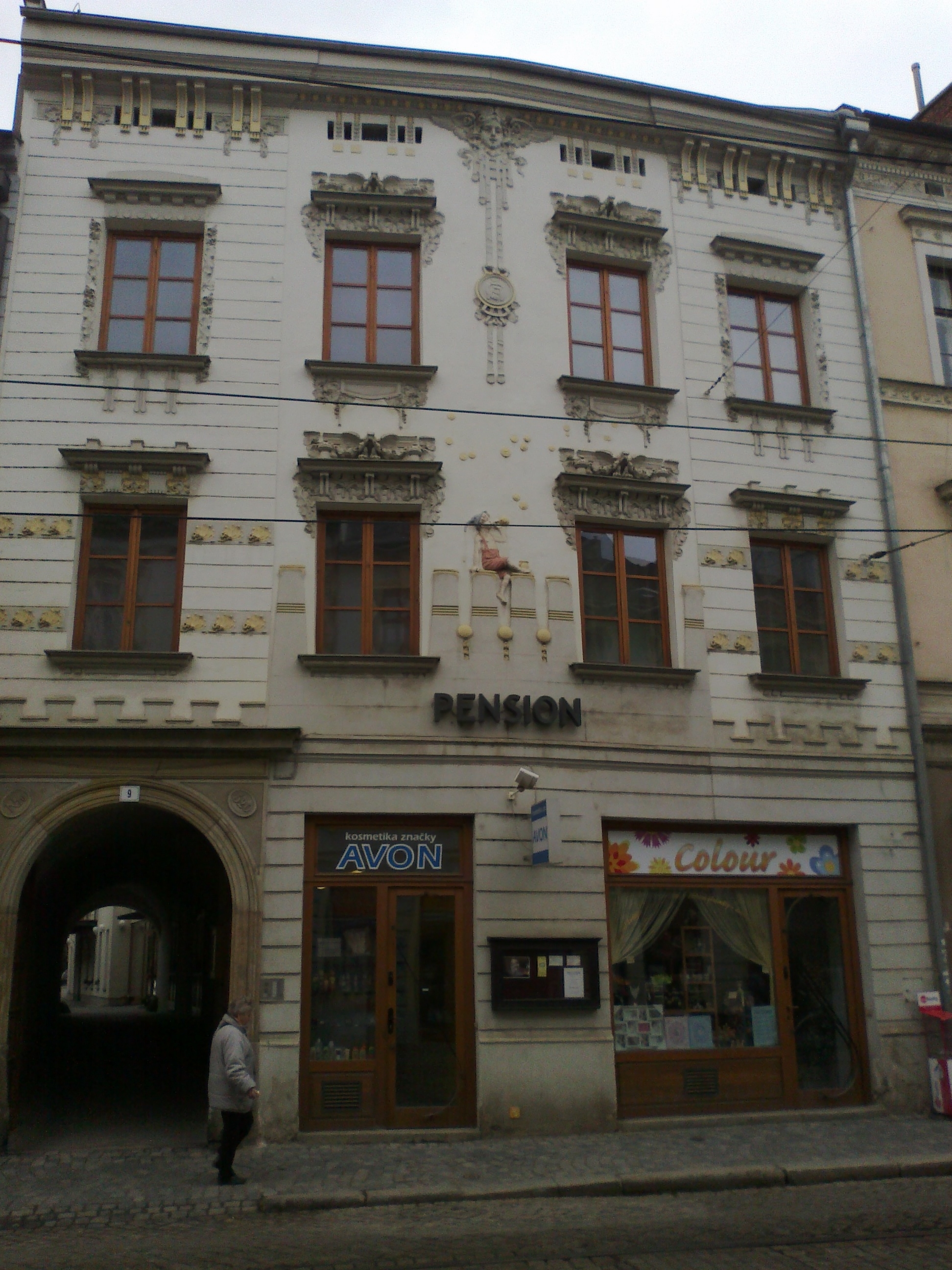
Next day martin got yoghurt and pastries for breakfast, in a little shop right around the corner, one of these super- narrow slots in a lovely pink art nouveau building with white friezes round the windows.
Did some soul searching on whether to stay one more night. Martin phoned his parents, and they said, fine. Private room was booked already, so we got a dorm room to ourselves, at 600 crowns instead of 900 (24 vs. 36 EUR).
Went to see the town some more, including the noon-day astronomical clock, playing music on its bells and showing happy members of the working classes. Sent postcards to our respective parents. Asked tourist info about concerts that day. No, we would not drive to Brno for that. Girl in the tourist office slightly clueless. Post office right on the square.
Also bought some chapstick, found a minimalist czech version, good quality, but just a tiny amount stuck in a plastic holder. If it gets warm, you have one mess. But hey, it is still winter, and at 11 crowns i am not going to complain.
Had lunch in a place at the university, bishop’s square. Then went home to veg out a bit and even sleep some.
Caught a little concert in the museum of modern art, 50 crown entrance fee. For that, a middle aged lady who sang chansons in czech, her friend the guitar player, the pianist, and the hand drum (hang drum?) player. All very spontaneous, family- like, with the audience humming or singing along occasionally. Not too long, either, stopped just in time for dinner. Back at the lovely micro brewery, which was packed with young people. Another lovely dinner.
And so off to the hostel, chatting a bit to some finnish and portuguese travellers, and off to the bunk beds.
Olomouc art museum collection
Olomouc art museum collection
Olomouc art museum collection
March 30, 2013, train from olomouc to vienna.
Bit cold in the morning,woke up from that. Snow/ sleet falling. Managed a shower, and breakfast, and were out at the railway station in good time. Trains a bit delayed, but we should be home on time. Nice lunch at the breclav railway station canteen, new and clean place with the loveliest bathrooms.
In the summer of 1992, in a vegetable garden on the roof of a shed housing inmates of the Sichuan Province Prison # 1, I spent three days alone with the old prisoner Zhang Fafu, who had been transferred to this prison at Nanchong from forced labor at a coal mine. Our task was to build a wall out of plastic parts and wire at the side where the roof garden faced the bathing pool, to prevent other prisoners from secretly watching the women taking their baths down below. I got this assignment at that time because my sentence was short, I was working at the kiosk of my unit and wasn’t considered a common criminal. So the cadre chose that old prisoner from the coal mine and me.
From the second day on he told me everything about himself. From his talking, I could feel the jolts in his soul. He had attended high school before Liberation in 1949, he loved reading and understood a lot of things; he even liked poetry. He asked me so often until I had no choice but to give him one of the poems I had written. A few days later, I was transferred. After I arrived at Prison # 3, someone from # 1 came to go over my accounts. That’s when I heard something happened to Zhang Fafu. He had taken the plastic parts from our wall, tied them to is arms and jumped from a building. He wasn’t dead, but he became a vegetable.
I don’t know if he read my poem. Later, when I was released from Prison # 3 upon completion of my sentence, I stuffed the original manuscript of this poem into a bamboo flute I had got from Liao Yiwu, and blocked the hole at the bottom with soap. This way I got to take the poem with me. All these years, whenever I think of Zhang Fafu, I think of our plastic wall. It’s not the same as the wall in my poem, but now I cannot separate the poem from Zhang Fafu.
Tr. MW, 2013
Translator’s note: Li Bifeng’s NOTE and the following poem (http://wp.me/PczcX-zk) are part of his novel Wings In The Sky (天空中的翅膀). One chapter is available on the LIBIFENG2012 WordPress site. The main characters are an old prisoner, a bird and a woman who lives in a shed not far from the prison with her daughter. The plot is rather interesting.
What is Chinese literature about? What is art about, in any medium, time or place? The reading for the imprisoned underground poet and activist Li Bifeng on June 3rd, 2013 in Vienna will include works by a diverse range of authors. Li Bifeng has become known through his association with Liao Yiwu, the exiled poet and documentary writer, now in Berlin. On his own, judging from his available work and his literary impact in China, even in dissident circles, Li Bifeng would not have become famous. This doesn’t mean he is not worth reading. But he has had little opportunity to find an audience, and not everything that is available online now is as compelling as Liao Yiwu’s signature poem Massacre, or any other famous piece of writing in Chinese. Actually, none of the works by Li Bifeng I have read up to now sound very dissident at all. They are “just art”, so to speak. He could have published them, as a different person.
What other texts will be read at Vienna University on June 3rd?
On May 3rd, 2013, we had a very interesting workshop and discussion at Vienna University’s East Asia Institute, on literature in Korea, China and Japan. It was initiated by Lena Springer, who invited Zhang Chengjue 張成覺, expert on the year 1957 and the so-called Anti-Rightists-Campaign in China. Zhang and Springer were inspired by Lu Xun expert Qian Liqun from Peking University, who called for research on the late 1950s in China across disciplines. The workshop in Vienna was about censorship, political changes, publishing conditions and (self-)perceptions of artistic quality. Professor Schirmer told us about a debate in South Korea 45 years ago, in 1968. A big-wig critic who became culture minister later published an essay, lamenting the lame state of Korean literature. A poet responded and said he had poems that could not be published, and his friends also had literature that could not be published because it would be considered dangerous, unstable, unsettling. 不穩。The critic said he didn’t understand. Surely good art would be independent of politics and would only need imagination and talent? Not so, the poet replied. Art is potentially unsettling, if it is powerful art at all. The critic didn’t get it again. Sounded very much like Prof. Kubin and his friends in China. Also like Taiwan 30 years ago, of course.
By calling for a worldwide reading on 4 June 2013 for the Chinese underground poet, Li Bifeng, the international literature festival berlin is demanding that the Chinese government release him from prison.
The poet and campaigner for democracy, Li Bifeng, wrote a report in 1998 about a courageous group of textile workers who blockaded a Chinese motorway and sent a video recording of it to foreign human rights organisations. In 1989, after he had been involved in the protest on Tiananmen Square and on the run for six months, Li Bifeng was captured and sentenced to twelve years imprisonment for ³economic crimes². In November 2012, the 48-year-old was sentenced to another 12 years, with no good reason, without evidence and despite worldwide protests. The authorities
suspect him of having helped his friend, the author Liao Yiwu and holder of the Peace Prize of the German Book Trade 2012, to escape to Germany in 2011.
In the short phases in which Li Bifeng has been able to write, he has written numerous poems, prose texts and plays as well as a novel. On the anniversary of the massacre on Tiananmen Square in Beijing, which took place on 4 June 1989, the Peter-Weiss Foundation for Art and Politics e.V. and the international literature festival berlin have initiated a
worldwide reading for Li Bifeng.
Appeal, texts by and about Li Bifeng: www.worldwide-reading.com, http://libifeng2012.wordpress.com
Some new translations into English and German
AERGER
aerger noch aerger noch aerger noch aerger rauch aerger noch aerger noch aerger jedes jahr fuer jahrzehnte aerger organisation gegen organisation alle machen mit es gibt endlich nach 70 jahren am 8. mai in wien am heldenplatz einen sieg mit musik mit dem heer mit ueberlebenden mit einer freude von beethoven strauss einem tanz einem stolz
I am starting to understand the pain in my poems comes from myself
you don’t have the despair and confusion you are accustomed
working overtime sleeping getting paid sending money
going back home every year or two like a clockwork
you are used to the rhythm you came from a village in a different province
you didn’t face the bewildering city the temporary residence permit’s
iniquity didn’t think of putting down roots in the city
weren’t going to ponder anything a little more distant
or resist you are used to “government rules
or everyone does it that way” so they are always right
all those years being best friends but you could never
comprehend my anger and I could never understand
how you swallowed it all and kept silent “to dream is the greatest right of the age”
and exactly the opposite “why would you dream of anything unrealistic”
facing reality coming from the countryside I feel so
futile and helpless inappropriate alone sometimes
“life is about getting through every day” you tell me
we talk about outfits the weather distant Sichuan
or how we are going to go far in the factory
defective products. staying close to the factory’s wages… life
being used to repeat every day twenty-four hours
sixty minutes per hour this is life finding
work in the fields in the factory getting married giving birth
raising kids getting old like your parents your whole life
you never lose which means you never win it remains
to keep alive keep it simple breaking up endless repetitive
life being dull or pure I think of these words
and of your smile actually your life is getting less
peaceful worrying your husband far away
could he get out of hand and your kids might
obey less and less and your burden grows heavier
wearing you down sometimes you sit at the window
silent alone brooding
moments nobody notices
Leben in täglichen Kleinigkeiten. Voller Rußgeruch.
Gewalt und Denken als zufällige Gewürze.
Die Gewalt des Beraubtwerdens hast du vergessen. Ich müh’ mich
Noch ab unterm Schatten des Denkens. Du sagst jedesmal
Das Leben mache dich viel zu müde. “Warum noch an diese Dinge denken”,
“Man kann ja doch nichts ändern. Die Realität macht nur Kopfschmerzen.”
Genau. In dieser gleichgültigen Welt. Sind wir
Winzig und schwach. All die Jahre. Hat jemand gelesen
Den Zorn und die Trauer in meinen Gedichten. Mir setzt man
Einen seltsamen Hut auf. Über das Denken und die Politik
Hab ich mir nie Gedanken gemacht. Aber zur Gerechtigkeit,
Ich kann nicht tatenlos zusehen. Es muss Aussichten geben.
Du beschwerst dich über mittlere Kader in der Fabrik.
Manchmal sind sie korrupt….Aber am Ende
Seufzt du immer und sagst: “Leider wissen ihre Vorgesetzten
Nichts davon. Sonst…. Damit wir nicht
Verzweifeln. Machen wir uns über unerreichbare Vorgesetzte
Schöne und gütige Gedanken. Bis irgendein Chef mit den Geldern durchbrennt
und dir noch drei Monate schuldet, dann bist du baff. Egal ob
Wir beraubt oder betrogen wurden. Wir stehen der Welt gegenüber
Voller Begeisterung und Vertrauen. Von Anhui bis Dongguan. Ganze sechs Jahre
Hast du lauter Fabriken gewechselt. Von Dongkeng bis Changping. Und Huangjiang
Wir waren nicht weit voneinander getrennt. Dein blinkendes Logo, wir haben gechattet,
Du hast mir dauernd etwas erzählt.
Dass die Fabrik bankrott ging. Dass die Bestellungen verschwanden.
Du hast mir erzählt, dass dein Chef, wegen der Wirtschaftskrise
Jeden Tag buckliger aussah. Du sagtest, als du ihn sahst,
Standest du deinem Vater gegenüber, im Feld nach der Missernte.
Painting by Sara Bernal (untitled, mixed media, 2013)
ANGST AND FEAR
– for Ernst Jandl
FEAR
fear. fear.
fear is. fear.
fear is a. fear.
fear is a bad. fear.
fear is a bad advisor. fear.
fear is a bad advisor, you. fear.
fear is a bad advisor, you lock. fear.
fear is a bad advisor, you lock yourself. fear.
fear is a bad advisor, you lock yourself in. fear.
fear is a bad advisor, you lock yourself in a. fear.
fear is a bad advisor, you lock yourself in a cage. fear.
fear is a bad advisor, you lock yourself in a cage and. fear.
fear is a bad advisor, you lock yourself in a cage and cannot. fear.
fear is a bad advisor, you lock yourself in a cage and cannot even. fear.
fear is a bad advisor, you lock yourself in a cage and cannot even pee. fear.
fear. fear.
fear is. fear.
fear is a. fear.
fear is a bad. fear.
fear is a bad advisor. fear.
fear is a bad advisor in. fear.
fear is a bad advisor in a. fear.
fear is a bad advisor in a tight. fear.
fear is a bad advisor in a tight dress in. fear.
fear is a bad advisor in a tight dress in a. fear.
fear is a bad advisor in a tight dress in a tight. fear.
fear is a bad advisor in a tight dress in a tight cage. fear.
fear is a bad advisor in a tight dress in a tight cage and. fear.
fear is a bad advisor in a tight dress in a tight cage and cannot. fear.
fear is a bad advisor in a tight dress in a tight cage and cannot even. fear.
fear is a bad advisor in a tight dress in a tight cage and cannot even pee. fear.
MW April 2013
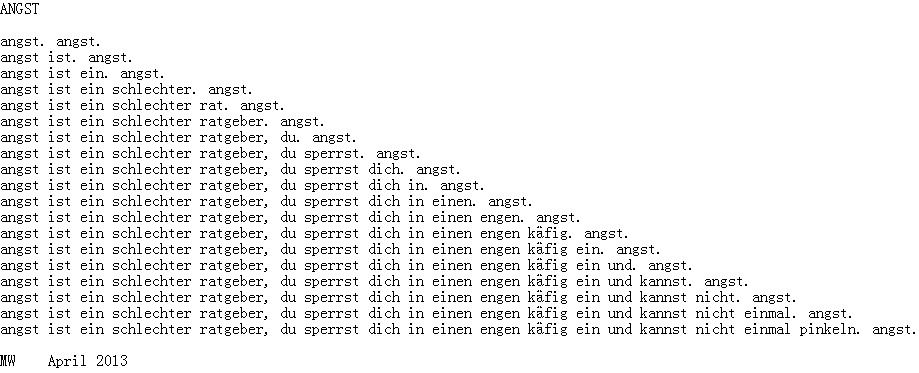
ANGST
angst. angst.
angst ist. angst.
angst ist ein. angst.
angst ist ein schlechter. angst.
angst ist ein schlechter rat. angst.
angst ist ein schlechter ratgeber. angst.
angst ist ein schlechter ratgeber, du. angst.
angst ist ein schlechter ratgeber, du sperrst. angst.
angst ist ein schlechter ratgeber, du sperrst dich. angst.
angst ist ein schlechter ratgeber, du sperrst dich in. angst.
angst ist ein schlechter ratgeber, du sperrst dich in einen. angst.
angst ist ein schlechter ratgeber, du sperrst dich in einen engen. angst.
angst ist ein schlechter ratgeber, du sperrst dich in einen engen käfig. angst.
angst ist ein schlechter ratgeber, du sperrst dich in einen engen käfig ein. angst.
angst ist ein schlechter ratgeber, du sperrst dich in einen engen käfig ein und. angst.
angst ist ein schlechter ratgeber, du sperrst dich in einen engen käfig ein und kannst. angst.
angst ist ein schlechter ratgeber, du sperrst dich in einen engen käfig ein und kannst nicht. angst.
angst ist ein schlechter ratgeber, du sperrst dich in einen engen käfig ein und kannst nicht einmal. angst.
angst ist ein schlechter ratgeber, du sperrst dich in einen engen käfig ein und kannst nicht einmal pinkeln. angst.
MW April 2013
ANGST
angst. angst.
angst ist. angst.
angst ist eine. angst.
angst ist eine schlechte. angst.
angst ist eine schlechte ratgeberin. angst.
angst ist eine schlechte ratgeberin in. angst.
angst ist eine schlechte ratgeberin in einem. angst.
angst ist eine schlechte ratgeberin in einem engen. angst.
angst ist eine schlechte ratgeberin in einem engen kleid in. angst.
angst ist eine schlechte ratgeberin in einem engen kleid in einem. angst.
angst ist eine schlechte ratgeberin in einem engen kleid in einem engen. angst.
angst ist eine schlechte ratgeberin in einem engen kleid in einem engen käfig. angst.
angst ist eine schlechte ratgeberin in einem engen kleid in einem engen käfig und. angst.
angst ist eine schlechte ratgeberin in einem engen kleid in einem engen käfig und kann. angst.
angst ist eine schlechte ratgeberin in einem engen kleid in einem engen käfig und kann nicht. angst.
angst ist eine schlechte ratgeberin in einem engen kleid in einem engen käfig und kann nicht einmal. angst.
angst ist eine schlechte ratgeberin in einem engen kleid in einem engen käfig und kann nicht einmal pinkeln. angst.
gut und böse, deutsch und china,
wenn es doch so einfach wär.
manchmal ist es wirklich einfach.
light is china. deutsch ist schwer.
dissonanz ist gut und wichtig,
harmonie ist selten echt.
deshalb ist das allermeiste,
was kubin sagt, falsch und schlecht.
denn er sagt ja stets dasselbe,
wenn man in die zeitung schaut.
in der forschung ist es anders.
was sich in der forschung staut,
was in vielen tausend jahren
dissonant war oder schön
ist halt nicht sehr kompatibel,
sieht man in die medien.
wer ist harmoniebedürftig,
wer ist forscher, dissident,
wer ist dichter, wer ist denker,
wer ist stiller, und wer rennt,
wer ist renitent und fuchtelt,
drängt sich stets ins rampenlicht,
ob in china oder deutschland,
wer ist prächtig, wer ein wicht?
gut und böse, deutsch und china,
wenn es doch so einfach wär.
manchmal ist es wirklich einfach.
blue is china. deutsch ist schwer.
廖亦武本來不想流亡。在中國沒工夫學德語,現在也許都沒工夫。寫作、關心李必豐、當大國敵人很費心。
Die Faszination der Wirtschaft, des Exotischen, der Kunst, der Literatur, der Wanderarbeiterinnen, der Bürger- und Menschenrechte. Die Faszination China/ Lenovo als Big Blue Chip/ Ai Weiwei/ Liu Xiaobo/ Liao Yiwu. Gao Xingjian, Liu Xiaobo, Mo Yan (und Liao Yiwu). Exil und Sprache, Dokumentation und Fiktion, Sprache(n) der unteren Schichten, der Kader, der SchriftstellerInnen drinnen und draußen. Ein mediensüchtiger Professor, der die Sinologie in die Klatschspalte der Nachrichten zerrt. Ein großer Forscher, Vermittler und eifriger Übersetzer als aufdringliche, absurd-komische Fußnote. Schweden und Norwegen sind für die heutige chinesische Literatur viel, viel wichtiger als Deutschland. Als Österreicher stört mich das naturgemäß ganz und gar nicht. Obwohl Deutschland durch die Popularität von Ai Weiwei und Liao Yiwu, in letzter Zeit wegen der Präsenz von und wegen des Preises für Liao Yiwu doch auch nicht unwichtig dasteht. Österreich und die Schweiz kommen sowieso nicht vor. Die Schriftstellerin Yu Luojin 遇罗锦 hat eine Zeitlang in Wien gewohnt, die Dichterin Shu Ting 舒婷 hat in Wien meine Frau und mich miteinander bekannt gemacht. Sheng Xue 盛雪 ist in Kanada. Und Hofmannsthal liegt in Wien begraben. Idol mancher, auch eines bekannten Sinologen. Großer Dichter, vor und im ersten Weltkrieg und nachher agitatatorisch zwischen Österreich und Deutschland gespalten. Von Stefan Zweig gepriesen, der Avantgarde hasste und faschistische Marschgruppen erst einmal faszinierend diszipliniert und schneidig fand, bevor er draufkam, wofür und wogegen sie waren. Avantgarde, Futurismus, Faschismus, Formalismus, Shklovski und Trotzki, Suprematismus, Stalinismus, Surrealismus, Pop-Art, Maoismus. Trakl, Rilke, Bei Dao, Ingeborg Bachmann, Paul Celan, Ernst Jandl, Erich Fried, Mira Lobe, Christine Nöstlinger, Elfriede Gerstl, Rosa Pock, Friederike Mayröcker, Marlen Haushofer, Christine Lavant, Hilde Spiel, Elfriede Jelinek, Robert Schindel, Maja Haderlap, Esther Dischereit, Josef Winkler. Lichtungen. Lichtblau.
dog-fucking corn
dog-fucking football
dog-fucking weather
dog-fucking earthquake
dog-fuck society
dog-fuck bosses
dog-fuck reporters
dog-fucking kids
…………
we Sichuan people
open our traps
cursing at dogs
I have a little dog at home
too small to climb stairs
he’s not amused
one fine spring morning
barks up the day
lyric poetry
“barking in heat, dog-fucking creep!”
hardworking father wanting to sleep
I’m almost ready to add a few words
but what makes us bark?
not our dogs
2013-4-20
Tr. MW, April 2013
INTERVIEW WITH A MADMAN
That time at our paper,
Went to an interview.
Went on like this:
“Who are you?”
“Who are you?”
“Why did you kill him?”
“Why did you kill him?”
“Why are you here?”
“Why are you here?”
Went on forever.
Didn’t know what to do.
Suddenly his idiot laugh
Made me embarrassed.
“Number 13!”
“Present!”
“Take your medicine!”
“Yes!”
Doctor and patient
Curt, loud and clear
Immaculate white
All over the room
When I was leaving
He asked very friendly:
“What is your number?”
This is the question
I have kept asking
Myself for years.
2012-12-14
Tr. MW, April 2013
COCKS
if you don’t sing
you are a cock
skulls in the night gnashing their teeth
make your hair stand up on end
in your pupils, from the shadows
feathers hatching, wings unfurling
birdcalls drift above the city
rage against the gloomy forest
birdheads! crazed and cocky kids
twilight subjects, heaven’s rebels
ostermontag ist schön.
man kann die autos zählen
man geht nach emmaus
klingt gar nicht hebräisch.
die meisten sind weg.
ich mein’ nicht die hebräer.
es gibt wirklich nicht viele.
da gibt es den schönberg.
das zentrum dort oben.
ostermontag ist schön.
am schwarzenbergplatz
den stalin umrunden
per roller, zu fuß.
der brunnen geht wieder.
und jemand spielt auf.
das kino spielt das paradies.
das kino kommt weg.
wir geh’n eh viel zu selten.
paradies hat drei teile.
sie heißen glaube, liebe, hoffnung.
ostermontag ist schön.
Liao Yiwu reading his poem “The Massacre”, Meng Huang 孟煌 reading his “Letter to Liu Xiaobo in Prison” and Maria Rosén singing the Swedish folksong “Ballad from Roknäs”, 19th March 2013, 9 pm, Sergels Torg, Stockholm, Sweden
Click here for texts and lyrics in Chinese, and to access the FREE LI BIFENG 釋放李必丰 page:
One call
One pine
One snowy path
The wind in the pine
The pines on the square
The crows in the air
The snow all around
The monument. To end the war.
As futile as easter.
Quite lasting, you know.
The sun from afar.
Ask not what Quan Ju De Peking Duck restaurants can do for you, ask what you can do for Quan Ju De Peking Duck restaurants!
“Dear reporters, after today’s press conference, you will believe in God.”
And here are two more pictures. Waiting for a miracle, doing crazy things in the meantime. Like going shopping.
Photo by Kai Strittmatter
Photo by Kai Strittmatter
Or taking to the streets. Last autumn, all through the first chairmen transition period, China was full of demonstrations and looting because of an island dispute. One Politbureau contender had stumbled over his wife and his police chief. Populist mobilizer for Maoist songs. Then they came up with the Chinese Dream. Same ducks, same colors.
Boycott sushi! Defend Quan Ju De Peking Duck Restaurant!
little wee gets up to play
we are more than what we are
sometimes we may call it god
wee may call as soon as twelve
sometimes we may call it light
wee may call as soon as two
wee may always call at night
little wee wakes up to cry
we are less than what we are
wee may sleep as soon as noon
sometimes we may call it god
wee may call as late as eight
sometimes we can see the light
wee can call us any time
sometimes we can feel the night
sometimes wee can be alright
the days of the blossoms
the yellow the white
the shoots and the air
and the birds and the bees
the flies and the beetles
the earth and the trembling
the cars that come floating
the buildings come tumbling
the life that sprouts
die tage die blueten
die spitzen die gruenen
die weissen die gelben
die bienen die fliegen
die wogen die steigen
die wagen die treiben
die erde die bebt und
das leben das keimt
Time To Say No! is an initiative inspired by Malala Yousafzai. There is a presentation in Brazil today. Yesterday there was a press conference and poetry reading in Vienna, organized by Austrian PEN. Time to Say No! is about rights. Education and dignity, which means not to be violated, are basic rights of all human beings. We heard female writers from Kenya, Sudan, Iran, India, Bulgaria, a wonderful male voice from former Yugoslavia, Austrian voices: Philo Ikonya, Ishraga Hamid, Sarita Jemanani, Boško Tomašević, Dorothea Nürnberg…. And two poems from China. The first one was “YOUR RED LIPS, A WORDLESS HOLE” 你空洞無聲的欲言紅唇 by Sheng Xue 盛雪, English translation by Maiping Chen and Brenda Vellino, German translation by Angelika Burgsteiner. The second poem from China was Lily’s Story 丽丽传 by Zhao Siyun 赵思云. The book Time To Say No, edited by Philo Inkonya and Helmuth Niederle, also contains poems by Ana Schoretits, Chantelle Tiong 张依蘋, Hong Ying 虹影, Reet Kudu, Wu Runsheng 吴润生 and many, many others.
I also wrote a blog post about Mo Yan and ideology in early December, after the school massacre in Connecticut.
Liao Yiwu 廖亦武 is going to visit Sweden this month (March 2013). He wrote another open letter to Göran Malmqvist. I have copied it here, along with a recent speech he held in Hamburg. In the open letter, Liao mentions a new song by the Chinese punk group Pangu 盤古.
Chat with an old friend in Beijing who works in Chinese media. Thursday, Feb. 28, 2013 7:50 am GMT
hello dear
bonjour. 早上好。
how are you ??
還可以
你好嗎?
空氣很臭嗎?
feeling nauseated, pollution is above maximum level again 855 right now
他們兩會喘氣一點也好
disgusting
+o(
you know the article i translated a few days ago to tackle the pollution? they want to forbid the barbecues !!
*^o)
like 羊肉串?
dui !!
太可笑
可悲
the state of the air is the state of the art of ruling the country. we had a guy from shanghai here at the university yesterday, there is a un conference on middle east in the city, and he is a chinese expert on jews in china and relations to middle east. very pragmatic, realist guy, sounds like some of his israeli friends. we don’t want another libya chaos, so we veto.
😐
but who are they defending in the security council? sudan was massacring their own people. China supports any regime that suppresses their own population by military means.
yeaah, so now it is too late for the international community to shine, and the ones who help in Syria are the radical islamist, Al qaida etc..
exactly.
when the war will be over, do we really want an other country ruled by Al Qaida, because china did not want chaos ? such short term vision lets not forget the dearest firend poutine such a nice guy to help his economy by boosting the weapons and jets industry
yes. the chinese love to cooperate on weapons with israel and do all sorts of research. he likes to talk about such things. but nobody asked tough questions. stephane hessel died two days ago in france, wasn’t it? the old guy who survived the nazis and inspired recent civil movements. it’s not easy. arab spring was risky. doesn’t look good now, on the whole.
yes, he passed away, just learned about it a few minutes ago, i just cried watching the news
every revolution takes time, the french one lasted more than 20 years to really settle down
the name arab spring comes from prague spring 1968. there are always risks with popular movements for democracy from the bottom up. participation, human rights, civil rights, civil society.
but the good thing in the chaos in egypt and algeria and tunisia, is that now, people know they can make a difference, and wont take bullshit and abuse like sheep
so, all those who just had personal ambitions are aware that they too can be put down by civilians if they don t act according with the will of the people.
yes. two and a half years ago it looked like mubarak and gaddafi etc. would rule forever.
it will take time, but in the end, we, the basic people all want the same: quiet, freedom, work, and education for the kids
it was more convenient for everybody to support the status quo.
for us, china, eu, diplomats….
you are right. to be left in peace by the government, to have basic rights and freedom, to have work, and education for the kids. in tibetan. in mongolian. in uighur. etc. not very difficult.
it’s very disgusting. the poem is from last october. it didn’t look as if she would get justice. remarkably well-written report in the newspaper when you follow the link., very detailed.
my chinese is too bad to understand the original text, but i will have some of my colleagues help me understand. I am getting ready for the NPA and CCPPC. 3 weeks with no day of for this occasion.
at austrian PEN-club they have a special activity Time To Say No. Started after Malala was shot in Pakistan. I am helping them with Chinese texts. http://www.penclub.at/
One Chinese writer who lives in Canada sent a much more horrible poem than Lily’s Story. Very good poem, too. Her name is Sheng Xue 盛雪. I can send it to you, if you like. Women’s day on March 8 is a good occasion to pay attention to the real world.
yes, please, it is always good to make people aware of these facts
too many people with power still think they can get away from their acts, thank god internet is there so nobody forgets
i can’t stand that these murderous pigs can get away with it !!
i am not for violence, but sometimes i think …
:@
please send it around, if you like.
i will
the english translation is not bad. but the original is even better.
or worse, of course.
i passed them around
what are your colleagues saying? Maybe they know some of the names in the poem by Sheng Xue. I didn’t know the names, but it sounds very real.
i did not hear anything from my colleagues
i guess many chinese just prefer to ignore that kind of things
like the ostrich digging its head in the sand
at least one or two of the names in the poem by Sheng Xue would get results even in English at Google or Baidu. Lily’s Story was reported in China. Even in newspapers, though not very big.
i think the more they hear about this kind of things, the more rebellious they will be towards those jerks
yes. but it isn’t big news every day. the pollution is. that’s the good thing about it. easy to say for me when I don’t smell it right now.
sie haben den baum vorm fenster gefällt
ich weiss nicht warum
er liegt noch herum
sie standen beisammen im hof und sprachen
von polizei und so sachen
ich fragte nicht nach
wir sind nachbarn im anderen haus
es geht uns nichts an
es war nur der baum
unlängst haben sie sträucher gerodet
da ist eine gesprungen
und eine weile liegengeblieben
hat man dann erfahren
sie haben den baum vorm fenster gefällt
es steht noch ein kleiner gestutzter
und bald kommt der efeu der wilde wein
und was rotes das klettert
und noch weisse sträucher
der baum war alt
er hat halt geblüht
von uns aus gesehen das schönste im hof
jetzt gibt es mehr licht
man sieht in der richtung die serbische kirche
und weniger nester vielleicht
Happy year of the snake! How are you doing? I have just finished translating an essay on bonsais in jail. From Chinese into German. Spring in a Prison Cell, by Shi Mingde (Shih Ming-te) 施明德, written in August 1989. He was Taiwan’s Liu Xiaobo. Released in the early 1990s, after 25 years in jail. Nearly executed in 1980 after organizing the Formosa protests. Arrested again in 1997, campaigning for direct presidential elections. Organized protests against corruption in 2006.
His older brother Shi Mingzheng died in a hunger strike in August 1988.
If you feel like it, please tell me how you like the following poem. Or the translation. Shorter words are easier to fit in a rhythm.
Have a good year!
Martin
Shi Mingzheng (1982)
BIRDS OF PASSAGE
Yes, we are September birds, arriving
on this western pacific island, panting;
marveling at the island’s beauty;
riding the breeze, changing into the foam, soaring over Green Island’s blue skies
We have wings to adore.
We don’t need passports or border controls.
We don’t have professions or housing,
picking grain anywhere, sleeping where we can rest.
We don’t have jails, no informing and framing,
no scaffolds or labor camps, no exploitation.
We eat what we find, at most we have children exploiting their parents.
We don’t have assassinations.
And so we don’t have police and informers.
We don’t have thugs performing as agents.
We have the freedom you people are craving, but if you catch us
We end up on sticks for your peace-loving teeth.
《新诗典》以本诗为天下苍生祈福! //@老纪微波:抄送@长安伊沙
Zhan Che Chanting sutras, blossoms opening
– stopping by the shrine of the Le Sheng Old People’s Home
[to be demolished]
100 year old banyan tree stretching its roots
sunlight in the wind tipping millions of leaves
some kind of music comes from these instruments
from strings and keys
from hairs and tongues
lepers kneeling before Buddha statues
wrists without hands
wrists that had knives tied to them for cutting vegetables
wrists, mallets tied to them beating wooden fish
– wooden fish swimming in sounds of bells
sounds of bells swimming in rain
those fish without noses
bats with no eyes
earthworms with no hands or feet
by the sound of those wooden fish
growing into whatever they planted
osmanthus smiles magnolia
scents through their four elements six roots of desire
through their five sensory organs in forms of flowers
scents drawing in sutra chanting
in the unseen world –
from their deformed hands feet noses lips
growing twigs and leaves
osmanthus blossoms magnolia smiles
smiling bodhisattvas
in scents of sandalwood and flowers
lighting lanters to walk through the night
but they will be banished by rigid laws
this cultural heritage for all mankind fits into
colonial history public health human rights
they are helpless in this official-commercial structure
but they will take to the streets kneeling and praying
with their deformed blood-swollen hands and feet
kneeling praying entreating towering authorities
bringing their muttering whispering groaning
flower scents and chanting sutras
drip into memory drop in the rain
This post is from Yi Sha’s Sina blog. Iron Lion’s Grave 铁狮子坟 is the bus stop at the east gate of Beijing Normal University 北京师范大学。 White Snow Black Crows Bai xue wu ya 《白雪乌鸦》 is the title of a novel by Chi Zijian 迟子建 that came out in 2012, about a plague outbreak in Harbin 100 years ago that claimed over 60.000 lives. Didn’t know about this novel when I first saw the poem, only after I had translated it. Don’t even know if Yi Sha thought of the novel when he wrote the poem. There was some sarcasm on Weibo about the “new” aircraft carrier in the last two months. Pictures of dilapidated schools in the mountains without even benches to sit on, but the national aircraft carrier is introduced. See also this post by Chinaavantgarde. I recently translated Spring Snow 《春雪》,another poem by Yi Sha that was printed in the Neue Zürcher Zeitung.
der mond ist ungeheuer oben.
der drache ist bald nicht mehr da.
am spielplatz sehen wir noch den mond.
es war ein schoener nachmittag
mit kleinem bob im belvedere.
der schnee ist jetzt schon laenger da.
die rampe bei den stufen rechts
wenn man hinaufgeht. leo fuhr
auf maias kleinem leichtem bob
vom schiurlaub in kaernten noch.
es war ein schoener ruhiger platz
und niemand stoerte sich an uns.
und eine mexikanerin.
der erste schnee, ganz frisch in wien
mit ihrem freund. der kann gut deutsch
er wohnt auch hier. sie fragten uns
und leo liess sie einmal fahren
und sogar beide je einmal.
der mond ist ungeheuer oben
ein bisschen hoeher als im herbst.
der letzte mond im drachenjahr
das fruehlingsfest ist heuer spaet
es kommt am zehnten februar
der mond ist ungeheuer oben
ein bisschen hoeher als im herbst.
das drachenjahr war ganz ok
mehr wasser als beim letzten mal
es rannte damals jiang zemin
mit fackel in die neue zeit
auf dem milleniumsmonument
jetzt gibt es schon den xi jinping
viel wichtiger: es gibt mo yan
man ahnte beides lang davor
beim letzten mal wars gao xingjian
das war im letzten drachenjahr
recht lang ists her. 12 jahre frueher
da war ich in taiwan
die 80er jahre
das letzte jahr vor 89
hat da shen congwen noch gelebt?
der haett es auch noch fast gekriegt
in stockholm, aus des koenigs hand
fuer literatur aus den vierziger jahren
und dreissiger jahren. vor 49.
jetzt gibts in deutschland liao yiwu
aus taiwan kamen lai hsiangyin
und chen kohua unlaengst nach wien
in taiwan ist viel hoffnung da
in china ist die luft recht dick
der mond ist ungeheuer oben
ein bisschen hoeher als im herbst
das drachenjahr war ganz ok
mehr wasser als beim letzten mal
in peking wars sogar zuviel
im juli, mit ertrunkenen.
zum abschluss wurde es sehr kalt
am ende kam ein schlimmer smog.
war es ein gutes drachenjahr?
ich weiss es nicht. wir sind in wien
in wien gibts haeupl weiterhin
und bundesheer. an seinem platz
und wenigstens nicht fuer den krieg.
der mond ist ungeheuer oben
den fluechtlingen ist ziemlich kalt
vor 20 jahren: lichtermeer
ich war in china. doch davor
nach 89 bald danach
war ich in wien. da war der loeschnak an der macht.
der cap war auch schon funktionaer.
das boot war voll. das sagte wer.
es gab die plakate
gesetze statt hetze
als auslaenderhetze.
das als das das statt war
das wollte ich kleben
auf alle plakate. in einer nacht.
ein bisschen wie bei ai weiwei.
ich hatte nicht genuegend freunde.
dann kam der krieg. jugoslawienkriege.
und ich war in shanghai.
dann war ich zivildiener, lehrer
fuer fluechtlinge aus bosnien.
doch nur weil ich wollte.
der grissemann hat nichts getan.
vielleicht aber spaeter.
es gibt nichts gutes. man tut es.
von kaestner. wie war das?
dann ging ich nach wuhan.
und spaeter nach chongqing.
dazwischen war rumaenien.
wir lernten und lehrten.
wir kamen nach peking.
und jackie ging zum militaer.
militaer in der botschaft.
und alles ganz friedlich.
und ich uebersetzte
dann waren schon die kinder da.
der mond ist ungeheuer oben
ein bisschen hoeher als im herbst
der letzte mond im drachenjahr.
ich muss jetzt endlich schlafen gehen.
Yi Sha became well-known in the 1990s for acerbic remarks on other poets. He has been widely criticized himself. Spring is a time of hope. The Chinese moon year begins with Spring Festival, the biggest holiday of the year. Typically for Yi Sha, this poem sounds rather mundane, laconic and depressing, dashing most expectations connected with poetry. The line “For suicides tomorrow morning” is a little truncated in my German version that was printed in the Neue Zürcher Zeitung (see image). “Für die Selbstmörder von morgen” makes a better rhythm than “Für die Selbstmörder von morgen früh”. In English I wasn’t tempted to leave out the morning. But you could say “dear god/for suicides in the morning/ let it snow once more.” In German there is something like a rhyme within the first two lines. When I was prepared/ To stride into spring/ it snowed again. Does it sound better this way in English too? You decide.
Why did I pick this particular poem? I didn’t pick it for publication. Andreas Breitenstein at NZZ (Neue Zürcher Zeitung) likes to print poems whenever he can wrangle a little space in any particular day’s edition. They have to be short. I had translated another poem by Yi Sha about snowfall in 2008. Mr. Breitenstein liked it, but it was too long. So I looked through Yi Sha’s collection Niao Chuang 尿床 (Wetting the bed), published in Taiwan in 2009. It’s a very nice edition. Huang Liang 黃梁, a critic in Taiwan, has brought out two ten-volume Series of Mainland Avantgarde Poetry 大陸先鋒詩叢, in 1999 and 2009. A great resource. I just picked some of the shortest poems in there.
Für Zivildienst. Und ein Bundesheer mit breiter Bevölkerungsbasis. Wenn überhaupt ein Heer. Aber zur Polizei hab ich kaum Vertrauen. Wir sind neutral. Nicht bei der NATO. Vertrau ich der Polizei? Warum soll ich einem Berufsheer vertrauen? Wir gehen jetzt zur Flüchtlingsdemo. 13:30 beim Volkstheater. Bis dann, alles Gute. Martin
We had a vote about our military in Austria on the weekend. And a demonstration for refugees on hunger strike. Complete with a huge Sachertorte. For the protesters. In commemoration of the “Lichtermeer” against racism and xenophobia in Vienna 20 years ago. I didn’t know if I was going to vote, on Sunday morning. So I got Jackie to call our old friend, Gen. A., her employer in Beijing. The Social Democrats wanted to abolish the draft. But some prominent Social Democrats wanted to keep it, incl. the president. General A. is Social Democrat. But he said if the draft is abolished, they will only get certain segments of the population as recruits. You can do all sorts of other things instead of going to the army. Work in a hospital, teach German to refugees (what I did), even go to Qiqiha’er 齊齊哈爾 for a year. (Here is another report in German, translated from 齊齊哈爾日報)。 It’s not that bad if every healthy young man is required to do something for the community. That was my reasoning. When I did that alternative community service thing, we had to do some training at first for being able to help in case of floods, storms etc. That boat thing was fun. The guy in our group whose parents were in the far-right Freedom Party volunteered and was the first to try and row to an island in the icy Danube. Boat leaked. He didn’t get very far. They sent him to hospital. He was ok. Later on he had to teach German to refugees, helping me. He wasn’t bad, they liked him. He really tried, and I’m quite sure his attitude to refugees etc. changed.
Every country or region has repressed issues. 有時候被壓抑的事偶爾出頭。奧地利前內政部長剛被判4年徒刑。 A 14-year old boy was shot dead for breaking into a supermarket in Austria in 2009. The policeman who ran after him and shot him in the back is still on duty. The facade of the Konzerthaus in Vienna says “Honor your German masters and ban good spirits”. Whom or what did they ban in the 1930s and 1940s? This poem is from Beijing. We lived in Beijing 1999-2008.
Photo by Andreas Landwehr, dpa
reden (und sonnenschein)
reden fegt der wind im winter
fegt der wind im winter weg
reden hilft bei starker sonne
hilft bei starker sonne kaum
reden haelt der sturm im fruehjahr
haelt der sturm im fruehjahr nicht
reden kommt im herbst in beijing
kommt in beijing oft zu spaet
Thank you, 20th century
We all grew up some time with you
I was born and grew up too
In your arms I feel at home
In your last year
You are generous
To set me free
One hundred years
Two world wars
Cold war east-west
Countless other wars and conflicts
I don’t have much experience
I carried my gun
Two years military service
Thank heavens
I stayed alive
One hundred years
One economic depression
America’s streets full of beggars
Some nations went hungry
Russia and China adopted
Communism
I have only shallow experience
When I was small
There was no rice
But there were dried sweet potatoes
Thank you
I didn’t stay hungry
Although malnourished
There was political tragedy
Military dictators
Even governing through terror
Countless people
Went to jail
Wailing was heard on
The earth’s every corner
I have limited experience
Held and carried
Flags and banners
Walked in streets
Of silent protests
There was art in various ways
Dadaists and surrealists
Stream of consciousness, expressionism
Existentialism, postmodernism
Baffling and shouting, collapsing
Suicide and going crazy
I don’t have much experience
Still at my desk
With simple words
Writing my poems
I went to Grandpa’s grave
One hundred years of graves and mounds
Thousands and millions
Buried simply
Left in the 20th century
Wrongs and grievances abroad
I don’t know much and beg your pardon
I went through this time
And stayed alive
20th century
I don’t count as your victim
Listen, century
I’m not qualified
To raise my voice
In blame
But begging your pardon
At night when the Milky Way blazes
Raising my head
I often think of
Flying away
Tr. Martin Winter, Jan. 2013
With help from Khinhuann Li 李勤岸
My favourite comments on Mo Yan in the last few months are in the article by Liu Jianmei (刘剑梅), published in FT Chinese on Dec. 11 and posted on the MCLC list on Dec. 19. The title asks something like ‘Does literature still work like a shining light?’ Maybe my translation is not too bright. Should literature be a shining lantern? That’s one of the questions in Liu’s article. Literature and art were thought of as relevant to society and the nation in the 1980s. Liu talks about different approaches and relationships of life and art. Mo Yan deserves careful reading, just like Yan Lianke and Lu Xun. Nothing more or less. Liu uses “Save the cildren”, the last line from Lu Xun’s Diary of a Madman, for a close look into Mo‘s works as well as Yan Lianke’s latest novel Four Books (not published in Mainland China). The main characters of Republic Of Wine and Frogs are unable to save the children, like Lu Xun’s narrator. Republic of Wine features cannibalism and a riotous carnival of language. It’s my favorite among Mo Yan’s novels, along with The Garlic Ballads.
What is art? What is it for? A little more than 100 years ago now, the Dadaists (in voluntary exile in Switzerland and other places) concocted a virtual antidote to the First World War. Words, ordinary and exalted speech, had lost any meaning in the collective carnage. Not much later, Hu Shi, Zhou Zuoren, Lu Xun etc. attempted to change the Chinese language, in written form and on stage. Yomi Braester shows in Witness Against History how Lu Xun’s most famous passages retain ambiguities that belie any straight nationalist reading, even if the author himself would have read them that way. I like the crazed language of the Madman. Republic of Wine, more experimental than any other works by Mo (to my knowledge), goes into that direction. In Bei Dao’s Rose of Time (Shijian de meigui), a collection of essays that appeared in Shouhuo (Harvest) magazine in the early 2000s, when Bei slowly became acceptable in China again, he writes about Pasternak and Mandelstam. In his youth, Pasternak praised Stalin. Later he tried to extricate other writers from the Gulag, with mixed success. Mandelstam believed in Communism all the way to his death in a labor camp. Bei Dao doesn’t say that. But the chapter on Pasternak invokes Russian Formalism and Structuralism that grew out of the abortive 1905 revolution. Art makes reality appear strange and different, enabling the spectator to perceive it more clearly. And the flag of art is always different from the flag on the citadel.
Republic of Wine is wilder than the real Mo Yan on the Nobel stage. When the real Mo (sounds funny, doesn’t it? The real NO, or the real NOT, like NOT A WORD), when the real Mo Yan talked about his mother, I was moved. It sounded like my grandmother in rural Austria around 1920. Sometimes she couldn’t go to school in winter because she had no shoes. But Mo Yan also said his mother was afraid he would “leave the collective” with his storytelling. Qunti 群体, the masses, the collective, could that be called an example of Mao wenti or Mao-ti, Mao-Speak in this usage? Actually not, qunti 群體 is an older word, could have been used by Li Dazho and other founders of the Chinese Communist Party, before Mao, Prof. Weigelin told me recently here in Vienna. She was right, I encountered qunti in another text I liked very much, was it by Yu Hua? Anyway, I was rather baffled when Perry Link related how a mother would tell her child on the bus to “jianchi 堅持”, to hold it until the driver could stop and let the child out to go to take a leak. Would “jianchi” really sound strange outside of Mainland China? But the discussions about Mao-style are still relevant – Mo Yan is an establishment figure nowadays, and generates critique of China’s established system in general.
I was a little surprised when Chinese critics of Mo Yan talked about the carnivalesque language in his novels. As if you had to be careful not to lose yourself in there. I did think of Mikhail Bakhtin and his concept of carnival in Dostoyevsky’s novels when I read Republic of Wine. But as far as I remember, Bakhtin had defended language and storytelling that would sound strange and crazy, as opposed to Socialist Realism. So when was Mo Yan’s writing first associated with carnival? Maybe in the 1980s? And how did this association evolve?
A few days after the recent massacre in a primary school in Connecticut, Ross Douthat in the New York Times talked about Dostoyevsky’s Brothers Karamazov. Although Dostoyevsky was a Christian, Douthat says, the senseless cruelty against children in the novel is just cruelly senseless, there is no “rhetorical justification of God’s goodness”. You have to look at the behaviour of characters who show “Christian love” to find any counterpoint. Below this op-ed, there are 121 reader’s comments, all within one day. Many say they want to talk about guns, not literature.
What is literature for? Why is there a Nobel for literature, but not for music or fine art? Or films? Nobels make for debate. Very much debate, in this case. Great.
Das tal ist angefüllt mit schnee so sieht es aus am vormittag um sieben wird es langsam hell um acht uhr geht die sonne auf um vier uhr sind die berge rot der runde mond kommt gross und grau.
Wir fahren heut zurück nach wien es war ein wunderschöner tag ein boot im ossiacher see den grossen wörthersee entlang das licht war einfach ideal und manchmal gibt es auch noch schnee.
Ich kann nicht hinein, auch wenn das Zimmer nicht versperrt ist
Auf der Treppe
Denk’ ich an einen weggegebenen Drachen
An eins, an das zweite
Kind dass ich abtreiben musste
Ich kann nur hinunter gehen
Auf dem Fluss treiben eisige Blasen
Über das Wasser schweben die
Jahre, ich gehe schneller
mein körper wie wasser sich erstreckt
klar, auf eine gewisse distanz zum netz
der wind wie eine hohe saite
sammelt licht, leert es auf deine faltigen wangen
ich sinke
und geb meine ruhigen tage dafuer
anstecken, abbrennen, fliegen können
in klang und takt, der fluss behält das ziel im blick
Hong Ying 1996-01-04
MW Übers. 2005-2012
_______________________________________________________________
wer dort geht am ersten ort, der heimat
das ufer der anlegestelle gegenüber
die steinernen häuser
das geheimnis der begierde, mehr als dreissig jahre
besungen
den namen, durchgemacht hat er
den sommer der freiheit
hab ich mir vorgestellt jetzt zu
schreiben, beginn bei der kindheit verletzung
eingeschlossen den goldenen tiger in deinen armen stimmt er mit ein
der strenge winter ist zu ende
vermeide mich
vermeide den wohnort, beginn bei der aussprache
scharf, ich sehe hin und lache
hell: ich tippe mit dem finger, und der regen stürzt herunter
ist das ein mensch dort
bloss vor meinen augen? erst verfault, dann wachsen
keime. salzige zungen
rufen nach mir, sie kommen aus jeglichen ecken gerannt
suchen mich, sie wollen mich
hier, das ist der ort des ziels
ganz gerade hängt das feuer, brennt bis an des wassers grund
in einer wendung, wagenrad trägt allein
diese zeit
kreuz längen und breiten dring in die wolken über dem grab
zieh herunter
azaleen blühen
verschlingen den regen
schreien: ich brauche dich hier
irgendwann beisst die kaelte zu
wenn du draussen wohnst
kennst du die wege
unten am bach, wo das licht nicht hinkommt
koennen enten im wasser schlafen?
enten stecken den kopf in die federn
im schilf in den straeuchern im haus auf der insel
obdachlose schlafen am spielplatz
jedesmal wenn sie ein spielzeug verliert
einen kleinen drachen eine matrioschka
ist meine tochter traurig.
manchmal singt sie dem spielzeug ein lied.
one day or another you feel the jaws
when you live out there
you know the paths
by the stream where the light can’t enter.
are they sleeping on the water?
ducks tuck their head in their feathers
in the reeds in the growth in their house on the island
sometimes the homeless sleep on the playground
each time she looses a toy
a little dragon a matryoshka
my daughter is sad.
sometimes she’ll sing her plaything a song.
Mo Yan’s Nobel lecture is worth seeing and hearing. The link above doesn’t work in China. Tried to post it on Weibo 微博, didn’t work either. Nobelprize.org is still banned in China, it seems. The video of Mo Yan’s speech is of course accessible on many websites in China. What is also accessible, to my surprise, is a video of Gao Xingjian’s Nobel lecture, 12 years ago. One Weibo user made this comment:
对莫言的指责,不尽赞同。但与高行健相比,莫言的差距不是一点点。结局是一个不能回国、只能在海外流浪,而另一个可以继续做作协副主席,备受当下世人追捧。相对于莫言的获奖演说,高行健2000年演说,恐怕更堪称是中文世界的骄傲。
“I don’t agree with Mo Yan’s critics. But if you compare him to Gao Xingjian, there is a huge difference. In the end, one of them can never return to his home country, the other one can keep his job at the Writer’s Association and be celebrated. Comparing the two Nobel speeches, Gao Xingjian’s could be the one more deserving of pride in the Chinese-speaking world.” Hard to translate, because it’s very good and rather literary Chinese.
Thanks to Charles Laughlin for his eloquent and far-reaching defense of literature. A defense, at least a deeper discussion of art and literature, is what has been missing from the debate. We’ve had apologies of Mo Yan 莫言, or the Nobel prize 諾貝爾獎. From himself, in his storied speech. From commentators, including me. I said debate in China is the best thing, perhaps the only thing, that comes from this prize. But what kind of debate? And why? Shouldn’t we be glad about the attention for Chinese literature, and for literature in China? Isn’t it enough to read more, and read more carefully?
Nick Kaldis has observed that Anna Sun’s article was the first attempt to debate Mo Yan and the current situation of Chinese literature in literary terms. Charles has pointed out the crucial flaws. The concept of Mao-speak or Mao-ti 毛體 came up in the 1980s in the context of a renaissance of culture, writing, philosophy, debate- everything that had been missing in the Mao-aftermath. Charles has emphasized that new literature in the 1980s, like the fiction of Yu Luojin 遇羅錦, Dai Houying 戴厚英, Zhang Wei 張煒, Zheng Yi 鄭義, Zhang Jie 張潔, A Cheng 阿城, Wang Anyi 王安憶, Liu Suola 劉索拉, Zhang Xianliang 張賢亮, Han Shaogong 韓少功, Jia Pingwa 賈平凹, Can Xue 殘雪, Ma Yuan 馬原, Yu Hua 余華, Ge Fei 格非 and many others, along with the critical writing, philosophy etc. around it, was supposed to overcome the effects of Mao-speak. Charles has also shown how Anna Sun’s view deliberately blocked out major portions of Chinese literature in many centuries, including the last 100 years.
But let us go back to the 1980s. In hindsight, it was very naive to believe that art and literature could renew the nation. What nation? What kind of nation, stemming from which revolution? It’s very easy and futile now to say all the hope of renewal was naive. The hope ended in 1989, and has been ending ever since, in the selling off of land 地, air 空氣, culture 文化, heritage 傳統, water 水, people 人 – with steadily worsening consequences. On the other hand, art and literature are still involved in an ongoing renewal, with very interesting results.
The only flaw in Charles’ essay, from my point of view, is what I’ve said before, too many times perhaps. I believe that ideology isn’t harmless. Questions involving ideology and philosophy aren’t harmless. At least they were thought of as relevant in the 1980s. Copying Mao’s seminal 1942 speech on literature and art in 2012 is just a ritual, yes. But what do Mao Zedong, the “Yan’an Talks” 延安講話, the involved concepts and the furious critique of ritual obeisance signify in the first place?
Are they all more important than reading more art 藝術? Maybe not. Still, how about a little theory 理論? What is ideology 意識形態? Lacan’s 拉岡 answer, according to Žižek 齊澤克, comes down to emptiness 空虛. No, this is not about Buddhism 佛教. Ideology is what people hold on to in their hearts and minds, in order to belong. To belong to a group. To have an answer, the hope of an answer, a meaning. Do you need to know what your ideology is all about, where it came from, what it involves? Not really. It’s there. Like the believe that everyone is entitled to buy automatic weapons. Every citizen.
In the 1980s, such questions, or more intelligent ones than I can elaborate here, there and anywhere, were asked a lot. A very, very big hope was involved. That’s where Liu Xiaobo 劉曉波 comes from. That’s where Wang Shuo 王朔 comes from. That’s where Yu Hua 余華 comes from. With some writer’s, it’s not always obvious where they come from. Liu Zhenyun 劉震云 and Feng Xiaogang 馮小剛, who are known for lively comedies, with sometimes well-hidden serious issues, have just released “1942”, a film about famine 飢荒. Man-made famine, mostly. And campaigns. Campaigns to unite the nation, to beat intruding foreigners.
It is rather obvious where Gao Xingjian 高行健 comes from, when you hear him speak. Some Weibo 微博 users did that last weekend, for a comparison in Nobel literature speeches 諾貝爾文學演講. Gao’s Nobel speech was available, copied on Chinese servers, which had not been policed very severely in this case, apparently. Gao Xingjian’s Mandarin has a southern accent. He is not hard to understand, but it’s not the kind of Mandarin Mo Yan commands, rather effortlessly, it seems. Mo Yan is the Writer’s Association’s 作家協會 vice chairman 副主席. The chairwoman is Tie Ning 鐵凝. I like her stories, they are very much about memory. But I haven’t heard her speak in public. Don’t know if a shining, booming Mandarin like Mo Yan’s is the standard at official cultural associations these days.
Is it obvious where Mo Yan comes from? Everybody knows where he comes from, we know his aunt, father, wife and brother, as far as they have been interviewed and compared to how they might appear in his novels. That’s what Mo Yan said in his speech. Is that all we need to know? Mo Yan spoke about is mother. It was very moving, at least to me. It’s a great text, that speech. Censorship-resistant. Available in six or seven languages on the official website. Which is blocked 被阻擋 in China, of course.
Gao Xingjian and Mo Yan are very different in their language. Everyone who has read Soul Mountain 靈山 and One Man’s Bible 一個人的聖經 in the original knows that. Mo Yan and Gao Xingjian are very different in their attempts to overcome Mao-ti. Both have written great novels, in my experience. Both stay away from day-to-day political issues and debates. But Gao Xingjian emigrated in order to write and paint in peace, comparatively. Mo Yan worked on his spoken Mandarin. Ok, that was unfair, I don’t know how he sounded in the 1980s. His novels from back then are great, especially The Garlic Ballads. Liu Xiaobo liked Red Sorghum 紅高粱, because it was very sexy, in the 1980s. I like The Garlic Ballads 天堂蒜薹之歌, and The Republic of Wine 酒国. Life and Death Are Wearing Me Out 生死疲勞 and Big Breasts And Wide Hips 丰乳肥臀 are fascinating, too. All stories about more or less recent decades. Sandalwood Death 檀香刑 is a 19th-century-story. Sex, gore and folklore. Very well done. And maybe as moving as Mo Yan’s words about his mother.
Yu Hua’s first novel Cry In The Drizzle 在細雨中呼喊 has a guy running amok in China’s 1970s. The hero’s father, if I remember correctly. Gao Xingjian’s Nobel made many exiled and self-exiled writers and other culture workers think about their paths. Maybe the prize was for all of them, in a way. Is Mo Yan’s prize, in a symbolic way, a reward for everyone in China? Depends on your ideology.
(Sorry, I am not sure where exactly Žižek 齊澤克 published what I’ve related above. Maybe in Has Someone Said Totalitarianism?)
how far is the mouth from the tip of the brush?
how far from the tip of the brush is the street?
how far is the street from the court?
how far is the court from the jail?
how far is the jail from the shots?
how far is democracy from the court?
how far is democracy from the jail?
how many light-years away from the shots?
wie weit ist die pinselspitze vom mund?
wie weit von der strasse?
wie weit ist die strasse entfernt vom gericht?
wie weit ist es vom gericht zum gefängnis?
wie weit vom gefängnis zum schuss?
wie weit vom gericht ist die demokratie?
wie weit ist die demokratie vom gefängnis?
und wie viele lichtjahre vom schuss?
weiss und rosa leuchtend schweben
fortgetragen in die tage
unter allen irren menschen
bluehen zweifellos die baeume
wachsen, fallen, reifen, stehen
atmen, oeffnen sich im wind
MW April 2011
blossom
shine and float in white and pink
carried forth into the day
all among the loony people
certainly the trees are blooming
growing, falling, ripening
standing, breathing in the wind
There is Zhang Xinying’s 张新颖 fine anthology 中國新詩 from 2000 (in Chinese), incl. 2 interesting poems by Zhou Zuoren 周作人. Zhang has close to 100 poets and up to 10 poems from each of them. If you cover the last 30 or 40 years, it would have to be rather thick to include at least ten or twenty examples each from 食指、芒克、多多、楊煉、于堅、韓東、西川、伊沙等等,to mention only a few older living males.
My favorite contemporary anthology is 黃梁’s 大陸先鋒詩叢. 10 volumes came out in 1998/1999 – Bai Hua 柏华、Zhu Wen 朱文、Meng Lang 孟浪 etc. 等等. Another 10 came out in 2009, incl. Tibet’s poetess and dissident blogger Woeser 唯色, migrant worker poetess Zheng Xiaoqiong 郑小琼(鄭小瓊), and a few more not-so-well-known poets like Pang Pei 庞培(born 1962).
The new 300-poems-anthology is Chinese-English, but it seems the English versions will all be done by Chinese translators. Some translators could be native speakers of English, and/or writing poetry in English. But it does look like an inner-Chinese project, so to speak. The Chinese Issue of The Drunken Boat from 2006 provides a very broad spectrum in the categories minorities, gender and localities in Asia and beyond. Xi Chuan is prominently featured. The 2008 China issue of The Atlantic Review also has an interesting mixture and beautiful poems, incl. Xi Chuan. But these two anthologies are all in English. In my earlier blog post on this topic of anthologies I have written about the advantages of starting from women writers and minorities. That was in Chinese, sorry.
Huang Liang is operating in Taiwan, but he still had some trouble with Mainland authorities about meeting and publishing Woeser 唯色. The 300 modern poems anthology includes the blind folk singer Zhou Yunpeng 周云蓬, who is also in the 10/19/12 New Statesman issue curated by Ai Weiwei, along with Zuoxiao Zuzhou 左小祖咒. On the other hand, compiler Diablo 野鬼 (Zhao Siyun 赵思云 is not the editor) told me they could never include Li Qin’an’s 李勤安 When Martial Law Was Lifted 解嚴以後, because with books you have to worry much more about (self-)censorship than online. I think When Martial Law Was Lifted 解嚴以後 is a landmark poem in any sense. I like Xi Chuan’s poetry very much, but on the whole now and then it needs to be complemented with something more explicitly political. Actually you could say the same about Hsia Yu 夏宇, maybe. Anyway, Li Qin’an 李勤安 still sounds relevant in Taiwan today, according to some of my friends there. On the Mainland, the role(s) of poetry are more acutely questioned, also by Zhao Siyun 赵思云 and Diablo 野鬼 (Zhang Zhi 张智), for example. See Diablo 野鬼’s “非诗” and Zhao Siyun’s Lili’s Story 丽丽传.