Posts Tagged ‘death’
12月 30, 2020
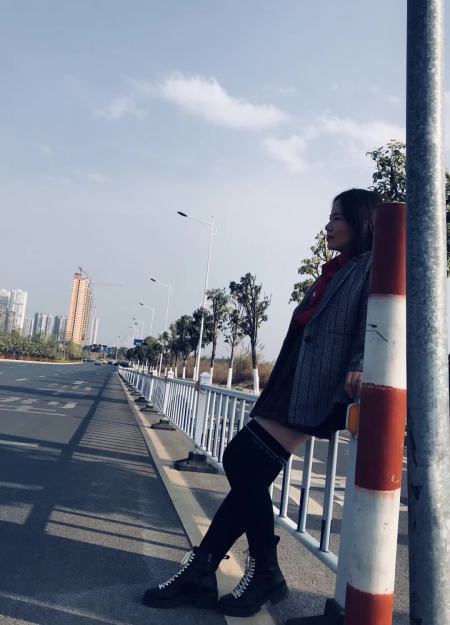
Xiao Xia
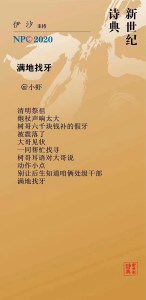
CRAWLING ALL OVER TO LOOK FOR THEIR TEETH
Fireworks for the ancestors
at Tomb-Sweeping Day were too loud,
Elder Brother Shu’s 6000-Yuan false teeth
got shattered and knocked out of his mouth.
Eldest Brother saw what happened
and helped in the search.
Brother Shu whispered to his older brother,
smaller movements, please!
Don’t let the young ones know two local cadres
are crawling all over looking for teeth.
Translated by MW, December 2020
 Xiao Xia, orig. name Xie Zihong, born in the 1980s in Laibin, Guangxi. Writes poetry since 2017, has published in local and foreign magazines and anthologies. 《新诗典》小档案:小虾,原名谢字红,女,广西来宾人,80后,汉族,2017年开始写诗。主要作品有《买烟》《殉情者》《敬》《查房》等,作品发表于《新世纪诗典》《AAA诗歌排行榜》《麒麟》《文学桂军二十年》《广西当代诗歌集》(俄语版)《中国口语诗歌年鉴》(2019卷)等。

标签:ancestors, cadre, death, dignity, family, government, ground, ground-level, life, local, NPC, officials, people, respect, society, teeth, Xiao Xia, 小虾, 新世纪詩典
发表在 2019, 2020, 20th century, 21st century, April 2019, December 2020, Middle Ages, NPC, poetry, Translations, 新世纪诗典 | Leave a Comment »
12月 20, 2020
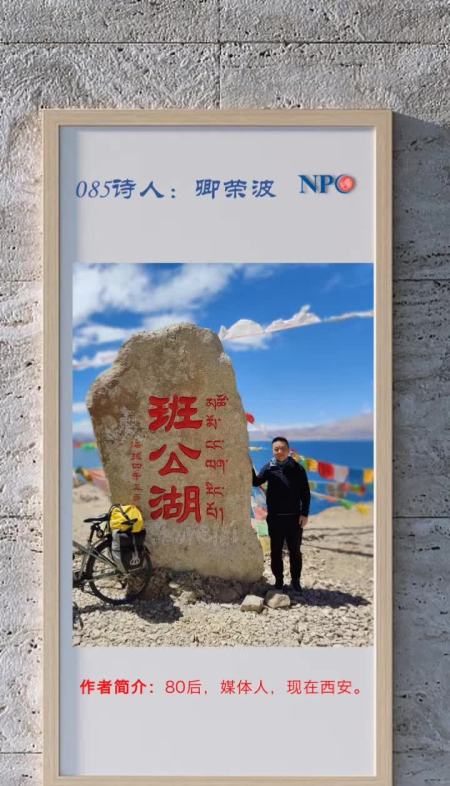
Qing Rongbo
KIND
Jetzt ist er
in dem Alter,
dass er im Hof gerne
Ameisen nachrennt
und draufsteigt.
Ich sag ihm,
nicht draufsteigen,
die sind lebendig, die wollen auch leben!
Er steigt noch fester drauf.
Bis ich sag,
Papa ist oft wie eine Ameise,
immer wieder,
willst du dann noch draufsteigen?
Er ist auf einmal baff
und fängt an zu weinen.
09. Juli 2020
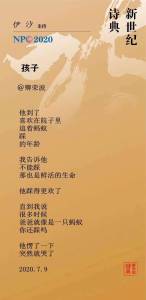
孩子
卿荣波
他到了
喜欢在院子里
追着蚂蚁
踩
的年龄
我告诉他
不能踩
那也是鲜活的生命
他踩得更欢了
直到我说
很多时候
爸爸就像是一只蚂蚁
你还踩吗
他愣了一下
突然就哭了

伊沙推荐语:
等我们做了父母,并且还需要做到一定程度之后,才会明白:子不教,父之过-这是文明,在中国古诗中不缺教子诗或训儿篇,现代口语诗人在此做出了自己智慧的回应-我的态度从来都是:传统中有的,我们必须要有,然后,我们拥有传统所没有的。
新世纪诗典10,NPC12月21日(冬至),3549首,1142人。第3个卿荣波(陕西)日

伊沙主持 | 新世纪诗典10一周联展(2020.12.20——12.26)
况禹点评《新诗典》卿荣波《孩子》:换位给事物带来的陌生化,或者具体到本诗——赋予动物以亲人的身份,无论是给孩子,还是对读者,所带来的撞击都是惊人的。惊人的背后,起作用的不止是艺术手段,还有那句老话,“屁股决定大脑”,人必须设身处地,才能稍微体会他人或其他生物的处境。两千五百年前人类最伟大的诗歌编选家、思想家和伦理学家孔子说——“己所不欲,勿施于人”,其实就是这个道理。
梅花驿:敬畏生命,与我们周围的生命休戚与共是人类之“善”,也是人性之“善”。所以,我们从小就被教育――捅燕子窝会瞎眼晴等等,虽说传统教育有着恐吓和迷信色彩。诗中教育孩子不能踩蚂蚁,孩子刚开始并不接受。“直到我说/很多时候/爸爸就像是一只蚂蚁”,孩子哭了。这才是生命教育的应有之义。
马金山|读卿荣波的诗《孩子》的十一条:
1、在形式与内容上高度集中,在语言和逻辑中张力强大,是现代诗写中需要不断积累和实践的重要课题;
2、卿荣波,80后,陕南人。《华商报》首席记者。现居西安;
3、卿荣波的诗,在孩子的题材方面,已收获两首佳作,且越写向度越不同,值得更多期待;
4、回到本诗,是那种多数人心中有,而又多数人笔下无的作品,至少没有这么干净、纯彻,将生命的意义和教育转化至极致的境界,此诗全部聚集于一体;
5、诗中写出人们共同的生命经验,尤其是对死亡命题的揭示,是人性的觉醒,构成了生存的基本要义;
6、诗的前三节,在写孩子的行为,特别是充满乐趣的那部分,更是深度投入,而在成年人这里,则是鲜活的生命构筑而成的世界,是生命之重;
7、最后两节,则是“我”作为成年人,作为爸爸对不正确行为孩子的教育,以身说话,以个人的生命名义为要旨,虽然孩子还不一定理解或者明白,孩子突然在行为上给出的回答,由此产生了强烈的共鸣;
8、诗的结尾,重重的一击,道出了生命的真谛,尤其是孩子哭了,在日常的生活状态表达中,瞬间使人心碎,写得深沉且动人心;
9、诗的标题《孩子》,全面概括了诗的所有内容,并形象丰富地展现出一个独特的艺术元素,让生命成为自然的事物,在丝毫不留痕迹的情况下,写出了孩子的某种觉知和情感;
10、本诗给予诗人的启示:“使用极少的文字,呈现出普遍的现象或意义,既需要高超的技艺,还需要对日常的积淀与挖掘能力”;
11、生命之诗,人性之诗,教育典范之作。
张小云点评:读卿荣波《孩子》
这是一个善巧而高效的教法
跟高人以观如母有情
引领他生起慈悲心一样
好的教育说到底是善心理的引导
当诗功与养育之德融为一体
卿荣波的诗便
出彩而上品
2020.12.20
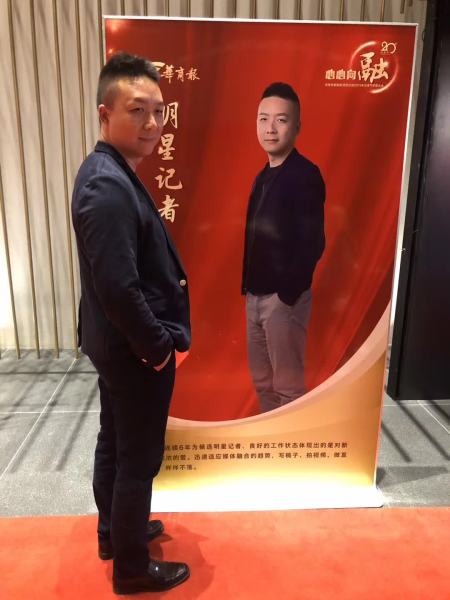
《新诗典》小档案:卿荣波 80后 陕南人 现在西安 《华商报》首席记者 明星记者 陕西省优秀新闻工作者 新闻作品多次获得陕西新闻一、二、三等奖 《新世纪诗典》作者 也是《新世纪诗典》的粉丝
标签:animals, ant, child, death, family, father, feeling, life, NPC, pain, people, poetry, Qing Rongbo, 卿荣波, 新世纪詩典
发表在 2020, 20th century, 21st century, December 2020, July 2020, Middle Ages, NPC, poetry, Translations, 新世纪诗典 | Leave a Comment »
12月 13, 2020

Lei Ji
SUIZIDDISKUSSION
Ein Dichter hat sich umgebracht,
ein Haufen Dichter diskutieren den Selbstmord.
Eine Dichterin zitiert umfassend und sagt
es sei die psychische Resilienz,
es seien Beziehungen zu kalt geworden,
jeder Mensch habe schon mal dran gedacht,
ein 4jähriger Bub habe sich mit Insektengift…
Ich sage im Scherz
da streng dich schnell an
und rette die Menschheit, es liegt an dir.
Sie redet weiter
als hätt sie nichts gehört
man müsse verstehen
man könne das Leben schließlich nicht wählen
also haben die Leute auch das Recht zu sterben.
Jemand liked, was sie schreibt,
jemand kommentiert
reden wir nicht mehr von Suizid,
reden wir lieber
über die Liebe.
Übersetzt von MW im Dezember 2020
 Yi Sha: Ich habe in einem Gedicht gesagt, die Dichterin Juliane Adler, Herausgeberin meiner beiden Gedichtbände auf Deutsch, schätze an Poesie in Alltagssprache etwas wie den “letzten Angriff”, die Gegner der Alltagssprache-Fraktion nennen es “panisches Denken um die Kurve” – was man auch sagt, wir haben diese besonderen Punkte, nicht nur den Angriff am Schluss, sondern auch das Aufatmen am Ende. Bei diesem Gedicht ist es eine letzte Wendung, sehr schön gewendet, der ganze Text wird noch besser. Lei Ji kennt mich schon neun Jahre, aber wie man unter fahrenden Dichtern sagt: Er hat mich nicht gut ausgenützt. 伊沙推荐语:我在诗里写过:我两部德译诗集的责编、德国女诗人朱鹰最欣赏中国口语诗的"最后一击",口语诗反对派讥之为"脑筋急转弯"-不管怎么说,中国口语诗有特点,不光有"最后一击",还有"最后一吸",本诗是"最后一转",转得漂亮,全诗提神。雷激认识我己经9年了,说句很江湖义气的话:他没有把我利用好。

标签:choice, circles, death, discussion, humanity, life, love, people, poets, practice, pressure, psychology, relations, relationships, resilience, soul, suicide, theory
发表在 2020, 20th century, 21st century, December 2020, Middle Ages, NPC, poetry, Translations, 新世纪诗典 | 1 Comment »
11月 28, 2020

Yu Ze
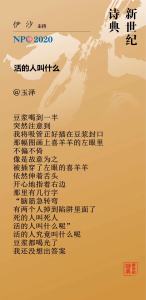
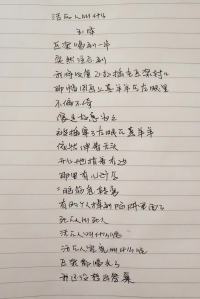
HOW DO YOU CALL THE ONE LEFT ALIVE?
I half-finish my soy milk
before I notice
I have stuck the straw in at the seal
right into the left eye of Pleasant Goat
right in the middle
as if intentionally
but Pleasant Goat with the straw in its left eye
still sticks its tongue out
and points happily to its right,
just a few lines.
“This will make your head spin:
Two people fall into a trap.
The one who dies is a corpse.
How do you call the one left alive?“
My soy milk is finished
but I haven’t thought of an answer.
4/7/20
Translated by MW, November 2020
标签:animals, answer, children, 玉泽, death, goats, kids, life, NPC, people, riddle, sheep, soy milk, Yu Ze, 新世纪詩典
发表在 2020, 20th century, 21st century, April 2020, Middle Ages, NOVEMBER 2020, NPC, Translations, 新世纪诗典 | Leave a Comment »
11月 26, 2020

Xie Rui
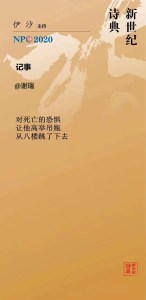
CHRONIK
Aus Angst vorm Sterben
hält er seinen Tropf hoch
und springt vom 8. Stock.
Übersetzt von MW im November 2020

伊沙推荐语:
11年前在衡山诗会上见过作者,宁夏诗人,酒量惊人,此后再无交集。本诗入典来自于马非的助攻,妙在细节:自杀者是救不活的,但一个绝妙的细节却可以救活一首好诗-那个高举在手的吊瓶!
新世纪诗典10,NPC11月26日,3524首,1135人。谢瑞(宁夏)日
况禹点评《新诗典》谢瑞《记事》:这类事不算新鲜,但作者的呈现很惊人:1.举着吊瓶跳楼;2.怕死的人因为怕,更快地奔赴了死。
梅花驿:这又是关于死亡的话题。“他高举吊瓶/从八楼跳了下去”,这个细节不是“酷”,而是“残忍”。其自杀深层原因,虽然作者给出了答案――死亡的恐惧。但读者不会囿于作者的猜测,也许会展开一系列丰富的联想:不堪负重的医疗费;人生的失败;爱情的失意……
标签:death, disease, 谢瑞, hospital, jump, life, NPC, people, sick, suicide, Xie Rui, 新世纪詩典
发表在 2020, 20th century, 21st century, Middle Ages, NOVEMBER 2020, NPC, poetry | Leave a Comment »
11月 23, 2020
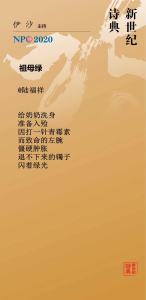
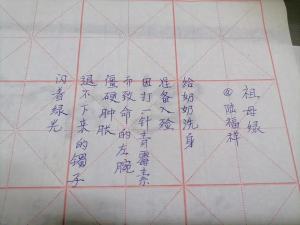
Lu Fuxiang
ZUMURUD
Omi waschen
und in den Sarg legen.
Das linke Handgelenk,
leblos nach einem Schuss Penicillin,
ist geschwollen und starr.
Der Armreif, der nicht mehr herunter geht,
funkelt grün.
Übersetzt von MW im November 2020
标签:antibiotics, color, death, family, funeral, grandmother, hands, injections, jewelry, jewels, language, light, people, washing, wrist
发表在 2020, 20th century, 21st century, Antique times, Middle Ages, NOVEMBER 2020, NPC, OCTOBER 2020, Persia, poetry, September 2020, Translations, 新世纪诗典 | Leave a Comment »
11月 22, 2020
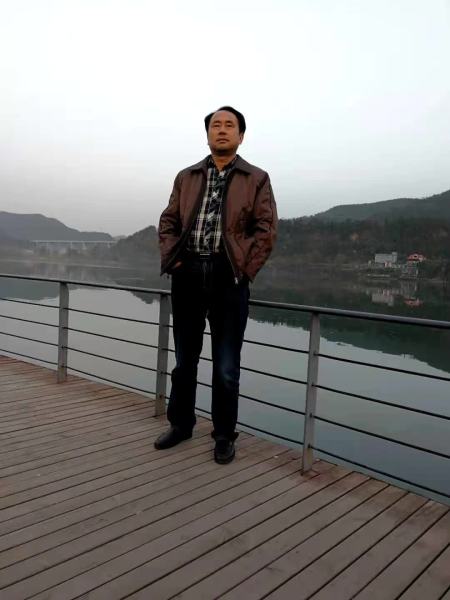
Pu Yongjian
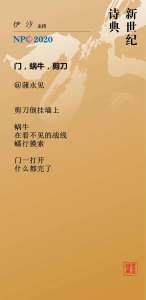
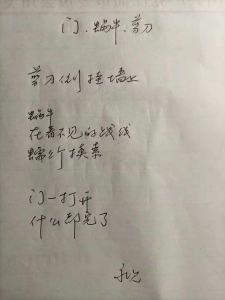
DOOR, SNAIL, SCISSORS
A pair of scissors hangs on the wall.
A snail
gropes along
an invisible front line.
The door opens
and it’s all over.
Translated by MW, November 2020
标签:death, door, 蒲永见, fate, life, line, NPC, people, poetry, Pu Yongjian, scissors, snail, thread, 新世纪詩典
发表在 2000s, 2010s, 2020, 20th century, 21st century, Middle Ages, NOVEMBER 2020, NPC, poetry | Leave a Comment »
11月 17, 2020

Zhang Jingcheng
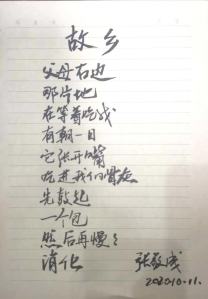
HEIMATORT
Das Stück Land
rechts von Vater und Mutter
will mich fressen.
Eines Tages
sperrt es sein Maul auf
und schluckt meine Asche.
Erst hebt sich
sein Bauch,
dann kann es langsam
verdauen.
28. August 2020
Übersetzt von MW im November 2020

标签:ashes, child, death, digestion, eating, family, feelings, future, graves, land, NPC, parents, people, tradition, Zhang Jingcheng, 张敬成, 新世纪詩典
发表在 1950s, 1960s, 1970s, 1980s, 1990s, 2000s, 2010s, 2020, 20th century, 21st century, August 2020, Middle Ages, NOVEMBER 2020, NPC, OCTOBER 2020, poetry, September 2020, Translations, 新世纪诗典 | 1 Comment »
11月 15, 2020

Zhuang Sheng
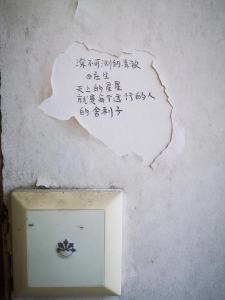
FATHOMLESS CLARITY
The stars in the sky
are the relics
of everyone who went far away.
Translated by MW, Nov. 2020

伊沙推荐语:
不知是我心闪一念,还是在哪里已经说过:庄生是能够创造奇迹的人-这不,半月冠军来了!每一种严肃的游戏的创造,就是为了测试诗人的某种能力:总点数测的就是你的耐力、厚度、韧劲、稳定性,半月冠亚军就是测你的单首高度、锐度、创新、爆发力。
新世纪诗典10,NPC11月16日,3514首,1133人。第19个庄生(广东)日
况禹点评《新诗典》庄生《深不可测的清澈》:古典小说、戏曲或神话,常把人的逝去看作“星宿归位”,庄生此诗的想象迴路也有近似的地方。所不同的是作者发掘出了一个新点——“舍利子”——不管是把它们视作生命的结晶还是物理意义上的“结石”,这就一下子让想象有了自我的特点。乍看起来这似乎是容易的事,其实做到不容易,有时甚至需要某种灵光一现的赐福。
梅花驿:诗人,某种意义上讲就是世界新秩序的发现者。祝贺庄生!“发现”了星星、远行的人和舍利子三者之间联系。当远行的人眼里星星和舍利子重合时,这个世界瞬间变成了新的世界。
这首有透明感。试想,一个人要沉淀多少杂质,才能抵达这样孤绝深邃的清澈。诗人和我从未谋面,但能感到他为人淳厚。从他的诗里,能看到他对父亲姐姐妻子女儿学生真实的爱意。仰望星空,在很深的夜里,不畏远行,相信他的修行能终获幸福。
庄生:感谢伊沙老师。明天是我生日。还是我和妻子领证五周年纪念日。神奇推荐
庞琼珍点评:这首有透明感。试想,一个人要沉淀多少杂质,才能抵达这样孤绝深邃的清澈。诗人和我从未谋面,但能感到他为人淳厚。从他的诗里,能看到他对父亲姐姐妻子女儿学生真实的爱意。仰望星空,在很深的夜里,不畏远行,相信他的修行能终获幸福。
标签:Buddha, buddhism, death, future, life, NPC, past, people, poetry, present, relics, religion, space, stars, time, Zhuang Sheng, 庄生, 新世纪詩典
发表在 2020, 20th century, 21st century, Antique times, Middle Ages, NOVEMBER 2020, NPC, poetry, Prehistoric times, Translations, Uncategorized, 新世纪诗典 | Leave a Comment »
11月 11, 2020

Mi Zhiping
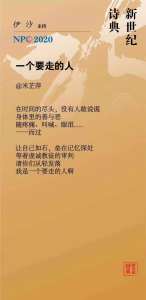
A PERSON WHO IS GOING TO LEAVE
At the end of their time, nobody dares to tell a lie.
Good and bad in your body,
going through pain, shouting and crying, tears…
one after the other, passing.
I can be like stones, piled in the dephts of memory,
waiting for true believers to judge me.
Please don’t be too harsh,
I am a person who will be gone.
Translated by MW, November 2020
 Mi Zhiping, born in Liaoning in 1985, lives in Norway. She has published a book of essays. Her poems have been published in October, a major literature magazine in China. 《新诗典》小档案:米芷萍:生于1985年,辽宁人。现居北欧挪威。曾出版散文集《与你相逢,总梦繁花一树明》。有诗作发表于《十月》。

标签:body, Chinese, compassion, 米芷泙, death, Europe, faith, Mi Zhiping, Norway, NPC, pain, people, religion, 新世纪詩典
发表在 2020, 20th century, 21st century, Middle Ages, NPC, poetry, Translations, 新世纪诗典 | Leave a Comment »
10月 7, 2020
Li Haiquan
A BURIAL IN THE MOUNTAINS
The old lady has no children with her.
Several men pick up their strength
to straighten her curled up body,
I hear her bones creaking.
They wash her
and wrap her in linen.
She was bow-legged,
so those men all together
push her into the coffin,
bones rattling again.
They keep the coffin in a cool spot.
As they come out and lock the door,
an elder hands out dark chicken eggs
from the old lady’s coop
and reminds them to come again
for the interment in a few days.
Translated by MW, Oct. 2020


伊沙主持 | 新世纪诗典10一周联展(2020.10.4——10.10)
标签:body, burial, community, customs, death, history, Li Haiquan, memory, mountains, NPC, people, solidarity, tradition, 新世纪詩典, 李海泉
发表在 2020, 20th century, 21st century, Middle Ages, NPC, OCTOBER 2020, poetry, Translations, 新世纪诗典 | 1 Comment »
9月 26, 2020

Sidse Laugesen
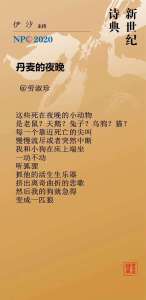
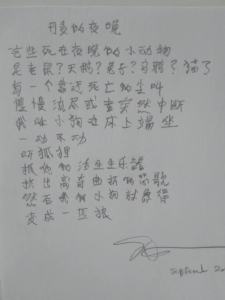
DÄNISCHE NACHT
Die kleinen Tiere die sterben:
Eine Maus? Ein Schwan? Ein Hase? Eine Krähe? Eine Katze?
Immer ein Schrei am Rand des Todes
der langsam verhallt oder jäh abbricht.
Mein kleiner Hund und ich sitzen im Bett,
wir rühren uns nicht,
wir hören den Fuchs
der schlägt sein lebendes Instrument,
presst schrille Klagelieder heraus.
Mein Hund wird ungeduldig,
er will ein Wolf sein.
Übersetzt von MW im September 2020
标签:animals, Chinese, cry, death, Denmark, Europe, language, night, NPC, people, poetry, Sidse Laugesen, song, sounds, writing, 劳淑珍, 新世纪詩典
发表在 2020, 20th century, 21st century, Antique times, Middle Ages, NPC, poetry, September 2020, Translations, Uncategorized, 新世纪诗典 | Leave a Comment »
9月 18, 2020

Tu Ya
ANDENKEN
Mutter ist vor einem Jahr dorthin gegangen.
In wessen Hof fällt die Blüte, wer weiß.
Ich weiß noch, Opa hat wahrsagen können.
Er hat gemeint, Mutter hat Glück.
Na dann fällt sie sicher zu guten Menschen.
12. August 2020
Übersetzt von MW im September 2020


标签:blossoms, death, family, feelings, flowers, mother, NPC, people, religion, signs, soul, souls, thoughts, tradition, Tu Ya, 图雅, 新世纪詩典
发表在 2019, 2020, 20th century, 21st century, August 2020, Middle Ages, NPC, poetry, September 2020, Translations, Uncategorized, 新世纪诗典 | Leave a Comment »
9月 11, 2020

Xiao Jing
PAPA SCHÜTZT MICH
Mamas Kusine ist gestorben,
ihr Mann ruft meinen Vater an
sagt ich soll ihn an Tochter Stelle
begleiten zum Krematorium.
Papa sagt ihm sofort,
Xiaojing ist nicht daheim.
Juni 2020
Übersetzt von MW im September 2020


标签:cousins, cremation, daughter, death, duty, family, father, funeral, NPC, people, protection, Xiao Jing, 新世纪詩典, 晓静
发表在 2000s, 2010s, 2020, 20th century, 21st century, June 2020, Middle Ages, NPC, poetry, September 2020, Translations, Uncategorized, 新世纪诗典 | Leave a Comment »
9月 6, 2020
Jianghu Hai
SCHNAPS
Mein Onkel zieht seinen Karren.
Auf dem Karren sitzen 800 Pfund Schnaps
und sein achtjähriger Sohn.
Er ist mein Cousin, ein halbes Jahr älter als ich.
Onkel arbeitet im Transport für die Konsumgenossenschaft
der Gemeinde Qingshan.
Die Bergstraße ist holprig,
das Kind sitzt stabil, der Schnaps leider nicht.
Das Kind leckt den ganzen Weg
an der Ritze wo Schnaps aus dem Deckel herauskommt.
Die Bergstraße ist 18 Li lang,
800 Pfund Schnaps wollen nicht schlafen.
Der achtjährige Sohn
ist eingeschlafen und wacht nicht mehr auf.
Übersetzt von MW im September 2020


标签:alcohol, children, country, countryside, death, drink, drinking, family, history, Jianghu Hai, life, memory, mountains, NPC, people, roads, spirits, transport, 新世纪詩典, 江湖海
发表在 2010s, 2020, 20th century, 21st century, Middle Ages, poetry, September 2020, Translations, Uncategorized, 新世纪诗典, 江湖海 | 1 Comment »
8月 30, 2020
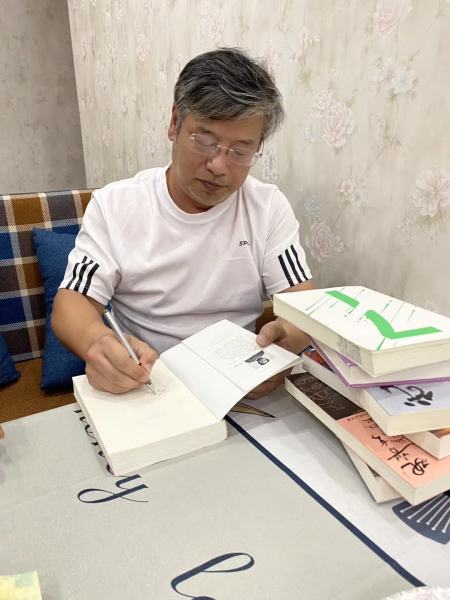
Yi Sha
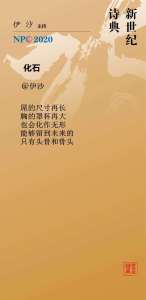
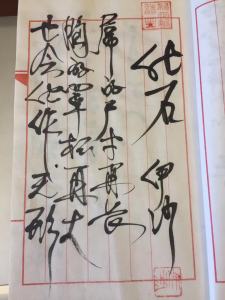
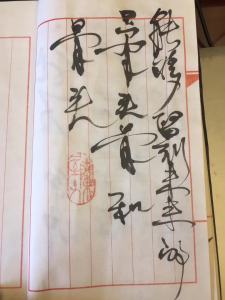
VERSTEINERT
Egal wie lang dein Schwanz,
egal wie groß dein Körbchen,
eines Tags werden sie ungreifbar.
Bleiben können höchstens
Knochen und Schädel.
August 2020
Übersetzt von MW am 30. August 2020
标签:attributes, big, body, bones, breasts, character, characters, death, form, fossils, future, gender, intangible, invisible, language, life, long, men, penis, people, poetry, sex, size, skull, time, women, words, yi sha, 新世纪詩典, 伊沙
发表在 1966, 1970s, 1980s, 1990s, 2000s, 2010s, 2020, 20th century, 21st century, Antique times, August 2020, Middle Ages, NPC, poetry, Stone Age, Translations, Uncategorized, Yi Sha, 新世纪诗典, 伊沙 | Leave a Comment »
8月 16, 2020

Yu Jie
FREI UND BEFREIT
Frei und befreit
ist fast unmöglich
unter den Menschen.
Frei und befreit,
der Friedhof dort,
das ist eine Stadt, die ist schön ruhig.
Frei und befreit,
wenn ich das höre,
kommt mir oft vor,
es kommt von dort.
25. Juli 2020
Übersetzt von MW im August 2020


标签:buddhism, cemetery, 玉杰, death, freedom, language, life, NPC, peace, people, poetry, quiet, religion, society, tradition, words, Yu Jie, 新世纪詩典
发表在 2020, 20th century, 21st century, August 2020, July 2020, Middle Ages, NPC, poetry, Translations, Uncategorized, 新世纪诗典 | Leave a Comment »
7月 26, 2020

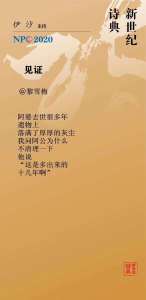
Li Xuemei
BELEG
Oma ist vor vielen Jahren von uns gegangen.
Auf ihren hinterlassenen Dingen
liegt dicker Staub.
Ich frage Opa,
warum er nicht sauber macht.
Er sagt:
„Das sind auch noch ein Dutzend
Jahre von ihr.“
Übersetzt von MW im Juli 2020

标签:death, dust, 黎雪梅, grandchildren, grandparents, memory, NPC, people, poetry, talk, things, 新世纪詩典
发表在 1930s, 1940s, 1950s, 1960s, 1970s, 1980s, 1990s, 2000s, 2010s, 2020, 20th century, 21st century, July 2020, Middle Ages, NPC, poetry, Translations, Uncategorized, 新世纪诗典 | Leave a Comment »
7月 23, 2020
FREUDE
Freude
ist einfach Freude
Freiheit
ist hoffentlich Freiheit
Freude ist tief
wie ein Traum
Verschwunden war
gottseidank nicht tot
Glück
ist einfach Glück
MW April 2020
伊沙推荐: 抗疫是对全世界的医疗系统+民族性+理综+文综之大考,德奥在欧洲早早及格,所以一个奥地利诗人在4月底便用中文写下本诗《自由了》-好一个"了"字!全世界的汉学家只有这一个能写出,全球用中文写诗的人会这么用者不会超过五个。这就是汉语口语的灵活表达,多么有趣而富有魅力!提醒大部分口语诗人:你们也不能坐享其成了口语诗的思维结构法,而忘记了对语言口语化的进一步开发。
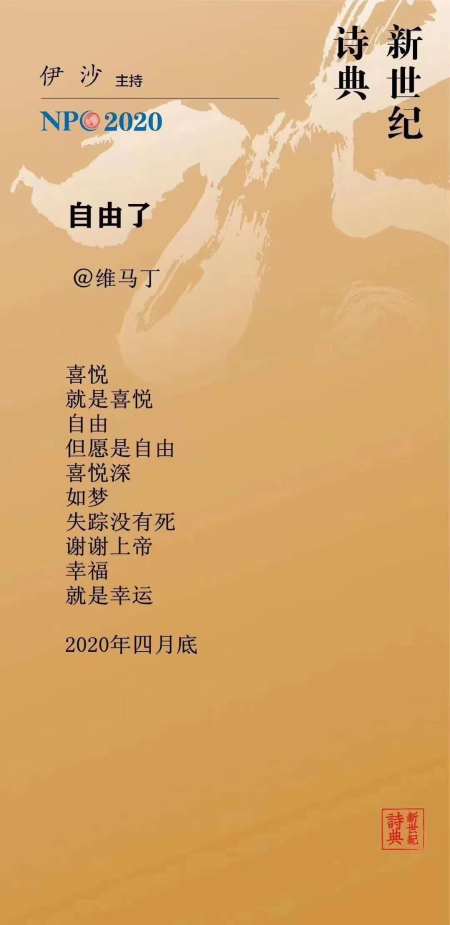
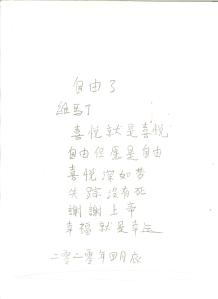
自由了
喜悦
就是喜悦
自由
但愿是自由
喜悦深
如梦
失踪没有死
谢谢上帝
幸福
就是幸运
2020年四月底
朱剑评《新世纪诗典》之维马丁《自由了》: 劫后余生,是种什么感觉?大概就如本诗所写,没有太多话,不会高调抒情,只会说最直接的感受,甚至都不关注逻辑,不刻意,只是“喜悦/就是喜悦”、“幸福/就是幸运”,当然更有后怕和怀疑,“自由/但愿是自由”,读之颇有共鸣。
况禹《新世纪诗典》维马丁《自由了》:如释重负的一首诗。不对!是重负刚刚被卸下的一首诗。它诞生在新冠疫情威胁全人类之际,我读着为作者高兴,也为未来的我们。
马金山:读维马丁的诗《自由了》的十一条
1、有的诗写出来即是生活,有的生活活下去就是诗;
2、维马丁,诗人、译者。1966年生于奥地利维也纳。获李白文化奖、人民文学翻译奖、李白翻译奖、长安诗歌节奖等;
3、毫无疑问,维马丁在当下的中国民间诗坛,是联系和交流最多最密且最具有影响力的诗人,不仅仅是因为他可以使用汉语写作,而是真正的内心真实与灵魂自由;
4、维马丁的诗,简约与现实,注重内心世界的挖掘,注重细节的体现与创新,注重大词的表达和延展,干净利落而又充满魅力;
5、诗中以一种最直接的方式表达生活,表现一种思维模型,带着一股浓浓的味道,从个体的视角,凸显趣味主义,语言干脆干练;
6、重复的词汇,在诗写的运用过程中,在本诗中是发光的,是遍布精神的基础,更是灵魂的痕迹;
7、如果将诗中的一些字词摘出来,会发现它们的存在性与现实感,“喜悦”、“自由”、“梦”、“失踪”、“死”、“上帝”、“幸福”、“幸运”等,给这个世界留下了怎样深沉而又深刻的色彩;
8、诗的背后的含义和溢出来的感觉,才是最为重要和丰富的一部分;
9、本诗写于四月,残忍的四月,在当代疫情不断的背景下,读这首诗,总能给人带来更多理解和感受,是丰富的,还是超然的;
10、本诗给予诗人的启示:“词语不仅在意象诗中有份量,在口语诗写中亦如是”;
11、时代刻痕。
读维马丁《自由了》
张小云
伊沙夸维马丁“好一个‘了’字!”
我在后面跟“着”点赞——
他喜悦“着”自己如梦深的喜悦
自由“着”世人愿想中的真正自由
庆幸“着”苟活下来的幸运
不管是他写“了”还是没写“着”的
他的诗闪现“了”这些虚词背后
连结“着”一个厉害的奥地利诗人
他活用“了”中文
写出“了”
十分 “了”得的汉语诗
2020.7.23
FREE
Joy
is simply joy.
Freedom,
let‘s hope it‘s freedom.
Joy is deep
like a dream.
Disappeared isn’t dead,
thank god.
Happiness
is just luck.
April 2020
English version summer 2020
자유롭게 되었다
Martin Winter
희열은
여전히 희열
자유
오로지 자유만을
희열이 깊어
꿈만 같고
실종되어도 죽지 않았다
하느님께 감사하나이다
행복은
바로 행운이다
2020년 4월 말
全京业 洪君植 译
标签:death, deaths, disappear, disappearance, disappearances, disappeared, disease, family, free, freedom, freedom of speech, happiness, happy, jail, joy, language, law, lawyers, luck, pandemic, people, poetry, politics, prison, speech, virus, words
发表在 2015, 2021, April 2020, February 2020, January 2020, July 2015, July 2020, June 2020, March 2020, May 2020, Middle Ages, NPC, poetry, Translations, Uncategorized, 新世纪诗典 | Leave a Comment »
7月 11, 2020
Qing Rongbo
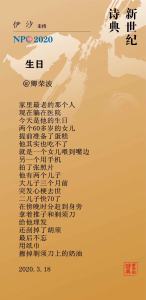
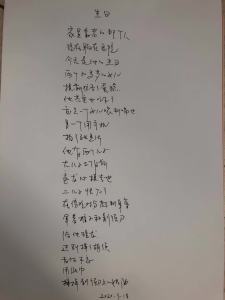
GEBURTSTAG
Der älteste Mensch in unserer Familie
liegt jetzt im Krankenhaus.
Heute ist sein Geburtstag.
Zwei Töchter in ihren Sechzigern
haben die Torte organisiert.
Er kann sie zwar nicht essen,
aber eine Tochter führt ihm etwas zum Mund
und eine macht ein Foto
mit ihrem Handy.
Er hat zwei Söhne,
aber der ältere ist vor drei Monaten
an einem Herzinfarkt plötzlich gestorben.
Der zweite Sohn ist bald 70.
Gegen Abend eilt er ans Bett
mit Rasiermesser und einer Maschine
um seinem Vater die Haare zu schneiden
und ihn zu rasieren.
Am Ende wischt er
mit einem Papiertuch
Butter von der Rasierklinge.
18. März 2020
Übersetzt von MW im Juli 2020
标签:beard, birthday, daughters, death, disease, family, food, hair, hospital, NPC, people, Qing Rongbo, sons, 卿荣波, 新世纪詩典
发表在 1990s, 2000s, 2020, 20th century, 21st century, April 2020, July 2020, June 2020, March 2020, May 2020, Middle Ages, NPC, poetry, Translations, Uncategorized, 新世纪诗典 | Leave a Comment »
7月 6, 2020
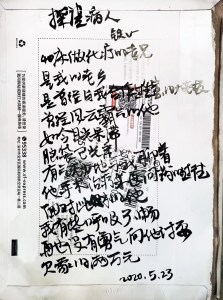
Tie Xin
KRANKENBESUCH
Der alte Freund in Chemo, Bett 40
ist aus meinem Heimatort.
Er war ein großer Chef, wir haben zusammen Geschäfte gemacht,
er war der Mann des Tages.
Jetzt hat er eine Glatze,
mit stumpfem Blick
und kraftloser Stimme erzählt er
von Operationen und seiner Behandlung.
Ich sitz ihm gegenüber,
mir stockt ein bisschen der Atem.
Ich trau mich nicht mehr von ihm zu verlangen
dass er mir die Zwanzigtausend zurückzahlt.
23. Mai 2020
Übersetzt von MW im Juli 2020

标签:age, cancer, career, death, disease, eyes, 铁心, friendship, hair, life, medicine, memory, money, operation, operations, success, Tie Xin, voice, 新世纪詩典
发表在 2020, 20th century, 21st century, April 2020, July 2020, June 2020, May 2020, Middle Ages, NPC, poetry, Translations, Uncategorized, 新世纪诗典 | Leave a Comment »
6月 30, 2020
Huang Haixi
STATUSPROBLEME
Ich gebe zu, die Leute, die bei mir vorkommen
sind Huang Vier, Li Drei oder Zhang Sechs,
diese Namen hab ich erfunden.
Ihre Kindernamen sind in Wirklichkeit Namen für Tiere,
Windhund, Schäfchen, Ochse.
Vielleicht haben sie auch Namen von körperlichen Gebrechen her,
Lahmer, Blinder, Taubstummer.
Ihre Vor-und Nachnamen hat man übersehen
und sie nach ihren Vätern eingeteilt,
Grundbesitzer, Rechtsabweichler, Konterrevolutionär.
Das sind echte Leute aus meinem Heimatort,
nach ihrem Tod erst können sie auf ihrem Grabstein
ihren eigenen Namen eingeschnitzt haben –
zum Beispiel Herr Sowieso.
2019-05-10
Übersetzt von MW im Juni 2020


标签:blind, body, deaf, death, 黄海, 黄海兮, family, grave, history, Huang Hai, Huang Haixi, lame, memory, mute, name, names, NPC, people, poetry, society, 新世纪詩典
发表在 2019, 2020, 20th century, 21st century, June 2020, May 2019, Middle Ages, NPC, poetry, Translations, Uncategorized | Leave a Comment »
6月 28, 2020

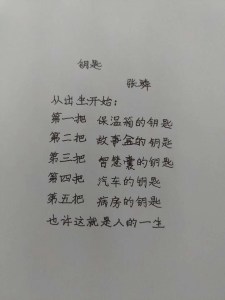
Zhang Lin
SCHLÜSSEL
Angefangen bei der Geburt:
Der erste: Der Brutkastenschlüssel
Der zweite: Der Geschichtenkisteschlüssel
Der dritte: Der Weisheitsbeutelschlüssel
Der vierte: Der Autoschlüssel
Der fünfte: Der Krankenzimmerschlüssel
Vielleicht ist das schon ein Menschenleben.
Übersetzt von MW im Juni 2020

标签:adult, birth, cars, child, childhood, death, disease, key, keys, life, NPC, people, school, Zhang Lin, 张璘, 新世纪詩典
发表在 2000s, 2010s, 2020, 20th century, 21st century, April 2020, June 2020, May 2020, Middle Ages, NPC, poetry, Translations, Uncategorized, 新世纪诗典 | Leave a Comment »
6月 9, 2020

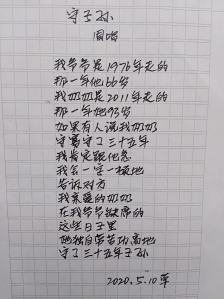
Zhou Ming
AN KINDER UND ENKEL
Mein Opa ist 1976 von uns gegangen,
damals war er 66.
Meine Oma ist 2011 von uns gegangen,
sie war 93.
Wenn jemand sagt, meine Oma habe als Witwe
35 Jahre lang das Andenken ihres Mannes gewahrt,
dann muss ich ihm unbedingt sagen,
und zwar Wort für Wort,
damit er es kapiert:
Meine liebe Oma
hat in all den Tagen
ohne meinen Opa
ganz allein in harter Arbeit
35 Jahre an Kinder und Enkel gedacht.
2020-05-10
Übersetzt von MW im Juni 2020

标签:children, death, family, grandchildren, grandfather, grandmother, grandparents, history, language, life, memory, society, thinking, widow, widowhood, work
发表在 1970s, 1976, 1980s, 1990s, 2000s, 2010s, 2011, 2020, 20th century, 21st century, April 2020, February 2020, January 2020, June 2020, March 2020, May 2020, Middle Ages, NPC, poetry, Stone Age, Translations, Uncategorized, 新世纪诗典 | Leave a Comment »
6月 9, 2020

Li Suo
LOCKDOWN APARTMENT
Alcohol disinfectant, 75%
Thermometer
Facemask hangs by the entrance, ready for re-use
Steamed bread, failed three times
Fresh flowers from Yunnan, bought online from Taobo
Cat hairs in the rug, always
Unwashed dishes, several days
50 installments of a trite soap opera
Uncontrolled feelings
Three o’clock in the morning, tears on my pillow
Six lamps turned on together
News of people who died
News of people waiting to die
News of people dying in vain
More and more in this apartment
A kind of gloom I never felt before
A heavy heart
A heavy heart like in Du Fu
(Ballad of Army Wagons)
Spring rain outside, unceasing cold
„Dark skies, rain wails and wails“
Layer on layer
They weigh on my chest.
3/22/20
Translated by MW, June 2020


标签:apartment, atmosphere, dark, death, deaths, depression, disease, 里所, feeling, feelings, ghosts, heaven, history, Li Suo, life, lockdown, memory, NPC, pain, pandemic, rain, room, sky, sounds, virus, 新世纪詩典
发表在 2020, 20th century, 21st century, April 2020, December 2019, February 2020, January 2020, June 2020, March 2020, May 2020, Middle Ages, NPC, poetry, Tang Dynasty, Translations, Uncategorized, 新世纪诗典 | Leave a Comment »
6月 7, 2020
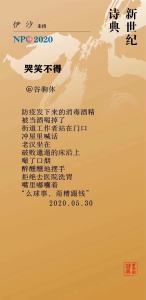
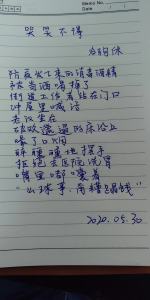
Gu Juxiu
SHOULD YOU LAUGH OR CRY?
Disinfectant alcohol, distributed against the virus,
some people drink it as liquor.
Street committee worker stands at the door,
shouts inside.
Old guy sits
on his old broken bed,
drags on a cigarette.
Drunk as a skunk, waves his hands,
No hospital! No one pumps out his stomach!
Just keeps muttering,
“Fuck little thing, not worth the money!“
5/30/20
Translated by MW, June 2020
Gu Juxiu
SOLL MAN LACHEN ODER WEINEN?
Alkohol, ausgegeben zur Desinfektion
wird als Schnaps getrunken.
Ein Mensch vom Straßenkomitee steht an der Tür
und ruft in die Wohnung.
Der alte Mann sitzt an der Kante
auf seinem alten schäbigen Bett,
zieht an seiner Zigarette,
wedelt besoffen mit seinen Armen,
kein Krankenhaus, kein Magen auspumpen!
Murmelt nur vor sich hin:
„So ein Eierscheiß ist das Geld nicht wert!“
- Mai 2020
Übersetzt von MW im Juni 2020
标签:age, alcohol, bed, death, disinfection, 谷驹休, Gu Juxiu, hospital, life, medicine, NPC, people, stomach, virus, 新世纪詩典
发表在 1950s, 1960s, 1970s, 1980s, 1990s, 2000s, 2010s, 2020, 20th century, 21st century, April 2020, February 2020, June 2020, March 2020, May 2020, Middle Ages, NPC, poetry, Translations, Uncategorized, 新世纪诗典 | Leave a Comment »
6月 5, 2020

Picture by Wang @oa___aob
MAKE AMERICA DIM
Make America dim
Make America diminished
Make America diminished capacity
Make America diminished credibility
Make America diminished trust
Make America diminished opportunity
Make America diminished equality
Make America diminished
Make America dim
Go on
MW 6/3/20
Picture by Wang @oa___aob
ALL SORTS
all sorts of factors and factories
all sorts of tractors
all sorts of actors
all sorts of dorks
all kinds of assorted windshield wipers
all sorts of snipers
maybe some kind ones
kind to their weapons
and also to people
something
in all sorts of people
when you listen
to water, to wind
when you feel the sun
in the woods
when you find
something to share
bare for the joy
when we walk
anywhere
in paths and trees
in cemeteries, in streets and fields
sharing ourselves
with the light and the night
within and around
each other
amen
MW Pentecost, May 31st, 2020

RUNNING OUT
I am running out of days
everyone runs out
in the end
but don’t worry it’s not that bad
world doesn’t stop
for everyone at the same time
it’s the end of the month
the 31st
and I promised to finish a book
months ago years ago
I guess this is the poem
I wrote the night before
not last night in my head
before I went to sleep
and then I forgot it
MW Pentecost, May 31st, 2020
RAIN
It is raining
the wind is cold
last day of May first day of June
Pentecost
Mostly end of the virus
for Austria and around
hopefully
wish I could
be with you
wherever you are
hope to see you soon
take care
MW Pentecost, May 31st, 2020
祝贺
今天推特
大家都转
祝贺
美国太空人
离开地球
时间选得好!
2020.5.31

Picture by Baidiucao
标签:death, friendship, history, language, life, light, memory, night, people, poetry, politics, rain, religion, world, writing
发表在 1989, 1990s, 2000s, 2010s, 2020, 20th century, 21st century, April 2020, February 2020, January 2020, June, June 2020, March 2020, May 2020, Middle Ages, poetry, Uncategorized | Leave a Comment »
5月 30, 2020

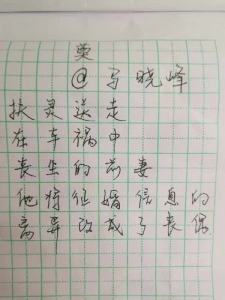
Ma Xiaofeng
IN MEMORIAM
He carries the casket
of his former wife
who died in a car-accident,
and in his marriage notice
he changes divorced into bereaved.
Translated by MW, May 2020

标签:accident, death, divorce, 马晓峰, funeral, grief, life, Ma Xiaofeng, marriage, NPC, people, society, 新世纪詩典
发表在 2020, 20th century, 21st century, April 2020, May 2020, Middle Ages, NPC, poetry, Translations, Uncategorized, 新世纪诗典 | Leave a Comment »
5月 27, 2020

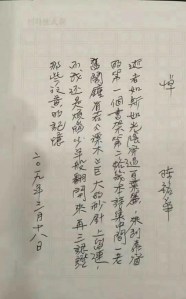
Chen Minghua
MOURNING
Time flies like light passing through blinds to the second shelf on the first book rack by the window, an old alarm clock between a few books of poetry, lingering on the second hand, as big as “Driftwood” by Luo Fu, but I still browse like an impatient youth to verify yellowing memories the umpteenth time.
3/18/19
Translated by MW, May 2020

标签:age, alarm, books, Chen Minghua, clock, death, 陳銘華, hand, light, memory, NPC, poetry, time, youth, 新世紀詩典, 新世纪詩典
发表在 2019, March 2019, May 2020, Middle Ages, NPC, poetry, Translations, Uncategorized, 新世纪诗典 | Leave a Comment »
5月 21, 2020
Pan Xichen
QINGMING
Why did our ancestors
give today
give our departed
such a pure and clean word?
Could it be? Could what we call
the nether world
actually be more bright and clear?
What I want to say,
on such a particular day:
isn’t it time,
if you have done wrong, to apologize;
or if you haven’t, to grieve in silence?
4/4/20
Translated by MW, May 2020


标签:death, deaths, disease, family, graves, grief, guilt, NPC, obligation, obligations, Pan Xichen, pandemic, people, poetry, silence, speech, spring, time, tombs, 新世纪詩典, 潘洗尘
发表在 2003, 2019, 2020, 20th century, 21st century, Antique times, April 2020, December 2019, February 2020, January 2020, March 2020, May 2020, Middle Ages, NPC, poetry, Translations, Uncategorized, 新世纪诗典 | Leave a Comment »
5月 19, 2020
Hong Zhu
YERPA
Attachment is hard, you want to break free and you can’t.
Laughter, then crying, crying, then laughs.
Is laughing better? Not as high as the mountain or small as the moon.
You are still attached, you want to forget and you can’t.
Would be good if you could, good and gone.
Gone but not gone? Be good, leave it unfinished?
Attachment is ever unfinished.
Because you want too much, and receive not enough,
you have trouble. Black hair can be cut,
trouble cannot.
Attachment is understood but not gone, because you don`t want it
or cause you don’t dare? You can`t give it up,
or don`t get what you want?
You have one hundred thousand great peaks, I only want
a temple so small you don’t know it is there.
You have the ends of the world, I only want
ten steps of green grass.
Translated by MW, May 2020
 Hong Zhu, orig. name Wang Jun, born in May 1967 in Nanjing, died 3/18/20 in Nanjing. Chief editor of China Federation Literature press. Famous high school poet, many awards.《新诗典》小档案:洪烛(1967年~2020年3月18日),原名王军,生于南京,1979年进入南京梅园中学,1985年保送武汉大学,1989年分配到北京,全国文学少年明星诗人,原中国文联出版社文学编辑室主任。洪烛曾出版有诗集《南方音乐》《你是一张旧照片》《我的西域》《仓央嘉措心史》《仓央嘉措情史》等[2]。洪烛是上世纪八十年代的全国文学少年明星,当时还在读中学的他就在《语文报》、《星星》、《鸭绿江》、《诗刊》、《儿童文学》、《少年文艺》等一系列报刊发表大量诗歌散文,十几次获得《文学报》等全国性征文奖,在全国中学校园赢得一定的知名度。洪烛因病于2020年3月18日在南京去世。
标签:attachment, death, desire, dust, hair, Hong Zhu, life, moon, mountains, NPC, philosophy, poetry, religion, temple, thought, thoughts, trouble, understanding, wishes, world, 新世纪詩典, 洪烛
发表在 1967, 1970s, 1979, 1980s, 1985, 1989, 1990s, 2000s, 2010s, 2020, 20th century, 21st century, March 2020, May 2020, Middle Ages, NPC, poetry, Translations, Uncategorized, 新世纪诗典 | Leave a Comment »
5月 18, 2020
Yi Bing
DISTANCE
That night father
grabbed for the night pot under the bed,
fell down head first,
never got up again.
My brother and I slept next to him
less than half a metre away on makeshift beds,
snored through till morning.
5/1/20
Translated by MW, May 2020
 Zhang Yibing, pen name Yi Bing, born in the 1970s, comes from Xiangyuan in Shanxi. Has published poetry in many journals and through various online portals. 《新诗典》小档案:姓名:张一兵,笔名:一兵。山西襄垣人。70后,诗歌作品散见于《中国口语诗年鉴》(2019年卷)、《山东诗歌》、《佛城诗歌》、《角落》等报刊杂志。近年来开始口语诗写作。有部分诗被《中国诗人微刊》、《大河诗刊》、《诗快报》 等网络平台选用。

标签:bed, brothers, death, distance, falling, family, father, night, NPC, people, poetry, pot, sleep, time, urine, Yi Bing, 新世纪詩典, 一兵
发表在 2010s, 2020, 20th century, 21st century, April 2020, May 2020, Middle Ages, NPC, poetry, Translations, Uncategorized, 新世纪诗典 | Leave a Comment »
5月 14, 2020

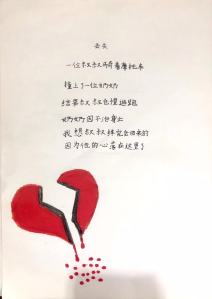
Gu Xiyu
LOST
An uncle rides a motorcyle
and hits a grandma.
The uncle flees in panic,
the grandma gets no treatment and dies.
I think the uncle will come back in the end,
because his heart fell down here.
Translated by MW, May 2020
Gu Xiyu, born in October 2010, goes to school in Yangzhou city.
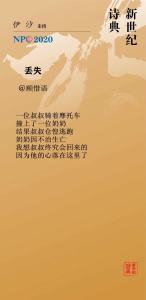
《新诗典》小档案:顾惜语,女,出生于2010年10月,现就读于扬州市江都区实验小学三年级21班。陕西省少儿诗社社员,获得首届“长嘉”全国少儿诗歌大赛提名奖,全国网络作文大赛获得二等奖。部分作文和诗歌在“拙原工作室”、“江南传媒”、“唐小诗诗社”、“诗锚”等网络平台发表。入选2019年度《中国100名优秀少年诗人》。 在唐小诗诗社“眼睛”和“春”主题童诗中,荣获最佳作品奖。数篇诗歌,作文和诗歌多次在《江都日报》 、《芦柴花》、《学语文之友》、《农村孩子报》、《河南青年时报》、《孩子选孩子的诗》《童诗周历》等诗歌选本或杂志上发表。
标签:accident, adults, children, collision, crime, death, 顧惜語, 顾惜语, fault, Gu Xiyu, heart, life, medicine, NPC, people, poetry, road, sin, society, traffic, 新世紀詩典
发表在 2010, 2010s, 2020, 20th century, 21st century, April 2020, May 2020, Middle Ages, NPC, poetry, Translations, Uncategorized, 新世纪诗典 | Leave a Comment »
5月 9, 2020

Liu Jian
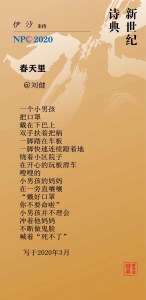
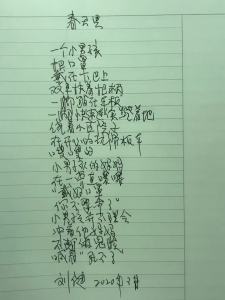
IM FRÜHLING
Ein kleiner Bub
trägt seinen Mundschutz
untern am Kinn,
hält mit beiden Händen die Lenkstange,
einen Fuß auf dem Roller,
mit dem anderen Fuß taucht er schnell an,
rund um die Wohnhausanlage.
Er saust und saust!
Seine Mama
rennt daneben und schreit:
„Setz die Maske auf!
Du kommst noch um!“
Der kleine Bub kümmert sich nicht darum,
schneidet ihr Gesichter
die ganze Zeit und ruft:
„Ich sterbe nicht!“
März 2020
Übersetzt von MW im Mai 2020
标签:boy, child, death, disease, family, life, Liu Jian, mother, NPC, outside, pandemic, play, playing, virus, 刘健, 新世纪詩典
发表在 2020, 20th century, 21st century, April 2020, December 2019, February 2020, January 2020, March 2020, May 2020, Middle Ages, NPC, poetry, Translations, Uncategorized, 新世纪诗典 | Leave a Comment »
5月 7, 2020
Ma Jinshan
LIFE IS PRECIOUS INDEED
On the third day of the lunar new year,
he takes his wife
and goes to Tibet.
All his friends say:
“You have quite a nerve!
To go for a trip
at such a time!“
He doesn‘t answer for a while.
“My wife has terminal cancer,
it was her last wish
to go there
once more.“
2/1/20
Translated by MW, May 2020
Ma Jinshan
WERT DES LEBENS
Er fährt am dritten Tag des Mondjahres
mit seiner Frau
nach Tibet.
Alle Freunde sagen:
„Du traust dir zu viel!
In dieser Zeit
machst du eine Reise!“
Er sagt lange nichts.
„Meine Frau hat Krebs im Endstadium.
Es war ihr letzter Wusch,
dort noch einmal
hinzukommen.“
2020-02-01
Übersetzt von MW im Mai 2020


标签:death, disease, 马金山, friends, life, Ma Jinshan, marriage, NPC, people, poetry, tibet, time, travel, trip, virus, wish, 新世纪詩典
发表在 2020, 20th century, 21st century, April 2020, December 2019, February 2020, January 2020, March 2020, May 2020, Middle Ages, NPC, poetry, Translations, Uncategorized, 新世纪诗典 | Leave a Comment »
5月 4, 2020

Chun Sue
BOMBED
Kids from a certain internet site
used to moan all the time they wanted to die.
But once the danger really arrived,
haven’t seen one of them wanting to die anymore.
2/5/20
Translated by MW, May 2020
Chun Sue
FLIEGERANGRIFF
Die Kinder von einer Internetseite,
die reden täglich vom Sterben.
Sobald die Gefahr wirklich da ist,
will keiner mehr tot sein.
5. Februar 2020
Übersetzt von MW im Mai 2020

标签:Chun Sue, danger, death, disease, fashion, internet, kids, NPC, pandemic, people, students, teenagers, virus, youth, 新世纪詩典, 春树
发表在 2000s, 2010s, 2020, 20th century, 21st century, April 2020, December 2019, February 2020, January 2020, March 2020, May 2020, Middle Ages, NPC, poetry, Translations, Uncategorized, 新世纪诗典 | Leave a Comment »
5月 4, 2020

Huzi
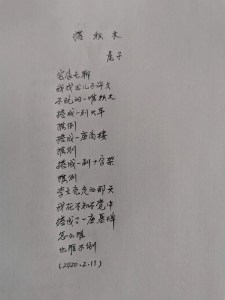
BUILDING BLOCKS
Stuck at home
I took out my son’s building blocks,
no-one had piled them up for a while.
I made a train,
pushed it over.
Made a tall building
and pushed it down.
Made a cross,
pushed it over.
On the day when Dr. Li Wenliang died,
I didn’t think and piled up a gravestone
and couldn’t push it down
anymore.
2/11/20
Translated by MW, May 2020
Huzi
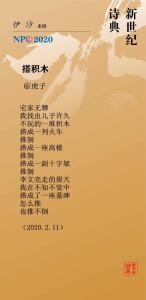
BAUSTEINE
Daheim ist mir fad,
ich nehm die Bausteine heraus
mit denen mein Sohn schon lang nicht mehr spielt.
Ich bau einen Zug,
werf ihn um.
Ich mach ein Hochhaus,
und werf es um.
Ich baue ein Kreuz,
werf es um.
An dem Tag, als Dr. Li Wenliang stirbt,
bau ich ohne zu denken
einen Grabstein.
Den kann und kann ich
nicht mehr umwerfen.
- Februar 2020
Übersetzt von MW im Mai 2020
标签:building, building blocks, buildings, china, cross, death, disease, doctors, 虎子, family, games, graves, home, hospital, Huzi, NPC, people, playing, poetry, train, virus, 新世纪詩典
发表在 Uncategorized | Leave a Comment »
4月 29, 2020
Na Hong
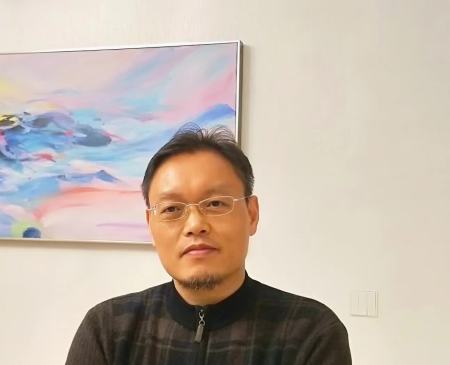
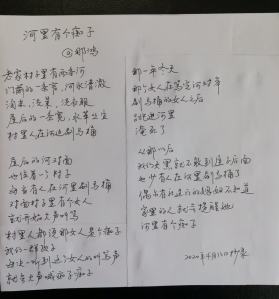
IM FLUSS IST EINE IRRE
Im Dorf, wo meine Familie herkommt, gibt es zwei Flüsse.
Der vor unseren Türen ist schmal und klar.
Wir sieben Reis, waschen Gemüse, waschen die Kleider.
Der Fluss hinterm Hof ist breit und voller Schilf,
die Leute bürsten darin ihre Klomuscheln.
Auf der anderen Seite des breiten Flusses
ist auch ein Dorf einer anderen Sippe.
Jedesmal, wenn jemand im Fluss Klokübel bürstet,
fängt eine Frau aus dem Dorf gegenüber
laut an zu schimpfen.
In unserem Dorf nennt man sie eine Irre.
Unsere Kinder,
jedesmal wenn sie diese Frau schimpfen hören,
schreien laut Irre! Irre!
Eines Tages im Winter
schimpft die Frau von gegenüber wieder
die Frauen die ihre Klokübel waschen
und springt dann in den Fluss
und ertrinkt.
Von da an
trauen wir uns wenn es dunkel wird nicht mehr hinter den Hof
und weniger Leute waschen im Fluss ihre Kübel.
Manchmal wissen frisch eingeheiratete Frauen noch nichts davon,
dann wird jemand im Haus sie erinnern,
im Fluss ist eine Irre.
Übersetzt von MW im April 2020

标签:children, clear, clothes, crazy, curses, death, dirty, 那鸿, history, memory, Na Hong, NPC, people, rice, river, scolding, shout, suicide, vegetables, village, washing, water, women, 新世纪詩典
发表在 19th century, 2000s, 2010s, 2020, 20th century, 21st century, April 2020, Middle Ages, NPC, poetry, Translations, Uncategorized, 新世纪诗典 | Leave a Comment »
4月 27, 2020

Lei Dao
FATHER’S WORRIES
It’s getting warm, the virus is waning,
suddenly there is frost.
Father gets very nervous,
watching the forecast each day.
He worries about freshly planted
cucumbers, beans, they are sprouting,
also the corn could freeze and die
in the middle of spring.
When the virus was rampant,
he wasn’t nearly as worried.
3/28/20
Translated by MW, April 2020
Lei Dao
VATERS SORGEN
Das Wetter wird wärmer, das Virus wird weniger
und auf einmal kommt Frost.
Vater ist sofort nervös.
Jeden Tag schaut er den Wetterbericht.
Er sorgt sich um die frisch gepflanzten
Gurken und Stangenbohnen, die sprießen,
und um den Mais, dass alles erfriert
wenn der Frost kommt im Frühling.
Auch als das Virus am ärgsten war,
hat er sich nicht solche Sorgen gemacht.
28. März 2020
Übersetzt von MW im April 2020


标签:corn, country, death, 雷岛, family, father, food, frost, history, Lei Dao, life, memory, NPC, season, spring, vegetables, weather, 新世纪詩典
发表在 2020, 20th century, 21st century, April 2020, February 2020, January 2020, March 2020, Middle Ages, NPC, poetry, Translations, Uncategorized, 新世纪诗典 | Leave a Comment »
4月 24, 2020

Xiao Mai
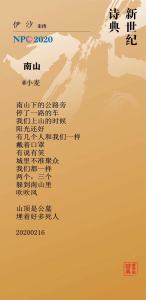
SOUTH MOUNTAIN
Along the road at the foot of South Mountain,
cars are parked everywhere.
While we are climbing,
the sunlight is fine.
There are some other people like us,
wearing face masks,
talking and laughing.
In the city, meeting up is forbidden.
So we sneak off,
two or three at a time,
to the slopes of South Mountain
to get outside and feel the wind.
At the top is the cemetery,
full of dead people.
2/16/20
Translated by MW, April 2020

标签:cemetery, city, climbing, countryside, death, disease, masks, mountains, NPC, outdoor, outside, outskirts, pandemic, people, poetry, rules, society, south, virus, walking, Xiao Mai, 小麦, 新世纪詩典
发表在 2003, 2020, 20th century, 21st century, April 2020, December 2019, February 2020, January 2020, March 2020, Middle Ages, NPC, poetry, Translations, Uncategorized, 新世纪诗典 | Leave a Comment »
4月 23, 2020
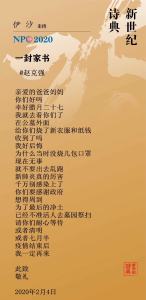
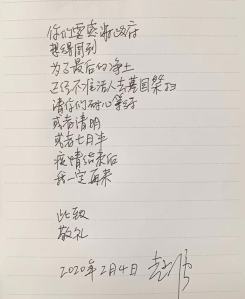
Zhao Keqiang
FAMILY LETTER
Dear Mom and Dad,
how are you?
It’s good I went to see you
on the 27th of the last month
before lunar new year. Burned paper money
and new paper clothes for you to wear.
Did you get them?
I am sorry I didn’t think of
burning a few paper face masks.
Now you can’t just run around
for nothing outside.
This new lung disease is very bad,
whatever you do, don’t get infected.
You should say thank you to the government,
they thought of everything,
to preserve the last bit of Pure Land,
no living body can go to the cemetery now.
So please have patience, wait for me,
maybe at Qingming in early April,
maybe for the ghost days in summer,
whenever the virus is over,
I’ll be sure to come.
Sincerely,
…
2/4/20
Translated by MW, April 2020
Zhao Keqiang
BRIEF AN DIE ELTERN
Lieber Papa, liebe Mama,
wie geht es Euch?
Gut, dass ich Euch am 27. Tag des Speckmonats
noch besucht hab.
Draußen vorm Friedhof
hab ich Euch Totengeld verbrannt und neue Kleider,
habt ihr das bekommen?
Tut mir leid
dass ich nicht auch ein paar Gesichtsmasken verbrannt hab.
Jetzt soll man ohne triftigen Grund
überhaupt nicht herumrennen.
Die neue Lungenentzündung ist wirklich arg,
ja nicht anstecken lassen!
Ihr müsst Euch bei der Regierung bedanken,
die haben mitgedacht
das letzte Reine Land,
da dürfen jetzt nicht mehr lebendige Leute zum Friedhof.
Ihr müsst geduldig sein,
vielleicht Anfang April zum Gräbertag,
vielleicht im siebenten Monat
wenn das Virus vorbei ist.
Ich komm sicher wieder zu Euch.
Herzliche Grüße,
Hochachtungsvoll
4. Februar 2020
Übersetzt von MW im April 2020

标签:clothes, death, disease, 赵克强, family, government, grave, holidays, letters, lunar calendar, masks, money, NPC, pandemic, paper, parents, people, Qingming, virus, Zhao Keqiang, 新世纪詩典
发表在 2019, 2020, 20th century, 21st century, December 2019, February 2020, January 2020, March 2020, Middle Ages, NPC, poetry, Translations, Uncategorized, 新世纪诗典 | Leave a Comment »
4月 21, 2020
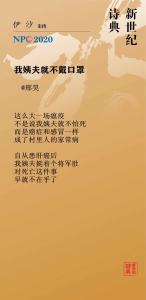
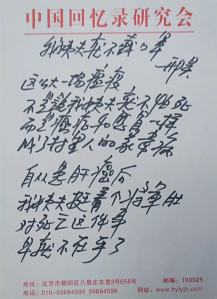
Xing Hao
MY UNCLE DOESN’T WEAR A MASK
Such a worldwide plague,
not that he’s not afraid to die,
it’s that cancer is like the cold,
the common cold in our village.
Ever since he got liver cancer,
my uncle wears his big belly
like a general
without a care in the world.
Translated by MW, April 2020
标签:belly, cancer, care, cold, common, death, disease, 邢昊, general, NPC, pandemic, village, virus, world, Xing Hao, 新世纪詩典
发表在 1950s, 1960s, 1970s, 1980s, 1990s, 2000s, 2003, 2010s, 2020, 2021, 20th century, 21st century, April 2020, December 2019, February 2020, January 2020, March 2020, Middle Ages, NPC, poetry, Translations, Uncategorized, 新世纪诗典 | Leave a Comment »
4月 21, 2020
CORONA
Corona ist ein Gedicht von Paul Celan.
Es hat überhaupt nichts mit Krankheit zu tun,
außer vielleicht mit der Krankheit der Liebe.
Er hat es in Wien geschrieben,
er war in Ingeborg Bachmann verliebt.
Es ist ein schönes, ein stolzes Gedicht,
ein Gesang an die Liebe.
Manchmal helfen Gedichte
in barbarischen Zeiten.
Ruth Klüger hat Gedichte geschrieben,
auch im KZ.
Adorno war im Exil.
Corona ist ein Gesang an die Liebe.
Celan und Bachmann sind nicht sehr lange beisammen geblieben,
aber die Zeit im Gedicht
gilt noch und hilft
solang du es liest.
Hör ihm zu, es gibt eine Aufnahme.
Es ist Zeit, dass der Stein sich zum Blühen bequemt.
Celan sagt „zum“.
Es ist Zeit.
MW März 2020

Mateusz Grochocki/Getty Images
标签:death, disease, Europe, history, ingeborg bachmann, language, love, memory, Paul Celan, people, poetry, time, Vienna, virus
发表在 1930s, 1940s, 1944, 1945, 1947, 1948, 1950s, 1960s, 1970s, 1980s, 1989, 1990s, 2000s, 2010s, 2020, 20th century, 21st century, April 2020, December 2019, February 2020, January 2020, March 2020, Middle Ages, poetry, Uncategorized | Leave a Comment »
4月 13, 2020

OSTERN
gott ist gefoltert
und hingerichtet worden
und deshalb lebt er
MW Ostern 2020
GLAUBE
Maia fragt
Was bedeutet dir dein Glaube
Mami sagt
Schau nach oben
Ein großer Kirschbaum
Im Arsenal
Unter anderen Bäumen
MW Ostern 2020
WIRKLICHKEIT
In Wirklichkeit ist es immer wie jetzt.
Halt nicht auf einmal,
doch in der Schwebe,
ein bisschen versetzt.
In Wirklichkeit ist
dein Leben nicht fest,
sicher ist gar nichts,
egal was wer sagt.
In Wirklichkeit bist du Tanz und Musik.
Wir sind was sich dreht
oder steht
und jemanden sucht
solang es noch geht.
MW 1. April 2020
HEUTE
Heute ist der wärmste Tag
des Jahres bis jetzt.
Gestern war Seder,
Vollmond.
Heute ist Gründonnerstag.
In Tschechien haben sie grünes Bier.
Heuer auch, irgendwo.
Irgendwie tröstlich.
MW April 2020
KARFREITAG
Karfreitag
Ka Freitag
Überhaupt ka Freitag
Sogt die liebe Regierung
– die vorige derselbe Chef –
Überhaupt ka Freier Tag
außer du nimmst Urlaub,
oder wie wor des,
wennst noch an Job hast.
MW 10. April 2020
GOTT
Gott ist das schönste
schwarze Loch für alle Macht
des Imperiums
MW Ostern 2020
PALMSONNTAG
Heute ist es sehr schön
Heute ist es sehr schön
Heute ist es sehr schön
Groß ist Gott. Ja.
Heute ist es sehr schön
Heute ist es sehr schön
Heute ist es sehr schön
Groß ist Gott. Ja.
MW April 2020
JEDER TAG
jeder tag ist ein gedicht
wenn du zeit hast
im moment haben viele leute
viel mehr zeit als sonst,
wenn auch nicht unbedingt ruhe.
haben sie einen moment?
ist eine häufige frage
im moment haben viele viele millionen
in vielen erdteilen
etwas gemeinsam.
natürlich ist das auch sonst der fall
aber normalerweise sagt niemand
von dieser situation betroffene aller länder,
lasst uns einander helfen,
so gut wir nur können,
oder was glaubst du?
MW März 2020
ACHTSAMKEIT
Achtsamkeit
hat sehr viel mit Neunsamkeit zu tun,
das sagen alle großen
Neunsamkeitslehrer.
Aber die großen Samenbanken,
die fangen frühestens
ab Zehnsamkeit an,
mit Ihnen zu reden.
MW März 2020
AUF DEN WIESEN
“Wir sind die Menschen auf den Wiesen” – Ernst Jandl
Jeder Mensch auf der Wiese
ist noch am Leben.
Alle nur drinnen bleiben
ist nur zum Speiben.
Masken, ok.
Abstand, bitte!
Also Bundesgärten aufsperren
in Wien,
damits Platz gibt.
Und bitte keine Leute,
die allen sagen,
dass picken sollen
in ihren Wohnungen.
MW 2. April 2020
NACKT
Nackt in der Straßenbahn
ohne Ticket,
Kontrollorinnen kommen.
Peinlich,
keine gute Bedeutung.
Aber kein Corona,
niemand achtet auf Abstand.
Also ein schöner Traum,
aber ich wach gleich wieder auf
und kann lang nicht schlafen.
MW April 2020
JESUS LEBT
Vor 2000 Jahren
ist einer gestorben
und war wieder lebendig,
zumindest für Freunde.
Naja, bei uns sind auch gestern
welche gestorben
und im Nahen Osten
wahrscheinlich auch ein paar.
Aber er war ein Sündenbock.
Das heißt er ist für sehr viele gestorben
und viele tröstet das.
Ich bin nicht sicher,
er hat nichts verhindert,
obwohl er Jude war,
oder eher recht wenig verhindert,
zumindest.
Aber der Mond
kommt jedes Jahr wieder.
Die Eier, der Frühling.
Und Jesus lebt.
MW April 2020

标签:austria, death, disease, easter, history, life, memory, music, people, poetry, police, reality, religion, society, spring, traffic, Vienna, virus, work
发表在 Uncategorized | Leave a Comment »
4月 3, 2020

Yi Sha
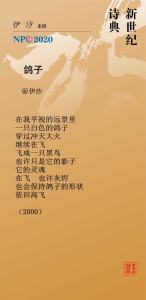
DOVE
In my sights straight in the distance,
a white dove
goes through a fire up to the sky.
Still it flies,
changed into black.
Maybe just its shadow,
its soul
flying. Maybe the ash
can keep the shape of a dove
sailing on.
2000
Translated by MW, 2020
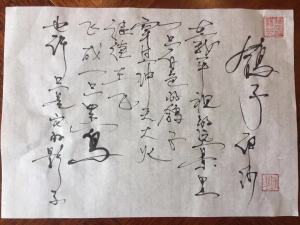
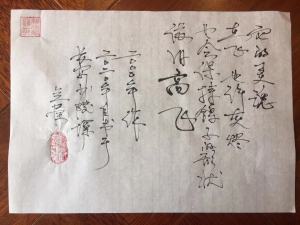
 GERMAN VERSION IN HERE, SEE “Textprobe“
标签:animals, ashes, birds, black, cremation, death, fire, flying, NPC, people, poetry, reincarnation, shape, sight, soul, transformation, white, 新世纪詩典, 伊沙
发表在 1930s, 1940s, 1950s, 1960s, 1970s, 1980s, 1989, 1990s, 1997, 2000, 2000s, 2010s, 2020, 20th century, 21st century, Antique times, April 2020, December 2019, February 2020, January 2020, March 2020, Middle Ages, NPC, poetry, Translations, Uncategorized, Yi Sha, 新世纪诗典, 伊沙 | Leave a Comment »
4月 2, 2020
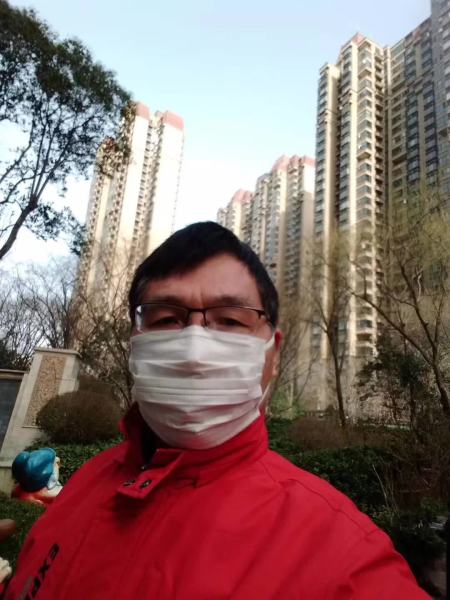
Meihua Yi
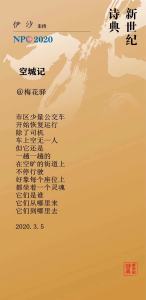
EMPTY CITY
Some bus lines in the city
start operating again
but apart from the driver
there is no-one inside.
Still they go on all day
one after the other
on empty streets.
It’s like there is a soul
sitting on every seat,
where do they come from,
where are they going?
3/5/20
Translated by MW, April 2nd, 2020

标签:air, bus, city, death, disease, life, NPC, people, poetry, report, souls, story, strategy, virus, 新世纪詩典, 梅花驿
发表在 2003, 2020, 20th century, 21st century, April 2020, December 2019, February 2020, January 2020, March 2020, Middle Ages, NPC, poetry, Translations, Uncategorized, 新世纪诗典 | Leave a Comment »
4月 1, 2020
Ye Zhen
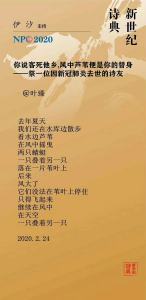
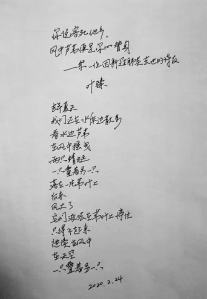
YOU SAY WHEN YOU DIE IN FOREIGN PARTS, REEDS IN THE WIND WILL STAND IN – TO A POETRY FRIEND WHO DIED FROM THE VIRUS
Last summer
we walked at the reservoir,
saw how the reeds
swayed in the wind.
Two dragonflies,
one on top of the other,
landed on a reed.
Then
the wind picked up,
they couldn’t stay,
had to fly up
in the wind doing their thing,
one stacked on another
up in the air.
2/24/2020
Translated by MW, 4/1/20
标签:air, animals, death, disease, friendship, grass, karma, memory, NPC, people, poetry, reeds, reincarnation, sex, sexuality, sky, virus, water, Ye Zhen, 叶臻, 新世纪詩典
发表在 2020, 20th century, 21st century, April 2020, December 2019, February 2020, January 2020, March 2020, Middle Ages, NPC, poetry, Translations, Uncategorized, 新世纪诗典 | Leave a Comment »
4月 1, 2020
《月亮》
【奥地利】维马丁
伊沙、老G译
月亮
被孤立地
高悬在外
月亮
被孤立地
高悬在外
在云层后面
越过花木
天又冷了几分
2020年3月

WIRKLICHKEIT
In Wirklichkeit ist es immer wie jetzt.
Halt nicht auf einmal,
doch in der Schwebe,
ein bisschen versetzt.
In Wirklichkeit ist
dein Leben nicht fest,
sicher ist gar nichts,
egal was wer sagt.
In Wirklichkeit bist du Tanz und Musik.
Wir sind was sich dreht
oder steht
und jemanden sucht
solang es noch geht.
MW 1. April 2020

CORONA
Actually it’s always like this
for many people.
You live from one day to the next.
Only now it’s a big deal
for the whole world
for a while.
MW April 1st, 2020

疫情
其实生活一直就这样
对很多人,所有的现象。
要躲起来,
要避免警察。
要依赖邻居,
要怕一些邻居。
每天每一刻都可能被传染,
要互相照顾。
2020.4.1

MOON
the moon
is hanging out
in isolation
the moon
is hanging out
in isolation
behind the clouds
over flowering trees
it’s getting cold again
MW March 2020

1 POEM/DAY
One poem per day
takes nothing away,
I want to say.
But everything takes time,
every drug,
every mask,
every care.
So one poem per day
could take away
whatever else you would have had.
But then you could
hear it again,
whatever you do,
if it was good.
MW March 2020

GRINDING
The world is grinding to a halt.
So are we all madly in love?
Or have we come to our senses
about the climate
between each other?
About working together?
We don’t have a choice.
And we don’t have a choice
in hoping it will soon be over.
And we still let them set our clocks.
MW March 29, 2020

ACHTSAMKEIT
Achtsamkeit
hat sehr viel mit Neunsamkeit zu tun,
das sagen alle großen
Neunsamkeitslehrer.
Aber die großen Samenbanken,
die fangen frühestens
ab Zehnsamkeit an,
mit Ihnen zu reden.
MW März 2020

标签:art, clock, conditions, contact, dance, death, disease, economy, international contact, isolation, life, meditation, moon, music, neighborhood, people, place, poetry, police, quarantine, religion, society, spring, time, virus, world
发表在 2020, 20th century, 21st century, April 2020, February 2020, January 2020, June, Literadio, March 2020, Middle Ages, poetry, Uncategorized | Leave a Comment »
3月 30, 2020
Li Suo
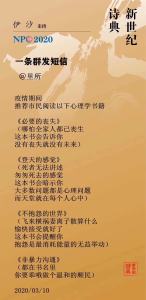
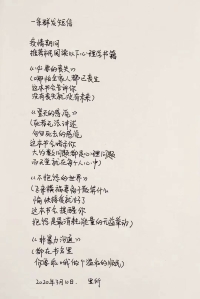
KURZNACHRICHT AN ALLE
In der Virus-Krise empfehlen Psychologen
den Stadtbewohnern folgende Bücher:
„Mut zur Trennung“ – „Necessary Losses“
(Auch wenn die ganze Familie tot ist,
dieses Buch sagt Ihnen,
ohne Begräbnis gibt es keine Zukunft.)
„Zum Himmel aufsteigen“ – Ein Harvard-Psychologe.
(Die Verstorbenen können nicht sagen,
wie es sich anfühlt, wenn man schnell weg muss.
Aber dieses Buch lässt Sie verstehen,
die meisten Probleme sind psychische Probleme,
und der Himmel liegt immer im Herzen.)
„Einwandfrei“ – A Complaint Free World.
(Das Unglück schlägt zu, Sie verlieren Ihre Lieben.
Hauptsache, Sie akzeptieren es heiter.
Dieses Buch erinnert Sie,
Klagen ist nutzlos und verbraucht unnötig viel Energie.)
„Gewaltfreie Kommunikation“
(Der Titel sagt alles. Sei ein braver und sanfter Untertan!)
10. März 2020
Übersetzt von MW am 30. März 2020
标签:acceptance, books, city, communication, complain, crisis, death, deaths, disease, 里所, faith, family, funeral, grief, heaven, Li Suo, loss, NPC, people, psychology, violence, virus, Wuhan, 新世纪詩典
发表在 2003, 2020, 20th century, 21st century, April 2020, December 2019, February 2020, January 2020, Literadio, March 2020, Middle Ages, NPC, poetry, PR, Translations, Uncategorized, 新世纪诗典 | Leave a Comment »
3月 20, 2020
为病逝的人祈祷
韩敬源
那鸣叫的蛐蛐是谁的命
那枝头的蝉声是谁的魂
我从你们可能走过的路上走过
我在你们可能躺过的床上休息
2013年8月
Han Jingyuan
I PRAY FOR PEOPLE WHO DIED FROM DISEASE
Whose life is in the cricket I hear?
Whose soul is in the cicada who calls from that twig?
I walk on the path where you may have walked,
I rest on the bed where you may have lain.
August 2013
Translated by MW, March 2020
Han Jingyuan
ICH BETE FÜR DIE WEGEN KRANKHEIT VERSTORBENEN
Wessen Leben ist in der zirpenden Grille?
Wessen Seele ist in der Zikade dort auf dem Zweig?
Auf dem Weg wo ich gehe seid ihr vielleicht gegangen,
Auf dem Bett wo ich ruhe seid ihr vielleicht gelegen.
August 2013
Übersetzt von MW im März 2020

标签:animals, crickets, death, disease, 韩敬源, grass, Han Jingyuan, history, life, memory, prayer, religion, SARS, sickness, soul, souls, virus, 新世纪詩典
发表在 2013, 2020, 20th century, 21st century, Antique times, August 2013, December 2019, February 2020, January 2020, March 2020, Middle Ages, NPC, poetry, Translations, Uncategorized, 新世纪诗典 | Leave a Comment »
3月 10, 2020

Xiang Jiajie
LATERNENFEST
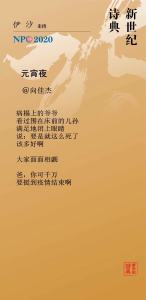
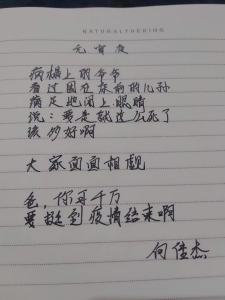
Opa auf dem Krankenbett
sieht rundherum Kinder und Enkel,
schließt zufrieden die Augen,
sagt: Jetzt einfach sterben
wär wirklich nicht schlecht.
Alle schauen einander an.
Papa, du musst unbedingt
aushalten, bis die Virus-Krise vorbei ist!
Übersetzt von MW im März 2020
标签:bed, crisis, death, disease, family, grandparents, NPC, people, poetry, virus, Xiang Jiajie, 向佳洁, 新世纪詩典
发表在 2000s, 2010s, 2020, 20th century, 21st century, February 2020, January 2020, March 2020, Middle Ages, NPC, poetry, Translations, Uncategorized, 新世纪诗典 | Leave a Comment »
3月 10, 2020
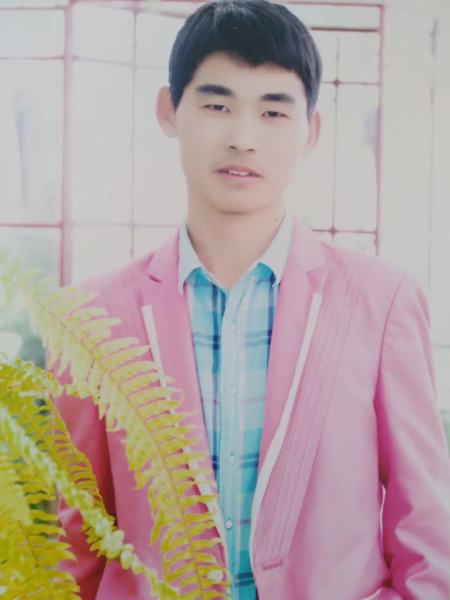
He Xi
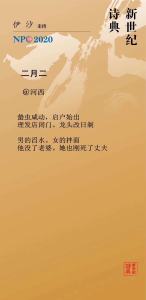
ZWEITER ZWEITER MONDKALENDER
Nach dem Winterschlaf, erstes Mal vor die Tür.
Der Friseur hat zu. Drachenkopf nicht rasiert.
Wasser schöpft ein Mann. Suppe kocht eine Frau.
Er hat keine Frau mehr. Ihr Mann ist grad erst tot.
Übersetzt von MW im März 2020
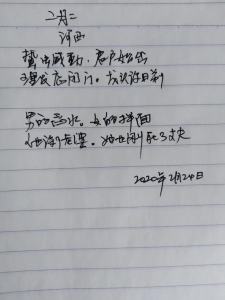
标签:cooking, countryside, death, disease, food, He Xi, land, life, lunar calendar, man, noodles, NPC, pasta, people, poetry, soup, spring, water, winter, woman, year, 新世纪詩典, 河西
发表在 2000s, 2010s, 2020, 20th century, 21st century, Antique times, February 2020, January 2020, March 2020, Middle Ages, NPC, poetry, Translations, Uncategorized, 新世纪诗典 | Leave a Comment »
3月 5, 2020
Youzi Xuesong
GRABSPRUCH
Bestätigte Nachricht aus meinem Heimatort –
derzeit kein einziger Fall von Coronavirus.
Das macht mich froh, das ist ein Trost. Tausend Meilen entfernt,
aber ich kann mich mein ganzes Leben nicht davon lösen.
Hier bin ich geboren und aufgewachsen, hier
wohnen meine Verwandten, Freunde, Bekannten,
Ziegelteich und Päonienhang, hier fließen Changhuai und Feishui.
In meinen Knochen sind Dialekt und Leberfleck.
Dieses Gedicht ist nicht lang, es muss nicht öffentlich werden,
Falls ich aus der Fremde diesen Frühling nicht wegkomm,
du klickst deinen Freundeskreis an, findest das ist mein
Grabspruch.
Übersetzt von MW im März 2020

标签:death, disease, family, friends, home, homesick, life, news, NPC, people, poetry, public, social media, society, virus, Youzi Xuesong, 新世纪詩典, 游子雪松
发表在 2020, 20th century, 21st century, February 2020, January 2020, March 2020, Middle Ages, NPC, poetry, Translations, Uncategorized, 新世纪诗典 | Leave a Comment »
3月 2, 2020

AAA (3A)
SEUCHENBILD
Wegen der Seuche
kann er nicht ausgehen,
also trinkt er online mit Freunden.
Trinkt und trinkt,
das Bild wird undeutlich.
Der Freund am anderen Ende
schaut aus wie sein eigenes Trauerfoto,
er fängt an zu heulen.
Übersetzt von MW am 2. März 2020
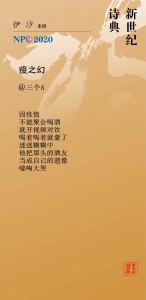

标签:3A, AAA, death, disease, drinking, feelings, friends, NPC, online, people, picture, social media, society, 新世纪詩典, 三个A
发表在 2020, 20th century, 21st century, February 2020, January 2020, March 2020, Middle Ages, NPC, poetry, Translations, Uncategorized, 新世纪诗典, 三个A | Leave a Comment »
2月 17, 2020

Qu Youyuan
EINÄSCHERUNG IST FÜR DIE HEIZUNG
Da ist die Welt zu kalt geworden.
Bleibt nur
dieses Skelett,
das geht als Brennholz.
Übersetzt von MW im Februar 2020

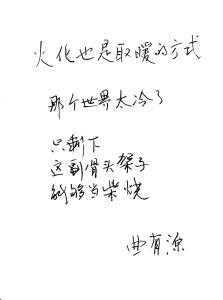
标签:body, bones, burn, cremation, death, heating, NPC, poetry, Qu Youyuan, warmth, 新世纪詩典, 曲有源
发表在 2020, 20th century, 21st century, February 2020, Middle Ages, NPC, poetry, Translations, Uncategorized, 新世纪诗典 | Leave a Comment »
2月 15, 2020
Yi Sha
NICHT VERBRENNEN
Ihr dürft die Handys
der Toten nicht mit verbrennen!
Das sind ihre Namen,
ihre Registrierung
ihre Usernames
ihre Passwörter
ihre Bar codes
ihre Tagebücher
ihre Fotos
ihre Spuren
ihre Freundeskreise
ihre Beziehungen
ihre Angehörigen
ihre Bankverbindungen
ihr Geld
ihre Bibliotheken
ihre Restaurants
ihre Internetshops
ihre Supermärkte
ihre Pizzaboten
ihre Privatsachen
ihre Geheimnisse.
Das ist ihr Umgang mit ihrer Welt,
das sind die Belege
für ihren Lebenskreis.
Da drin sind ihr Schicksal,
ihr Atem,
ihre Hinterlassenschaft,
ihre letzten Worte,
ihre Liebe,
ihr Hass,
ihr Sex,
ihre Gedichte.
Ihr dürft die Handys
der Toten
nicht alle verbrennen!
14. Februar 2020
Übersetzt von MW am 14. Februar 2020
《不能烧》
伊沙
你们不能
把逝者的手机
一把火烧掉
那是他们的姓名
他们的注册
他们的域名
他们的密码
他们的二维码
他们的日志
他们的照片
他们的足迹
他们的朋友圈
他们的关系网
他们的亲人
他们的银行
他们的钱
他们的图书馆
他们的饭馆
他们的网店
他们的超市
他们的送餐小哥
他们的稳私
他们的秘密
他们与世界的交流
他们活过一场的
核心证据
他们的生命
他们的呼吸
他们的遗物
他们的遗言
他们的爱
他们的恨
他们的性
他们的诗
你们不能
把逝者的手机
一把火烧掉
2020、2、14
标签:burn, death, disease, life, people, phone, poetry, society, virus, Wuhan, yi sha, 伊沙
发表在 2020, 20th century, 21st century, February 2020, January 2020, Middle Ages, poetry, Translations, Uncategorized, Yi Sha, 伊沙 | Leave a Comment »
2月 11, 2020
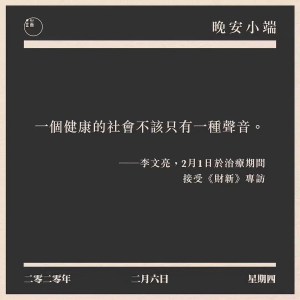
TAGEBUCH EINES MÄDCHENS IN WUHAN
Sie haben die Stadt isoliert.
Ich hab solche Angst.
Wer kann uns retten?
Mama geht es immer schlechter.
2020-01-23
Mama sagt am Telefon,
Sie wird nach Jinyintan verlegt.
Weiß nicht ob das gut ist oder nicht?
2020-01-23
Mama ist gegangen.
2020-01-28
Papa bekommt eine Computer-Tomographie.
Ich weiß nicht, wie lang ich warten muss.
Ich hock an der Straße und schau ins Leere,
hab mich noch nie so minderwertig gefühlt.
2020-01-29
Ich geh mit Papa zum Krankenhaus,
so wie er am 24. mit Mama gegangen ist.
Papa scheucht mich mit aller Kraft aus dem Krankenzimmer,
sagt ich darf nicht mehr kommen.
2020-02-02
Hab nicht von Mama geträumt,
aber dass ich sie überall suche
und Leute frage ob sie Mama gesehen haben.
Ob sie weiß, dass Papa krank ist,
dass ich sie suche?
2020-02-04
Es ist wirklich zu schrecklich, wenn der Atem versagt.
Mama, nimm Papa mit,
im Himmel könnt ihr frei atmen.
2020-02-07
Papa,
ich hab dich auch verloren.
Bitte such Mama,
und
wartet auf mich.
2020-02-08
Ich hab solche Angst.
Ich bin auch angesteckt.
2020-02-08
(Das ist ein Gedicht. Es ist nicht mein Gedicht. Ein Mädchen, das anonym bleiben wollte, hat ihr Tagebuch auf Douban gepostet. Ich habe nur diese paar Sätze in Verse gesetzt. Ein Gedicht ist aus Sprache und Seele geformt. Ich möchte aus dem Tagebuch dieses Mädchens ein kleines Denkmal formen. Ich habe es auf Weibo weitergegeben. Sie könnte jeder Mensch auf der Welt sein, hab ich gesagt.)
Shen Haobo
Übersetzt von Martin Winter, 2020-02-10
Original-Tagebuch siehe http://blog.creaders.net/u/11445/202002/365655.html
沈浩波
一个武汉女孩的日志
封城了
我好害怕
谁能救救我们
妈妈越来越不舒服了
(2020.1.23)
妈妈打来电话说
医院要把她转院到金银潭
不知道是好还是不好
(2020.1.26)
妈妈走了
(2020.1.28)
等爸爸做CT
不知道要等到什么时候
蹲在路边发呆
这是我这辈子最卑微最低廉的样子
(2020.1.29)
送爸爸去住院了
就像爸爸24号送妈妈住院一样
爸爸在病房拼命地赶我走
叫我不要再来
(2020.2.2)
没梦到妈妈
但梦到我一直在找她
到处问人
你看到我妈妈了吗?
她知不知道爸爸病了
我在找她?
(2020.2.4)
呼吸衰竭真是太残忍的死法了
妈妈,你带爸爸走吧
天上可以自由地呼吸
(2020.2.7)
爸爸
我把你也弄丢了
你去找妈妈
然后
你们等我
(2020.2.8)
我好害怕
我也感染了
(2020.2.8)
(注:这是一首诗,并不是我写的诗。是一个不愿意公开姓名和身份的武汉女孩,在豆瓣上的日志。我只是把这些文字简单地分了分行,变成诗的样子。诗是语言和心灵共同形成的雕塑,我想把这个女孩的日志变成一座小小的雕塑。把这些日志转发到微博的网友@毛十八 说:她可以是任何一个人。)
标签:children, death, diary, disease, family, hospital, life, parents, people, Shen Haobo, Wuhan, 沈浩波
发表在 2003, 2020, 20th century, 21st century, December 2019, February 2020, January 2020, poetry, prose, Translations, Uncategorized | 1 Comment »
2月 8, 2020

Li Haiquan
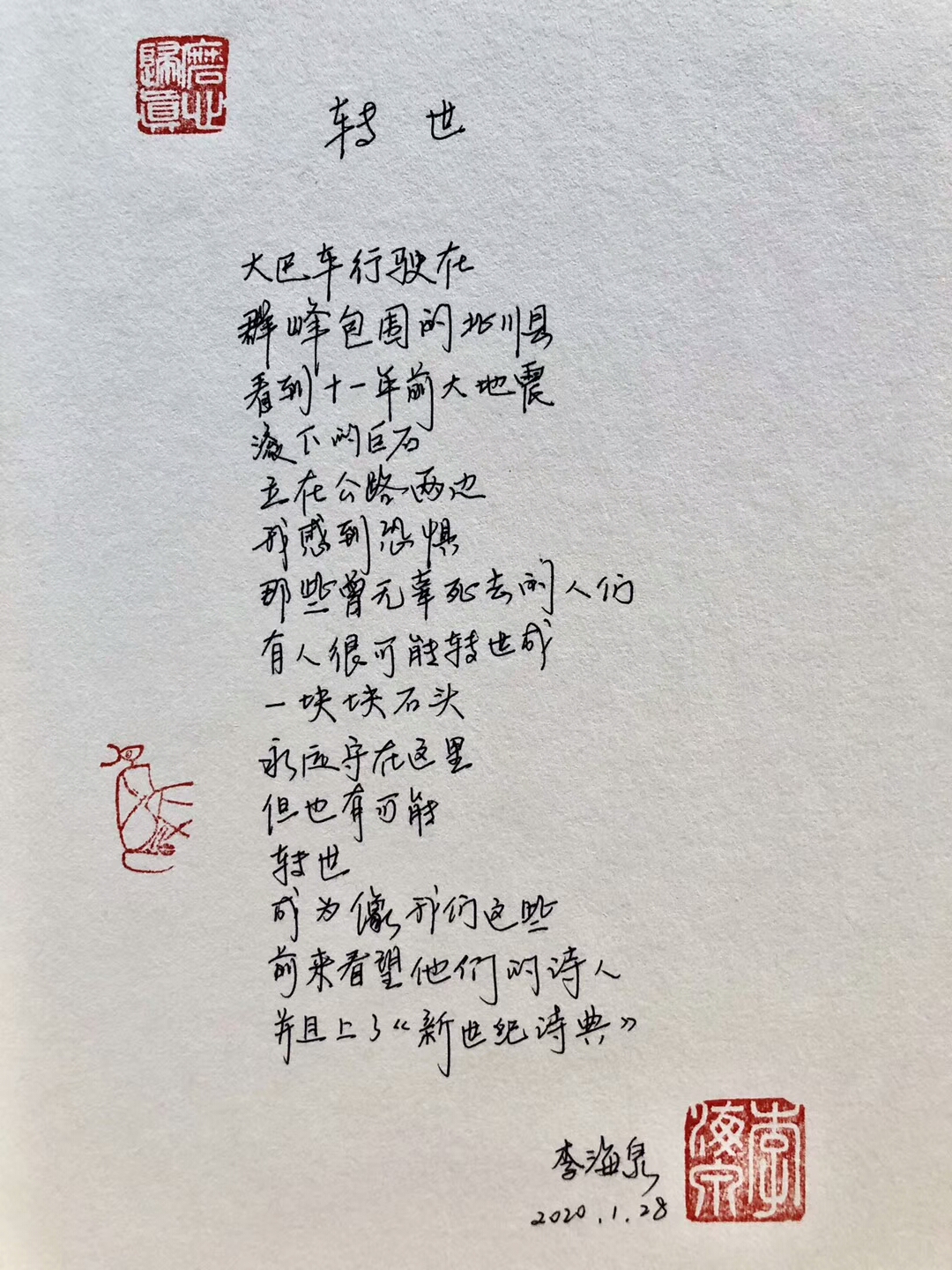
WIEDERGEBURT
Der Bus fährt durch Beichuan,
durch das von Gipfeln umzingelte Land.
Zu beiden Seiten der Straße
stehen große Steine,
die vor elf Jahren beim großen Erdbeben
herunter gerollt sind.
Mir schaudert.
All die unschuldigen Seelen von damals,
vielleicht sind manche wiedergeboren
als lauter Steine,
die dort für immer wachen.
Aber vielleicht sind auch manche
wiedergeboren
als Leute wie wir,
als Dichter die kommen und schauen
und vorkommen auf NPC.
Übersetzt von MW im Februar 2020

标签:buddhism, catastrophies, death, life, NPC, people, poetry, religion, rocks, stone, 新世纪詩典
发表在 2008, 2019, 2020, 20th century, 21st century, Antique times, February 2020, NPC, poetry, Translations, Uncategorized, 新世纪诗典 | Leave a Comment »
2月 7, 2020

Yi Sha
SALUTE
At the place where a hero has died,
I quietly take off my hat.
Salute to our great doubters,
you are the backbone of the Chinese nation.
Feb. 7th, 2020
Tr. MW

《致敬》
伊沙
在英雄死去的地方
我默默脱帽
向伟大的怀疑主义者致敬
你们才是中华的脊梁


标签:death, disease, doubt, history, medicine, memory, nation, poetry, politics
发表在 2003, 2019, 2020, 20th century, 21st century, December 2019, February 2020, January 2020, Middle Ages, poetry, Translations, Uncategorized, Yi Sha, 伊沙 | Leave a Comment »
1月 15, 2020
________________________________________
FAZ-Feuilleton:SALUTIERT DEN VERDÄCHTIGEN!
法蘭克福匯報,2020年1月10日發表
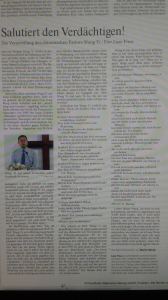
SALUTIERT DEN VERDÄCHTIGEN!
向那些涉嫌犯罪的人致敬
Aus dem kommenden Buch „Der Jordan fließt durch Chengdu“
選自《約旦河穿過成都》
Von Liao Yiwu
Übersetzt von Martin Winter
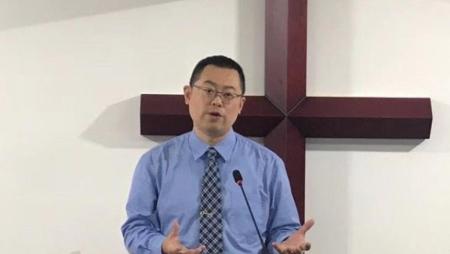
Meinem Freund Wang Yi wurde in der Vorweihnachtszeit im Geheimen der Prozess gemacht, dann wurde er vom Mittleren Volksgerichtshof von Chengdu zu neun Jahren Gefängnis verurteilt. Die Behandlung entspricht der für meinen 2017 in der Haft verstorbenen Freund, den Friedensnobelpreisträger Liu Xiaobo. Deshalb veröffentliche ich hier als Protest dagegen einen Ausschnitt aus dem neuen Buch, an dem ich gerade schreibe: „Der Jordan fließt durch Chengdu“.
Erst viele Jahre später, nachdem er sie mir gegeben hat, habe ich endlich Wang Yis Gedichte gelesen. Erst als er und seine Frau Jiang Rong schon verhaftet und der „Anstiftung zum Umsturz“ angeklagt waren. Ich habe selbst in der Nacht des Massakers von 1989 das lange Gedicht „Massaker“ geschrieben und auf Tonband gesprochen. Deswegen war ich vier Jahre im Gefängnis, und als ich herauskam, hatte ich einen Abscheu gegen Dichter in den Knochen. Abgesehen von Höflichkeitsgesten habe ich deshalb nie mehr ernsthaft Werke von Leuten aus meiner Generation gelesen. Wang Yi, der jünger ist als ich, hat mir unzählige Male Gedichte und sogar Gedichtbände geschickt. Manchmal hat er sogar etwas gesagt: „Alter Liao, bitte gib mir doch einen kleinen Kommentar, auch wenn es dir nicht gefällt, streich nur an und verbessere es einfach.“ Ich habe immer den Kopf geschüttelt: „Ich bin nur Musikant, kein Dichter.“ Wang Yi war peinlich berührt, er hat mich angeschaut, und nach einer Weile erst hat er gesagt: „Na dann nicht.“
Im Buddhismus sagt man, was du schuldest, zahlst du irgendwann doch zurück. Wang Yi war jahrelang mein bester Freund, abgesehen von Familie war er mir am nächsten. Wir haben oft geplaudert und sind am Stadtrand spazieren gegangen. Er hat mich gerne eingeladen und war nie geizig. Wenn irgend etwas los war, hat er sofort für mich sein Wort eingelegt, abgesehen von dem Zuspruch, den er mir immer gegeben hat. Aber ich hab das völlig unbewegt einfach als selbstverständlich empfunden – ich hatte ja „Massaker“ geschrieben und war über Nacht zum Helden geworden, obwohl das schon eine Weile her war und mir die Leute mittlerweile auf dem Gehsteig ausgewichen sind wie einem Haufen Hundescheiße. Meine innere Verfassung war auch verändert; wenn ich allein war, hab ich an die Folter und die Erniedrigungen im Gefängnis gedacht und geweint, ich hab mir sogar an die Brust geschlagen. Ich hab mir vorgesagt, du darfst nie wieder verhaftet werden. Ein geprügelter Hund mit gebrochenem Rückgrat. Das Einzige, das mir meine Selbstachtung erhalten hat, war das Schreiben nicht aufzugeben. Ich hatte Angst vor dem Vergessen, also hab ich alles aufgezeichnet über die Menschen, denen ich begegnet war. Aber Wang Yi und auch Yu Jie, die haben mir am meisten geholfen, und ich habe sie fast nie erwähnt.
Außerdem hat Wang Yi wirklich ein großes Talent als Dichter!
In dieser Zeit schreib unbedingt ein verdächtiges Gedicht!
Eine Zeile Chinesisch stürzt eine Regierung.
Ein Sonett mit vierzehn Zeilen stürzt 14 Regierungen.
Auf dem Maskenball lass dich erkennen
von denen, die dich kennen. Die anderen lass dich ja nicht erkennen.
In dieser Zeit schreib ein Gedicht, das dem Führer Angst macht!
Eine Metapher ist eine Atombombe.
Die Sängerin weiß nichts, absurdes Papier, Tränen ums verlorene Land.
In den schlimmsten Tagen kommen die höchsten Wellen.
Der Tod, als Gefangener, festgehalten vom Wasser.
Wer ist kein Angehöriger politischer Gefangener?
Wer ist kein Hinterbliebener wandernder Seelen?
In dieser Zeit sag ein Gedicht auf, das sind zwei, drei Verbrechen.
Wenn du nichts aufsagst, wirst du aufgesagt.
In dieser Zeit führen Blinde Selbstgespräche,
heilig, heilig, heilig. Blinde fragen Taube, hast dus gesehen?
In dieser Zeit schreib ein verdächtiges Gedicht!
Salutiert den Verdächtigen!
Das ist von 2015. Jiang Rong und er waren schon lange getauft, und waren schon alte Bekannte auf Wachstuben und im Polizeikommissariat. Weit entfernt vom Dicken Wang, der mit mir im Drei-Eins-Buchladen auf der Zhazi-Straße herumgesessen und Tee getrunken hat. Das ist ein Heldengedicht, das auf einmal herausspringt aus der anhaltenden allgemeinen Gemeinheit nach dem Massaker vom 4. Juni 1989. Es lässt mich an Filme denken wie Braveheart oder Der letzte Mohikaner. Am Ende von Braveheart wird der Held von den königlichen Soldaten gefesselt aufs Schafott geführt. Ein Priester kommt und fragt ihn, ob er bereut. Alle Blicke sind auf ihn gerichtet, alles ist still, und er brüllt mit letzter Kraft: „Freiheit!“
Der Henker lässt die Axt niedersausen. Wang Yi hat dieser Film sehr gefallen, aber er hat auch vorausgeahnt, dass er selbst um seinen Kopf fürchten muss. Er war zwar Pastor, aber er war eben nicht mehr irgendein Stammgast im Drei-Eins-Buchladen, der sowohl in den Alltag als auch in die Bibliothek und in Gelehrsamkeit eintauchen konnte. Sein guter Freund aus Studentenzeiten, der Schriftsteller Lei Ligang, erinnert sich:
„Damals waren sie ziemlich arm. Einmal waren wir zusammen im Carrefour, und Wang Yis Frau Jiang Rong hat vor den vollen Regalen geseufzt: „Wenn wir nur eines Tages einfach kaufen könnten, was wir gerne essen!“ Das hat mich traurig gemacht, wir haben alle zu den Schwachen gehört, die beim Lebensmittel-Einkaufen genau auf den Preis achten müssen.Damals waren wir vier, also Jiang Rong und Wang Yi und Yuhuan und ich, wir waren jeden zweiten Tag beisammmen, wir haben gegessen und Karten gespielt. Yuhuan und ich, wir waren vom Temperament her die Stärkeren, Wang Yi und Jiang Rong waren viel sanfter und nachgiebiger. Jedesmal haben Yuhuan und ich ausdiskutiert, was und wie gespielt wird; wenn wir uns dann einig waren, haben die anderen gleich zugestimmt. Aber in Wirklichkeit haben die zwei viel schärfer gesehen, was in dieser Welt los ist, das haben sie in den Knochen. Wenn das jemand hat, und dann noch im Leben so sanft sein kann, das muss ich einfach bewundern. Gerade weil ich es selbst nicht kann, habe ich davor immer noch Achtung. Wang Yi ist im selben Jahr geboren wie ich, aber ich habe ihn jahrelang immer wieder als einen viel Älteren empfunden, für den ich Respekt haben muss.
Auch wenn es ihm bestimmt sein mag, aber was hat er durchgemacht, das aus dem sanften Wang Yi, den Lei Ligang beschrieben hat, ein solcher Don Quichotte geworden ist? Was geht da innerlich in ihm vor? Dazu hat er nicht lange nach dem oben zitierten Heldengedicht auch einen wichtigen Text geschrieben:
Wang Yi
GIB MIR EIN PAAR MINUTEN UM TRAURIG ZU SEIN
Gib mir ein paar Minuten, um traurig zu sein.
Soviel ist passiert, das lässt einen ersticken.
Lass mich ein bisschen schwach sein,
im dunklen, abgeschlossenen Zimmer,
wie meine Freunde, die sie abgeführt haben,
in der Nacht abgeführt haben wie Jesus,
durch die Stadt, die böse geworden ist.
Gib mir ein paar Minuten, um traurig zu sein,
ich erwarte die Freude, überraschende Freude.
Unterbrich mich nicht durch Hüsteln,
sag mir nichts weiter, nur ein paar Minuten
lass mein Handy stumm sein, kein Kurier soll an die Tür klopfen.
Ich muss allein sein mit meiner erstickenden Seele,
auch wenn die Welt gerade jetzt einstürzt,
wenn ein wichtiger Mensch gerade jetzt stirbt,
das ist für mich alles als wär nichts geschehen.
Denn ich bin traurig
wie eine Frau mit zerrauften Haaren.
Gib mir ein paar Minuten, um traurig zu sein.
Ich will mich nicht waschen, will mich nicht kämmen,
will nicht herauskommen, will dich nicht sehen.
Dafür, dass der Tränen-Damm bricht
wegen einer unglaublichen Nachricht
gib mir ein paar Minuten, um traurig zu sein.
Damit das Licht noch mehr sticht,
damit ich hunderttausendmal üb
für den Augenblick wenn du zur Tür hereinkommst.
2015-07-11, Rüsttag
Lieber Dicker Wang, ich hab es endlich gelesen, ich hab es angeschaut und werde dafür sorgen, dass es noch mehr Leute lesen und sehen. Du bist im Gefängnis, und ich muss dir einfach ein paar Minuten geben, oder ein paar Jahre, oder noch länger. Ich werde nicht schreien wie früher, und auch nicht einfach verschwinden, wie damals, als ich aus China geflohen bin. Vielleicht muss ich auch einmal richtig bereuen, haha, du weißt, das war nicht ernst gemeint, einen lahmen Hund hebt man nicht auf die Mauer. Lei Ligang kennt dich besser als ich, aber er hat noch viel weniger aufgemuckt […]
________________________________________
向那些涉嫌犯罪的人致敬
——選自《約旦河穿過成都》
廖亦武
我的朋友王怡在聖誕前夕被秘密開庭,隨後被成都中院判刑9年——這對待他的手法,跟對待我的另一個朋友劉曉波的手法一樣。所以我在這兒貼出尚未完成的《約旦河穿過成都》中的一節,以示抗議。我會在2020年寫完這本書:
---------------------------
多年之後,我終於一字一句讀完了王怡的幾首詩,而他和蔣蓉已經以“煽動顛覆國家政權罪”被捕入獄。我自從在大屠殺之夜寫作并朗讀長詩《大屠殺》,坐牢四年出來,就從骨子裡瞧不起詩人,除了客套,我從未認真讀過任何同代人的作品。即使“晚輩”王怡無數次贈送詩和詩集,有時候甚至委婉地提到:“老廖,還是指點一下嘛,看不慣就順帶幫著改一下嘛。”我都搖頭道:“我是藝人,不是詩人。”於是王怡尷尬地望著我,半晌才說:“那就算了。”
佛家有句俗語:欠的總要還的。那些年,除開家屬,王怡是對我最友善的人類,經常一塊閑聊和郊遊,請客從不吝嗇,稍微出點事,他總是第一時間為我呼籲,日常的噓寒問暖就別提了。而我卻沒心沒肺,覺得一切理所應當——因為我寫過《大屠殺》,做過一夜英雄——儘管時過境遷,我已淪為人行道上人人繞行的狗屎。我的心態也變了,一個人的時候,回想坐牢受到的種種虐待和羞辱,就氣緊淚流,甚至捶胸頓腳。我告誡自己再也不能進去了,一條狗,脊樑骨被敲斷,只能認慫。唯一瞧得起自己的,是沒放棄寫作,由於怕被遺忘,我記錄了物是人非的一切。卻極少提到對我幫助最大的王怡和余杰。
況且,王怡真的有詩歌天才:
在這個時代,你必須寫一首涉嫌犯罪的詩。
一排漢語,可以顛覆一個政權。
十四行詩,可以顛覆十四個政權。
在秘密的化裝舞會上,讓認出你的人
認出你來。認不出你的,更加認不出你。
在這個時代,你必須讓領袖害怕一首詩。
一個比喻,是一枚核彈。
商女不知,滿紙荒唐言,一把亡國淚。
在最糟糕的日子,也有巨大的湧浪襲來。
死亡,成了囚犯,被水羈押著。
誰不是政治犯家屬呢?誰不是鬼魂的未亡人?
在這個時代,你朗誦一首詩,涉嫌三、五個罪名。
你不朗誦,你就被他們朗誦。
在這個時代,瞎子吶吶自語。
神聖,神聖,神聖。瞎子問聾子,你看見了嗎?
在這個時代,你必須寫一首涉嫌犯罪的詩。
向那些涉嫌犯罪的人致敬。
這是2015年的作品。他和蔣蓉受洗歸主已久,并多次出入派出所和公安局,與我一塊在柵子街三一書店喝茶閑坐的王胖子相去甚遠——這是六四大屠殺之後的漫長平庸之惡中突然躍升的英雄詩篇,令人聯想美國電影《勇敢的心》或《最後一個摩根戰士》。在《勇敢的心》結尾,主人公被國王衛隊綁赴斷頭臺,御用神父來到身邊問他是否懺悔?全場人頭攢動,鴉雀無聲,而他卻拼盡最後的力氣大吼一聲:“自由!!”
劊子手落下巨斧。對此片頗為贊賞的王怡也預感到自己頭頂的巨斧終將落下,雖然是牧師,可他已不是三一書店的查常平和彭強,可以沉入書齋、日常和學術。他的大學同窗好友兼作家雷立剛回憶道:
……那時很窮困。記得有一次在家樂福,王怡的妻子蔣看著滿滿的貨架說:“要是將來我們可以想買什麼吃的就買什麼吃的,那就好了。”我聽了,很傷感,我們都是這個世界的弱者,以至於想買什麼吃,都得先仔細看看價格。那幾年,我,玉環,王怡,蔣,我們四個,幾乎隔天就聚在一起吃飯,打撲克牌,我和玉環個性都很強,而王怡與蔣則溫和得多,每次關於如何玩耍的安排,總是我和玉環爭論,得出結論,而後他倆立即贊同。但實質上,他倆在骨子裡,對於這個人世,比我們尖銳很多。骨子裡如此尖銳的人在生活中對人如此溫和,實在令我欣賞不已。我對那些我無法做到的,往往還是有幾分敬意的。因此多年來我一直敬重王怡,儘管他是同齡人,但很多時候,我會誤以為他是老年人,歲數比我大很多……
儘管命中注定,但要從雷立剛眼中的外柔內剛的王怡過渡到晚近唐吉柯德式的王怡,卻要曆經怎樣的熬磨?為此,王怡在寫下上述英雄詩篇不久,又寫了另一首詩:
請給我幾分鐘難過的時間
最近太多事情,令人窒息
請讓我軟弱片時
在黑暗的房間禁閉片時
像那些被帶走的朋友,在夜裡
哦,和耶穌一樣,在夜裡
穿過變得野性的城市
請給我幾分鐘難過的時間
等待歡樂,歡樂的襲擊
不要用咳嗽打斷我
不要轉換話題,只要幾分鐘
手機靜音,快遞也不要來敲門
我必須獨自面對,靈魂的窒息
如果世界剛好在此時坍塌
如果有重要的人物離世
哦,願這一切,彷彿無事發生
因為我難過得就像
一個蓬頭垢面的女子
請給我幾分鐘難過的時間
容我不洗臉,不梳頭
不肯出來見你
為了淚水的決堤而下
為了一個難以置信的消息
請給我幾分鐘難過的時間吧
為了讓光明更加刺眼
為了讓我千百次地排練
你推門進來的那個瞬間
親愛的王胖子,我讀到了,看到了,還會讓更多的人讀到和看到。你在坐牢,我不得不給你幾分鐘、幾年、甚至更長的時間。我不會像過去那樣大呼小叫,也不會像逃離中國那樣不辭而別。也許我也需要一個決志懺悔,哈哈,你曉得這是假的,癩狗是扶不上牆的,如同比我更理解你、卻更不爭氣的雷立剛……
Wang Yi
STEHT AUF, BESUCHT TOTE ANGEHÖRIGE
Steht auf, besucht eure toten Verwandten.
Es regnet nicht mehr, Reis steht bis über die Knie.
Glaubst du, wenn gebrochene Knochen geflickt sind,
sind sie stärker als heile?
Der Tod ist das Gegenteil von Erschaffen.
So viele Bücher, die mit Tod zu tun haben
gewinnen den Nobelpreis für Literatur.
Atmen geht leise weiter voran,
mit greifbaren Dingen erklärt man Dinge dahinter,
oder doch umgekehrt?
Steht auf, geht zurück in Heimatorte, die nicht mehr da sind.
Glaubst du, wenn Bäume schwanken, dann kommt erst der Wind?
Und dass nicht der Wind die Bäume bewegt?
Versteckt sich der Anfang im Ende, oder ist es ein
verschwommener Mensch, der dauernd nach seinem Bilde
Idole verfertigt?
Steht auf, entschuldigt euch bei einem Mann, der schon tot war.
Es ist nicht mehr Winter, dafür bin ich geboren.
Er ist schon gestorben und kann nicht mehr sterben.
Ich habe gelebt, kann nicht noch einmal leben.
1. November 2016 in Chengdu
起來,去看望死去的親人
王怡
起來,去看望死去的親人
雨水止住,谷秧已高過雙膝
你相信嗎,折斷的骨頭一旦癒合
比完好的更加堅固?
死亡是創造的反義詞
大量的,與死亡相關的書籍
膺獲了諾貝爾文學獎
呼吸仍靜悄悄地進行
以有形之物,解釋無形之物
或者反其道而行之?
起來,返回已消逝的故鄉
你相信嗎,是樹木搖晃,攪起了風
而不是風吹動了樹?
是開端藏在結尾裏,還是一個
面容模糊的人,按著自己的形象
不斷製作偶像?
起來,去向一個死過的人道歉
冬天已往,這是我在世的目的
他死過,就不會再死
我活過,也不能再活
2016,1,11,成都
Wang Yi
GOTT DIESES AUGENBLICKS
Gott dieses Augenblicks. Du gehörst
in keine Zeit. Gott von hier,
Gott von dort. Derselbe Gott
auf der Hochzeit, auf dem Begräbnis,
im Gespräch, unterwegs.
Gott dieses Augenblicks. Trägst allen Kummer,
trägst unvollkommene Vollkommenheit.
Narben aus der Geschichte, Dunst aus dem Staub,
derselbe Gott. Lässt Katastrophen zu und
gewährst Segen. Richtest und bist barmherzig.
Gott dieses Augenblicks. Machst Herzen frei
und Körper krumm. Großer,
winziger, Gott von Weihnachten
und vom Karfreitag.
Gott der Weißen, Gott der Schwarzen.
Oh Gott des Augenblicks. Gott der Partei
und des Volkes.
Der Hunde, der Schweine, und derer, die füttern.
Der Richter, der Insassen, Gott von Atombomben
und von Stammzellen.
Gott dieses Augenblicks. Von Betlehem,
von Guiyang und Chengdu.
Von Himmelsstämmen und Erdzweigen, von Yin und Yang.
Gott der Linken und der Rechten, der Langlebigen und der früh Verstorbenen,
von allem, was Odem hat, ob es lobt oder ablehnt.
20.12.2012, in Erwartung der Feiertage
此刻的上帝
王怡
此刻的上帝。不屬於
任何時間。這裏的上帝
那裏的上帝。同一位上帝
在婚禮上,在葬禮上
在對話中,也在行走的路上
此刻的上帝。帶著憂傷
帶著一切不完美的完美
帶著歷史的痕跡,塵土的氣息
同一位上帝。降災禍的,和
賜祝福的。審判人的,和憐憫人的
此刻的上帝。使內心自由
也使身體彎曲。偉大的
渺小的,聖誕節的
受難日的上帝
白人的上帝,和黑人的上帝
哦,此刻的上帝。黨和
人民的上帝
狗的,豬的,和飼養員的上帝
法官和囚犯,原子彈
和乾細胞的上帝
此刻的上帝。伯利恆的
貴陽和成都
天干和地支,陰和陽的上帝
左派和右派,長壽和夭折的
凡有氣息的,或讚美,或拒絕的上帝
2012,12,20,待降節的祈禱。
标签:courage, 王怡, death, history, Liao Yiwu, life, memory, poetry, politics, prison, prose, protest, religion, society, state, Wang Yi, 廖亦武
发表在 2019, 2020, 20th century, 21st century, Antique times, December 2019, January 2020, June, Middle Ages, poetry, PR, prose, Stone Age, Translations, Uncategorized, Warring States | Leave a Comment »
12月 9, 2019

MOND
der mond ist ganz weit weg und allein
der mond liegt ganz weit weg und allein
der mond geht ganz weit weg und allein
in seinem hof
der mond wandert ganz weit weg und allein mit seinem hof
der mond steht ganz weit weg und allein
der mond liegt ganz weit weg und allein in seinem unheimlichen hof
der mond ist ganz weit weg und allein in seinem unheimlich prächtigen hof
MW Dezember 2019
DEIN KIND SCHREIT
dein kind schreit
sie ist 15
hat als kind viel geschrien
sie schreit dich an
schimpft
wüst
wochenlang
einen monat
du bist auf dem dach
der mond erscheint
weiß und blass
unbestimmt
hinter wolken
der sonnenuntergang
rundherum
über den dächern
das licht in den fenstern
es wird nacht
das licht versinkt
das licht in den fenstern
die lichter in den fenstern erscheinen
—
wochenlang
du wachst auf in der nacht
als sie klein war
sie ist 15
du wachst auf vor 5 in der früh
schreibst ein gedicht
in deinem kopf
sie ist dein liebes kind
schreit
jeden tag mehrere male
beschimpft dich
neun mal in 10 sagst du nichts
es wird immer schlimmer
wenn du freundlich bleibst
du warst sehr viel mit ihr als sie klein war
auf dem dach
in beijing
2003 oder 2004
in den straßen
lange spaziergänge
an der hand auf den schultern
sie hat lange geschichten gesungen
erfunden
aus märchen erfunden
jedesmal anders
auf chinesisch
oder auf deutsch
englisch hat sie auch viel gesprochen
die geschichten
hast du auf deutsch und chinesisch im ohr
—
sie schreit dich an
einfach so
wochenlang
die flugzeuge steigen
alle zwei bis fünf minuten
aus dem sonnenuntergang
und fliegen nach hinten
nach schwechat
zum flughafen
heute ist es wärmer
gestern war mehr sonne
aber der wind war schwer zu ertragen
heute ist allerseelen
manchmal sind die flugzeuge laut
einmal in zehnmal
höchstens
hab ich zurückgeschimpft
oder geschrien
vor eineinhalb jahren
jetzt ist sie 17
insgesamt geht es uns gut
wir haben zwei kinder
ihr bruder ist 2005
in beijing geboren
ein flugzeug verschwindet
ein anderes steigt auf
jetzt ist es dunkel
MW 2. November 2019
THE CROSS
– For Pauluskirche in Vienna
At first I thought it hangs in the middle
Two neon tubes bright as new
There was a cross before I remember
Behind the altar just not as bright
But it was big
It’s a protestand church
Lutheran not stand-alone tucked in a house
But big inside
The cross is inside
Inside the wall behind the altar
They made it new it’s kind of nice
We came here in 2008
11 years ago
People welcomed us
We didn’t know anyone in the neighborhood
Now we love in a different place with a different church
But this here is home every time
We come back
MW November 30, 2019
IM GEDENKEN
im stillen gedenken
im kaffee kochen gedenken
im kaffee trinken gedenken
im marmeladebrot streichen gedenken
im marmeladebrot kauen gedenken
im brausen gedenken
im anziehen gedenken
im gehen gedenken
im stillen gedenken
im windel wechseln gedenken
im gedenkpostkarte schreiben gedenken
im weinen gedenken
MW Dezember 2019
DEIN ZIMMER STEHT OFFEN
dein zimmer steht offen wie eine wunde
ich weiß nicht ob irgendwer das verdient
ich weiß nicht wie lange du das geplant hast
du hast nichts gesagt
so viel aggression
es hat angefangen vor eineinhalb jahren
oder vorher was immer
alles anschreien ist schlecht
alles beleidigen
also es tut mir leid
dein zimmer steht offen wie eine wunde
niemand darf in dein zimmer
naja ab und zu
wenn dus brauchst
so wars seit du klein warst
vor eineinhalb jahren so viel aggression
du hast mich angeschrien
jeden tag mehrmals vier wochen lang
immer mehr immer lauter immer aggressiver
meistens hab ich nichts gesagt
ich: hier ist dein frühstück
du: du arschloch!
ich: hier ist dein abendessen.
du: du arschloch!
ich: hier ist dein frühstück
du: du arschloch wie kannst du so falsch freundlich sein nach unserem streit gestern!
und so weiter
immer schlimmer
vier wochen lang
wie gesagt
alles anschreien ist schlecht
alles beleidigen
auch zurückschreien
es tut mir leid
dein zimmer ist offen wie eine wunde
nach vier wochen
nach vier wochen wie gerade beschrieben
vor eineinhalb jahren
gehst du zum jugendamt
sagst ich sei aggressiv und gefährlich
die meiste zeit nachher
eineinhalb jahre
warst du weiter bei uns
dein zimmer dein bruder
dein frühstück dein abendessen
ein paar wochen bei großeltern
ferien skikurs
sonst immer bei uns
insgesamt friedlich
relativ friedlich
wie gesagt
alles anschreien ist schlecht
alles beleidigen
auch zurückschreien
es tut mir leid
dein zimmer ist offen wie eine wunde
MW Dezember 2019-12-07
EINFACH DEN MUND HALTEN
in österreich gibt es eine sendung
einfach den mund halten
in der früh wenn du aufstehst
stimmt überhaupt nicht
eigentlich sind es nur fünf minuten
in der früh wenn du aufstehst
es ist recht schön mit ein bisschen musik
so um sechs in der früh
oder vielleicht ein bisschen später
einfach zum nachbeten
stimmt überhaupt nicht
die sendung gibt es seit fünfzig jahren
oder so ähnlich
oder noch länger
jemand sagt etwas aus seinem leben
einfach zum nachbeten
stimmt überhaupt nicht
warum fällt dir das alles ein
manchmal ist es eine sehr schöne stimme
eine frau sagt etwas
du musst nicht zuhören
nur fünf minuten
dann ein bisschen musik
die passt überhaupt nicht
manchmal ist es doch wirklich schön
nur bis zu den nachrichten
manchmal willst du zuhören
einfach zum nachdenken
MW Dezember 2019
EINFACH DEN MUND HALTEN
einfach den mund halten und lügen
vielleicht lassen sie dich dann in ruhe
einfach sagen du liebst die partei
einfach sagen es war deine schuld
einfach sagen du siehst es ein
du hast falsch gehandelt
egal was sie sagen
einfach den mund halten und lügen
vielleicht ist es besser für deine familie
vielleicht gibt es ruhe für deine familie
MW Dezember 2019

标签:alone, austria, beijing, children, china, church, daughter, death, family, home, life, moon, poetry, radio, religion, roof, room, Vienna
发表在 2019, 20th century, 21st century, December 2019, Middle Ages, November 2019, poetry, Uncategorized | Leave a Comment »
11月 16, 2019

VIOLENT TIMES
We are living in violent times.
I don’t, I am from Austria,
cops are mostly peaceful,
they can kill a child,
and the media still supports them,
happened a few years ago.
And 70 people died in a lorry.
But all in all, we are very peaceful,
we here in Austria.
A few people are very rich,
most people aren’t.
But social services work,
although not all work how they did
just a few years ago.
And we are not taken over by Putin, Erdogan, Trump etc.,
although they try.
We let them take other people,
as long as it’s elsewhere.
There is a video
of our vice-chancellor,
came out in May.
He said on hidden camera,
they wanted Austria to be like Hungary.
No free press, almost none.
And there are records
of casino people
in cahoots with the government,
making laws.
Nothing special, I guess.
All in all, Austria is peaceful.
Carpe diem, what not.
MW November 2019

标签:austria, children, death, economy, Europe, government, history, life, memory, peace, people, poetry, police, politics, refugees, society, times, Vienna, violence
发表在 2000s, 2009, 2010s, 2013, 2014, 2015, 2016, 2017, 2018, 2019, 20th century, 21st century, August 2015, Middle Ages, November 2019, poetry, Uncategorized | Leave a Comment »
11月 12, 2019
LERMONTOW: ICH GEH AUS ALLEIN…
Ich geh aus, allein. Nacht liegt wie tot.
Ein Pfad blitzt im Nebel, ich kann mich entfernen.
Das leere Feld hört auf Gott
Und Sterne reden mit Sternen.
Der Himmel ist ein feierliches Wunder.
Die Erde schläft im Blau.
Was fällt mir schwer? Wo ist meine Wunde?
Was tut mir leid? Worauf wart ich genau?
Ich warte auf nichts mehr im Leben
Und finde auch nichts, das mich reut.
Ich suche Ruhe und Freiheit,
Vergessen und Schlummer sollt ihr mir geben.
Nur will ich nicht in die kalte Gruft,
Ich will Jahrhunderte dösen,
Meine Kraft soll ruhen in meiner Brust
Aber mein Atem darf nicht verwesen.
Tag und Nacht brauch ich Liebe im Ohr,
immer im Grünen ein süßes Singen,
eine raschelnde Eiche möcht ich davor,
dass Zweige dunkel über mir hingen.
1841
Übersetzt von MW im November 2019
RUSSIAN POETRY: From the ends to the beginning – a bilingual anthology
М.Ю. Лермонтов
I.
Выхожу один я на дорогу
Сквозь туман кремнистый путь блестит;
Ночь тиха. Пустыня внемлет Богу,
И звезда с звездою говорит.
II.
В небесах торжественно и чудно!
Спит земля в сиянье голубом…
Что же мне так больно и так трудно?
Жду ль чего? жалею ли о чём?
III.
Уж не жду от жизни ничего я,
И не жаль мне прошлого ничуть;
Я ищу свободы и покоя!
Я б хотел забыться и заснуть!
IV.
Но не тем холодным сном могилы…
Я б желал навеки так заснуть,
Чтоб в груди дремали жизни силы,
Чтоб, дыша, вздымалась тихо грудь;
V.
Чтоб всю ночь, весь день мой слух лелея,
Про любовь мне сладкий голос пел,
Надо мной чтоб, вечно зеленея,
Тёмный дуб склонялся и шумел.
1841г
RUSSIAN POETRY: From the ends to the beginning – a bilingual anthology

标签:death, earth, fog, freedom, god, heaven, history, language, Lermontov, life, literature, memory, night, path, peace, poetry, russia, sleep, translation
发表在 1841, 1980s, 19th century, 2010s, 2019, 20th century, 21st century, Middle Ages, November 2019, poetry, Translations, Uncategorized | Leave a Comment »
10月 30, 2019

Yi Sha
DAS MAUL ZERREISSEN
Am ersten Zehnten schick Winterkleider
(Bauernkalender heute am 28. Oktober)
Ich geh für Großvater, Großmutter, Mutter
Totenpapierkleider kaufen zum Verbrennen
Und hör wie zwei alte Leute vor mir
sich das Maul zerreißen
über unsere Außenpolitik
Sie vergleichen China und den Iran
Ich trau mich nicht sie auszulachen
als alte Verrückte
Vor über 30 Jahren
Iran-Irakkrieg
Vielleicht haben sie damals für beide Seiten
die Waffen gemacht
28. Oktober 2019
Übersetzt von MW am 29. Oktober 2019
《妄议者》
伊沙
十月一,送寒衣
我走在给
祖父、祖母、母亲
买纸衣的路上
听到身前两位老者
在妄议国家
外交大事
把中国与伊朗
扯在一起
我不敢嘲笑他们
是疯子
没准儿三十年前
向两伊同时出售的炮弹
就是他们造的
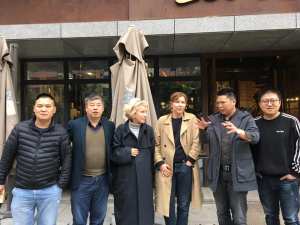
标签:clothes, death, economy, factories, family, history, industry, iran, Iraq, memory, old people, poetry, politics, war, weapons, winter, yi sha, 伊沙
发表在 1980s, 1990s, 2000s, 2010s, 2019, 20th century, 21st century, Antique times, Middle Ages, October 2019, poetry, Translations, Uncategorized, Yi Sha, 伊沙 | Leave a Comment »
10月 24, 2019

Cong Rong
ANTI-JAPANISCHER KRIEG
Oma flüchtet,
lässt Song-Porzellan und Jade zurück,
hat meinen Onkel in ihrer Hand.
Die Flüchtlinge drängen sich oben am Berg,
halten den Atem an.
Jemand steckt den Kopf raus und fragt:
Was ist wenn das Kind weint?
Die ganze Gruppe will Oma und das Kind weghaben.
“Wenn es weint, drück ich es tot,
eure Sicherheit ist nicht in Gefahr!”
Sechzig Jahre später frag ich sie,
und wenn der Onkel geweint hätt?
“Dann hätt ich ihn totdrücken müssen.”
Übersetzt von MW im Oktober 2019
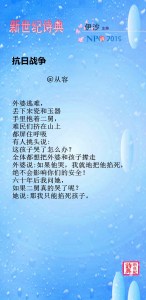
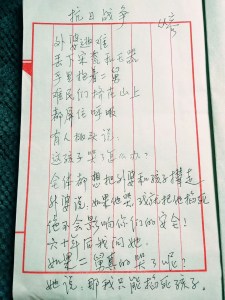
抗日战争
从容
外婆逃难,
丢下宋瓷和玉器
手里抱着二舅,
难民们挤在山上
都屏住呼吸
有人挑头说:
这孩子哭了怎么办?
全体都想把外婆和孩子撵走
外婆说:如果他哭,我就地把他掐死,
绝不会影响你们的安全!
六十年后我问她,
如果二舅真的哭了呢?
她说:那我只能掐死孩子。
标签:children, collective, confession, Cong Rong, cruelty, crying, danger, death, family, grandmother, group, history, killing, language, memory, NPC, people, poetry, talk, translation, uncle, war, 從容, 新世纪詩典, 从容
发表在 1930s, 1937, 1938, 1939, 1940s, 1945, 1950s, 1960s, 1970s, 1980s, 1990s, 2000s, 2010s, 2019, 20th century, 21st century, Middle Ages, NPC, October 2019, poetry, Translations, Uncategorized, 新世纪诗典 | Leave a Comment »
10月 12, 2019
SEX
weisst du wenn du kommst bin ich richtig gluecklich
egal ob es gut fuer mich war oder nicht
und ganz egal ob du das jetzt glaubst
aber nicht weitersagen
MW Oktober 2019
VERHEIRATET SEIN
In der Früh hab ich stundenlang
meine Hand an Deinem Gesicht
und Du schläfst einfach weiter
das Wochenende durch
MW Oktober 2019

GEDICHT
Was ist ein Gedicht?
Ein Geheimnis
Ein Geständnis
Ein Witz
Ein Bericht
Ein Musikstück
in Sprache
in Gedanken Worten und Werken
durch meine Schuld
durch meine Schuld
durch meine große Schuld
darum bitte ich die selige Jungfrau
und Gottesmutter Maria
und alle Engeln und Heiligen
meine Gedichte zu lesen
bei Gott unserm Herrn
MW Oktober 2019
JEDENFALLS
Jedenfalls das Leben geht weiter
egal was du schreibst oder nicht
solang du halt lebst
und auch nachher bild dir nix ein
solang das Leben halt weitergeht.
MW Oktober 2019
PREIS
Den Tod eines Juden
verkünden wir
und seine Auferstehung preisen wir
bis Er kommt
in Herrlichkeit
MW 6. Oktober Erntedank 2019
TAG
Die Fahrer sind die schönsten Wolken
Die Flieger schweben langsam und majestätisch
Die Sonne vergoldet die neuen Gebäude
Der Kran ganz hinten ist ein Schiff in den Lüften
Die Fassade ist fast ein Strand
MW Oktober 2019
标签:death, history, life, love, memory, moon, place, poetry, religion, sex, sun, weekend
发表在 2019, 20th century, 21st century, Middle Ages, October 2019, poetry, Uncategorized, Welcome! | Leave a Comment »
10月 8, 2019

Li Suo
SCHLAFBAUM MITEINANDER
der schatten geht mit der sonne
die ganze zeit
mama und ich wechseln dreimal den platz
setzen uns dann doch dorthin
wo oma umgefallen und nicht mehr aufgewacht ist
auf diese bank
das ist im norden des kleinen platzes
unter zwei schlafbäumen
mama beschreibt es mit knappen worten
den nachmittag im vorfrühling
wann sie gekommen ist
wo der arzt gehockt hat für die wiederbelebung
dann sprechen wir noch über ihr leben
und mein leben
kleine kinder flitzen über den platz
wie aquariumfische
im meer des sonnenlichts
mama sagt hätte sie gewartet
bis ich kinder habe
ich rücke näher zu mama
links von uns ist mehr platz auf der bank
für oma
und für meine kinder
2019-06-17
Übersetzt von MW im Oktober 2019

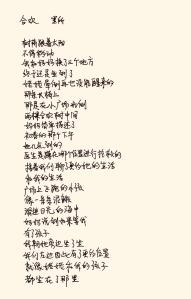
标签:animals, bench, children, death, 里所, family, fish, grandparents, Li Suo, life, light, memory, mother, NPC, parents, people, sea, square, talk, trees, 新世纪詩典
发表在 2019, 20th century, 21st century, June 2019, Middle Ages, NPC, October 2019, poetry, Translations, Uncategorized, 新世纪诗典 | Leave a Comment »
10月 1, 2019
OCTOBER 1
today is october 1
nothing special in austria
i sit in the sun on our balcony
it’s very warm
seventy years ago
my parents were very young
they didn’t know each other
my mother was born in 1942
my father in 1940
so they were very small school kids
poor families
my mother had it a little better
in the countryside by the railway
as far as i heard
her father was alive
my father’s father didn’t come back
from the war
many many many many
people never came back
many children too
from the camps
from the ruins
but i think by 1949
my parents were both in school
they were relatively lucky
austria was relatively lucky
after the war
october 1 or october 1st
is no special day in austria
we had an election two days ago
so people talk about that
i think about seventy years ago
because of china’s national day
they have another one in taiwan
on october 10
it commemorates the revolution
in 1911 in china, in wuhan
in all of china eventually
no more emperors
but not in taiwan, not on taiwan
taiwan was under japan
no revolution
although people tried, maybe not that year
now taiwan has it’s national day
on october 10
they’ve had it this way since 1949
maybe since 1945
but since 1949 they are the only ones
with that national day
that comes from china in 1911
or maybe not exactly
did they change their national day
in 1949 right away?
maybe not
in beijing they have the greatest parade
since 1949 maybe
yes, many soldiers, tanks
school kids en masse, probably
forming words, numbers, flowers
great fireworks
i have just finished steven king’s new novel
the institute
i remember when someone interviewed ernst jandl
great austrian poet who died in 2000
it was in his apartment in vienna
he was a school teacher
anyway the reporter was rather surprised
jandl told him he had just bought a novel by stephen king
no, nothing more highbrow
in english, i think
jandl taught english and german
he was a pow in england
his unit had succeeded
in surrendering to the british
so they were lucky, those who survived
anyway jandl told the reporter
no, he didn’t need to read
highbrow stuff all the time
he wanted to write democratic poetry
anyway
not too different from erich fried
in this respect
they met in england
fried had fled from the nazis in 1938
out of vienna
he was not much older than jandl
almost the same age
after the war he was mostly in germany
jandl was in vienna
what was i talking about, stephen king
children not coming back
most of the children the book is about
the institute
most don’t come back
almost all of them don’t
over many years
thousands
in several countries
and there is this messianic thing
about this horrible institution
described in the novel
i am sorry guess i should use another word
most children murdered were jewish
in austria and so on
pointed out as jews
and messias is jewish
like everything in the bible of course
the institute is supposed to save the world
at the cost of killing children
and their parents
and this takes place now under trump
although he’s hardly mentioned
and not important
but they have existed since after the war
these institutes
in the novel
no-one ever came back
they saved the world, they said
not the children, of course
there is also another handmaid’s tale
margaret atwood
the testaments
haven’t read it yet
but i bought it
i loved the first one
the handmaid’s tale
it was a long time ago
i read it in english
when did it come out, 30 years ago?
maybe more
now they have the tv series
suddenly these two or three years
everyone talks about it
under trump and so on
although they are not that important
these strongmen
although many people are incarcerated
because of them
in many countries
including children
we are living in dystopian times
end of the world
we are lucky in austria
most of us are, relatively
it’s a very warm day
big demonstrations last friday
climate strike
many children, school children
more children than workers
so whether today
when you read this
is a special day for you
or not
have a good day
MW October 1st 2019
Photo by Johannes Fiederling
标签:art, asia, austria, beijing, children, china, death, East Asia, elections, emperors, Erich Fried, Ernst Jandl, Europe, history, institutions, life, literature, Margaret Atwood, memory, national day, novels, parents, poetry, Stephen King, taiwan, Vienna, war, world
发表在 1910s, 1911, 1949, 2016, 2017, 2018, 2019, 20th century, 21st century, Middle Ages, poetry, Uncategorized | Leave a Comment »
9月 17, 2019

Pang Qiongzhen
BEIEINANDER BLEIBEN
Wir betreten die Große Moschee
in der Huajue-Gasse in Xi’an,
da bemerk ich erst, Frau G ist Muslima.
Sie erzählt vom Begräbnis ihres Vaters.
Ihr Mann Yi Sha und männliche Verwandte
haben ihren Vater mit sauberem Wasser gewaschen,
in ein 12 Meter langes Leintuch gewickelt und begraben.
Aber für sich wählt sie das nicht, sie will mit Yi Sha,
ihrem Han-chinesischen Mann, beisammen sein.
2019-04-15
Übersetzt von MW im September 2019
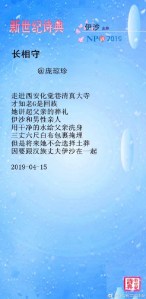
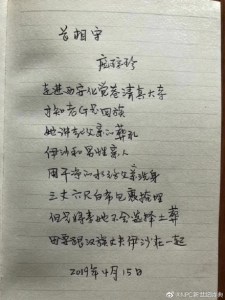
标签:burial, customs, death, family, history, Islam, life, marriage, memory, NPC, Pang Qiongzhen, poetry, religion, rights, society, Xi'an, yi sha, 庞琼珍, 新世纪詩典
发表在 2019, 20th century, 21st century, April 2019, NPC, poetry, Translations, Uncategorized, 新世纪诗典 | Leave a Comment »
8月 22, 2019
Wu Yulun
EINE SCHILDKRÖTE ENTDECKT IHRE SEELE
Ich komm nach Hause
und merk meine brasilianische Schildkröte die ich ein Jahr gehabt hab ist tot.
Ihre Leiche schwimmt
mit lauter Schaffleischstücken im Becken –
das war vor ein paar Stunden ihr Mittagessen.
Das lässt mich daran denken, wie viele Dichter gestorben sind.
Diese kränkliche Schildkröte,
nach einem Jahr
voller Leiden
hat sie gelernt zu denken wie ein dekadenter Poet.
Sie wehrt sich nicht mehr,
frisst noch einmal wie ein Taotie-Monster
und streckt in der Juli-Sonne die Glieder,
schlendert in Milch und Honig
am Strand von Kanaan.
In dieser Stunde nimmt Gott sie zu sich.
Übersetzt von MW im August 2019

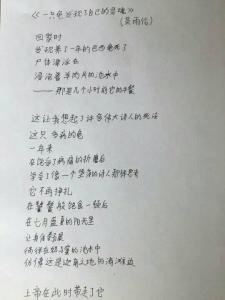
标签:animals, culture, death, food, history, literature, meat, memory, NPC, pets, poetry, religion, turtles, Wu Yulun, 吴雨伦, 新世纪詩典
发表在 1990s, 2010s, 2018, 2019, 20th century, 21st century, August 2019, NPC, poetry, Translations, Uncategorized, 新世纪诗典 | Leave a Comment »
6月 27, 2019

Yi Sha
FASCHISTISCHE KUNST
Ich befehle euch: Applaudiert mir!
In den Städten wo Panzer parken,
gestern. Ziehe ich drei
Intellektuellen die Haut ab. Auf dem Land
röst & verzehr ich Lebern & Nieren von sechs starken Bauern.
Blutspringbrunnen
verschönern die grünen Verkehrsinseln. Spatzen
fliegen über sonnige Dreschplätze
und sehen Statuen aus Fleisch.
Und Gedichte. Wie Kugeln
die Menschenmädchen erschießen.
Himmelslaternen. Eins zwei drei
Menschenwürste
zum letzten Abendmahl.
Das ist ein Befehl: Applaudiert mir!
In Friedenszeiten
kennt ihr keine Schmerzen.
Bei Nachkriegsprozessen stehen wir ganz vorne,
ich und meine Kunst
ausgezeichnet belohnt.
1991
Übersetzt von MW im Juni 2019

Yi Sha
FASCIST ART
I order you: Applaud me!
In the city where tanks are parking,
yesterday. I peel off three hides
from intellectuals. In the country,
I roast and eat entrails of six sturdy peasants.
Fountains of blood
adorn the gardens dividing the roads. Sparrows
fly over the sunlight on threshing grounds
and see statues of flesh.
Also poems. Like bullets.
Mow down human sisters.
Sky lanterns up high, one after the other,
human sausages
for a last supper.
I order you: Applaud me!
In times of peace
you don’t know suffering.
At post-war trials, first-tier war criminals,
me and my outstanding art
receive their rewards.
1991
Translated by MW, 2019
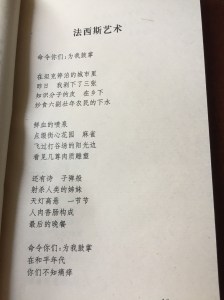




标签:art, death, Fascism, history, memory, murder, people, poetry, tanks, war, yi sha, 伊沙
发表在 1920s, 1930s, 1940s, 1950s, 1960s, 1970s, 1980s, 1989, 1990s, 1991, 2019, 20th century, 21st century, June, June 2019, Middle Ages, poetry, Translations, Uncategorized, Yi Sha, 伊沙 | Leave a Comment »
6月 16, 2019

Yi Sha
FAX POEM
In 1994
before Bukowski died
he wrote his first and only fax poem
in the poem he writes
“this is my first FAX POEM
it’s too late:
I have been
smitten.”
In the same year
I received an invitation
from Norway
requesting particular poets all over the world
to send their poem in their mother tongue
at one particular day
to one particular number
The host on his side would collect these poems
stick them on a huge wall
this poetry wall would be kept forever
I have forgotten
which poem I sent
it was through the telephone clerk
at my parents’ work unit
I don’t know if Bukowski
wrote for this activity
if he did
it was the only time Old Bu and I
came together
alive
June 2019
Translated by MW, June 2019
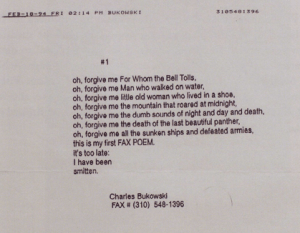
6月第88首,总14267首
@长安伊沙
《传真诗》
1994年
布考斯基死前
写下了平生第一首传真诗
他在诗中写道:
"这是我的第一首传真诗。
太迟了:
我已经
被击昏。"
正是在那一年
我也接到过一个邀请
来自挪威
希望全世界受邀的诗人
都在某个特定的日子
向某个指定的传真电话发诗
用各自母语创作的诗
主办方收到这些诗
会集中贴到一面大墙上
那面诗墙将被永久保存
我当时发的哪一首
已经忘记了
是托父母单位的电话员
发送的
我不知道布考斯基
是否为这个活动而写
如果是
那便是我与老布
平生惟一的交集

Yi Sha
DREAM #1477
dreamt about the state
of a poem
not the content
three stanzas
every one
well written
but over all it was no good
June 2019
Translated by MW, June 2019
6月第85首,总14264首
@长安伊沙
《梦(1477)》
梦见了一首诗
的状态
而非内容
它分三段
每一段
都写得挺好
但整体并不好
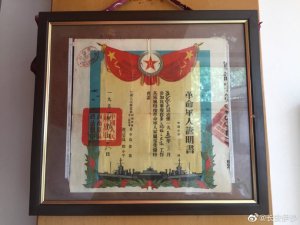
Yi Sha
SING ALOUD TOGETHER WITH THEM:
LET US DIP IN TWIN OARS
In 1985 fall and winter semester
I had just started at Beijing Normal University
I was transferred
to the university primary school
to one 4th class
to help in their activities
Before I left
these sweet primary students
gave me all sorts of presents
The most beautiful girl
(from Beijing Film Studio parents)
gave me a photo
of Clark Gable,
said “You look like him”
(Good heavens!)
Oh, never saw her again,
this girl who was born
in 1974.
But in my heart
she grew up,
grew up into a great beauty,
high school and college,
working
love, marriage, kids
a whole happy life
June 2019
Translated by MW, June 2019
《与他们一起高唱
让我们荡起双桨》
1985年秋冬
刚入北师大
我被派到
北师大附小
四年级某班
帮助他们搞活动
临别时
可爱的小学生
送我各种小礼物
班里最漂亮的女生
(北影厂子弟)
送我一张
克拉克.盖博的照片
说:"你长得像他"
(我的天哪!)
哦,后来我再没见过
这位1974年出生的
小女生
后来她在我心中
长大了
长成了大美人
上中学上大学
然后工作
恋爱结婚生子
过着幸福的人生

Yi Sha
DREAM #1474
She appears in your dream
meaning
she loves you
even if you don’t accept love
her love
in your subconscious
you will cherish her
and
full of thanks
June 2019
Tr. MW, June 2019
6月第75首,总14254首
@长安伊沙
《梦(1474)》
她在梦中伏现
意味着
爱你者
即使你不接爱
她的爱
你的潜意识
也会珍存她
并且
满含感恩
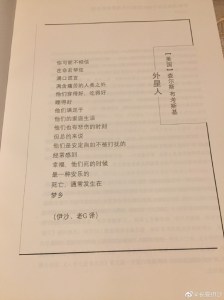
Yi Sha
DREAM #1473
I am a short-track
Croatian
speed-skater
have snatched gold
at the winter olympics
on the winner’s podium
they are playing my hymn
and flying my colors
I help the runner-up
the Russian contestant
to wipe the blood at his mouth
where he was hit in the race
from my blade
June 2019
Tr. MW, June 2019
6月第74首,总14253首
@长安伊沙
《梦(1473)》
我是一名
短道速滑选手
克罗地亚人
一举夺得了
冬奥会冠军
领奖台上
国歌奏响
国旗升起
我为亚军得主
俄罗斯选手
拭去嘴角的血迹
他是在比赛中
被我的冰刀
划伤的

Yi Sha
MEAL
I have always thought
a pile of meat
does not constitute
a meal
and neither does
a pile of greens
got to have grain
grains are the soul
of Chinese cooking
only grain
fills me inside
June 2019
Tr. MW, June 2019
6月第56首,总14235首
@长安伊沙
《饭》
我始终认为
一堆肉
不能构成
一餐饭
一堆草
也不能构成
一餐饭
还是要有谷
谷才是
中餐之魂
我胃里的
镇物
6月11日 18:39
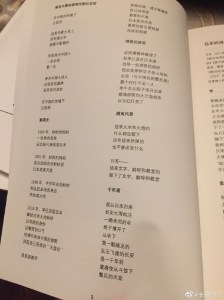
Yi Sha
CRAZY-GROWING VINE
The vine on our balcony
grows like crazy.
Martin Winter’s son,
our friend young Leo
has christened this stalk
“Lincoln”.
Sturdy Lincoln leans out
far into the courtyard
summons the people
to free the slaves
and wage war
against an unjust system.
For a moment
I hear shots ringing out
May 2019
Tr. MW, June 2019
《疯长的葡萄树》
伊沙
我家阳台上的
葡萄树在疯长
那棵被维马丁之子
乐友小朋友
命名为“林肯”的
葡萄树
状若总统先生
探出身子在演讲
号召人民
解放黑奴
向不合理的制度开战
某一瞬间
我听见枪声响起
Photo by Li Haiquan
Yi Sha
CHILDREN’S DAY
We were resting
in an old pavilion
at Qujiang South Lake
with Martin and Old Professor Ren.
A little boy
jumps out at Martin:
“Grandpa, hello!
It is June 1st, Children’s Day!”
Suddenly it’s like I see
myself almost 50 years ago
hiding in a thicket at Xingqing park
throwing rocks at a foreigner
as Chairman Mao’s little Red Guard
June 2019
Tr. MW, June 2019
6月第24首,总14203首
@长安伊沙
《儿童节追记》
那天在曲江南湖
古亭中
与任老、马丁小憩
一个小男孩
忽然跳到马丁面前:
"爷爷,你好!
今天是六一儿童节!"
我恍然看见
将近五十年前的我
躲在兴庆公园的树丛里
朝老外丢石子
是毛主席的红小兵
Yi Sha
BAMBOO LEAVES ALL OVER THE WORLD
This Dragon-Boat Festival
I remember another Dragon-Boat festival day
12 years ago
in Rotterdam
where my enemies cannot go
A poster on a utility pole by the road
reminded me
it was Dragon-Boat day
I had a date with Arthur Sze
and Ye Mimi from Taiwan
for a late-night snack at that Chinese restaurant.
I was going to treat them
for Dragon-Boat Zongzi.
But in the end
we didn’t go,
don’t know why.
Actually that’s really too bad.
If we had eaten
Zongzi that night
that wonderful poetry festival
would make my enemies’ eyes
go red even now
even more
June 2019
Tr. MW, June 2019
6月第17首,总14196首
@长安伊沙
《天涯何处无粽叶》
在这个端午
怀想起那个端午
十二年前
在仇伊者见不得的
鹿特丹
路边电线杆上
中餐馆的促销海报
提醒我
今天是端午节
我跟美籍华裔诗人施家彰
台湾女诗人叶觅觅说好了
夜宵去这家中餐
我坐东请他俩吃粽子
可是后来
不知什么原因
没有去成
今天回想起来
颇觉遗憾
如果当晚
吃到了粽子
那届诗歌节的美好
便会翻倍
无能的仇伊者的红眼病
还会加剧
Yi Sha
DREAM #1466
I
am busy behind a cannon
The ammunition piled there
isn’t physical cannon balls
but an abstract
idea: responsibility
June 2019
Tr. MW, June 2019
6月第16首,总14195首
@长安伊沙
《梦(1466)》
我
在一门大炮的后面
忙碌着
那里堆放的不是
有形的炮弹
而是无形的抽象的
概念:责任
Yi Sha
DREAM #1465
Stick it in
pull it out
stick it in
pull it out
feeling sad
June 2019
Translated by MW, June 2019
6月第15首,总14194首
@长安伊沙
《梦(1465)》
插进去
拔出来
插进去
拔出来
好伤心
Yi Sha
TRAUM 1465
Reinstecken
Rausziehen
Reinstecken
Rausziehen
Traurig
Juni 2019
Übersetzt von MW im Juni 2019
标签:cannons, charles bukowski, children, Children's Day, death, Dragon Boat festival, dream, dreams, fax, food, grain, greens, history, Leo, life, Lincoln, love, Martin Winter, meat, memory, nation, Norway, poetry, president, sex, slaves, sports, students, system, teaching, translation, vine, world, yi sha, 伊沙
发表在 1966, 1969, 1970s, 1980s, 1985, 1990s, 2000s, 2019, 20th century, 21st century, April 2019, June 2019, May 2019, poetry, Translations, Uncategorized, Yi Sha, 伊沙 | Leave a Comment »
5月 11, 2019
He Ying
WINTER CLOTHING DAY
moon calendar, tenth month and first day, midnight
at the crossroads, still a few heaps of burnt paper
swaying in the cold wind
a beggar comes and kneels down, both knees on the ground,
makes a bow
to the rest of a fire
to light a cigarette
Translated by MW, May 2019
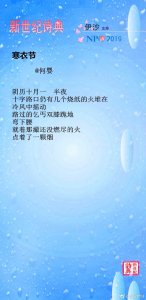
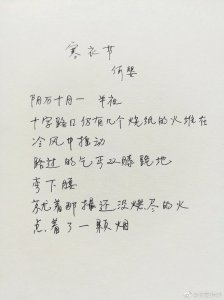
标签:ancestors, beggar, clothes, cold, dead, death, fire, ghosts, Halloween, He Ying, NPC, paper, poetry, sacrifice, seasons, smoke, society, tradition, winter, 新世纪詩典, 何婴
发表在 2018, 2019, 20th century, 21st century, May 2019, Middle Ages, November 2018, NPC, October 2018, poetry, Translations, Uncategorized, Warring States, 新世纪诗典 | Leave a Comment »
5月 7, 2019
Pang Qiongzhen
DURCHGEMACHT
Hui Lin ist 1942 geboren.
Liang Bo ist 1944 geboren.
Mein ältester Bruder ist 1946 geboren.
Der zweite Bruder ist 1949 geboren.
Der kleinste Bruder ist 1958 geboren.
Mein ältester Bruder ist mit 71 gestorben.
Der zweite Bruder ist mit 59 gestorben.
Der jüngste ist nicht einmal ein Jahr alt geworden.
Ich schmeichle Hui Lin und Liang Bo, sie seien jung.
Liang Bo setzt neckisch seine Schirmkappe auf,
deckt sein weißes Haar zu, ist gleich noch jünger.
“Ich bin vom Affenjahr,
geboren in Chungking im Widerstandskrieg gegen Japan,
wir habens nicht leicht gehabt.
Aber in Taiwan und in Amerika
waren kein Hunger und keine Kampfsitzungen.”
2019-03-28
Übersetzt von MW im Mai 2019
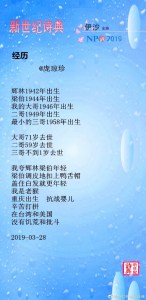
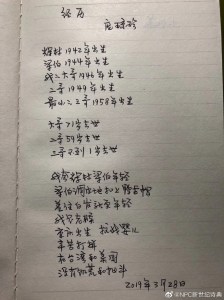
标签:age, brothers, death, family, famine, health, history, memory, NPC, Pang Qiongzhen, struggle, 庞琼珍, 新世纪詩典
发表在 1940s, 1942, 1944, 1949, 1950s, 1958, 1960s, 1970s, 1980s, 1990s, 2000s, 2019, 20th century, 21st century, March 2019, May 2019, Middle Ages, NPC, poetry, Translations, Uncategorized, 新世纪诗典 | Leave a Comment »
5月 2, 2019
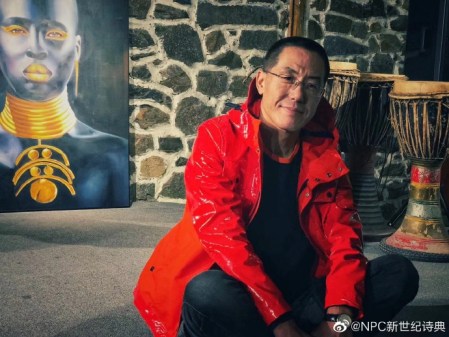
Pan Xichen
EGAL WIE KALT ES WIRD DER HIMMEL ERFRIERT NICHT
Egal wie kalt es wird,
der Himmel erfriert nicht.
Das hab ich mir dieses Jahr vorgesagt,
und nächstes Jahr werd ichs auch sagen.
Selbst wenn ich eines Tags
erfroren sein mag
und nichts mehr sagen kann,
auch das ist dann
der Wille des Himmels.
2018-12-31
Übersetzt von MW am 1. Mai 2019
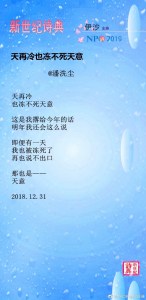
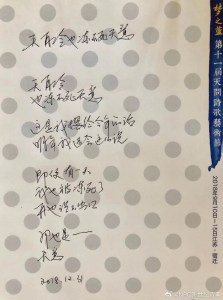
标签:cold, death, fate, freeze, heaven, life, new year, NPC, Pan Xichen, weather, year, 新世纪詩典, 潘洗尘
发表在 2018, 2019, 20th century, 21st century, Antique times, December 2018, May 2019, Middle Ages, NPC, poetry, Translations, Uncategorized, 新世纪诗典 | Leave a Comment »
4月 28, 2019
Yu Shuai
A LIFE
At 16,
joins a rural drum band.
At 26,
swallows iron balls on stage,
one gets stuck.
No treatment, dies.
Translated by MW, April 2019
Yu Shuai
EIN LEBEN
Mit 16
in einer ländlichen Trommlerkapelle.
Mit 26,
schluckt Eisenkugeln,
eine steckt,
nicht behandelt, stirbt.
Übersetzt von MW, April 2019

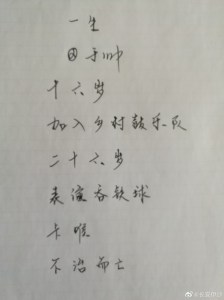
标签:balls, country, death, iron, life, medicine, NPC, performance, rural, society, Yu Shuai, 新世纪詩典, 于帅
发表在 2019, 20th century, 21st century, Antique times, April 2019, Middle Ages, NPC, poetry, Translations, Uncategorized, 新世纪诗典 | Leave a Comment »
4月 26, 2019
WHAT DOES IT MEAN TO BE HUMAN?
what does it mean to be human?
what does it mean to be alive?
means you’re not dead yet.
means you can ask superfluous questions.
goddammit, every animal knows
what it means to be an animal.
right?
our children are growing up
discovering love
they always had love, but
any animal knows this is different.
they are bewildered by their own bodies.
again, this has gone on for a while,
it just grows more acute,
and again, every animal knows.
goddammit,
what a luxury question.
what does it mean
to be mean?
not the golden mean.
everyone knows what it means to be mean.
he’s in the news
and on the news every day.
to be human
means to have rights.
doesn’t it?
1947, UN-declaration,
two people from China
worked on it.
Animal rights.
Post about dying whales,
you’ll get 1000s of likes,
about people, oh well.
I want to call this poem
stupid question.
Thank you!
Now go forth and profligate,
or whatever.
MW April 3, 2019
ALWAYS ONLY THE CULTURE
always
always only
always only the
always only the culture
always only the culture
always only the cultural
revolution
always only the cultural
revolution
since 1966
always only the cultural
revolution
always only the cultural
revolution
always only the culture
always only the culture
always only the
always only
always
not the famine
but
but still
but still also
the tens of millions
starved to death
but
but still
but still also
but still also
the terror
the totalitarian
terror
“totalitarian” is in dictionaries
and in chinese search engines
china is hardly
mentioned at all
as neighbor of the soviet union
and in art
in the art
of the cultural revolution
always only the culture
always only the culture
hannah arendt
died in 1975
before the end
of the cultural revolution
in the last edition she saw
of her seminal work
origins of totalitarianism
at least in the german edition
she mentioned china
in the cultural revolution
hardly anyone mentioned the famine
always only the culture
always only the culture
but
but still
but still also
the terror
the terror
pinochet
pol pot
kissinger
who downed more
who did more
who bombed more
1979, democracy wall
in beijing
since 1979
capitalism
reigns supreme
the party reigns supreme
through capitalism
or the other way
through kaputalism
or the other way
everything demolished developed
and demolished again
or the other way
of course only in china
but
but still
but still also
always only the culture
always only the culture
always only the
always only
always
always
MW March-April 2019
IMMER NUR DIE KULTUR
immer
immer nur
immer nur die
immer nur die kultur
immer nur die kultur
immer nur die kultur-
revolution
immer nur die kultur-
revolution
seit 1966
immer nur die kultur-
revolution
immer nur die kultur-
revolution
immer nur die kultur
immer nur die kultur
immer nur die
immer nur
immer
nicht die hungersnot
oder
oder doch
oder doch auch
die zig millionen
hungertoten
oder
oder doch
oder doch auch
der terror
der terror der
totalitären herrschaft
“totalitär” gibt es in wörterbüchern
und in chinesischen suchmaschinen
china wird dabei höchstens
ganz wenig gestreift
als nachbarstaat der sowjetunion
und in der kunst
der bildenden kunst
der kulturrevolution
immer nur die kultur
immer nur die kultur
hannah arendt
ist 1975 gestorben
also vor dem ende
der kulturrevolution
in der letzten auflage ihres hauptwerks
ursprünge und elemente totalitärer herrschaft
erwähnt sie china
in der kulturrevolution
kaum jemand sprach damals von hungersnot
immer nur die kultur
immer nur die kultur
oder
oder doch
oder doch auch
der terror
der terror
pinochet
pol pot
kissinger
wer hat mehr
wer hat mehr
wer hat mehr bombadiert
1979 war die mauer der demokratie
in peking
seit 1979
regiert der kapitalismus
die partei regiert
mithilfe des kapitalismus
und umgekehrt
mithilfe des kaputtalismus
und umgekehrt
es wird kaputt gemacht und neu gebaut
und wieder kaputt gemacht
und umgekehrt
natürlich nur in china
oder
oder doch
oder doch auch
immer nur die kultur
immer nur die kultur
immer nur die
immer nur
immer
immer
MW März 2019
标签:animals, asia, body, capitalism, children, china, cultural heritage, Cultural Revolution, culture, 美国 America, death, demolishing, destruction, dictators, earth, East Asia, economy, education, Europe, famine, Fascism, growing up, Hannah Arendt, history, human, human rights, humane, humanities, humanity, humans, hunger, language, life, love, media, memory, nazis, news, people, philosophy, poetry, politics, question, questions, re-education, rights, social media, socialism, society, south america, Southeast Asia, soviet union, terror, totalitarian, UN, world
发表在 1910s, 1920s, 1930s, 1940s, 1950s, 1960, 1960s, 1966, 1970s, 1975, 1976, 1980s, 1990s, 2000s, 2010s, 2019, 20th century, 21st century, Antique times, April 2019, March 2019, Middle Ages, Old Egypt, poetry, PR, prose, Roman times, Stone Age, Uncategorized, Warring States | Leave a Comment »
4月 4, 2019

You Lianbin
BESTE TRAUERREDE
Am 14. Februar 2019 am Nachmittag
ist meine Mutter durch einen Verkehrsunfall
von uns gegangen.
Meine Tochter sagt
Oma geht in den Himmel
und feiert mit Opa Valentinstag.
25.Februar 2019
Übersetzt von MW am 2.April 2019

标签:child, daughter, death, family, grandmother, grandparents, grief, history, memory, NPC, Qingming, valentine's day, You Lianbin, 新世纪詩典, 游连斌
发表在 2019, 20th century, 21st century, April 2019, February 2019, NPC, poetry, Translations, Uncategorized, 新世纪诗典 | Leave a Comment »
3月 10, 2019
Jiang Xinhe
FRIEDHOF
in der früh
mit dem lastenfahrrad
raus aus dem dorf
vorbei
an einem friedhof
auf einmal schreit meine kleine schwester
hallo
friedhof
13.11.2018
Übersetzt von MW im März 2019
标签:death, family, graves, Jiang Xinhe, NPC, poetry, shout, sisters, sudden, transport, village, 姜馨贺, 新世纪詩典
发表在 2003, 2018, 2019, 21st century, February 2019, November 2018, NPC, poetry, Translations, Uncategorized, 新世纪诗典 | 1 Comment »
3月 8, 2019

Ma Fei
GLÜCKSKINDER
Mir ist aufgefallen vor 24 Jahren
in Karamay bei dem Feuer
da hat es drei Glückskinder gegeben,
die waren alle schlimm in den Augen der Lehrer.
Zwei Buben haben nicht auf das Kommando
“hinsetzen” gehört,
sind entwischt und davongekommen.
Und noch ein Mädchen,
die war unvorschriftsmäßig nicht in Schuluniform,
ist heimgeschickt worden
und hat die ganze Katastrophe versäumt.
21.Februar 2019
Übersetzt von MW im März 2019



伊沙主持 | 新世纪诗典8一周联展(2019.3.3——3.9)
标签:catastrophy, children, clothes, command, death, deaths, disobey, 马非, fire, history, leaders, Ma Fei, memory, naughty, news, nice, NPC, obey, people, poetry, pupils, rules, school, smoke, students, survivors, teachers, uniform, 新世纪詩典
发表在 1990s, 1995, 2000s, 2010s, 2019, 20th century, 21st century, February 2019, Han dynasty, March 2019, Middle Ages, NPC, poetry, Translations, Uncategorized, 新世纪诗典 | Leave a Comment »
2月 24, 2019
Jiang Caiyun
ALTER SOLDAT
Opas Kamerad
hat keine Kinder.
Im Koreakrieg
hat er eine Hand dortgelassen.
Als Opa gestorben ist,
geht der Kamerad ganz in schwarz
mit leerem Ärmel
durch die Leute,
gibt Opa die Hand.
Übersetzt von MW im Februar 2019
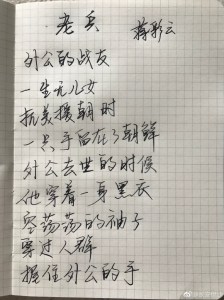
标签:cripple, death, 蔣彩云, funeral, hand, handicapped, history, Jiang Caiyun, memory, NPC, war, wound, 新世纪詩典
发表在 1950s, 2000s, 2010s, 2019, 20th century, 21st century, February 2019, NPC, poetry, Translations, Uncategorized, 新世纪诗典 | Leave a Comment »
2月 23, 2019

Jiang Erman
RIVER
In the evening
I take my flashlight,
shine it into the river.
The kid who drowned half a year ago
sits in the water writing his homework.
He sees the light,
lifts his head,
smiles at me.
9/5/18
Translated by MW, Febr. 2019
Jiang Erman
FLUSS
Am Abend
nehm ich die Taschenlampe
und schau in den Fluss.
Der Bub, der ertrunken ist vor einem halben Jahr,
schreibt seine Hausübung im Wasser.
Er bemerkt das Licht,
hebt den Kopf,
lächelt mich an.
2019-09-05
Übersetzt von MW im Februar 2019


标签:child, communication, connection, death, flashlight, Jiang Erman, life, light, NPC, poetry, river, school, water, 姜二嫚, 新世纪詩典
发表在 2018, 2019, 20th century, 21st century, February 2019, NPC, poetry, September 2018, Translations, Uncategorized, 新世纪诗典 | Leave a Comment »
1月 25, 2019

Photo by Liu Xia
20
20 years ago I wrote my first Chinese poem.
It was in Chongqing. “Wanbao, wanbao!”
That’s what they cry, all over China. Every afternoon.
“Evening news, evening news!”
Evening paper, every town has one.
Some have morning papers, those are called Zaobao,
most of them.
“Get your evening paper!”
Anyway, “wanbao, wanbao!”
could mean late retribution. Bào, what comes back, gets back,
a report. Wan, late. Zao, early.
“Wanbao, wanbao!”
Chongqing was the wartime capital.
Jiefang bei, liberation monument, is the city center.
It’s not from 1945 or 1949,
it’s from the 1930s or so.
Most people don’t know exactly.
Emancipation column. One of my students called it that.
Kang Di, think it was her.
Emancipation in German means women’s lib.
“Emanzipationssäule”.
I was teaching German.
Women’s Liberation Monument.
Women’s Rights Monument.
She didn’t know emancipation means many things.
Didn’t want to correct her.
Another essay was about marriage.
Were they really so conservative, our elders,
when they married a stranger,
when they slept with a stranger they had never seen before?
Good question.
Good essays, especially the girls, the young women.
“Wanbao, wanbao!”
In Beijing it sounded more like “wanbo!”, although Beijing supposedly
is where Mandarin comes from.
“Wanbao, wanbao!”
Chongqing is a hilly city. No bicycles. What did they do, back in the 1960s,
1970s, ’80s, when no-one had a car?
They had porters, for the steep slopes with the stairs,
I guess they’re still there.
“Bang-bang”, people for hire.
They bang on their tools, bang their tools together.
Bang-bang are men, but there are women porters.
Hong Ying’s mother carried sand, rocks and gravel.
Daughter of Hunger, her most famous book.
Daughter of the River in English, it was a bestseller.
Hungry Daughter, Ji’e de nü’er.
That’s right, they have a “ü”, just like in German,
and like in Turkish. Ürümqi, city in China,
nowadays governed like North Korea.
Many re-education camps. They had prisons in Chongqing,
Liao Yiwu was in there,
another famous writer from China.
Didn’t know him then. But Chongqing is about war and imprisonment.
Lieshimu, that’s the address
of our university. We taught German and English.
Two universities, one foreign languages,
the other law and police. Law and politics. Yes, they are not separated.
“Wanbao, wanbao!” No zaobao in Chongqing,
although I’m not sure now.
Lie-shi-mu, Martyr’s Grave.
Geleshan, Gele Mountain, right behind our college,
other side of the train tracks.
Someone was murdered there, some gambling debt.
Students died, one or two every few months.
Nice walks on Geleshan, very peaceful, really.
“Wanbao, wanbao!” Every city in China.
Nowadays people have cell phones,
but there are printed newspapers and magazines.
And printed books, there is no crisis.
“Wanbao, wanbao!” Late reports, late reports.
From the guns. Or whatever.
Karma. Shan means good, doing good.
A Buddhist word. Shan you shanbao,
doing good has good returns.
Wouldn’t that be nice?
But teachers believe it, teachers and parents,
again and again, otherwise you go crazy.
They went crazy too, war and famine,
all the way till 1961, ’62. When Hong Ying was born.
No, also 1969,
Cultural Revolution, like civil war.
Shan you shan-bao,
good deeds, good returns.
“Shan you shanbao, e you e-bao.”
E like in Urgh! Like something disgusting, that’s what it means.
Ur yow ur-pow, something like that. But more like b.
Eh yow e-bao. Yes, “e” like ur. “You” like yo-uw.
Shàn you shànbào, è you èbao.
Do good for good returns, do bad stuff for bad returns.
Not that it doesn’t come back, time isn’t ripe.
That’s how it goes on.
You throw the boomerang, boomerang doesn’t come back,
they tell you wait, it’ll come back.
Karma.
And so I wrote a Buddhist newspaper poem.
Bu shì bu bào, shíhou wei dào.
Wei like in Ai Weiwei, “ei” like in Beijing.
Wei means not yet, that’s his name. Really.
“Wei” like the future.
His father was the most famous Communist poet
of the People’s Republic. Imprisoned in the 1930s,
maybe in Chongqing. Then again under Mao.
Exiled to Xinjiang, North Korea today, re-education camps.
Desert, somewhere between Dunhuang and Ürümqi,
what was the town? It’s a big city now.
Ai Weiwei grew up in a hole in the ground, with his brother.
They are both artists. Anyway, where was I?
Bu shì bu bào, shíhou wei dào.
Not that it doesn’t come back, time isn’t ripe.
Emancipation monument.
MLK day, I have a dream.
They had to memorize the whole speech,
in schools in China, 1970s.
Maybe earlier too, maybe till now.
Good deeds, good returns.
Bad deeds, bad returns.
The Chinese Dream.
Not that it doesn’t come back.
Zao you zaobao, wan you wanbao.
Morning has morning papers, evening has evening news.
Early deeds, early returns.
Late deeds, late returns.
Late returns after gambling.
Famous party secretary, famous police chief,
they are in prison now. Or one is dead?
Killed a British guy, now they imprison Canadians.
Anyway, my poem.
Wanbao, wanbao!
Wanbao, wanbao!
Zao you zaobao,
wan you wanbao.
Bushi bu bao, shihou wei dao.
Actually the saying goes on, the Buddhist Karma.
Once time is ripe, everything comes back.
You don’t need to say that. People know.
晚报,晚报!
早有早报,晚有晚报。
不是不报,时候未到!
MW January 2019

Artwork by Liu Xia
Photos by Liu Xia
标签:Ai Weiwei, bad, Chongqing, college, country, death, emancipation, evil, famine, good, history, Hong Ying, karma, language, Liao Yiwu, liberation, life, memory, news, poetry, prison, religion, reporting, return, returns, society, sounds, state, teaching, University, values, war, writing, Xinjiang
发表在 1930s, 1940s, 1945, 1949, 1950s, 1960s, 1961, 1962, 1969, 1970s, 1980s, 1990s, 1998, 1999, 2000s, 2010s, 2018, 2019, 20th century, 21st century, December 2018, January 2019, poetry, Uncategorized | Leave a Comment »
12月 20, 2018
Wang Xiaochuan
JETZT WEISS ICH WAS HEULEN UND WEHKLAGEN HEISST
am eingang von der notfallambulanz
eine frau
hält ein kind
sitzt auf den stufen
heult und klagt
ich seh das kind
hat an diesem winterabend
nackte füße
es ist fest zusammengewickelt
ich seh noch
in der nähe
einen mann
er kommt weinend her
umarmt die heulende frau
auf den stufen
die security
werfen die beiden
auf den gehsteig
vor das tor des universitätskrankenhauses
die beiden
halten immer noch
das fest zusammengewickelte kind
mit nackten füßen
das sich nicht rührt
und heulen und klagen
4. November 2018
Übersetzt von MW im Dezember 2018
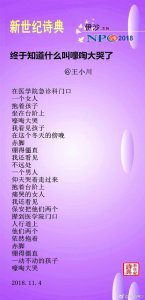
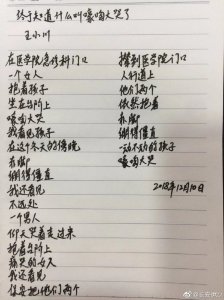
标签:birth, brutality, child, civilisation, culture, 王小川, death, emergency, history, hospital, institutions, man, NPC, pain, parents, people, security, society, stairs, story, woman, 新世纪詩典
发表在 Uncategorized | Leave a Comment »
11月 18, 2018
Yi Sha
CHARLES BUKOWSKI’S TIME
allen ginsberg recites all naked gets himself famous
bukowski doesn’t care
drinks & writes drinks & writes drinks & writes fucks when it’s time
gary snyder takes to the mountains becomes a hermit gets famous too
bukowski doesn’t care
drinks & writes drinks & writes drinks & writes fucks when it’s time
robert frost recites at kennedy’s inauguration
bukowski doesn’t care
drinks & writes drinks & writes drinks & writes fucks when it’s time
sartre refuses his nobel & calls bukowski “america’s best poet”
bukowski doesn’t care
drinks & writes drinks & writes drinks & writes fucks when it’s time
camus accepts his nobel & calls bukowski “greatest writer of the us”
bukowski doesn’t care
drinks & writes drinks & writes drinks & writes fucks when it’s time
someone calls him a second shakespeare someone calls him new hemingway
he doesn’t care
drinks & writes drinks & writes drinks & writes fucks when it’s time
sylvia plath does away with herself
bukowski doesn’t care
drinks & writes drinks & writes drinks & writes fucks when it’s time
anne sexton offs herself too
bukowski doesn’t care
drinks & writes drinks & writes drinks & writes fucks when it’s time
robert bly holds recitals & marches against vietnam war & it’s a big deal
bukowski doesn’t care
drinks & writes drinks & writes drinks & writes fucks when it’s time
czesław miłosz from poland lives in america & receives a nobel
bukowski doesn’t care
drinks & writes drinks & writes drinks & writes fucks when it’s time
joseph brodsky from soviet russia becomes american receives a nobel
bukowski doesn’t care
drinks & writes drinks & writes drinks & writes fucks when it’s time
his poetry sells better than ginsberg’s #1 in his country
bukowski doesn’t care
drinks & writes drinks & writes drinks & writes fucks when it’s time
one after one the elite of the era become bukowski fans
bukowski doesn’t care
drinks & writes writes & drinks fucks when it’s time
john ashberry flits like a butterfly between universities & poetry festivals
bukowski doesn’t care
drinks & writes drinks & writes drinks & writes fucks in time
doesn’t care doesn’t care doesn’t care doesn’t care
drinks & writes drinks & writes drinks & writes drinks & writes
fucks in time till he can’t anymore
alive in time croaks when it’s time
November 2018
Translated by MW in November 2018
查尔斯.布考斯基的时代丨伊沙
艾伦.金斯堡赤身裸体当众朗诵暴得大名
他不为所动
喝酒写作喝酒写作喝酒写作喝酒写作该操就操
加里.斯奈德跑到山中隐居竟也出名
他不为所动
喝酒写作喝酒写作喝酒写作喝酒写作该操就操
罗伯特.弗罗斯特在肯尼迪总统就职典礼上朗诵
他不为所动
喝酒写作喝酒写作喝酒写作喝酒写作该操就操
拒绝了诺贝尔文学奖的萨特称其为"美国最好的诗人"
他不为所动
喝酒写作喝酒写作喝酒写作喝酒写作该操就操
接受了诺贝尔文学奖的加缪称其为"美国当代最伟大的作家"
他不为所动
喝酒写作喝酒写作喝酒写作喝酒写作该操就操
有人称其为"第二个莎士比亚"有人称其为"新海明威"
他不为所动
喝酒写作喝酒写作喝酒写作喝酒写作该操就操
西尔维娅.普拉斯把自己解决了
他不为所动
喝酒写作喝酒写作喝酒写作喝酒写作该操就操
安妮.塞克斯顿又把自己干掉了
他不为所动
喝酒写作喝酒写作喝酒写作喝酒写作该操就操
罗伯特.勃莱举办反对越战巡回朗诵会大出风头
他不为所动
喝酒写作喝酒写作喝酒写作喝酒写作该操就操
旅居美国的波兰诗人米沃什获得了诺贝尔文学奖
他不为所动
喝酒写作喝酒写作喝酒写作喝酒写作该操就操
加入美籍的苏联诗人布罗茨基获得了诺贝尔文学奖
他不为所动
喝酒写作喝酒写作喝酒写作喝酒写作该操就操
诗集销量超过金斯堡成为美国之最
他不为所动
喝酒写作喝酒写作喝酒写作喝酒写作该操就操
这个时代最精英的艺人们纷纷做其铁粉
他不为所动
喝酒写作喝酒写作喝酒写作喝酒写作该操就操
约翰.阿什贝利像花蝴蝶一样穿梭在名大学与诗歌节之间
他不为所动
喝酒写作喝酒写作喝酒写作喝酒写作该操就操
不为所动不为所动不为所动不为所动
喝酒写作喝酒写作喝酒写作喝酒写作
该操就操操不动了就不操了
该活就活活不动了该死就死
2018.11
Yi Sha
WHEN I AM OLD
When I am old,
don’t have too much to say anymore,
I’ll be quiet and remember
my ordinary life
I couldn’t escape.
No too many things to keep in mind,
my whole life
I just wrote a few poems.
I will think of
these moments when it happened,
not the final results,
the hour when something came down from heaven.
2000
Translated by MW, November 2018
Yi Sha
WENN ICH ALT BIN
wenn ich alt bin
nicht mehr zu viel zu sagen hab
werd ich mich still erinnern
das ganze gewöhnliche leben
dem ich nicht entkommen bin
ich werd nicht an sehr viele sachen denken
mein ganzes leben
hab ich nur ein paar gedichte geschrieben
was mir einfallen wird
sind die momente wo es passiert ist
nicht die resultate
die stunde wenn etwas vom himmel herunterkommt
2000
Übersetzt von MW im November 2018
当我老了
诗/伊沙
当我老了
已没有多余的话
我会静静回忆
自己的一生
无法免俗
我不会想起很多事
我的一生
只写过几首诗
我会想起
它们发生的瞬间
不是最后的结果
是它们自天而降的时刻
2000
Yi Sha
DOG-FUCKING REALM
This realm of Chinese poetry
is not banal at all.
Poets
with not one famous poem
can point their finger
when and wherever at any poet
who holds a whole bunch.
“He has not one good thing,
all he writes is garbage!”
This is
a most familiar sight.
But if you say
this is fair,
there is justice-
you are full of shit.
November 2018
Translated by MW, Nov. 2018
《狗日的诗坛》
中国诗坛
一点也不庸俗
一首名作
都没有的诗人们
可以随时随地指着
手握一串名作的诗人说:
"他一首好诗都没有
写的全是垃圾!"
这是
平常而又平常的一幕
但如果你认为
这是合理的
无关公平正义
那么你就是一泡狗屎
Yi Sha
NPC-ATLAS
– als Vorwort für den Sammelband des 7. Jahres
Nach der Mittagszeit
am Bahnhof in Osaka
in einem Cafe
trink ich Kaffee
und denk an die Frage
ob in unserer Neuen Poesie aus China
Gedichte über Japan drin sind
oder in Japan entstandene.
Bei den ersteren fällt mir Zhu Jian ein,
bei den letzteren Su Liming.
Dann denk ich wie die heutigen Dichter
in NPC ihre Welt beschreiben
und vor meinen Augen entsteht
ein Weltreich der Poesie.
Juli 2018
Übersetzt von MW im November 2018
新世纪诗典》第七季(将出)代序
《新诗典》的版图
午后
在大阪驿的
一家咖啡馆里
喝着咖啡
想到一个问题
《新诗典》中
有没有写到日本
或写于日本的诗
前者想起朱剑
后者想起苏历铭
继而想到《新诗典》中
那些当代中国诗人
写世界的诗
眼前呈现出一幅
辽阔的诗国版图
(2018)
2月4日 01:39
Yi Sha
GROSSES UND KLEINES FAHRZEUG
auf einem lastwagen in laos
frag ich zhang xiaoyun den laienbruder
hinayana und mahayana-buddhismus
was ist der unterschied
bruder zhang sagt langsam im südlichen ton:
“großes fahrzeug ist ein großer bus
kleines fahrzeug ist eigener wagen”
ich hab verstanden!
“hinayana ist selber schreiben,
mahayana ist NPC machen …”
“genau!” sagt bruder zhang,
aber 900 buddhas
wieviele busse braucht man da
denk ich im stillen
Februar 2018
Übersetzt von MW im November 2018
《大乘与小乘》
在出行的皮卡上
向张小云居士请教
南传佛教以及
大乘小乘的区别
张居士南音款款地说:
"大乘是大巴
小乘是坐驾⋯⋯"
我听明白了:
"小乘是自己写诗
大乘是做《新诗典》⋯⋯"
"对"张居士肯定地说
"可是将近九百个菩萨
得多少辆大巴啊?"
我在心里说
标签:age, Albert Camus, Allen Ginsberg, Anne Sexton, art, buddhism, charles bukowski, countries, Czeslaw Milosz, 美国 America, death, drinking, Europe, fucking, Gary Snyder, heaven, hinayana, history, inspiration, Japan, Jean-Paul Sartre, Joseph Brodsky, Kennedy, language, Laos, life, literature, mahayana, memory, moment, Nobel prize, NPC, old, poetry, poets, Poland, politics, protest, religion, Robert Bly, Robert Frost, shit, society, soviet union, success, suicide, Sylvia Plath, time, Vietnam, war, world, writing, yi sha, 新世纪诗典
发表在 1950s, 1960s, 1970s, 1980s, 1990s, 2000, 2000s, 2010s, 2018, 20th century, 21st century, Antique times, February 2018, Middle Ages, November 2018, NPC, October 2018, poetry, Translations, Uncategorized, Yi Sha, 新世纪诗典, 伊沙 | Leave a Comment »
11月 5, 2018

Da You
KEINE SEELE IST BESSER
“Wenn ich eine Seele hab,” sagt meine Mutter,
“wart ich am Grab,
auf Kinder und Kindeskinder,
wenn niemand kommt,
niemand und niemand kommt.
Seele sein
schmeckt mir nicht.”
2017-10-10
Übersetzt von MW im November 2018
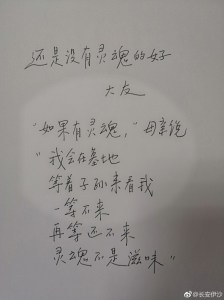
标签:children, Da You, death, family, grandchildren, grave, language, mother, NPC, poetry, ritual, soul, translation, waiting, 大友, 新世纪詩典
发表在 2017, 2018, 20th century, 21st century, November 2018, NPC, October 2017, poetry, Translations, Uncategorized, 新世纪诗典 | Leave a Comment »
10月 27, 2018

erzählungen:
小说:
《贍養上帝》 刘慈欣 Liu Cixin: DEN HERRGOTT VERSORGEN, übersetzt von Martina Hasse
《深山疗养院》 郝景芳 Hao Jingfang: GEBIRGSSANATORIUM, übersetzt von Carsten Schäfer
《末日》 韩少功 Han Shaogong: UNTERGANG, übersetzt von Helmut Forster
《丽江的鱼儿们》 陈楸帆 Chen Qiufan: DIE FISCHE VON LIJIANG, übersetzt von Maja Linnemann
《影族》 残雪 Can Xue: SCHATTENVOLK, übersetzt von Martin Winter
《养蜂人》 王晋康 Wang Jinkang: DER IMKER, übersetzt von Marc Hermann
《草原动物园》 马伯庸 Ma Boyong: STEPPENZOO, übersetzt von Frank Meinshausen
《萤火虫之墓》 程婧波 Cheng Jingbo: GLÜHWÜRMCHENGRAB, übersetzt von Cornelia Travnicek
《热岛》 夏笳 Xia Jia: HEISSE INSEL, übersetzt von Julia Buddeberg
poesie:
詩歌:
韓東 詩歌 Han Dong: GEDICHTE übersetzt von Marc Hermann
沈浩波 詩歌 Shen Haobo: GEDICHTE übersetzt von Martin Winter
唐欣 詩歌 Tang Xin: GEDICHTE übersetzt von Martin Winter
erhältlich ab November 2018 in den Konfuzius-Instituten von Wien, Bremen und Frankfurt sowie bei www.FABRIKTRANSIT.net
unter “andere lieferbare Bücher”.
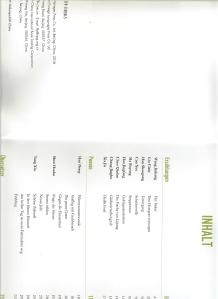
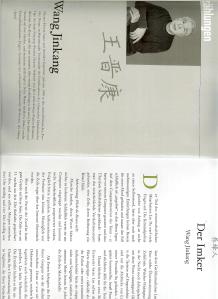
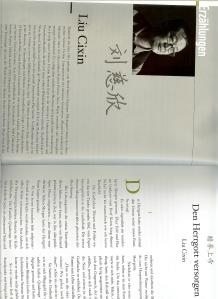







标签:age, animals, authors, bees, beijing, bicycles, care, china, Chinese literature, death, earth, family, fiction, fish, future, heat, heavens, high-speed, history, intergalactical travel, knowledge, life, literature, magic, memory, mountains, people, People's Literature, planets, poetry, religion, science, shadows, space, space ships, spaceflight, speed, stars, stories, translation, villages, war, world
发表在 1960s, 1970s, 1980s, 1990s, 2000s, 2010s, 2018, 2081, 20th century, 21st century, Leuchtspur, November 2018, October 2018, poetry, PR, prose, Translations, Uncategorized, 人民文學 | Leave a Comment »
9月 22, 2018
Shi Ran
KORNKAMMER
die größte kornkammer
in meiner erinnerung
war bei uns daheim im großen zimmer
der sarg
den opa für sich bereitgestellt hat
beim korn rausnehmen
haben wir den dicken sargdeckel aufgeschoben
da sind immer ein paar motten herausgeflogen
wie graue asche
Übersetzt von MW im September 2018
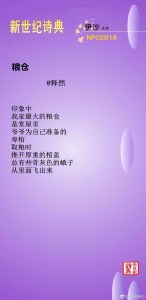

标签:ashes, coffin, death, 釋然, family, grain, history, life, memory, moths, NPC, poetry, Shi Ran, 新世紀詩典
发表在 2018, 20th century, 21st century, NPC, poetry, September 2018, Translations, Uncategorized, 新世纪诗典 | Leave a Comment »
9月 2, 2018

Jun Er
EARTH WILLOW
Little brother told me
in America on Google Earth
he can see the old willow tree at our old home
when you find the willow
you find our place
30 years ago on holiday from college
I worked in the fields with my father
noticed the willow shoot
begged father to dig it out
and plant it at the water hole in front of our gate.
Now I can’t even put
my arms all around it.
Three people have died in our family
but our tree
has made it onto the map in the sky.
Translated by MW, Sept. 2018
Jun Er
ERDKARTENWEIDE
mein kleiner bruder sagt mir
auf google earth aus amerika
gibt es die alte weide vor unserem haus
wenn du die weide hast
bist du schon bei unserem alten haus
vor 30 jahren in den ferien vom studium
hab ich mit meinem vater im feld gearbeitet
den weidenschößling entdeckt
meinen vater gebeten dass wir ihn ausgraben
und einsetzen beim wasserloch vor dem tor
heute kann ich mit meinen armen
nicht ganz rundherum
von unserer familie sind drei gestorben
aber der baum ist auf der karte im himmel
Übersetzt von MW im Sept. 2018

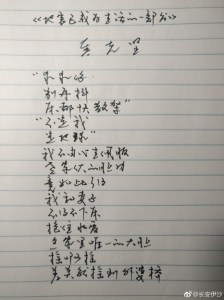
《十首诗》半月刊(第12期)|8月新作展B
张明宇编选
本辑诗人:徐江、马金山、周鸣、赵立宏、吴涛、周晋凯、第广龙、马非、南人、海青、严小妖、庄生、刘傲夫、君儿、乌城、梅花驿、江睿、伊沙、沈浩波、庞琼珍、岳上风、东岳、蒋雪峰、独化、张明宇
标签:brother, college, country, countryside, 美国 America, death, family, history, home, internet, Jun Er, Jun'er, live, memory, NPC, poetry, school, sister, time, tree, work, 君儿, 新世纪诗典
发表在 1980s, 1990s, 2000s, 2010s, 2018, 20th century, 21st century, NPC, poetry, September 2018, Translations, Uncategorized, 新世纪诗典 | Leave a Comment »
8月 2, 2018

THAILAND CAVE RESCUE
In Thailand
12 boys were saved,
and their trainer.
They had been locked in a cave
by rising water.
A whole football team.
Some were refugees from Burma.
In Europe
in the Mediterranean
it’s not allowed now
to rescue people.
They don’t actively kill
refugees
but they let them drown.
And all the media,
well, it depends what they say.
Interior ministers
are very happy.
But maybe they have
something similar
somewhere some time
in Asia.
MW July 2018
THAILAND CAVE RESCUE 2: AUSTRIA
In Thailand,
12 boys
and their young trainer
are rescued
from a flooded cave.
They were 11-16 years old.
In Austria,
a 14-year-old gets shot dead
from behind,
after breaking
into a supermarket.
Another one also gets shot,
survives and gets put on trial
as fast as possible.
And all the big papers
are very fast
on the side of the shooters.
Old enough to steal,
old enough to die,
they chant unisono.
The provincial governor,
some say he made up that song.
The killer
who ran after the boy
and shot him from behind
from very close
was put on trial
more than one year later,
but just for a little.
He knew the boy’ s mother,
they all knew each other
in the poor quarter
of the small town.
The killer lied,
of course they all lied,
said they were in danger,
so he had to shoot.
Actually of course,
the boys were unarmed.
All these details
came out at the trial.
Anyway the killer is still on duty.
Eight months on parole.
No way for the mother
to sue any further,
to get any money.
Some green- leaning left- leaning weekly,
maybe a few other reporters ,
some people didn’t shut up.
So there was a trial,
but he’s still on duty,
and it could be worse,
without truth or trial,
just self- defense,
what they all wanted.
It could be in Austria,
in many places.
Maybe also in Thailand.
MW July 2018
HÖHLENRETTUNG I
In Thailand
werden 12 Buben
im Alter von 11-16 Jahren gerettet.
Sie waren in einer Höhle
eingeschlossen.
In Österreich
wird einer erschossen
mit 14
von hinten
auf der Flucht
wegen Einbruch
in einem Supermarkt.
Noch einer wird angeschossen
und schleunigst verurteilt.
Und alle großen Medien stehen
sofort auf der Seite der Polizei.
Der Provinzgouverneur sowieso.
Der Todesschütze ist weiter im Dienst.
Aber vielleicht gibt es das auch
in Thailand,
unter der Junta.
MW Juli 2018
HÖHLENRETTUNG II
In Thailand
werden 12 Buben
im Alter von 11-16 Jahren gerettet.
Sie waren in einer Höhle
eingeschlossen.
Ein ganzes Fußballteam.
Manche sind
aus Burma geflohen.
In Europa
und im Mittelmeer
dürfen Flüchtende
Männer Frauen und Kinder
nicht mehr gerettet werden.
Sie werden
zwar nicht erschossen,
man lässt sie ersaufen.
Und alle großen Medien
naja vielleicht sind nicht alle immer
auf der Seite der Grenzpolizei.
Die Innenminister schon sowieso.
Aber vielleicht gibt es das auch
anderswo.
MW Juli 2018
标签:asia, austria, boys, children, death, Europe, football, heroes, history, international cooperation, international news, life, Mediterranean, memory, murder, news, police, refugees, rescue, shooting, soccer, Southeast Asia, thailand, trapped, values, villains
发表在 2009, 2018, 20th century, 21st century, July 2018, Middle Ages, poetry, Uncategorized | Leave a Comment »
7月 2, 2018

Xidu Heshang
DIE SCHÖNSTE FRAU IM KRANKENHAUS
tangdu-krankenhaus, stationärer bereich
17. stock, atemwege-abteilung.
die frau die heraufkommt,
ist die schönste frau
die mir heute morgen begegnet ist.
sie sagt der herr doktor cui kai
sei ein fescher mann,
er sei ein gott unter den schwestern.
sie lacht eine weile mit ihrer freundin,
als ob sonst niemand dabei wär,
dann sagt sie:
“ich hab mich selbst schon längst
zum tod verurteilt,
heute komm ich ins spital,
um zu hören wie er das urteil verkündet.”
Übersetzt von MW am 1. Juli 2018
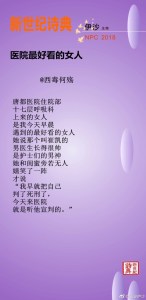
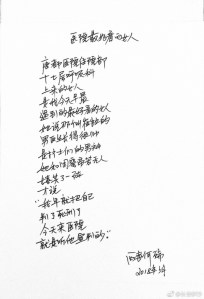
标签:beauty, body, death, desire, doctor, 西毒河殇, gender, health, hospital, life, NPC, nurse, physician, poetry, sex, Xi'an, Xidu Heshang, 新世纪詩典
发表在 2018, 20th century, 21st century, July 2018, June 2018, NPC, poetry, Translations, Uncategorized, 新世纪诗典 | 1 Comment »
6月 14, 2018
Wang Qingrang
1976
Mama hat mich geboren.
Aber Papa trug vor der Brust
eine weiße Blume der Trauer,
stand in einer Schar
vor einem Foto
und schluchzte.
Übersetzt von MW im Juni 2018


标签:birth, chairman, collective, 王清让, death, family, government, grief, history, memory, NPC, people, picture, poetry, society, Wang Qingrang, 新世纪詩典
发表在 1970s, 1976, 1980s, 1989, 1990s, 2000s, 2010s, 2018, 20th century, 21st century, June 2018, Middle Ages, NPC, poetry, Translations, Uncategorized, 新世纪诗典 | Leave a Comment »
6月 9, 2018

Yi Sha
DREAM 1065
My wife Old G. takes a rope,
ties up a crocodile’s mouth.
Very tight,
then she picks him up
and shoves him
into an iron cage.
In the cage
there are two other
tied-up crocodiles.
She says, “If you want pets,
you have to raise them this way.
Blows before words.
That little dog,
if you had
tied him up first,
he would be
our little dog now.”
May 2017
Translated by MW, June 2018
Yi Sha
DREAM 1066
Every village
in china
has a halfwit.
I spend the night in some village
and per accident kill their halfwit.
I am terrified,
and even more terrified
when they don’t notice
his disappearance at all.
I get off scot-free.
May 2017
Translated by MW, June 2018

Yi Sha
DREAM 1296
One fellow teacher
and shitty Mao-fan
jumps to his death.
Blood splatters the empty space
between university buildings.
I am shaken,
extremly surprised,
which goes to show
I never thought
their opposition
to the current dynasty
was the real thing.
Tr. MW, June 2018
Yi Sha
TRAUM 1296
einer von den
verschissenen mao-fans
unter meinen kollegen
springt in den tod
sein blut spritzt
auf den leeren platz
zwischen unterrichtsgebäuden
ich bin erschüttert
hätts gar nicht erwartet
aus dem traum kann man sehen
ich hab nie daran geglaubt
dass die mit dieser dynastie
nicht zufrieden sind
Juni 2018
Übersetzt vin MW im Juni 2018
《梦(1296)》
我同事中的
一个毛粪
跳楼自杀了
血溅教学楼
中间的空地
我非常震惊
非常意外
由此梦可见
我从不认为
他们对
当朝的不满
是真实的
PROSE POETRY
QUESTION
June 2007, Poetry International Festival Rotterdam.
A Chinese from America who writes in English asks me,
“Who is the best poet in China now?”
“I”, I blurt out.
June 2018
Tr. MW, June 2018
From WING FEATHERS
In the face of this world-class stupid censorship system, the best method is to write a lot, to write very broadly and very well, till you are so fat you’re not afraid of them cutting off meat.
June 2018
Translated by MW, June 2018
From WING FEATHERS
Unlike you, my Kung-Fu guru is not Lu Xun’s brother Zhou Zuoren.
My Shifu’s surname is Liu.
June 2018
Translated by MW, June 2018
From WING FEATHERS
Rather than look at the way you guys preen yourself, let me preen myself too: Editing my new poetry collection, I have way too much material, first choice of everything is no good, I have to choose again, and cut away ruthlessly, otherwise the book gets too thick. So I get very edgy.
June 2018
Translated by MW, June 2018

PROSAGEDICHTE
FRAGE
juni 2007, 38. internationales poesiefestival rotterdam.
ein ami-chinese der englisch schreibt fragt mich: “wer ist heute der beste dichter in china?”
“ich”, sag ich sofort.
Juni 2018
Übersetzt von MW im Juni 2018
AUS DER SERIE “FEDERN”
gegenüber dem weltweit größten zensurapparat ist die beste methode mehr schreiben, breiter schreiben, besser schreiben, ein großer dicker hat weniger angst dass man ihm was wegschneidet.
Juni 2018
Übersetzt von MW im Juni 2018
AUS DER SERIE “FEDERN”
Mein Kung-Fu-Lehrer ist nicht wie bei euch Lu Xuns Bruder Zhou Zuoren. Mein Shifu heißt Liu So-undso.
Juni 2018
Übersetzt von MW im Juni 2018
AUS DER SERIE “FEDERN”
wenn ich euch zuschau wie ihr euch produziert, produzier ich mich lieber selber. ich redigiere grad mein neues gedichtbuch, hab viel zu viel material, das erste mal auswählen ist komplett unnütz, ich muss wieder auswählen, rücksichtslos wegschneiden, sonst wird das buch zu dick. ich werd ganz nervös.
Juni 2018
Übersetzt von MW im Juni 2018

散文诗
《反问》
2007年6月,第38届鹿特丹国际诗歌节期间。
一位用英语写作的美国华裔诗人问我:"谁是目前中国最好的诗人?"
"我。"我脱口而出。
《羽翼》
对付世界仅存的唯二出版审查制度的最好办法就是写多写广写好,做个大胖子不怕刀割肉。
《羽翼》
我的二先生跟你们不同,不是周作人,而是刘⋯⋯
《羽翼》
看尔等装逼不如我来装一下:编选新诗集,诗太多太好,初选率太高,这是白劳动,复选、决选时还得狠狠删,否则书太厚⋯⋯我的心情开始烦躁起来。
标签:accidents, animals, belief, blood, country, countryside, death, dream, dreams, dynasty, history, life, literature, memory, murder, opinion, poetry, politics, suicide, teaching, writing, yi sha, 伊沙
发表在 1960s, 1966, 1970s, 1980s, 1989, 1990s, 2000s, 2010s, 2017, 2018, 20th century, 21st century, June 2018, May 2017, Middle Ages, poetry, Translations, Uncategorized, Yi Sha, 伊沙 | Leave a Comment »
6月 7, 2018
Meihua Yi
LIEBESGESCHICHTE
als ich frisch verliebt war
wollt ich immer reden
und hab mir geschichten ausgedacht
für meine freundin
eine geschichte
spielt in xinjiang
also im fernsten westen
ein fernbus
hat eine panne
kein dorf in der nähe
schon gar kein geschäft
an der landstraße
aber ein schneesturm
am nächsten tag
wird der bus gefunden
fahrgäste und fahrer
sind eisfiguren
nur ein liebespaar hat überlebt
denn dieses pärchen
die haben sich die ganze nacht
im schneesturm so fest umarmt
und einander gewärmt
meine freundin hat es geglaubt
sie hat immer wieder gefragt
und dann, und dann?
was war denn das weitere schicksal des paares?
der hintergrund der geschichte
war natürlich die zeit
der sechziger oder siebziger jahre
Übersetzt von MW im Juni 2018


标签:bus, death, history, love, Meihua Yi, memory, NPC, poetry, snow, storm, story, storytelling, travel, warmth, writing, Xinjiang, 新世纪詩典, 梅花驿
发表在 1960s, 1970s, 1980s, 1990s, 2000s, 2010s, 2018, 20th century, 21st century, June 2018, NPC, poetry, Translations, Uncategorized, 新世纪诗典 | Leave a Comment »
6月 4, 2018

Shen Haobo
ANNIVERSARY FEVER
At every anniversary of a famous poet or writer,
that guy who is dead gets really happy.
As if a new book is coming out,
jumping out of their grave, waving their hands,
advertising themselves.
Harking for the spring rain of applause,
all excited.
Two, three days later
they are exhausted and dead again.
Isn’t it funny?
I ask myself,
in a few decades when my day comes up
and I don’t get the attention
will I be unhappy
and gnash my teeth in my grave?
4/12/18
Translated by MW in June 2018
Shen Haobo
JAHRESTAGSFIEBER
bei jedem jahrestag eines berühmten autors
wird der typ der schon tot ist ganz aufgeregt
als ob er ein neues buch publiziert
springt aus dem grab
wedelt mit den armen, macht werbung
lauscht seinem applaus wie dem frühlingsregen
es ist so herrlich
paar tage später
ist er erschöpft und wieder ganz tot
ist das nicht komisch?
ich frag mich
wenn ich zig jahre später dann meinen tag hab
und ich krieg keine aufmerksamkeit
werd ich traurig sein
und mit den zähnen knirschen im grab?
12. April 2018


标签:anniversary, applause, art, day, death, excitement, fame, history, life, literature, memory, NPC, poetry, poets, publishing, Shen Haobo, tired, writers, 新世纪诗典, 沈浩波
发表在 2000s, 2010s, 2018, 20th century, 21st century, April 2018, June 2018, NPC, poetry, Translations, Uncategorized, 新世纪诗典, 沈浩波 | Leave a Comment »
6月 4, 2018
29
I don’t know but I’ve been told,
I am 52 years old.
I was young when it happened.
We were all young, those who remember.
Those who died, they stay young.
Even he who died last year.
I was in Taiwan.
I am from Austria.
Many things happened 29 years ago.
I hate Beijing Tian’anmen.
Everyone hates that stupid song,
everyone who knows.
Actually that place is history.
It’s a cool city.
I remember riding my bicycle
through the gate in 2008.
In the late 1990s people flew kites on the square.
They demolished the South Gate,
the whole quarter.
The city, most of it.
Every city.
Still, you could ride through the gate.
Now even the subway entrance is blocked.
Back then the world saw the true face.
Now security shows its true face,
so everyone knows.
Does it help?
MW June 4th, 2018
梦见马克思
昨晚梦见马克思。
所有人都是马克思。
老少男女大家都叫这个姓名。
人家街上互相都这样打招呼,没什么奇怪。
梦里好像是英语或德语。
大家叫 MARX,就一个音节。
不分姓名。
我们每一个人都叫马克思,整个城市。
不知道哪个具体的地方。
没有我,只有我们。
在梦里很自然。
2018/5
DREAMING OF MARX
Dreamt of Marx last night.
Everyone was Marx.
Young and old, male and female, all the same name.
On the street people hailed each other “Marx!”
I guess the dream was in German or English.
Just one name, only one syllable.
Nothing else.
Everyone of us throughout the city.
Not sure which city actually.
No me, only us.
In this dream it was very natural.
MW May 2018
DER MOND IST AUFGEGANGEN
der mond ist aufgegangen
der mond ist heut orange
geht über kränen auf
der park ist voll von kindern
es ist bald 10 am abend
doch morgen schlafen alle lang
denn morgen ist fronleichnam
ein feiertag ein großer
mit großer prozession
und jedenfalls viel ruhe
und weniger getue
und auch ein bisschen sommer schon
wir stolzen menschenkinder
sind eitel arme sünder
und wissen gar nicht viel
wir spinnen luftgespinste
und suchen viele künste
und kommen weiter von dem ziel
mond lass dein heil uns schauen
auf nichts vergänglichs trauen
nicht eitelkeit uns freun
lass uns einfältig werden
und vor dir hier auf erden
wie kinder frech und fröhlich sein
so legt euch denn ihr brüder
in gottes namen nieder
kalt ist der abendhauch
wir wollen alle schlafen
denn wir sind müde affen
und unsre kranken nachbarn auch
MW Mai 2018
标签:1989, bicycles, children, death, demolition, dream, gate, history, kites, language, life, Marx, massacre, memory, moon, poetry, protests, security, society, song, subway, Tian'anmen, twitter, youth
发表在 1960s, 1966, 1970s, 1980s, 1989, 1990s, 2000s, 2008, 2010s, 2018, 20th century, 21st century, June 2018, May 2018, poetry, Uncategorized | Leave a Comment »
6月 3, 2018

Jiang Xinhe
SLEEPING TOGETHER WITH MY LITTLE SISTER
When she doesn’t move at all,
sometimes I stretch out my hand
to feel at her nose
if she’s breathing,
before I go back to sleep.
4/10/18
Translated by MW in June 2018
Jiang Xinhe
SCHLAFEN MIT MEINER KLEINEN SCHWESTER
manchmal bewegt sie sich gar nicht
dann streck ich meine hand aus
spür ihren atem an ihrer nase
bevor ich weiter schlaf
10. April 2018
Übersetzt von MW im Juni 2018
标签:care, children, death, family, Jiang Xinhe, life, NPC, poetry, sister, sisters, sleep, 姜馨贺, 新世纪詩典
发表在 2000s, 2003, 2010s, 2018, 20th century, 21st century, April 2018, May 2018, NPC, poetry, Translations, Uncategorized | Leave a Comment »
6月 1, 2018

Jiang Erman
TO LIVE
Watching the news,
a stewardess
murdered
by a taxi driver,
I come to think
I’m 10 years old,
that’s not so easy.
5/12/18
Translated by MW in June 2018
Jiang Erman
LEBEN
ich seh in den nachrichten
eine stewardess
wird von einem taxichauffeur
ermordet
und denk auf einmal
ich bin
10 jahre alt
das ist nicht so leicht
12.Mai 2018

标签:children, Children's Day, death, history, holiday, Jiang Erman, life, memory, murder, news, NPC, society, work, 姜二嫚, 新世纪诗典
发表在 2000s, 2010s, 20th century, 21st century, May 2018, Middle Ages, NPC, poetry, Translations, Uncategorized, 新世纪诗典 | Leave a Comment »
5月 29, 2018

Xu Lizhi 许立志
IN SCHLAFLOSEN NÄCHTEN SOLL MAN NICHT SCHREIBEN
in schlaflosen nächten soll man nicht schreiben
in schlaflosen nächten schreiben macht schmerzen schlimmer
in schlaflosen nächten schreiben macht einsamer
in schlaflosen nächten schreiben macht es trostloser
in schlaflosen nächten schreiben macht noch verzweifelter
in schlaflosen nächten schreiben macht lebensmüde
in schlaflosen nächten will ich nicht schreiben
will in schlaflosen nächten im sarg hin und hergehen
in schlaflosen nächten vorm fenster stehen
in schlaflosen nächten am rücken liegen am bauch an der seite
in schlaflosen nächten das licht abschalten einschalten
in schlaflosen nächten an der straße hocken und trinken
in schlaflosen nächten die stimme erheben und singen
in schlaflosen nächten den himmel auslachen
in schlaflosen nächten ganz leise schluchzen
in schlaflosen nächten heulen und röhren
in schlaflosen nächten einen unfall mitansehen
in schlaflosen nächten über die straße gehen und zurück
in schlaflosen nächten über die straße gehen und zurück
in schlaflosen nächten über die straße gehen und zurück
in schlaflosen nächten rote zigarettenstummel am straßenrand aufheben
in schlaflosen nächten mich selber anzünden
in schlaflosen nächten das kalte leben auf einmal verbrennen
2014-06-27
Übersetzt von MW 2017
《失眠的夜晚不适合写诗》
失眠的夜晚不适合写诗
失眠的夜晚写诗只会更痛苦
失眠的夜晚写诗只会更孤独
失眠的夜晚写诗只会更凄凉
失眠的夜晚写诗只会更绝望
失眠的夜晚写诗只会更想死
失眠的夜晚因此不写诗
失眠的夜晚在棺材里来回走动
失眠的夜晚站在窗前看着什么
失眠的夜晚仰卧俯卧侧卧
失眠的夜晚把灯关上再打开
失眠的夜晚把门打开再关上
失眠的夜晚蹲在街角喝酒
失眠的夜晚自言自语
失眠的夜晚放声高歌
失眠的夜晚仰天长笑
失眠的夜晚低声啜泣
失眠的夜晚号啕大哭
失眠的夜晚目睹一场车祸
失眠的夜晚穿过马路再穿回来
失眠的夜晚穿过马路再穿回来
失眠的夜晚穿过马路再穿回来
失眠的夜晚捡起路边红红的烟头
失眠的夜晚把自己点着
失眠的夜晚冰冷的生命整夜燃烧
2014-6-27
标签:death, 许立志, life, night, poetry, sleep, work, writing, Xu Lizhi
发表在 1990s, 19th century, 2000, 2000s, 2010s, 2014, 2017, 2018, 20th century, 21st century, June 2014, poetry, Translations, Uncategorized | Leave a Comment »
 中国大好き
中国大好き 